Community & Social Justice Perspectives
Definition (#f7aeae)
Important (#edcae9)
Extra (#fffe9d)
Making a difference in the community:
The broader context of human problems no matter what setting the work is in, must be considered in order to be effective & ethical.
In much the same way family therapists think beyond the child to the needs and strengths of the whole family, one must think beyond the needs of the individual to the needs and strengths of the community at large.
There will be many tough choices to face when working systematically, regarding changes to the profession and its role.
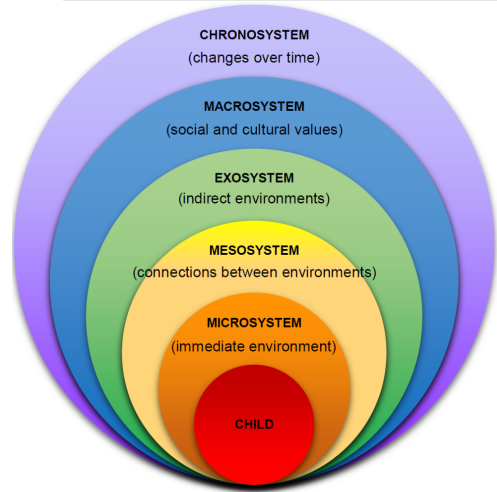
Community as the client:
The foundation of all ethical practice is promoting the welfare of clients.
Homan believes conditions that affect people need to be significantly changed for individuals and communities, rather than to change the people themselves affected by these conditions.
Chung and Bemak suggest that by adhering to traditional roles, practitioners can maintain and reinforce the status quo, resulting in passively supporting the social injustices and inequalities.
Addressing the cause of the problem within the community can help change the lives of many individuals—not just the one person sitting in our office or clinic.
Community agency: Refers broadly to include any institution- public or private, non-profit or for-profit designed to provide a wide range of social and psychological services to the community.
Community worker: Diverse pool of human-service workers whose primary duties include serving individuals within the community. Ex: social workers, community organizers, psychiatrists, nurses etc.
Social justice perspective:
Social justice: Access and equity to ensure full participation in the life of a society, particularly for those who have been systematically excluded on the basis of race/ethnicity, gender, age, physical or mental disability, education, sexual orientation, socioeconomic status, or other characteristics of background or group membership.
Represents a proactive concern with advocacy and social change and focuses on changing systems and policies on multiple levels.
Counseling with marginalized groups in our society is most enhanced:
When mental health professionals can understand how individual and systemic worldviews shape clinical practice.
When they are equipped with organizational and system knowledge, expertise, and skills.
From this perspective, the helping professional’s role includes advocate, consultant, psychoeducator.
Goals of social justice & advocacy competencies:
The goal of counseling from a social justice perspective is to promote the empowerment of people who are marginalized and oppressed in our society.
Advocacy can help create a better world that goes beyond an individual client.
Societal barriers include limited access to health care and a quality education, poverty, segregation, racism, sexism, and discrimination, all of which are conditions that contribute to oppressive societal practices and create barriers to participating fully in society.
Social justice and advocacy competencies are necessary for counselors to work effectively on a systemic level i.e. affecting public opinion.
Counselors therefore function as advocates when they help clients challenge these institutional barriers.
Roles of helpers working in the community:
Providing services in nontraditional settings:
Outreach Interventions: The outreach approach may include both developmental and educational efforts, such as skills training, stress management, consultation, & volunteering at non-profit organisations.
Alternative roles for Counselors: advocate, change agent, consultant, adviser, or facilitator of indigenous support systems etc.
Role of Helpers working in the community:
Consultant: Consultants work with clients from diverse racial, ethnic, and cultural backgrounds to design preventive programs aimed at eliminating the negative impacts of racism and oppression.
Adviser: The counselor as adviser initiates discussions with clients about ways to deal with environmental problems that contribute to their personal problems. Ex: employment issues.
Facilitator of Indigenous Support Systems: People in rural environments, and older people would not consider seeking professional help in the traditional sense. Though they may be willing to put their faith in family members or close friends, or turn to their own communities.
Counselors can play an important role by encouraging clients to make full use of indigenous support systems.
Promoting change in communities:
Effective community workers encourage community members to discover their own strengths and to build on these resources.
Developmental approach:
Grounded on strengths, focuses on assets and capacities, promotes capability and power, changes conditions, and is aimed at prevention.
This approach builds on identifying resources within the individual, the group, or the community that can be more fully activated.