Week 5
Lecture 1
Sometimes they have been called the dark reactions, but they are not dark reactions, but they happen in the light. Photosynthesis is the most ecologically important process on the planet.
this is where carbon fixation reactions and organic carbon leaves. CO2 is not organic and therefore need to go through chemical processes to be organic. It will then moves throughout all our ecosystems. There are different strategies that have evolved across different species and we call them C3, C4 and cam.
Is it possible to engineer some of these properties to do carbon fixation? Usually we bring carbon in and we can convert it to other compunds like sucrose.
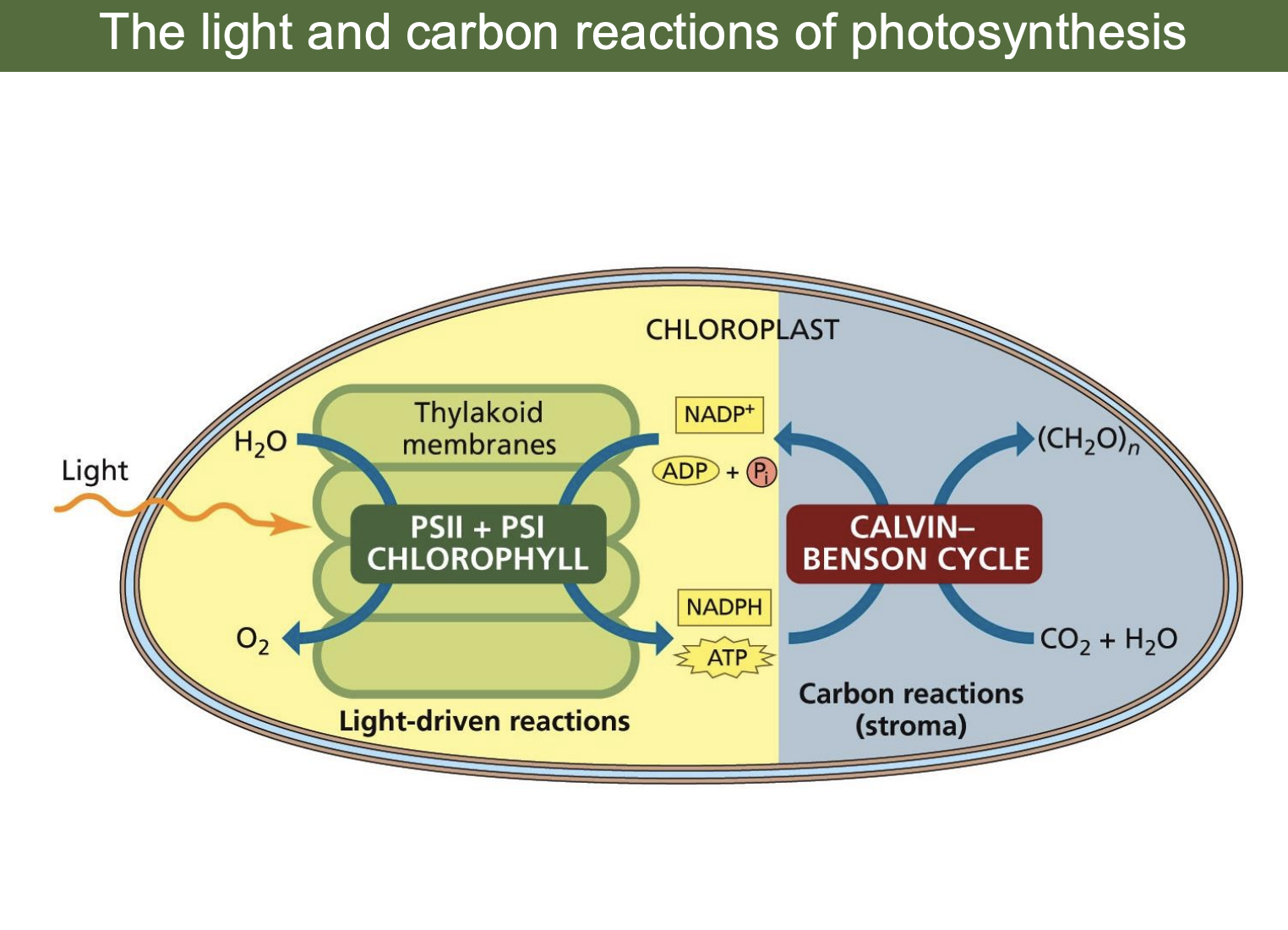
The electrons you see acc started off in water. They got pulled off and the protons were used in the lumen to generate that electrochemical gradient and then move downhill from. potential energy can create a gradient driving the turbine of the ATP synthase (also where chemical energy is stored temporarily and we can use this to drive reactions) Electrons will bind to NADP to give you the strong reducing compound that can be reused all together you can drive the thermodynamically unfavourable reaction. The assimilation of CO2. is very much an uphill reaction. Oxygen is just a byproduct.
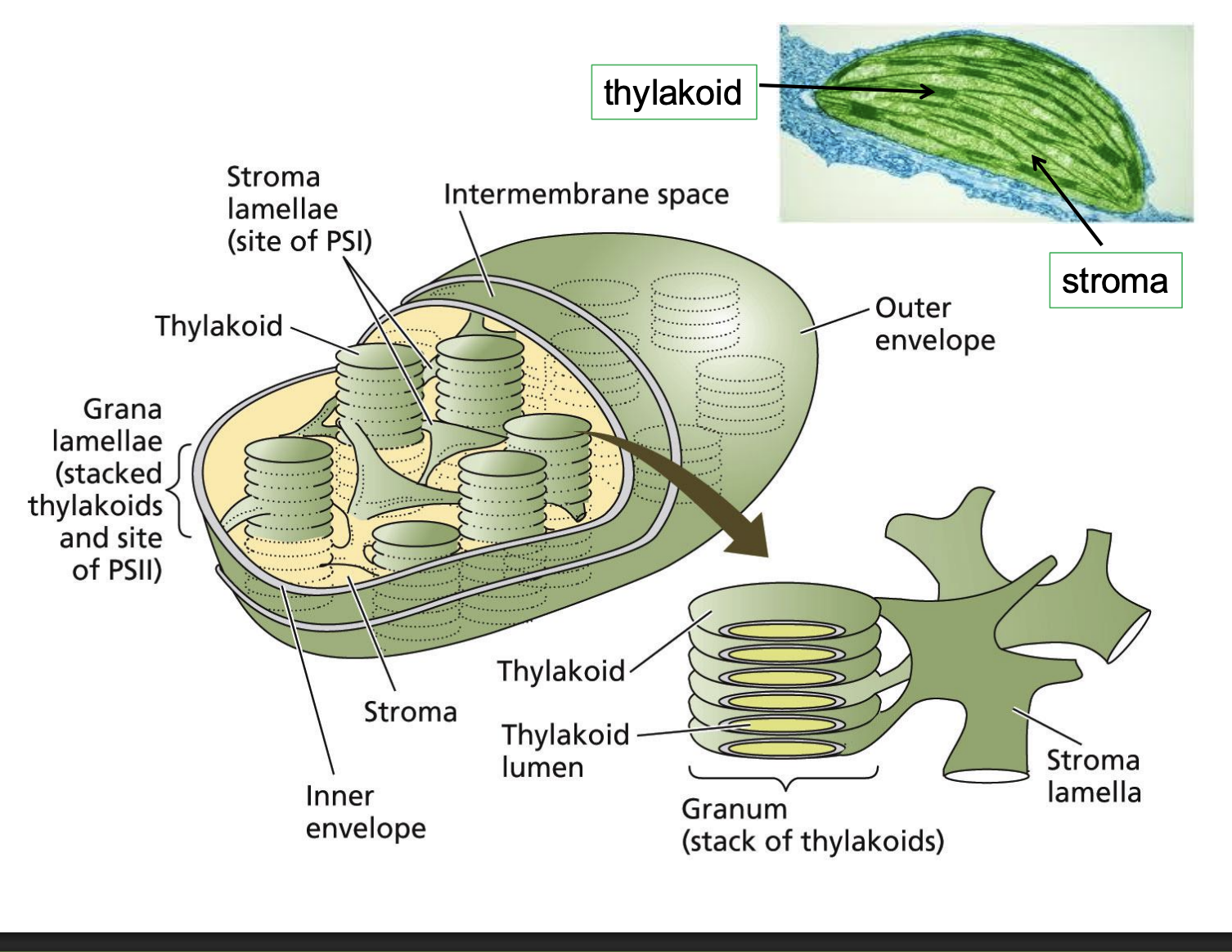
In stochemotry we start with water and light reactions with that you get electrons moving to NADP. This happens in the chloroplast but more specificly the light reactions, happen on the thylakoid disks, in the pigments, and embedded in the thylakoid membranes. On the inside the lumen has the gradient, to create this gradient formation its accumulating protons as you strip them off water. Using that gradient will be used to make ATP in the stroma. The stroma is the solution that surrounds all of these thylakoid disks / granule stacks. In the chloroplast, the light reactions are on the thylakoid membranes. In the grana the ATP is released as the protons go down through the turbine thats in the membrane / the thylakoid memory. That turbine also feeds into NADPH then those reactions can drive,the current fixation reactions.
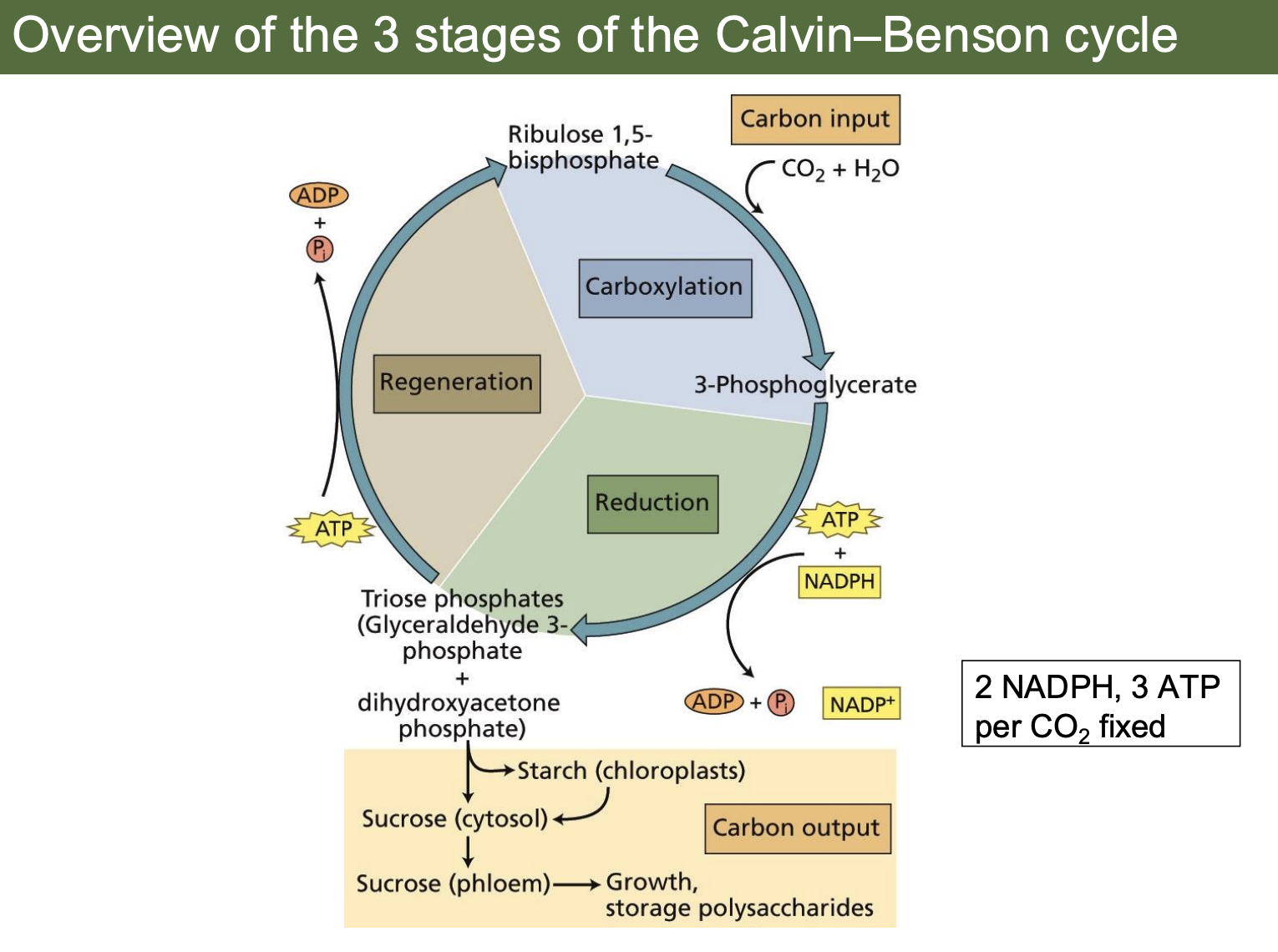
This is the Calvin–Benson cycle, also known as carbon fixation. In this cycle, the enzyme RuBisCO catalyzes the fixation of CO₂ by attaching it to ribulose-1,5-bisphosphate (RuBP), forming an unstable six-carbon intermediate that immediately splits into two molecules of 3-phosphoglycerate. 3-PGA is a fairly versatile but during the reduction phase it becomes even more useful. In reduction, ATP and NADPH produced by the light reactions provide the necessary energy to do this process. ATP phosphorylates 3-PGA, and NADPH donates electrons to reduce it, producing glyceraldehyde-3-phosphate. NADPH acts as an electron carrier, supplying the reducing power needed to convert inorganic carbon into organic molecules. Some of the G3P produced is siphoned off to form a wide variety of organic compounds, including sugars, amino acids, lipids, and other essential biomolecules. This is where nearly all organic carbon originates, and from there it spreads throughout the biosphere. While other carbon fixation pathways exist in microbes, most carbon enters the Earth through RuBisCO and the Calvin–Benson cycle. Because this pathway is a cycle, the remaining G3P molecules are used in the regeneration phase to reform RuBP, the original five-carbon CO₂ acceptor. This step requires additional ATP and ensures the cycle.
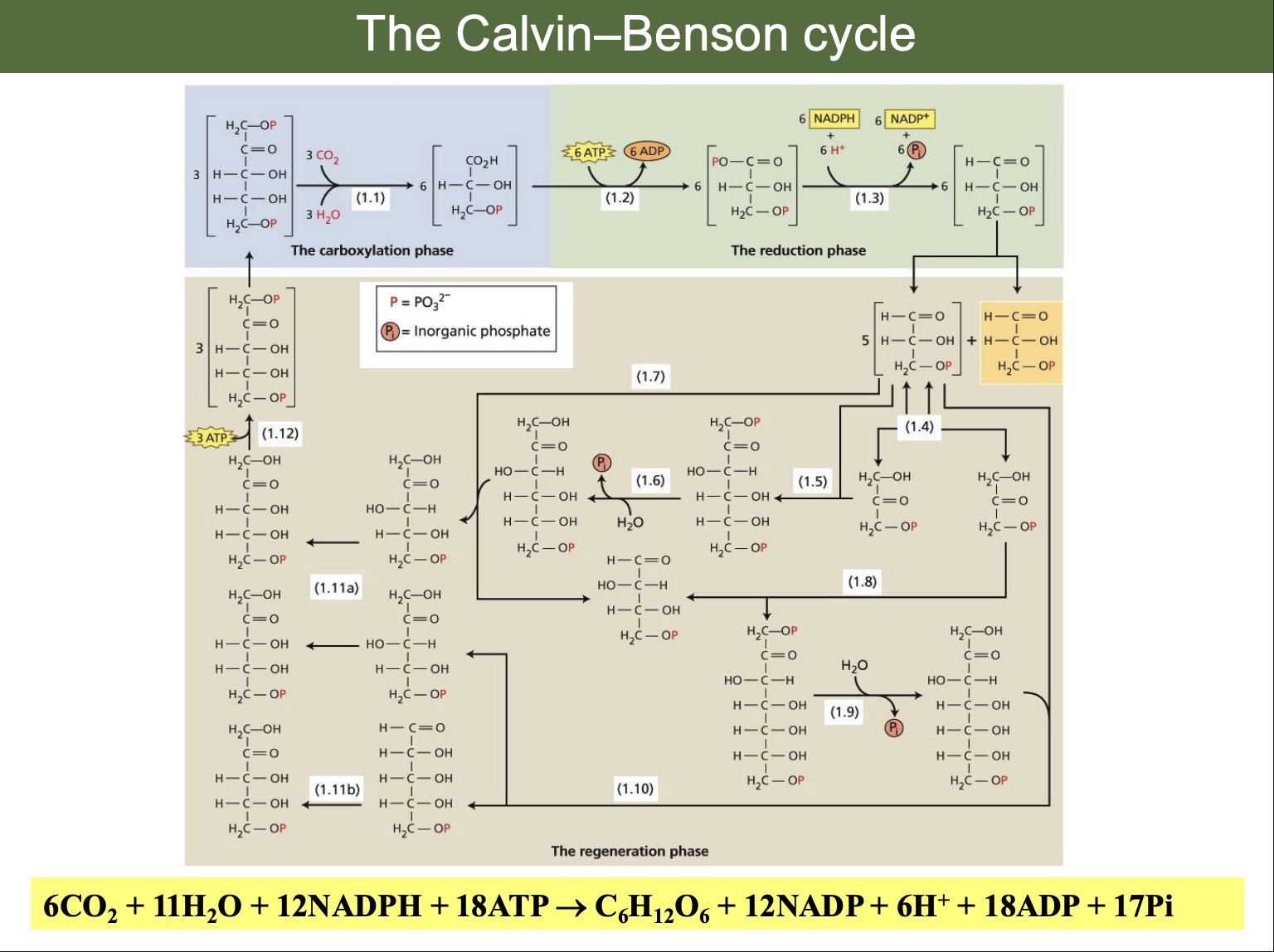
this is the three phases of the Calvin–Benson cycle with a bit more biochemical context, RuBisCO stands for ribulose-1,5-bisphosphate carboxylase/oxygenase—the “bisphosphate” refers to the two phosphate groups, and the carboxylase activity is the reaction we want here, bringing carbon into the organic world. CO₂ is fixed to produce three-carbon compounds, which are then phosphorylated and reduced during the reduction phase using ATP and NADPH. These reduced, phosphorylated three-carbon molecules are highly versatile. Some can be siphoned off into sucrose synthesis, starch synthesis, or used as carbon skeletons for other molecules, including those containing nitrogen. The key point is that the Calvin cycle is not just about fixing carbon it produces building blocks that feed many other metabolic pathways.Because this is a cycle, some of these compounds must be used to regenerate the five-carbon starting molecule, which requires additional energy input. The exact stoichiometry isn’t the main concern here; what matters is how energy-demanding this process is. A large amount of ATP and reducing power is required to take inorganic carbon and push it uphill thermodynamically into reduced organic molecules. Despite being energetically expensive, this is where organic carbon begins for most life on Earth.
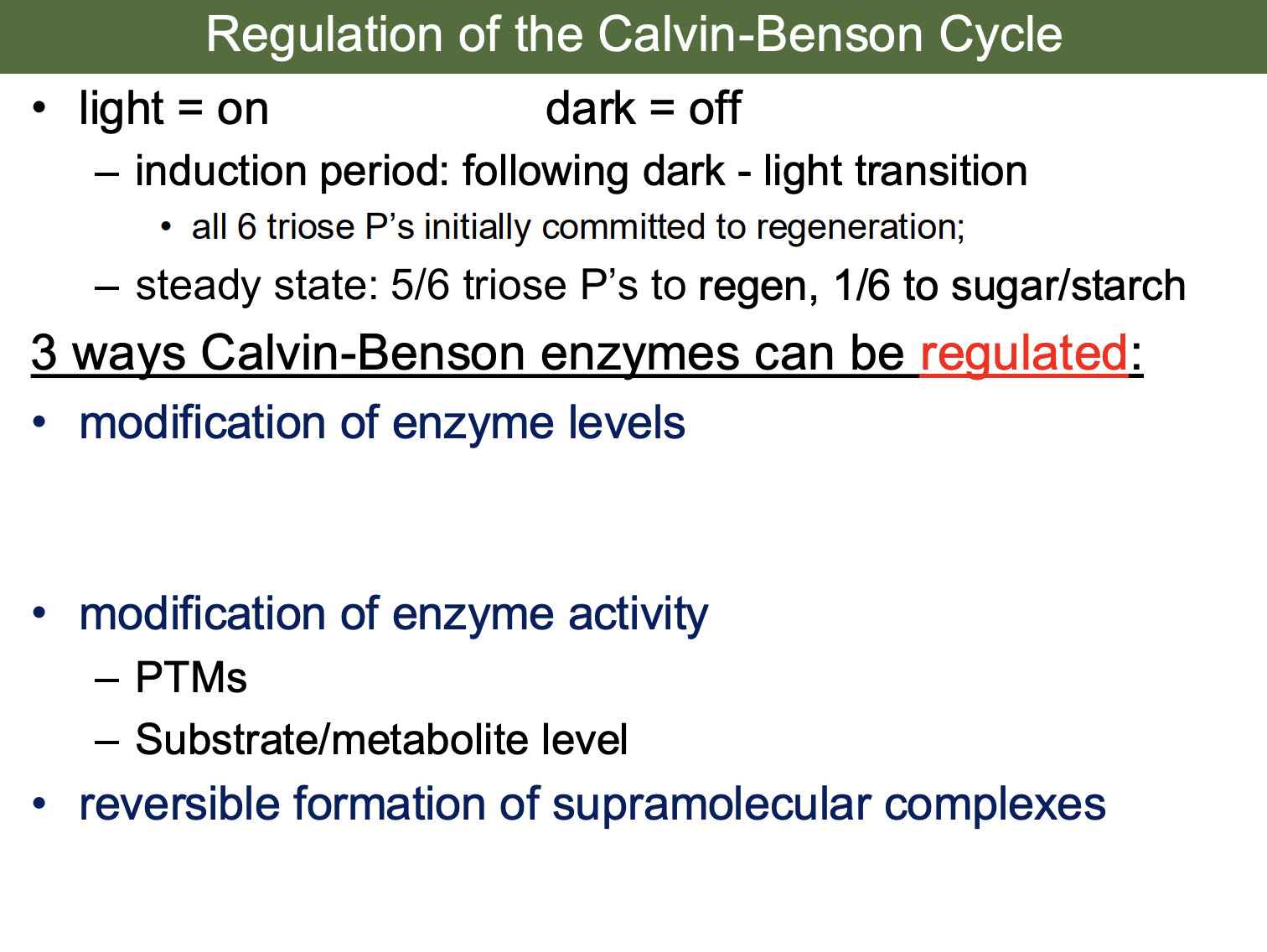
The purpose of the Calvin–Benson cycle is to bring inorganic carbon (CO₂) to organic where it becomes reduced carbon that is versatile and can be used to make whatever the plant needs. That reduced carbon is then passed on through the food web when other organisms eat plants, obtaining reduced carbon in the form of sucrose, starch, and many other compounds. These products function as broad metabolic building blocks. The Calvin–Benson cycle takes place in the chloroplast, specifically in the stroma. CO₂ enters the cycle, and what comes out are reduced three-carbon compounds (C3), which is why this pathway is referred to as C3 metabolism. Some of this reduced carbon is exported out of the chloroplast to the cytosol and other organelles for additional biosynthetic reactions, and ultimately much of it is oxidized later to recover energy through respiration. Because the pathway is a cycle, the five-carbon CO₂ acceptor is regenerated, allowing the process to continue. Although it was historically called the “dark reactions,” the Calvin–Benson cycle is strongly regulated by light, since it depends on ATP and NADPH produced by the light reactions. The cycle must run several times to build up metabolite pools (resevoirs of compounds like aminoacidds sugars and other) before a fraction of the carbon can be siphoned off for biosynthesis, but this is not limiting because CO₂ and light are generally abundant. Regulation occurs at several levels. Coarse regulation involves changing enzyme abundance by making more or less of Calvin–Benson cycle enzymes, including RuBisCO. Fine regulation occurs through post-translational modifications, such as phosphorylation and dephosphorylation of enzymes. Perhaps most importantly, the cycle is regulated by substrate availability enzymes respond directly to the concentrations of CO₂, RuBP, ATP, and NADPH. In addition, enzymes can form multienzyme complexes, bringing reactions into close physical proximity and increasing efficiency, much like an assembly line.
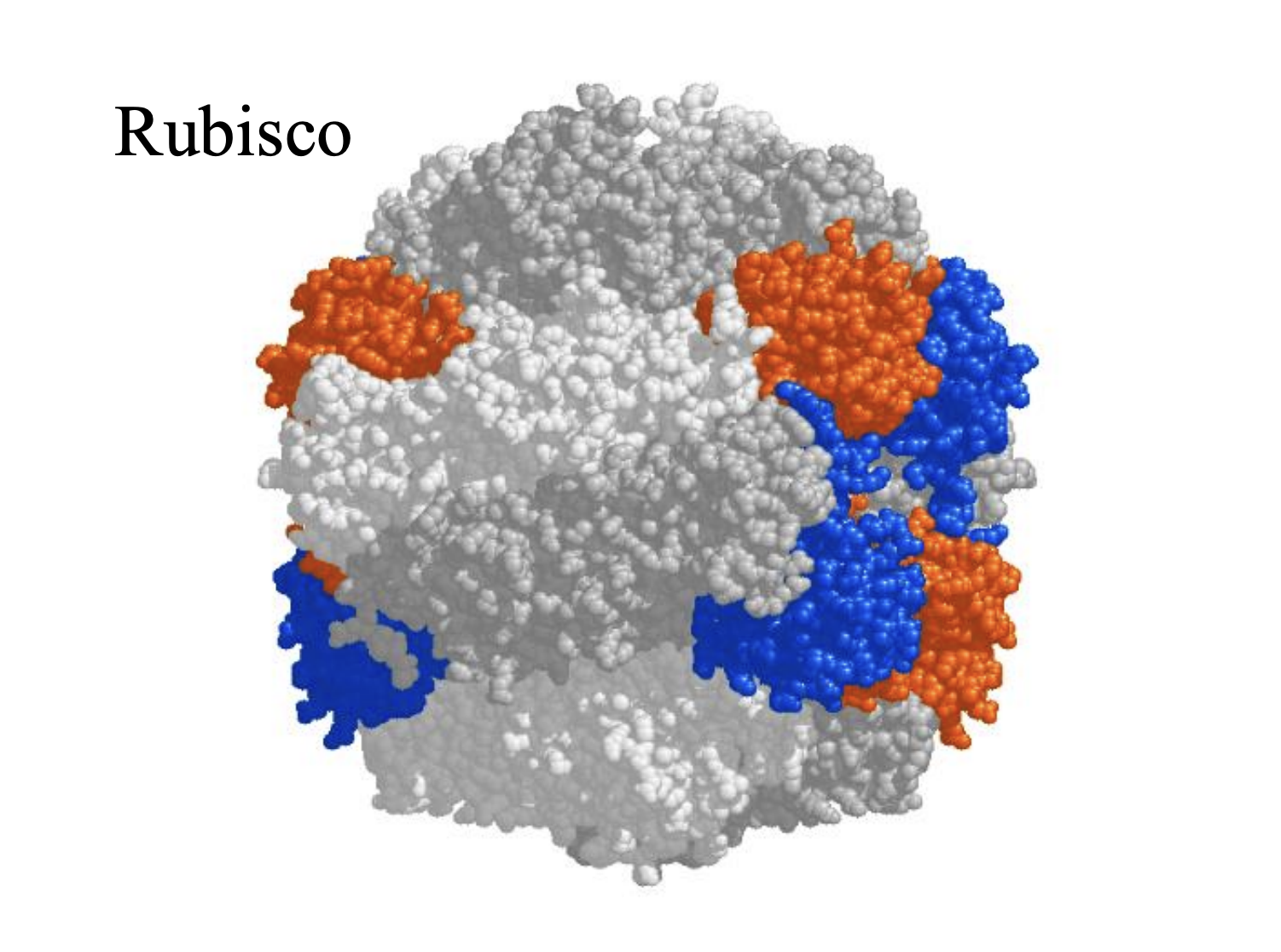
RuBisCO is a large, multimeric enzyme composed of large and small subunits. The large subunits are encoded by the chloroplast genome, while the small subunits are encoded by the nuclear genome and imported into the chloroplast. This already tells you something important: RuBisCO is a complex and highly regulated enzyme that requires coordination between two genomes. RuBisCO is widely regarded as the most abundant enzyme on Earth, and many would argue it is also the most important. For the most part, this is where organic carbon begins in the biosphere. If you take any green leaf, grind it up, and extract the proteins, RuBisCO will dominate the extract. In the lab, when these proteins are run on a polyacrylamide gel, RuBisCO appears as a large, intense band, far more abundant than any other protein in green tissue.
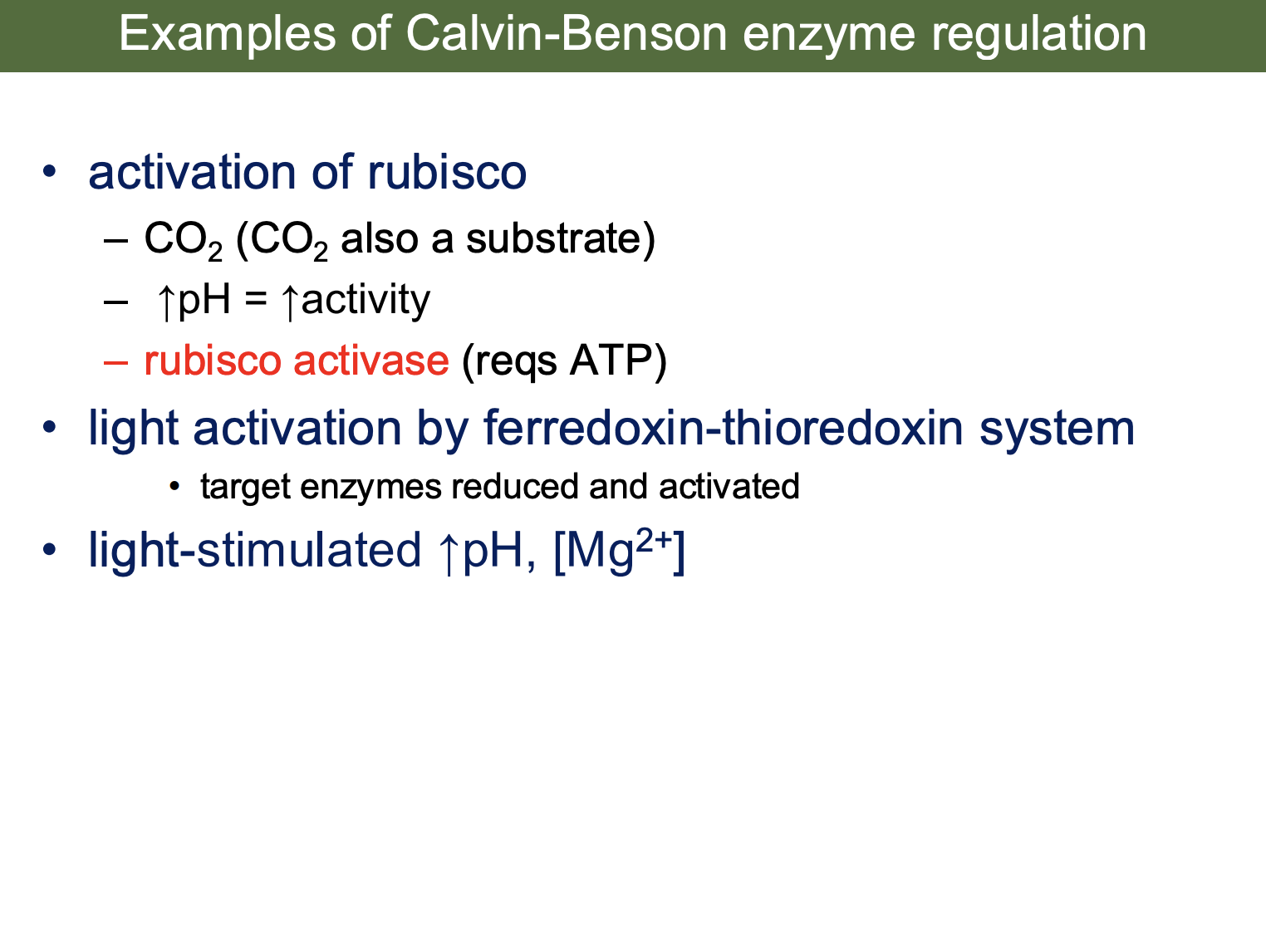
Because RuBisCO is such a key enzyme, it is tightly regulated, as is true for any major control point in metabolism. Sometimes regulation is simple by changing substrate availability and other times it is more complex, involving post-translational modifications, changes in cellular compartment conditions, and the presence of activators or inhibitors. RuBisCO regulation is relatively complex. CO₂ levels themselves do not fluctuate dramatically over the course of a day, but RuBisCO activity is sensitive to temperature, gas diffusion through stomata, and the competing reaction with oxygen. It is also strongly affected by the chemical environment of the stroma, particularly pH. In the light, the stromal pH becomes more alkaline, which increases RuBisCO activity. This happens because the light reactions pump protons into the thylakoid lumen to build a proton gradient, removing protons from the stroma. As a result, the lumen becomes acidic while the stroma becomes more alkaline conditions that favor RuBisCO activity when carbon fixation is needed.Light also creates a highly reducing environment through the movement of electrons in the light reactions. This reducing power helps activate enzymes involved in the Calvin–Benson cycle, coordinating carbon fixation with the availability of ATP and NADPH. In addition, magnesium ion concentrations increase in the stroma during illumination, further promoting RuBisCO activation. Finally, RuBisCO is directly activated by a separate, ATP-dependent protein called RuBisCO activase, which helps maintain RuBisCO in its active form. Together, changes in pH, Mg²⁺ levels, redox state, and RuBisCO activase ensure that RuBisCO is most active in the light, when the energy and reducing power needed for the Calvin–Benson cycle are available.
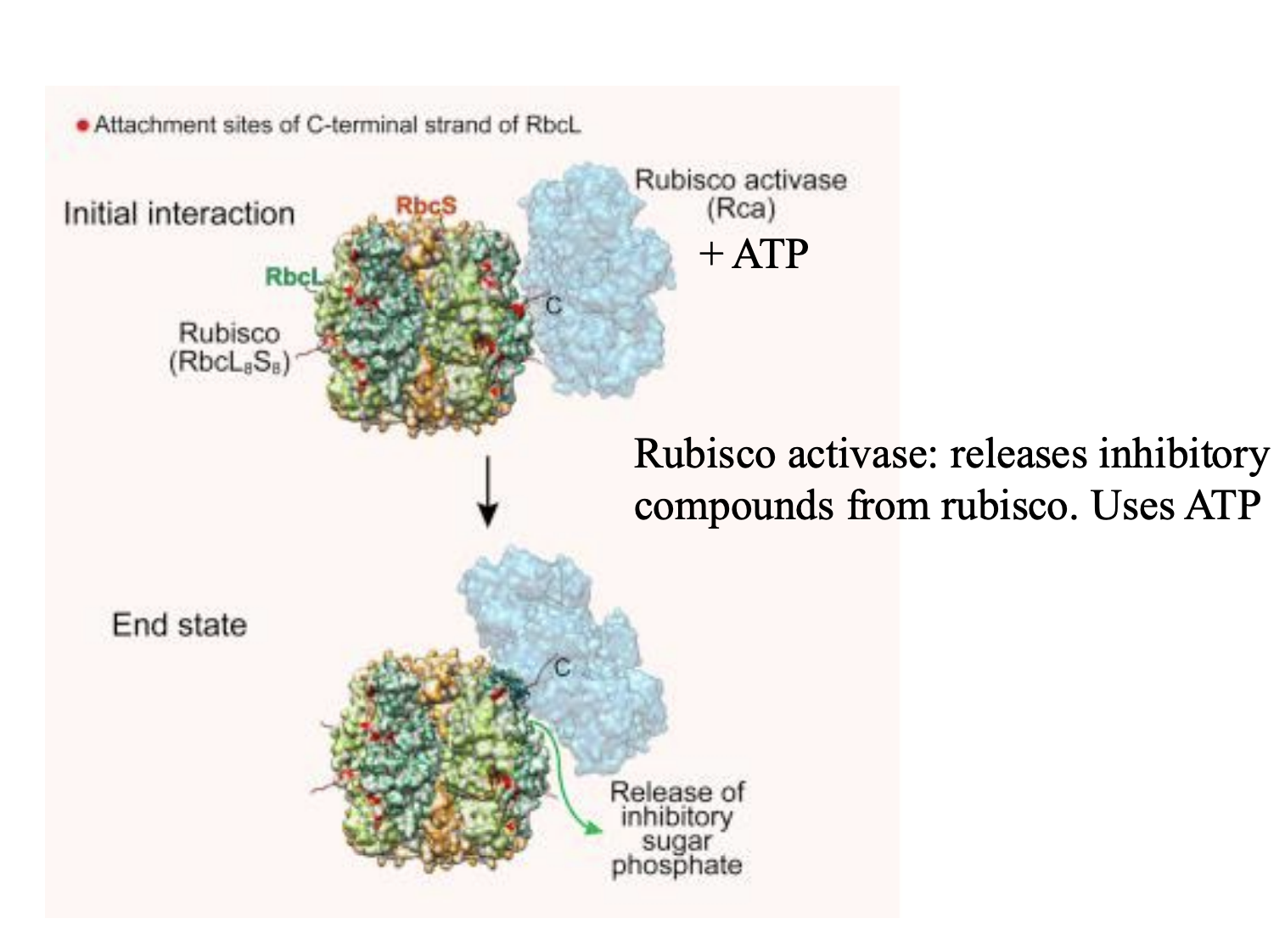
RuBisCO activase helps regulate RuBisCO activity. RuBisCO activase is light-regulated, and its activity is coordinated with the increased reducing power generated by the light reactions and the availability of ATP. In this way, RuBisCO activation is directly linked to whether the plant has the energy needed to run the Calvin–Benson cycle. RuBisCO activase physically interacts with RuBisCO and functions by relieving inhibition, a regulatory concept that will appear repeatedly in metabolism. RuBisCO can be inhibited by the binding of a specific sugar phosphate, which acts as a regulatory inhibitor rather than a normal metabolic intermediate. RuBisCO activase uses ATP to remove this inhibitory sugar phosphate, restoring RuBisCO to its active form. Although some energy is required to activate RuBisCO, once it is in the active state, carbon fixation can proceed efficiently as long as light, ATP, and reducing power are available.
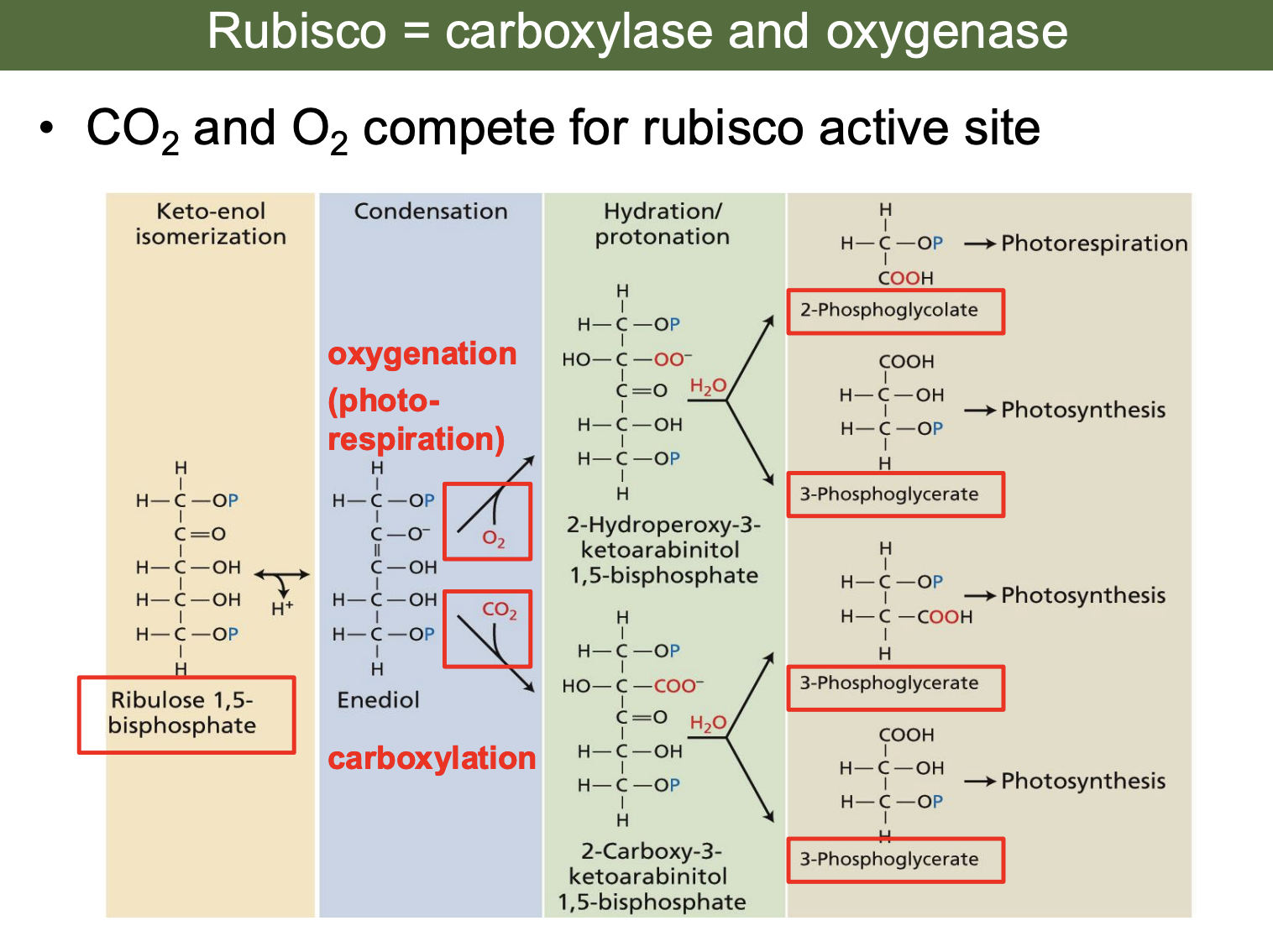
RuBisCO binds CO₂ and a five-carbon, double-phosphorylated sugar (RuBP), combines them, and the unstable six-carbon intermediate immediately splits into two three-carbon molecules of 3-phosphoglycerate (3-PGA). These three-carbon compounds can then be manipulated—some are used to regenerate RuBP, and some are siphoned off for a wide range of other biosynthetic reactions. But what happens if oxygen gets in the way? RuBisCO is both a carboxylase and an oxygenase, and these two reactions compete with each other. The reaction you want is with CO₂, but if O₂ enters the active site instead, RuBisCO catalyzes an oxygenation reaction. In this case, you produce one molecule of 3-PGA (the “good” product) and one molecule of 2-phosphoglycolate, a two-carbon compound. The problem is that no new carbon has been fixed. You started with a five-carbon RuBP, added oxygen instead of CO₂, and ended up with five carbons total. Since the whole purpose of RuBisCO is to bring inorganic carbon into the organic world, this reaction has failed at carbon fixation. This process is called photorespiration. It involves oxygen, hence the name, and produces compounds that are not useful end products of the Calvin–Benson cycle. Instead, they must be processed through additional pathways to recover some carbon, costing the plant energy and reducing overall photosynthetic efficiency.
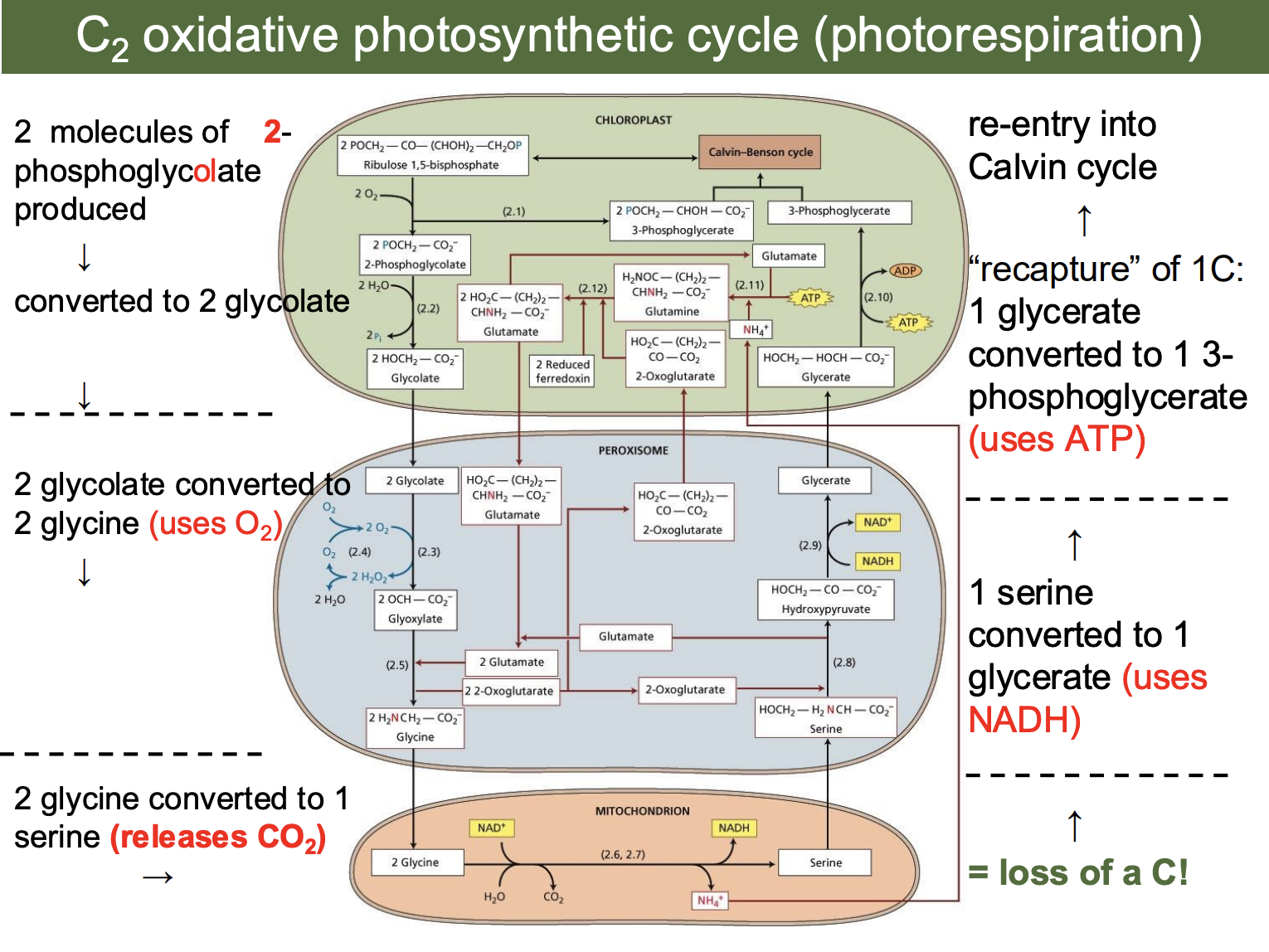
To get the oxygenation product back into the Calvin–Benson cycle, the plant has to go through a set of biochemical gymnastics known as photorespiration. This pathway spans multiple subcellular compartments and involves many reactions—not something you need to memorize step by step. Instead, the important questions are: what goes in, what comes out, where does it happen, and what is the purpose? Photorespiration occurs across several compartments: the chloroplast stroma, peroxisome, mitochondrial matrix, and cytosol. The two-carbon compound produced when RuBisCO reacts with oxygen is first converted in the chloroplast and then transported into the peroxisome, where oxygen is used to further oxidize it into a more versatile compound. Ultimately, this carbon is incorporated into amino acids through reactions involving nitrogen metabolism. Amino groups are transferred from compounds like glutamate, producing glycine, the smallest amino acid. Glycine can be used directly in protein synthesis, but two glycine molecules are often transported into the mitochondria, where they are combined and decarboxylated. This releases CO₂ and results in a three-carbon amino acid, serine. At this point, carbon has already been lost, and energy has been consumed. Serine is then moved back into the peroxisome, where additional reactions—requiring reducing power—convert it into glycerate, which is transported back into the chloroplast. After phosphorylation, it becomes a Calvin–Benson cycle intermediate and can re-enter the cycle or be used elsewhere in metabolism. The key takeaway is not the pathway itself, but how costly and inefficient it is. Photorespiration consumes oxygen, releases CO₂, and uses ATP and reducing power, all while partially undoing the job of carbon fixation. This seems counterproductive, and for decades plant physiologists have debated why this pathway exists at all.
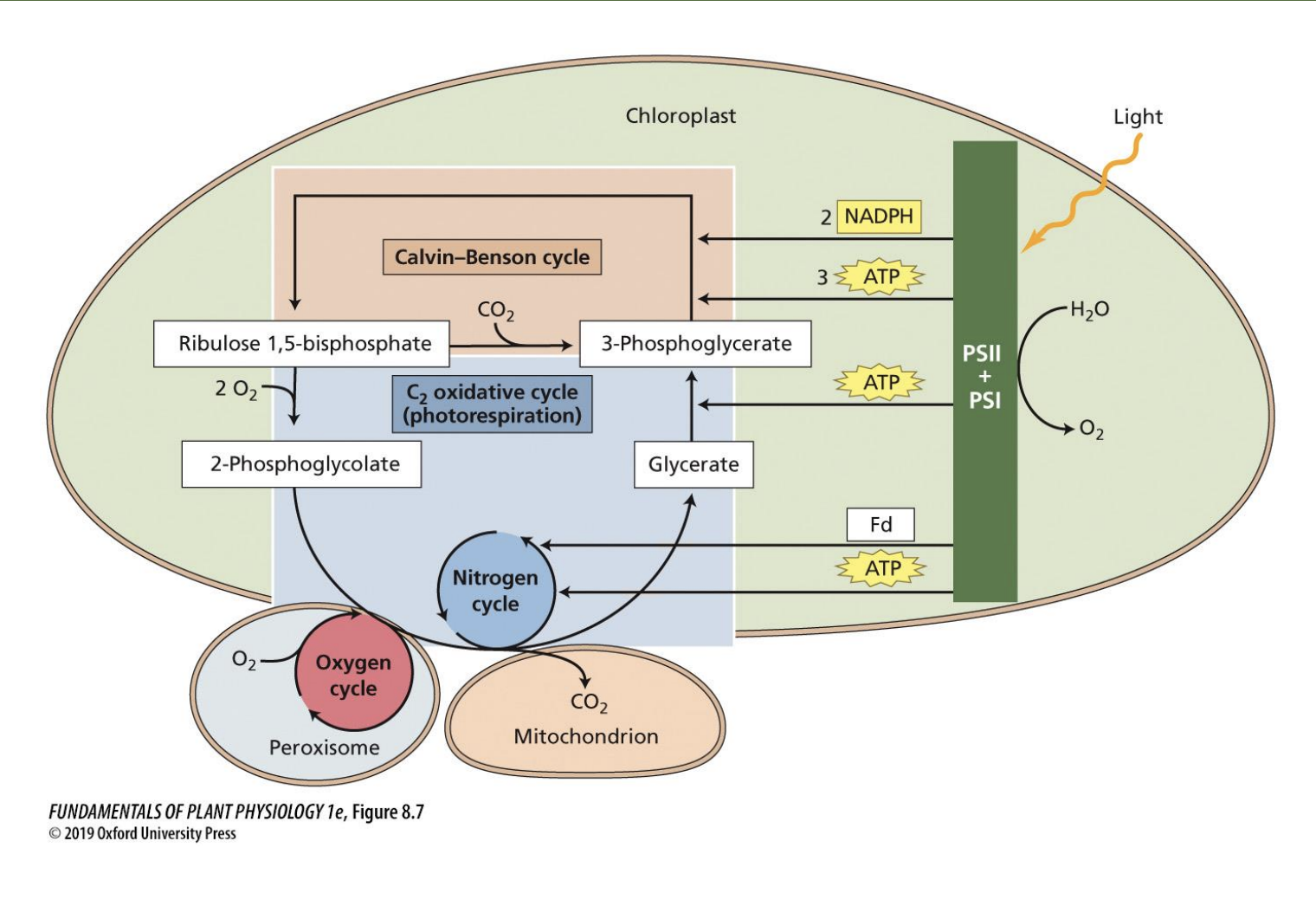
This shows the multiple cellular compartments involved in photorespiration. Carbon moves between the chloroplast, peroxisome, mitochondrion, and likely through the cytosol as well. In some cases, these organelles may be closely associated, allowing intermediates to be transferred directly, but overall this pathway involves a lot of intracellular movement. Along the way, CO₂ is lost, which already tells you this is not an efficient process. The main control is at the top of the pathway through the relative availability of CO₂ versus O₂ at RuBisCO. The regulation of each individual step downstream is extremely complex and not the point here. If oxygen levels are low, photorespiration is minimized. If CO₂ levels are high relative to oxygen, the carboxylation reaction is favored. We’ll look later at how plants manipulate this balance. As for what goes in and what comes out: oxygen goes in, along with RuBP, and early intermediates such as phosphoglycolate and glycolate are produced. After many reactions across compartments, carbon eventually returns to the chloroplast as a Calvin–Benson cycle intermediate, but it takes a long and energetically costly route to get there.
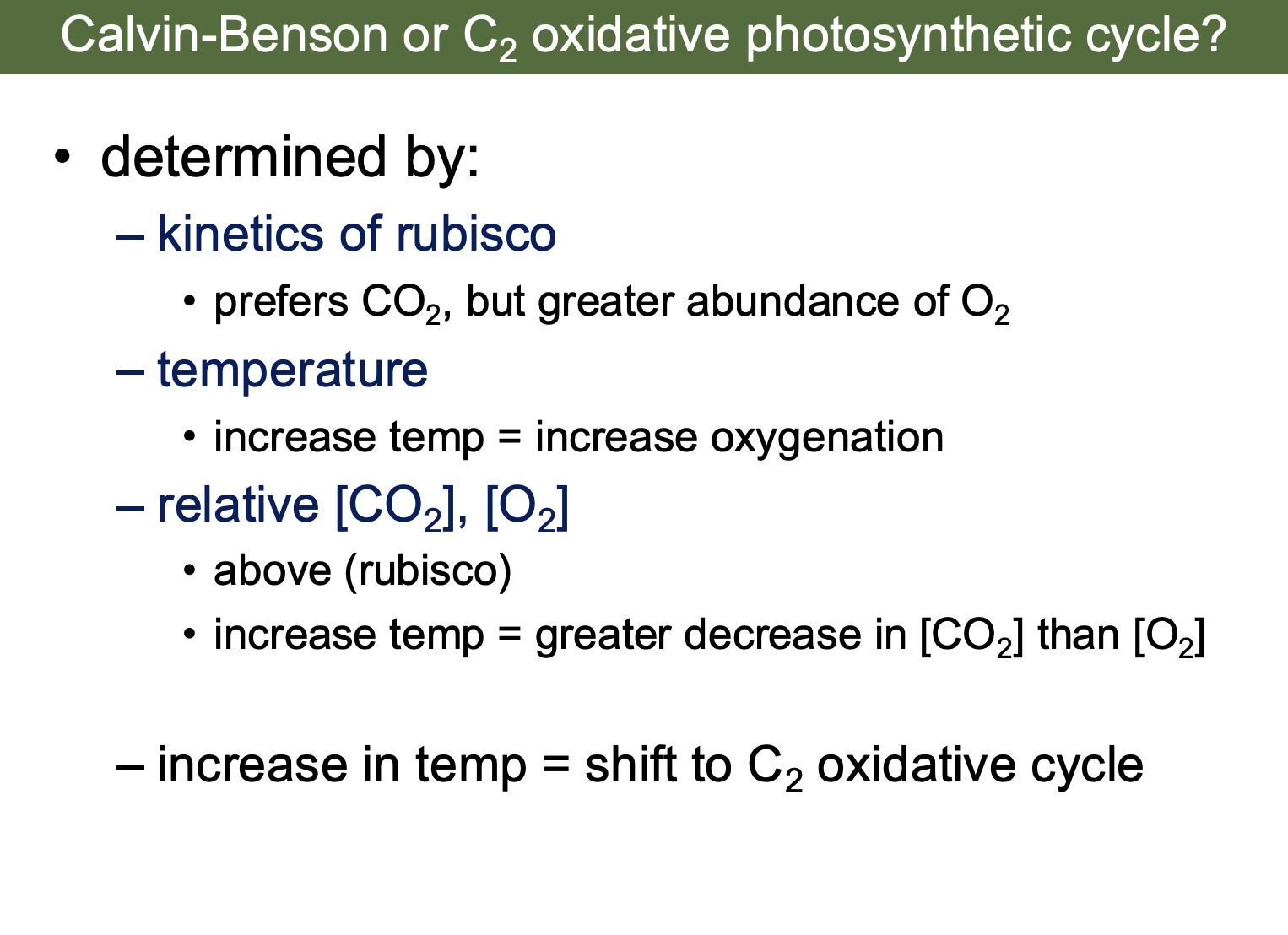
The big question is: why does photorespiration happen, and what is it for? Part of the answer comes from the kinetics of RuBisCO. RuBisCO strongly prefers CO₂ over O₂, but there is a problem: in the atmosphere, O₂ is about 20%, while CO₂ is only around 0.04%. That means even though RuBisCO “likes” CO₂ better, it sometimes grabs O₂ instead, leading to photorespiration. This tendency also depends on temperature and solubility. CO₂ is less soluble than O₂, and as temperature rises, the solubility of both gases decreases. Higher temperatures make it more likely that O₂ will compete with CO₂, which is why photorespiration tends to be more of a problem in hotter conditions. So, photorespiration isn’t because RuBisCO is “bad” at its job it’s a consequence of the relative concentrations and solubility of CO₂ and O₂, and how these change with environmental conditions.
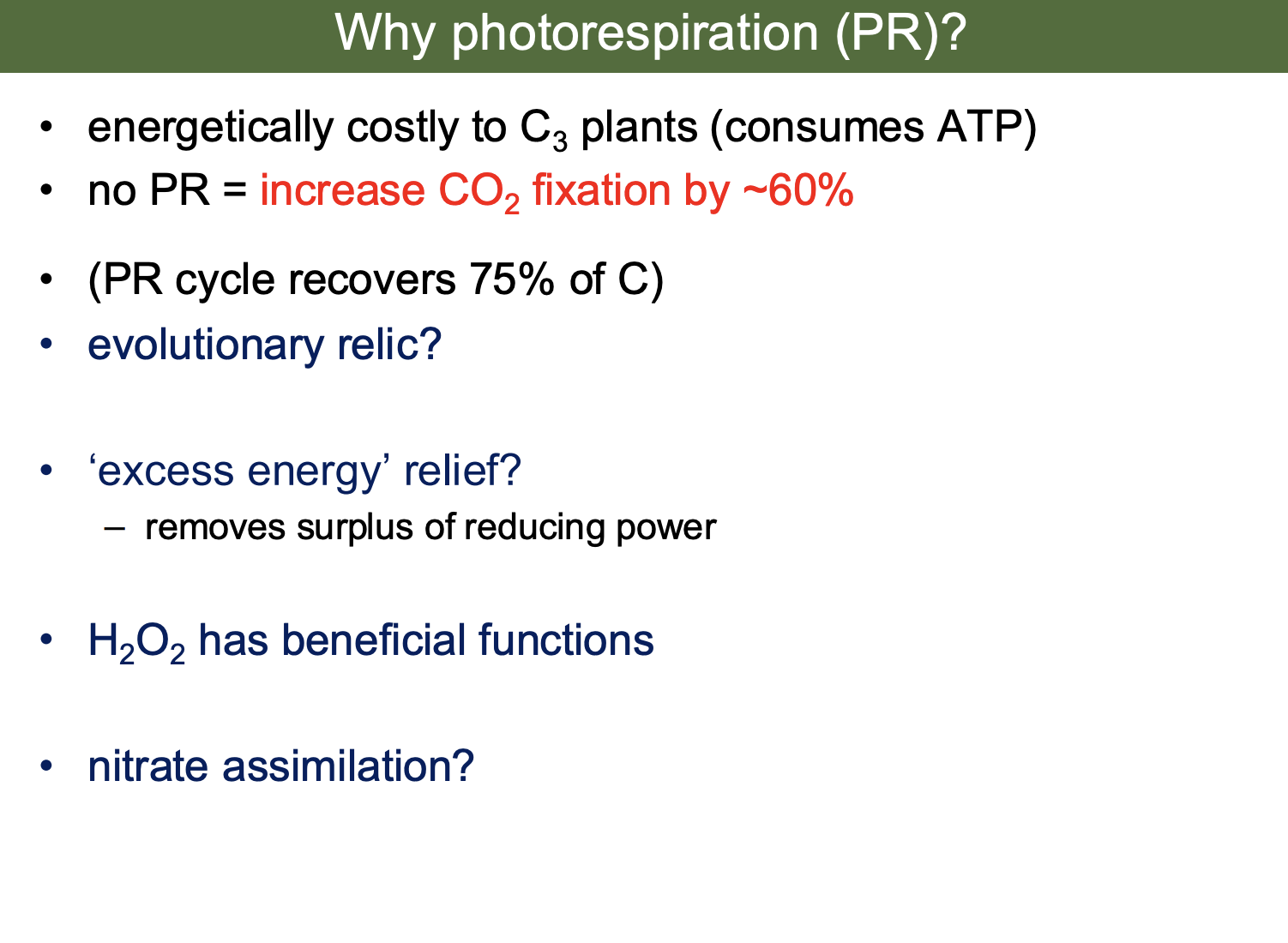
Photorespiration has long puzzled plant physiologists because it reduces net CO₂ fixation by about 30–60% in C₃ plants, depending on conditions. When RuBisCO reacts with O₂ instead of CO₂, some carbon is lost (though most is partially recovered through the photorespiratory pathway), and extra ATP and reducing power are consumed. This seems wasteful and counterproductive to the goal of carbon fixation.
There are several hypotheses about its role:
Evolutionary relic – RuBisCO evolved billions of years ago when atmospheric O₂ levels were low, so there was no strong selection pressure to distinguish CO₂ from O₂ more effectively. Structural constraints may limit the enzyme’s ability to evolve improved specificity.
Energy relief valve – Photorespiration may help dissipate excess ATP and reducing power generated by the light reactions under high-light conditions, preventing damage from reactive oxygen species.
Signaling and metabolic integration – The hydrogen peroxide produced and the metabolic intermediates from photorespiration may play roles in cell signaling and help link carbon and nitrogen metabolism.
Although it is energetically costly, photorespiration is not entirely “bad”. Evidence suggests that in C₃ plants it has been selectively maintained, likely to prevent metabolic damage under high-light or stress conditions. At the same time, reducing photorespiration can improve productivity, which is why it is a target for crop improvement efforts.
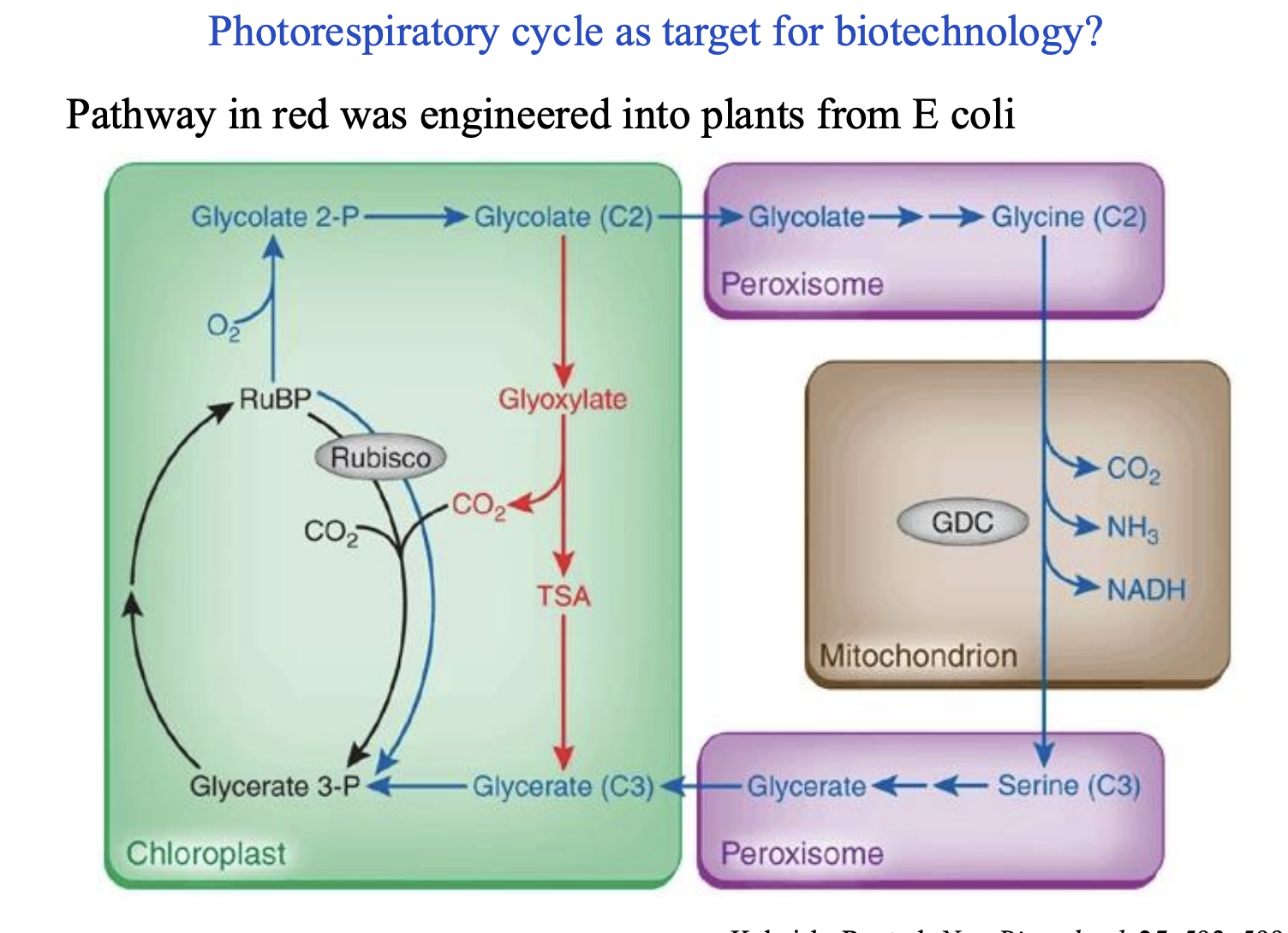
Even though photorespiration has protective and metabolic roles, it has not stopped researchers from trying to reduce it in C₃ crops like soybean, rice, and wheat, which make up much of global food production. The goal is to increase CO₂ fixation and productivity by bypassing or streamlining the energy-costly photorespiration pathway. One approach is to introduce bacterial enzymes into the chloroplast that can convert glycolate directly to glycerate, which can then re-enter the Calvin–Benson cycle. Bacteria are particularly useful for this because over billions of years they have evolved highly versatile biochemical pathways for harvesting energy under diverse conditions. Studies have shown that engineering these alternative pathways can improve productivity under normal and elevated temperatures without major negative consequences for the plant. This suggests that photorespiration is not strictly essential, and its reduction is a viable strategy to enhance crop yield.
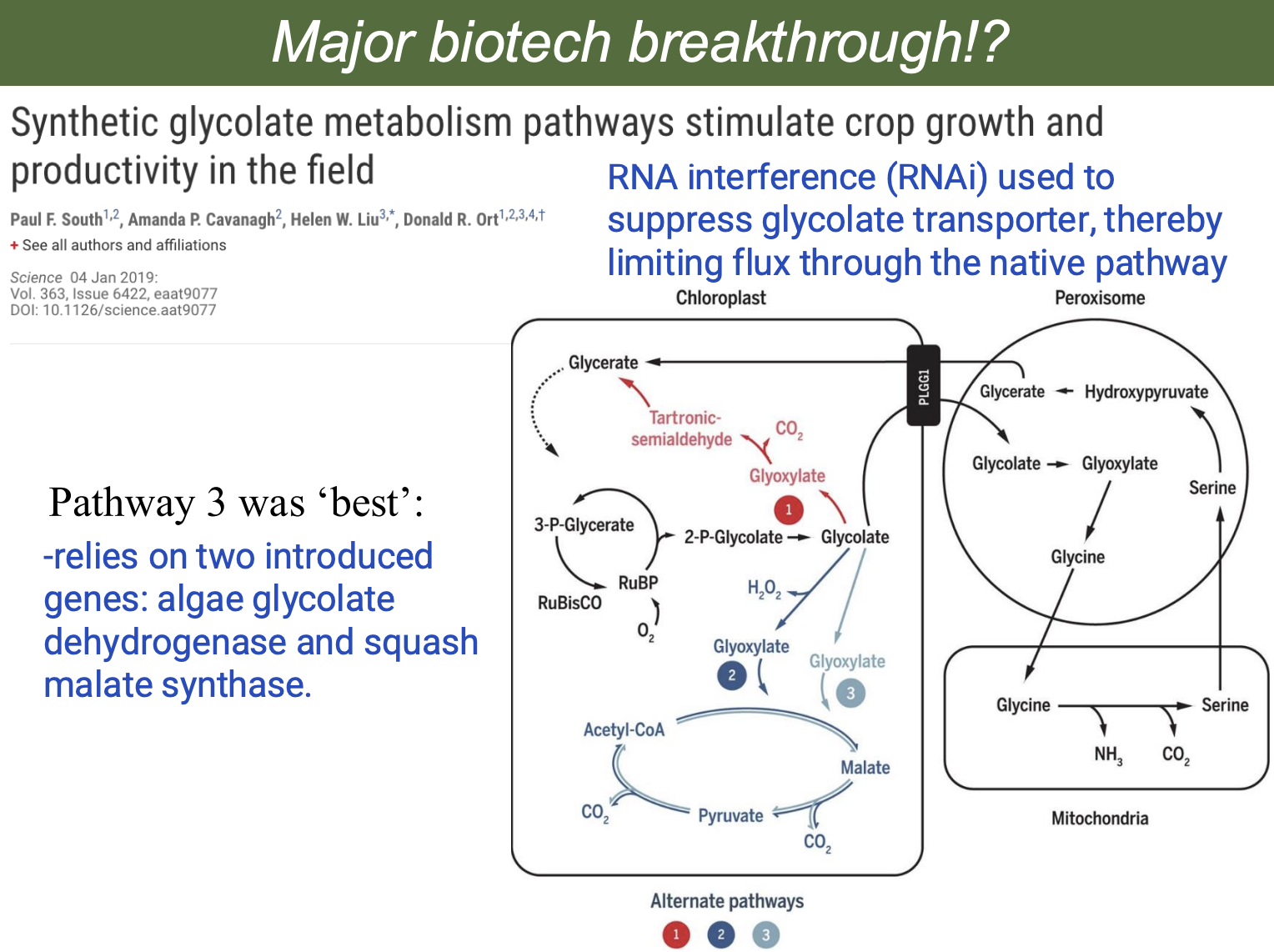
A few years ago, a high-impact study explored reducing photorespiration by blocking glycolate export from the chloroplast and introducing alternative metabolic pathways to process it. Using RNA interference, the researchers suppressed the transporter that normally moves glycolate out of the chloroplast. They then tested different pathways—some from bacteria, some from algae—to convert glycolate back into intermediates that could re-enter the Calvin–Benson cycle.The most effective pathway involved a single-cell glycolate dehydrogenase from algae combined with an organic acid synthase from plants. Transgenic plants using this pathway showed higher productivity, demonstrating that partial reduction of photorespiration can improve yield.However, the evidence suggests that photorespiration cannot be entirely eliminated. Plants likely retain some photorespiration as a protective “blow-off valve” for excess light energy and to maintain links between carbon and nitrogen metabolism. Reducing, rather than eliminating, photorespiration appears to be the practical strategy for improving crop productivity.
C₃ plants are named because the first stable product of carbon fixation in the Calvin–Benson cycle is a three-carbon compound, specifically 3-phosphoglycerate (3-PGA). Most temperate crops, like soybean, rice, and wheat, are C₃ plants.
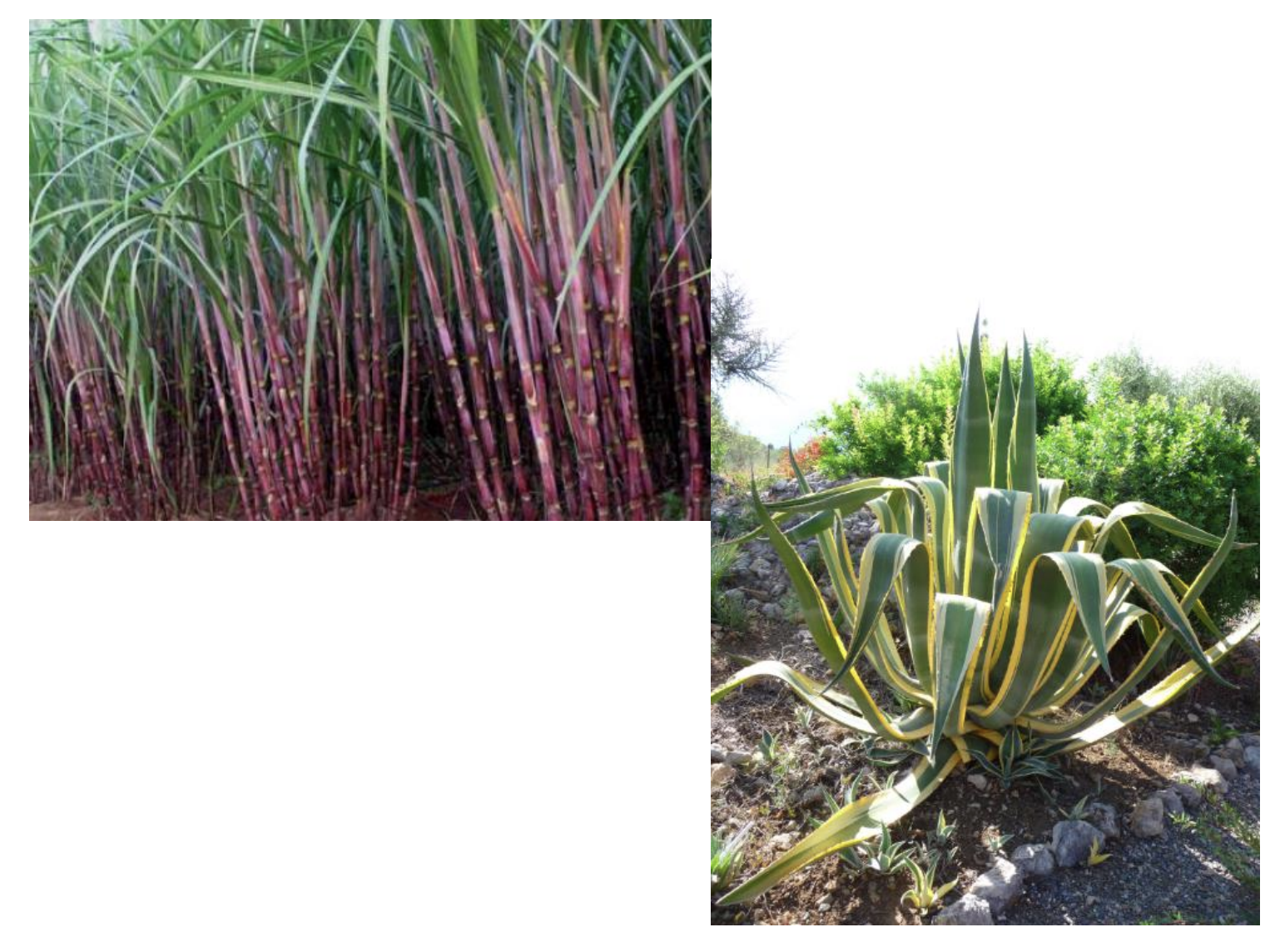
C₄ plants are named because their first stable carbon fixation product is a four-carbon compound, typically oxaloacetate or malate. C₄ photosynthesis is common in tropical grasses (e.g., maize, sugarcane) and some succulents, although it is not exclusive to these groups.
Both C₄ and CAM plants tend to be found in warmer or more arid environments, as these pathways help concentrate CO₂ at the site of RuBisCO, reducing photorespiration.
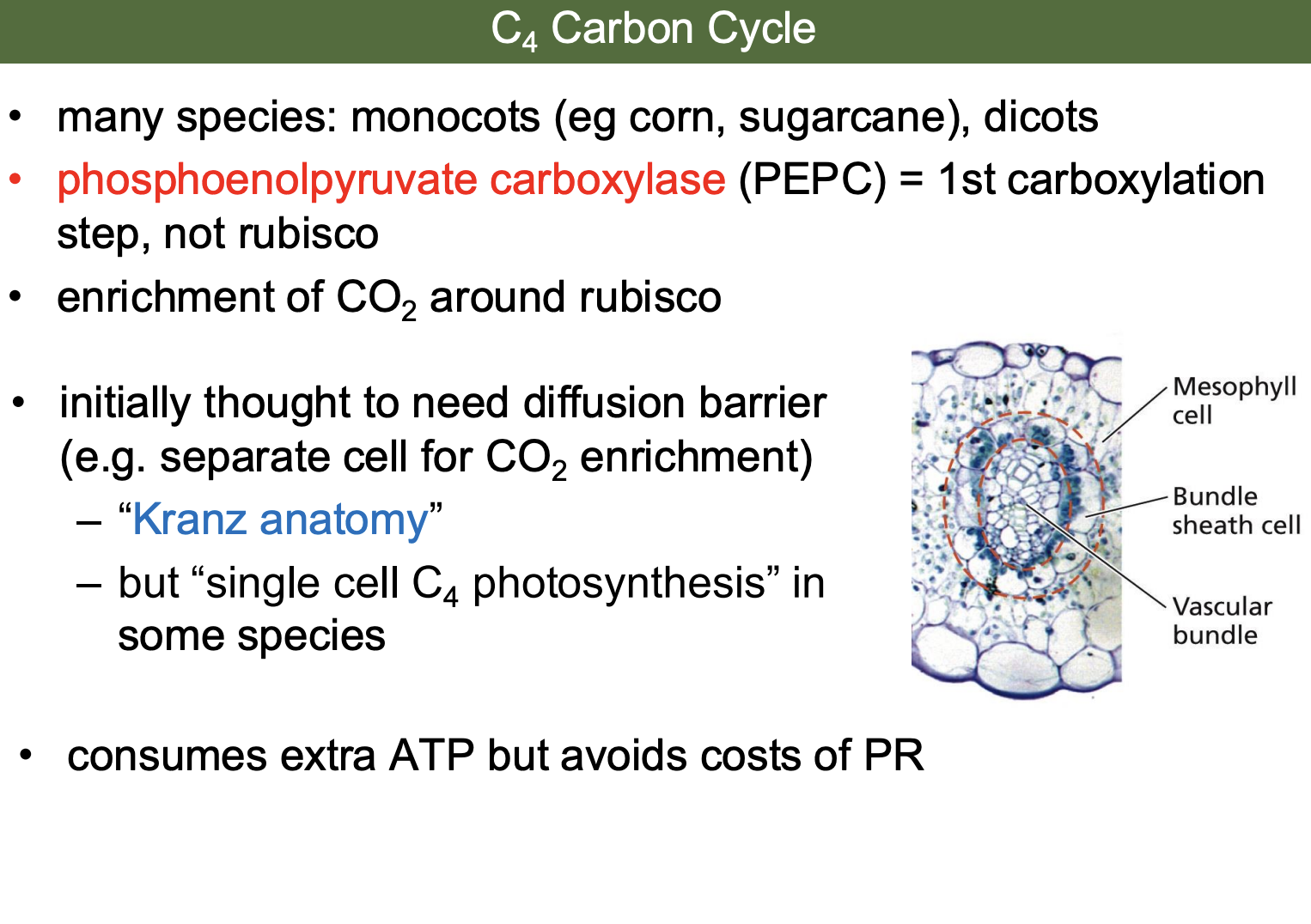
C₄ Photosynthesis
Key feature: The first step of carbon fixation occurs in mesophyll cells, not directly by RuBisCO. Instead, CO₂ (or bicarbonate) is fixed by PEP carboxylase, adding CO₂ to a three-carbon compound (PEP) to form a four-carbon organic acid (usually oxaloacetate or malate).
Spatial separation: The four-carbon compound is transported to bundle sheath cells, where CO₂ is released near RuBisCO. This concentrates CO₂ around RuBisCO, dramatically reducing photorespiration.
Anatomical adaptation: This separation is called Kranz anatomy, with mesophyll cells surrounding bundle sheath cells. Some rare plants (and some algae/diatoms) can perform C₄ photosynthesis within a single cell, but the principle of spatial separation remains.
Energetics: C₄ photosynthesis uses more ATP than C₃, but it largely avoids the energy and carbon losses from photorespiration, making it advantageous in hot, bright, or dry environments.
Outcome: Even with some residual photorespiration, the CO₂ concentration at RuBisCO is high, so C₄ plants achieve higher efficiency of carbon fixation under conditions where C₃ plants would lose carbon to photorespiration.
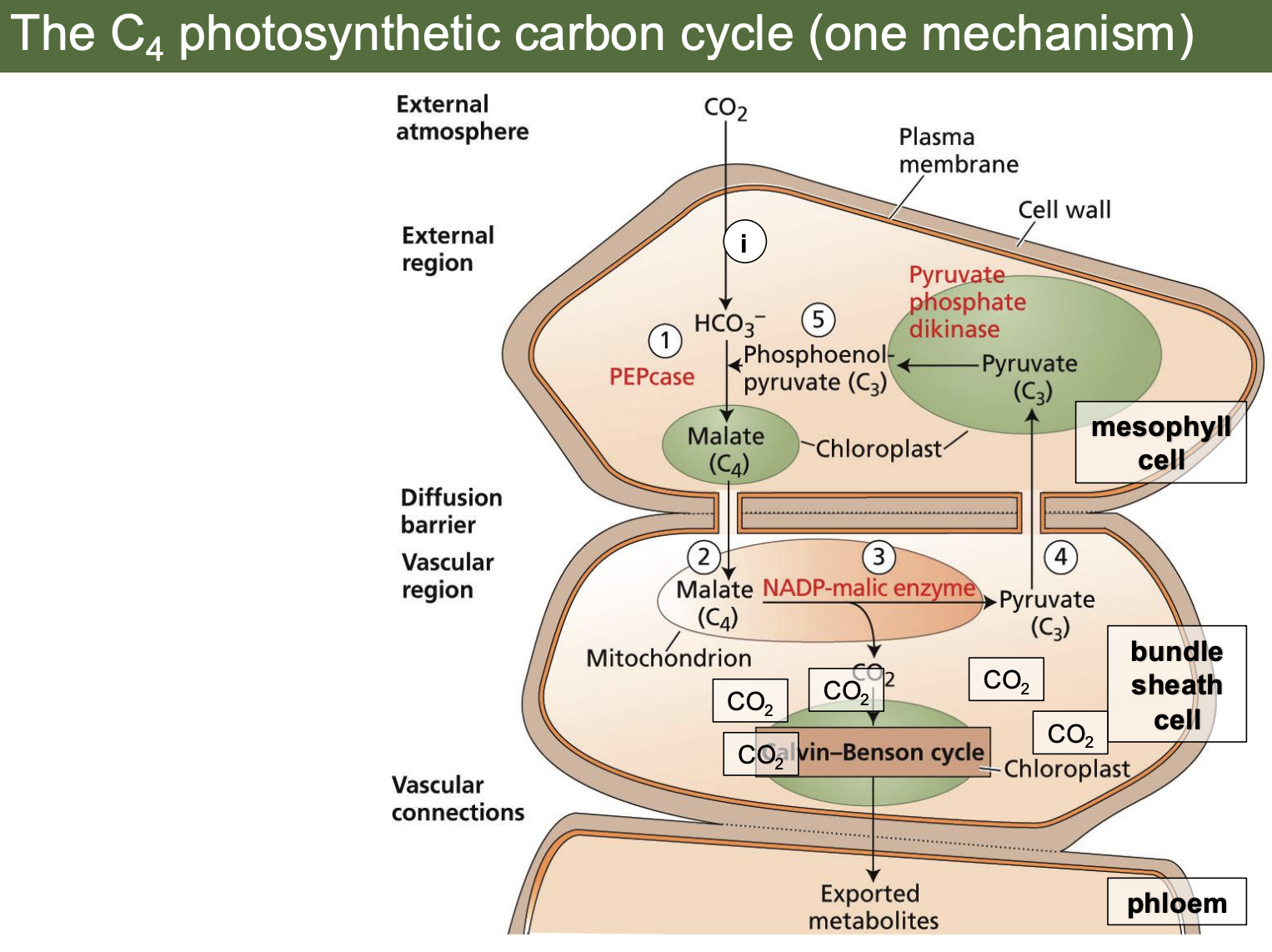
C₄ Photosynthesis – Anatomy & Biochemistry
Mesophyll cells (MC):
These are the most abundant cells in the leaf.
CO₂ is initially captured by PEP carboxylase, which fixes CO₂ (or bicarbonate) onto a three-carbon compound, forming a four-carbon organic acid.
PEP carboxylase is highly specific for CO₂ and does not react with O₂, avoiding photorespiration at this step.
Transport to bundle sheath cells (BSC):
The four-carbon organic acid (often malate) moves from the mesophyll into the bundle sheath cells surrounding the vascular tissue.
Inside the BSC, the malic enzyme (in mitochondria) decarboxylates the organic acid, releasing CO₂ right next to RuBisCO.
Calvin–Benson cycle in bundle sheath:
RuBisCO now operates in a high CO₂ environment, so photorespiration is minimized.
The Calvin–Benson cycle proceeds normally, producing three-carbon compounds for sugar synthesis and regeneration.
Regeneration:
After decarboxylation, the remaining three-carbon compound (pyruvate) is transported back to the mesophyll cells.
ATP is used to regenerate PEP from pyruvate, which keeps the cycle running.
Energetics & ecological advantage:
C₄ photosynthesis uses extra ATP compared to C₃ plants, but the benefit is strong suppression of photorespiration, especially under high light and high temperature conditions.
This is why C₄ plants tend to dominate in tropical and subtropical environments.
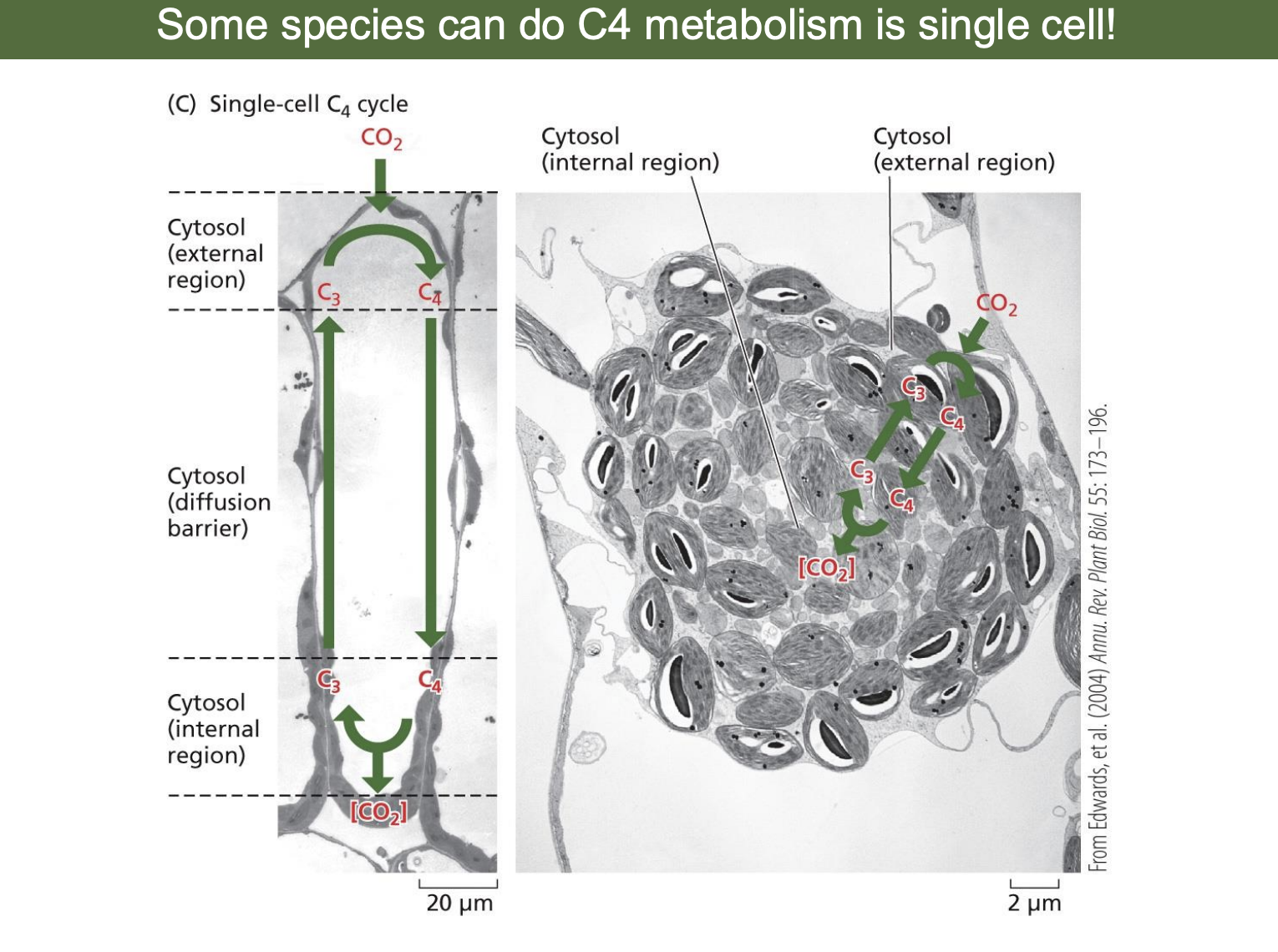
Single-cell C₄ Photosynthesis:
Some plants can perform C₄ metabolism within a single cell, rather than using the typical two-cell (mesophyll + bundle sheath) system.
The main challenge is preventing interference between PEP carboxylase and RuBisCO:
CO₂ must first be captured and converted into a four-carbon compound.
The four-carbon compound is then transported within the same cell to the chloroplasts where RuBisCO operates.
Chloroplast organization is crucial:
Chloroplasts are clustered in a region of the cell where the CO₂ released from the four-carbon compound can concentrate around RuBisCO, ensuring minimal photorespiration.
This requires an extra level of intracellular organization compared to two-cell C₄ anatomy, but it allows C₄ efficiency even in single-cell species.
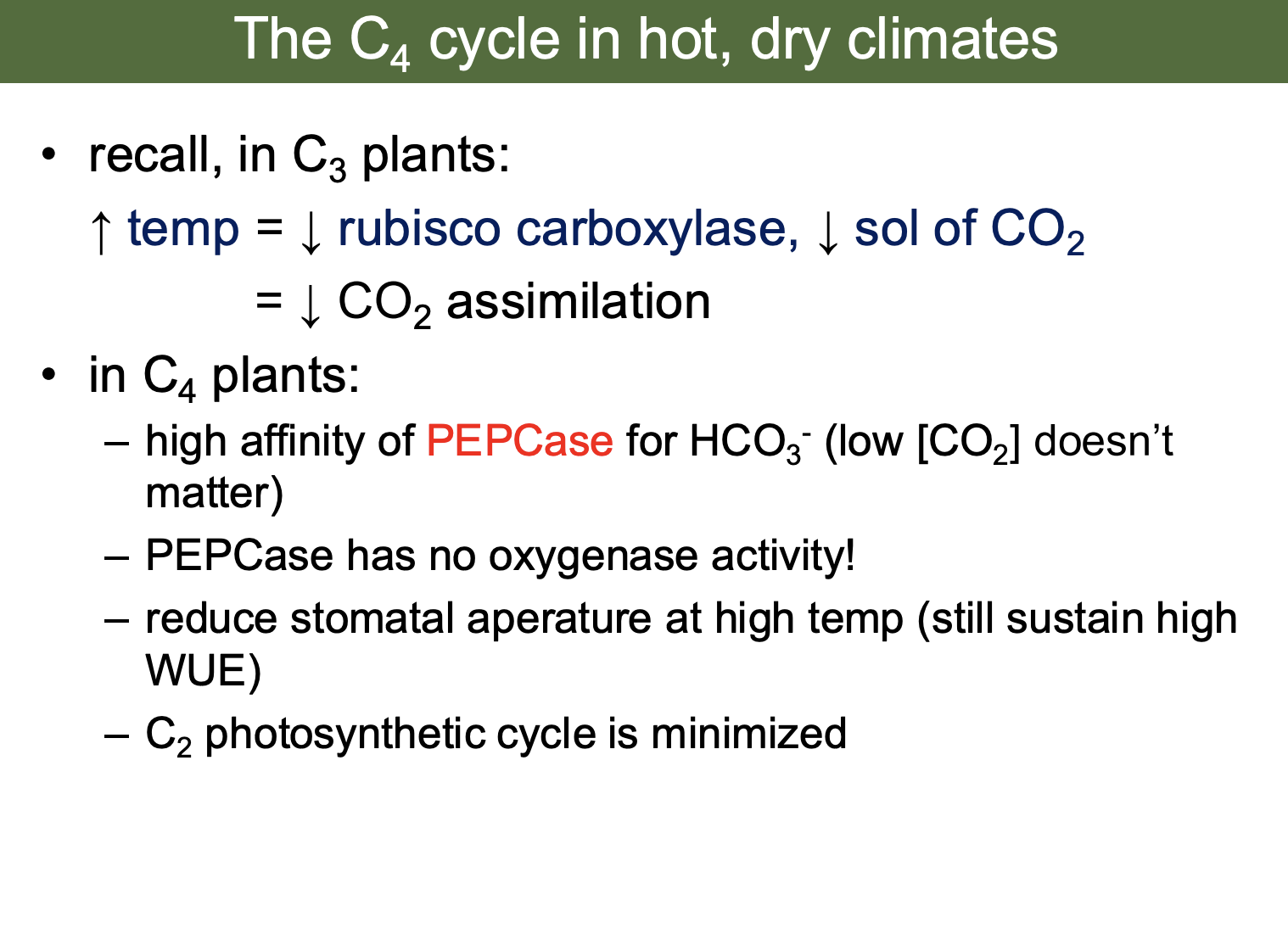
C₄ Plants – Water-Use Efficiency and Environmental Adaptation
Environmental preference: C₄ plants are common in hotter and sometimes drier environments because their photosynthesis pathway is more water-efficient.
Water-use efficiency (WUE):
PEP carboxylase captures CO₂ efficiently, so stomata do not need to stay open as long or as wide.
Less open stomata → less water loss through transpiration.
Photorespiration:
PEP carboxylase does not react with O₂, and CO₂ is concentrated around RuBisCO in the bundle sheath.
Photorespiration (C₂ pathway) is greatly minimized, though not entirely eliminated.
Outcome: Higher CO₂ fixation efficiency per water lost, making C₄ plants better suited to high light, hot, and dry conditions.
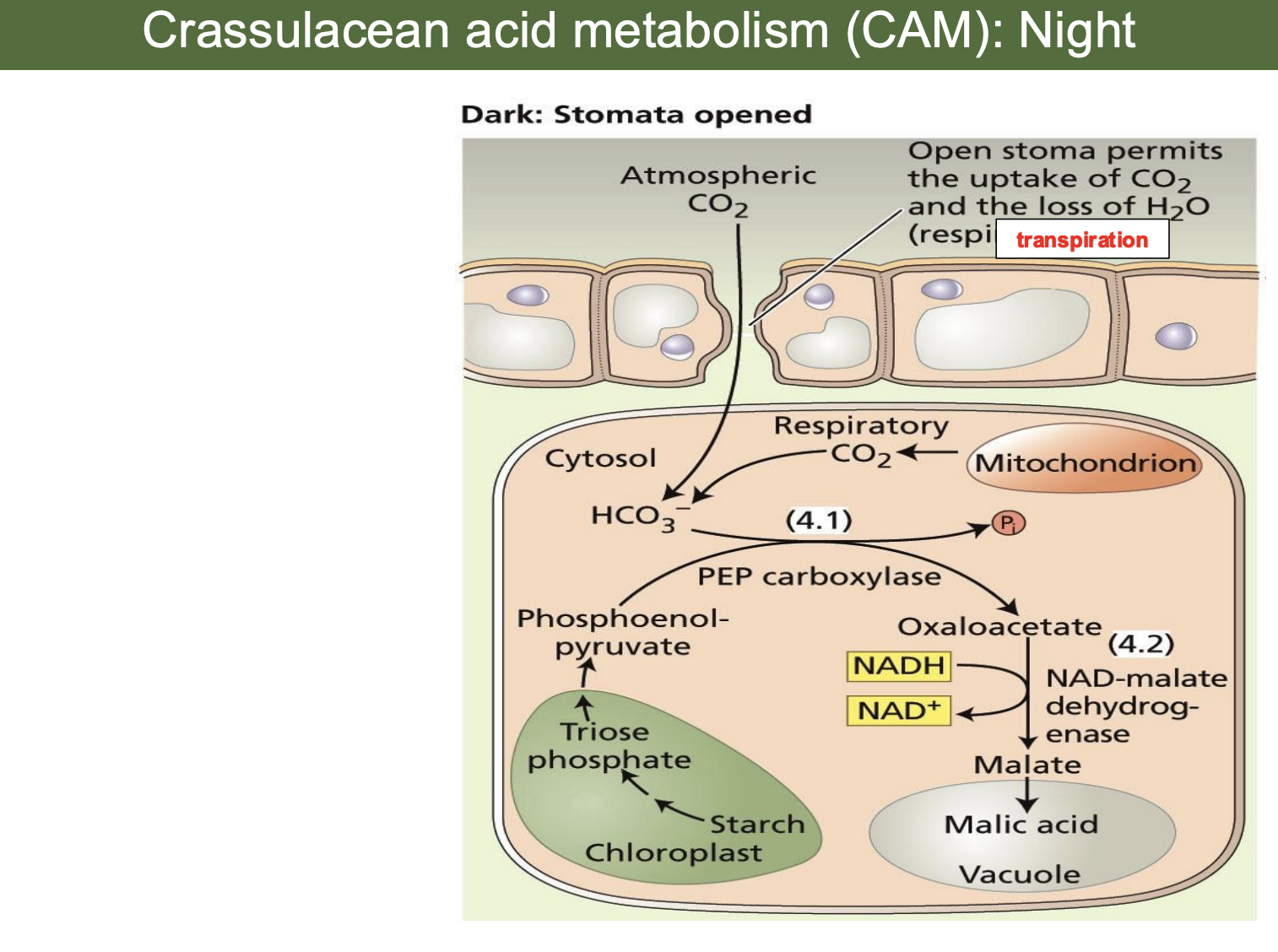
CAM Photosynthesis – Temporal Carbon Concentration
Environmental adaptation: Common in succulents and desert plants, where daytime temperatures are high and water loss risk is severe.
Carbon fixation at night:
Stomata open at night, when it is cooler and humid, minimizing water loss.
CO₂ enters the cell and is fixed by PEP carboxylase into a four-carbon organic acid (usually malate or oxaloacetate).
The four-carbon compound is stored in the vacuole overnight.
CO₂ release during the day:
During daylight, stomata close to conserve water.
Stored four-carbon compounds are decarboxylated, releasing CO₂ near RuBisCO in the chloroplast.
RuBisCO then operates efficiently under high CO₂ conditions, minimizing photorespiration.
Water-use efficiency:
CAM plants have very high water-use efficiency because most CO₂ uptake occurs at night.
This temporal separation of CO₂ capture and the Calvin–Benson cycle allows survival in arid, hot environments.
Principle: Like C₄ plants, CAM plants are performing a carbon concentration mechanism, but using temporal rather than spatial separation.
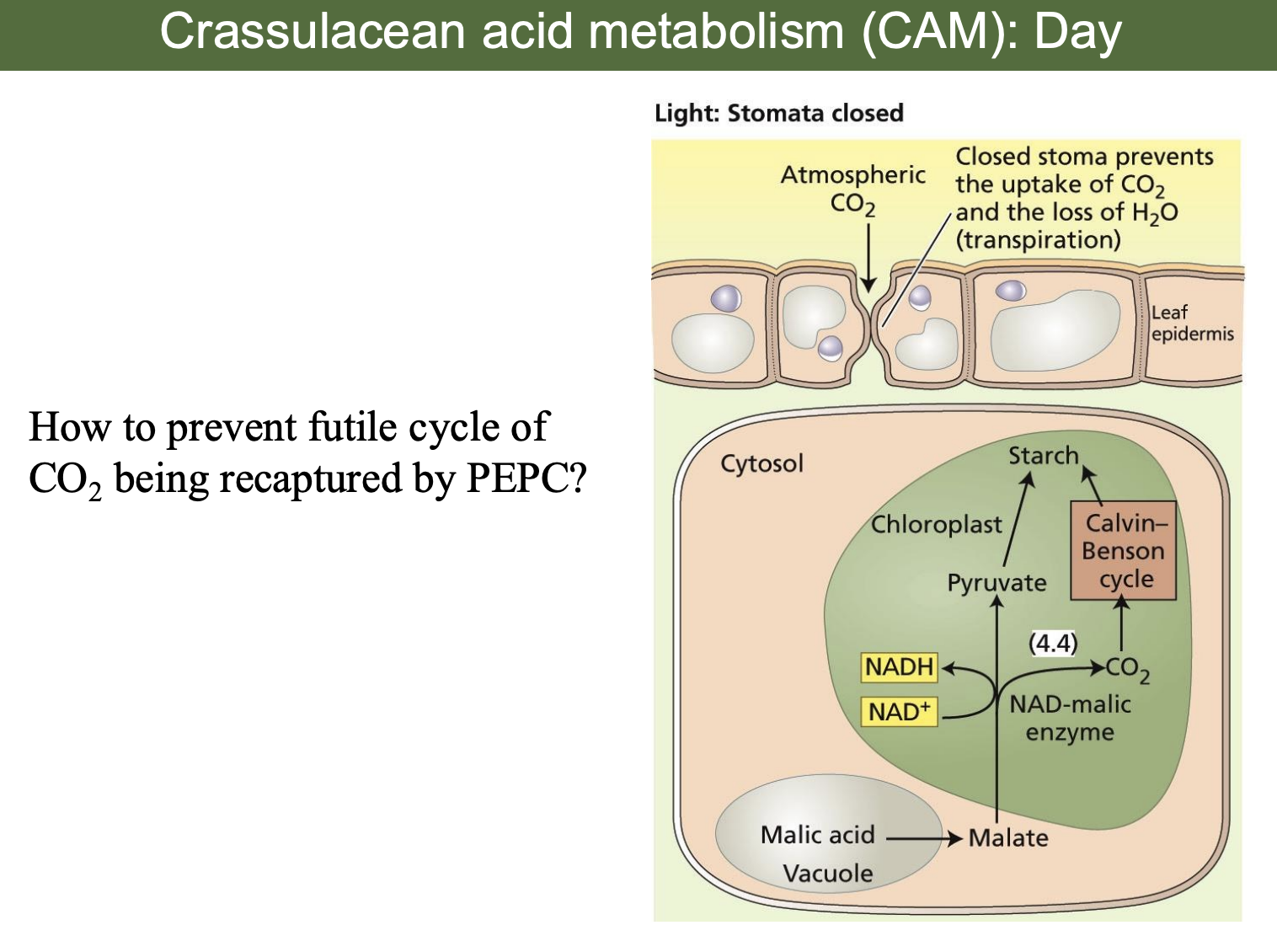
CAM Photosynthesis – Daytime Phase
Stomata closed:
During the day, stomata remain closed to conserve water.
CO₂ release from stored organic acids:
The four-carbon organic acids stored in vacuoles overnight are decarboxylated, releasing CO₂.
This CO₂ is concentrated near RuBisCO in the chloroplast stroma, just like in C₄ plants.
Result: high local CO₂ concentration minimizes photorespiration during the Calvin–Benson cycle.
Temporal regulation of PEP carboxylase:
PEP carboxylase is inactivated during the day to prevent futile cycles (re-fixing CO₂ already released from organic acids).
This regulation is achieved primarily via post-translational modification (PTM), such as phosphorylation, and possibly some transcriptional control.
Role of Phosphorylation in Metabolic Pathways
Trapping intermediates:
Phosphorylation adds negative charges, preventing metabolites from diffusing across membranes (e.g., chloroplast or cytosol).
Energetic priming:
Phosphorylated compounds are poised for downstream reactions, effectively raising their biochemical potential.
Enzyme specificity:
Enzymes can distinguish phosphorylated from non-phosphorylated forms, providing regulatory control over metabolic flux.
Lecture 2
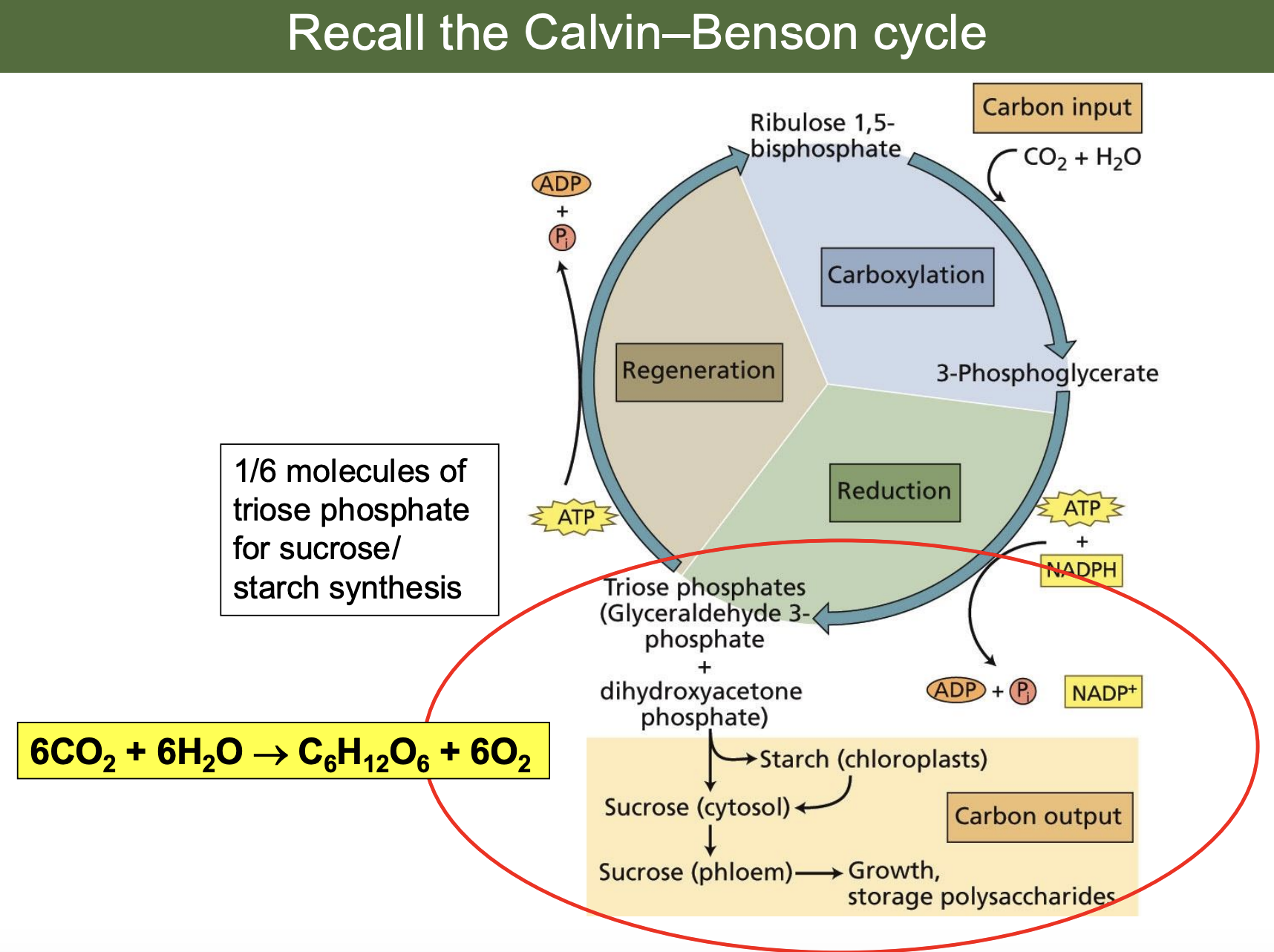
Life depends on atmospheric CO2 and there conversion to organic molecules so cells can use it. but the problem is that co2 comes in as +4 but we used +2 in sugars meaning co2 needs to be reduced (endergonic) but that cost energy and so we use light captured and stored ATP and NADPH in the calvin benson cycle. the cycle happens in the chloroplast stroma and its found in many prokaryotes and all photosynthesising eukaryotes. so the goal of the calvin cycle are :
fixes inorganic CO2 and lowers oxudation state
it will produce triose phosphate (a 3 carbon sugar)
Carboxylation ( CO2 Fixation)
in this stage the CO2 is attached to a carbon skeleton. CO2 and H2O will react with RuBP (thisreaction is catalysed by rubisco) and ultimatly makes two molecules of 3-PGA.
Reduction
in this stage the carbon is chemically reduced using light reactions. so we use ATP to phosphoralyte 3 - PGA to form 1,3 Bisphosphoglycerate and NADPH will reduce that to make G3P (can be used to make starch)
At this point the cycle runs three time the 3 RuBP makes 15 carbons, 3 CO2 makes 3 carbons and so in total we have 18 carbon. and out of 6 G3P molecules 1 leaves the cycle for fixed carbon and the rest stay for RuBP. in this process we use 6 NADPH and 9ATP
regeneration of RuBp
in this stage we replenish the CO2 acceptor so the triose phosphate are rearranged it involves a 10 enzyme catalyzed reaction and ATP is required just to recreate RuBP so CO2 fixation can continue.
Triose phosphates are converted starches in the chloroplast and they are exported to the cytosol to make sucrose
an induction period is when leaves are in the dark/night and so the calvin cycle is inactive
Gene expression and protein synthesis controls how much enzymes exist in the chloroplast
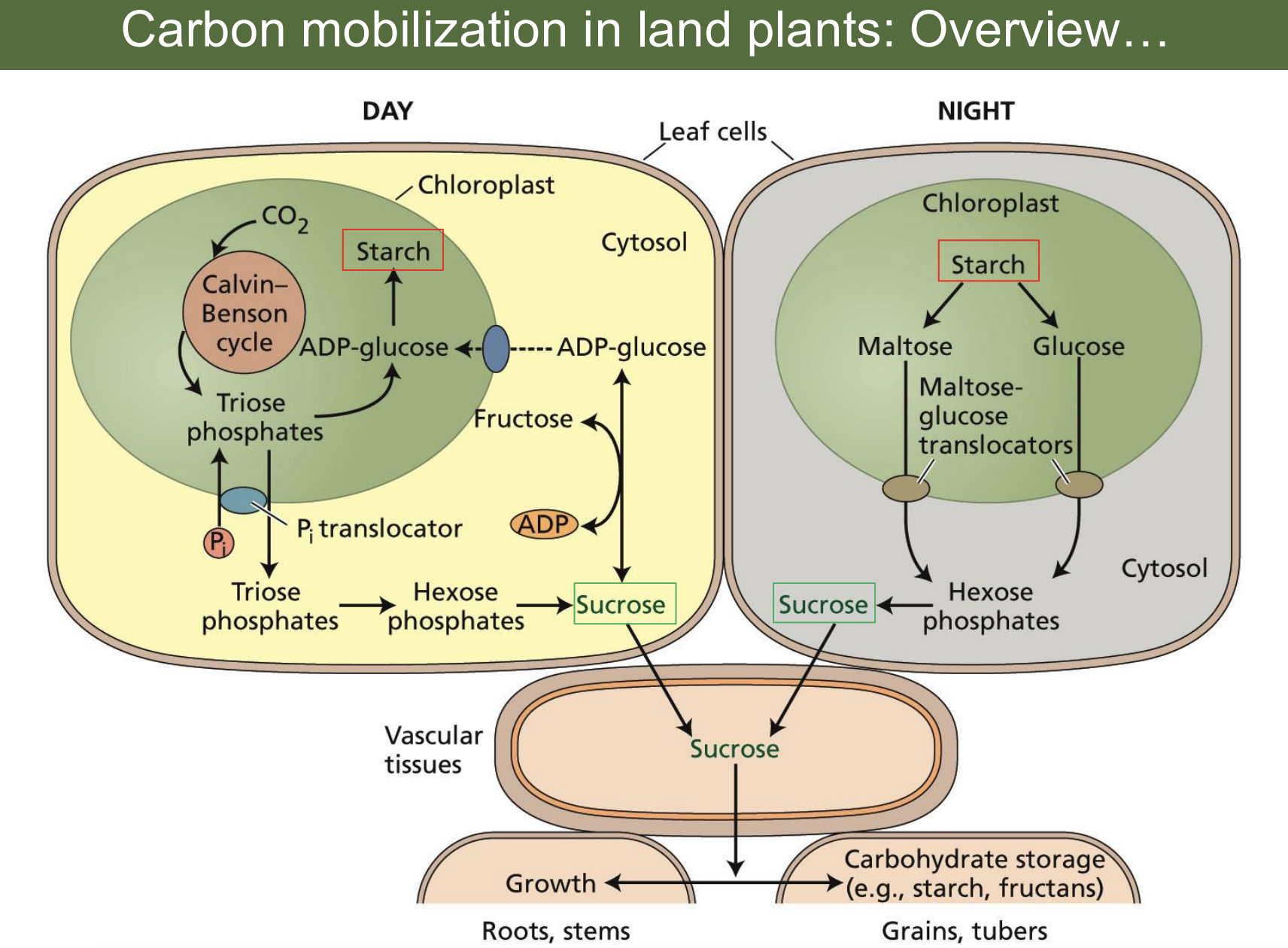
land plants cant photosynthesize at night so they store carbon in the day to mobilize at night and they move in sectiosn between starch and sucrose to keep carbon supply continous.
starch synthesis
the triose phosphate converts to hexose phosphate that is then converted to ADP glucose and that is used as a glucose donor for starch synthesis and that accumulates in the chloroplast
Sucrose synthesis
triose phosphates are exported from chloroplast and used in the cytosol to make sucrose (main transport of sugar)
transport across the chloroplast is important and we use triose phospjhate and phosphate translocators during the say and maltose and glucose transporters at night and they transport carbon phophate balance and are information links. at night the chloroplast starch is broken down and that produces maltose and glucose this exits the chloroplast and enters the hexose phosphate pool to be converted to sucrose. starch levels increase during the day and are reduced at night (called transitory starch
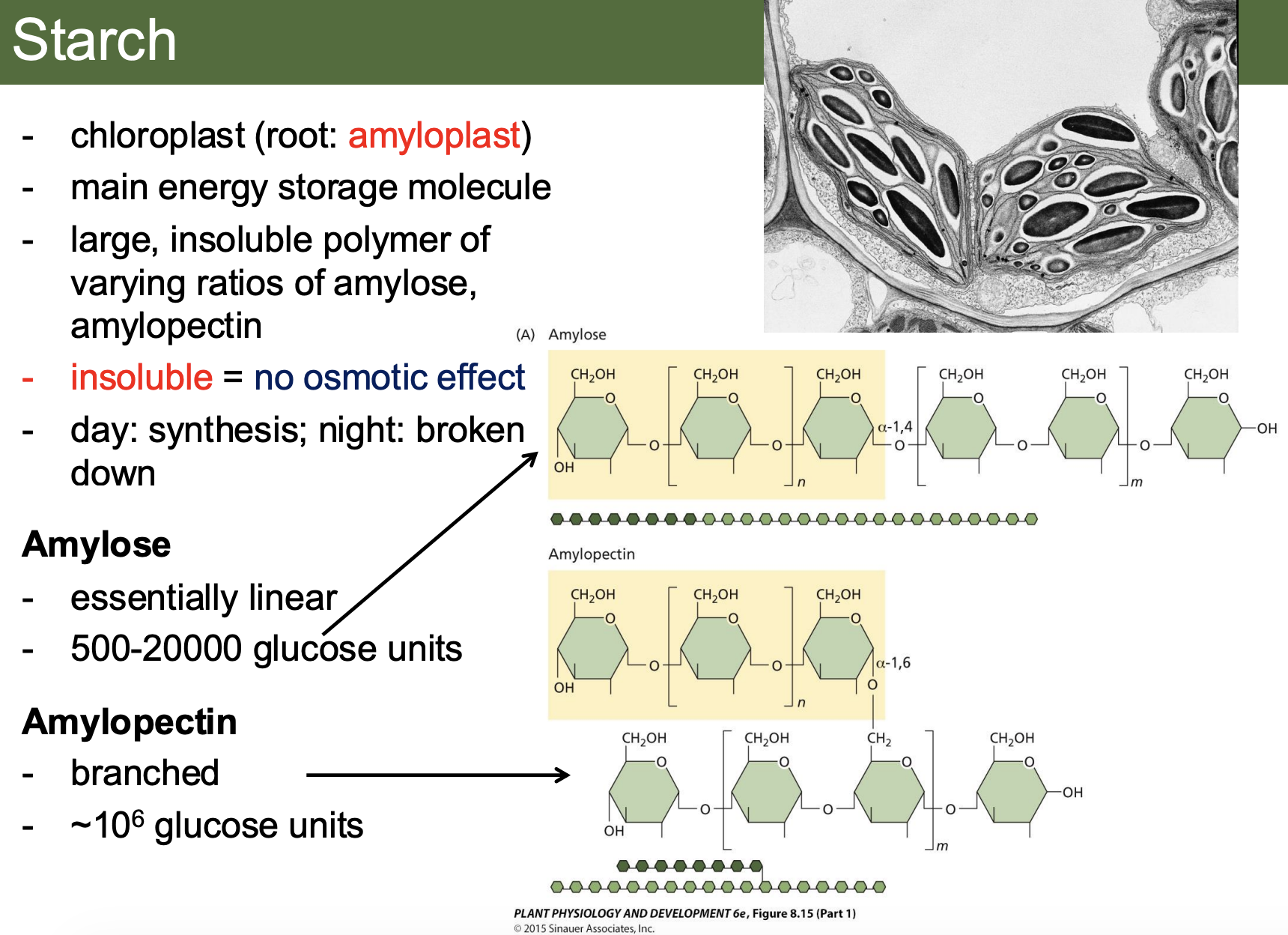
in photosynthetic tissues the starch is stored in chloroplast but in non photosynthetic tissues like roots and seeds the starch is stored in the amyloplasts (specialised plastids for starch.
starch is the primary carbohydrate reserve and it stores excess carbon during photosynthesis to be later broken down to support respiration,growth and sucrose export.
Starch is a mix of amylose and amylopectin molecules to be able to compact storage and control the accessibility.
starch is insoluable in water so it will not have an effect on osmotic pressure . plants can also store alot of glucose without havoing water gush into the cell and having the cell burst and thats why plants use starch as storage and not glucose.
during the day plants do calvin benson cycle to produse triose phosphates and creates excess carbon to be stored in chloroplast to prepare for night and at night when there is no photosynthesis the starch is degraded and it produces maltose and glucose to make sucrose to be able to breathe.
Amylose - is a linear molecule linked by 1.4 glycosidic bonds that from long unbrached chains althought they do coil into helical structures. they are large units but they can compact the packing (creating density) and reduce starch solubility
Amylopectin - has a backbone of 1,4 bonds and has branch points of 1,6. it is an enormous molecule that make up 70% to 80% of starch. branching is important since multiple enzymes can work at the same time on different ends. this allows fast synthesis during the day anf fast degration at night
Photo - starch granules inside plastids? granules are dense insoluble and visible storages
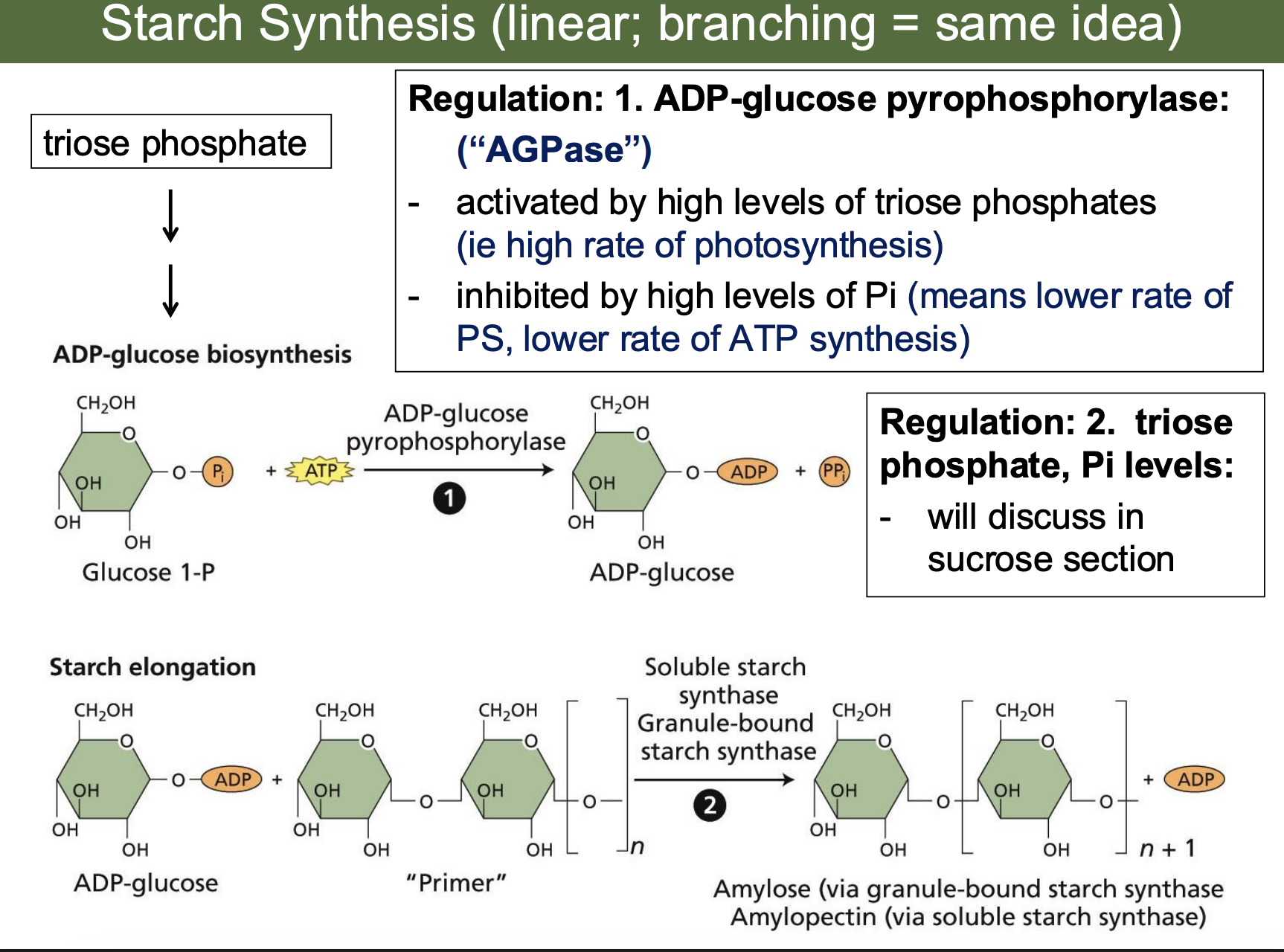
remember the calvin cycle uses ATP and NADPH from light reactions to fix CO2 —> triose phosphates to make starch or sucrose
it happens in the stroma and for this process we use CO2,ATP,NADPH and it will create triose phosphate,ADP,NADP+
this image bridged between the calvin cycle and what starch does and where it goes. so the calvin cycle produces a bucnh of G3P and that turns into glucose 1 phosphate to ADP glucose into starch. the high triose phosphate (photosynthesis running fast) will activate AGPase and this controlls whether carbon gets stored as a starch
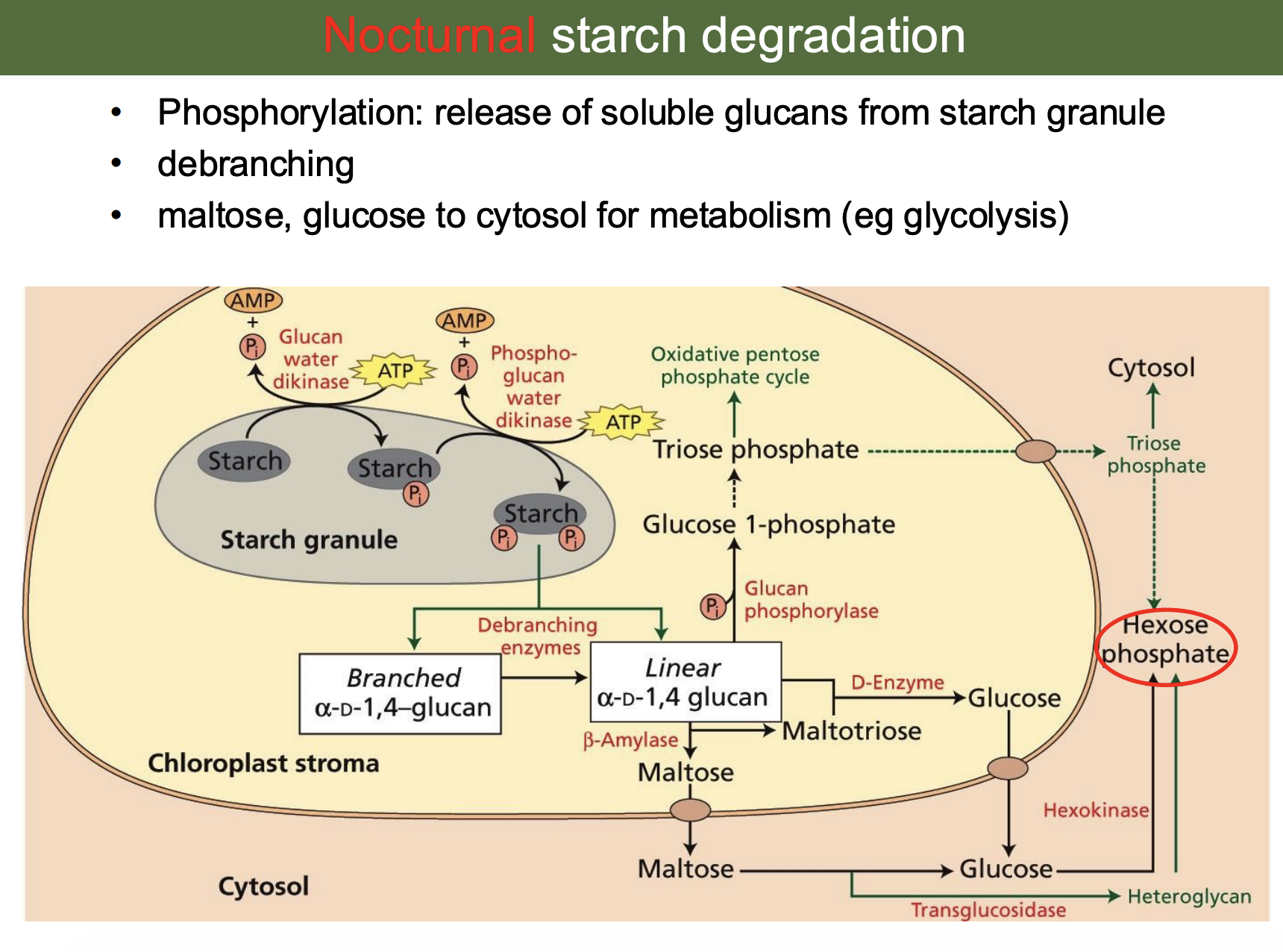
remember during the day plants make more and store starch in chloroplast and they break down that starch at night to keep metabolisim going.
starch granule are insoluable and tightly packed so basicly two enzymes glucan water dikinase and phosphoglucan water dikinase use ATPto add phosphate to the glucose units in starch . this matters cause the phosphoralation loosense the starch structure to expose chains and makes it more accessible to degrade enzymes.
branches starch (amylopectin) is harder to break down so we debranch them and after that the linear chain can be chopped up and they use beta amylase (relase maltose),glucan phosphorylase (glucose 1 phosphate), and D enzyme (rearange maltotriose to glucose and glucans. the maltose and glucose get exported to the cytosol and when it gets there glucose becomes hexokinase and then hexose phosphatethat then enters glycolysis or in other metabolic pathways. hexose phaspahte can be used as a currency for nightime metabolisim as it feeds glycolysis and maintain ATP production.
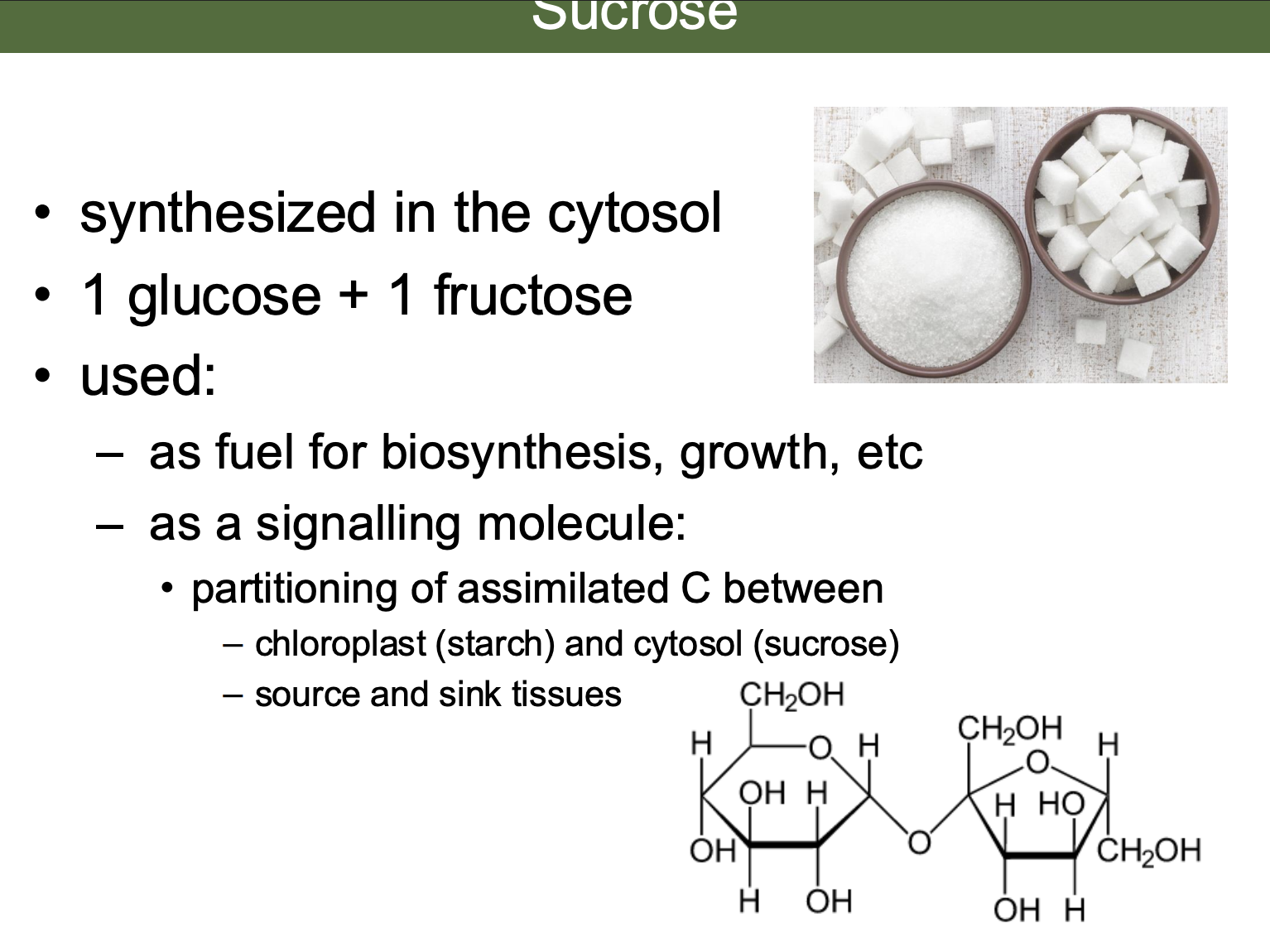
Sucrose is a disaccharide that is made from 1 glucose and one frustoce and they are linked by a glycosidic bond. the sucrose is made in the cytosol. and sucrose is used for energy building meaning it fuels biosynthesis anf general metabolisim and can be broken down to provide energy when its needed. it also used as a signaling molecule to help assimilate carbon and allocats it to chloroplast and cytosol it help determine soucre tissues(mature leaves) and sink tissues (roots,seeds)
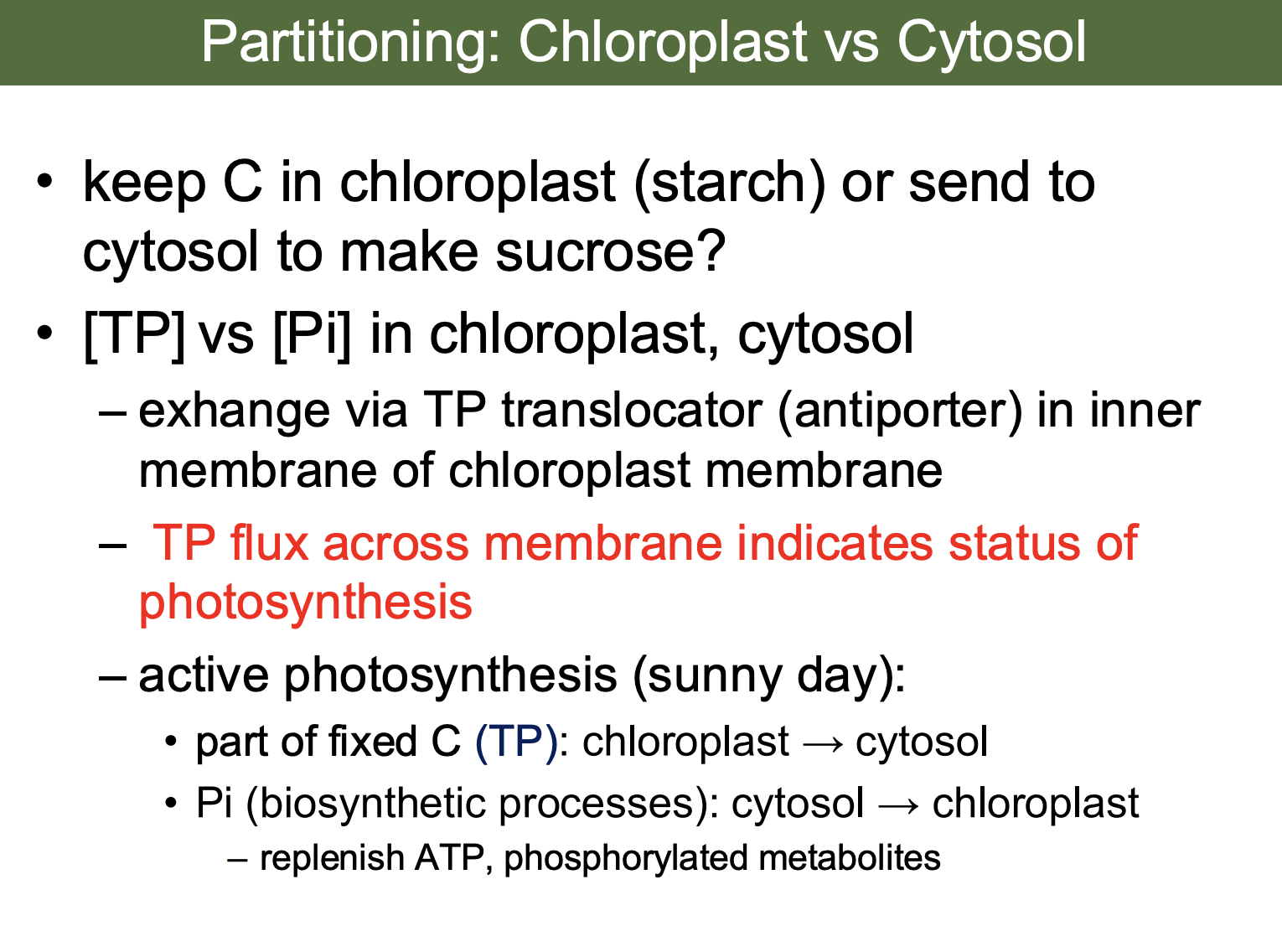
tp and Pi tranlocator are located ion the inner chloroplast and work as an antiporter so TP is out and Pi is in and no ATP is required as its driven by concentration gradients.
during the day (active photosynthesis) insoide the chloroplast the calvin cycle runs fast and produces alot of TP it is then exported to the cytosol to make sucrose and supplies carbon to the sink tissues. Pi is imprted into the chloroplast and comes from the cytosolic biosynthesis and it needs to regenerate ATP and maintain phosphorylated intermediates.
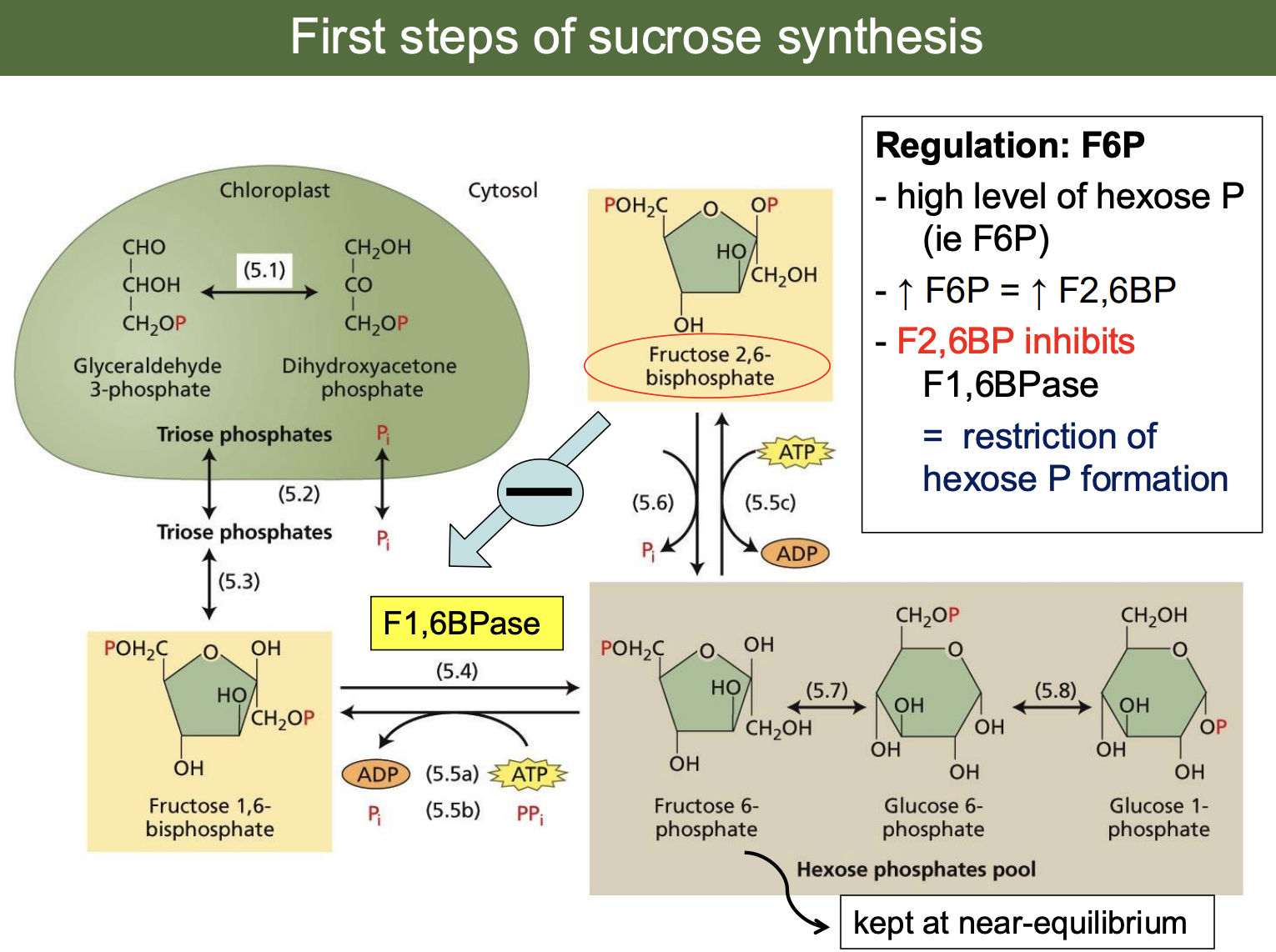
triose phosphate is exported into the cytosol by the TP/Pi tranlator
GAP and DHAP (from TP) is made into fructose 1,6 biphosphate and that will convert to fructose 6 phosphate and Pi
when hexose P levels become high it will inhibit 1,6 biphosphate resulting in a restriction of sucrose synthesis
this matters because then we have no overaccumulation of sucrose, depletion of triose P and metabolic imbalences of sucrose starch respiration and biosynthesis
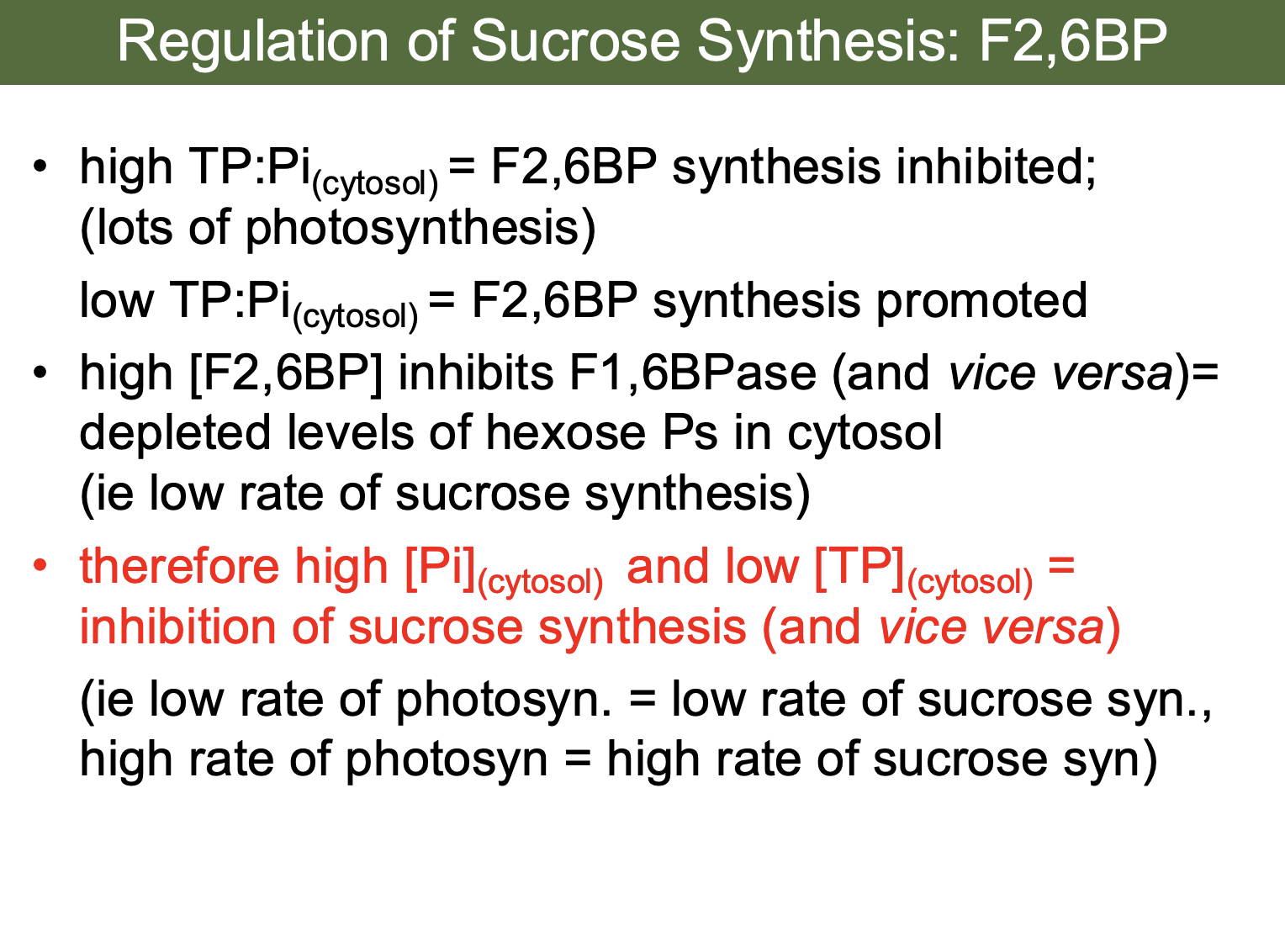
Fructose 2,6 biphosphate is a cytosolic signal to coordinate photosynthesis rate and sucrose synthesis rate and this is done by regulating cytosolic fructose 1,6 biphosphate which is required to make sucrose.
TP (triose phosphate) comes from the chloroplast (Calvin cycle)
Pi (inorganic phosphate) goes back into the chloroplast
in high photosynthesis lots of TP exported → high TP:Pi and F2,6BP synthesis is inhibited in low photosynthesis little TP exported → low TP:Pi an F2,6BP synthesis is promoted
alot of F2,6BP inhibits cytosolic FBPase meaning there are fewer hexose phosphates meaning less sucrose synthesis.
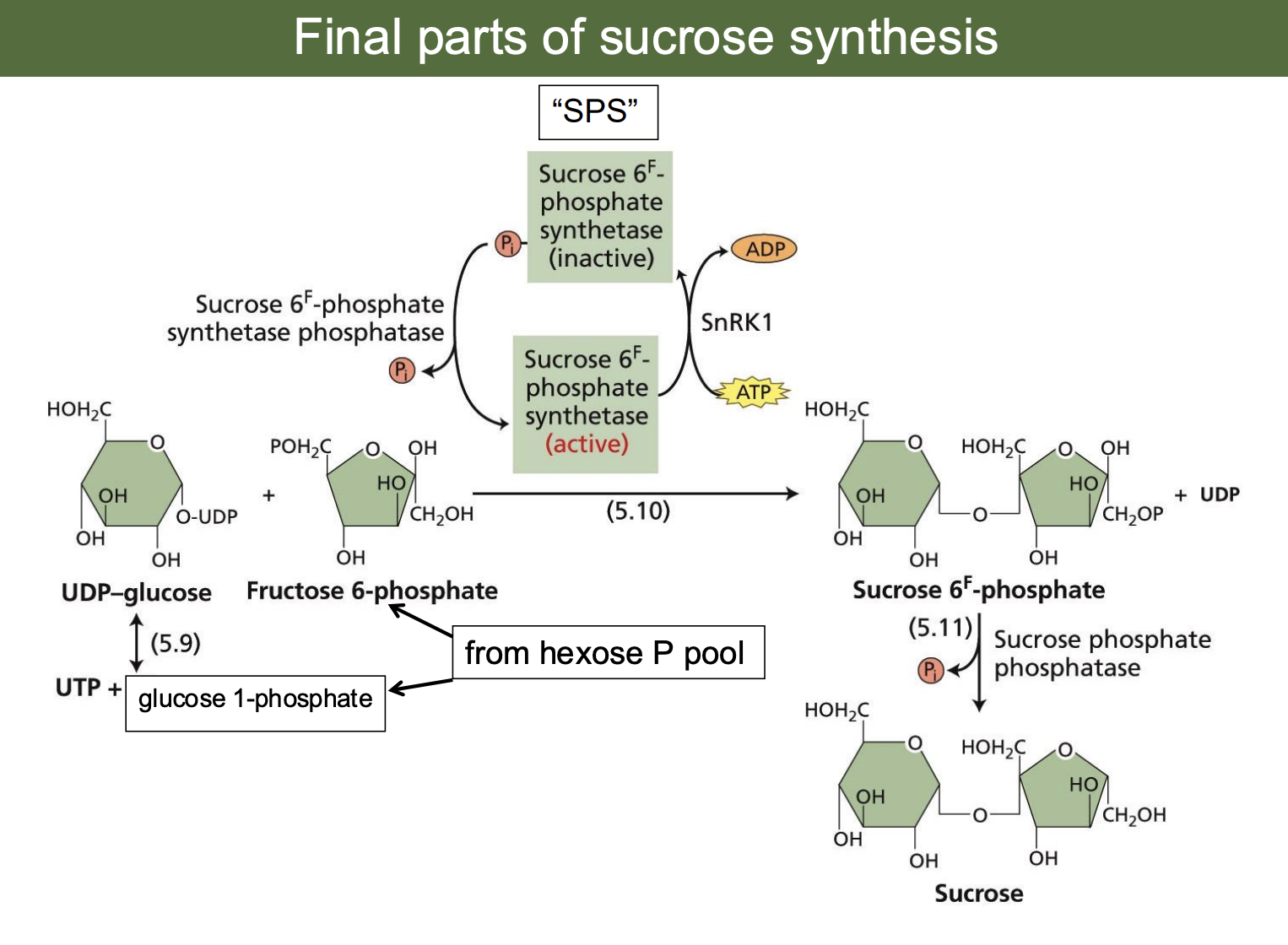
SPS is the sucrose phosphate synthase UDP-glucose (comes from glucose-1-phosphate + UTP) + fructose-6-phosphate (comes from cytosolic hexose-P pool) → sucrose-6′-phosphate + UDP
This step is rate-limiting and highly regulated
Sucrose-6′-phosphate → sucrose + Pi
regulation of SPS has two kinds
inactive - SPS is phosphoralated by SnRK1 and uses ATP this happens when energy or carbon is low and sucross synthesis is turned off
Active - SPS is dephosphoralated and the sucrose - phosphate synthase phosphatase remouves Pi and this happens when carbon is abundant and sucrose synthesis is turned on
SPS regulation works with F2,6BP to control upstream
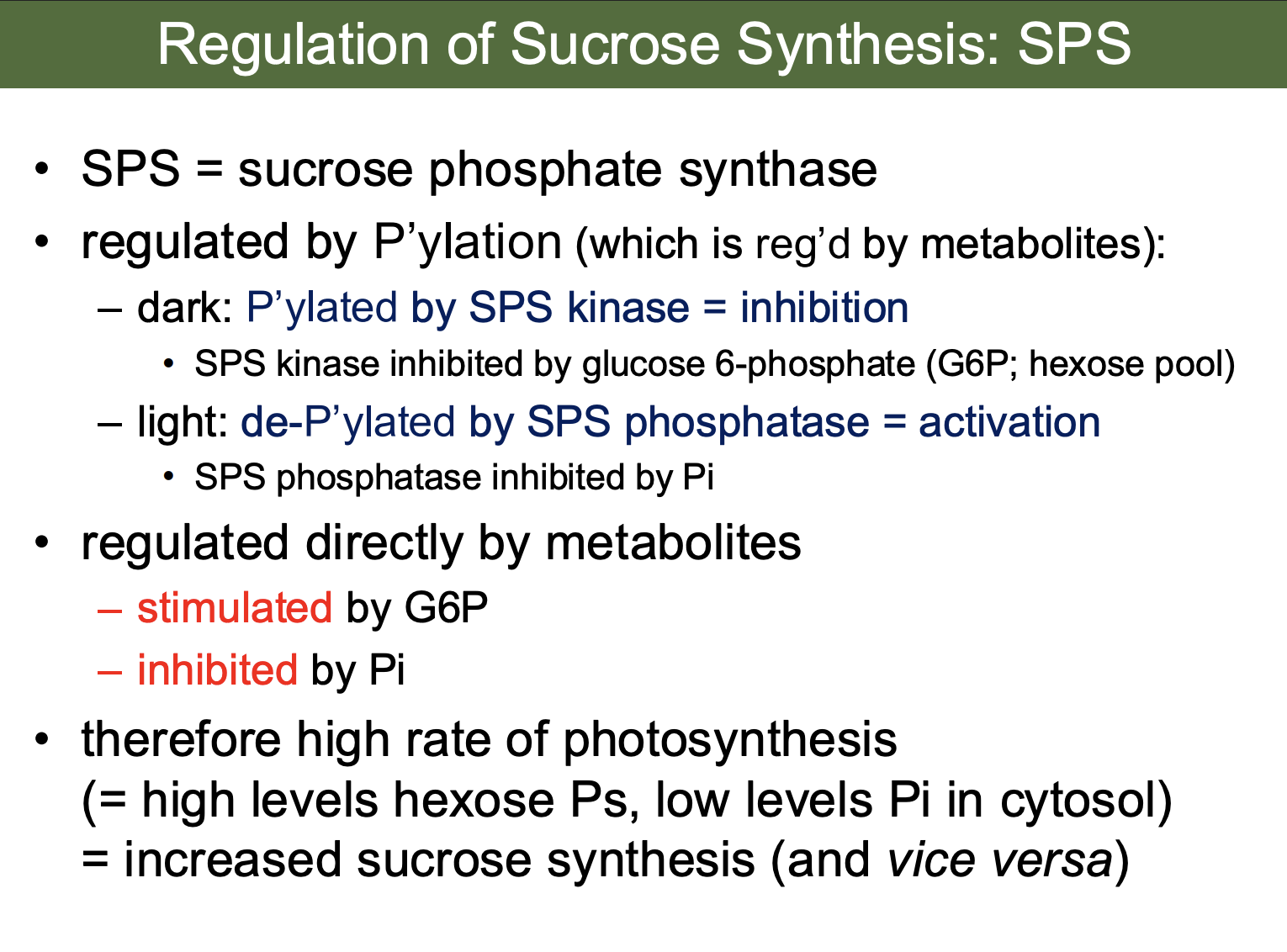
in dark conditions SPS is off and this is phosphoralated by SPS kinase and so in this case it would be inactive because photosynthesis is low hexose levels are low Pi is kinda high also SPS kinase is inhibited by G6P and in the dark G6P is low when kinase still remains active so SPS stays phosphorylated.
in light SPS is on SPS is dephosphorylated by SPS phosphatase dephosphorylated SPS = active. because photosynthesis is high hexose P is high and cytosolic P is low.
SPS can also be regulated allosterically as it will be stimulated by G6P so metabolites can double kinase and phosphate control and act directly on SPS
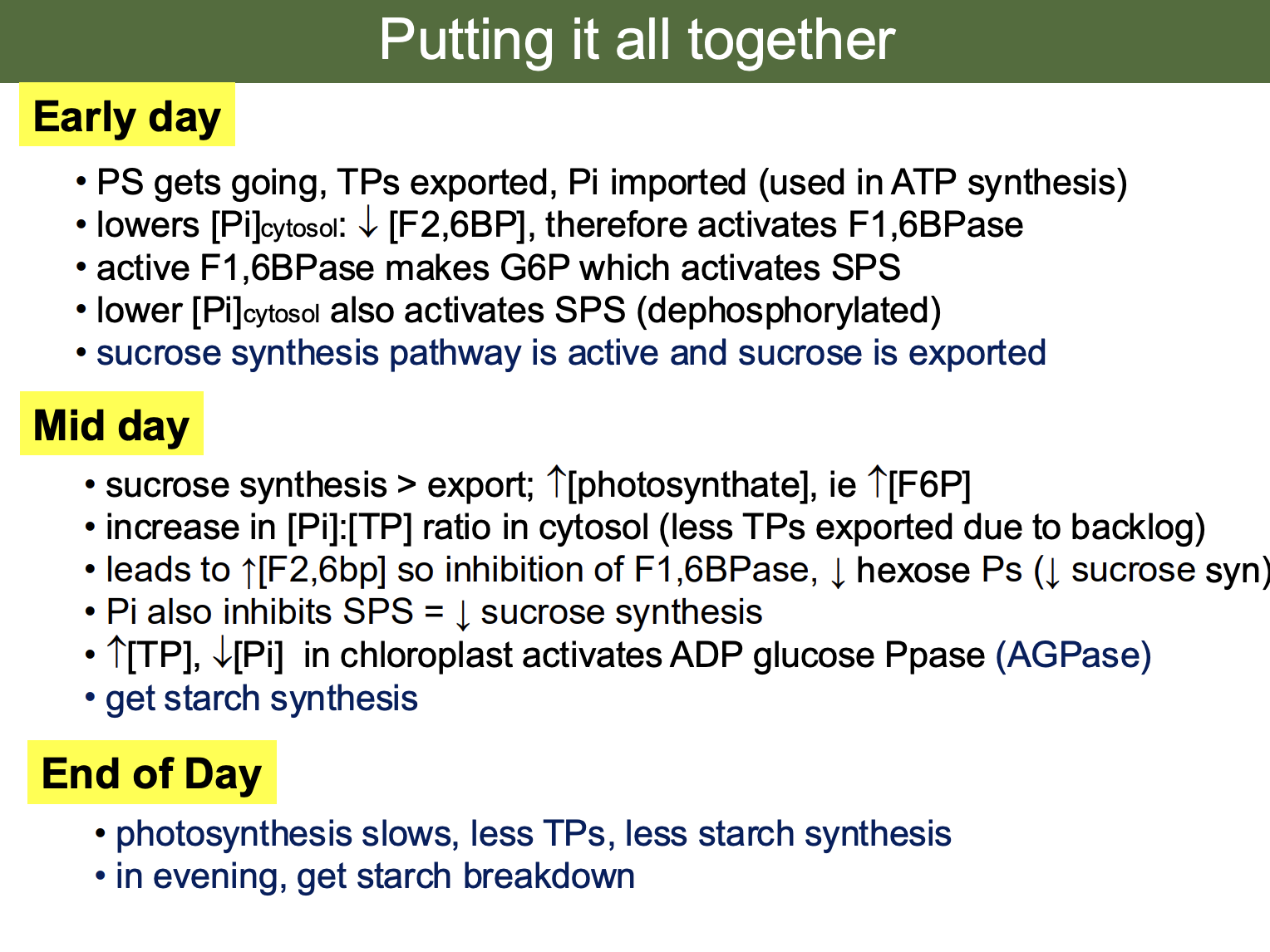
in the early day
Photosynthesis turns on
Triose phosphates (TPs) are exported to the cytosol
Pi is imported into the chloroplast for ATP synthesis
→ cytosolic Pi drops
↓ Pi → ↓ F2,6BP, ↓ F2,6BP → F1,6BPase activated, F1,6BPase → ↑ hexose-P (esp. G6P)
G6P + low Pi: allosterically activates SPS favors SPS dephosphorylation
Sucrose synthesis ON,ucrose exported to sinks
Mid day
Photosynthesis is very high
Sucrose synthesis can’t keep up with TP production
Cytosolic TP export backs up
Pi:TP ratio in cytosol increases
↑ Pi:TP → ↑ F2,6BP ↑ F2,6BP → inhibits F1,6BPase ↓ hexose-P → ↓ sucrose synthesis Pi directly inhibits SPS
Chloroplast response : ↑ TP and ↓ Pi inside chloroplast, This activates AGPase, → starch synthesis increases
Carbon is diverted from sucrose → starch
end of day
Light decreases
Photosynthesis slows
TP production falls
Starch synthesis decreases
Stored starch is broken down, Carbon is exported (as sucrose/maltose) to sustain metabolism
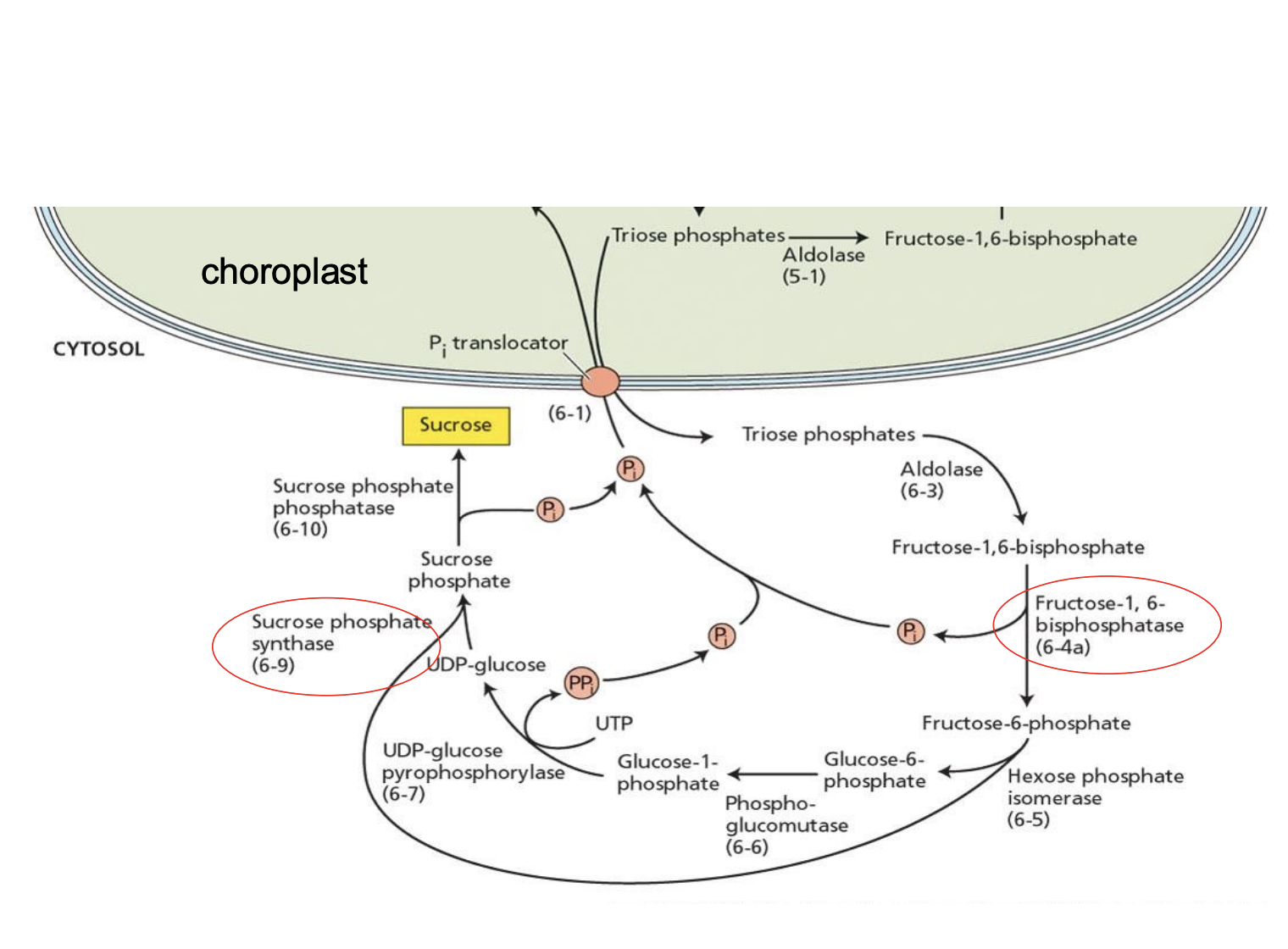
UDP-glucose + Fructose-6-phosphate → Sucrose-6-phosphate (left circle)
this step is a rate-limiting and committing step to sucrose and once carbon passes SPS, it’s basically destined for expor.
it regulated because SPS integrates Carbon availability,Energy status,and Light conditions
and activated by G6P and when dephosphorylated (light)
Fructose-1,6-bisphosphate → Fructose-6-phosphate + Pi (right circle)
this is the step into the hexose-phosphate pool It determines whether triose phosphates get:
recycled back into metabolism or
committed to sucrose synthesis
it activated when carbon is abundan and Inhibited when carbon is limiting
When both of these gates are open sucrose synthesis can continue.
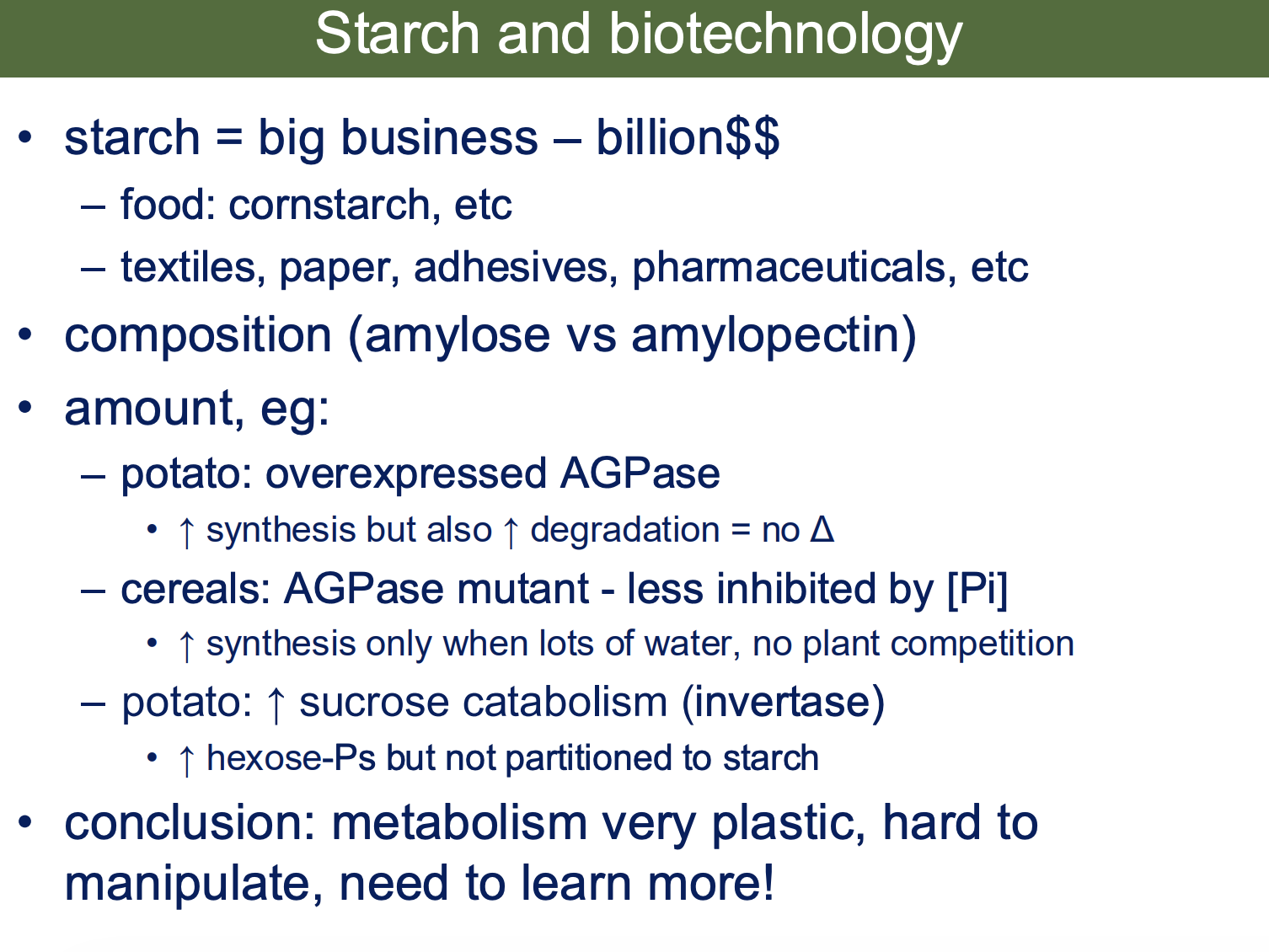
Starch is economically important (food, paper, textiles, adhesives, pharmaceuticals), so biotechnology tries to increase:
composition (amylose vs. amylopectin)
amount of starch
Potato overexpressing AGPase
AGPase (ADP-glucose pyrophosphorylase) is a key regulatory enzyme in starch synthesis.
Expectation:
↑ AGPase → ↑ starch synthesis → more starch
Observed:
Synthesis increased
But degradation also increased
Net starch amount did not change
Meaning: the plant compensates metabolically — when synthesis increases, degradation pathways may also increase to maintain balance.
Plant metabolism is plastic and highly regulated:
Changing one enzyme rarely gives the expected yield increase
Multiple regulatory and compensatory pathways adjust flux
Therefore starch biotechnology is difficult
Opening one road (one enzyme) does not guarantee more cars reach your destination (starch), because traffic lights, alternate roads, and congestion (regulation) redirect the flow.
Lecture 3
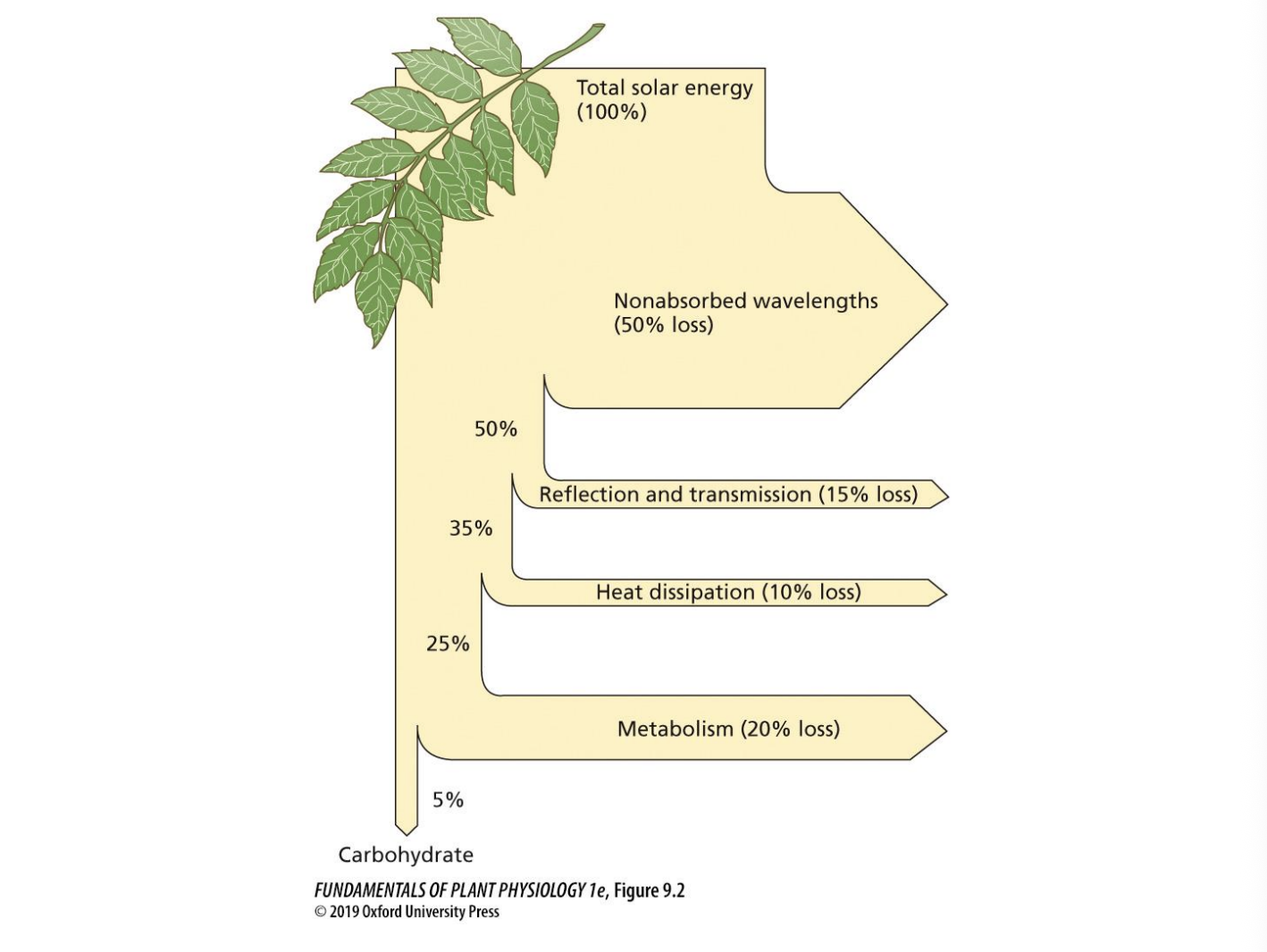
Total solar energy reaching the leaf is 100%
non absorbed wavelenghts show a 50% loss
only light in the photosynthetically active radiation (PAR) range (400-700nm) can drive photosynthesis
half of sunlight is outside the usable range of UV/infrared so 50% is immediatly usable
meaning we have 50% left is usable energy
Reflection and transmission have 15% loss
some usable light reflects off the leaf surface or passes trhouhg the leaf without being absorbed
35% is remaining
Heat dissipation has a 10% loss
part of the absorbed energy is released as heat instead of being used in photochemistry
remaining 25%
Metabolism has 20% loss
Some of the captured energy is used for cellular metabolisim and respiration. not stored sugars
5% is now remain
so only about 5% of the original solar energy ends up being storedas carbohydrates (from photosynthesis)
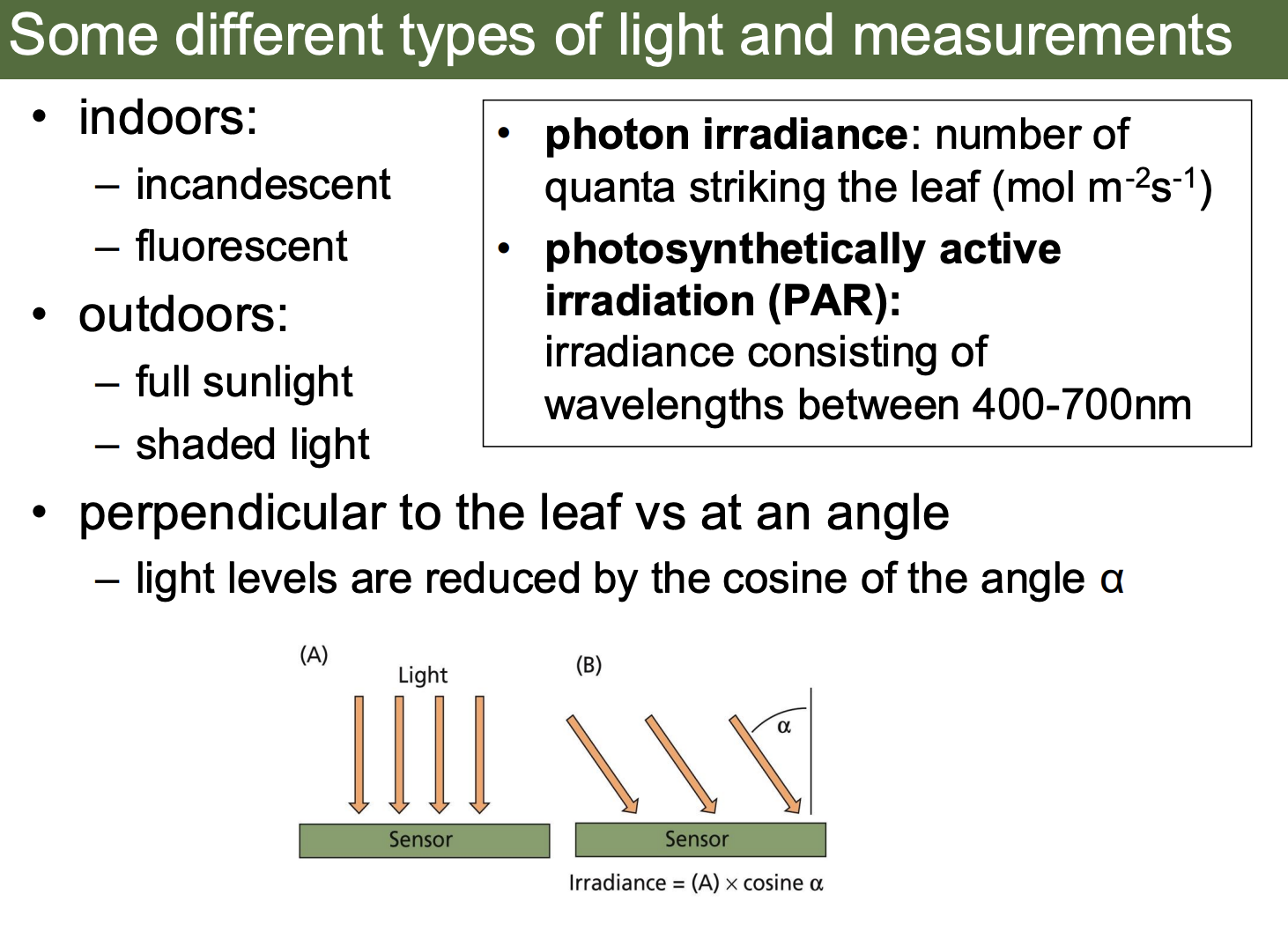
When we talk about light plants dont care about how bright it is all they care about is how usable the photons hit the leaf are. most plants science light measurement use photon numbers.
photon irradiance - this is the number of light particles (or photons) hitting a surface per unit time and area (usually use mol m^-2 s^-1 for units). we use mol because photons come in big numbers so we count them like chemicals. a quanta is the photons and saying the quanta stricking the leaf is a way of saying photon irradiance (relates to photosynthesis rate)
PAR = light usable for photosynthesis the wavelength ranges from 400-700nm this is the visible light plant actually use. UV and IR dont drive photosynthesis directly. PAR is not a light source its the definition of a wavelength range and we can measure it from sunlight,fluorescent lamps,LEDs,any source of light.
there are two kinds of indoor light mesurments
Incandescent - lost of energy wated as heat,low photon output in the useful range, bad for photosynthesis
fluorescent light - higher proton efficiency, better match to plant usable wavelengths.
There are two kinds of outdoor ligths
full sunlight - very high photon irradiance get around 1500 - 2000 μmol m⁻² s⁻¹ at midday and it has a broad an continous spectrum
Shaded light - lower photon number, spectrum is shifted, leaves adapted to shade often saturate at lower light levels.
Leaf angle matters alot. if the light is straight on we get maximum light absorption but if it at the angle the effective light is reduced. light received by the surface is reduced by the cosine of the angle (α) between the incoming light and the normal surface (straight out from the leaf) —→ Irradiance = (incoming light) × cos α. take for example at a 0° angle you get 100% light a 60° angle get you 50% light.
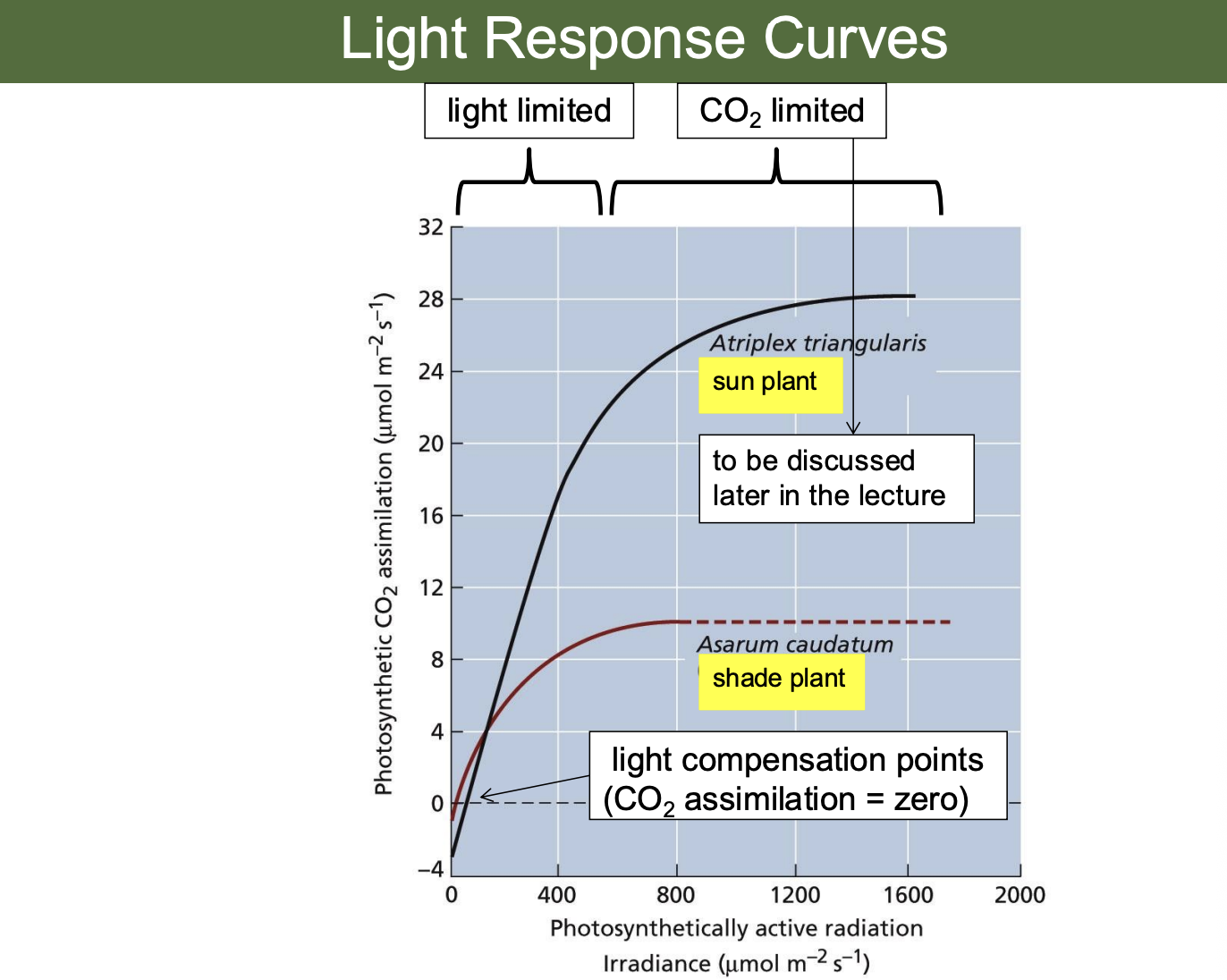
Graph explanation : the x axis is PPFD (photosynthetic photon flux density) so basicly how much usable light hits the leaf. the y axis is Net CO₂ fixation so photosynthesis - respiration when it positive = CO₂ when its negative = CO₂ is released
At low light (near darkness) photosynthesis is at 0 meaning not enough protons but mitochondrial respiration keeps going and respiration releases CO₂ so the net change is negative (the curve is below the 0 axis)
LCP is the light compensation point so the excat PPFD that increases photosynthesis increases and eventually CO₂ will be fixed and CO₂ will be released. (this is when the curve would cross the x axis)
Shade plants have lower light compensation points because they have low respiration rates so they dont lose much CO₂ in the dark. so only a small amount of photosynthesis is needed and the net CO₂ change is positive at very low light
just above the light compensation point photosynthesis increases linearly with PPFD and lihgt is a limiting factor so basicly more protons = more fixed CO₂
The slope of the linear region gives the maximum quantum yield of photosynthesis meaning the moles of CO₂ fixed per mole of photons absorbed. and the top of the curve represents photosynthesis is no longer light limited it limited by enzymes CO₂ diffusioin adn biochemical energy
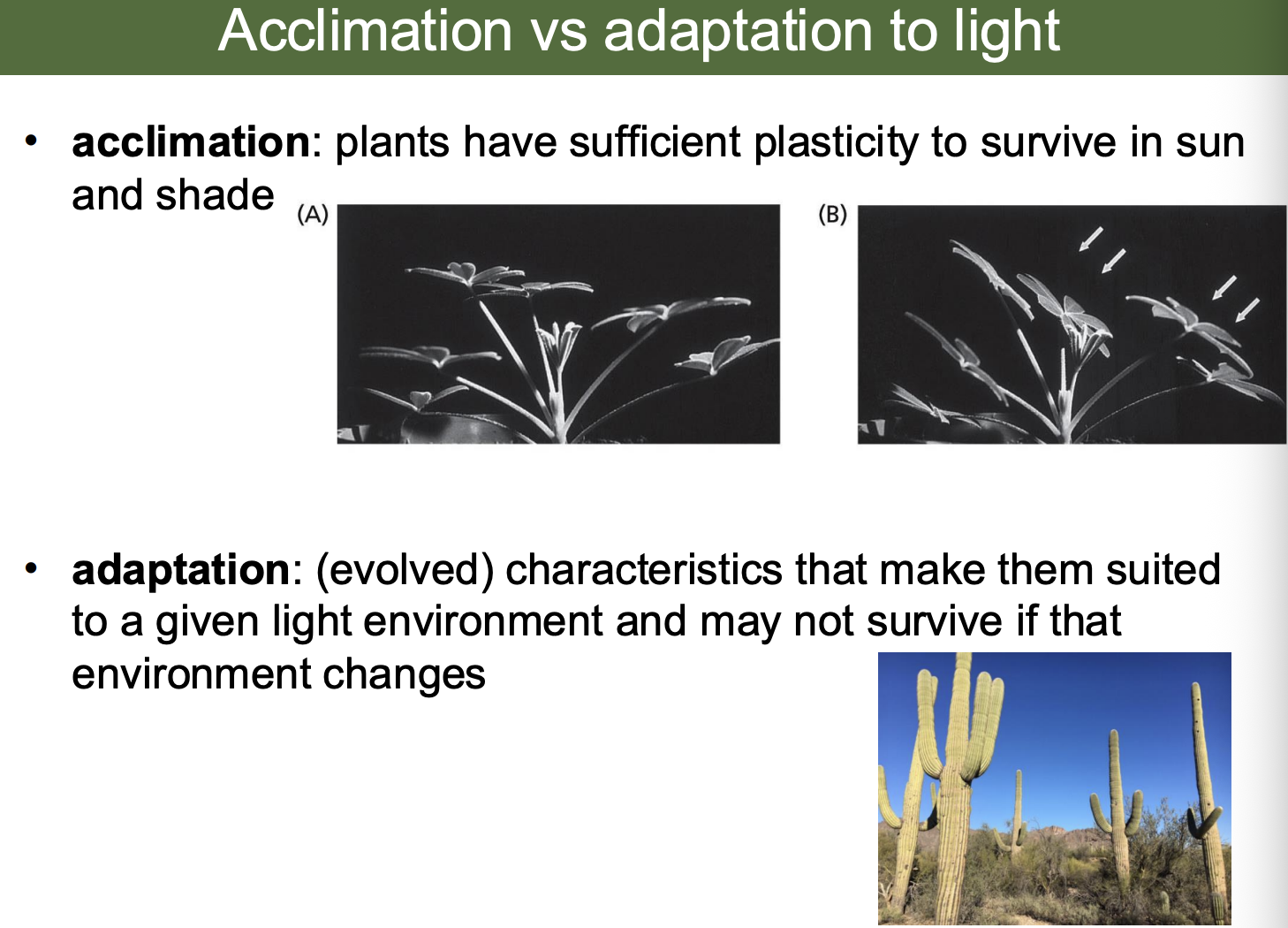
Acclimation is a developmental process in which individuals leave adjust their biochemistry,physiology,morphology to match the enviromental conditions they experience especially light. it can occure in new leaves and mature leaves. the degree to whitch the plant adjusts is determined by plasticity. that allows then to grow as sun plants and as shaded plants. this is critical cause light availability can vary in enviroments. its also affected by light qualoity noit just quantity. acclimation is a non permanent change that do not require genetic modification and can be reversed if needed
adaptation refers to the genetically fixed trait that evolve in plant population over many generations throught natural selection. so plants can evolve stable genetic adaptations that allow then to grow and reproduce
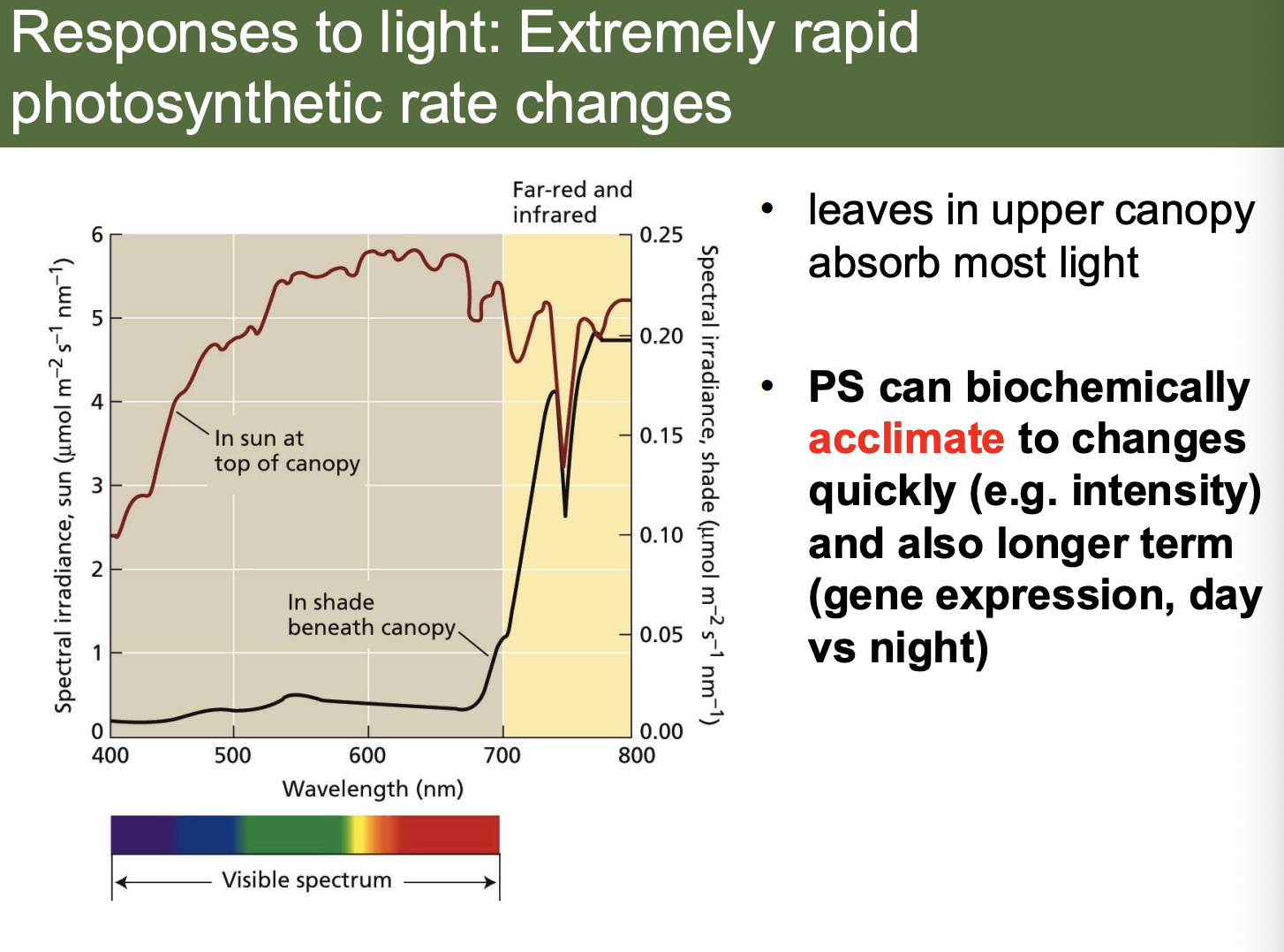
The spectral distribution and light intensity change from the top of the plant canopy to shaded regions beneath it. so at the top of the canopy leaves are exposed to full sunlight that contains high level;s of photosynthetically active radiation across the visible spectrum. as sunlihgt passes throught the canopy most PAR is absorbed by the upper leaves . under the canopy the light intensity is reduced and light quality is altered because chlorophyll strongly absorb blue and red wavelengths and wavelengths are selectively remouved by canopy leaves so sahded enviroments are relatively enriched in far red infrared wavelengths the shift in irradiance has important consequenced for photosynthesis and plant development.
Photosynthetic organisms exhibit extremely rapid biochemical responses to changes in light intensity. These rapid responses include adjustments in electron transport rates and energy dissipation mechanisms that allow photosynthesis to respond within seconds.plants also undergo longer-term acclimation, involving changes in gene expression, enzyme content, and leaf structure and can differ between day and night.
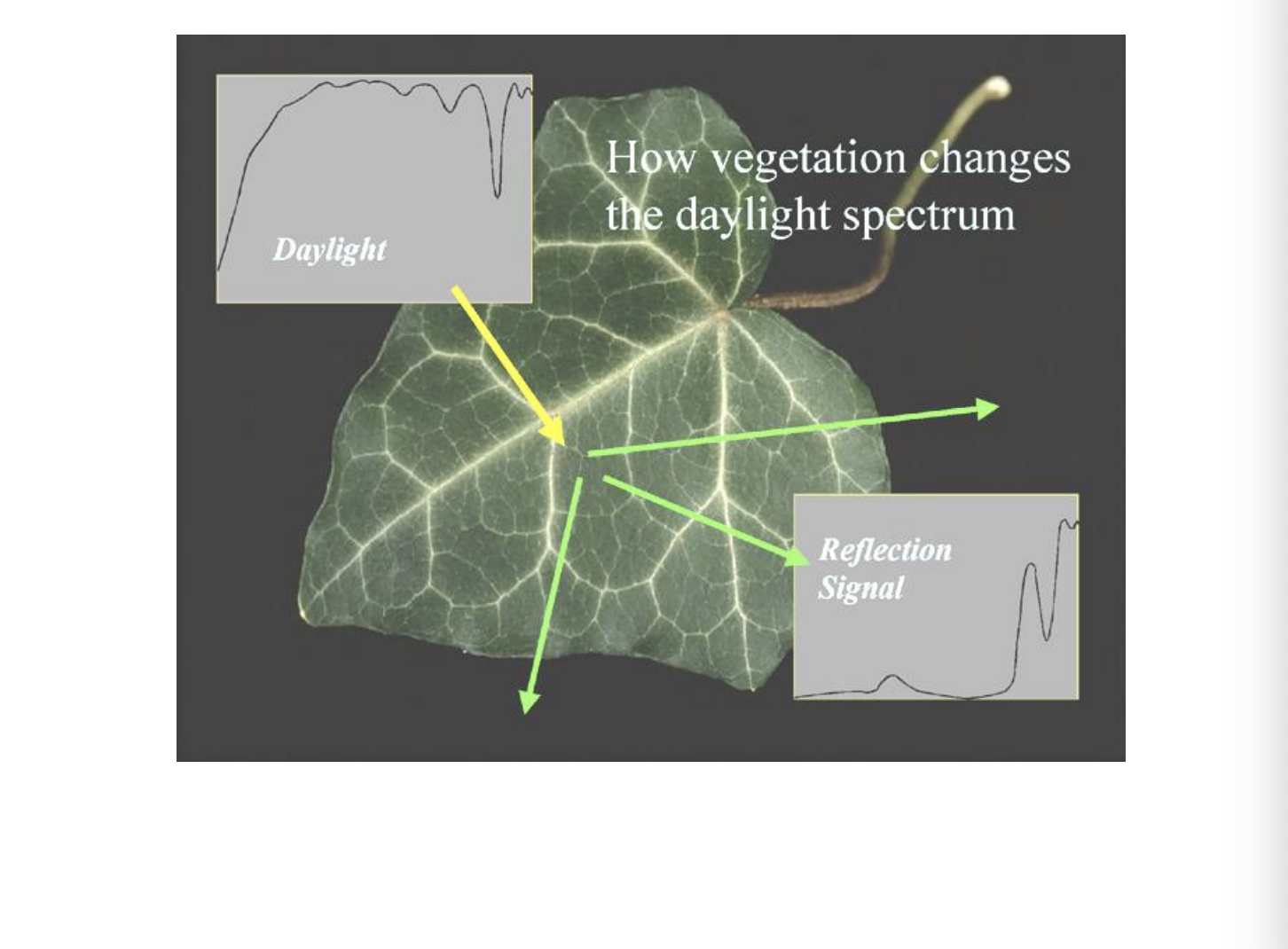
Incoming sunlight above a canopy has a broad, continuous spectrum, High intensity across the visible range. When daylight encounters vegetation, leaves do not absorb all wavelengths equally.
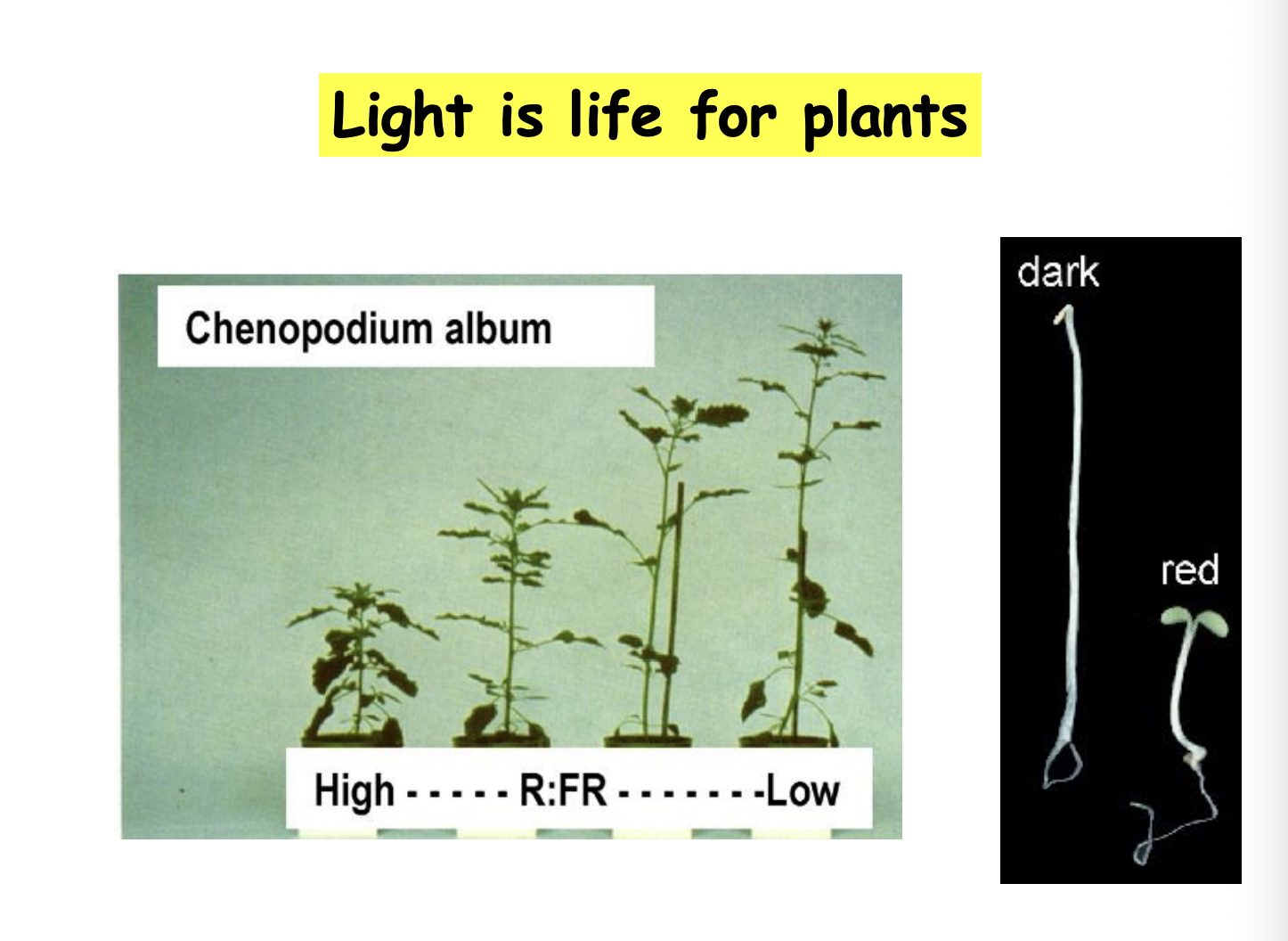
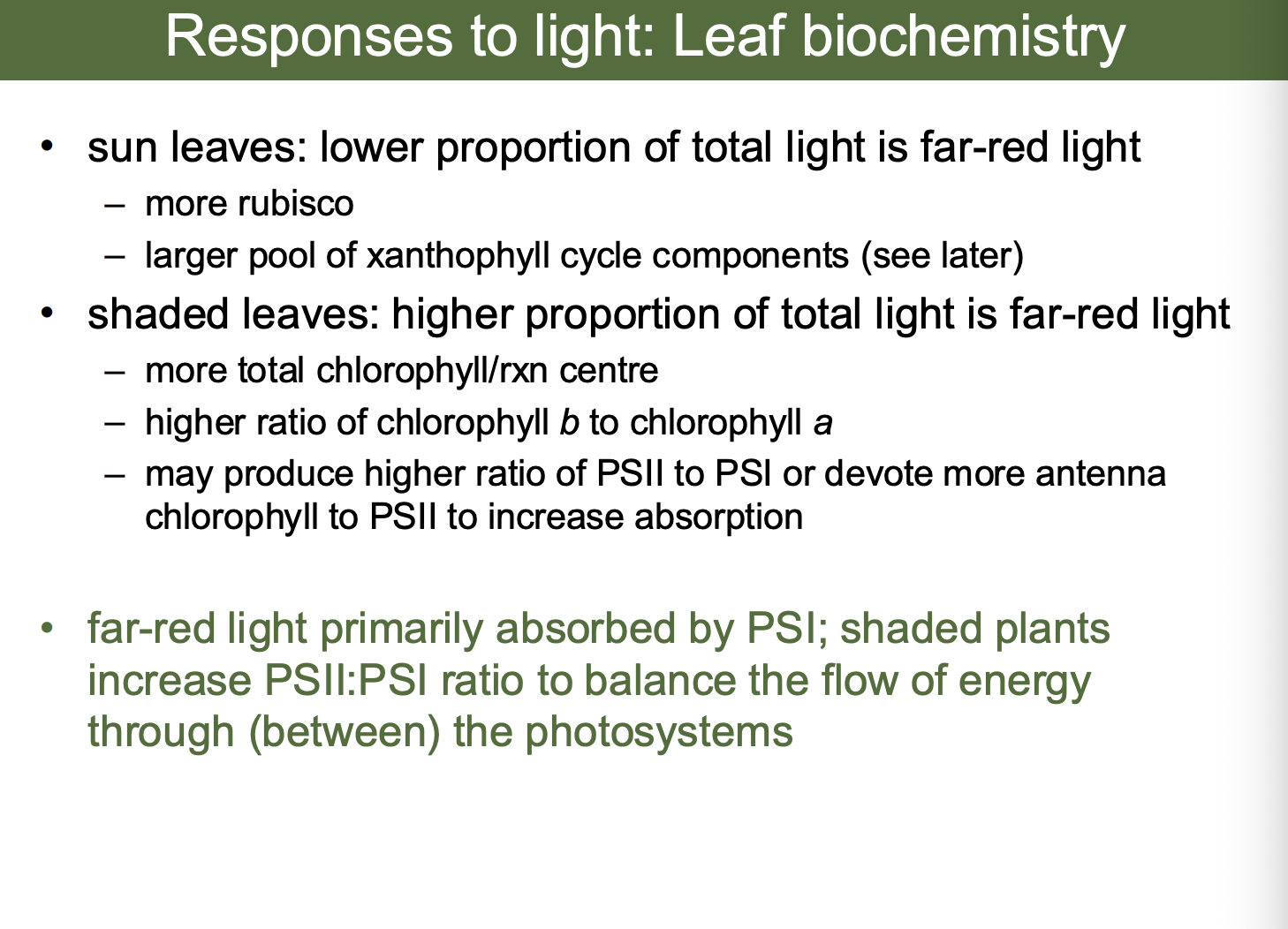
Leaves adjust their biochemical makeup depending on whether they develop in sun or shade, largely in response to differences in light intensity and spectral quality, especially the proportion of far-red light
Sun leaves develop in environments with high Light intensity, proportion of far-red light is low, Red and blue wavelengths are abundant. having more rubisco enables high maximum rates of CO₂ fixation, high photosynthetic capacity rather than efficiency. Large xanthophyll-cycle pigment pool allows rapid dissipation of excess excitation energy as heat,protects PSII from photoinhibition during high or fluctuating light.
Shade leaves develop in environments with : low PPFD, large fraction of remaining light is far-red, red and blue wavelengths have been largely absorbed by canopy leaves. More total chlorophyll per reaction center increases the probability of photon capture, important in low-light environments. Higher chlorophyll b means Chlorophyll b expands the absorption spectrum, improves capture of wavelengths poorly absorbed by chlorophyll a, enhances antenna function rather than reaction center capacity. More chlorophyll per xanthophyll center pioritizes light harvesting over energy dissipation, reflects low risk of photodamage under shade conditions.
Far-red light is absorbed primarily by photosystem I in shaded environments, PSI becomes preferentially excited so it creates an imbalance in electron flow. so they restore balance by Increasing the PSII meaning they adds more PSII to compensate for lower PSII excitation, and maintain efficient linear electron flow. they can also adding more antenna chlorophyll to PSII to increases light absorption by PSII without changing reaction center number, and achieves the same functional balance.
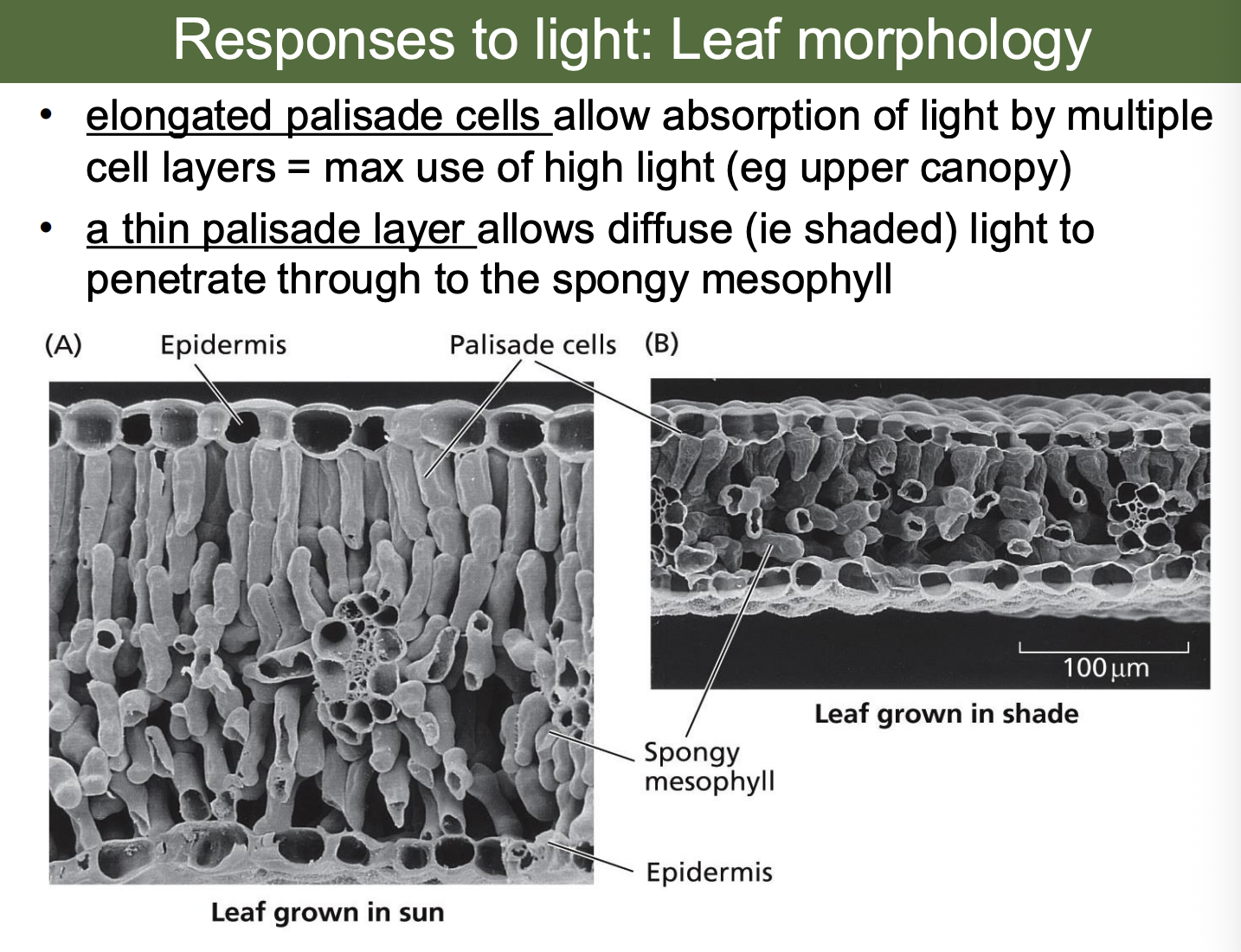
Sun leaves (A) - thicker overall, longer palisade mesophyll cells column-shaped cells just beneath the upper epidermis), multiple layers of palisade cells. maximize photosynthesis under high light
Shade leaves (B) - Thinner leaves, Shorter palisade cells and usually fewer palisade layers, capture low light efficiently
Spongy mesophyll - below the palisade layer in both leaves, Contains irregular cells with air spaces for gas exchange (CO₂ diffusion)
Plants adjust leaf anatomy depending on the light environment high light leads to thick, palisade-rich sun leaves, while low light leads to thin shade leaves optimized for light capture rather than high photosynthetic capacity.
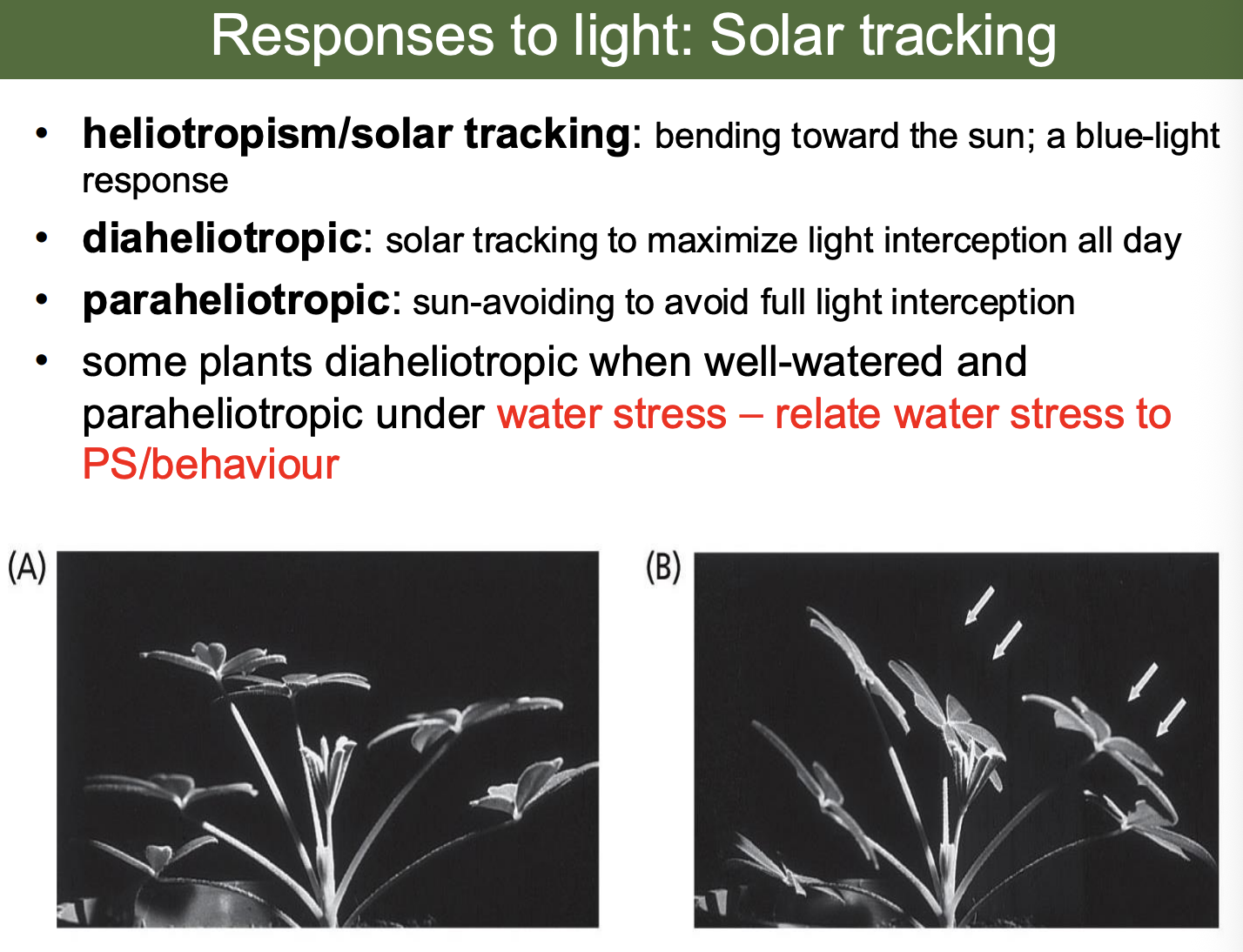
Solar tracking (heliotropism) is the movement of leaves or shoots in response to the position of the sun. It is a blue-light–mediated response, driven by photoreceptors that detect the direction of incoming light and cause differential growth or turgor changes, leading to bending toward or away from the sun.
Diaheliotropism (sun-tracking) - Diaheliotropic leaves track the sun throughout the day so that the leaf surface remains perpendicular to incoming sunlight. this Maximizes light interception, Increases photosynthetic carbon fixation
Paraheliotropism (sun-avoiding) - Paraheliotropic leaves orient parallel to the sun’s rays, reducing the amount of light intercepted. this minimizes excess light absorption,reduces leaf temperature, protects photosynthetic machinery from photoinhibition
Some plants exhibit plasticity in solar tracking as in well-watered conditions leaves are diaheliotropic and high photosynthesis is supported because stomata remain open and CO₂ supply is adequate. In water-stressed conditions leaves become paraheliotropic, stomata close to conserve water, limiting CO₂ uptake, excess light would overexcite the photosystems, increasing the risk of photodamage.
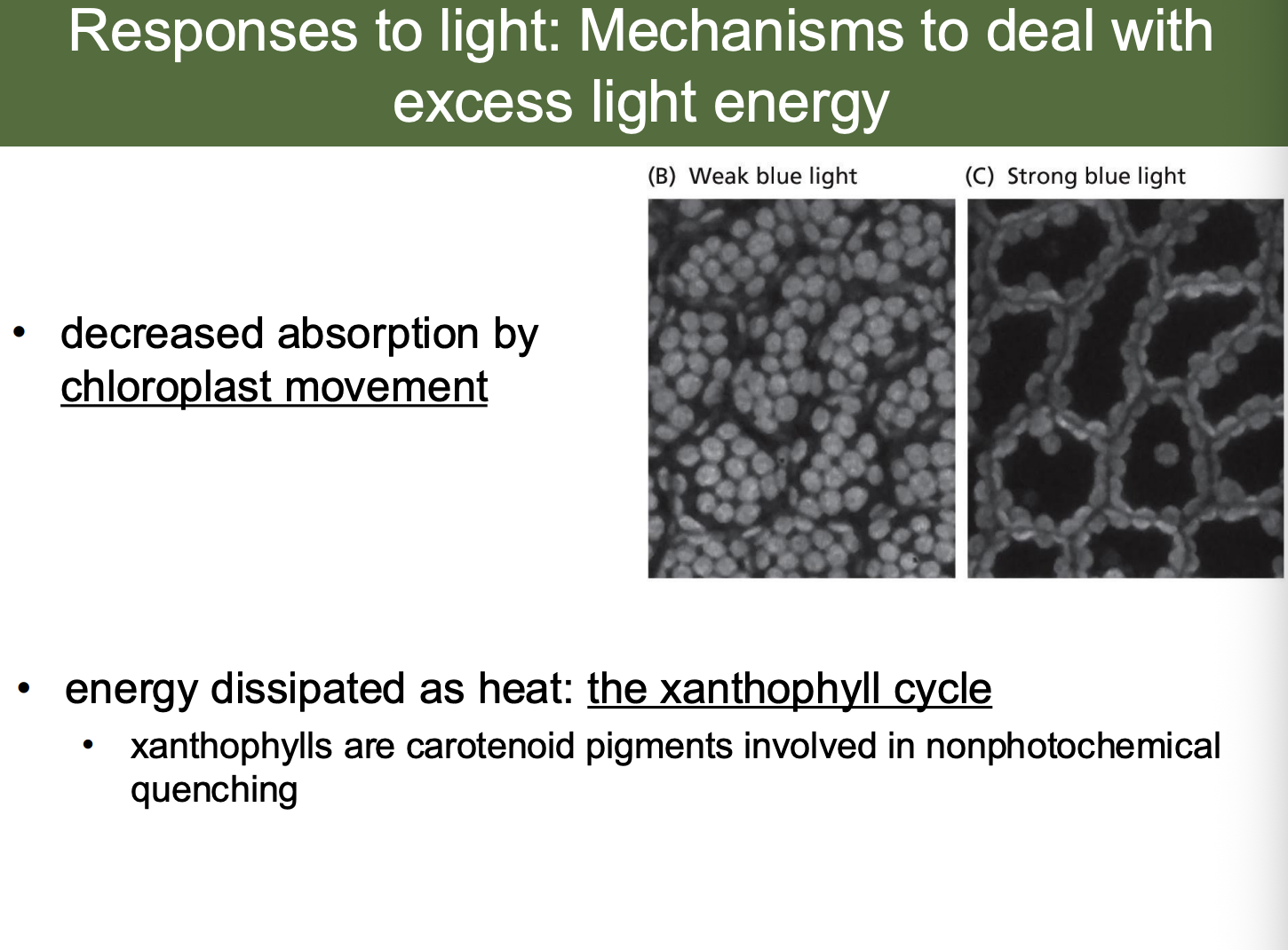
Plants exposed to high light intensities risk absorbing more energy than can be used in photosynthesis. Excess energy can damage photosystems and generate reactive oxygen species (ROS). Plants have evolved several mechanisms to manage excess light, particularly mediated by blue light.
Weak blue light (B) - Chloroplasts position themselves to maximize light capture (accumulation along the cell surface facing light).
Strong blue light (C) - Chloroplasts move to the side walls of cells, decreasing light absorption by reducing the area directly exposed. This protects chloroplasts from photodamage under high irradiance.
The xanthophyll cycle involves carotenoid pigments located in the thylakoid membranes. When excess light is absorbed, energy is dissipated as heat rather than driving photosynthesis. This process is called nonphotochemical quenching. Xanthophyll pigments convert excess excitation energy into heat, protect PSII from photoinhibition, prevent formation of harmful ROS.
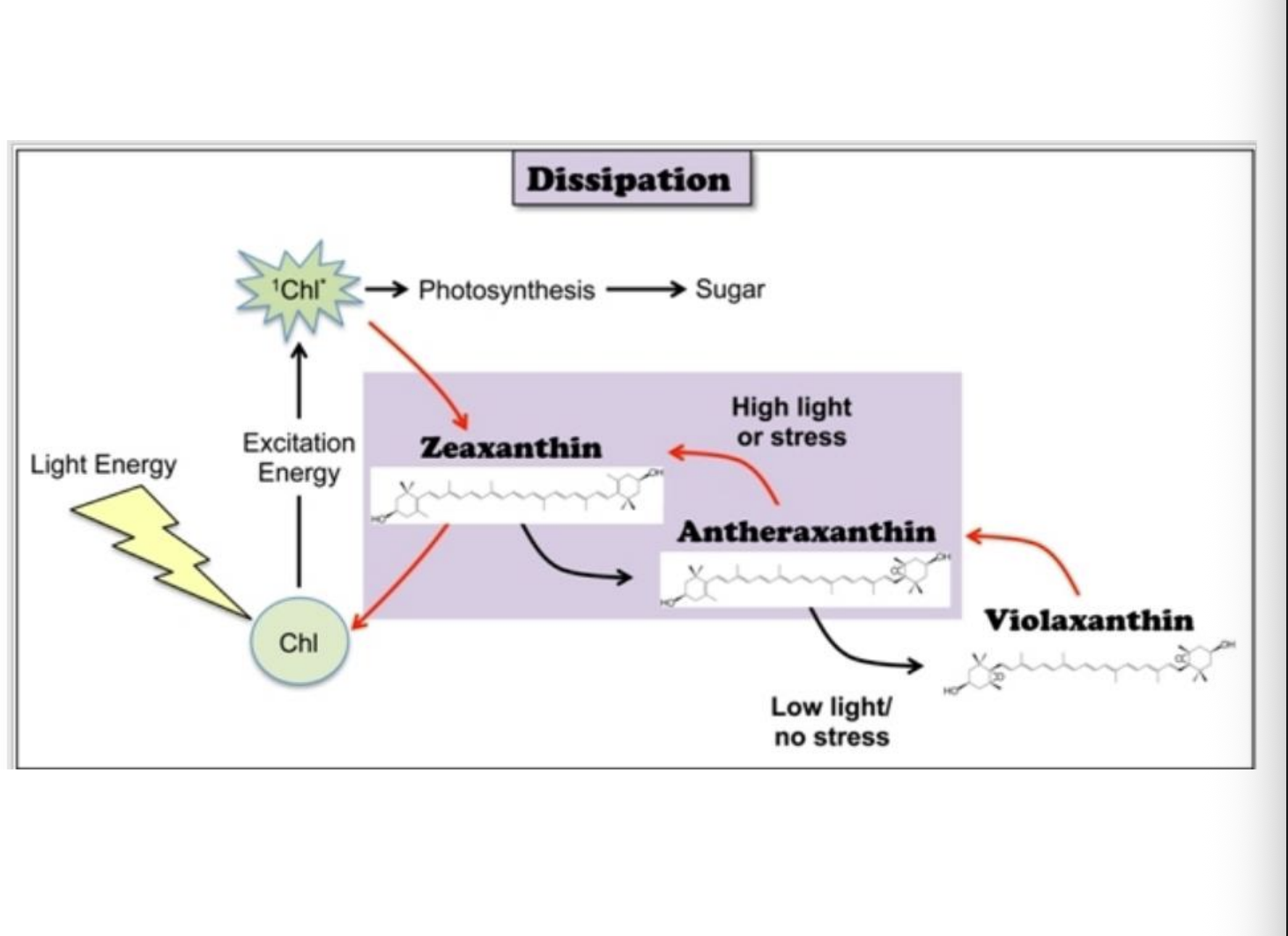
this is the process of non-photochemical quenching so excess light energy absorbed by chlorophyll (Chl) is safely dissipated as heat via the xanthophyll cycle.
Light energy excites chlorophyll (Chl), which can be used for photosynthesis to produce sugar or dissipated as heat.
Under high light, the xanthophyll cycle converts violaxanthin to zeaxanthin via antheraxanthin.
Zeaxanthin helps dissipate excess excitation energy from Chl, protecting the plant from damage.
Under low light, the cycle reverses, converting zeaxanthin back to violaxanthin.
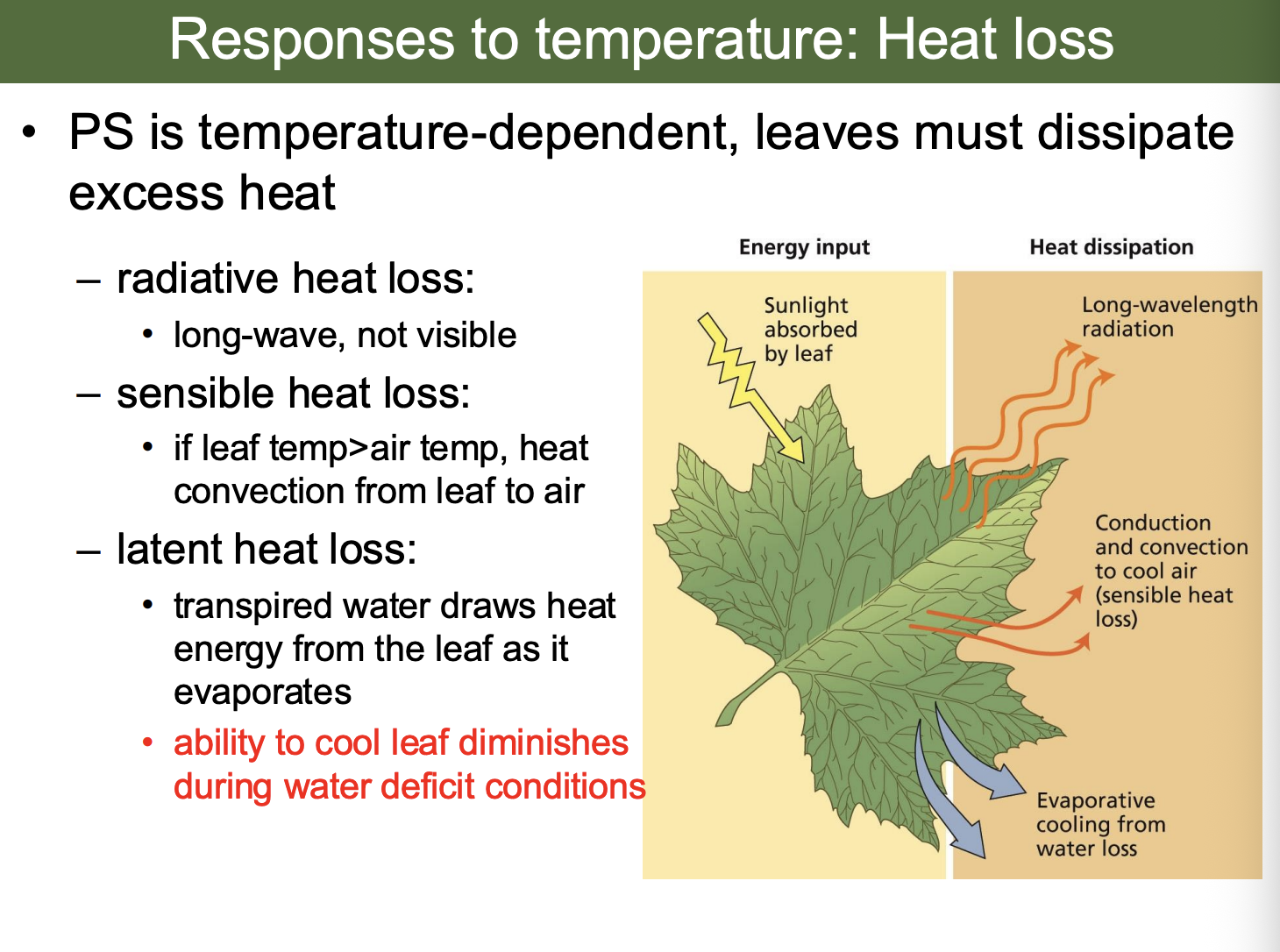
Leaves exposed to sunlight absorb a significant amount of energy, mostly in the visible spectrum (≈400–700 nm), which drives photosynthesis. However, not all absorbed energy can be used for photosynthesis—especially under full sunlight, the remaining energy becomes heat, which must be dissipated to prevent leaf damage and maintain optimal photosynthetic function.
Leaves lose heat through three primary pathways
Radiative heat loss - Leaves emit long-wavelength infrared radiation, This energy is radiated away from the leaf surface and does not contribute to warming, It is independent of air temperature
Sensible heat loss - Occurs when leaf temperature exceeds air temperature, heat is transferred from the leaf to the surrounding air via conduction and convection, efficiency depends on air movement and the temperature difference.
Latent heat loss (evaporative cooling) - Water evaporating from the leaf surface during transpiration absorbs energy from the leaf, draws heat away, cooling the leaf effectively, efficiency depends on water availability; under water deficit, evaporative cooling is reduced, making leaves more prone to overheating
remember photosynthesis is temperature-dependent, so excess heat can reduce photosynthetic efficiency or damage photosystems.Leaves absorb only about 50% of total solar radiation mostly in visible light, but this still generates a substantial heat load. The balance between absorbed energy and dissipated heat determines whether the leaf maintains a safe operating temperature.
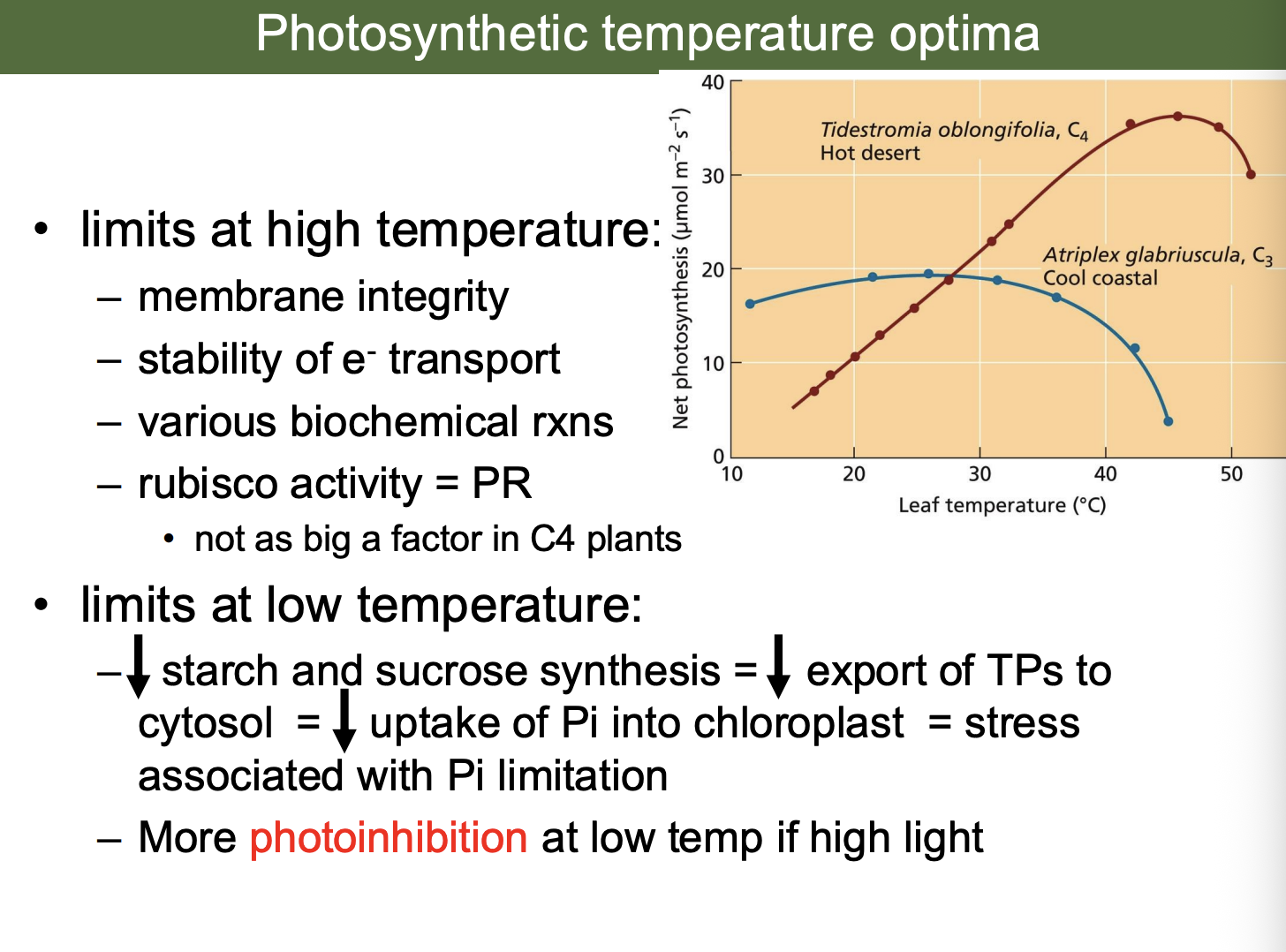
plants exhibit a narrow temperature range in which photosynthetic rates are maximized. The peak photosynthetic rate under these conditions is called the photosynthetic thermal optimum
depends on biochemical constraints, genetic adaptations, and environmental acclimation.
exceeding the thermal optimum, either above or below, causes a decline in net photosynthesis.
At high leaf temperatures, photosynthesis is limited by:
Membrane integrity – high temperatures can destabilize thylakoid and chloroplast membranes, impairing electron transport.
Electron transport stability – damage to PSII and associated proteins reduces the efficiency of light-dependent reactions.
Rubisco activity – high temperatures can reduce the carboxylation efficiency of Rubisco, especially in C3 plants.
its a little different in C3 and C4 plants
C4 plants (e.g., Tidestromia oblongifolia, hot desert species) maintain higher photosynthetic rates at elevated temperatures.
High-temperature inhibition is less severe in C4 plants, reflecting biochemical adaptations such as CO2-concentrating mechanisms.
At low leaf temperatures, photosynthesis is limited by:
Starch and sucrose synthesis – enzyme activity slows, limiting carbon export
Pi (inorganic phosphate) uptake into chloroplasts – low temperatures reduce availability for ATP synthesis and photochemistry.
Photoinhibition – high light at low temperature increases damage to PSII because photoprotective processes are slower.
Electron transport and enzyme kinetics – metabolic reactions slow down.
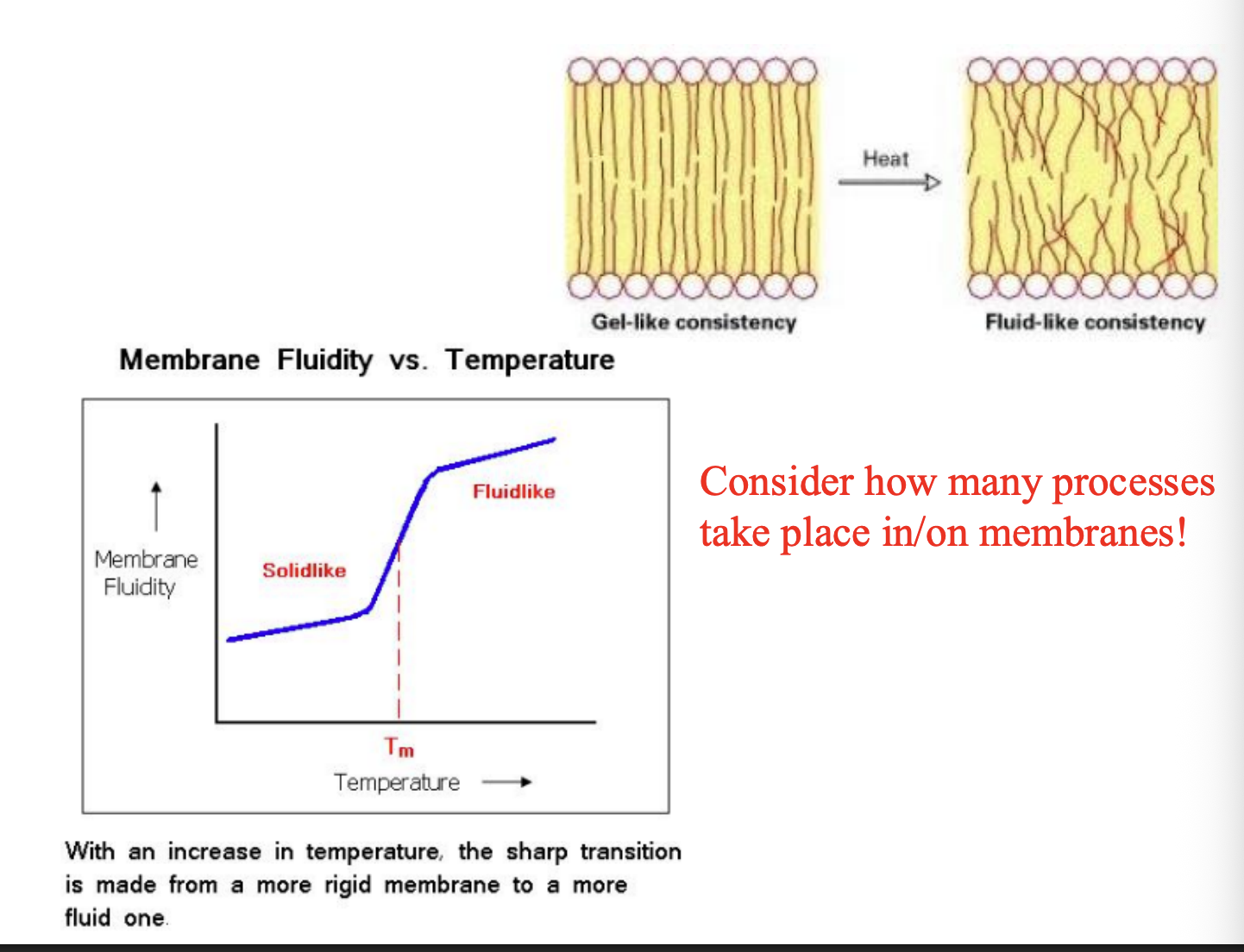
illustrates the relationship between temperature and the fluidity of a cell membrane, showing how heat causes a sharp transition from a rigid, gel-like state to a more fluid one at a specific transition temperature.
Transition temperature - is the specific temperature at which the sharp change in fluidity occurs.
At temperatures below the transition temperature the membrane is more rigid and less permeable. Above the transition temperature he membrane becomes more fluid and permeable, allowing substances to cross more easily.
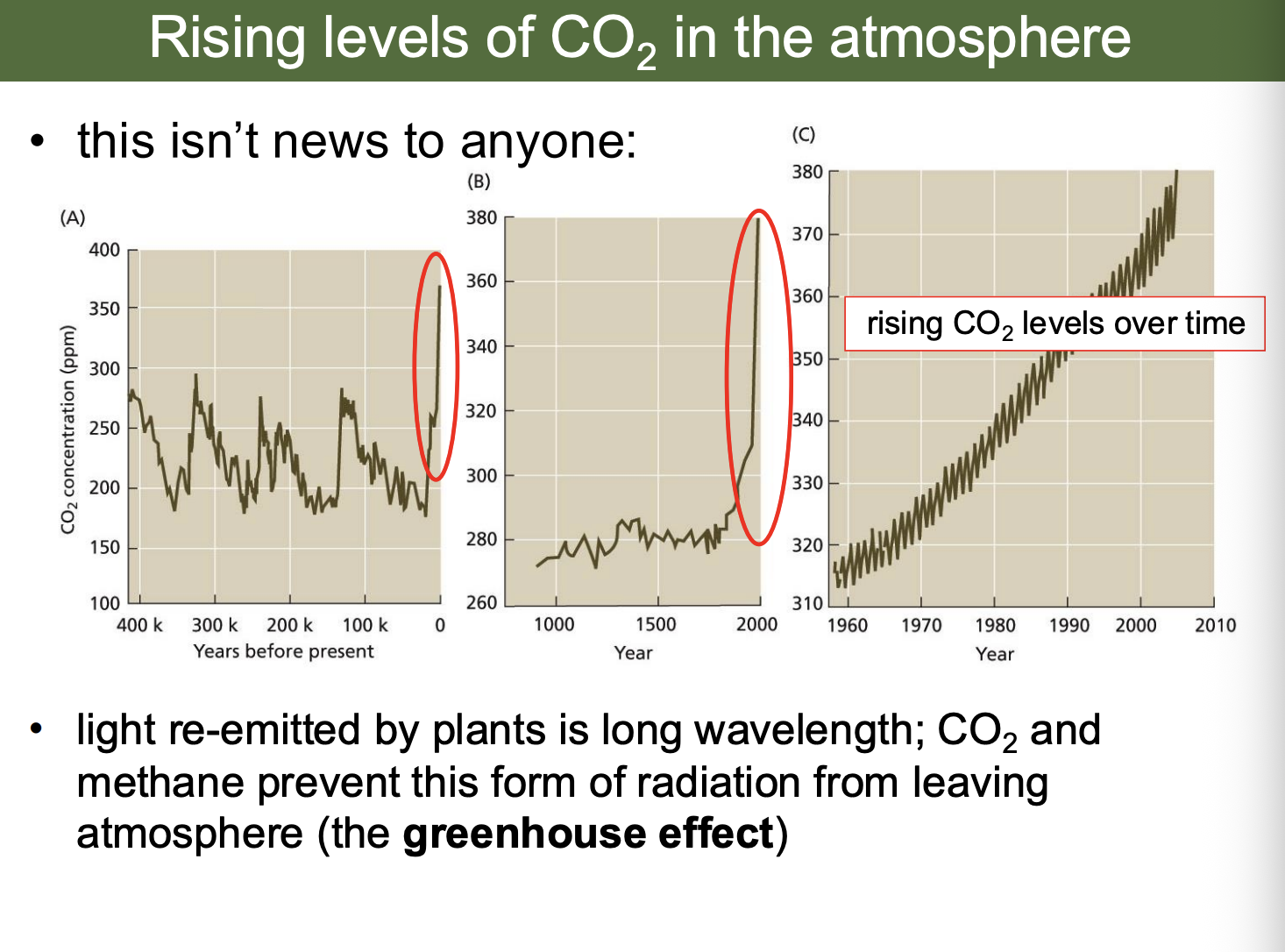
Atmospheric CO₂ has risen from glacial lows (~180 ppm) to present levels (~420 ppm) due to fossil fuel emissions and deforestation, creating a CO₂-enriched environment that affects plant photosynthesis, physiology, and growth, especially for species evolved in historically low-CO₂ conditions.
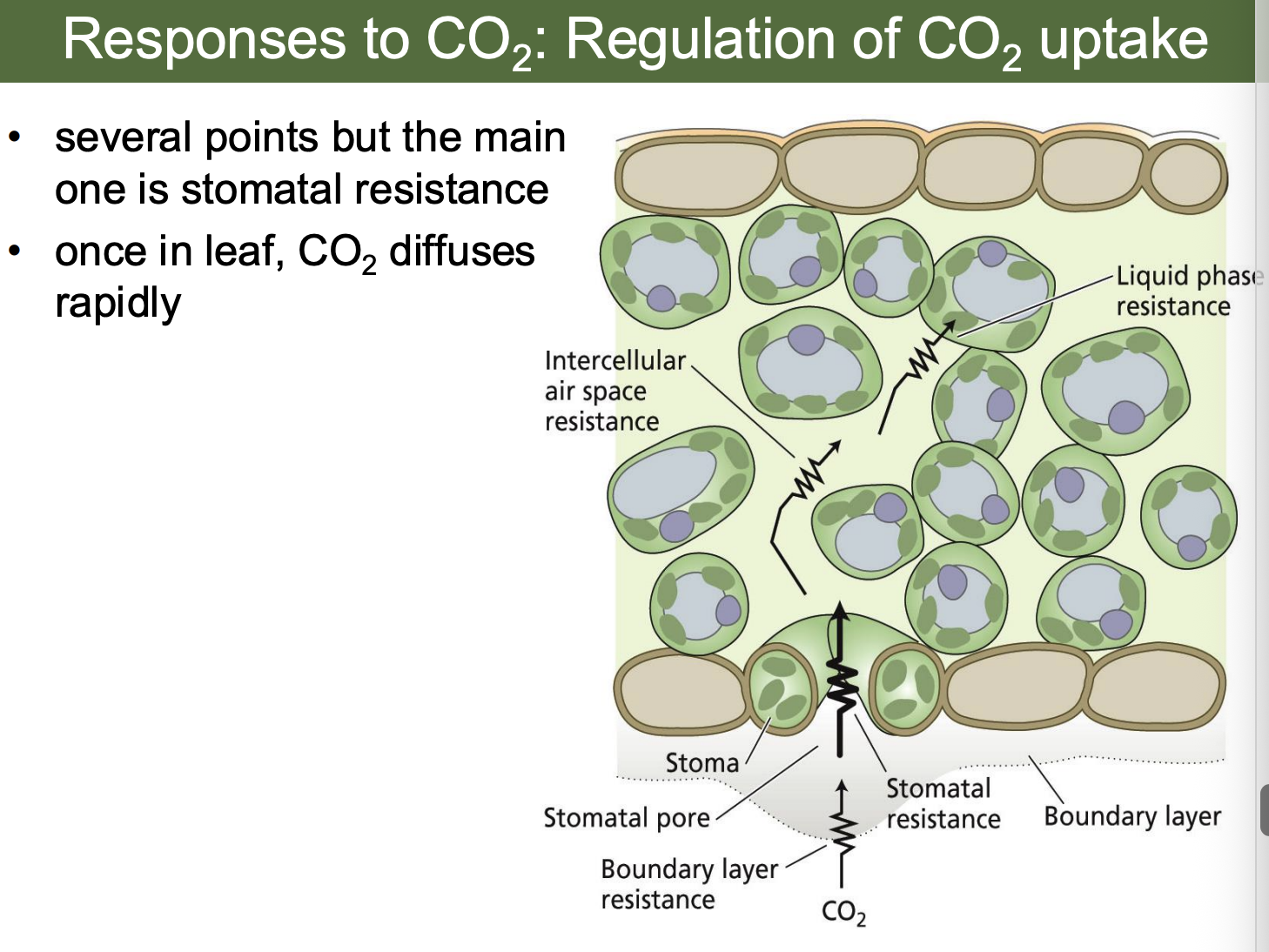
The process involves several resistances that co2 must overcome to reach the chloroplasts for photosynthesis.
Boundary layer resistance: The resistance of the relatively still air layer immediately next to the leaf surface.
Stomatal resistance: The primary point of control, where the plant regulates co2 entry through guard cells that open and close the stomatal pore. This is the main factor mentioned in the text.
Intercellular air space resistance: Once inside the leaf through the stoma, co2 diffuses rapidly through the air spaces between cells.
Liquid phase resistance: The final barrier as co2, dissolves in the water film surrounding the cells and diffuses into the chloroplasts.
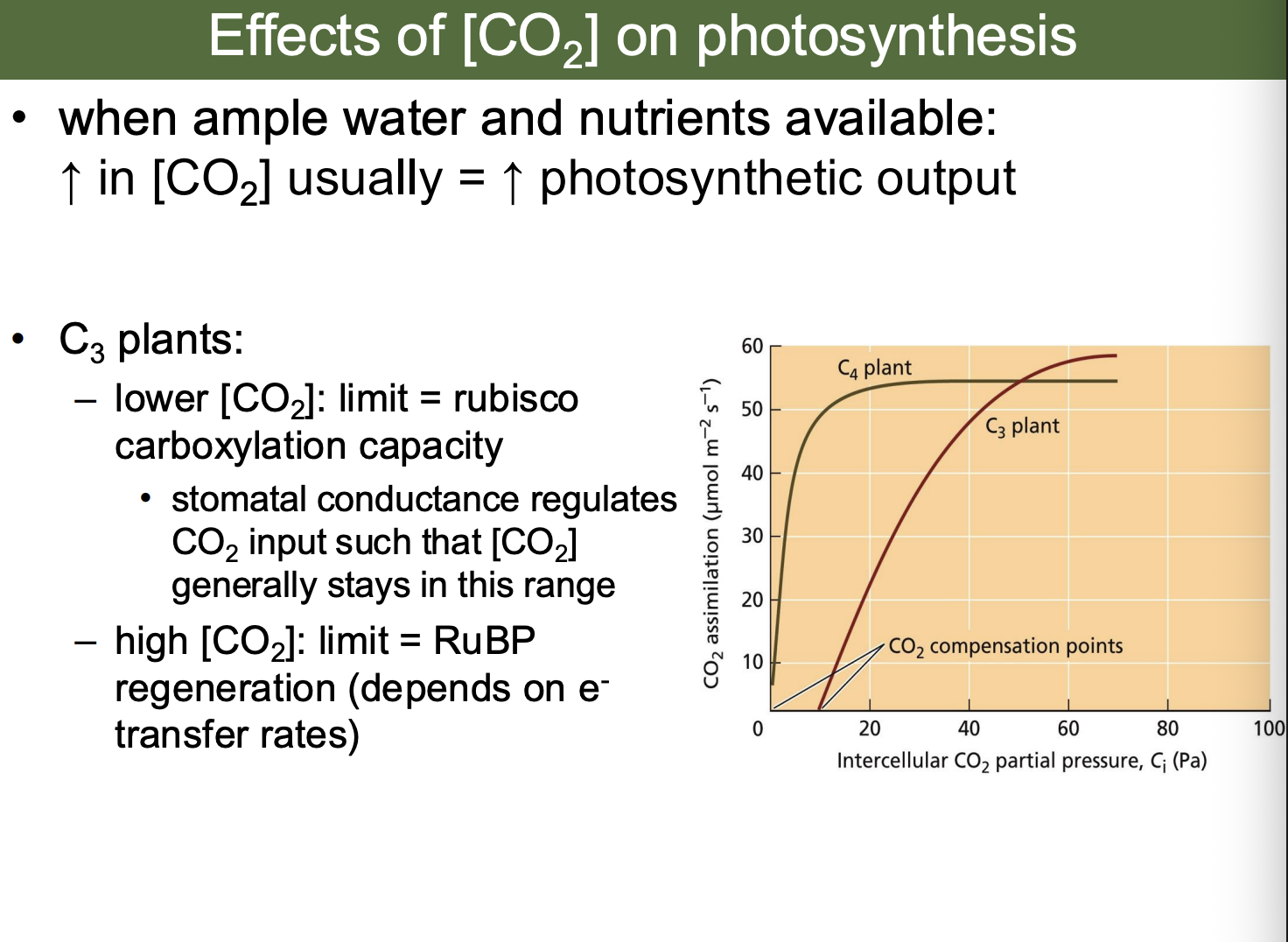
Photosynthesis depends not only on light and temperature but also on the availability of CO₂ inside the leaf. increasing carbon dioxide concentration affects photosynthesis in C3 and C4 plants when water and nutrients are abundant. Measuring the intercellular CO₂ partial pressure (cᵢ) allows us to determine how CO₂ supply limits photosynthesis.
At very low intercellular CO₂ concentrations, net photosynthesis is zero because the CO₂ released by mitochondrial respiration equals the CO₂ fixed by photosynthesis.(CO2 compensation point)
Low cᵢ (low CO₂) photosynthesis is limited by Rubisco carboxylation capacity. Stomatal conductance regulates CO₂ entry, so cᵢ typically stays in a range where Rubisco is partially limiting.
High cᵢ (high CO₂) photosynthesis becomes limited by RuBP regeneration and the rate of electron transport, rather than CO₂ availability.
In well-watered, nutrient-sufficient conditions, elevated CO₂ above ambient levels increases photosynthetic rate and overall productivity.
C4 photosynthesis concentrates CO₂ around Rubisco in bundle sheath cells, reducing CO₂ limitation. As a result, C4 plants reach photosynthetic saturation at lower cᵢ than C3 plants, and their CO₂ compensation point is much lower. Increases in atmospheric CO₂ have less effect on C4 photosynthesis, because the CO₂-concentrating mechanism already maximizes Rubisco efficiency.
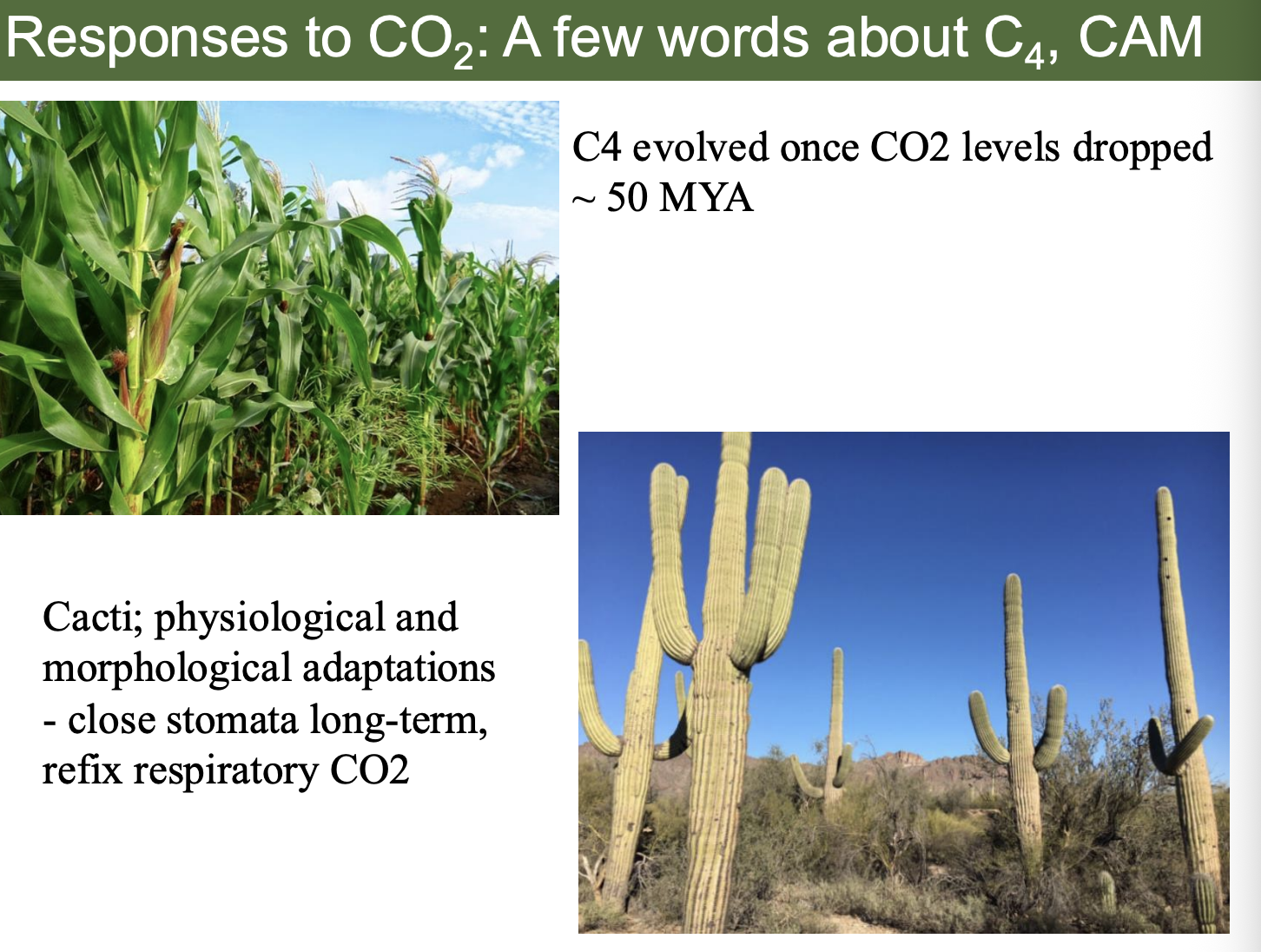
C4 photosynthesis evolved around 50 million years ago, when atmospheric CO₂ levels dropped significantly. C4 plants concentrate CO₂ in bundle sheath cells, reducing photorespiration and increasing Rubisco efficiency.
Low CO₂ limitation is minimized.
Photosynthesis saturates at lower intercellular CO₂ than in C3 plants.
Efficient in hot, sunny environments.
CAM (Crassulacean Acid Metabolism) is found in cacti and other succulents. they work like : Stomata open at night to take up CO₂, which is stored as malate in vacuoles. During the day, stomata close to conserve water, and stored CO₂ is refixed for photosynthesis.
Allows photosynthesis under very low water availability.
Reduces water loss while still refixing CO₂ released from respiration.
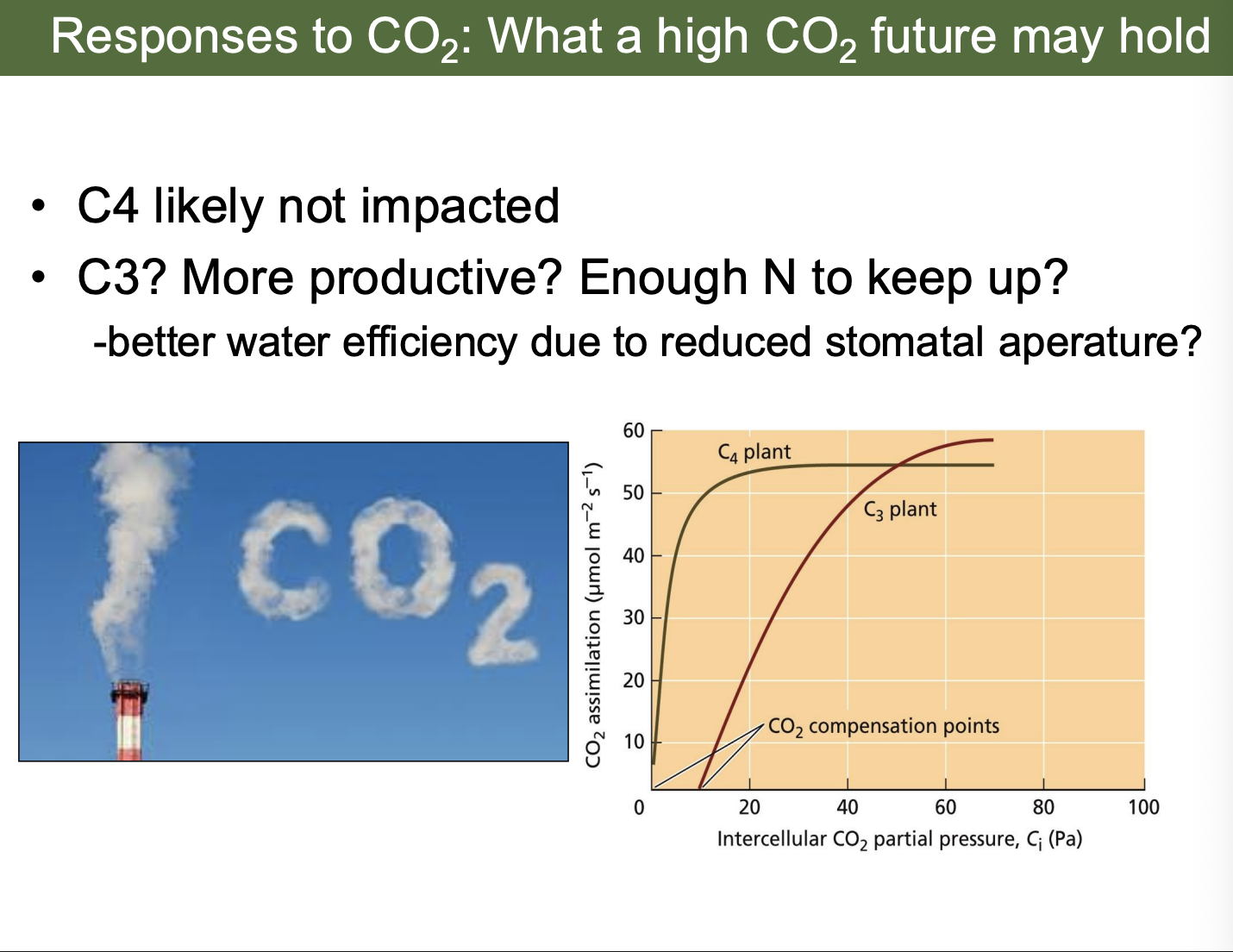
C4 plants - Already have a CO₂-concentrating mechanism in bundle sheath cells, higher atmospheric CO₂: Likely minimal effect on photosynthesis because C4 plants are already saturated at current CO₂ levels.
C3 Plants - Strongly responsive to elevated CO₂; photosynthesis can increase significantly as intercellular CO₂ rises, so might have Increased productivity under optimal light, water, and nutrient conditions. Improved water-use efficiency because higher CO₂ allows stomata to partially close while maintaining CO₂ influx. but there are possible limitations like Productivity gains may be limited by nitrogen availability, since Rubisco and other Calvin cycle enzymes require nitrogen and Water and nutrient constraints may restrict the full potential of CO₂ fertilization.