6.3.2(a) population size
spec points
the factors that determine size of a population
To include the significance of limiting factors in determining the carrying capacity of a given environment and the impact of these factors on final population size.
population: number of a certain species in particular area
population growth: human population is growing exponentially birth rate is higher than death rate
what affects birth rate
Economic conditions
Cultural and religious backgrounds
Social pressures and conditions
Birth control
Political factors
what affects death rate
Age profile - more elderly people = more deaths
Life expectancy
Food supply
Safe drinking water and sanitation
Medical care
Natural disasters
war
describe how each population is changing
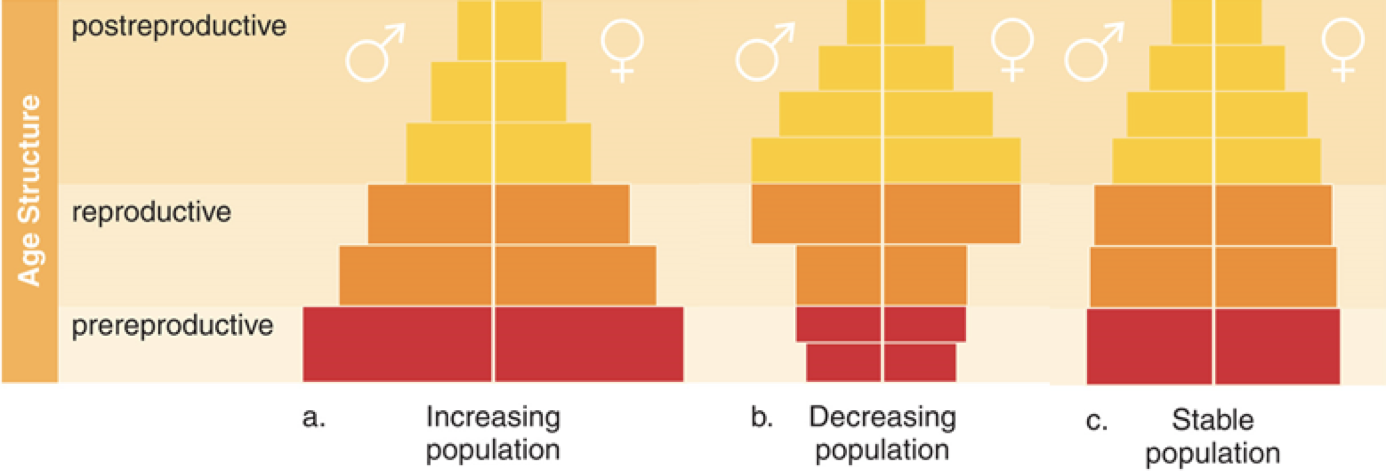
Carrying capacity: maximum stable population size that an ecosystem can support
Limiting factor: A factor that slows down the rate of a natural process
population growth curve
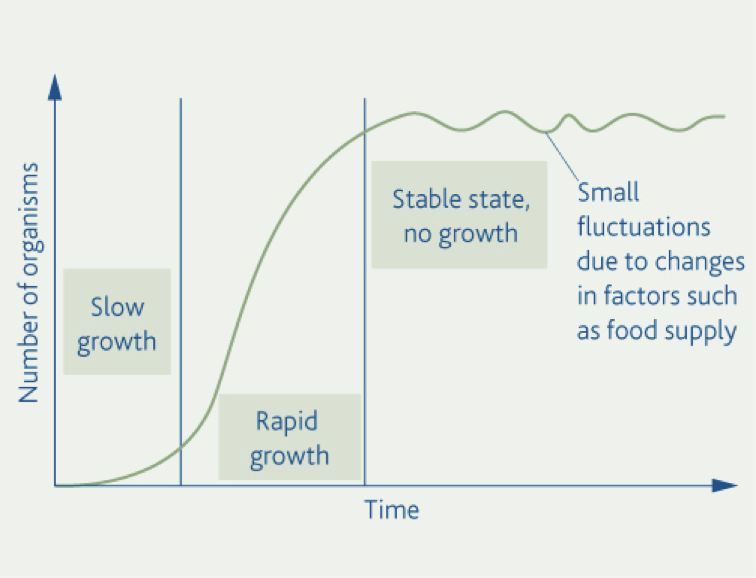
Slow growth - (lag phase) small number of individuals reproduce. BR higher than DR
Rapid growth – (log phase) Ever-increasing number of individuals reproduce exponentially (no constraints on population size)
Stable state - (reached carrying capacity) population declines until it remains stable with cyclic fluctuations. BR=DR
two types of strategist
k-strategist | r-strategist |
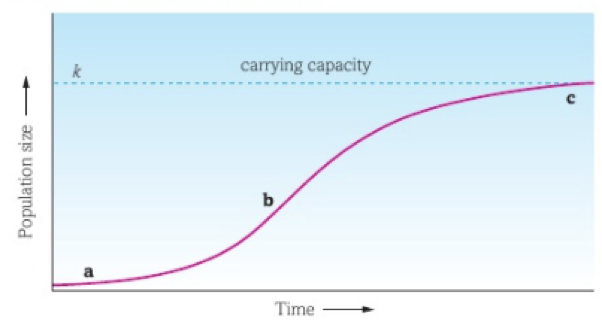 | 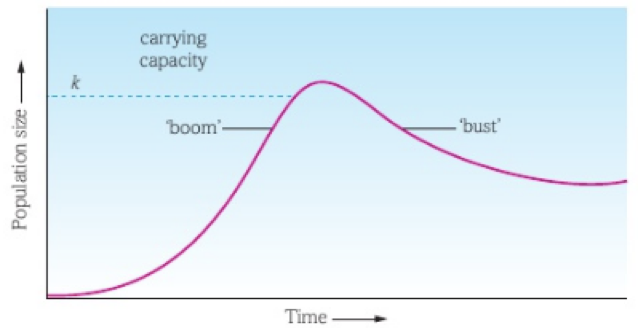 |
Limiting factors exert more of an effect as the population grows closer to the carrying capacity Gradually levels out | Population size increases so rapidly that it can exceed the carrying capacity There are then not enough resources to survive/ reproduce or a build up of waste products poisons the species. Called ‘boom and bust’ |
k- strategists often: Low reproductive rate, slow development, long life span, large body mass | r- strategists often: High reproductive rate, fast development, short life span, small body mass |
what will happen to the Algae population if:
Lots of light
Warm
Lots of nutrients
No limiting factor means that growth can continue at an exponential rate
now what happens?
Nutrients are used up
Light doesn’t get to lower levels
Other species may enter the pond
Winter comes – low temp and less light
Limiting factors affect the population size
bacterial growth + limiting factors
bacteria will grow until a factor limits growth. no population can grow indefinitely
Every individual within a species population has the potential to reproduce and have offspring which contribute to population growth
In reality, however, there are many abiotic and biotic factors that prevent every individual in a population from reaching adulthood and reproducing
This ensures the population size of each species is limited at some point (i.e. the carrying capacity of that species is reached)
This is why no single species has a population size that dominates all other species populations on Earth, with the possible exception of humans
The combined effects of limiting factors that prevent the further increase of a population is known as environmental resistance
Limiting Factor Type Examples | |
Abiotic | Shelter, Temperature, pH, Light, Water, Oxygen, Humidity, Accumulation of toxic waste |
Biotic | Disease, Predators, Competition, Food |
3 types of biotic factors
Interspecific competition (between different species)
This is competition for the same resources between individuals from different species
For example, red squirrels and grey squirrels in the UK compete for the same habitat, nesting sites and food resources
Intraspecific competition (between different members of one species)
Predation
In some cases, competition between species means that the sizes of both populations are limited
This can occur as each species has access to fewer resources and therefore less chance of survival and reproduction
This usually occurs if the two species are similarly well-adapted to the habitat
In other cases, competition between species can lead to a decrease in the population size of one of the species and an increase in the population size of the other
This can occur if one species is able to out-compete the other for resources and therefore has a greater chance of surviving and reproducing
This usually occurs if one of the species is better adapted to the habitat
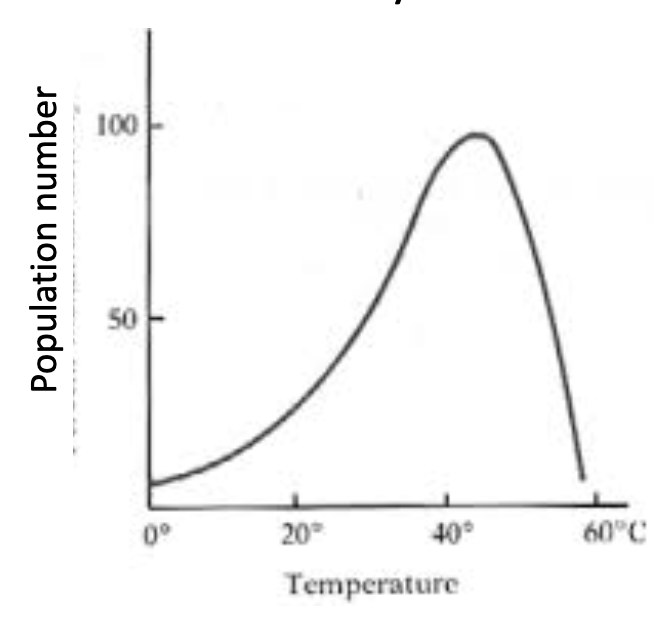
Temperature
Each species has a different optimum temperature - further away from the optimum the fewer can survive.
if the temperature of their surroundings is significantly lower or higher than the optimum body temperature for that species, individuals will have to use up a significant amount of energy to maintain their optimum body temperature (via homeostasis)
As each individual now has less energy available for growth and reproduction, fewer individuals reach reproductive age and successfully reproduce, meaning that population growth is limited
light
greater light intensity = greater rate of photosynthesis
more seeds
higher population
more animals can be supported
pH
affects enzymes, too high/low pH causes active site to denature so less e-s complexes
water and humidity
Where water is scarce only species that are adapted to dry conditions will increase/maintain their population.
Increased humidity affects transpiration rates – How and why will this affect other species?
adaptations to abiotic factors
otters: webbed feet – can walk on land and swim in water
whales: thick blubber – keep warm in cold seas where food is plentiful
bears: hibernate in winter – increase chance of survival as they conserve energy in coldest months
adaptations to biotic factors
chimpanzees: twigs used to fish for termites – another source of food
scorpions: dancing before mating – ensures that they are the same species
bacteria: some bacteria produce antibiotics – kills other species of bacteria
migration
immigration: movement of individuals into an area
emigration: movement of individuals away from an area
density-independent factors
Density-independent factors are limiting factors that include things like unusual weather, natural disasters, and human activity. Nature can sometimes create circumstances that reduce population size relatively quicker.
food or nutrient limitation
pollutants in the environment
climate extremes, including seasonal cycles such as monsoons