An Era of Social and Cultural change
Victorian Morality and Education (Late 1800s)
Core Ideas of Victorian Morality
Origin: Social values associated with Queen Victoria’s rule in Britain (1837–1901).
Justified class hierarchy:
Upper classes = wealthy because morally superior, intelligent, disciplined.
Created divide between rich and poor.
Gender roles:
Men → breadwinners, authority in public and private life.
Women → domestic sphere, moral guardians, refined home environment.
Emphasis on:
Manners, self-discipline, temperance, moral behavior.
Individual moral improvement.
Responsibility of middle/upper classes to reform society.
Women’s Roles and Social Reform
Women expected to manage home and raise children.
Catherine Beecher, The American Woman’s Home (1869):
Guidelines for domestic life.
Home decoration and childrearing as central duties.
Encouraged activities:
Music, painting, sewing, literature.
By 1880s–1890s:
Women expanded into reform work.
Settlement houses, women’s clubs, temperance, abolition, women’s rights.
Public Education and Social Control
Schools promoted middle-class values and “Americanized” immigrants.
Purpose:
Instill discipline, loyalty, punctuality.
Prepare industrial workforce.
Key figures:
Horace Mann → promoted public school system.
William Torrey Harris → emphasized order and workforce preparation.
Criticism:
Joseph Mayer Rice condemned memorization and harsh discipline.
Growth of education:
1852: Massachusetts first compulsory education law.
By 1918: all states required schooling.
Morrill Land Grant Act (1862) funded colleges.
Higher Education
Women’s education expanded:
Vassar College (1865), Wellesley, Smith.
College curriculum:
Mathematics, classical literature.
Little science or modern subjects.
Strong emphasis on discipline and morality.
Moral Crusades Against Social Ills
Causes
Industrialization and urbanization created poverty, crime, overcrowded cities.
Middle-class reformers sought to improve society.
Reform Approaches
Charity and philanthropy.
Legislative reform.
Religious activism.
Efforts to regulate behavior of poor and immigrants.
Major Organizations
YMCA (1851) → housing and moral recreation for men.
YWCA → support for women and children.
Salvation Army (1865 England; U.S. 1880):
Soup kitchens, shelters.
Promoted discipline and middle-class values.
Social Gospel Movement
Christian duty to help poor.
Opposed social Darwinism.
Key leaders:
Washington Gladden → church mediation in labor conflicts.
William S. Rainsford → social services for immigrants.
Walter Rauschenbusch → cooperation among business, labor, and religion.
Led toward belief government should ensure public welfare.
Social Critics and Reform Writers (Muckrakers)
Writers exposed corruption, inequality, and industrial abuses.
Influenced Progressive Era reforms.
President Theodore Roosevelt called them “muckrakers.”
Examples:
Frank Norris → railroad corruption.
Theodore Dreiser → business corruption.
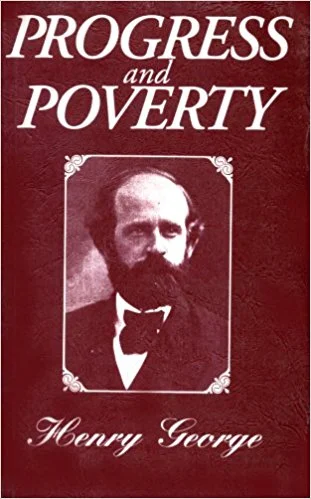
Henry George (Economic Reform)


4
Key Ideas
Book: Progress and Poverty (1879).
Proposed single tax on land value.
Argument:
Land value is unearned and fixed.
Taxing land reduces inequality.
Would make land effectively common property.
Influences: David Ricardo, John Stuart Mill.
Impact and Criticism
Popular but never widely adopted.
Critics:
Land value reflects human investment.
Could discourage development.
Later support:
Economist Milton Friedman called land tax least harmful.
Edward Bellamy (Utopian Socialism)


Looking Backward (1888)
Utopian novel set in year 2000.
Features:
Government-controlled economy.
No poverty, war, or class conflict.
Collective production and distribution.
Technocratic administration.
Themes
Society organized like an industrial machine.
Individual freedom limited by centralized control.
Inspired Nationalist Clubs advocating reform.
Upton Sinclair (Industrial Reform)


4
The Jungle (1906)
Exposed unsafe meatpacking conditions.
Result:
Pure Food and Drug Act.
Federal inspections and food safety regulation.
Political Activity
Socialist.
Ran for California governor (1934) with anti-poverty platform.
Later won Pulitzer Prize.
Utopian Experiment
Founded Helicon Hall community in New Jersey.
Attempt to create cooperative society.
APUSH Significance (Big Themes)
Industrialization → social inequality and reform movements.
Expansion of public education and social control.
Growth of women’s public roles.
Rise of Progressive Era reforms.
Government increasingly responsible for social welfare.
Development of critiques of capitalism and industrial society.