The Romantic Period
The Shift from Neoclassicism to Romanticism
In British literary history, the pendulum tends to swing from one extreme to the opposite extreme. Renaissance writers emphasized passion and abundance, so neoclassical writers swung to the opposite side to emphasize reason and restraint.
The pendulum swung again at the turn of the 19th century. This time, writers turned away from Dryden and Pope's rational, classical verse in favor of poetic passion and freedom.
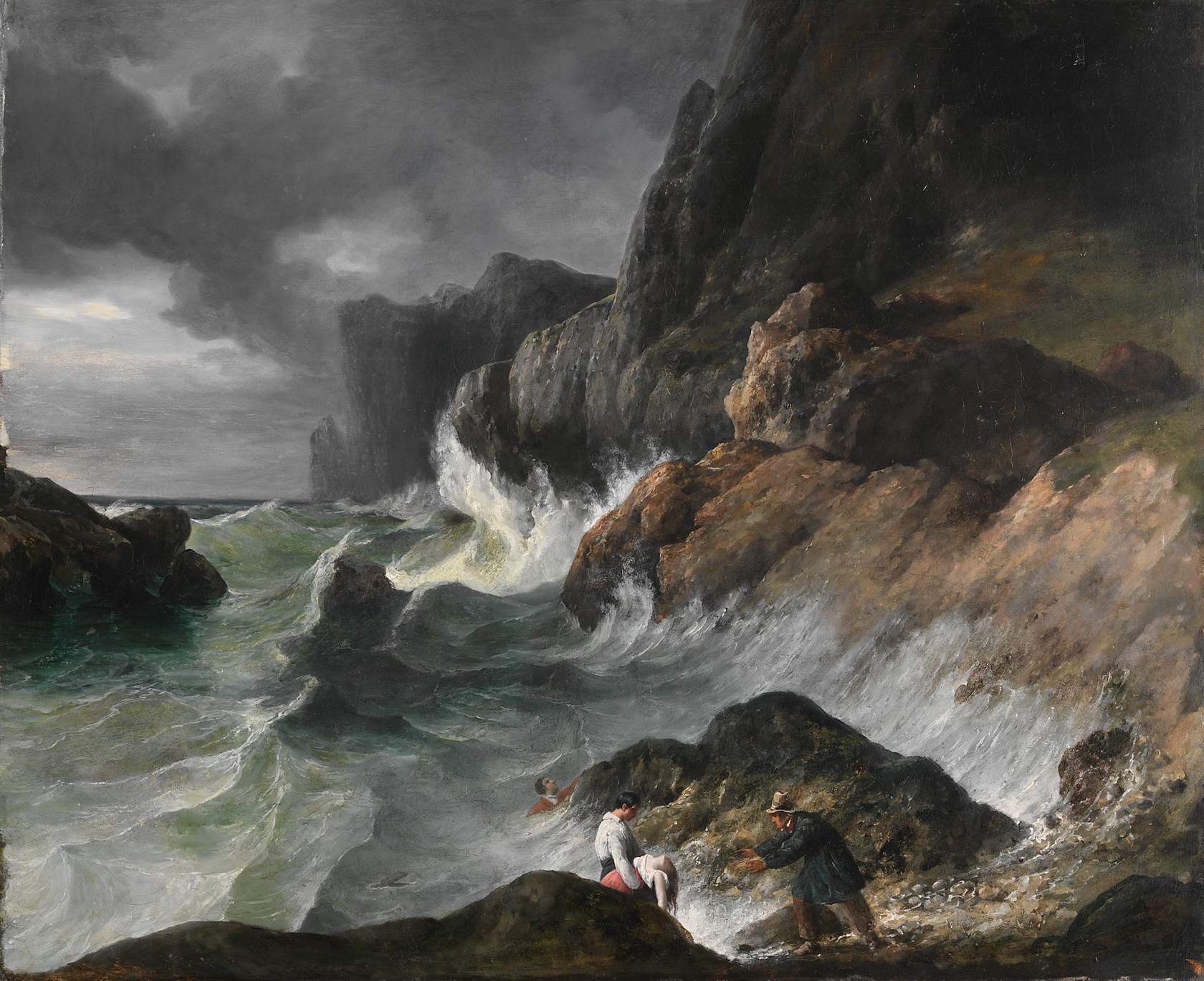
Stormy Coast Scene after a Shipwreck, ca. 1825
Romanticism influenced not just literature but also art, music, science, education, and philosophy. Through many facets, the movement reflected and expressed the general spirit of an age in which all manner of political rebellions and social upheavals occurred. While the French and the Americans revolted against their governments, England's poor and ostracized also began to seek their rights.
Let's review the conventions of Romantic poetry during this topsy-turvy time in British and world history.
Individualism and the Poet
The Romantic period is largely responsible for our contemporary image of writers as brooding, solitary people. Romantic poets wanted to be seen as individuals, not bound by any society, rules, or ideals they did not choose themselves. Therefore, these poets wrote less about external things and more about their own experiences and feelings. More than ever before, there was less separation between the poem and the poet:
[I]n most Romantic lyrics the 'I' is no longer a conventionally typical lyric speaker . . . but one who shares recognizable traits with the poet. The experiences and states of mind expressed by the lyric speaker often accord closely with the known facts of the poet's life.
Norton Anthology of English Literature
When they did write about others, it was with special empathy for that person's individual experience (e.g., Blake's The Chimney Sweeper and Barrett Browning's Cry of the Children).
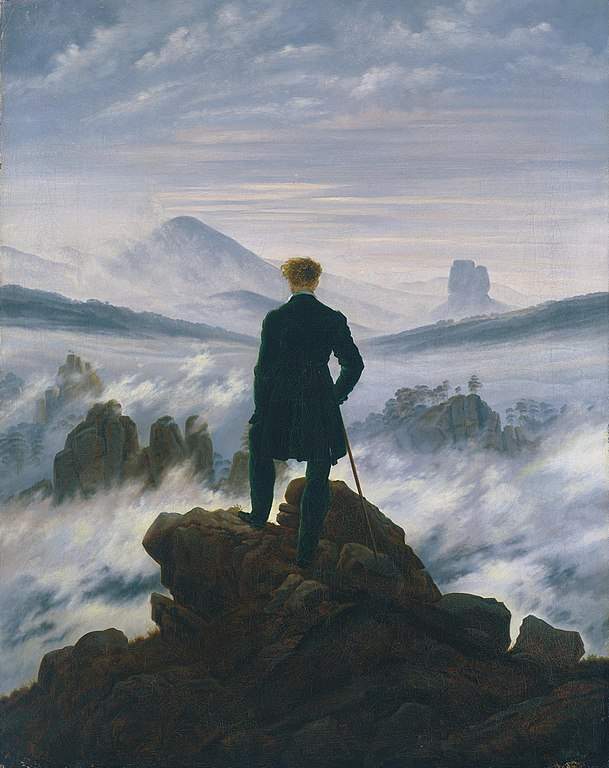
Spontaneity of Feeling
The swelling emotion of awe in one's chest while looking over a wild landscape. The joyous discovery of love-at-first-sight or a child being born. The nostalgic sadness of a fading memory. The terror of an uncontrollable storm. Romantic poets believed that poetry should spring out of these spontaneous moments of extreme emotion. The subject matter could be mundane or supernatural; what mattered was the expression of emotion around that subject. Still, William Wordsworth stressed that care and thought should fine-tune the poem.
The feeling therein developed gives importance to the action and situation, and not the action and situation to the feeling. ... For all good poetry is the spontaneous overflow of powerful feelings: and though this be true, Poems to which any value can be attached were never produced on any variety of subjects but by a man who, being possessed of more than usual organic sensibility, had also thought long and deeply.
William Wordsworth in the preface to Lyrical Ballads
John Keats, another Romantic poet believed that the emotions in the poem should be so strong that they infect the reader, too:
[A poem's] touches of beauty should never be half-way, thereby making the reader breathless, instead of content. The rise, the progress, the setting of Imagery should, like the sun, come natural to him, shine over him, and set soberly, although in magnificence, leaving him in the luxury of twilight. ... [I]f poetry comes not as naturally as the leaves to a tree, it had better not come at all.
John Keats in an 1818 letter
In particular, Romantic poets emphasized the most extreme human emotions: awe, love, terror, agony, etc.
Obviously, this outpouring of personal feelings from the poet to the reader is very different from the more distant tone of neoclassical writers.
The Natural and the Supernatural
At the turn of the 19th century, Britain was changed forever by the Industrial Revolution. The Industrial Revolution marked a shift from handmade to machine-made, from rural to urban living. Romantic poets saw nature as central to the human experience and lamented this shift in their poetry.
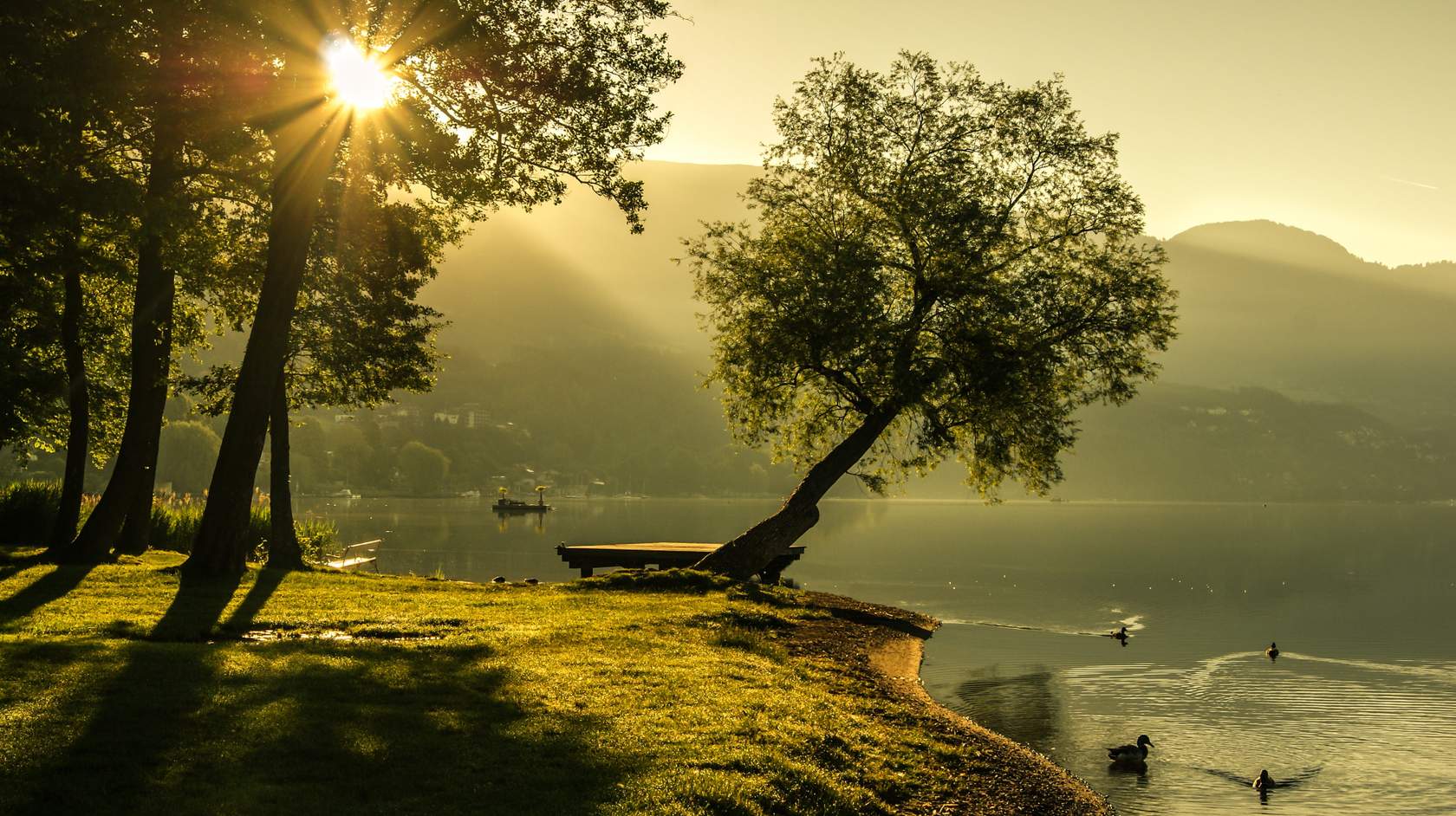
More often than not, however, the poets simply described nature as they saw it. They painted it as joyful ("Daffodils"), dangerous ("The Tiger"), eternal ("My heart leaps up"), and uncontained (Rime of the Ancient Mariner). Some poets wished to elevate everyday sights, like Wordsworth, who added "a certain coloring of imagination, whereby ordinary things should be presented to the mind in an unusual aspect."
Other Romantic poets were obsessed with the supernatural: the hauntings and bewitchings of old folklore (Cristabel, Manfred).
Conclusion
As we begin to read poetry from this unique and rich time in British literary history, we must keep in mind that the Romantics valued freedom of expression. Although at least one of these key components will appear in each of the poems we read, literature has never fit perfectly neatly into categories. That is one of the best things about it!