L7: Introduction to Spectroscopy
What is spectroscopy?
Light ←→ Matter interactions
wide range of frequencies, from gamma rays to radio waves
rhodopsins in eyes
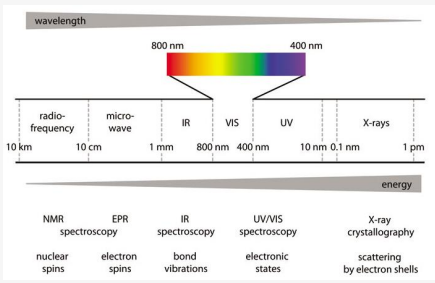
light as a ruler
electromagnetic wave that oscillates through space and time
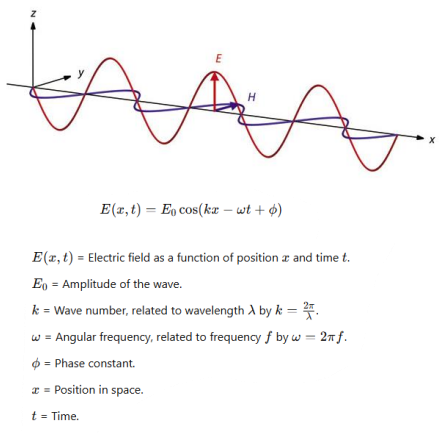
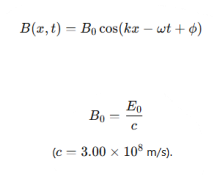
peak to peak/trough to trough = wavelength (λ)
number of oscilations in a given time period = frequency (ν)
any wave: λ*ν = v (constant)
for light: λ*ν = c (3 × 10^8)
Composite light - made of many different wavelengths
Beginnings of spectroscopy
Newton (1641) - solar spectrum of sunlight using prism - each wavelengths bends at different degree
Fraunhofer lines - Sun’s radiation is absorbed by various elements on its way to the earth
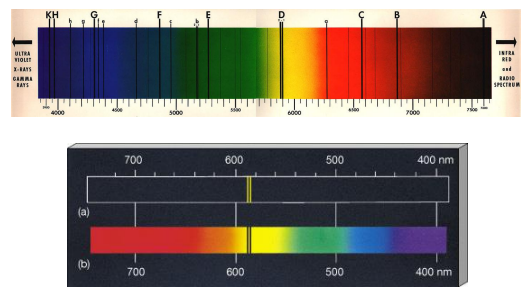
flame test - introducing a sample of the element or compound to a hot, non-luminous flame and observing the color of the flame that results
Emission spectrum - Light emitted by matter
Absorption spectrum - Light absorbed by matter
Atomic spectra - lines
fine
electronic emission only
quantum transitions
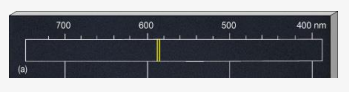
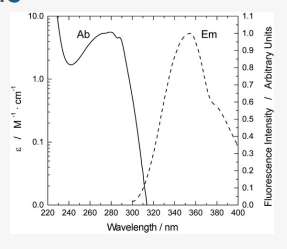
Molecular spectra - bands
broad
each electronic state contains vibrational and rational states
Franck-Condon principle - when a molecule is undergoing an electronic transition, such as ionization, the nuclear configuration of the molecule experiences no significant change
Dual nature of light
Newton - corpuscles (particles)
Bohr - wave
interference - Two beams of light upon collision do not change their direction
Einstein - photoelectric effect
chemical change - photon ‘destroyed’ in the process
G.N. Lewis - coined the term photon
E=hv
v=c/λ
E=hc/λ
Wave - bulk properties (reflection, interference, diffraction)
Particle - atomic/molecular interactions (photons)
Why spectroscopy?
Key applications in Biochemistry
Protein-ligand interactions (UV-Vis absorption).
Myoglobin vs Neuroglobin binding to Heme
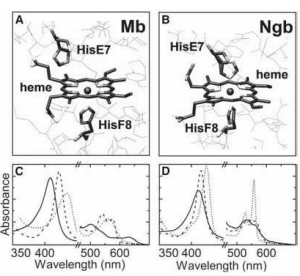
Solid lines- Ferric heme iron (Fe3+) is coordinated by H2O/OH in Mb and by the distal histidine HisE7 in Ngb. Dotted lines – Deoxy species, the sixth coordination site on the ferrous heme iron (Fe2+) is vacant in Mb; in Ngb, the iron is still coordinated by the HisE7. Dashed line - The CO-ligated form where a CO molecule is bound to Fe2+ in both proteins.
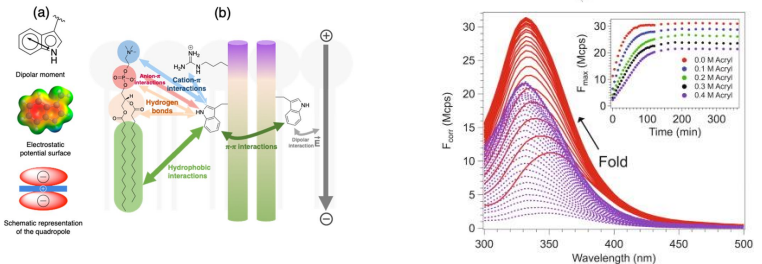
Molecular environments & folding (Fluorescence)
Tryptophan to analyse folding of proteins
Single-molecule tracking (Super-resolution microscopy).
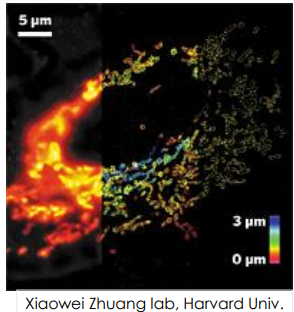
Molecular interactions (FRET, FLIM)
How Light Helps Us Study Biomolecules
Light absorption & emission reveal molecular structure and environment
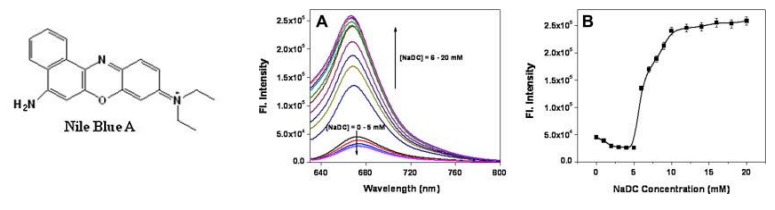
Different techniques target different biomolecular properties.
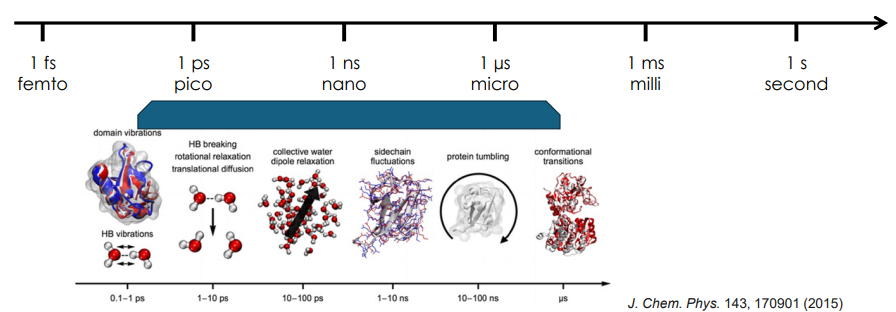
Optical spectroscopy
Phosphorescence*
Fluorescence*
(*steady state or time-resolved emission)
Internal conversion
Intramolecular charge transfer
Conformational change
Electron transfer
Proton transfer
Energy transfer
Excimer/ Exciplex formation
Photochemical transformation
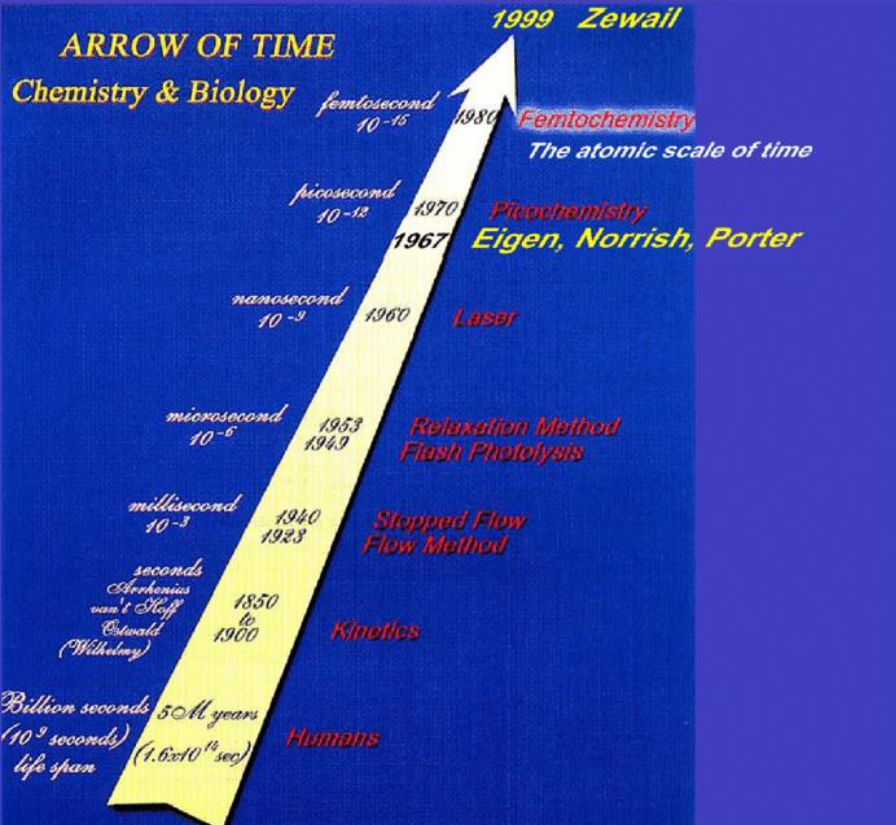
The visual system and need for time resolution
The human visual system can process ~10 images per second (10 Hz)
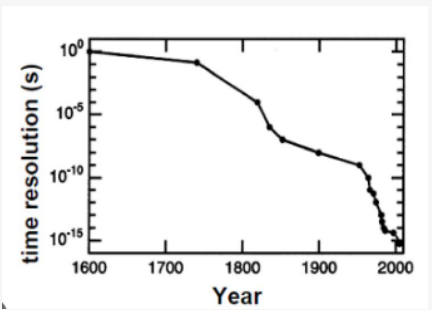
1960 - first (pulse) laser invented - excite samples
Absorption spectroscopy
transitions between different energy levels of a molecule, induced by the energy of the incident electromagnetic radiation.
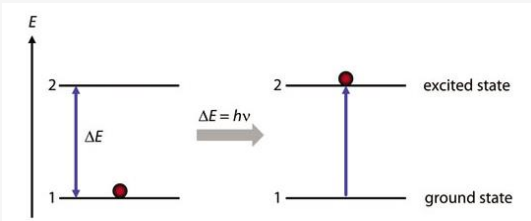
energy of photon >= differece in energy btwn the two states
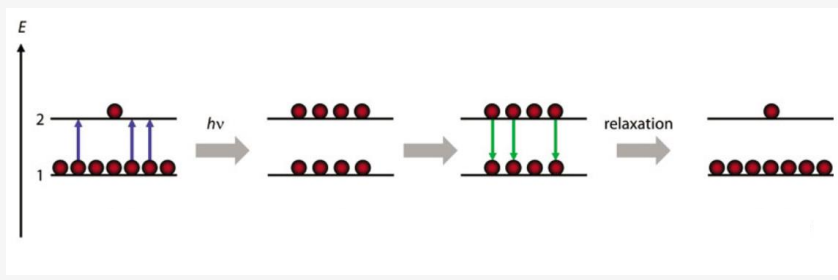
equilibrium of states
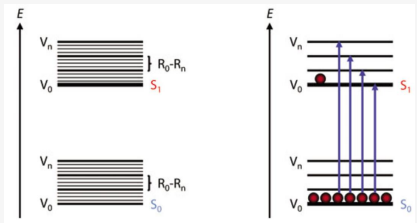
lines → spectra - Collisions between absorbing molecules and solvent make the energy levels less discrete Thus, we observe an “ensemble” spectrum Rather than discrete lines
Rotational state energy ~0.1x vibrational state energy ~ 0.01x electronic state energy
At room temp, RT ~ 2.5KJ.mol-1 ~ Rotational energy differences between state
At room temp, transitions start at S0 and V0 but not R0