Sudden Cardiac Arrest
Overview
Discussion on sudden death epidemiology, workups based on nutrient characteristics, and defibrillator usage.
Historical context from Bruce Fye concerning ventricular fibrillation in ancient writings.
Sudden Death Epidemiology
Most common cause of sudden death in the US remains coronary disease (81%).
Recent data indicates increased incidence of sudden death in younger individuals due to:
Rising obesity epidemic.
Associated metabolic conditions.
Key Findings
45% of sudden deaths occur in undiagnosed heart disease patients.
2% are due to genetically based arrhythmic disease.
Causes of Sudden Death
Structural Causes
Coronary Disease
Major cause of sudden death.
Plaque ruptures can cause ventricular fibrillation (VF).
Many victims have evidence of silent myocardial infarctions (MIs).
Dilated Cardiomyopathy (DCM)
Contributes significantly to sudden death, ranking as the second major cause.
Recent decline in sudden death rates due to advancements in treatments (ACE inhibitors, beta-blockers, etc.).
Medical therapies have been shown to reduce risk significantly.
Electrical Causes
Post-cardiac arrest management should include monitoring and testing for electrical abnormalities.
Evaluation for arrhythmic syndromes and genetic testing recommended for those with concerning phenotypes.
Defibrillation
Importance of quick defibrillation following identification of rhythm disturbance.
External and internal defibrillation methods discussed with historical contributions from researchers.
Workup for Sudden Death
Standard Labs and Imaging
Routine lab tests including troponins, D-dimer for pulmonary embolism, and ECG are critical.
Imaging techniques like CT scans, Cardiac MRI, and PET scans tailored based on patient presentation.
Genetic and Secondary Evaluations
Genetic testing should be pursued in cases with suspected hereditary conditions.
Secondary workup may involve evaluating for structural changes via echocardiogram or MRI.
Risk Factors for Sudden Death
Traditional risk factors include:
Smoking, obesity, untreated hypertension, diabetes.
Increasing coronary artery disease observed in younger populations.
Multi-vessel coronary spasm as a potential risk factor in women.
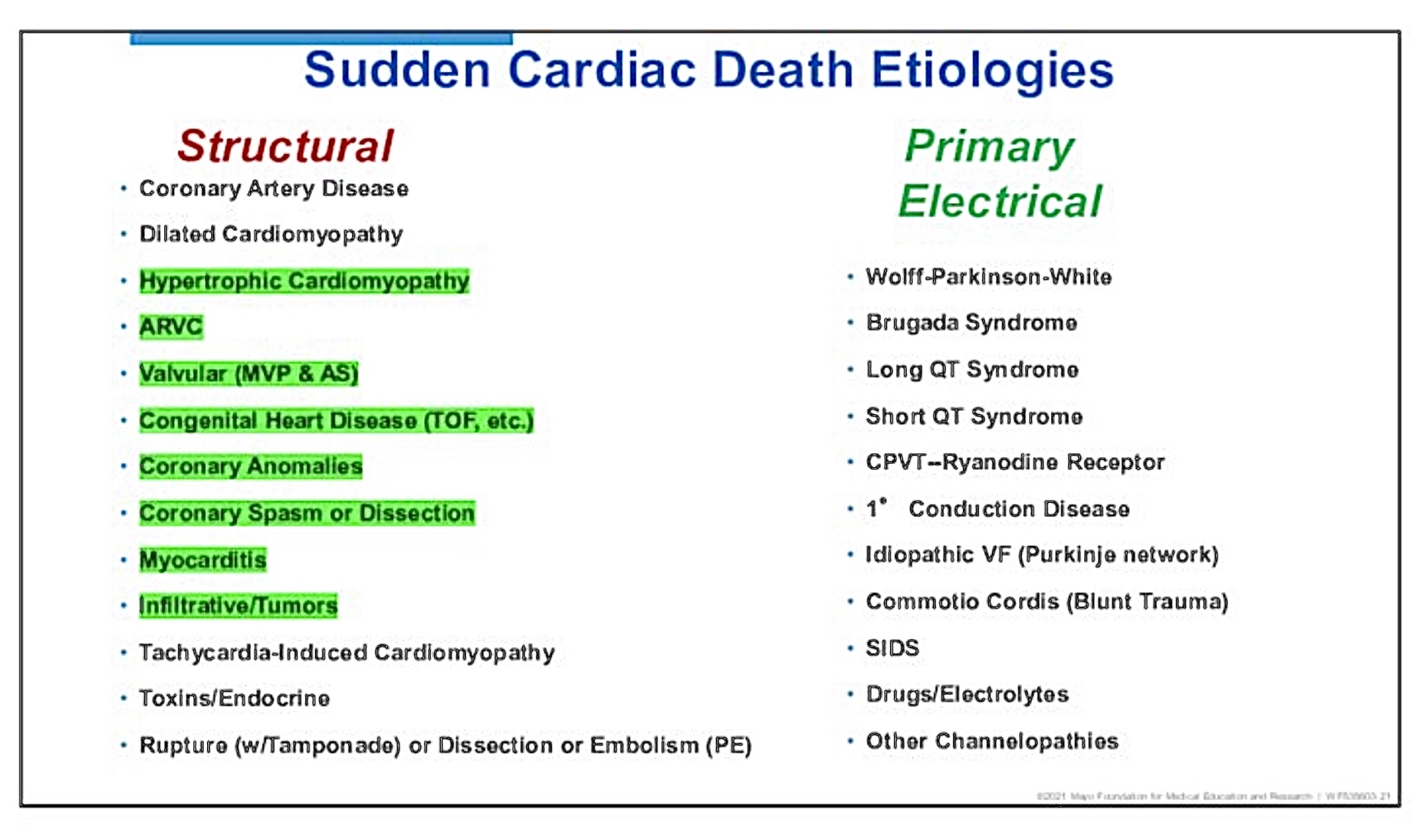
Structural Abnormalities in Young Athletes
Hypertrophic cardiomyopathy recognized as a major cause of sudden death in athletes.
Cases of commotio cordis (sudden death due to impact).
Arrhythmogenic right ventricular cardiomyopathy (ARVC) noted for its association with sudden death in young individuals.
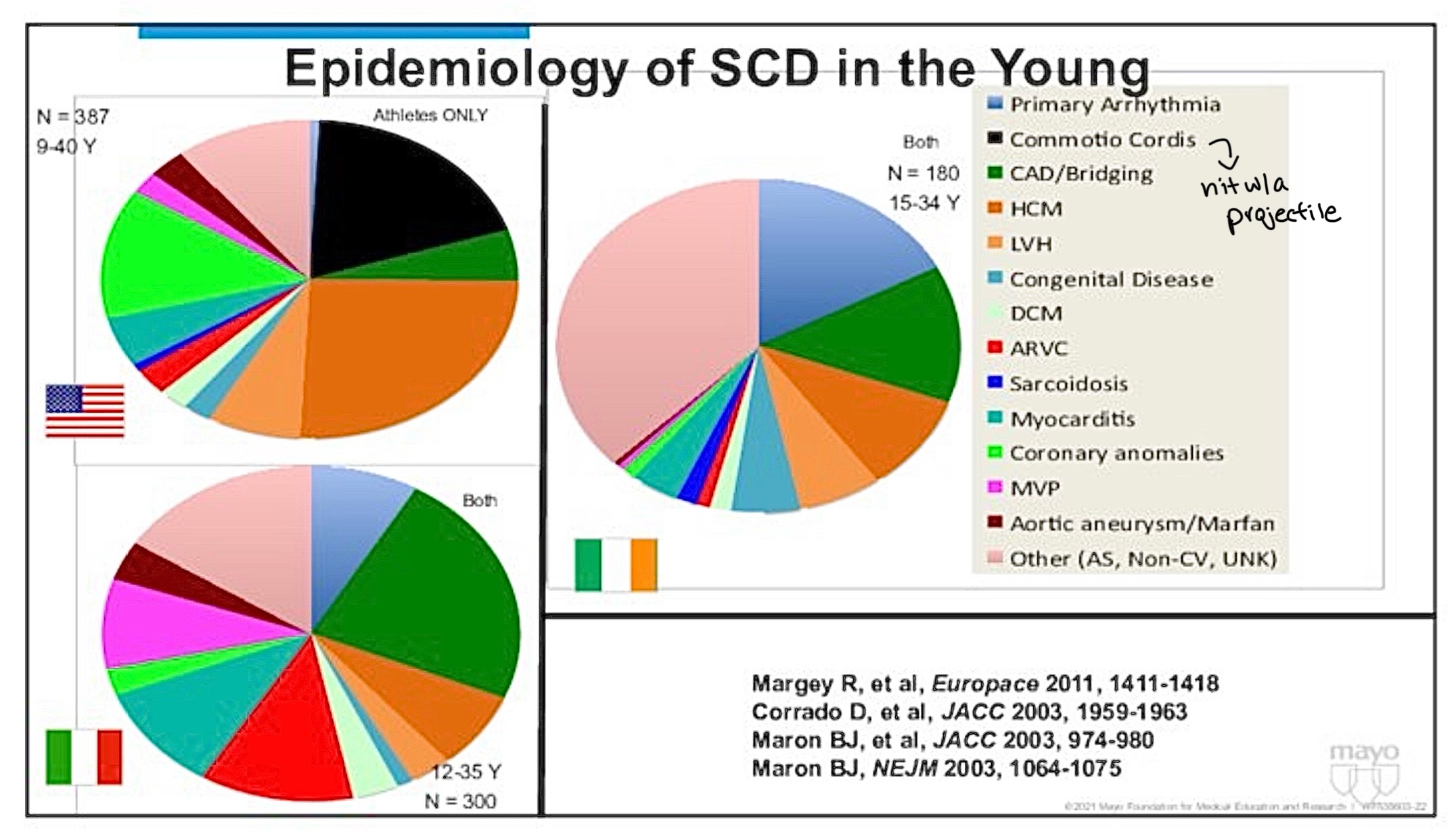
Management and Treatment Strategies
Multidisciplinary approach to manage sudden death survivors effectively.
ICD (Implantable Cardioverter-Defibrillator) in secondary prevention for:
Patients with previous cardiac arrest or significant left ventricular dysfunction.
Indications for defibrillator placement include:
After acute ischemia with poor EF post-revascularization.
High-risk patients during stratification process.
Summary
Immediate focus on restoration of electrical rhythm is crucial in sudden cardiac arrest cases.
Importance of thorough evaluation and tailored management strategies to mitigate risks associated with sudden death.
Emphasis on the multidisciplinary approach for comprehensive care post-sudden death incidents.