2.3.3 Long-run AS
Different shapes of the AS curve: Keynesian and Classical
Keynesian
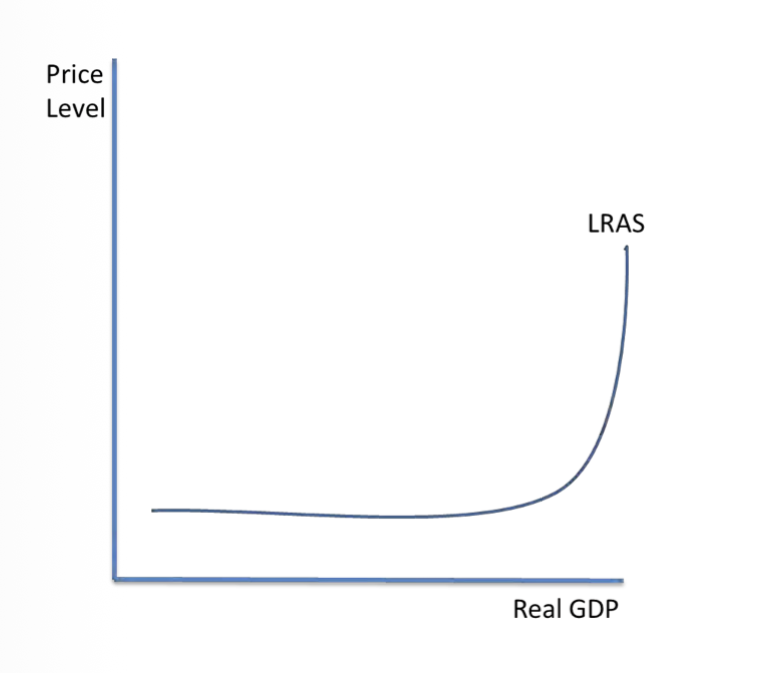
The Keynesian view suggests that the price level in the economy is fixed until resources are fully employed.
The horizontal section shows the output and price level when resources are not fully employed; there is spare capacity in the economy.
The vertical section is when resources are fully employed.
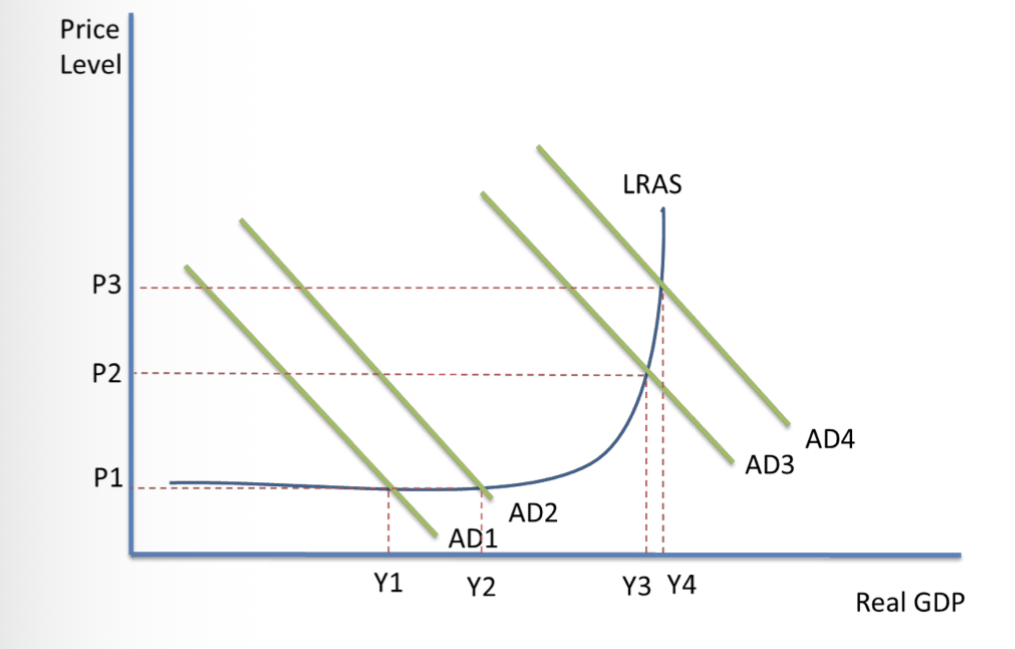
Over the spare capacity section, output can be increased (AD1 to AD2) without affecting the price level (stays at P1). In other words, output changes are not inflationary.
Once resources are fully employed, an increase in output (AD3 to AD4) will be inflationary (price level increases from P2 to P3)
Classical
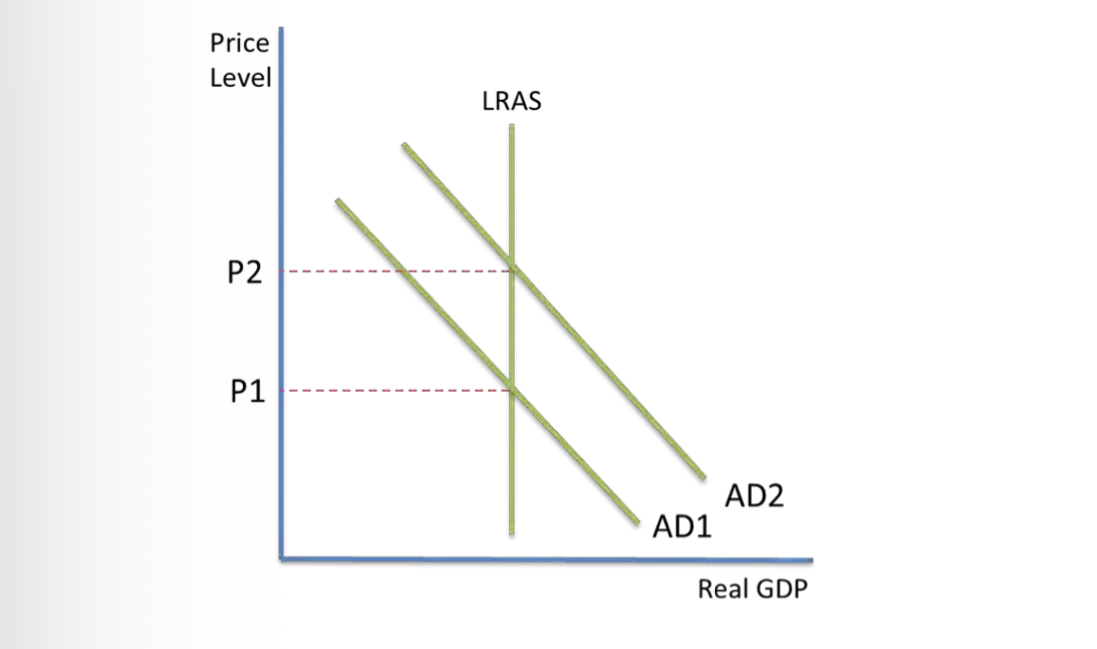
The view suggests that output is fixed at each level. All factors of production in the economy are fully employed in the long run
This means that changing AD, such as AD1 to AD2 only makes a change in the price level (P1 to P2) and it will not change national output (real GDP).
Factors influencing Long run AS
The LRAS curve is influenced by changes which affect the quantity or quality of the factors of production. This is equivalent to shifting the PPF curve i.e when the economy is operating at full capacity.
Technological advances
If more money is spent on improving technology, the economy can produce goods in larger volumes or improve the quality of the goods and services produced
Changes in relative productivity
A more productive labour and capital input will produce a larger quantity of output with the same quantity of input.
Changes in education and skills
This improves the quality of human capital so its more productive and more able to produce a wider variety of goods and services. May become more innovative.
Changes in government regulation
Government regulation could limit how productive and efficient a firm can be if its excessive. This is sometimes referred to as ‘red-tape’
Demographic changes and migration
If there is net inward migration and the majority of the population is of working age, the size of the labour force will increase, which means the economy can increase its output.
Competition policy
A more competitive market encourages firms to be more efficient and more productive , so they are not competed out of business. Governments can use effective competition policy to stimulate efficiency in the economy.