Brown - Microbial Insecticides
A microbial insecticide can be an organism that either produces a toxic substance that kills an insect species
OR has the ability to fatally infect a specific target insect
The most utilized microbial insecticides are the toxins synthesized by B. thuringiensis
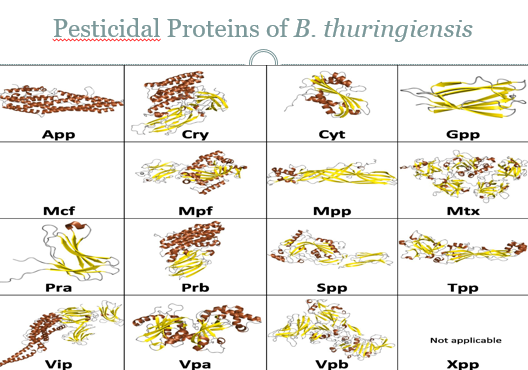
INSECTCIDIAL TOXIN OF B.THURINGIENESIS
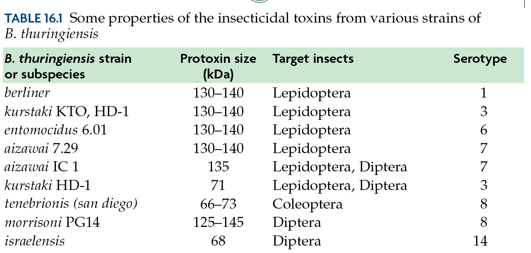
B. thuringiensis comprises a large number of strains and subspecies ( 350)
Each strain produces a different toxin that can kill different insects
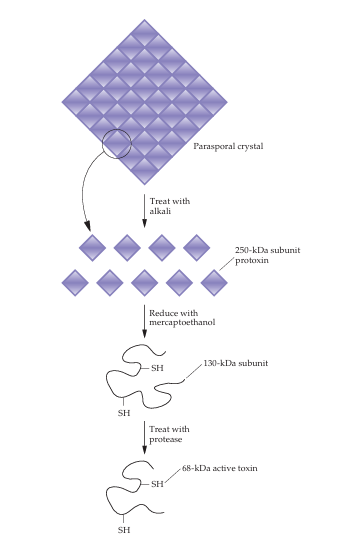
The insecticidal activity of B. thuringiensis strains is contained within the parasporal crystal
The parasporal crystal is synthesized during bacterial sporulation
The parasporal cystal composes ~ 20 to 30% of the dry weight of a sporulated culture
This consists mainly of protein (95%) and 5% carbohydrate
About 150 different parasporal crystal proteins (Cry proteins) are known
It is an aggregate of proteins
Can be dissociated by mild alkali treatment
The subunits can be dissociated invitro with B-mercaptoethanol
Mercaptoethanol reduces disulfide linkages
CLASSIFICATION
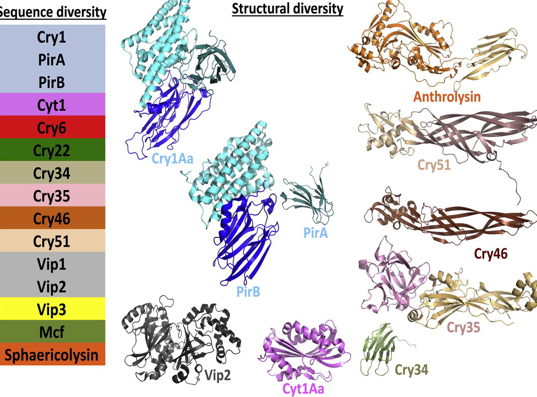
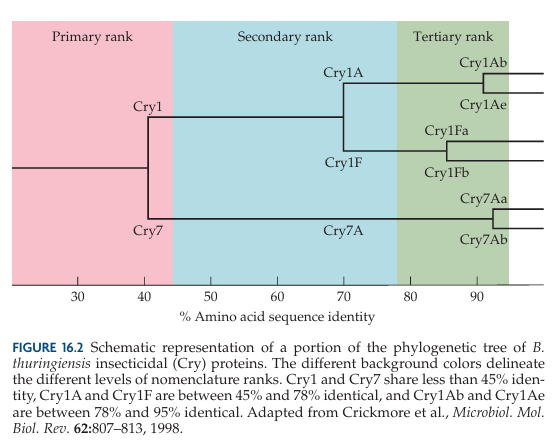
Cry proteins are assigned designations based on their degree of evolutionary divergence
This is visualized as a phylogenetic tree constructed using amino acid sequences
Insecticidal toxin of B. thuringiensis
Parasporal crystal does not usually contain the active form of the insecticide
The protein that is released after solubilization is called a protoxin
This is a precursor of the active toxin
MODE OF ACTION
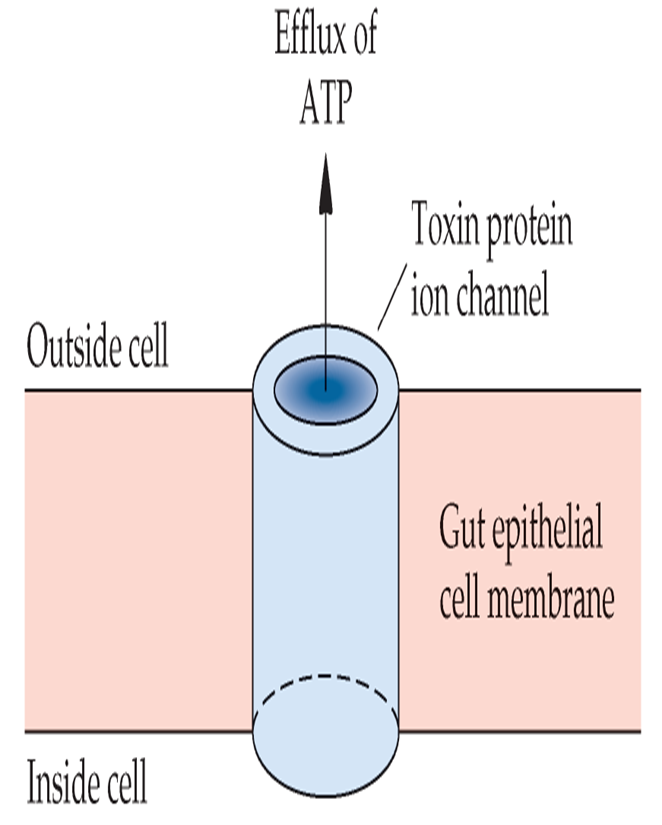
When an insect ingests a parosporal crystal the protoxin is activated by the proteases as well as the alkalinity of the gut of the insect
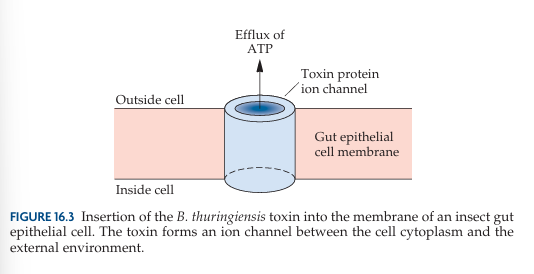
The toxin protein inserts itself into the membrane of the gut epithelial cells of the insect
It creates an ion channel
This ion channel leads to excessive loss of ATP
Cellular metabolism will eventually cease
The insect will then stop feeding, become dehydrated and then die
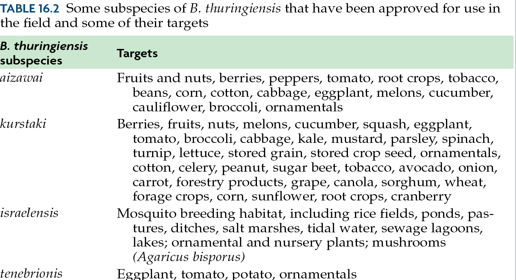
LIMITING FEATURES OF Bt TOXIN
Bt toxin is normally applied as a spray and has to be ingested for it to be toxic. It has no effect on insects if it is applied to the surface of the insect
Hence it has no effect on insects that bore into plants or insects that affect the roots of the plant
One approach is to create transgenic plants that carry and express the Bt toxin gene
It can kill a susceptible insect only during a specific developmental stage
Hence the toxin must be applied only during a specific developmental stage
Knowledge of the lifecycle of the insect is important
Major impediment to the wide spread application of Bt insecticide is the cost
(1.5-3 times the cost of chemical insecticides)
The parasporal crystal can be degraded by sunlight.
In some instances it may persist in the environment for a day or a month
The lack of persistence in the natural environment of the insecticidal protoxin means that selection of resistant insects is highly unlikely
TOXIC GENE ISOLATION
To develop B. thuringiensis insecticides with greater potencies and broader host ranges, it is necessary to isolate and characterize the protoxin gene
The first step is to determine whether the toxin is located on a plasmid or on the chromosomal DNA
To test whether it is carried on a plasmid, Bt strain would be conjugated to a strain that does not have the toxin
Chromosomal DNA are rarely transferred by conjugation
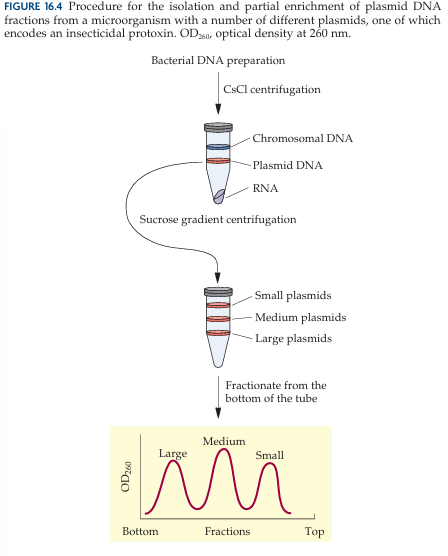
Bacterial culture is grown and then lysed
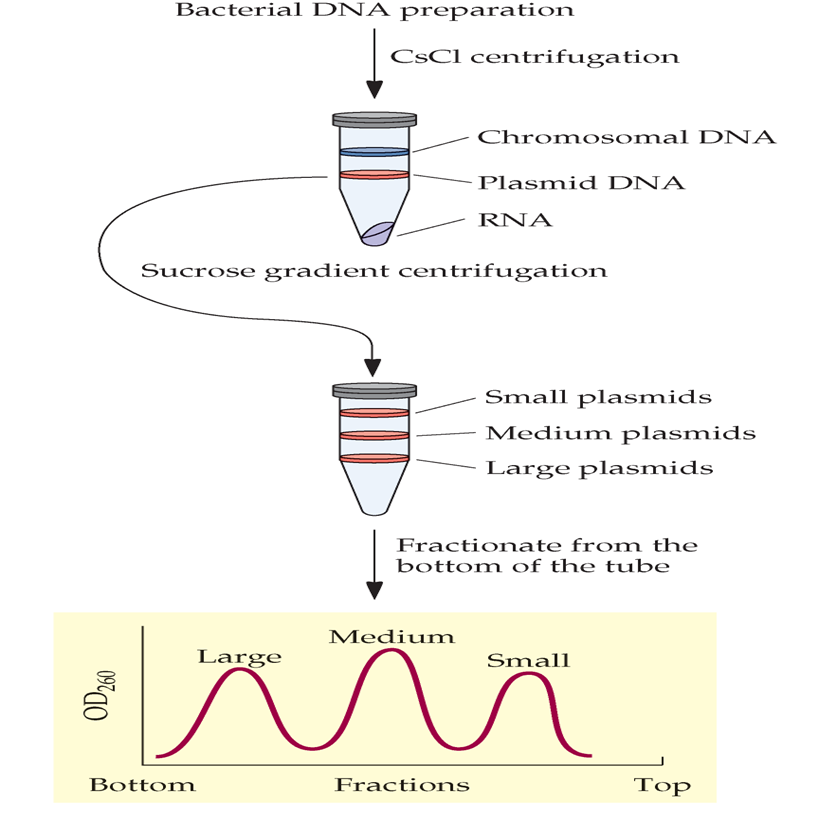
CsCl gradient centrifugation is conducted
If the protoxin is part of the genome, a clone bank is construct from chromosomal DNA
If it is plasmid encoded further fractionation occurs by sucrose gradient centrifugation
This procedure separates plasmids according to size
and enriches the DNA which then serves as a starting material for isolation of the protoxin gene
Given the current knowledge regarding the sequence similarity among B. thuringiensis protoxin genes,
the cloning and screening of these genes are better achieved through PCR
ENGINEERING B.THURINGIENSIS TOXIN GENES
The entire amino acid sequence of the toxin gene has been determined
Comparative genomics has shown that a common toxic domain exits in all of the B. thuringiensis strains
A subcloned segment of the coding sequence produced a truncated protein that retained full insecticidal activity
The following can be used for further genetic manipulation:
Intact protoxin gene
A portion of an intact protoxin gene
A chemically synthesized coding sequence
Most B. thuringiensis protoxin proteins are produced during sporulation phase of growth
It would be more advantagous to have a protoxin produced during vegetative stage of growth
This would allow for synthesis under a continous fermentation process
During sporulation of B. thuringiensis a specific transcription initiation factor (σ factor) interacts with promoters that are active only within this phase of the bacterial life cycle
The σ factor turns on the transcription of the mRNAs that are unique to sporulation
To express the protoxin gene during vegetative growth, it is necessary to place the toxin producing gene(s) under the control of a promoter that is active during vegetative growth
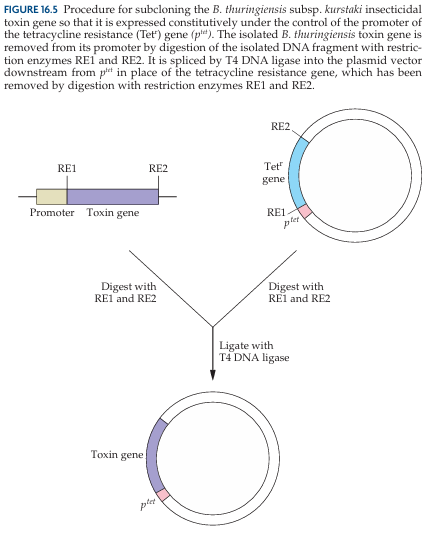
An example of this was seen in the subcloning of B. thuringiensis subsp kurstaki insecticidal toxin gene.
This gene was expressed constitutively under the control of the promoter of the tetracycline resistant gene (p tet)
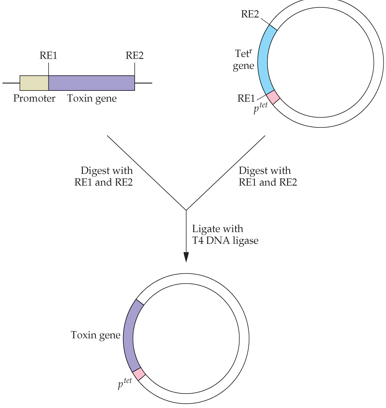
The toxin gene is removed from the promoter by digestion with RE1 and RE2
The tet gene in the plasmid vector was removed using RE1 and RE2
It is spliced by T4 DNA ligase into the plasmid vector downstream from ptet promoter
When this construct was use to transform a sporulation defective mutant of B. thuringiensis , toxin synthesis occurred in the absence of sporulation
Under these conditions toxin synthesis is more efficient than in wild type cells
Transformed cells produce more protein
Time and substrate required to produce the toxin is smaller
This system can be refined by integrating the vegetative toxin genes in the chromosmal DNA of the B. thuringiensis host. Why is this important?
The creation of microbial insecticides that are effective against a broad spectrum of insect is another area of biotech research
Broad specificity can be achieved by:
Transferring the gene for a particular toxin into a B. thuringiensis strain that normally synthesizes a different species –specific toxin
Fusing portions of two different species- specific toxin genes to one another so that a unique dual-acting toxin is produced
In addition to dual toxicity the bacteria with two different toxin genes showed an effect against non target pest
Modifying the portion of the insecticidal toxin that is responsible for binding to the insect gut epithelial cell receptors. In particular modification of domain II
B. thuringiensis subsp israelensis protoxin is highly toxic when ingested by mosquito larvae
However the parasporal cystals sink rapidly when sprayed on water, rendering it ineffective
To overcome this, the insecticidal toxin gene is introduced into organisms that are food sources for the mosquito larvae eg.
Synechoccus spp (photosynthetic cyanobacteria)
Caulobacter crescentus
In field trials however the toxin genes expressed in these organisms had poor viability and were expressed at low levels
Another alternative micro-organsism is Asticcacaulis excentricus
Gram negative aerobe
Found near the surface of water
It is inexpensive to produce
Does not have a high level of protease activity
Does not sink when sprayed on ponds infested with mosquitoes
Not very sensitive to UV light
Insects that attack the roots of plants are not affected by B. thuringiensis toxin genes
However it is possible to introduce the toxin gene into bacterial species colonizing the rhizosphere
The engineered bacteria can then be introduced to the soil where it will provide protection against root attacking insects
As long as the engineered bacterium is able to persist it will continually produce the toxin, obviating the need for repeated spraying
Case study the integration of B. thuringiensis subsp kurstaki toxin gene in Pseudomonas fluorescens that colonises corn roots
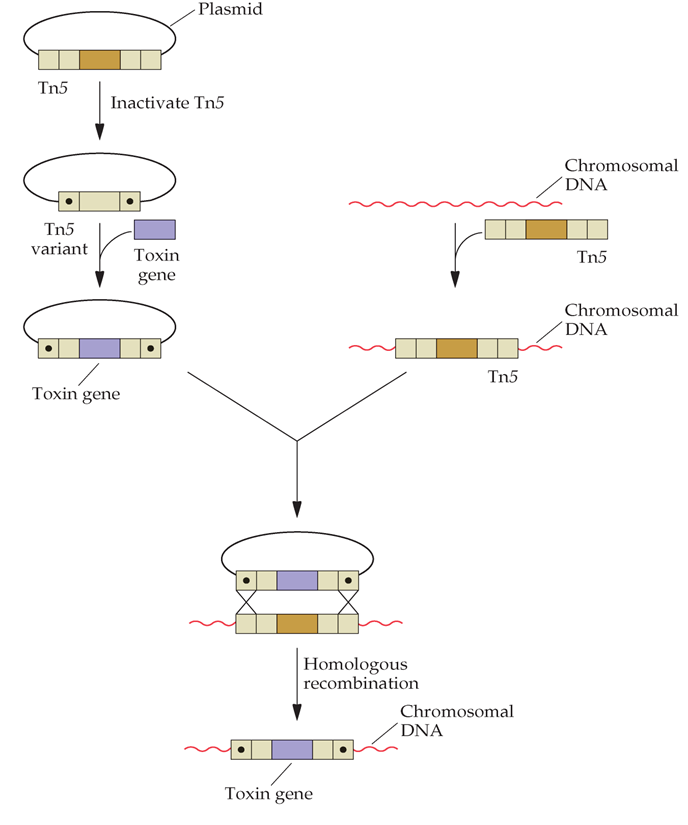
A transposon Tn5 element that had been cloned into a plasmid was genetically modified by altering portions to the right and left borders and deleting transposase
Altered Tn5 element cannot be excised
An isolated B. thuringiensis subsp kurstaki toxin gene was spliced into the middle of the altered Tn5 element on the plasmid and placed under a constitutive promoter
A wild type Tn5 element was transposed into the chromosome of P fluorescens (root colonizing strain)
The plasmid carrying the altered Tn5 element with the inserted toxin gene was introduced into the host bacterium that had the integrated wild-type Tn5 element
Homologous recombination occurs by means of a double crossover between the non-transposable Tn5 element on the plasmid that carried the toxin gene
and the chromosomally integrated wild type Tn5 element
This leads to the integration of the altered Tn5 with the toxin gene into the chromosomal DNA with the concomitant loss of the wild type Tn5 element
This modified bacteria is now ready for field testing
PREVENTING THE DEVELOPMENT OF RESISTANCE
The toxicity moiety of many Cry proteins is composed of three separate domains:
Domain II is involved in the specific binding of the toxin to protein receptors that are found on the surface of the midgut epithelial cells
Domain I (located on the N terminal end of the toxin molecule) is involved in the formation of the channel (pore)
DOMAIN III
(located on the C terminal end of the toxin molecule),
Involved in the functioning of the channel (pore)
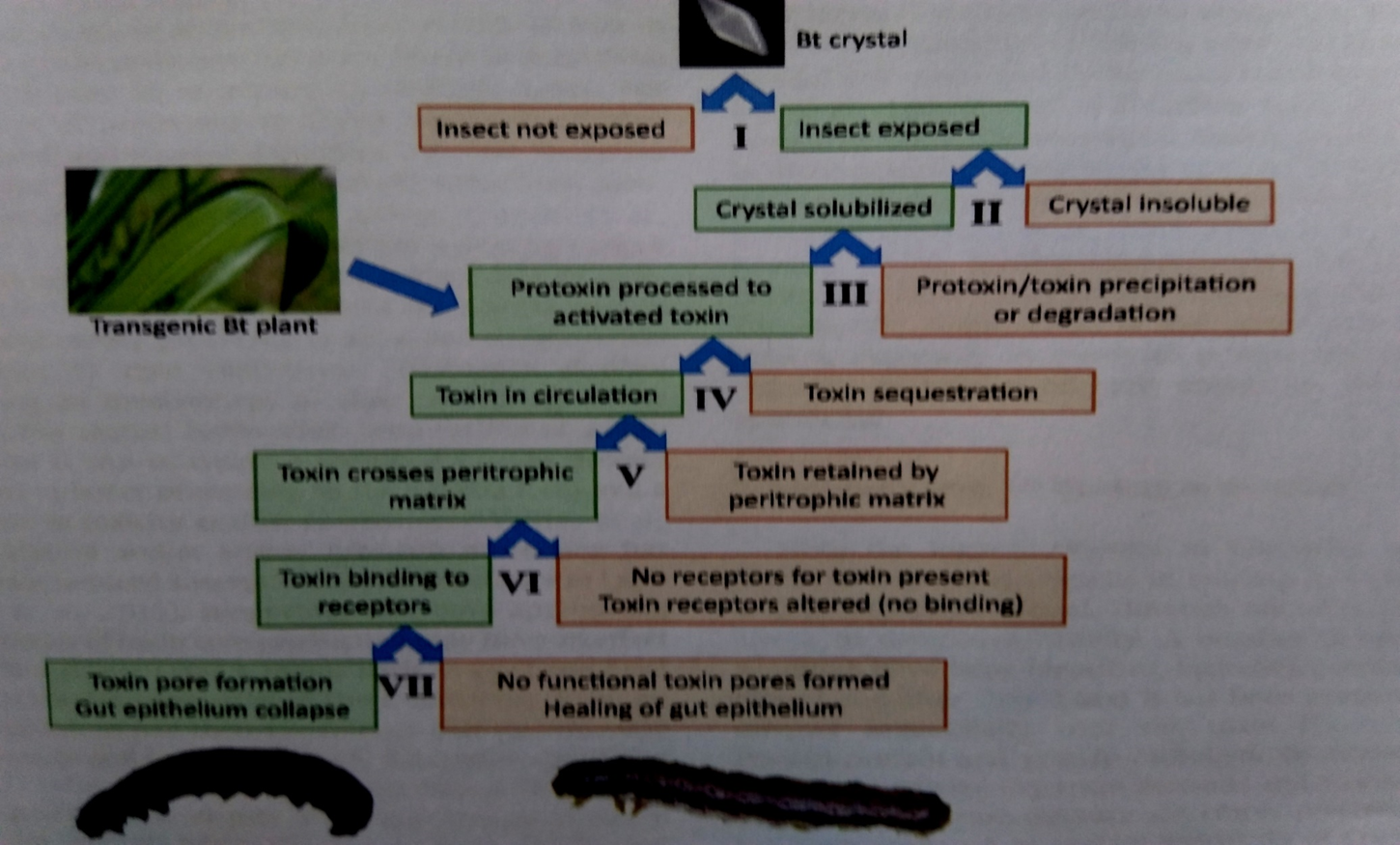
Generally resistance to B. thuringiensis insecticidal toxins is the consequence of a mutation(s) that alters an insect midgut receptor protein so it no longer binds to the Cry protein
If however a toxin gene is engineered so that the toxin is bound to more than one midgut cell surface protein, then resistance might be less likely to arise. Why?
It would require alterations to several proteins
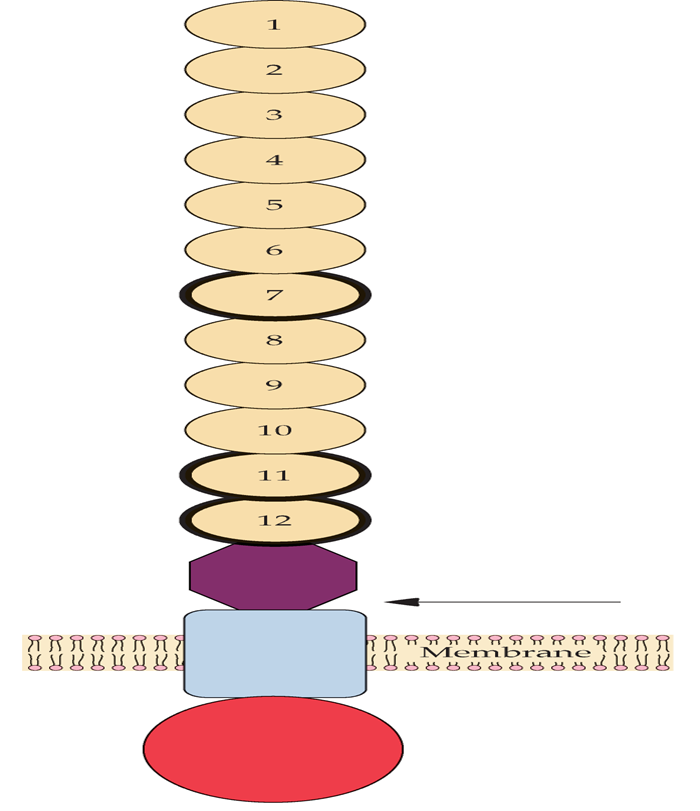
Cadherin protein molecule embedded in a midgut epithelial membrane
Alternating the strain of B. thuringiensis that is employed from one season to the next
Alternating the B. thuringiensis treatment with the use of chemical or biological insecticides
Applying mixtures of different strains eg P. fluorescens
Applying low levels of chemical insecticides and B. thuringiensis at the same time
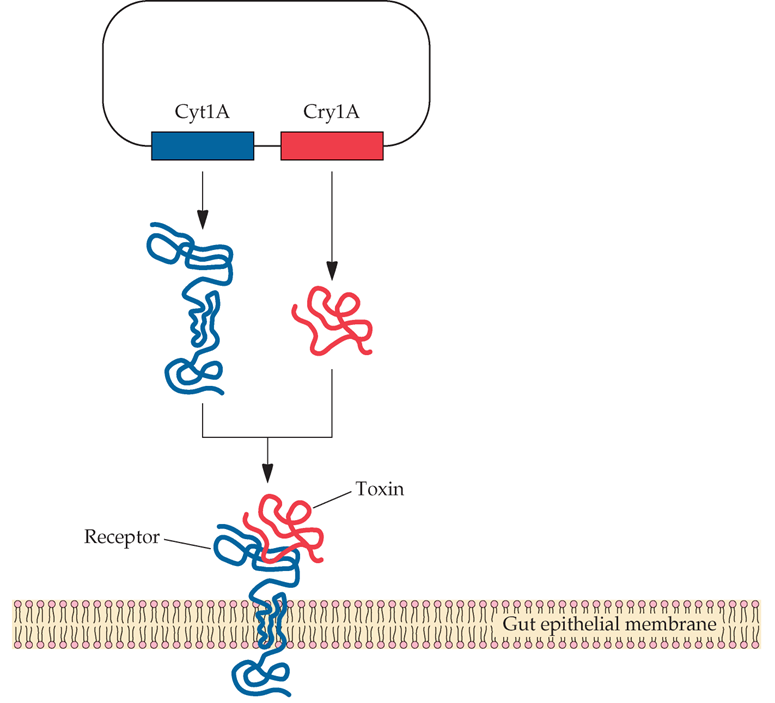
TEXTBOOK
INSECTICIDAL TOXIN OF B.THURINGIENSIS
MODE OF ACTION AND USE
A microbial insecticide can be a microbially produced toxic substance that kills an insect species or an organism that has the ability to fatally infect a specific target insect. The most studied, most effective, and most often utilized microbial insecticides are the toxins synthesized by B. thuringiensis. This bacterium comprises a large number of strains and subspecies, each of which produces a different toxin that can kill specific insects—there are more than 150 different subspecies of B. thuringiensis (Table 16.1). For example, B. thuringiensis subsp. kurstaki is toxic to lepidopteran larvae, including those of moths, butterflies, and skippers; cabbage worms; and spruce budworms. B. thuringiensis subsp. israelensis kills diptera, such as mosquitoes and blackflies. B. thuringiensis subsp. tenebrionis (also known as B. thuringiensis subsp. san diego) is effective against coleoptera (beetles), such as the potato beetle and the boll weevil. In addition, some subspecies of B. thuringiensis produce insecticidal toxins that are directed against hymenoptera (sawflies, wasps, bees, and ants), orthoptera (grasshoppers, crickets, and locusts), and mallophaga (lice).
The insecticidal activity (toxin) of B. thuringiensis subsp. kurstaki (first discovered in 1911) and other strains is contained within a very large struc ture called a parasporal crystal, which is synthesized during bacterial spo rulation. Although no significant role on behalf of the bacterium has been attributed to the parasporal crystal structure, by synthesizing the crystal, the bacterium is “providing for its future” in that a dead insect provides sufficient nutrients to allow germination of the dormant spore. The parasporal crystal contains approximately 20 to 30% of the dry weight of a sporulated culture and usually consists mainly of protein (~95%) and a small amount of carbohydrate (~5%). About 150 different parasporal crystal proteins (Cry proteins) are known. The crystal is an aggregate of protein that can generally be dissociated by mild alkali treatment into sub units. The subunits can be further dissociated in vitro by treatment with β-mercaptoethanol, which reduces disulfide linkages (Fig. 16.1).
The insecticidal toxins from the B. thuringiensis strains were previously grouped into four major classes—CryI, CryII, CryIII, and CryIV—based on the insecticidal activity of the toxin. These proteins were further organized into subclasses (A, B, C, etc.) and subgroups (a, b, c, etc.). In the past few years, as increasing numbers of B. thuringiensis strains were isolated and their genes were characterized, it became clear that the original classifica tion was unable to accommodate many of the newly discovered B. thur ingiensis toxin genes. Therefore, a new system of B. thuringiensis gene classification was introduced.
In the current classification scheme (established in 1998), B. thuringi ensis insecticidal (Cry) proteins are assigned designations based on their degree of evolutionary divergence, as estimated by certain mathematical algorithms. This scheme is readily visualized by constructing a phyloge netic tree based on the amino acid sequences of B. thuringiensis toxin pro teins, i.e., Cry proteins (Fig. 16.2). Basically, the amino acid sequences of the proteins are compared, and if the proteins are identical, then they are 100% homologous. If only 50% of the amino acids are the same, then the proteins have 50% identity. The relationship among a set of protein sequences can be deduced and represented as a branched tree. The nodes (branch points) of the tree represent points of divergence. For the classification of the B. thuringiensis Cry proteins, a four-part naming system was devised. Demarcations, set at 95, 78, and 45% homology, show the boundaries that define the different nomenclature ranks. The name that is given to a par ticular toxin depends on the location of the node where the toxin protein sequence enters the tree relative to these set boundaries.
A toxin that joins the tree to the left of the leftmost boundary is assigned a new primary rank (an Arabic numeral), one that joins the tree between the central and left boundaries is assigned a new secondary rank (an uppercase letter), one that joins the tree between the central and the right boundaries is assigned a new tertiary rank (a lowercase letter), and one that joins to the right of the rightmost boundary is assigned a new quaternary rank (an Arabic numeral). For example, Cry proteins that are less than 45% homologous are given a number (e.g., Cry1 and Cry7) and are assigned to the primary rank. Cry proteins that are 45 to 78% identical to proteins of the primary rank are further designated with an uppercase letter (e.g., Cry1A and Cry1F). The complete Cry protein tree consists of the positions of all Cry proteins. This classification system is utilized throughout this chapter, even when refer ring to work that was published prior to the development of this system.
The parasporal crystal does not usually contain the active form of the insecticide. Rather, once the crystal has been solubilized, the protein that is released is generally a protoxin, a precursor of the active toxin. The protoxin of many of the Cry toxins that are directed against lepidoptera has a molecular mass of approximately 130 kilodaltons (kDa) (Fig. 16.1).
When a parasporal crystal is ingested by a target insect, the protoxin is activated within its gut by the combination of alkaline pH (7.5 to 8.0) and specific digestive proteases, which convert the protoxin into an active toxin with a molecular mass of approximately 68 kDa (Fig. 16.1). In its active form, the toxic protein inserts itself into the membranes of the gut epithelial cells of the insect and creates an ion channel, which leads to an excessive loss of cellular ATP (Fig. 16.3). About 15 minutes after this ion channel forms, cel lular metabolism ceases; the insect stops feeding within a few hours, becomes dehydrated, and eventually dies (in about 2 to 5 days).
Because the conversion of the protoxin to the active toxin requires both alkaline pH and the presence of specific proteases, it is extremely unlikely that non target species, such as humans and farm animals, will be affected.
The mode of action of B. thuringiensis toxins imposes certain constraints on its application. To kill an insect pest, B. thuringiensis parasporal crystals must be ingested. Contact of the bacterium or the insecticidal toxin with the surface of the target organism has no effect on it. The requirement that the insecticide be ingested, in part, limits the susceptibility of nontarget insects and other animals to the insecticide. B. thuringiensis is generally applied by spraying, so it is usually formulated with insect attractants to increase the probability that the target insect will ingest the toxin. However, insects that bore into plants or attack plant roots are less likely to ingest a B. thuringiensis toxin that has been sprayed on a host plant, so other strategies have been devised to control such pests. One approach is to create transgenic plants that carry and express a B. thuringiensis toxin gene so that they are protected from infestation throughout the growing season.
It was recently discovered for gypsy moths (and suggested to possibly be the case for other insects, as well) that the B. thuringiensis toxin does not kill the larvae by itself as previously thought. Rather, bacteria that are part of the insect’s gut microbial community are required for toxicity to the insect. Elimination of the insect’s gut bacteria by oral administration of antibiotics abolished B. thuringiensis insecticidal activity, and reintroduc tion of an Enterobacter sp. that is normally part of the insect’s gut microbial community restored this activity. The data indicate that the B. thuringiensis toxin enables the enteric bacteria to reach the insect hemocoel by permea bilizing the gut epithelium. In this way, the insect is killed much more rapidly than might otherwise be expected.
The discovery that B. thuringi ensis insecticidal activity depends on insect enteric bacteria should not have any significant effect on the efficacy or use of B. thuringiensis-based insecti cides. However, this information may be important in the design and exe cution of some laboratory experiments intended to better understand the functioning of B. thuringiensis insecticidal strains and to facilitate the devel opment of improved biological insecticides.
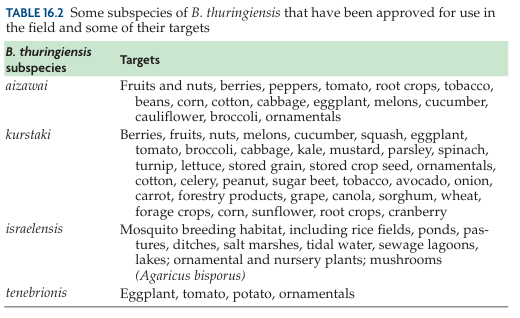
A limiting feature of the action of the B. thuringiensis toxin is that it can kill a susceptible insect only during a specific developmental stage. Therefore, the toxin must be applied when the pest population is at a par ticular stage in its life cycle (generally the larval stage). The other major impediment to more widespread application of B. thuringiensis subsp. kurstaki is that it costs from 1.5 to 3 times as much as chemical insecticides. The limitations and the cost notwithstanding, several subspecies of B. thu ringiensis have been approved for use and have rapidly gained widespread acceptance (Table 16.2).
B. thuringiensis subsp. kurstaki was first discovered in 1901, although its commercial potential was largely ignored until 1951. Within recent decades, however, B. thuringiensis subsp. kurstaki has become the major means of controlling the spruce budworm in Canada. In 1979, approximately 1% of the forest area in Canada that was treated with an insecticide to combat the spruce budworm (about 2 million hectares, or 8,000 square miles) was sprayed with B. thuringiensis subsp. kurstaki. The remainder of the treated forests were sprayed with chemical insecticides. By 1986, the use of B. thu ringiensis subsp. kurstaki had increased dramatically. It was used to treat approximately 74% of the forests sprayed in that year for spruce budworm. In other countries, B. thuringiensis subsp. kurstaki has been used against tent caterpillars, gypsy moths, cabbage worms, cabbage loopers, and tobacco hornworms.
For the biological control (biocontrol) of insect pests, B. thuringiensis subsp. kurstaki is typically applied by spraying approximately 1.3 × 10⁸ to 2.6 × 10⁸ spores per square foot (1 square foot is equivalent to 0.093 m2) of the target area. Administration of the spores is timed to coincide with the peak of the larval population of the target organism, because the parasporal crystals, being sensitive to sunlight, are short-lived in the environment. Under simulated conditions, sunlight degrades over 60% of the tryptophan residues of the parasporal crystal within a 24-hour period, thereby ren dering the protein inactive. Depending on the amount of sunlight present, parasporal crystals may persist in the environment for as little as a day or as long as a month. The lack of persistence of the insecticidal protoxin in the natural environment means that natural selection of resistant insects is highly unlikely.
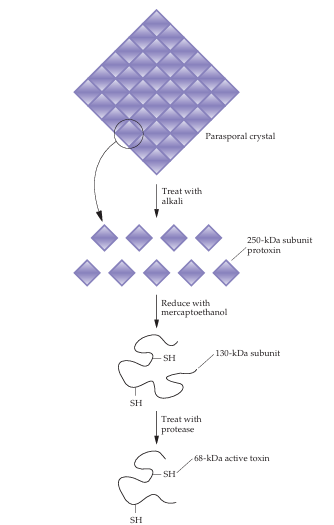
Fig 16.1. Schematic representation of a B. thuringiensis parasporal crystal com posed of Cry1 protoxin protein. Each 250-kDa protein subunit of the parasporal crystal contains two 130-kDa polypeptides. (Molecular masses determined by poly acrylamide gel electrophoresis are approximations and do not always provide exact multiples.) Conversion of the 130-kDa protoxin into an active 68-kDa toxin requires the combination of a slightly alkaline pH (7.5 to 8) and the action of a specific protease(s), both of which are found in the insect gut. The activated toxin binds to protein receptors on the surface of the gut epithelial cell membrane.
TOXIC GENE ISOLATION
To develop B. thuringiensis-based insecticides that have greater potencies and broader host ranges, it is necessary to isolate and characterize the pro toxin gene(s). For the initial isolation of insecticidal protoxin genes, the first step was to determine whether the toxin genes are located on a plasmid or on the chromosomal DNA. To test for plasmid-borne toxin genes, the source B. thuringiensis strain was conjugated with a strain that lacks insecticidal activity. If the latter strain acquired the ability to synthesize the insecticidal toxin, then the toxin gene(s) was most likely present on a plasmid, because the transfer of chromosomal DNA during conjugation is a rare event.
The procedure for isolating a protoxin-encoding DNA sequence is a familiar one. B. thuringiensis cells are grown in laboratory culture and lysed. The total cellular DNA is isolated and separated into plasmid and chromosomal DNA fractions by cesium chloride (CsCl) gradient centrifugation. When the protoxin gene is part of the genome, a clone bank is con structed from the chromosomal DNA. When the toxin gene(s) is plasmid encoded, the plasmid DNA can be further fractionated by sucrose gradient centrifugation, which separates different plasmids according to their sizes and enriches for the DNA that serves as the starting material for the isolation of a protoxin gene(s) (Fig. 16.4).
B. thuringiensis subsp. kurstaki contains an insecticidal protoxin gene on one of seven different plasmids that are approximately 2.0, 7.4, 7.8, 8.2, 14.4, 45, and 71 kilobase pairs (kb) in length. To determine which B. thuringiensis subsp. kurstaki plasmid carries the protoxin gene, following sucrose gradient centrifugation, the plasmid DNA sample is divided into three fractions that contain, respectively, the small (2.0-kb), medium-sized (7.4-, 7.8-, 8.2-, and 14.4-kb), and large (45- and 71-kb) plasmids. The frac tion with the small plasmid is discarded, because the plasmid is too small to encode a protein equivalent to the 130-kDa protoxin. A protein of this size requires at least 4.0 kb of coding DNA. The medium and large plasmid fractions are each partially digested with the restriction enzyme Sau3AI and then ligated into the BamHI site of plasmid pBR322. In the original experiments, these clone banks were transformed into Escherichia coli, and then the colonies were screened immunologically (see chapter 3) by the following procedure to detect clones that expressed a Cry protein and therefore carried a cry gene.
Colonies were transferred from agar plates to a nitrocellulose membrane.
The transferred colonies were lysed with organic solvents.
All available sites on the membrane to which primary and sec ondary antibodies could potentially bind (nonspecifically) were blocked by treating the membrane with bovine serum albumin (which bound to the nonspecific sites and prevented antibodies from binding to those sites).
The bovine serum albumin-treated membranes were treated with rabbit antiserum that contained antibodies against the insecticidal toxin. The antibodies bound only to the insecticidal toxin and not to any nonspecific sites on the membrane.
The membranes were washed to remove unbound antibodies and then treated with 125I-labeled Staphylococcus aureus protein A, which bound only to the Fc portion of the bound antibodies and not to any nonspecific sites on the membrane.
Spots on the membrane corresponding to colonies that actively synthesized the insecticidal toxin were visualized by autoradiography.
The isolated protoxin gene was then used as a DNA hybridization probe to localize the cry gene to the 71-kb plasmid of B. thuringiensis subsp. kurstaki. Similar cloning and screening procedures have been used to iso late other B. thuringiensis toxin genes. However, given the current knowl edge regarding sequence similarity among B. thuringiensis protoxin genes, the cloning and screening of these genes are more easily achieved by using polymerase chain reaction (PCR) and DNA hybridization techniques.
ENGINEERING OF B.THURINGIENSIS TOXIN GENES
Once the isolation and sequencing of a toxin gene were accomplished, the complete amino acid sequence was determined. Comparisons of amino acid sequences from other B. thuringiensis toxin proteins showed that a common toxic domain exists in these strains. Moreover, a subcloned seg ment of the complete protein-coding sequence produced a truncated pro tein that retained full insecticidal activity. Thus, an intact protoxin gene, a portion of one, or a chemically synthesized coding sequence can be used for further genetic manipulation.
SYNTHESIS DURING VEGETATIVE GROWTH
Under normal conditions, most B. thuringiensis protoxin proteins are syn thesized only during the sporulation phase of growth. In other words, only a portion of the growth cycle of the organism is devoted to parasporal crystal production. It might therefore be advantageous, in terms of increased yield and decreased production time, to have the toxin gene tran scribed and translated during vegetative growth. Furthermore, production of the insecticidal toxin during vegetative growth would permit the toxin to be synthesized by a continuous fermentation process, potentially sig nificantly decreasing the cost of producing it. Continuous fermentations are carried out with smaller-scale—and therefore less expensive—bioreactors and downstream processing equipment than conventional batch fermentations.
During the sporulation of B. thuringiensis, a specific transcription initia tion factor (sigma factor) interacts with the promoters of genes that are active only within this phase of the bacterial life cycle. This factor turns on the transcription of the messenger RNAs (mRNAs) that are unique to sporulation. In fact, when a B. thuringiensis toxin gene with its sporulation specific promoter was cloned and expressed in Bacillus subtilis, Bacillus megaterium, or B. thuringiensis, gene transcription occurred only during sporulation. Thus, to express a B. thuringiensis insecticidal toxin during vegetative growth, it is necessary to place the toxin-producing gene(s) under the control of a promoter that is active during vegetative growth.
When a DNA fragment containing a toxin gene that lacked its native promoter was cloned into a plasmid under the control of a continuously active, constitutive promoter from a tetracycline resistance gene that had been originally isolated from a Bacillus cereus plasmid and reintroduced into B. thuringiensis, active toxin protein was produced continuously throughout the growth cycle, including both the vegetative and sporula tion phases (Fig. 16.5). In addition, when the construct was used to trans form a sporulation-defective mutant of B. thuringiensis, toxin synthesis occurred in the absence of sporulation.
Under these conditions, toxin synthesis is more efficient than in wild-type cells, i.e., the final yield of protein is greater in the transformed cells, and less time and substrate are required to produce the toxin. A refinement of this system might entail integration of this vegetatively expressed toxin gene into the chromosomal DNA of the sporulation-defective B. thuringiensis host. This manipulation would ensure that the insecticidal toxin gene is not lost because of plasmid instability during a continuous fermentation process.
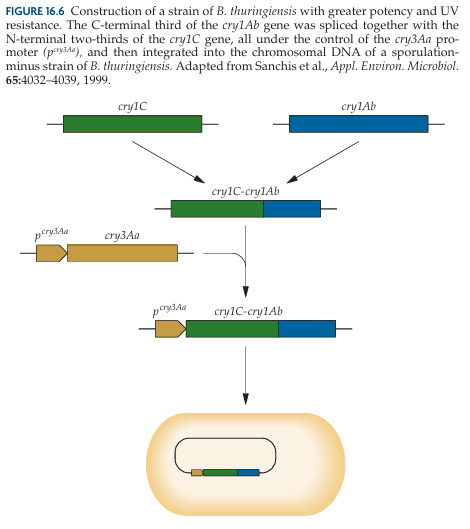
Unlike that of most other B. thuringiensis toxin protein (cry) genes, the expression of cry3A is normally controlled by a vegetative promoter, rather than by a sporulation-specific promoter. The cry3A gene encodes a toxin that is directed against coleopteran larvae. When a mutant strain of B. thu ringiensis that was unable to form spores was transformed with a plasmid carrying a cloned cry3A gene, the insecticidal toxin was both overproduced and stabilized in comparison to when this protein was produced in the wild-type strain. This result suggests that other cry genes that are normally expressed only during sporulation could be placed under the control of the cry3A promoter and overproduced by expressing these constructs in a sporulation-defective B. thuringiensis mutant.
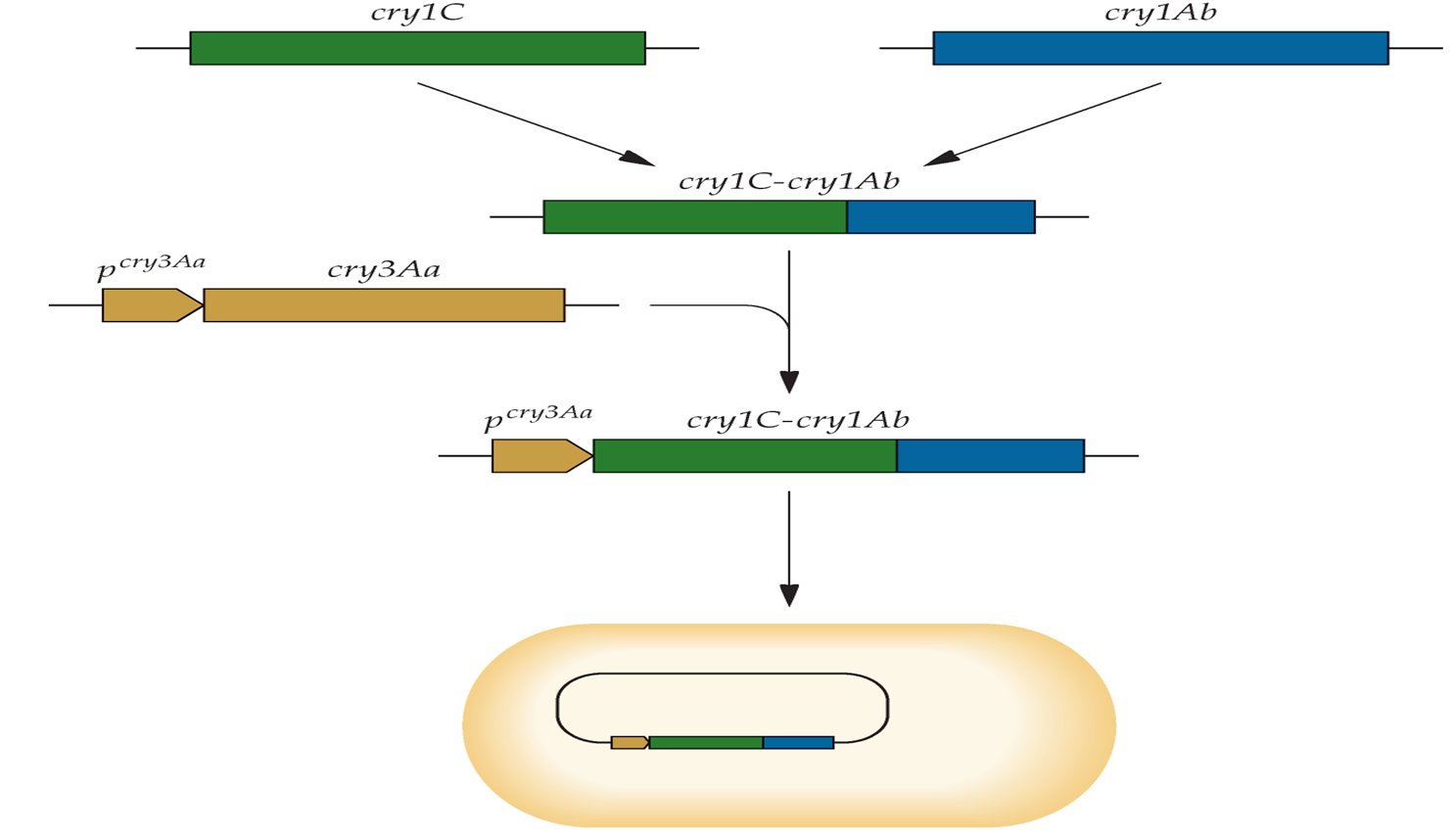
In one experiment, a chimeric cry1C–cry1Ab gene was constructed, placed under the transcriptional control of the vegetative cry3A promoter, and then integrated into the chromosomal DNA of a nonsporulating derivative of B. thuringiensis subsp. kurstaki (Fig. 16.6). The chimeric cry1C–cry1Ab gene consisted of approximately 2.2 kb of DNA from the cry1C gene and 1.3 kb of DNA from the cry1Ab gene. Although the mature toxin that is produced following proteolytic cleavage of the hybrid protoxin is identical to the toxin that is produced from the cry1C gene, this toxin was found to be considerably more active than Cry1C (Table 16.3).
Thus, depending upon the insect tested, Cry1C–Cry1Ab was 3 to 34 times more active than Cry1C. This seemingly strange result probably occurs because of the increased sta bility to proteolytic digestion of the Cry1Ab portion of the hybrid protoxin protein, which is removed upon activation of the protoxin. The nonsporulating B. thuringiensis host strain had a disrupted sigK gene, which encodes the sigma factor σ28, which is required for sporulation-specific transcription.
Other workers have created nonsporulating B. thuringiensis strains by inserting modified protoxin genes into the late-stage sporulation gene spoVBt1 . Since the chimeric protoxin Cry1C–Cry1Ab was encapsulated with the bacterial cells, the protein was considerably more resistant to the degradative effect of ultraviolet (UV) light, which rapidly inactivates the protoxin that is normally secreted outside of the bacterial cell during sporulation.
In addition to increased potency and greater UV resistance, the environmental persistence of the nonsporulating mutant was significantly decreased com pared with that of the sporulating wild-type strain. This may actually be an advantage, since it is less likely that the nonsporulating mutant will transfer any of its DNA to other organisms in the environment.
BROADENING THE SPECTRUM OF TARGET INSECTS
Because many crops are attacked by more than one insect species, it would be advantageous, if feasible, to create microbial insecticides that are effective against a broad spectrum of target insects. Such a broad-specificity molecule could be obtained (1) by transferring the gene for a particular toxin, e.g., one against diptera, into a B. thuringiensis strain that normally synthesizes a different species-specific toxin, e.g., one against coleoptera; (2) by fusing portions of two different species-specific toxin genes to one another so that a unique dual-acting toxin (hybrid toxin) is produced; or (3) by modifying the portion of the insecticidal toxin that is responsible for binding to insect gut epithelial cell receptors.
TRANSFERRING CRY GENES
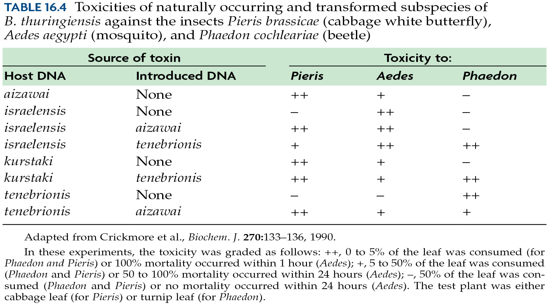
To test whether the spectrum of target insect pests could be widened, the insecticidal toxin genes from B. thuringiensis subsp. aizawai and tenebrionis were cloned into shuttle vectors that could be main tained in both B. thuringiensis and E. coli. These genetic constructs were then introduced by electroporation into B. thuringiensis subsp. kurstaki, israelensis, and tenebrionis (Fig. 16.7), and all the transformed strains were tested for toxicity to three different insect species.
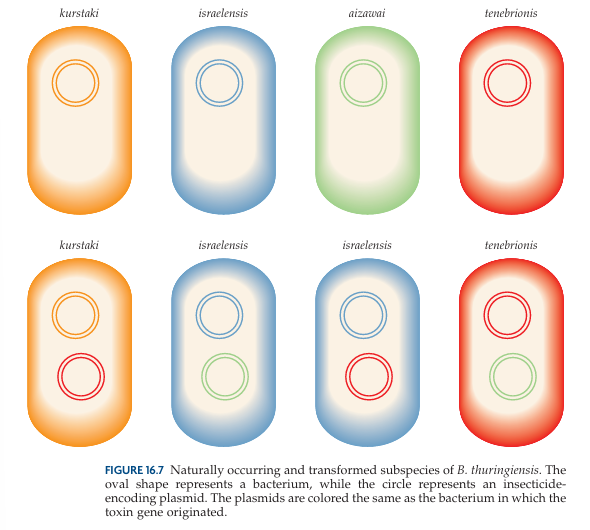
In each case, the toxicity of the native host toxin protein(s) was main tained, and in most cases, the introduced toxin gene also expressed an active toxin with the same specificity as the toxin produced by the source bacterium (Table 16.4). In addition, and surprisingly, when the B. thuringiensis subsp. tenebrionis toxin gene was introduced into B. thuringiensis subsp. israelensis, the resultant transformant was somewhat toxic to Pieris brassicae, the cabbage white butterfly, against which neither of the gene products alone has insecticidal activity.
In many instances, introduced plasmid vectors carrying isolated cry genes are unstable in B. thuringiensis. Often, in the absence of selective pres sure, all or a portion of these plasmids are lost. The problem of plasmid instability with introduced genes was overcome by integrating cloned cry genes into the chromosomal DNA of the host cell. One group of researchers attempted to broaden the insect specificity of a strain of B. thuringiensis subsp. kurstaki, which normally carries five different insecticidal toxin genes, cry1Aa, cry1Ab, cry1Ac, cry2Aa, and cry2Ab. While the products of these cry genes are active against a variety of lepidopteran species, they are not effective against Spodoptera spp. Therefore, a cry1Ca gene, which is nor mally found only in B. thuringiensis subsp. aizawai and entomocidus, was introduced into the chromosomal DNA of the B. thuringiensis subsp. kurstaki host strain. The transformed B. thuringiensis subsp. kurstaki strain showed a sixfold increase in its ability to kill Spodoptera exigua (beet army worm) larvae.
MODIFYING THE LOOP REGIONS OF DOMAIN II
The toxic moiety of many Cry proteins is composed of three separate domains. Domain II is involved in the specific binding of the toxin to protein receptors that are found on the surfaces of insect midgut epithelial cells, although domain III may also play a role in receptor binding. Following binding, a portion of domain I, in the N-terminal region of the toxin, inserts into the membrane. It is believed that the interaction of portions of domain I from several toxin molecules interact to make up the pore. Domain III, which is located at the C-terminal end of the toxin molecule, is also thought to be involved in pore function.
Modification of cry genes to increase the binding of the Cry protein to receptors generally leads to an increase in insecticidal activity. In particular, modification of domain II is an effective means of increasing Cry toxicity to particular insects. In one series of experiments, researchers modified the insect specificity of Cry19Aa. This was done by directed mutagenesis of the cry19Aa gene, replacing a nucleotide sequence that encoded the amino acids Ser–Tyr–Trp–Thr in loop 1 of domain II with a sequence encoding Tyr–Gln–Asp–Leu–Arg and deleting a sequence in loop 2 encoding Tyr Pro–Trp–Gly–Asp (Fig. 16.8). The decisions regarding which sequences to alter were based on computer models comparing the three-dimensional structure of Cry19Aa with the structure of Cry4Ba. These changes—alterations of both loop 1 and loop 2 were required—yielded a modified Cry19Aa protein whose insecticidal activity against the mosquito Aedes aegypti was increased more than 42,000-fold while its activity against other insects was essentially unchanged.
This work suggests that it may be possible to ratio nally engineer various Cry toxins to have desired activities by manipu lating specific amino acid sequences within the protein loops. However, even if the genetic manipulations are successful and designer-engineered Cry proteins are attainable, it remains to be seen whether the general public and the regulatory authorities in various countries will embrace this technology, which would include releasing genetically manipulated bacteria into the environment.
IMPROVING DELIVERY OF A MOSQUITOCIDAL TOXIN
The B. thuringiensis subsp. israelensis insecticidal protein is highly toxic when ingested by mosquito larvae. Since 1982, it has been used successfully worldwide to control mosquitoes and blackflies. However, the parasporal crystal of this species sinks rapidly after it is sprayed on water, which effectively removes it from the feeding area of mosquito larvae and dramatically decreases its efficacy as a mosquitocide. To overcome this shortcoming, several approaches have been attempted. Currently, B. thuringiensis subsp. israelensis insecticidal protein is available as granules or as slow-release rings or brickettes, which float on the surface of water. Another solution is to introduce the insecticidal toxin gene into organisms that are common food sources for mosquito larvae.
Good candidate organisms for this pur pose include Synechocystis and Synechococcus spp., which are photosynthetic cyanobacteria that proliferate near the water surface, where there is suffi cient light for their growth and where mosquito larvae are normally found. Another organism with the potential to be a host for the expression of for eign insecticidal toxin genes is Caulobacter crescentus, an aquatic bacterium that generally is widely distributed throughout aquatic environments where mosquito larvae feed.
The toxin gene from B. thuringiensis subsp. israelensis was introduced into and expressed in these organisms. In laboratory trials, the insecticidal toxin that was produced by either transformed cyanobac teria or C. crescentus was toxic to mosquito larvae. However, in field trials, transformed cyanobacteria or C. crescentus expressing B. thuringiensis insec ticidal toxin genes had poor viability, and the cloned genes were expressed at a low level.
A possible alternative host for the expression of mosquitocidal cry genes is Asticcacaulis excentricus, a gram-negative aerobic bacterium that is found in aqueous environments near the surface of the water. In a series of experiments, A. excentricus was transformed with a broad-host-range plasmid vector that carried the genes for mosquitocidal toxin proteins pro duced by a strain of Bacillus sphaericus (a bacterium similar to B. thuringi ensis) under the control of the tac1 promoter, which is a variant of the tac promoter. This transformant produced insecticidal toxin proteins of 51 and 42 kDa and was almost as toxic to Anopheles and Culex mosquito larvae as the naturally occurring high-toxicity strains of B. sphaericus.
However, unlike B. sphaericus, A. excentricus does not sink when it is sprayed onto ponds infested with mosquito larvae. Moreover, A. excentricus is inexpen sive to produce, as it can be grown on much simpler media than either B. sphaericus or B. thuringiensis. It does not have a high level of protease activity, so the insecticidal toxin is not readily degraded. It is well adapted to environments such as those near the surface of standing water that are exposed to relatively high levels of UV light. Thus, A. excentricus cells should not be as sensitive to inactivation by UV light as those of either B. sphaericus or B. thuringiensis. However, to use a genetically engineered strain of A. excentricus to control mosquito populations in the environment, it will be necessary to integrate the insecticidal toxin genes into the chromosomal DNA without any antibiotic resistance genes.
PROTECTING PLANT ROOTS
Insects that attack the roots of plants are not affected by B. thuringiensis based insecticides that are sprayed onto leaves and shoots. However, it is possible to introduce the toxin gene from a B. thuringiensis strain into a bacterial species that colonizes the region adjacent to plant roots (the rhizosphere). The engineered bacteria could be introduced into the soil, where they would synthesize the insecticidal toxin and release it into the area immediately surrounding the plant roots, thereby conferring protection against root-attacking insects.
In addition, as long as the engineered bacteria were able to persist in the soil, they would continue to synthesize the insecticidal toxin, thus obviating the need for repeated spraying of either biological or chemical insecticides. This approach has been tested on a small scale. The gene for the B. thuringiensis subsp. kurstaki insecticidal toxin was integrated into the chromosomal DNA of a strain of P. fluorescens that colonizes corn (maize) roots. The integration of the toxin gene was achieved as follows (Fig. 16.9).
A transposon Tn5 element that had been cloned into a plasmid was genetically modified by altering portions of its left and right bor ders and deleting its transposase gene. Such an altered Tn5 element cannot be excised from the plasmid, even by exogenous transposase, because the left and right borders are not are recognized by the transposase.
An isolated B. thuringiensis subsp. kurstaki insecticidal toxin gene was spliced into the middle of the altered Tn5 element on the plasmid and placed under the control of a constitutive promoter.
A wild-type Tn5 element was transposed into the chromosome of the root-colonizing strain of P. fluorescens.
The plasmid carrying the altered Tn5 element with the inserted toxin gene was introduced into P. fluorescens carrying the inte grated wild-type Tn5 element.
Homologous recombination by means of a double crossover between the nontransposable Tn5 element on the plasmid that carried the toxin gene and the chromosomally integrated wild-type Tn5 led to the integration of the altered Tn5 with the toxin gene into the chromosomal DNA, with the concomitant loss of the wild type Tn5 element
In this form, the toxin gene is unlikely to be lost either during large scale laboratory growth or after release of the engineered microorganism into the environment. Also, the probability of transfer of the toxin gene to other microorganisms in the environment is very low. Laboratory trials showed that the engineered P. fluorescens was toxic to tobacco hornworm larvae. However, the ability of this genetically manipulated microorganism to minimize root damage from insect predation remains to be tested in the greenhouse and in open-field trials.
In other laboratories, various B. thuringiensis insecticidal toxin genes have been introduced into the chromosomal DNA of a number of different microorganisms. For example, the cry1Ac genes were introduced into a strain of P. fluorescens and found to protect sugarcane plants against the sugarcane borer, Eldana saccharina. Also, when this gene was used to transform Clavibacter xyli subsp. cynodontis, a bacterium that normally inhabits the xylem of Bermuda grass, the bacterium protected corn plants from damage caused by the European corn borer, Ostrinia nubilalis.
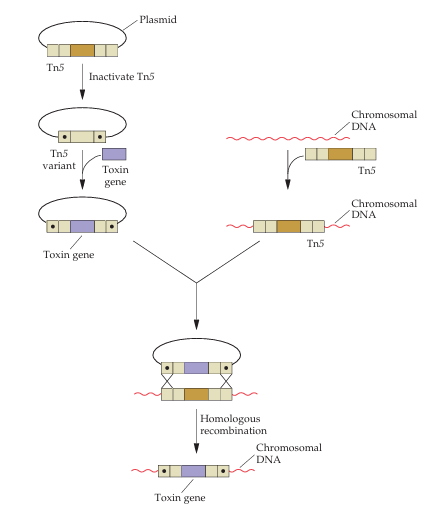
Fig 16.9. Procedure for the development of a genetically engineered P. fluorescens strain that carries a copy of the B. thuringiensis insecticidal toxin gene integrated into its chromosomal DNA. The B. thuringiensis insecticidal toxin gene is cloned into an excision-defective variant of Tn5 on a plasmid. This construct is introduced into a P. fluorescens strain containing a wild-type Tn5 sequence that has been integrated into its chromosomal DNA. By homologous recombination, the excision-defective Tn5 element carrying the B. thuringiensis insecticidal toxin gene becomes integrated into the P. fluorescens chromosome.
PREVENTING THE DEVELOPMENT OF RESISTANCE
When B. thuringiensis subsp. kurstaki is used as an insecticide in a controlled environment where there is no sunlight to rapidly break down the pro toxin, e.g., when stored grain is treated to protect it against insect preda tion, resistant target insects develop within a few generations. This inherited resistance is typically due to an alteration in a midgut membrane protein that normally acts as a receptor for the B. thuringiensis subsp. kurstaki toxin. Resistant insects accumulate because the protoxin persists under these conditions and selects for resistant individuals. The lesson here is that the simplest way to avoid selecting for insects that are resistant to B. thuringiensis subsp. kurstaki in the absence of sunlight is to limit the use of this bacterium to field applications. However, extensive annual use, even under natural conditions, may result in a level of persistence high enough to allow selection to occur.
Certainly, as larger quantities of B. thuringiensis are used over a wider geographical area, the probability that resistant strains of insects will be selected will increase. Various ways to avert this problem are being examined. These strategies, which may be utilized either with B. thuringiensis that is sprayed or with transgenic plants expressing the insecticidal toxin, include the following:
The use of two or more B. thuringiensis insecticidal toxins at the same time. Provided that the toxins bind to different receptors, it is extremely unlikely that an insect will develop resistance to both toxins at the same time. When this approach is used in transgenic plants, it is often called “gene pyramiding.”
Application of a B. thuringiensis insecticidal toxin along with tra ditional chemical insecticides. The idea here is that almost no insect survives these two very different treatments, and resistance does not develop to either. Transgenic plants that produce a B. thuringiensis insecticidal toxin are commonly treated with chemical insecticides. However, the number of chemical insecti cide treatments is significantly reduced when the plants produce a B. thuringiensis insecticidal toxin. In Florida, nontransgenic corn plants often require as many as 10 sprayings of chemical insecti cides per growing season. Plants that produce a B. thuringiensis insecticidal toxin are more likely to be sprayed with chemical insecticides only about three or four times a season.
Application of a B. thuringiensis insecticidal toxin at the same time as another biologically based insecticidal protein (typically isolated from plants; see chapter 18). Again, it is extremely unlikely that the target insects will survive both types of insecticides.
The use of two B. thuringiensis insecticidal toxins, one of which has had its toxin gene modified so that it binds to a different receptor than the other toxin.
The use of refugia (small tracts of land where the crop is not treated with the microbial insecticide). Approximately 20% of a crop is not sprayed with B. thuringiensis (or 20% is nontransgenic, with the remaining 80% of the plants being transgenic and producing a B. thuringiensis insecticidal toxin). The wild-type insects can prolif erate in the absence of the B. thuringiensis insecticidal toxin, and only (a very small number of) mutant insects that are resistant to the high levels of B. thuringiensis insecticidal toxin survive in the presence of the toxin. Upon mating, the small number of resistant insects will all mate with sensitive insects, so that the next genera tion will contain mostly homozygous sensitive insects and a small number of heterozygous sensitive insects. This strategy assumes that resistance to the B. thuringiensis insecticidal toxin is inherited as a recessive trait. This approach has been used in the field for a number of years, with all of the available evidence indicating that little to no resistance to any B. thuringiensis insecticidal toxins has developed.
As noted above, fusion of the coding portions of the active regions of two different toxin genes is another way of generating a novel protein with extended toxicity. This idea has been examined in laboratory experiments. When a series of lepidopteran-specific hybrid toxins were constructed, some of them were more toxic than the products of either of the contributing genes by themselves, and in one case, a hybrid protein had acquired a totally new biological activity.
Generally, resistance to B. thuringiensis insecticidal toxins is the conse quence of a mutation(s) that alters an insect midgut receptor protein(s) so that it no longer binds to the Cry protein. However, if a toxin gene were engineered so that the toxin bound to more than one midgut cell surface protein, then resistance might be less likely to arise, since it would require alterations to several proteins.
The insecticidal proteins Cry1Ca and Cry1Ea are both toxic to lepi doptera but have different species specificities. Cry1Ca is active against S. exigua, Mamestra brassicae, and Manduca sexta, while Cry1Ea is active only against M. sexta. In one experiment, hybrid Cry1Ca–Cry1Ea proteins were constructed and tested for their toxicities to different insect species, as well as for their abilities to bind to different receptors (Fig. 16.12). The hybrid toxin G27, which contained domain III from Cry1Ca, was toxic to S. exigualarvae even though it bound to the Cry1Ea receptor but not to the Cry1Ca receptor (Fig. 16.13). Conversely, the hybrid toxin F26 was not toxic to S. exigua larvae even though it bound to the Cry1Ca receptor. Since the Cry1Ca and G27 proteins bind to different insect midgut receptors (although both are toxic to S. exigua), either simultaneous or alternating treatments of S. exigua with these two B. thuringiensis insecticidal toxins might limit the development of strains that are resistant to the toxins. Resistance to both Cry1C and G27 would require mutations in two separate midgut proteins.
B.THURINGIENSIS SUBSP.ISAREALNSIS THRAWTS INSECT RESISTANCE
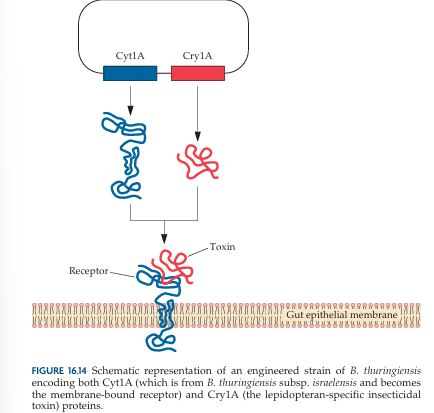
In contrast to what has been observed with other strains of B. thuringiensis, no instances of field resistance of mosquitoes to B. thuringiensis subsp. israelensis have ever been reported, and only low levels of resistance have been observed in laboratory studies. This lack of insect resistance may reflect the fact that, in addition to synthesizing at least three different Cry proteins—Cry4A, Cry4B, and Cry11A—B. thuringiensis subsp. israelensis also produces Cyt1A, a highly hydrophobic endotoxin that is not at all homologous to any of the Cry proteins and appears to have a completely different mode of action.
While Cry proteins bind to glycoproteins on the insect midgut epithelial membrane, the primary affinity of Cyt1A is the lipid component of the membrane, especially the unsaturated fatty acids. Cyt1A acts syner gistically with the Cry proteins, and its presence may explain why mos quitoes do not develop resistance to the Cry proteins. In one series of experiments, using purified insecticidal proteins, it was demonstrated that with the addition of the Cyt1A protein, insects that had become resistant to Cry4A, Cry4B, and Cry11A (all of which are encoded by B. thuringiensis subsp. israelensis) were killed when they were treated with B. thuringiensis subsp. israelensis. Recent experiments suggest that, following the binding of Cyt1A to the midgut epithelial membrane, the protein can act as a receptor for some of the Cry proteins encoded by B. thuringiensis subsp.israelensis.
The reason that B. thuringiensis subsp. israelensis is a highly effective insect pathogenic bacterium may be because the strain not only carries several insecticidal proteins, but also contains a protein that acts as the receptor for these insecticidal proteins. It is therefore extremely unlikely that any target insect will be able to develop resistance to B. thu ringiensis subsp. israelensis. To capitalize on the advantage that the Cyt1A protein provides to B. thuringiensis subsp. israelensis, genes for Cyt1A and Cry1Ac (which is typically found in B. thuringiensis subsp. kurstaki strains and targets lepidopteran larvae) were used to transform a strain of B. thu ringiensis (Fig. 16.14).
The combination of these two proteins in one strain was highly toxic to the diamondback moth (Plutella xylostella), a lepi dopteran species. On the other hand, strains that expressed one or the other of these proteins, but not both, required extremely high levels of the proteins before any toxicity could be detected. These results suggest, in this case, that Cyt1A (which usually targets diptera) is uncharacteristically behaving as a receptor for Cry1Ac (a lepidopteran toxin). It will be exciting to ascertain whether this synergism can be extended to other Cry proteins combined with Cyt1A.
Other strategies that have been proposed as a means of avoiding the development of insects that are resistant to B. thuringiensis insecticidal toxins include alternating the strain of B. thuringiensis that is employed from one season to the next, alternating B. thuringiensis treatment with the use of chemical or other biological insecticides, or applying mixtures of different strains of B. thuringiensis.
How would you use genetic engineering to improve the usefulness of a particular B. thuringiensis protoxin?
Below is a roadmap of genetic‐engineering strategies—drawn directly from your notes—to turn any given Cry protoxin into a more potent, more versatile, and easier-to-produce bioinsecticide. I’ll illustrate each approach with concrete examples from the textbook.
1. Supercharge Protoxin Expression
Goal: Produce more crystal-protoxin per unit biomass, ideally in fast, continuous fermentations.
Swap out the sporulation promoter
Most cry genes sit behind σ^28-dependent, sporulation-specific promoters and only go on during spore formation.
Solution: Place your cry ORF under a strong vegetative promoter, e.g. the native cry3A promoter (which is active in log phase) or a constitutive promoter such as the tetR promoter from B. cereus.
Result: Toxin is made throughout growth, not just during sporulation. In a spo⁻ (sigK⁻) background, you get higher yields, shorter batch times, and you can run continuous fermentations in small reactors (Fig. 16.5).
Chromosomal integration for stability
Plasmid-borne cry constructs can be lost without antibiotic selection.
Solution: Integrate the engineered cry cassette into a neutral locus (e.g. a disrupted spoVBt1 or in place of the wild‐type Tn5) so the toxin gene is never “curing” away during scale-up.
2. Enhance Protoxin Activation in the Insect Gut
Goal: Ensure maximal conversion of the 130 kDa protoxin → 68 kDa toxin under insect gut conditions.
Protease‐site tailoring
Insect gut proteases (trypsin‐, chymotrypsin–like) cleave pro-regions to activate the toxin.
Solution: Introduce or optimize cleavage motifs (e.g. Lys–Arg or Phe–Leu) at both N- and C-terminal junctions so that activation is faster and more complete.
pH-stabilizing surface mutations
Crystal dissolution and protoxin solubility hinge on the midgut’s alkaline pH (~8).
Solution: Replace acid-labile residues (e.g. histidines) on surface loops to prevent mis-folding at lower pH, ensuring uniform solubilization when the larva feeds.
3. Broaden or Retarget Insect Specificity
Goal: Kill more pest species—and thwart resistance—by tweaking domain II (receptor binding) and domain III (pore stabilization).
Domain‐swap chimeras
Cry toxins have three domains: DII (receptor binding), DI (pore‐forming), DIII (pore stabilizer).
Example: The cry1C–cry1Ab hybrid placed under the cry3A promoter in a sigK⁻ host not only overproduced toxin but gave a mature 68 kDa toxin with 3–34× higher activity than Cry1C alone (Table 16.3, Fig. 16.6).
Loop‐mutagenesis of DII
Short surface loops in DII define which midgut receptor you bind.
Example: Directed mutagenesis of loops 1 & 2 in Cry19Aa (Ser–Tyr–Trp–Thr → Tyr–Gln–Asp–Leu–Arg; deletion in loop 2) boosted Aedes aegypti toxicity >42,000-fold while leaving other targets unchanged (Fig. 16.8).
Pyramiding multiple toxins
Co-express two or more Cry proteins that bind different receptors (gene pyramiding) to make simultaneous resistance improbable.
Example: Introducing cry1Ca (coleopteran) into a kurstaki strain extended its host range to Spodoptera exigua by 6-fold (Table 16.4).
4. Improve Environmental Stability & Safety
Goal: Keep more protoxin around in the field, resist UV, and ensure rapid environmental clearance when desired.
Non-sporulating chassis
Sporulation releases crystals extracellularly, where sunlight degrades them.
Solution: Use a spo⁻ or sigK⁻ Bt mutant: toxin remains cell-encapsulated, giving greater UV resistance and shorter persistence in soil (Fig. 16.6 notes).
Fusion to bacterial hemoglobin (for other hosts)
If you export Cry into alternative aquatic hosts (e.g. Asticcacaulis), co-express Vitreoscilla hemoglobin to boost respiration and stress tolerance, letting your engineered cell survive harsh conditions longer.
5. Resistance Management via Synergists
Goal: Delay or prevent evolution of resistant insect populations.
Co-express Cyt1A
In israelensis, Cyt1A acts as a lipid-binding “receptor” for Cry4/11 and synergizes to prevent resistance.
Strategy: Transform your Cry1Ac strain with cyt1A; the dual action kills diamondback moth far more potently than either alone (Fig. 16.14).
Alternating/Refugia (field practice)
Deploy mixtures of Bt strains or alternate Bt applications with chemical insecticides, and plant untreated refugia to maintain susceptible insect alleles.
Putting It All Together: A Case Study Workflow
Select your Cry protoxin (e.g. Cry1Ac).
Codon-optimize the ORF for Bt to maximize translation.
Replace its sporulation promoter with the cry3A vegetative promoter.
Fuse DII loops from Cry1Ab to increase binding to your target pest.
Clone into a broad-host-range integration vector, then knock out sigK and integrate via homologous recombination.
Co-integrate a cyt1A cassette under the same promoter to add synergistic action.
Validate by measuring protoxin yield in continuous culture, activation kinetics in gut extracts, UV stability assays, and LC₅₀ bioassays against target larvae.
By layering these genetic modifications—better expression, faster activation, sharper targeting, improved stability, and built-in resistance management—you can convert any Bt protoxin into a next-generation bioinsecticide that is cheaper to make, kills more pests more reliably, and stays ahead of insect resistance.
Below is a detailed strategy—built directly from your notes—showing how to take a given B. thuringiensis protoxin and turn it into a more potent, versatile, and field-ready bioinsecticide.
1. Supercharging Protoxin Production
A. Move Expression into Vegetative Growth
Why? Wild-type Cry genes are under sporulation-specific σ factors, so toxin only appears late in culture.
How?
Remove the native sporulation promoter by restriction digest (RE1/RE2).
Fuse the cry ORF downstream of a vegetative, constitutive promoter—e.g. the tet promoter (ptet) from a B. cereus tetracycline-resistance gene.
Ligate with T4 DNA ligase back into your Bt shuttle vector.
Transform into a sigK⁻ (sporulation-defective) B. thuringiensis host.
Result: Toxin is produced throughout growth—yields climb, batch times shrink, and you can run continuous fermentations in small, cost-effective bioreactors (Fig. 16.5).
B. Chromosomal Integration for Stability
Why? Plasmid-borne cry cassettes can “cure” without antibiotic selection.
How? Integrate your ptet–cry construct via homologous recombination into a neutral locus (e.g. disrupted spoVBt1 or a nontransposable Tn5 “landing pad”).
Result: The toxin gene never drops out—your production strain stays rock-solid for scale-up.
2. Broadening and Strengthening Insecticidal Spectrum
A. Transferring Additional cry Genes
Why? Many crops face multiple pests.
How? Clone a second cry gene (e.g. cry1Ca for coleoptera) into your engineered strain that already makes cry1Ac. Use a compatible promoter (ptet) and integrate into the chromosome.
Result: Dual-toxin strain kills both lepidopteran and coleopteran larvae. In one study, adding cry1Ca to a kurstaki background gave a 6× boost against Spodoptera exigua.
B. Creating Hybrid (Dual-Acting) Toxins
Why? A single polypeptide with two binding specificities can hit two targets at once.
How?
Fuse the receptor-binding Domain II of Cry19Aa (loops engineered for mosquito binding) onto the pore-forming Domain I/III of Cry4Ba.
Express this chimeric protoxin from ptet in your sigK⁻ host.
Result: The hybrid shows potent toxicity against both Aedes and Spodoptera, with activities tens of thousands of times higher than the parental toxins.
C. Loop-Directed Mutagenesis of Domain II
Why? Fine-tune receptor affinity to specific midgut proteins.
How?
Identify key loops (e.g. Ser–Tyr–Trp–Thr in loop 1).
Replace them by site-directed mutagenesis with sequences from a toxin known to kill your target—e.g. Tyr–Gln–Asp–Leu–Arg from Cry4Ba.
Screen mutants by bioassay against larval gut proteases.
Result: In one example, loop swaps in Cry19Aa yielded a >42,000× boost in mosquito-larvae toxicity.
3. Improving Field Delivery & Persistence
A. Non-Sporulating, Cell-Encapsulated Toxins
Why? Free crystals degrade under sunlight (60% Trp loss in 24 h), and spores can persist too long.
How? Use your sigK⁻ Bt so toxin stays bound inside the cell envelope.
Result:
UV resistance: Cells shield crystals from light.
Environmental safety: Rapid decline in soil once cells die—limits unintended spread.
B. Rhizosphere or Aquatic Delivery Hosts
Why? Some pests (root borers, mosquito larvae) don’t ingest surface sprays.
How?
Clone your improved cry cassette into a broad-host-range vector with ptet.
Integrate into the chromosome of a root-colonizing Pseudomonas fluorescens via a nontransposable Tn5 “landing pad.”
Or transform Asticcacaulis excentricus, which:
Floats on water (no sinking),
Has low extracellular proteases,
Tolerates UV and grows on simple media.
Result:
Continuous protection of roots or water surfaces by living cells that produce toxin in situ—no repeat sprays.
4. Resistance Management
A. Multi-Receptor Targeting
Why? Resistance arises when insects mutate one gut receptor.
How? Engineer your toxin so it binds two different receptor proteins—e.g. graft a Domain II loop from Cry1Ab onto Cry1Ac, creating a toxin that needs two simultaneous receptor changes to evade.
Result: Evolution of resistance becomes statistically negligible.
B. Synergistic Cyt Proteins
Why? Bt israelensis uses Cyt1A to act as a “receptor” for its Cry proteins, preventing mosquito resistance.
How? Co-integrate a cyt1A cassette alongside cry in your production strain under ptet.
Result: Even Cry-resistant larvae succumb, and you buy years of field efficacy.
Putting It All Together: Workflow
Design & Synthesize
Codon-optimize your cry (and any second toxin or cyt) ORFs for Bt.
Promoter Swap
Replace sporulation promoters with ptet.
Chassis Engineering
Delete sigK (sporulation σ-factor) to lock in vegetative expression.
Chromosomal Integration
Use non-transposable Tn5 or homologous recomb. to lock in your constructs and avoid plasmid loss.
Functional Validation
Measure protoxin yield in continuous culture, activation rates in insect-gut extracts, UV stability, and larval LC₅₀ assays.
Field-Ready Delivery
Transfer into root or water-colonizing hosts for in situ protection.
Lay out refuge plots or alternate Bt strains to forestall resistance.
By layering these genetic-engineering tactics—more toxin, faster activation, broader target range, durable delivery, and built-in resistance safeguards—you transform a single B. thuringiensis protoxin into a next-generation bioinsecticide fit for the field and the future.