Unit 2 (2.8-2.10)
2.8 Springs
F = -kx or F = kx
whenever the displacement is to the right the force is to the left
Example 1
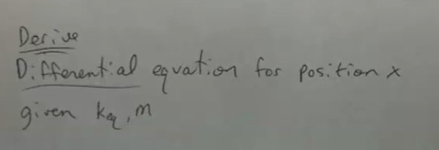
Solution
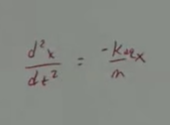
Example 2
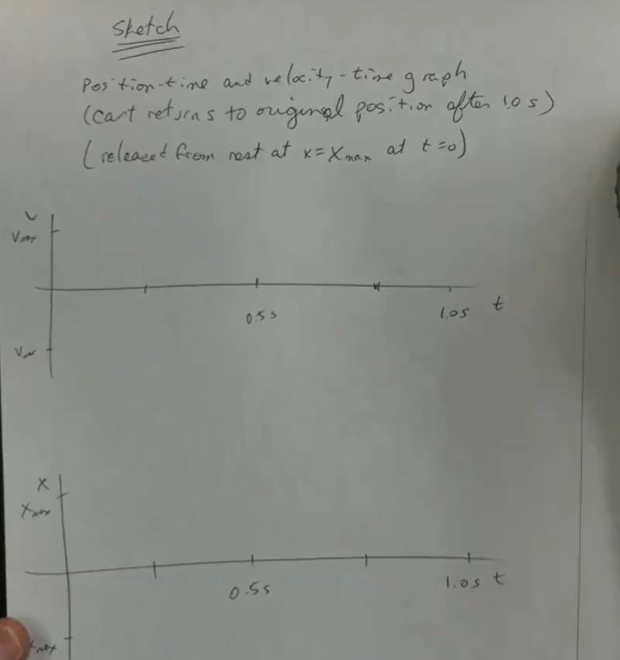
Solution
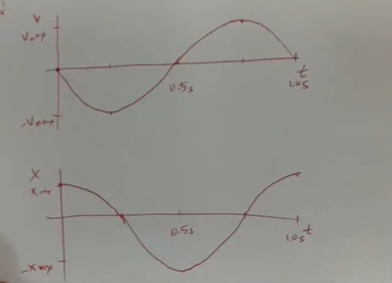
Second Order Differential functions have solutions that are cosine/sin
We found the second differential equation with example 2
Example 4
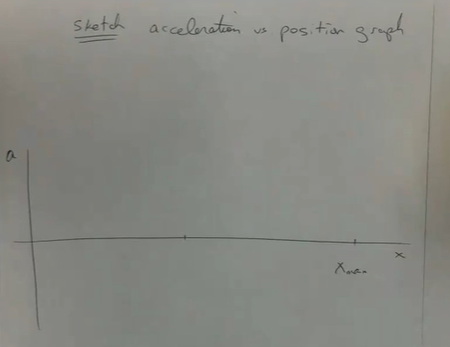
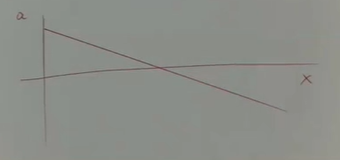
Solution
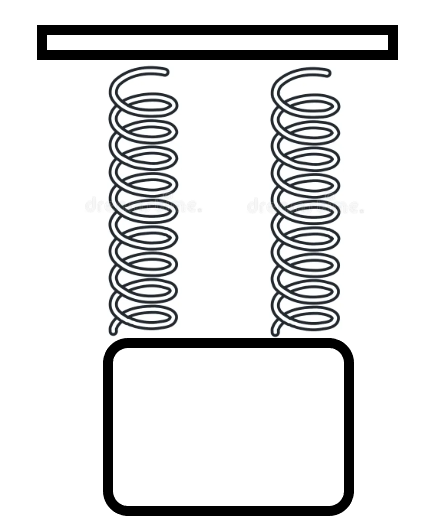
Springs in Parallel
X is constant, K is variable
Distances stretched/compressed are equal
X is constant in F= kx
Spring Constant, K, is total of two springs
Ktotal = K1 + K2
Example 1
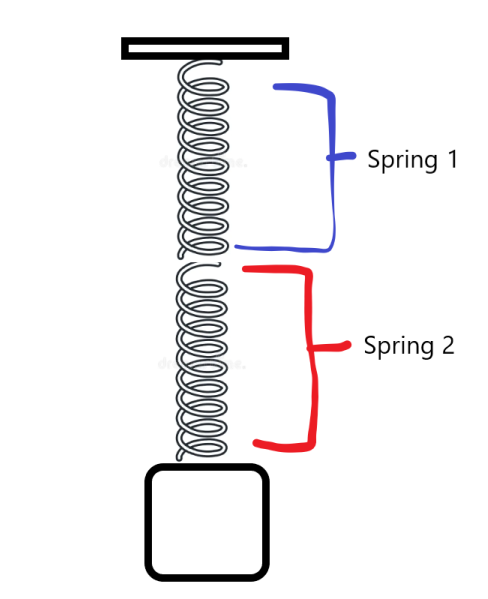
Springs in Series
Distance (X) is totaled between the two springs
Xtotal = X1 + X2
The inverse of Keq is total of the inverse of the sum of the spring constants
The Keq will never be greater than the individual spring constants
Still have to solve the problem using Keq, so you have to take the inverse of
2.9 - Resistive Force
Resistive Force = velocity-dependent force that resists motion.
Changes with speed
EX: air resistance, drag, etc
Fr = -kv
always opposite of motiong
k is a CONSTANT & dependent on MANY things
surface area
viscosity
density
etc
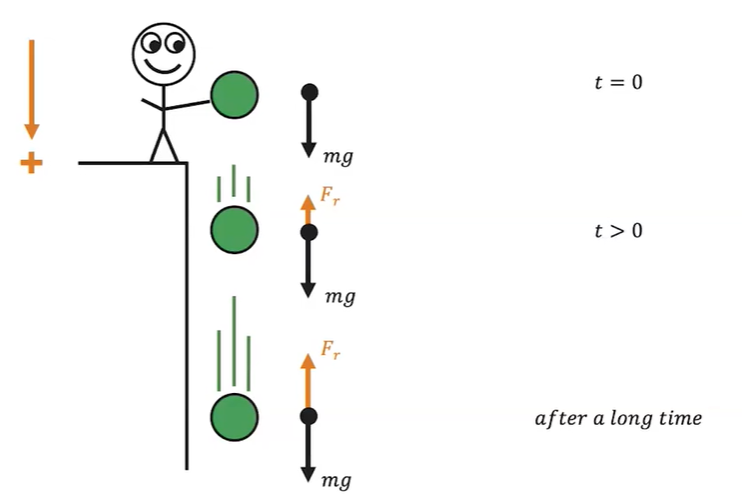
At t = 0, there is little FR since there is little velocity yet
At t > 0, there is some FR but not enough to balance gravity
After a long time, FR BALANCES the Fg
resistive force balances force of gravity
FR = Fg ———→ = Fg - FR
= 0, since Fg = Fr
ma = 0, so a = 0
Creating Differential Equations
1.) = ma & FR = -bv
2.)
3.) ma = mg - bv
4.) m= mg -bv
1.) Sum of forces is equal to mass*acceleration & Resistive Force = -bv or -kv
2.) In free fall, the only forces are gravity and FR
Fr is always opposite of motion, so it is subtracted from mg (downwards motion)
3.) Sub in sum of forces with mass*acceleration
4.) Acceleration is EQUAL to the derivative of velocity
m= mg -bv
Terminal Velocity
Terminal Velocity: Velocity reached when Resistive Forces balances Gravitational Force in Free Fall
Net force acting on object = 0
Reaches this state of equilibrium EVEN IF it initially was Larger OR Smaller than FG
Method 1:
Use Sum of Forces
Where
v =
Graphing Velocity v Time graph under Resistive Force
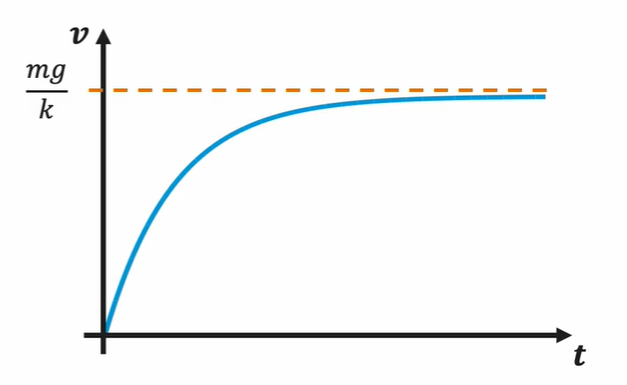
object never REALLY reaches Terminal Velocity
so VT is an asymptote
Graphing Acceleration v Time Graph under Resistive Force
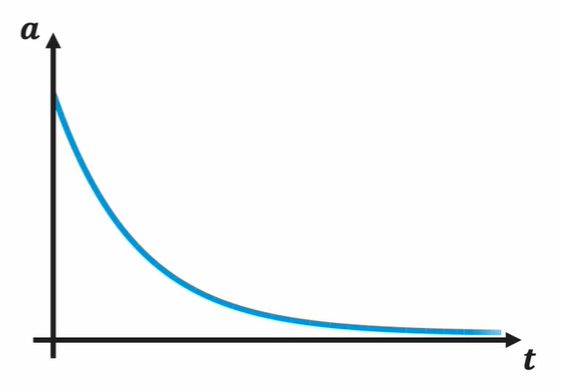
Acceleration is initially gravity
As time passes, acceleration slowly decreases until it EQUALS 0
VT is reached
Resistive Force BALANCES gravity
Graphing Position v Time Graph under Resistive Force
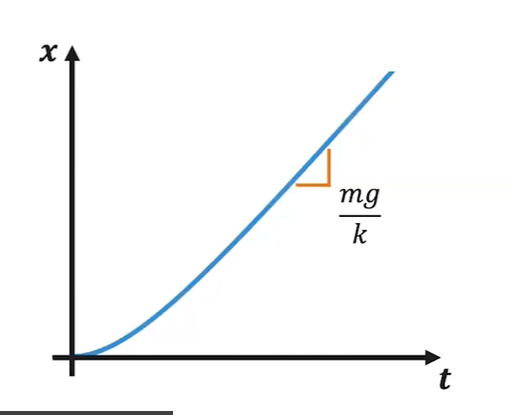
X is positive because downward is t
Slope at t = 0 must be 0 AND x must be 0
although slope curves at start, slope EVENTUALLY BECOMES CONSTANT (linear)
Because acceleration becomes 0 after a long time, resistive forces balance out gravity’s acceleration
THE CONSTANT SLOPE = VT ( )
2.10 - Circular Motion
Centripetal Force, Centripetal Acceleration & Tangential Motion
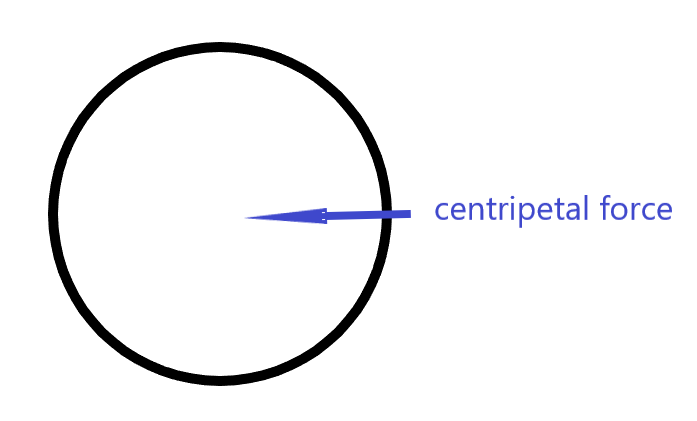
Centripetal Force is the Force that points to the center of the Circular Motion
Centripetal Acceleration is in the same direction as the Centripetal Force
*Centripetal Force depends on MANY variables to keep the motion circular
Mass
speed
circle radius
UNDER UCM
velocity magnitude is constant
acceleration only redirects the velocity vector
does not change the magnitude
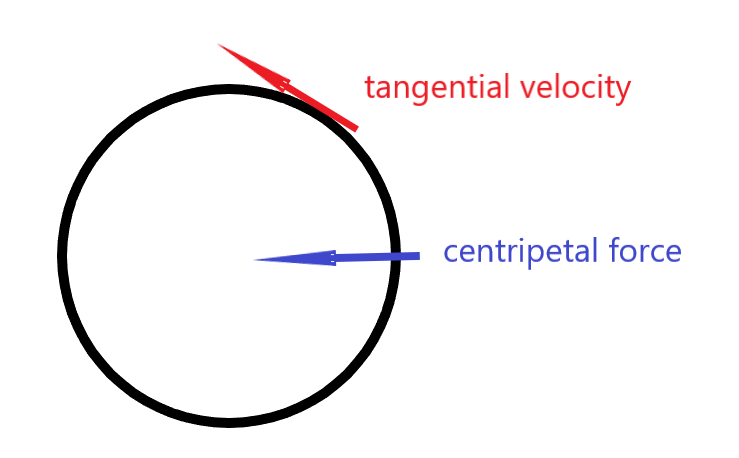
Tangential Velocity is the velocity at a certain frame
Magnitude is always the same
Direction changes (towards the center of the circle)
Acceleration and Velocity share the same direction,
Centripetal Acceleration means that the tangential velocity always changes direction towards the center
NOT UCM
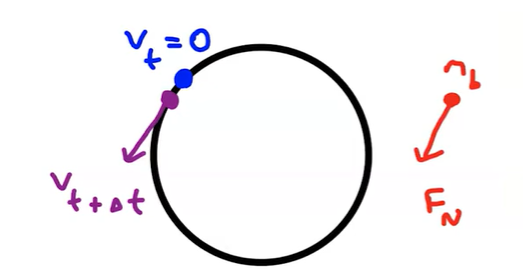
When a tangential force changes the tangential velocity’s magnitude, (creates a tangential acceleration)
For instance, speeding up a ball from rest to start making it go into a circle
Centripetal Acceleration
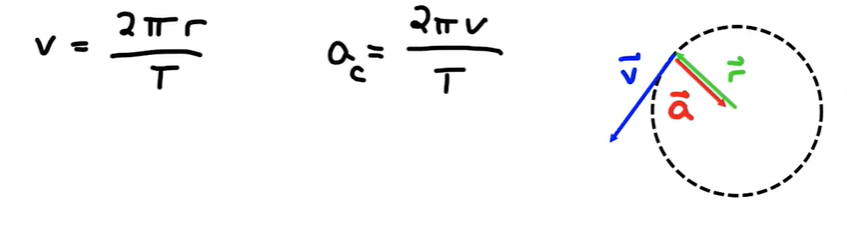
velocity = distance/ time ———> distance = circumference
circumference =2
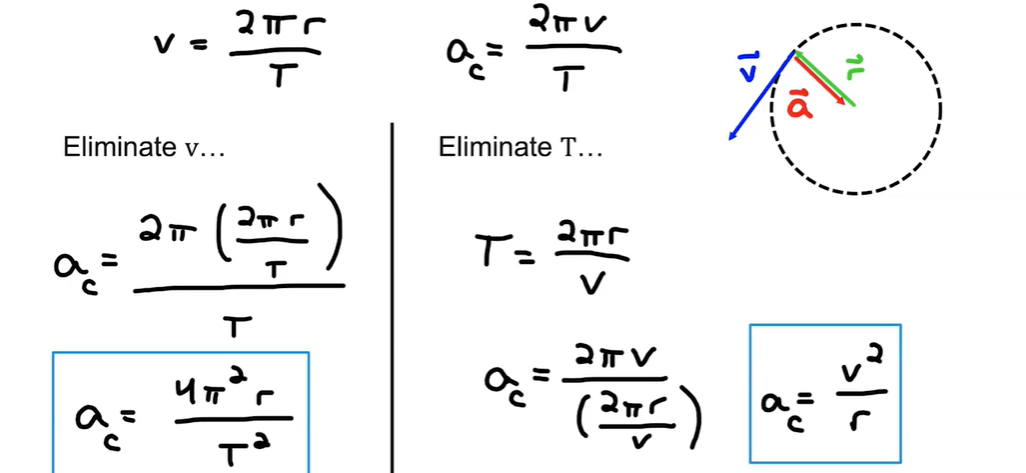
Ac = = 4
T = ———→
Example 1
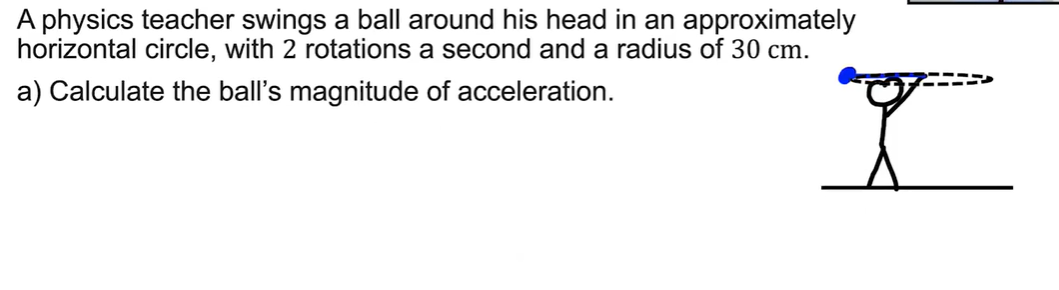
Solution
v = = 37.56 m/s
a = = =
4 = 47 m/s
Critical Speed
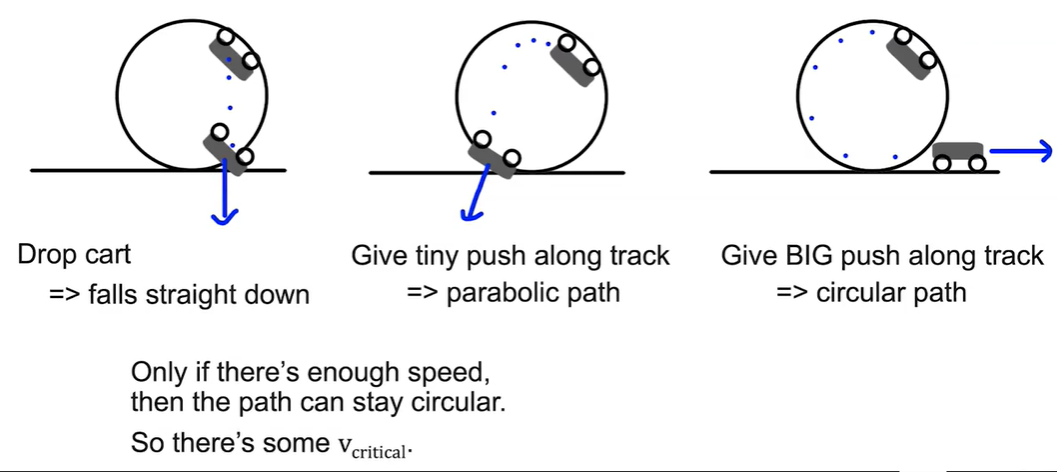
VCritical is the speed needed for the cart to make the full circular path
vcritical is tangential velocity
SO Velocity at the top CANNOT EQUAL 0
example 1
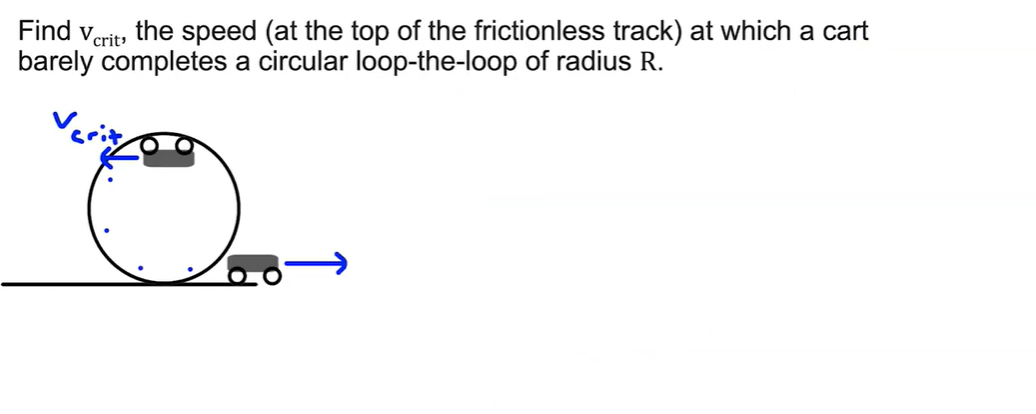
Solution
vcrit =
Barely completes the loop = FN is 0
so centripetal force = mg
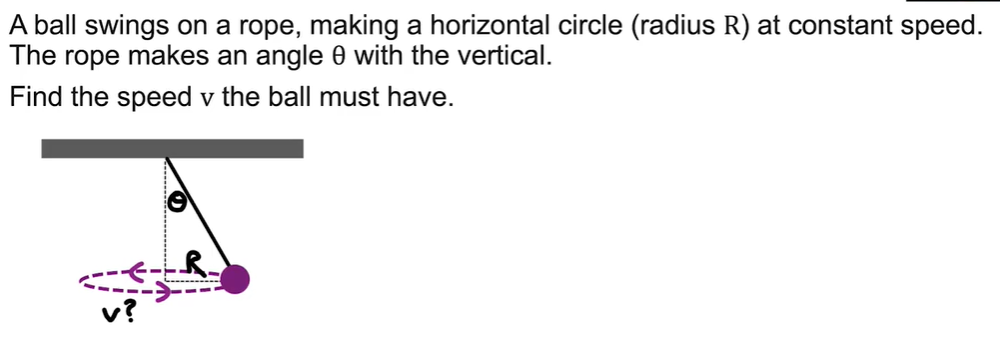
Conical Pendulum
Example 1
Solution
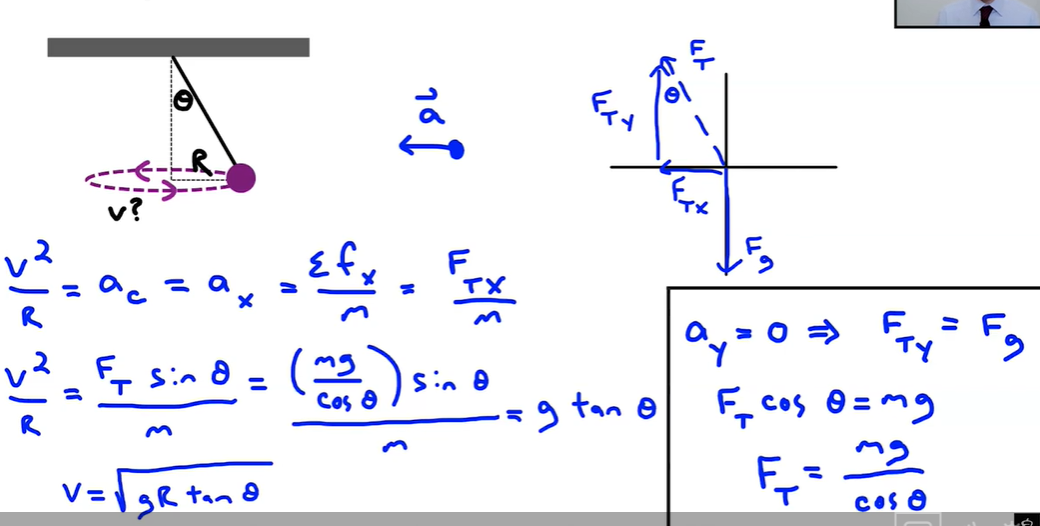
Find the centripetal force using the X-Component of FT
Use the Y-Component of FT to solve for FT
Input that into original equation to find V
Finding Net Acceleration when there is atan
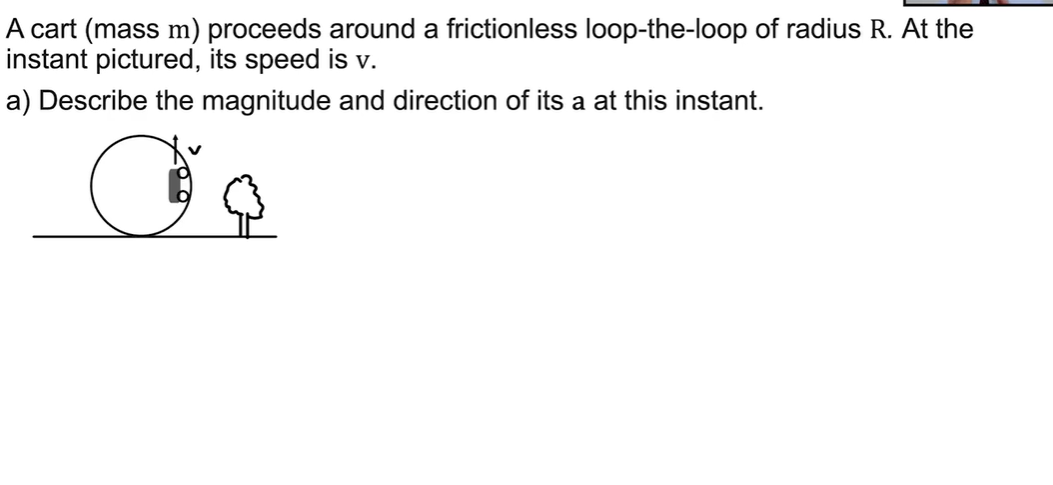
Full Body Diagram
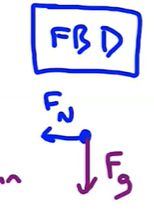
FG is the TANGENTIAL ACCELERATION
Changes MAGNITUDE Of tangential velocity
Find acceleration of FN and FG
Find NET acceleration using Pythagorean Theorem
acceleration is a vector