ANTIMICROBIAL DRUGS 1
Antimicrobial Drugs
Chemotherapy: The use of drugs to treat a
disease.
▪ Antimicrobial drugs: Interfere with the growth of
microbes within a host.
▪ Antibiotic: Of biological origin. Produced by a
microbe, inhibits other microbes.
▪ Chemotherapeutic agent: synthetic chemicals
▪ Today distinction blurred → many newer
"antibiotics" are biological products that are
▪ chemically modified or
▪ chemically synthesized
The History of Chemotherapy
▪ Paul Ehrlich and Sahachiro
Hata developed Salvarsan
(Arsphenamine) against
syphilis in 1910: The
concept of chemotherapy to
treat microbial diseases was
born.
▪ Sulfa drugs (sulfanilamide)
discovered in 1932 →
against Gram+ bacteria
Copyright © 2006 Pearson Education, Inc., publishing as Benjamin
CummingsThe History of Chemotherapy cont.
1928: Fleming discovered
penicillin
1940: Howard Florey and Ernst
Chain performed first clinical
trials of penicillin.
Features of Antimicrobial Drugs
▪ Selective toxicity: Drug kills pathogens without
damaging the host.
▪ Therapeutic index: ratio between toxic dose and
therapeutic dose – or ratio of LD50 to ED50
High therapeutic index ⇒ less toxic
▪ Antimicrobial action – Bacteriostatic vs. bactericidal
▪ Activity Spectrum – Broad-spectrum vs. narrow-
spectrum
▪ Tissue distribution, metabolism, and excretion –
BBB; Unstable in acid; half-life duration
THE ACTION OF ANTIMICROBIAL DRUGS
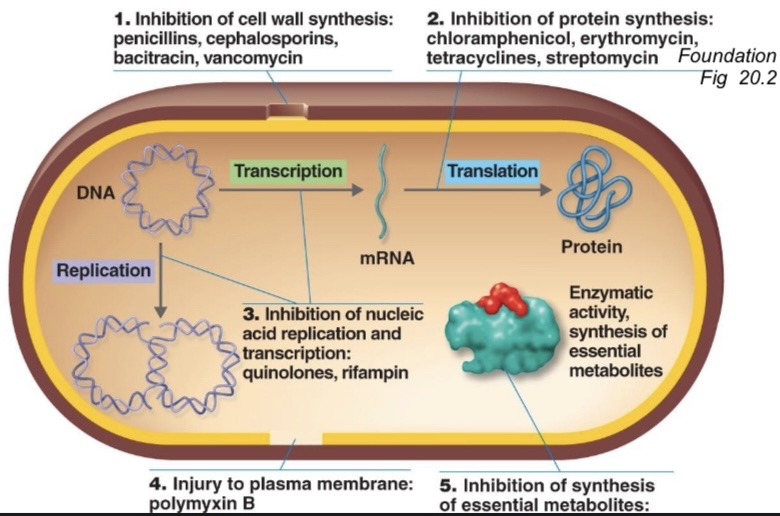
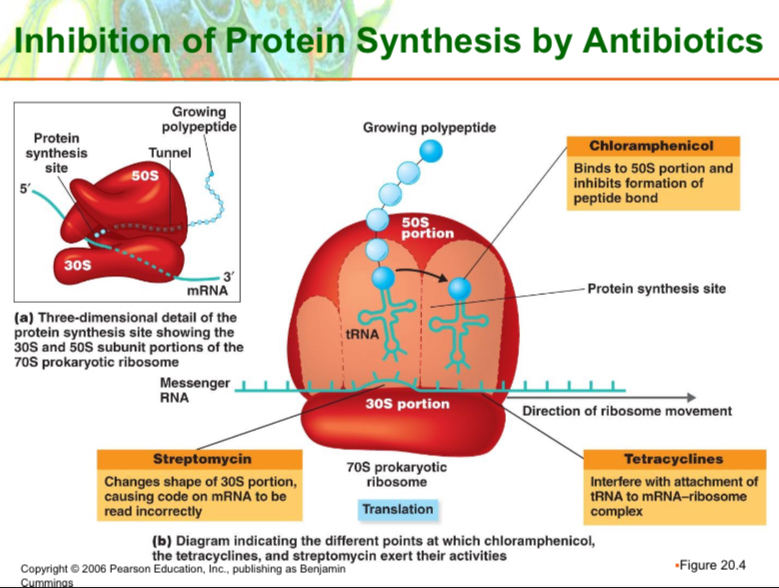
Antibacterial Antibiotics
Inhibitors of Cell Wall Synthesis: Penicillin
Natural and semisynthetic penicilins contain β-lactam ring
Natural penicillins produced by Penicillium are effective
against Gram + cocci and spirochetes
Semisynthetic penicillins: made in laboratory by adding
different side chains onto β-lactam ring ⇒ penicillinase
resistant and broader spectrum of activity
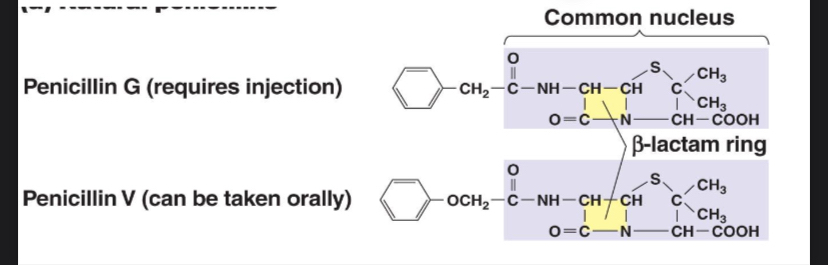
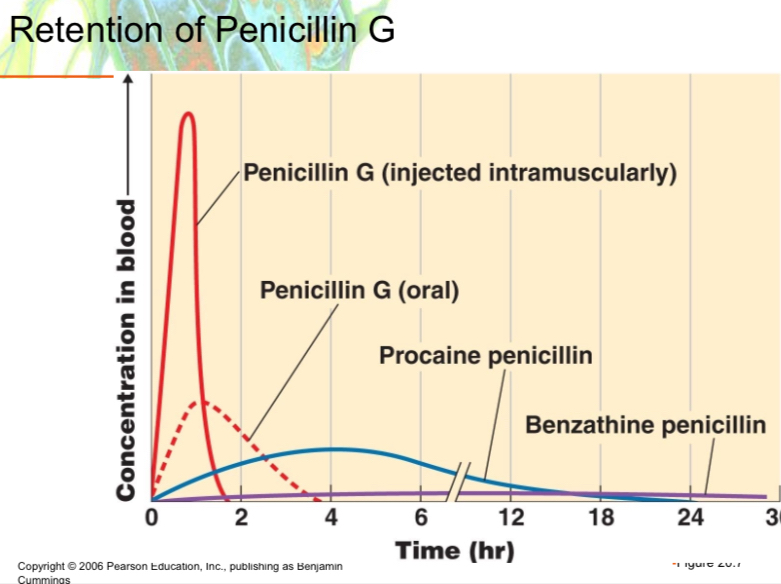
Penicillin cont.
Penicillinase (β-lactamase): bacterial enzyme that
destroys natural penicillins
Penicillinase resistant penicillins: methicilin replaced
by oxacilin and nafcilin due to MRSA
Extended-spectrum penicilins: Ampicilin, amoxicilin;
new: carboxypenicilins and ureidopenicillins (also good
against P. aeruginosa)
Cephalosporins
Fungi of genus
Cephalosporium
⇒ 4 Generations of
cephalosporins
1. First-generation: Narrow spectrum, gram-positive
2. Second-generation: Extended spectrum includes
gram-negative
3. Third-generation: Includes pseudomonads; mostly
injected, some oral.
4. Fourth-generation: Most extended spectrum
Cephalosporins cont.
Structure and mode of action resembles penicilins
1. More stable to
bacterial
β-lactamases than
penicilins
2. Broader spectrum
⇒ used against
penicillin-resistant
strains
Vancomycin
▪ Glycopeptide from Streptomyces
▪ Inhibition of cell wall synthesis
▪ Used to kill MRSA
▪ Emerging Vancomycin
resistance: VRE and VRSA
Antifungal Drugs
▪ Polyenes, such as nystatin and amphotericin B,
for systemic fungal infections. Inhibition of
ergosterol synthesis ⇒ fungicidal. Nephrotoxic
▪ Griseofulvin from Penicillium. Systemic/oral.
Binds to tubulin ⇒
For Tineae
Antiviral Drugs
Nucleoside analogs inhibit DNA synthesis
Acyclovir and newer derivatives: Selective inhibition
of herpes virus replication. Acyclovir conversion to
nucleotide analog only in virus infected cells ⇒
very little harm to uninfected cells!
Antiviral Drugs for Treating HIV/AIDS:
HAART
1. NRTIs and NNRTIs
2. Protease Inhibitors
3. Fusion Inhibitors
4. Integrase Inhibitors
HIV protease cleaves viral polypeptide
into functional proteins
Protease inhibition ⇒ HIV cannot
mature and noninfectious viruses are
produced.Antiprotozoan and Antihelminthic Drugs
Examples of Antiprotozoan:
▪ Chloroquine: Malaria
▪ Quinacrine: Giardia
▪ Metronidazole (Flagyl): Vaginitis, anaerobic bacteria
Examples of Antihelminthic:
▪ Niclosamide and praziquantel: Tapeworm
▪ Mebendazole: broadspectrum antihelmintic
▪ Ivermectin: nematodes, mites, lice . . .
Antibiotic Assays to Guide Chemotherapy
Agar Disk Diffusion Method determines
susceptibility of an organism to a series of
antibiotics: Kirby-Bauer test
More sophisticated methods available for clinical
labs
Drug Resistance
Penicillin G resistance of S. aureus from 3% to >
90%
Multidrug-resistant S. aureus = MRSA or
“super-bug”
Vancomycin-resistance →
Multi drug resistant TB = MDR-TB
Evolution of drug resistance:
▪ Vertical evolution due to spontaneous
mutation
▪ Horizontal evolution due to gene transfer
Antibiotic Resistance
▪ A variety of mutations can lead to antibiotic
resistance
▪ Mechanisms of antibiotic resistance
1. Enzymatic destruction of drug
2. Prevention of penetration of drug
3. Alteration of drug's target site
4. Rapid ejection of the drug
▪ Resistance genes are often on plasmids or
transposons that can be transferred between
bacteria.
Antibiotic Resistance
Read Clinical Focus:
Antibiotics in Animal Feed
Linked to Human Disease (p. 577)
▪ Misuse of antibiotics selects for resistance mutants.
Misuse includes
▪ Using outdated or weakened antibiotics
▪ Using antibiotics for the common cold and other
inappropriate conditions
▪ Using antibiotics in animal feed
▪ Failing complete the prescribed regimen
▪ Using someone else's leftover prescription