MS and MG
I. Multiple Sclerosis (MS)
MS is a chronic inflammatory autoimmune disorder that affects the myelin sheath and nerve fibers of the Central Nervous System (CNS), including the brain and spinal cord.
Pathophysiology: Immune-mediated demyelination leads to slowed or blocked nerve impulses. As inflammation subsides, damaged tissue is replaced by scleroses (plaques).
Key Types to Know:
Clinically Isolated Syndrome (CIS): First episode, < 24-hour episode of neurological s/s attributed to MS; MRI may not show evidence of MS yet, will likely be diagnosed with MS within 10 years
Relapsing-Remitting (RRMS): Most common; symptoms develop and resolve in weeks/months, returning to baseline.
Primary Progressive (PPMS): Steady deterioration without remissions; typically onset at 40–60 years old.
Secondary Progressive (SPMS): Begins as RRMS but later becomes steadily progressive.
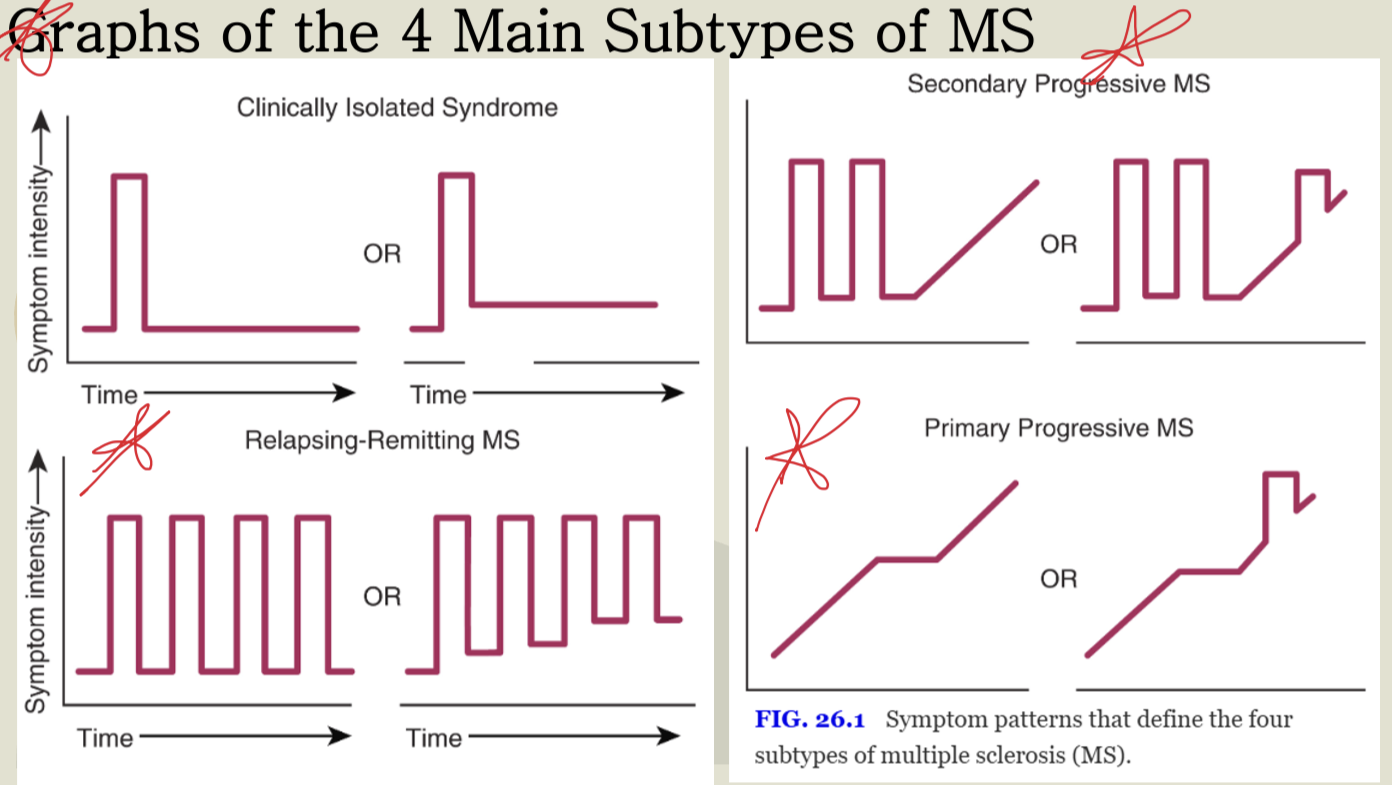
Assessment & Triggers:
Early Indicators: Vision changes (diplopia, nystagmus), mobility issues, and sensory disturbances (paresthesia).
Triggers: Fatigue, stress, overexertion, and heat (e.g., hot showers) can exacerbate symptoms.
Cognitive Changes: "MS hug" (dysesthesia), memory loss, and impaired judgment.
Pharmacology:
Disease-Modifying Drugs (DMDs): Interferon beta 1a/1b (immunomodulators) are used to reduce the frequency/severity of relapses. Side effects include flu-like symptoms, hepatotoxicity (monitor LFTs), and myelosuppression (monitor CBC).
Acute Relapse: Treated with short courses of high-dose IV glucocorticoids (Methylprednisolone) to suppress inflammation.
Spasticity: Managed with Baclofen or Diazepam.
II. Myasthenia Gravis (MG)
MG is a chronic autoimmune neuromuscular disorder characterized by fluctuating muscle weakness and rapid fatigue.
Pathophysiology: Antibodies attack nicotinic acetylcholine receptors at the neuromuscular junction (NMJ), reducing functional receptors by 70–90%.
Key Symptoms: Ptosis (drooping eyelids), diplopia, and difficulty swallowing (dysphagia) or breathing.
Pharmacology (Pyridostigmine):
The drug of choice is Pyridostigmine (Mestinon), a cholinesterase inhibitor that increases acetylcholine at the NMJ.
Patient Teaching: Dosing is individualized; patients should take the medication prior to exertion or eating to ensure muscle strength for swallowing.
Antidote: Atropine is used to treat excessive muscarinic responses (e.g., bradycardia).
III. Critical Comparison: Myasthenic vs. Cholinergic Crisis
Distinguishing between these two is a high-yield exam topic.
Feature | Myasthenic Crisis | Cholinergic Crisis |
|---|---|---|
Cause | Undermedication (too little Ach) | Overdose of cholinesterase inhibitors |
Symptoms | Extreme muscle weakness; respiratory paralysis | SLUDGE (Salivation, Lacrimation, Urination, Diaphoresis/Diarrhea, GI cramping, Emesis) & Killer Bs (Bradycardia, Bronchospasm) |
Diagnosis | Tensilon Test: Symptoms improve with Edrophonium | Tensilon Test: Symptoms worsen or do not improve |
Treatment | Neostigmine | Stop meds; Atropine; respiratory support |
IV. Nursing Priorities & Collaborative Care
Safety & Aspiration: Perform a swallow screen before oral meds for MG or MS patients with dysphagia.
Vision Support: For diplopia (double vision), use an eye patch, alternating eyes every few hours.
Immunity: Many MS drugs are immunosuppressants; teach patients to avoid crowds and people with infections.
Mobility: Plan for periods of rest to manage fatigue and avoid overexertion which can trigger MS flare-ups