W7 L16: GI Tract pt5
Digestion & Absorption Protein & Lipids
Amino acids are building blocks of protein
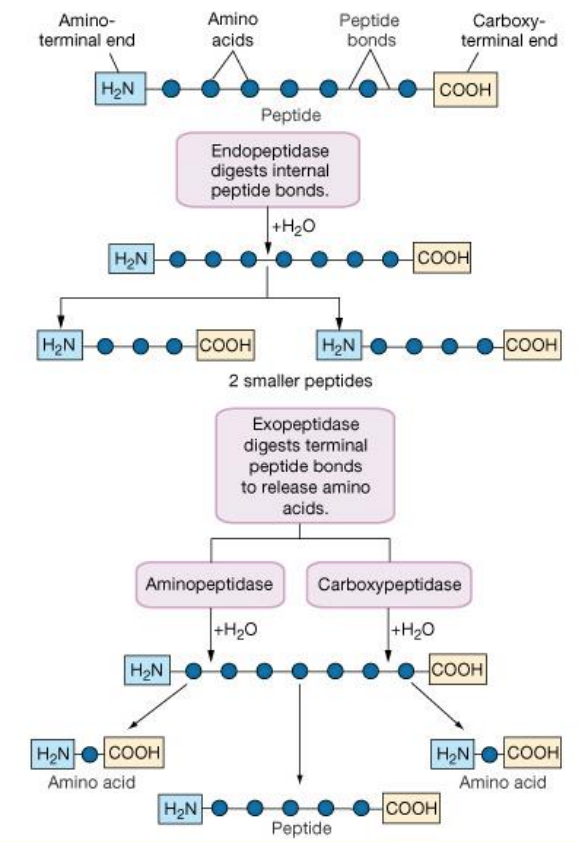
Proteolytic enzymes
- Exopeptidase enzymes
- Carboxy- or amino-peptidases
- liberate free individual amino acids
- Endopeptidases
- liberate smaller peptide chains
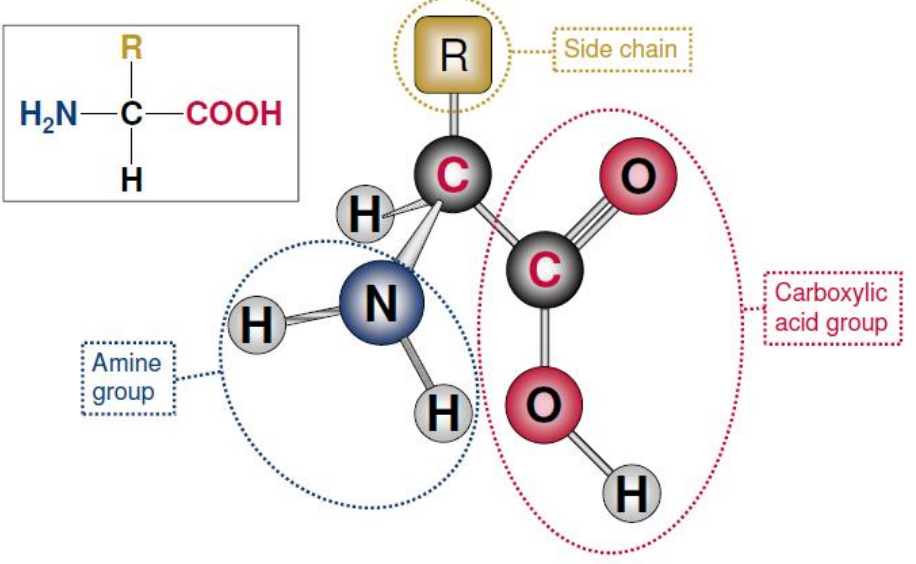
Digestion of proteins
- Mechanical disruption by chewing and gastric motility
- Protein denaturation by HCl
- Combined effect of chemical and enzymatic digestion
Stomach
- Enzymatic digestion of proteins begins
- Pepsin
- secreted by chief cells
- most effective in v. acidic environment of stomach (pH2)
- becomes inactive at higher pH
- Cleaves certain peptide bonds b/w amino acids
- smaller peptide fragments (polypeptides)
- breaks peptide bonds adjacent to phe, tyr, aps, glu, leu, met
What prevents pepsin from digesting the protein in stomach cells?
- Pepsin is secreted in an inactive form → pepsinogen
- pepsinogen is converted into active pepsin when it comes in contact w/
- HCl secreted by parietal cells
- active pepsin mols.
- pepsinogen is converted into active pepsin when it comes in contact w/
- Stomach epithelial cells protected from gastric juices
- layer 1-3 mm thick alkaline mucus
- secreted by surface mucous cells & mucous neck cells
Small intestine
Pancreatic juice
- trypsin
- chymotrypsin
- carboxypeptidase
- elastase
Produces in an inactive form to protect pancreas
Trypsin secreted in inactive form → trypsinogen
Pancreatic acinar cells secrete trypsin inhibitor - to protect itself
- blocks enzyme of any trypsin formed accidentally in pancreas or in pancreatic juice
Trypsinogen reaches lumen of SI
- activating brush-border enzyme → enterokinase
- splits off part of trypsinogen → trypsin
Trypsin acts on other inactive precursors
- chymotrypsinogen → chymotrypsin
- procarboxypeptidase → carboxypeptidase
- proelastase → elastase
Endopeptidases
- trypsinogen
- chymotrypsinogen
- proelastase
Exopeptidases
- procarboxypeptidase A
- procarboxypeptidase B
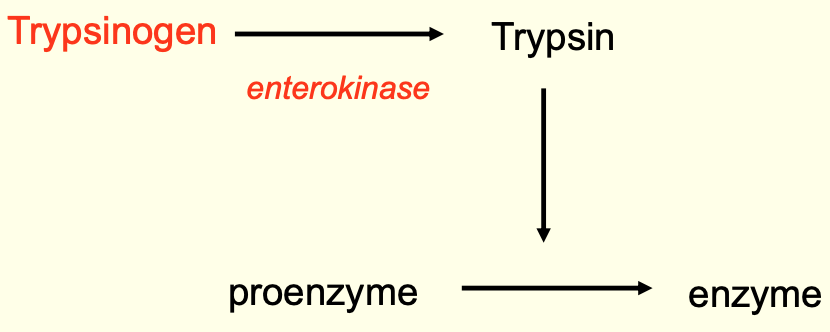
Protein digestion completion
- 2 peptidases in the bush border
- Aminopeptidase
- cleaves off amino acid at amino end of peptide
- Dipeptidase
- splits dipeptides (2 amino acids joined by a peptide) into single amino acids
Absorption of proteins
- most proteins absorbed as amino acids via active transport processes
- duodenum & jejunum
- 50% of absorbed AA are present in food
- 50% from the body
- protein in digestive juices
- dead cells sloughed off mucosal surface
- 95% - 98% of protein present in SI is digested & absorbed
- Na+ dependant AA transport - individual AA
- H+ co-transport w/ small peptides
- dipeptides & tripeptides
- hydrolysed to single AA inside absorptive cells
- AA move out of absorptive cells via diffusion
- Larger peptides moved by transcytosis
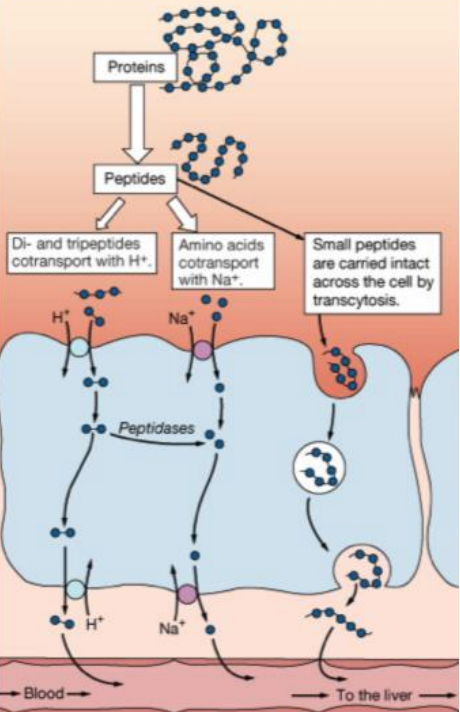
Absorption R of proteins
- AA transported in blood to liver (hepatic portal system)
- Hepatocytes deaminate (remove NH2) AA
- AA
- ATP production
- converted to carbohydrates of fats
- Toxic ammonia (NH3) converted into much less toxic urea (excreted in urine)
- Hepatocytes synthesised most plasma proteins
- α & β globulins, albumin, prothrombin & fibrinogen
Summary of proteins:
- Protein digestion begins in stomach
- HCl denatures proteins
- pepsin begins enzymatic digestion
- Pancreatic juice secreted into SI
- pro-enzymes are activated
- peptidases in brush border
- AA & peptides are absorbed by 3 mech. of active transport
- AA are processed by the liver
Lipids
What fat enters the GI tract
Triglycerides
- Most abundant lipids in the diet
- Molecule of glycerol bonded to 3 fatty acid mols.
Dietary:
- 100 g/day (RNI 70 g/day)
- 90 % triacylglycerol
- 5 % phospholipids
- 0.5 % cholesterol ester
Endogenous (make):
- bile 10 – 15 g
- phospholipid
- 1 – 2 g cholesterol
- ester 6 g
- intestinal cells
- 10 g dead bacteria
Mouth
- Lingual glands in lamina propria of the tongue
- Secrete mucus & lingual lipase
- Acts on ~30% of dietary triglycerides (fats & oils)
- Converts them to simpler FAs & diglycerides
Stomach
- Chief cells
- Gastric lipase
- operates best at pH 5-6
- Splits triglycerides into FA & monoglycerides
- monoglycerides → glycerol mol. + 1 FA mol.
Small intestine
- Most lipid digestion occurs here
- Pancreatic juice - pancreatic lipase
- Bile salts - emulsification
- Triglycerides broken down into FAs & monoglycerides
- Short chain FAs
- fewer than 10-12 carbons
- hydrophobic - more water-soluble than longer FAs
- Long chain FAs
- Large short-chain FAs (w/ more than 10-12 carbon atoms)
- Hydrophobic - not water-sol.
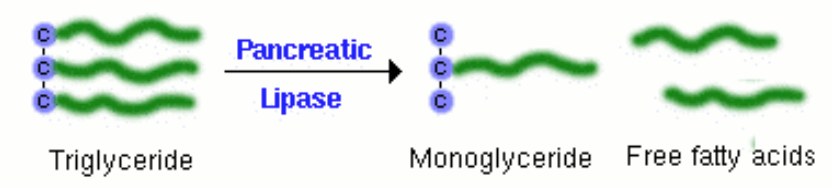
Pancreatic lipase is made up of 3 separate enzymes
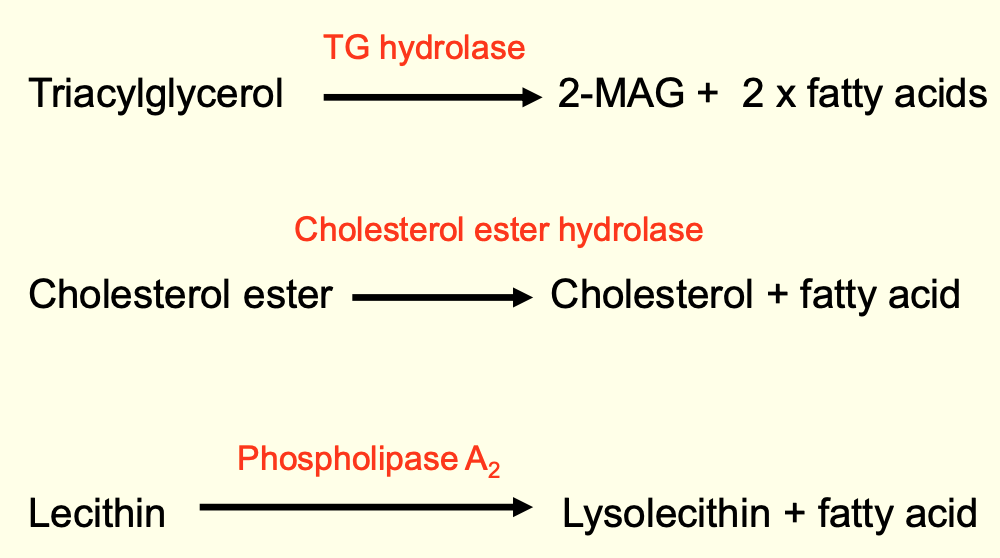
Action of pancreatic enzyme
- Triacylglycerol hydrolase
- Specific for first and third ester bonds
- Maximal enzymatic efficiency requires:
- colipase (stabilises active catalytic site), prevents inactivation by bile salts
- alkaline pH
- bile salts for emulsification
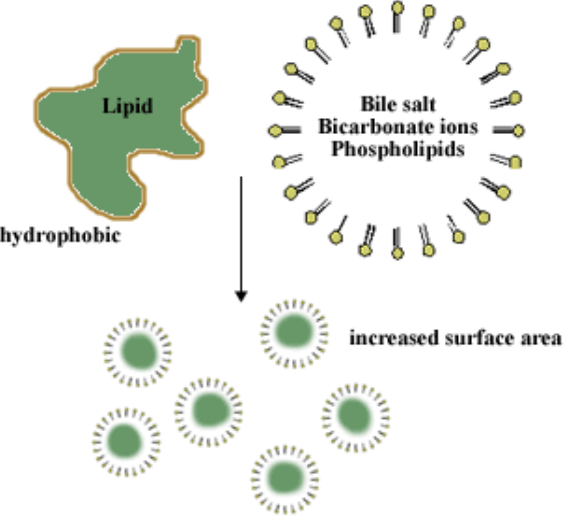
Bile salts
- Na+ salts & K+ salts of bile acids
- Amphipathic
- hydrophobic (nonpolar) region
- hydrophilic (polar) region
- Emulsification
- hydrophobic region interacts w/ large lipid globule
- hydrophilic region interact w/ watery intestinal chyme
- large lipid globule is broken down into several small lipid globules (1μm in diameter)
- Breakdown of large lipid globules into suspension of small lipid globules
- Crucial in ↑ SA for lipase action
Micelles
- ↑ solubility (2-10nm diameter)
- 20-50 bile salts mol.
- Hydrophobic regions of bile salts interact w/ FAs & monoglycerides
- Hydrophilic regions of bile salts interact w/ watery intestinal chyme
Lipid digestion
Emulsification by bile salts
Formation of mixed micelles
Micelle breaks down close to luminal surface
- low pH of acid microclimate zone
Fatty acids are released to be absorbed by epithelial cells
All dietary lipids are absorbed via simple diffusion
Adults absorb about 95% of lipids present in SI
Small short-chain FAs
- dissolved in watery intestinal chyme
- pass through absorptive cells via simple diffusion
- into blood capillary of a villus
Micelles move to bush border of absorptive cells
Large short chain and long chain FAs, & monoglycerides diffuse out of micelles into absorptive cells
Micelles remain in chyme
Micelles continually repeat ferrying function
Move back to interior of small intestinal lumen
Pick up more of large short chain and long chain FAs, & monoglycerides
Micelles also solubilise other large hydrophobic molecules en
- fat-sol. vits (A, D, E & k)
- cholesterol
Inside absorptive cells
- long chain FAs & monoglycerides are recombined to form triglycerides
- aggregate into globules along w/ phospholipids & cholesterol & cholesterol and become coated w/ proteins (chylomicrons)
Chylomicrons
- large spherical masses
- ~80nm in diameter
- Leave absorptive cells via exocytosis
- cannot enter blood capillaries
- Absorbed into lymphatic system and into lacteal
- Too large to enter capillary directly
- Transported by lymphatic vessels to thoratic duct
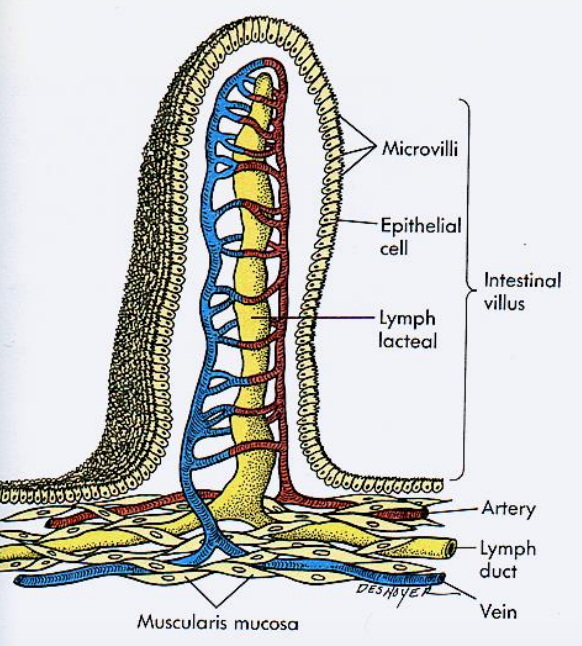
Intestinal villus
- Enter the blood at the junction of the left internal jugular & left subclavian veins
- Hydrophilic protein coat
- keeps chylomicrons suspended in blood
- prevents them from sticking to each other
Lipid absorption
- Within 10 mins ~50% chylomicrons have been removed from blood
- Enzyme attached to apical surface capillary endothelial cells
- Lipoprotein lipase → breaks down triglycerides in chylomicrons & other lipoproteins into FAs & glycerol
- FAs diffuse into hepatocytes & adipose cells & combine w/ glycerol during re-synthesis of triglycerides
- 2-3 hours after a meal, few chylomicrons remain in blood
Enterohepatic circulation
- Most bile salts are reabsorbed by active transport in ileum
- Returned by blood to liver through hepatic portal system
- Re-secreted into bile
- Insufficient bile salts
- obstruction of bile ducts
- removal of gallbladder
- diminished lipid absorption
- loss of up to 40% of dietary lipids in faeces
Lipid metabolism in liver
- Hepatocytes store some triglycerides
- Break down FAs to generate ATP
- Synthesise lipoproteins
- transport FAs, triglycerides & cholesterol to & from body cells
- Synthesise cholesterol
- Use cholesterol to make bile salts