Respiratory System 6: Respiratory System Defences
Respiratory Defense Mechanisms
Introduction
The respiratory system faces constant exposure to potentially damaging agents such as:
Irritants
Particulates
Pathogens
The primary goal is to protect the delicate tissues of the alveoli where gas exchange occurs. Defenses are crucial at the entry points (mouth and nose) to prevent damage to these sensitive tissues.
Nasal Passage Defenses
The nasal passage employs several defense mechanisms:
Turbinates (baffles): These structures disrupt airflow, aiding in:
Trapping particles
Warming inhaled air
Humidifying inhaled air
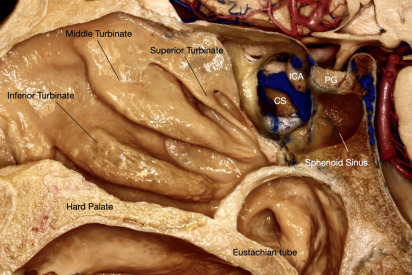
Lymphoid tissues: Located within the nasal passage, these tissues contain white blood cells that can:
Engage in phagocytosis
Activate immune responses
Deal with pathogens quickly
Trachea and Bronchi
Air travels down the trachea, through the bronchi, and past additional lymph nodes before reaching the alveoli.
Alveolar Macrophages: These are present in the alveoli and act as a final line of defense.
Trachea and Throat Tissues: The tissues lining the trachea and the back of the throat are composed of cells containing goblet cells (mucus-secreting cells).
Goblet Cells and Cilia
Goblet Cells: These are mucus-secreting cells.
Epithelial Tissue Type: Primarily pseudostratified and, in some regions, columnar.
Cilia: Hair-like protrusions on epithelial cells that form the "brush border."
Mucus and Cilia Interaction
Mucus Layer: Goblet cells secrete mucus that sits atop the cilia.
Cilia Movement: Cilia rhythmically push the mucus towards the mouth and nose, driven by internal microskeletons.
Particle Trapping: Inhaled particles and pathogens become trapped in the sticky mucus.
Mucus Consistency
The consistency of mucus is critical for effective defence:
Ideal Consistency: The mucus needs to be:
Sticky enough to trap particles
Mobile enough for cilia to move it effectively
Not too runny, to prevent dripping into the alveoli
Not too thick, to prevent overwhelming the ciliary transport
Consequences of Improper Mucus Production
Excessive Mucus: While trapping more effectively, it can:
Overwhelm the cilia
Fall into the alveoli
Disrupt gas exchange
Gas Exchange Disruption: Mucus accumulation in the alveoli creates a barrier, hindering effective oxygen and carbon dioxide exchange.
Upper vs. Lower Respiratory Tract Defences
Upper Respiratory Tract:
Nasal hairs trap particulates.
Turbinates warm, humidify, and trap inhaled particles.
Breathing through the nose provides enhanced defense compared to mouth breathing.
Lower Respiratory Tract:
Ciliated cells and mucus-secreting goblet cells trap and remove particles.
Alveoli:
Resident macrophages perform phagocytosis.
Macrophages clean up debris to maintain respiratory membrane function.