civil litigation
Civil Litigation Overview
Definition: Civil litigation refers to dispute resolution processes for civil (noncriminal) cases in public courts.
Scope: Encompasses pretrial and posttrial events; often misunderstood as synonymous with trial.
Types of Business Litigation:
Contract disputes
Employment disputes
Negligence lawsuits
Bankruptcy issues
Intellectual property issues
Dispute Resolution in Business Planning
Importance: Dispute resolution is integral to effective business planning and strategy; requires careful cost-benefit analysis.
Role of Legal Counsel: Legal advice is vital, but decision-making rests on business managers and owners.
Options for Dispute Resolution:
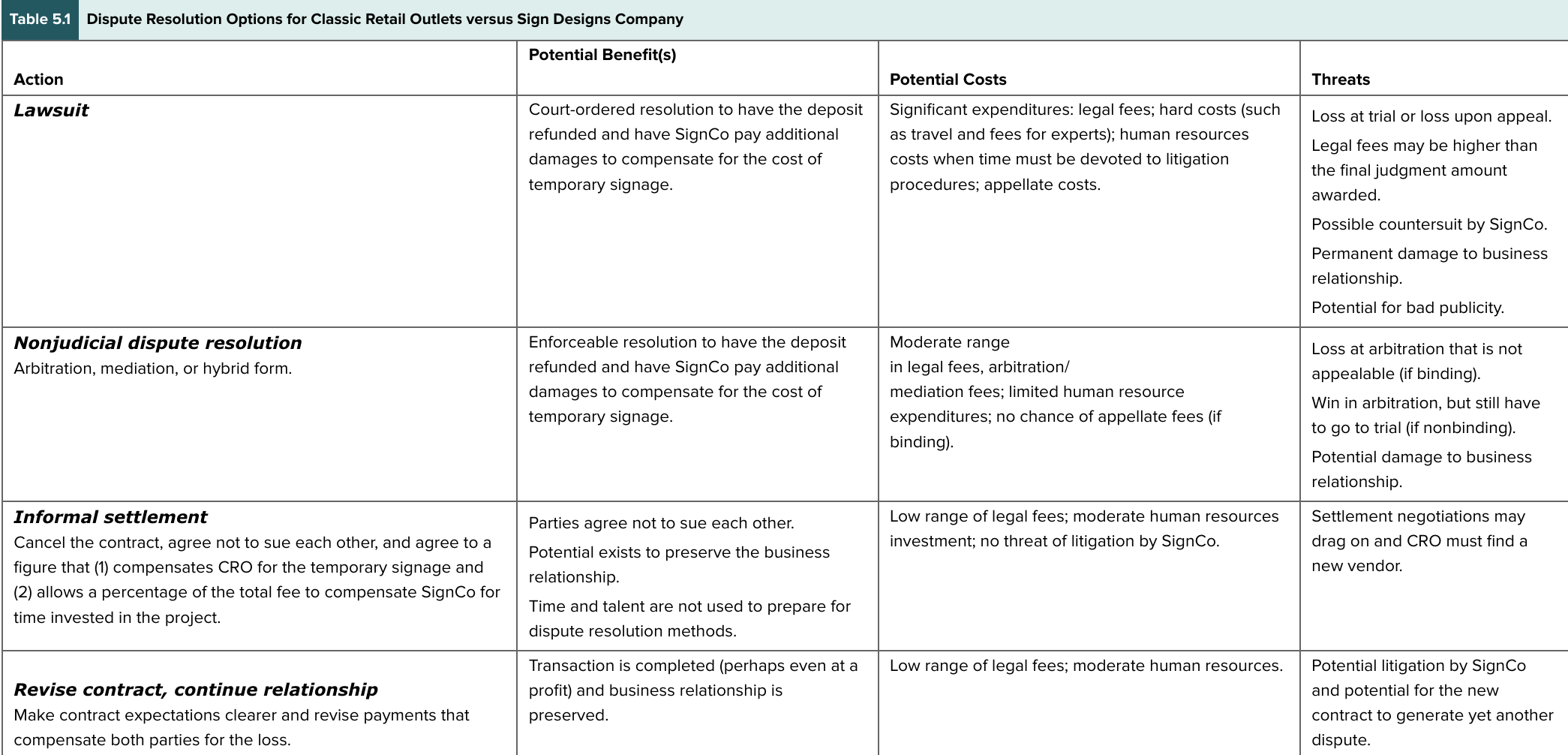
Businesses have a wide range of options for dispute resolution, each with its advantages and disadvantages.
Case Study: Classic Retail Outlets, Inc. and Sign Designs Company
Scenario:
CRO contracts SignCo for signage design, manufacturing, and installation with a payment structure of 50% upon signing and 50% at delivery.
Conflict:
Initial delivery is unsatisfactory; CRO claims deviations from specifications.
SignCo agrees to revise but delays the process, leading to further dissatisfaction.
After a second rejected prototype, CRO faces additional costs for temporary signs.
Business Problems Identified
CRO has paid 50% but still needs a sign and incurred extra costs.
SignCo has invested time and resources, perceiving CRO's expectations as unreasonable.
Resolution Options
Analytical Approach: CRO should conduct a cost-benefit analysis and consider various alternatives to resolve the dispute effectively.