Infection Control
Learning Objectives
Understand the chain of infection and the body's defenses.
Identify inflammatory response manifestations and diagnostic tests for infections.
Differentiate between medical and surgical asepsis in client care.
Recognize standard versus isolation precautions.
List nursing interventions to prevent infections.
Chain of Infection Components
Infectious Agent: Bacteria, viruses, fungi, parasites, or prions responsible for infections.
Reservoir: Habitat where infectious agents live, grow, and multiply (animate/inanimate).
Portal of Exit: Route for pathogens to exit the reservoir (body orifices, fluids).
Mode of Transmission: How pathogens spread (contact, droplet, airborne, etc.).
Portal of Entry: Route allowing pathogens to enter the host (body orifices, skin breaks).
Susceptible Host: Individual who can be affected by the pathogen.
Breaking the Chain of Infection
Disinfecting, sterilizing, cleaning, and antimicrobial treatments.
Hand hygiene, clean environments, and proper containment of fluids.
Improving host defenses via immunizations and hygiene.
Modes of Transmission
Contact Transmission: Direct (infected person to person) or indirect (contaminated object).
Droplet Transmission: Respiratory droplets traveling through air to mucosa.
Airborne Transmission: Infectious particles remain suspended in the air.
Body’s Defenses
Physical Barriers: Skin, mucous membranes protecting from pathogens.
Chemical Barriers: Enzymes and acids in secretions.
Nonspecific Immunity: Neutrophils and macrophages act as phagocytes.
Specific Immunity: Antibodies and lymphocytes targeting specific pathogens.
Inflammatory Response
Triggered by injury or presence of pathogens.
Characteristics: heat, redness, swelling, pain, loss of function.
Followed by stages (incubation, prodromal, acute illness, decline, convalescence).
Types of Infection
Local Infection: Confined to one area, often treated topically.
Systemic Infection: Spreads through the bloodstream, affects the whole body.
Diagnostic Tests
Urinalysis, cultures, imaging (X-ray, MRI), and blood tests to detect infections.
Asepsis Principles
Medical Asepsis: Clean techniques reducing pathogens.
Surgical Asepsis: Sterile techniques ensuring no pathogens are present.
Sterilization vs. disinfection methods.
Types of Precautions
Standard Precautions: General practices for all clients to prevent infections.
Contact Precautions: For infections spread by direct/indirect contact.
Droplet Precautions: Close contact with respiratory droplets.
Airborne Precautions: For infections transmitted through the air.
Protective Isolation: For clients at high risk post-transplant.
Nursing Interventions for Infection Control
Awareness of HAIs and maintaining asepsis in invasive devices.
Use of PPE appropriate to the infectious agent (gloves, gowns, masks).
Prevention of needlestick injuries and proper waste disposal.
Management and handling of contaminated linens and waste properly.
Chapter 10: Medical and Surgical Asepsis
Asepsis is the absence of illness-producing micro-organisms. Hand hygiene is the primary behavior.
Medical asepsis refers to the use of precise practices to reduce the number, growth, and spread of micro-organisms (“clean technique”). It applies to administering oral medication, managing nasogastric tubes, providing personal hygiene, and performing many other common nursing tasks.
Surgical asepsis refers to the use of precise practices to eliminate all micro-organisms from an object or area and prevent contamination (“sterile technique”). It applies to parenteral medication administration, insertion of urinary catheters, surgical procedures, sterile dressing changes, and many other common nursing procedures.
Before beginning any task or procedure that requires aseptic technique, health care team members must check for latex allergies. If the client or any member of the team has a latex allergy, the team must use latex-free gloves, equipment, and supplies. Most facilities use non-latex (nitrile) gloves. However, it is the health care team’s responsibility to identify latex allergies and use items that are latex-free. QS
Practices That Promote Medical Asepsis
Hand Hygiene
Always use hand hygiene. Wash hands with an antimicrobial or plain soap and water, or use alcohol-based hand rub (gels, foams, and rinses; or performing a surgical scrub).
The three essential components of handwashing are the following.
Soap
Running water
Friction
All health care personnel must perform hand hygiene, either with an alcohol-based product or with soap and water, before and after every client contact, and after removing gloves. When hands are visibly soiled, after contact with body fluids, before eating, and after using the restroom, wash them with a nonantimicrobial or antimicrobial soap and water. It is also important for clients and visitors to practice hand hygiene.
Perform hand hygiene using recommended antiseptic solutions when caring for clients who are immunocompromised or have infections with multidrug-resistant or extremely virulent micro-organisms.
Perform hand hygiene after contact with anything in clients’ rooms and after touching any contaminated items, whether or not gloves were worn, and before putting gloves on and after taking them off. Performing hand hygiene might be necessary between tasks and procedures on the same client to prevent cross-contamination of different body sites.
Wash hands with soap and warm water: Place hands under running water. Add soap and rub hands together vigorously for at least 15 seconds to remove transient flora and up to 2 minutes when hands are more soiled. Rinse under running water. After washing, dry hands with a clean paper towel before turning off the faucet. If the sink does not have foot or knee pedals for turning off the water, use a clean, dry paper towel to turn off the faucet(s). QEBP
For hand hygiene with an alcohol-based product, dispense the manufacturer’s recommended amount in the palm of the hand. Rub hands together vigorously, remembering to cover all surfaces of both hands and fingers. Continue to rub until both hands are completely dry.
A nurse is reviewing hand hygiene techniques with a group of assistive personnel (AP). Which of the following instructions should the nurse include when discussing handwashing?
Select all that apply.
A
Apply 3 to 5 mL of liquid soap to dry hands.
The APs should apply alcohol rubs to dry hands. When washing hands with soap and water, the Aps should wet the hands first before applying soap for handwashing.
B
Wash the hands with soap and water for at least 15 seconds.
It takes 15 seconds to remove transient flora from the hands. For soiled hands, the recommendation is 2 minutes.
C
Rinse the hands with hot water.
The APs should use warm not hot water to minimize the removal of protective skin oils.
D
Use a clean paper towel to turn off hand faucets.
If the sink does not have foot or knee pedals, the APs should turn off the water with a clean paper towel and not with their hands.
E
Allow the hands to air dry after washing.
The APs should dry their hands with a clean paper towel. This helps prevent chapped skin.
Not quite!
You answered incorrectly.
Additional Personal Hygiene Measures
Emphasize the importance of covering the mouth and nose when coughing or sneezing, using and disposing of facial tissues, and performing hand hygiene to prevent spraying and spreading droplet infections. Encourage clients and visitors to practice respiratory hygiene/cough etiquette. Ensure spatial separation of 3 ft from those with a cough or have them wear a mask.
Wash hair frequently and keep it short or pulled back to prevent contamination of the care area or the clients.
Keep natural nails short and clean and free of nail gels and acrylic nails. The area around and under the nails can harbor micro-organisms.
Remove jewelry from hands and wrists to facilitate hand disinfection.
Protective Clothing
Use masks, gloves, gowns, and protective eyewear to help control the contact and spread of micro-organisms to staff and clients.
Physical Environment
Additional examples of practices that reduce the growth and spread of micro-organisms are changing linens daily, cleaning floors and bedside stands, and separating clean from contaminated materials.
Do not place items on the floor (even soiled laundry). The floor is grossly contaminated.
Do not shake linens because doing so can spread micro-organisms in the air. Keep soiled items from touching clothing.
Clean the least soiled areas first to prevent moving more contaminants into the cleaner areas.
Use plastic bags for moist, soiled items, following facility protocol for bag selection, to prevent further contamination of items or of individuals handling the soiled items. Put all soiled items directly into the appropriate receptacle to avoid handling soiled items more than once.
Place all laboratory specimens in biohazard containers or bags for transport or disposal.
Pour any liquids used for client care directly into the drain and avoid splattering to prevent spreading droplets. Empty body fluids at water level of toilet to avoid splashing.
Practices that Maintain a Sterile Field
Prolonged exposure to airborne micro-organisms can make sterile items non-sterile.
Avoid coughing, sneezing, and talking directly over a sterile field.
Advise clients to avoid sudden movements; refrain from touching supplies, drapes, or the nurse’s gloves and gown; and avoid coughing, sneezing, or talking over a sterile field.
Only sterile items can be in a sterile field.
The outer wrappings and 1-inch edges of packaging that contains sterile items are not sterile. The inner surface of the sterile drape or kit, except for that 1-inch border around the edges, is the sterile field to which other sterile items can be added. To position the field on the table surface, grasp the 1-inch border before donning sterile gloves. Discard any object that comes into contact with the 1-inch border. QS
Touch sterile materials only with sterile gloves.
Consider any object held below the waist or above the chest contaminated.
Sterile materials can touch other sterile surfaces or materials; however, contact with non-sterile materials at any time contaminates a sterile area, no matter how short the contact.
Microbes can move by gravity from a non-sterile item to a sterile item.
Do not reach across or above a sterile field.
Do not turn your back on a sterile field.
Hold items to add to a sterile field at a minimum of 6 inches above the field.
Any sterile, non-waterproof wrapper that comes in contact with moisture becomes non-sterile by a wicking action that allows microbes to travel rapidly from a non-sterile surface to the sterile surface.
Keep all surfaces dry.
Discard any sterile packages that are torn, punctured, or wet.
When entering a client’s room to change a surgical dressing, a nurse notes that the client is coughing and sneezing. Which of the following actions should the nurse take when preparing the sterile field?
A
Keep the sterile field at least 6 ft away from the client’s bedside.
It would be difficult for to maintain a sterile field away from the bedside. But more important, this might not have any effect on the transmission of some micro-organisms.
B
Instruct the client to refrain from coughing and sneezing during the dressing change.
The client might be unable to refrain from coughing and sneezing during the dressing change.
C
Place a mask on the client to limit the spread of micro-organisms into the surgical wound.
Placing a mask on the client prevents contamination of the surgical wound during the dressing change.
D
Keep a box of facial tissues nearby for the client to use during the dressing change.
Keeping tissues close by for the client to use still allows contamination of the surgical wound.
Well done!
You answered correctly. NCLEX Connection: Safety and Infection Control, Standard Precautions/Transmission‑Based Precautions/Surgical Asepsis
A nurse has prepared a sterile field for assisting a provider with a chest tube insertion. Which of the following events should the nurse recognize as contaminating the sterile field?
Select all that apply.
A
The provider drops a sterile instrument onto the near side of the sterile field.
As long as the provider has not reached over the sterile field (by placing the instrument on a near portion of the field), the field remains sterile.
B
The nurse moistens a cotton ball with sterile normal saline and places it on the sterile field.
Fluid permeation of the sterile drape or barrier contaminates the field.
C
The procedure is delayed 1 hr because the provider receives an emergency call.
Prolonged exposure to air contaminates a sterile field.
D
The nurse turns to speak to someone who enters through the door behind the nurse.
Turning away from a sterile field contaminates the field because the nurse cannot see if a piece of clothing or hair made contact with the field.
E
The client’s hand brushes against the outer edge of the sterile field.
The 1-inch border at the outer edge of the sterile field is not sterile. Unless the client reached farther into the field, the field remains sterile.
Not quite!
You answered incorrectly.
Nursing Interventions
Equipment
Select a clean area above waist level in the client’s environment (a bedside stand) to set up the sterile field.
Check that all sterile packages (additional dressings, sterile bowl, sterile gloves, and solution) are dry and intact and have a future expiration date. Any chemical tape must show the appropriate color change.
Make sure an appropriate waste receptacle is nearby.
Procedure
Perform hand hygiene.
Sterile field setup
Open the covering of the package per the manufacturer’s directions, slipping the package onto the center of the workspace with the top flap of the wrapper opening away from the body.
Grasp the tip of the top flap of the package, and with the arm positioned away from the sterile field, unfold the top flap away from the body QS
Next, open the side flaps, using the right hand for the right flap and the left hand for the left flap.
Grasp the last flap and turn it down toward the body.
Additional sterile packages
Open next to the sterile field by holding the bottom edge with one hand and pulling back on the top flap with the other hand. Place the packages that will be used last furthest from the sterile field; open these first.
Add them directly to the sterile field. Lift the package from the dry surface, holding it 15 cm (6 in) above the sterile field, pulling the two surfaces apart, and dropping it onto the sterile field.
Pour sterile solutions
Remove the bottle cap.
Place the bottle cap face up on a clean (non-sterile) surface.
Hold the bottle with the label in the palm of the hand so that the solution does not run down the label.
First pour a small amount (1 to 2 mL) of the solution into an available receptacle.
Pour the solution (without splashing) onto the dressing or site without touching the bottle to the site.
Sterile solutions expire 24 hr after opening and recapping in some facilities. Other facilities’ policies state that once a sterile solution container is opened, it can be used only once and then thrown away.
Sterile gloves
Once the sterile field is set up, don sterile gloves.
Sterile gloving includes opening the wrapper and handling only the outside of the wrapper. Don gloves by using the following steps.
With the cuff side pointing toward the body, use the nondominant hand and pick up the dominant-hand glove by grasping the folded bottom edge of the cuff and lifting it up and away from the wrapper.
While picking up the edge of the cuff, pull the dominant glove onto the hand.
With the sterile dominant-gloved hand, place the fingers of the dominant hand inside the cuff of the nondominant glove, lifting it off the wrapper and putting the nondominant hand into it.
When both hands are gloved, adjust the fingers.
During that time, only a sterile gloved hand can touch the other sterile gloved hand.
At the close of the sterile procedure or if the gloves tear, remove the gloves. Take them off by grasping the outer part of one glove at the cuff area, avoiding touching the wrist and pulling the glove down over the fingers and into the hand that is still gloved. Then, place the ungloved hand inside the soiled glove and pull the glove off so that it is inside out and only the clean inside part is exposed. Discard into an appropriate receptacle.
A nurse is wearing sterile gloves in preparation for performing a sterile procedure. Which of the following objects can the nurse touch without breaching sterile technique?
Select all that apply.
A
A bottle containing a sterile solution
A bottle of sterile solution is sterile on the inside and non-sterile on the outside. Place the solution in a sterile container on the field before putting on sterile gloves.
B
The edge of the sterile drape at the base of the field
The 1-inch border at the outer edge of the sterile field is not sterile. Do not touch it with sterile gloves.
C
The inner wrapping of an item on the sterile field
The inner wrappings of any objects dropped onto the sterile field are sterile. Touch them with sterile gloves.
D
An irrigation syringe appropriately placed on the sterile field
Any sterile objects dropped onto the sterile field during the setup are sterile. Touch the syringe with sterile gloves.
E
One gloved hand with the other gloved hand
One sterile gloved hand may touch the other sterile gloved hand because both are sterile.
Not quite!
You answered incorrectly.
A nurse has removed a sterile pack from its outside cover and placed it on a clean work surface in preparation for an invasive procedure. Which of the following flaps should the nurse unfold first?
A
The flap closest to the body
The flap closest to the body is the innermost flap and the last one to unfold.
B
The right side flap
Unfold the side flap that is closest to the top of the package before the one underneath it; however, there is another flap to unfold first.
C
The left side flap
Unfold the side flap that is closest to the top of the package before the one underneath it; however, there is another flap to unfold first.
D
The flap farthest from the body
The priority goal in setting up a sterile field is to maintain sterility and thus reduce the risk to the client’s safety. Unless the nurse pulls the top flap (the one farthest from her body) away from the body first, there is a risk of touching part of the inner surface of the wrap and thus contaminating it.
Well done!
You answered correctly.
Active Learning Scenario
A nurse is reviewing with a newly licensed nurse the procedure for putting on sterile gloves. Use the ATI Active Learning Template: Nursing Skill to complete this item.
Description of Skill: List the steps involved in putting on a pair of sterile gloves.
Click to download this file.
Active Learning Scenario Key
Click to reveal sample responses.
Chapter 11: Infection Control
An infection occurs when the presence of a pathogen leads to a chain of events. All components of the chain must be present and intact for the infection to occur. A nurse uses infection control practices (medical asepsis, surgical asepsis, standard precautions) to break the chain and thus stop the spread of infection.
Types of Pathogens
Pathogens are the micro-organisms or microbes that cause infections.
Bacteria (Staphylococcus aureus, Escherichia coli, Mycobacterium tuberculosis)
Viruses: Organisms that use the host’s genetic machinery to reproduce (HIV, hepatitis, herpes zoster, herpes simplex virus [HSV], SARS-CoV-2 [COVID-19])
Fungi: Molds and yeasts (Candida albicans, Aspergillus)
Prions: Protein particles (new variant Creutzfeldt-Jakob disease)
Parasites: Protozoa (malaria, toxoplasmosis) and helminths (worms [flatworms, roundworms], flukes [Schistosoma])
Virulence is the ability of a pathogen to invade and injure a host.
Herpes zoster is a common viral infection that erupts years after exposure to chickenpox and invades a specific nerve tract.
Immune Defenses
Nonspecific innate
Native immunity restricts entry or immediately responds to a foreign organism (antigen) through the activation of phagocytic cells, complement, and inflammation. This occurs with all micro-organisms, regardless of previous exposure.
Passive: Antibodies are produced by an external source.
Temporary immunity that does not have memory of past exposures
Intact skin, the body’s first line of defense
Mucous membranes, secretions, enzymes, phagocytic cells, and protective proteins
Inflammatory response with phagocytic cells, the complement system, and interferons to localize the invasion and prevent its spread
Specific adaptive immunity
Specific adaptive immunity allows the body to make antibodies in response to a foreign organism (antigen). This reaction directs against an identifiable micro-organism.
Active: Antibodies are produced in response to an antigen.
Requires time to react to antigens
Provides permanent immunity
Involves B- and T-lymphocytes
Produces specific antibodies against specific antigens (immunoglobulins [IgA, IgD, IgE, IgG, IgM])
Infection Process
Chain of Infection
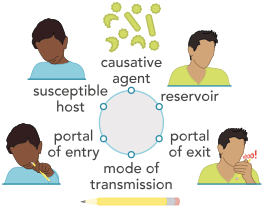
Chain of Infection
Causitive agent
Reservoir
Portal of exit (from the host)
Mode of transmission
Portal of entry (to the host)
Susceptible host
Stages of an infection
Incubation: interval between the pathogen entering the body and the presentation of the first finding
Prodromal stage: interval from onset of general findings to more distinct findings; during this time, the pathogen multiplies
Illness stage: interval when findings specific to the infection occur
Decline stage: interval when manifestations begin to subside as the number of pathogens decrease
Convalescence: interval when acute findings disappear, total recovery taking days to months
A nurse is reviewing the stages of infection with new nurses. Place the stages in the order in which they occur.
Drag the description to the desired ordered number.
Prodromal
Convalescence
Incubation
Illness
1
2
3
4
Assessment/Data Collection
Risk Factors
A nurse should assess each client for the risks of infection specific to the client, the disease or injury, and the environment. The most common risks include:
Inadequate hand hygiene (client and caregivers)
Individuals who have compromised health or defenses against infection, which include:
Those who are immunocompromised
Those who have had surgery
Those with indwelling devices
A break in the skin (the body’s best protection against infection).
Those with poor oxygenation
Those with impaired circulation
Those who have chronic or acute disease (diabetes mellitus, adrenal insufficiency, renal failure, hepatic failure, or chronic lung disease)
Caregivers using medical or surgical asepsis that does not follow the established standards
Health-Care Associated Infections
Health-care associated infections (HAIs) are infections that a client acquires while receiving care in a health care setting. Formerly called nosocomial infections, these can come from an exogenous source (from outside the client) or an endogenous source (inside the client when part of the client’s flora is altered).
|
Clients who have poor personal hygiene or poor nutrition, smoke, or consume excessive amounts of alcohol, and those experiencing stress
Clients who live in a very crowded environment
Older adult clients: Older adults can have a slowed response to antibiotic therapy, slowed immune response, loss of subcutaneous tissue and thinning of the skin, decreased vascularity and slowed wound healing, decreased cough and gag reflexes, chronic illnesses, decreased gastric acid production, decreased mobility, bowel and bladder incontinence, dementia, and greater incidence of invasive devices (a urinary catheter or feeding tube). G
Individuals who make poor lifestyle choices that put them at risk, which include:
Clients who use IV drugs and share needles
Clients who engage in unprotected sex
Clients who have recently been exposed to:
Poor sanitation
Mosquito-borne or parasitic diseases
Diseases endemic to the area visited, but not in the client’s home country
Expected Findings
Findings identifiable in the nursing assessment of generalized or systemic infection include the following.
Fever
Presence of chills, which occur when temperature is rising, and diaphoresis, which occurs when temperature is decreasing
Increased pulse and respiratory rate (in response to the high fever)
Malaise
Fatigue
Anorexia, nausea, and vomiting
Abdominal cramping and diarrhea
Enlarged lymph nodes (repositories for “waste”)
Older adult clients
Older adults have a reduced inflammatory and immune response and thus might have an advanced infection before it is identified. Atypical findings (agitation, confusion, or incontinence) can be the only manifestations. G
Other findings can vary depending on the site of the infection (dyspnea, cough, purulent sputum, and crackles in lung fields, dysuria, urinary frequency, hematuria and pyuria, rash, skin lesions, purulent wound drainage, erythema and odynophagia, dysphagia, hyperemia, enlarged tonsils, change in level of consciousness, nuchal rigidity, photophobia, headache).
Inflammation is the body’s local response to injury or infection. The inflammatory response has three stages.
Findings during the first stage of the inflammatory response (local infection) include the following.
Redness (from dilation of arterioles bringing blood to the area)
Warmth of the area on palpation
Edema
Pain or tenderness
Loss of use of the affected part
In the second stage, the micro-organisms are killed. Fluid containing dead tissue cells and WBCs accumulates and exudate appears at the site of the infection. The exudate leaves the body by draining into the lymph system. The types of exudates are:
Serous (clear).
Sanguineous (contains red blood cells).
Purulent (contains leukocytes and bacteria).
In the third stage, damaged tissue is replaced by scar tissue. Gradually, the new cells take on characteristics that are similar in structure and function to the old cells.
A nurse is caring for a client who has an infection. Sort the manifestations the nurse would expect to find if the infection is localized or systemic.
Drag the manifestations from the left column to the correct category on the right.
Fever
Malaise
Edema
Pain or tenderness
Increased heart rate and respiratory rate
Localized
Systemic
Laboratory Tests
Leukocytosis (WBCs greater than 10,000/µL)
Increases in the specific types of WBCs on differential (left shift = an increase in neutrophils)
Elevated erythrocyte sedimentation rate (ESR) over 20 mm/hr; an increase indicates an active inflammatory process or infection
Presence of micro-organisms on culture of the specific fluid/area
Diagnostic Procedures
Gallium scan: Nuclear scan that uses a radioactive substance to identify hot spots of WBCs
Radioactive gallium citrate: Injected by IV and accumulates in area of inflammation
X-rays, CT scan, magnetic resonance imaging (MRI), and biopsies to determine the presence of infection, abscesses, and lesions
Patient-Centered Care
Nursing Care
Use frequent and effective hand hygiene before and after care.
Educate the client about the required and recommended immunizations and where to obtain them. The target groups include children, older adults, those with chronic disease, and those who are immunocompromised and their families and contacts.
Educate the client and ask for a return demonstration of good oral hygiene. Good oral hygiene decreases the protein (which attracts micro-organisms) in the oral cavity, which thereby decreases the growth of micro-organisms that can migrate through breaks in the oral mucosa.
Encourage the client to consume an adequate amount of fluids. Adequate fluid intake prevents the stasis of urine by flushing the urinary tract and decreasing the growth of micro-organisms. Adequate hydration also keeps the skin from breaking down. Intact skin prevents micro-organisms from entering the body.
For immobile clients, ensure that pulmonary hygiene (turning, coughing, deep breathing, incentive spirometry) is done every 2 hr, or as prescribed. Good pulmonary hygiene decreases the growth of micro-organisms and the development of pneumonia by preventing stasis of pulmonary excretions, stimulating ciliary movement and clearance, and expanding the lungs.
Use of aseptic technique and proper personal protective equipment (gloves, masks, gowns, and goggles) in the provision of care to all clients prevents unnecessary exposure to micro-organisms.
Teach and use respiratory hygiene/cough etiquette. It applies to anyone entering a health care setting (clients, visitors, staff) with manifestations of illness, whether diagnosed or undiagnosed. This includes cough, congestion, rhinorrhea, or an increase in the production of respiratory secretions. The components of respiratory hygiene and cough etiquette include:
Covering the mouth and nose when coughing and sneezing.
Using facial tissues to contain respiratory secretions and disposing of them promptly into a hands-free receptacle.
Wearing a surgical mask when coughing to minimize contamination of the surrounding environment.
Turning the head when coughing and staying a minimum of 3 ft away from others, especially in common waiting areas.
Performing hand hygiene after contact with respiratory secretions and contaminated objects/materials.
Isolation Guidelines
Isolation guidelines are a group of actions that include hand hygiene and the use of barrier precautions, which intend to reduce the transmission of infectious organisms.
The precautions apply to every client, regardless of the diagnosis, and implementation of them must occur whenever there’s anticipation of coming into contact with a potentially infectious material.
Change personal protective equipment after contact with each client and between procedures with the same client if in contact with large amounts of blood and body fluids.
Clients in isolation are at a higher risk for depression and loneliness. Assist the client and their family to understand the reason for isolation and provide sensory stimulation.
Precautions
Standard precautions (tier one)
This tier of standard precautions applies to all body fluids (except sweat), non-intact skin, and mucous membranes. A nurse should implement standard precautions for all clients.
Hand hygiene using an alcohol-based waterless product is recommended after contact with the client when the hands are not visibly soiled or contaminated with blood or body fluids and after the removal of gloves.
Alcohol-based waterless antiseptic is preferred unless the hands are visibly dirty, because the alcohol-based product is more effective in removing micro-organisms.
Wash hands with soap and water if contamination with spores is suspected.
Hand hygiene using nonantimicrobial soap or an antimicrobial soap and water is recommended when visibly soiled or contaminated with blood or body fluids.
Use soap and water (not alcohol) for C. difficile.
Remove gloves and complete hand hygiene between each client.
Masks, eye protection, and face shields are required when care might cause splashing or spraying of body fluids.
Clean gloves are worn when touching anything that has the potential to contaminate the hands of the nurse. This includes body secretions, excretions, blood and body fluids, non-intact skin, mucous membranes, and contaminated items.
Hand hygiene is required after removal of the gown. Use a sturdy, moisture-resistant bag for soiled items and tie the bag securely in a knot at the top.
Properly clean all equipment for client care; dispose of one-time use items according to facility policy.
Bag and handle contaminated laundry to prevent leaking or contamination of clothing or skin.
Enable safety devices on all equipment and supplies after use; dispose of all sharps in a puncture-resistant container.
A client does not need a private room unless they are unable to maintain appropriate hygienic practices.
Transmission precautions (tier two)
Airborne precautions
Use airborne precautions to protect against droplet infections smaller than 5 mcg (measles, varicella, SARS-CoV-2, pulmonary or laryngeal tuberculosis).
Airborne precautions require:
A private room.
Masks and respiratory protection devices for caregivers and visitors.
Use an N95 or high-efficiency particulate air (HEPA) respirator if the client is known or suspected to have tuberculosis or SARS-CoV-2.
Negative pressure airflow exchange in the room of at least six to 12 exchanges per hour, depending on the age of the structure.
If splashing or spraying is a possibility, wear full face (eyes, nose, mouth) protection.
Clients who have an airborne infection should wear a mask while outside of the room/home.
Droplet precautions
Droplet precautions protect against droplets larger than 5 mcg and travel 3 to 6 ft from the client (streptococcal pharyngitis or pneumonia, Haemophilus influenzae type B, scarlet fever, rubella, pertussis, mumps, mycoplasma pneumonia, meningococcal pneumonia and sepsis, pneumonic plague).
Droplet precautions require:
A private room or a room with other clients who have the same infectious disease. Ensure that clients have their own equipment.
Masks for providers and visitors.
Clients who have a droplet infection should wear a mask while outside of the room/home.
A nurse is contributing to the plan of care for a client who is being admitted to the facility with a suspected diagnosis of pertussis. Which of the following interventions should the nurse suggest?
Select all that apply.
A
Place the client in a room that has negative air pressure of at least six exchanges per hour.
B
Wear a mask when providing care within 3 ft of the client.
C
Place a surgical mask on the client if transportation to another department is unavoidable.
D
Use sterile gloves when handling soiled linens.
E
Wear a gown when performing care that might result in contamination from secretions.
Contact precautions
Contact precautions protect visitors and caregivers when they are within 3 ft of the client against direct client and environmental contact infections (respiratory syncytial virus, shigella, enteric diseases caused by micro-organisms, wound infections, herpes simplex, impetigo, scabies, multidrug-resistant organisms).
Contact precautions require:
A private room or a room with other clients who have the same infection.
Gloves and gowns worn by the caregivers and visitors.
Disposal of infectious dressing material into a single, nonporous bag without touching the outside of the bag.
Protective environment
Protective environment is an intervention (not type of precautions) to protect clients who are immunocompromised. This includes clients who have had an allogeneic hematopoietic stem cell transplant.
A protective environment requires:
Private room.
Positive airflow 12 or more air exchanges/hr.
HEPA filtration for incoming air.
Mask for the client when out of room.
The nurse is reviewing the use of transmission-based isolation precautions with a group of new nurses. Sort the following infectious diseases by the type of precautions required.
Tuberculosis
SARS-CoV-2 (COVID-19)
Influenza
C. difficile
MRSA
Contact
Droplet
Airborne
Medications
Antipyretics
Antipyretics (acetaminophen and aspirin) are used for fever and discomfort as prescribed.
Nursing Actions
Monitor fever to determine effectiveness of medication.
Document the client’s temperature fluctuations on the medical record for trending.
Antimicrobial therapy
Antimicrobial therapy kills or inhibits the growth of micro-organisms (bacteria, fungi, viruses, protozoans). Antimicrobial medications either kill pathogens or prevent their growth. Give anthelmintics for worm infestations.
Health care associated infections
Health care associated infections (HAIs) are infections that a client acquires while receiving care in a health care setting. Formerly called nosocomial infections, these can come from an exogenous source (from outside the client) or an endogenous source (inside the client when part of the client’s flora is altered).
Often occur in the intensive care unit.
The best way to prevent HAIs is through frequent and effective hand hygiene.
A common site of HAIs is the urinary tract, and these are often caused by Escherichia coli, Staphylococcus aureus, and enterococci. Other sites of HAIs are surgical wounds, the respiratory tract, and the bloodstream.
An iatrogenic infection is a type of HAI resulting from a diagnostic or therapeutic procedure.
HAIs are not always preventable and are not always iatrogenic.
Use current evidence-based practice guidelines to prevent HAIs due to multidrug-resistant organisms.
Multidrug-Resistant Infection
Antimicrobials are becoming less effective for some strains of pathogens due to the pathogen’s ability to adapt and become resistant to previously sensitive antibiotics. This significantly limits the number of antibiotics that are effective against the pathogen. Use of antibiotics, especially broad-spectrum antibiotics, has significantly decreased to prevent new strains from evolving. Taking the measures below can ensure that an antimicrobial is necessary and therapy is effective. Methicillin-resistant Staphylococcus aureus (MRSA) is a strain of Staphylococcus aureus that is resistant to many antibiotics. Vancomycin and linezolid are used to treat MRSA. Vancomycin-resistant Staphylococcus aureus (VRSA) is a strain of Staphylococcus aureus that is resistant to vancomycin, but so far is sensitive to other antibiotics specific to a client’s strain. Nursing Actions
Client Education
|
Nursing Actions
Administer antimicrobial therapy as prescribed.
Monitor for medication effectiveness (reduced fever, increase in the level of comfort, decreasing WBC count).
Maintain a medication schedule to ensure consistent therapeutic blood levels of the antibiotic.
Interprofessional Care
Transporting a client
If movement of the client to another area of the facility is unavoidable, the nurse takes precautions to ensure that the environment is not contaminated. For example, a surgical mask is placed on the client who has an airborne or droplet infection, and a draining wound is well covered.
Reporting communicable diseases
A complete list of reportable diseases and the reporting system are available through the Centers for Disease Control and Prevention’s website (www.cdc.gov). There are more than 60 communicable diseases that must be reported to the public health departments to allow for officials to:
Ensure appropriate medical treatment of diseases (tuberculosis).
Monitor for common-source outbreaks (foodborne—hepatitis A).
Plan and evaluate control and prevention plans (immunizations for preventable diseases).
Identify outbreaks and epidemics.
Determine public health priorities based on trends.
Client Education
Teach the client about:
Any infection control measures at home.
Self-administration of medication therapy.
Complications to report immediately.
Active Learning Scenario
A nurse manager is teaching a module on the chain of infection during nursing orientation to a group of newly licensed nurses. Use the ATI Active Learning Template: Basic Concept to complete this item.
Related Content: List the six links in the chain of infection that must be present for an infection to occur.
Click to download this file.
Active Learning Scenario Key
Click to reveal sample responses.