Diencephalon and Cerebellum - 10.28.24
Diencephalon Overview
Key components: Thalamus, Hypothalamus, Epithalamus.
Functions in sensory processing, homeostasis, and emotional regulation.
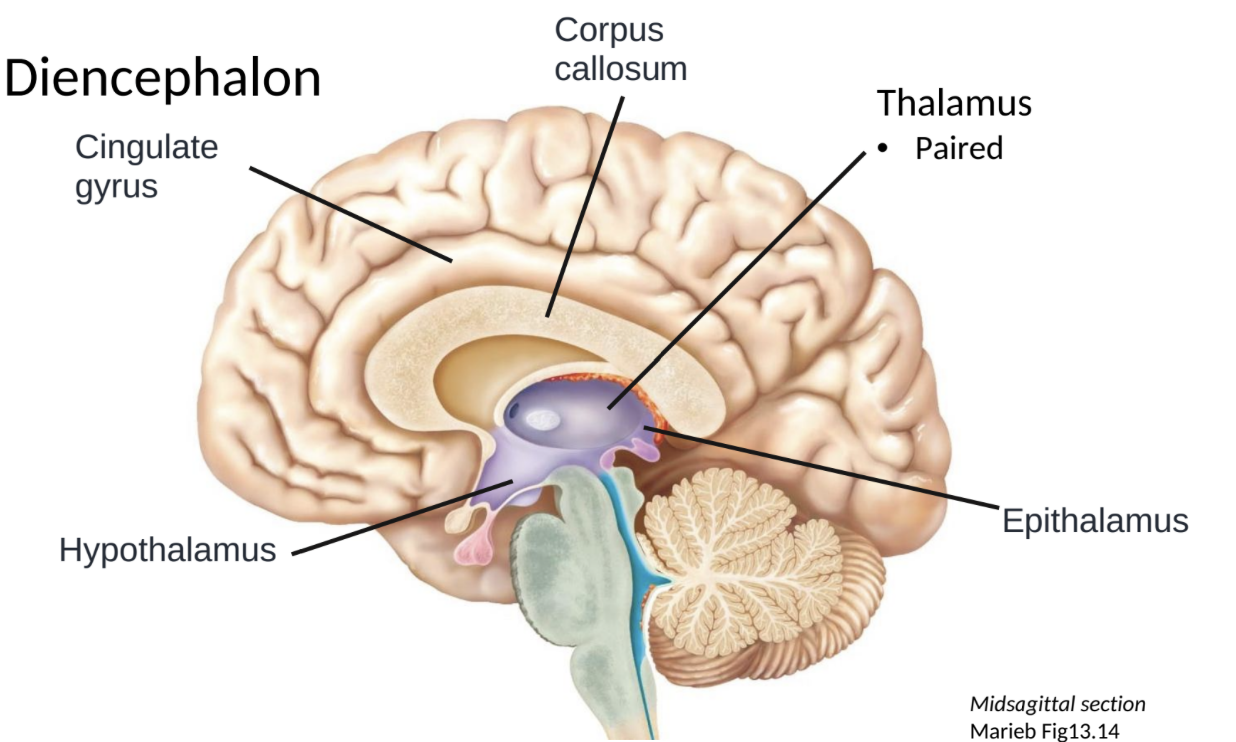
Thalamus
Gatekeeper Function
Acts as a filter for signals entering the cortex.
Edits, sorts, and routes incoming information.
Information Processing
Sensory reception: Receives data from spinal cord and cranial nerves.
Motor regulation: Integrates information from the basal nuclei and cerebellum to streamline motor cortex activity.
Emotional awareness: Processes information from limbic system and hypothalamus for emotional responses.
Hypothalamus
Homeostatic Control Center
Thermoregulation: Functions as a thermostat for body temperature, initiates fever.
Food Intake Regulation: Monitors hunger/fullness through blood chemistry.
Fluid Balance: Checks blood osmolarity, induces thirst, promotes water conservation in kidneys.
Endocrine Regulation
Produces hormones like antidiuretic hormone and oxytocin.
Regulates pituitary gland activity.
Controls circadian rhythms and sleep patterns.
Emotional Regulation
Integrates sensory input with the limbic system and autonomic nervous system (ANS).
Effectual responses linked to emotional states.
Epithalamus
Pineal Gland Function
Releases melatonin, coordinating circadian timing of the body.
Emotions
Sensory and Emotional Integration
Emotions arise from stimuli processed by the limbic system and hypothalamus.
Generates visceral and somatic motor responses (e.g., heart racing, blushing).
Includes cognitive recognition and regulation of emotions.
Sleep and Wakefulness
Circadian Alerting System
Photic signals from eyes affect hypothalamus, regulating alertness.
Sleep onset signaled by hypothalamus reducing communication with thalamus.
Sleep Pressure
Builds throughout the day, promotes drowsiness at night.
Sleep Stages
Non-Rapid Eye Movement (NREM) Sleep
Stage 1: Transition into sleep (1-5 min).
Stage 2: Reduced heart rate and body temperature (10-60 min).
Stage 3: Deep sleep, muscle relaxation, and memory consolidation (20-40 min).
Rapid Eye Movement (REM) Sleep
Increase in eye movement and muscels in this stage
Active state; increased heart rate and brain activity, (10-60 min).
Intense dreams due to active limbic system.
Prefrontal cortex (logical part) not active
Cerebellum
Structure
Composed of three lobes: Anterior, Posterior, Flocculonodular.
Motor Processing
Receives planned movement info from the cerebral premotor cortex.
Evaluates current body position for necessary adjustments.
Ensures smooth, coordinated movements, maintaining balance.
Cognitive Functions
Involves attention, language learning, emotional regulation, and motor/procedural learning.