Glycolysis
Glycolysis
first stage of aerobic respiration
occurs in the cytoplasm of cells
breaks glucose (6C) into 2 pyruvate (3C) molecules
enzyme controlled reactions
does not require oxygen so is anaerobic process
produces:
pyruvate
small amounts of ATP
reduced NAD
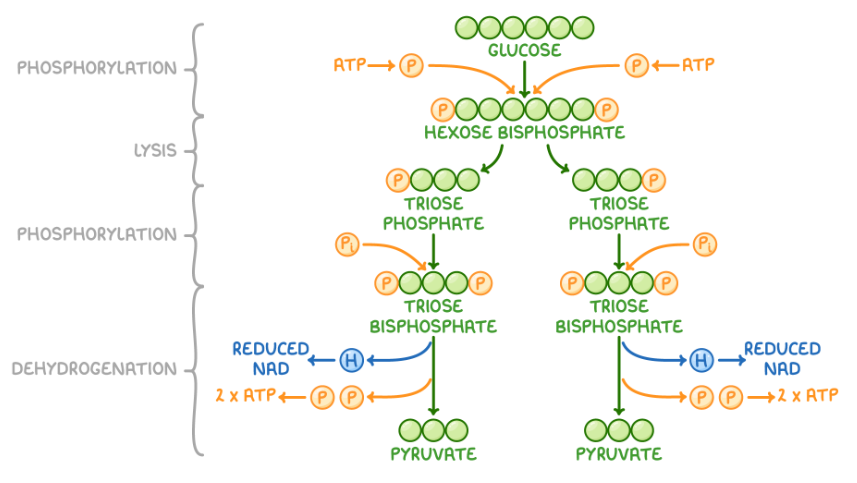
Phosphorylation of glucose
2x ATP molecules donate phosphate groups to glucose
forms hexose bisphosphate
Lysis
hexose bisphosphate is split into two molecules of triose phosphate (TP)
Phosphorylation of TP
second phosphate group is added to each TP molecule
converts them into 2x triose bisphosphate
Dehydrogenation
a hydrogen is removed from each triose bisphosphate molecule
they are oxidised
used to form:
2x reduced NAD
2x pyruvate
4x ATP
substrate level phosphorylation
formation of ATP without involvement of an electron transport chain
after glycolysis - if oxygen is available - pyruvate moves through mitochondrial membranes by active transport
Reactants and products of glycolysis
reactants
1x glucose
2x ATP
products
4x ATP
2x reduced NAD
2x pyruvate
net energy gain is 2x ATP and 2x reduced NAD per glucose molecule processed