HA Exam 1 Rundown
- Open Ended Questions: Used to get more than one word response. Qustions should focous on patients health.
- Directive Questions (Close Ended): Used for more precise details. Requires one or two words as a response, or to lead a patients focous back.
- Techniques that enhance the interview: Professional behavior and the art of asking questions to gain trust.
- Active listening: Listening with a purpose to the words and noticing non-verbal behaviors. Concetraitiing on what the person is saying, body language, facial expressions.
- Facilitation: Words or phrases that encourage the patient to continue talking
- Clarification: Used to abtain more information about conflicting, vague statements
- Reflection: Used to gain clarifiation by restating a phrase made by the patient, in a form of a question. Encourages elaboration, indicates that the nurse is interested in more infromation.
- Confrontation: Used when inconsitencies are noted b/w what the patient reports and what is observed or other data about the patient.
- Interpertation: Used to share conclusion drawn from data given to the patient. After hearing the conclusion, the patient can deny or confirm or revise the interpertation.
- Summarization: Condenses and orders data obtained during the interview to help clarify a sequence of events. Useful when interviewing a patient who rambles on, or does not provide sequential data.
- Components of Health History:
- Biographic Data: name, gender, adress, birthday, martial status, etc..
- Reason for seeking care
- History of presenting illness
- Present Health Status: current health illness, meds, allergies, diabetes, hypertension
- Past Health Status: medical history. Childhood illnesses, surgeries, hospitalizations
- Family History: prescence of disease amongst bilogical family
- Personal and psychological history: personal mental and physical health
- Review of systems
- Standards of Nursing Care
- Assessment: collect patient data and information relative to the healthcare consumers halth or situation.
- Diagnosis: Analyze assessment data to deteermine actual data to determine actual or potential diagnosis
- Planning: develop a plan that describe strategies to gain/attain expected, measure outcome
- Implementation: nurse implements the identified plan, coordinates care delivery, or uses strategies to promote health and a safe enviornment
- Evaluation: Nurse evaluataes ptogress towarda attainment of goals and outcomes
- Not in ADPIE: Outcome identification: nurse identifies expected outcomes for a plan individualized to the healthcare consummer outcomes
- OLDCARTS
- Onset
- Location
- Duration
- Characteristics
- Agravating factors
- Related symptoms
- Treatments
- Severity
- Culturally congruent care
- Asess ones own beliefs and cultural heritage
- Participate in a life long learning to appreciate cultural preferences
- Communicate respectfully with appropriate language beahviors
- Use knowledge of health beliefs, practices, and communication patterns when interacting with healthcare consumers
- Types of HA
- Comprehensive: detailes history + physical examination. Performed at PCP, an admition to a hospital or longterm care facility
- Problem based/Focous: history and physical examination to a specific problem
- Episodic/Follow up: Follow up with healathcare provider
- Shift: conducted by nurses each shift
- Screening: short focoused on disease examination
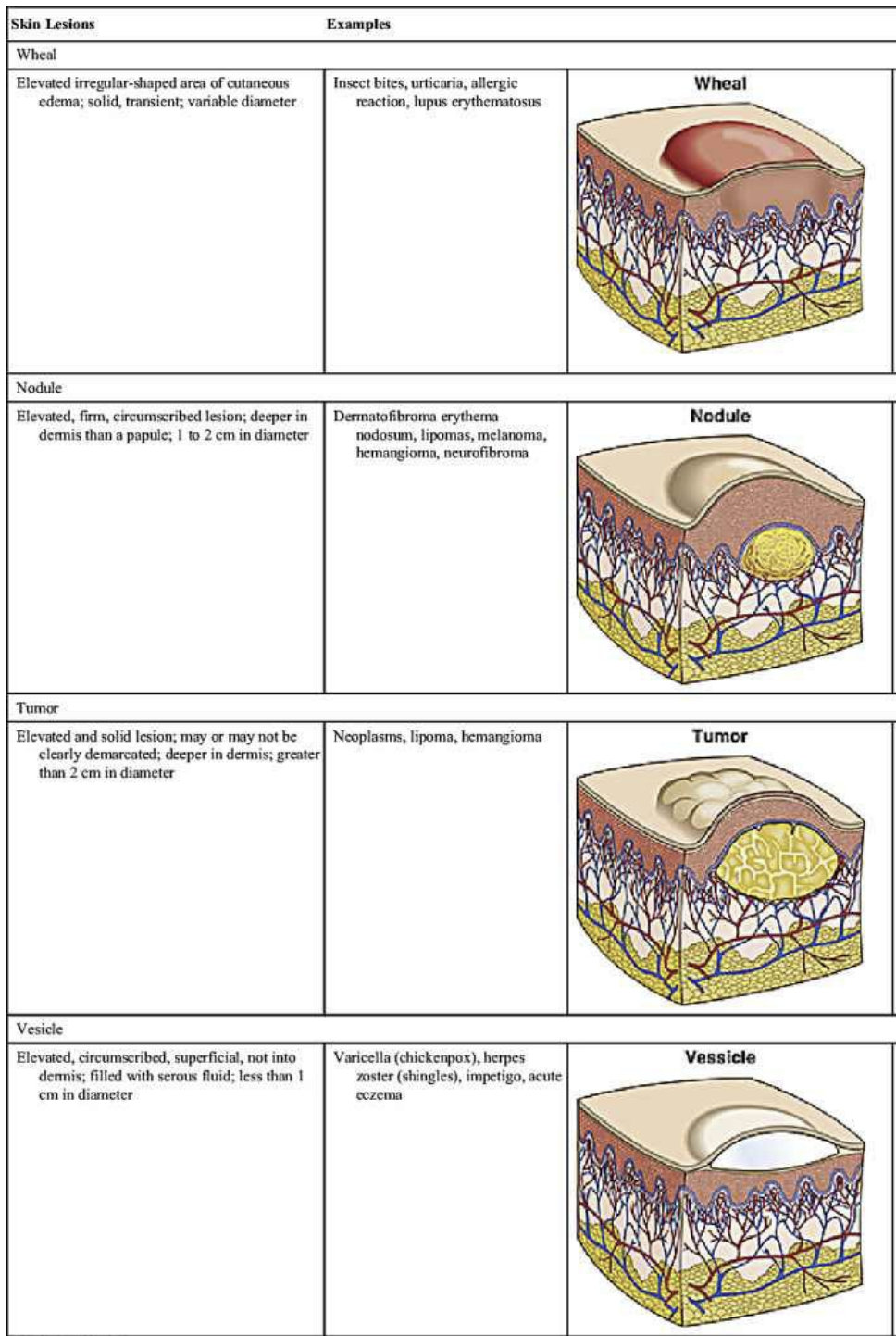
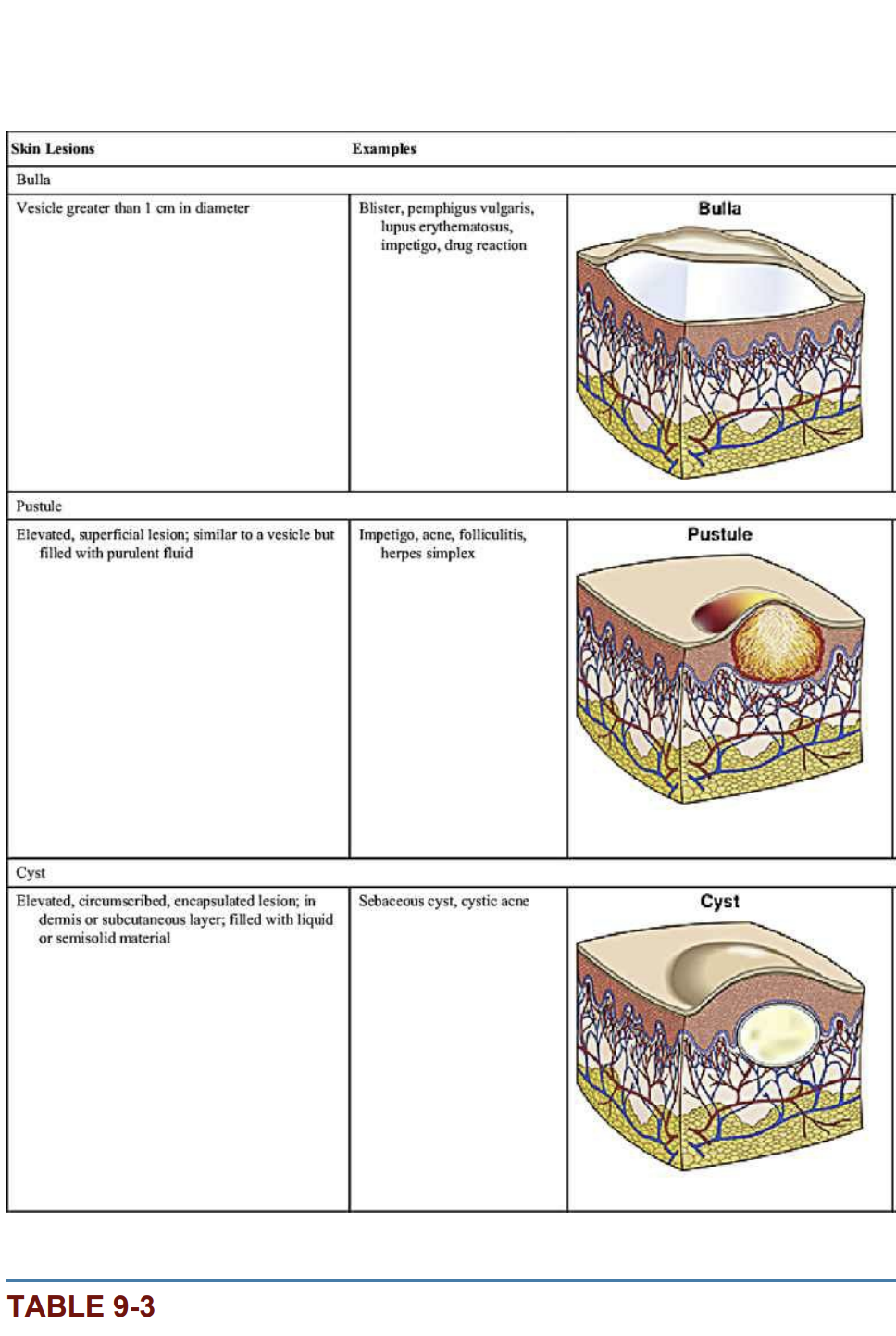
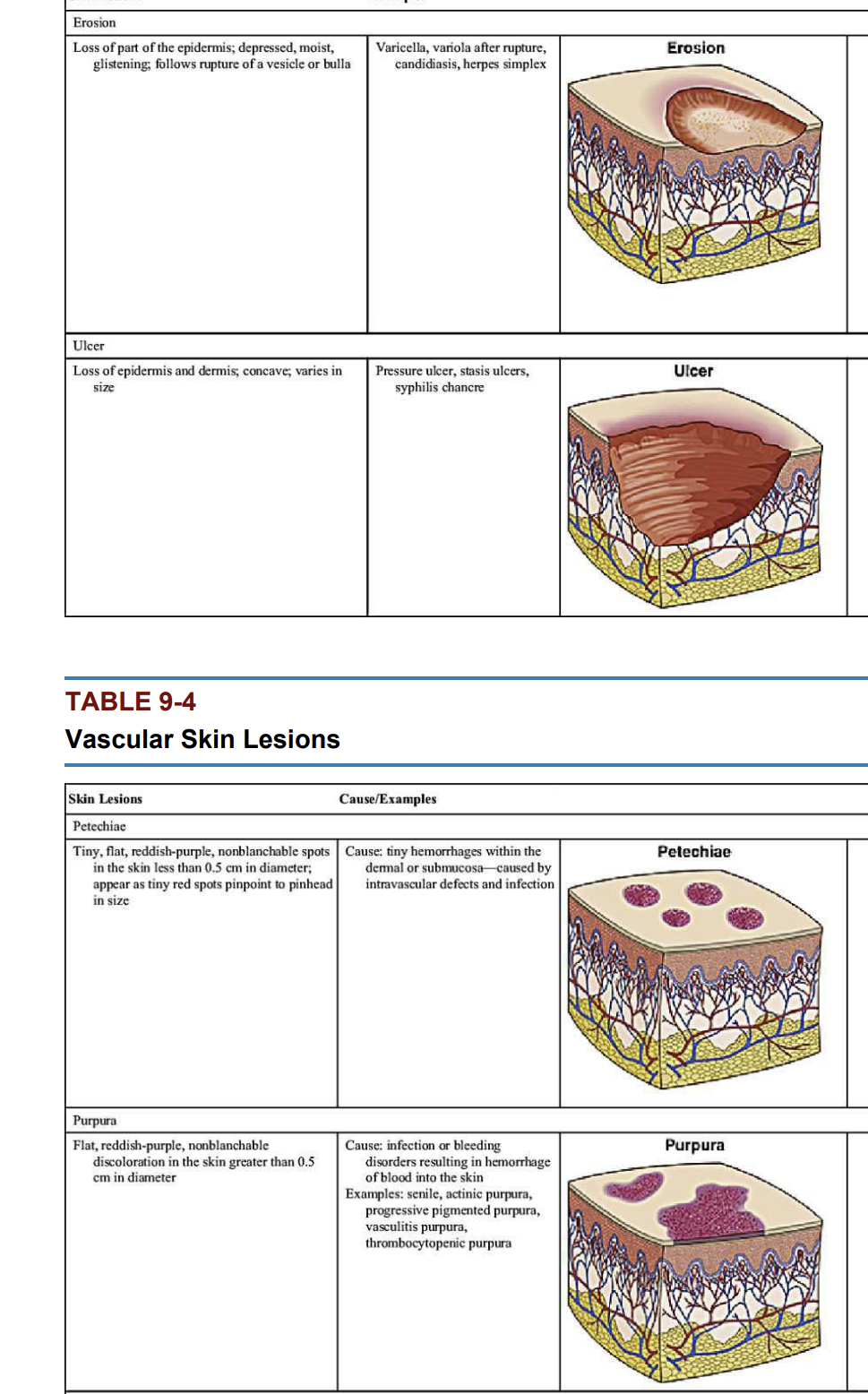
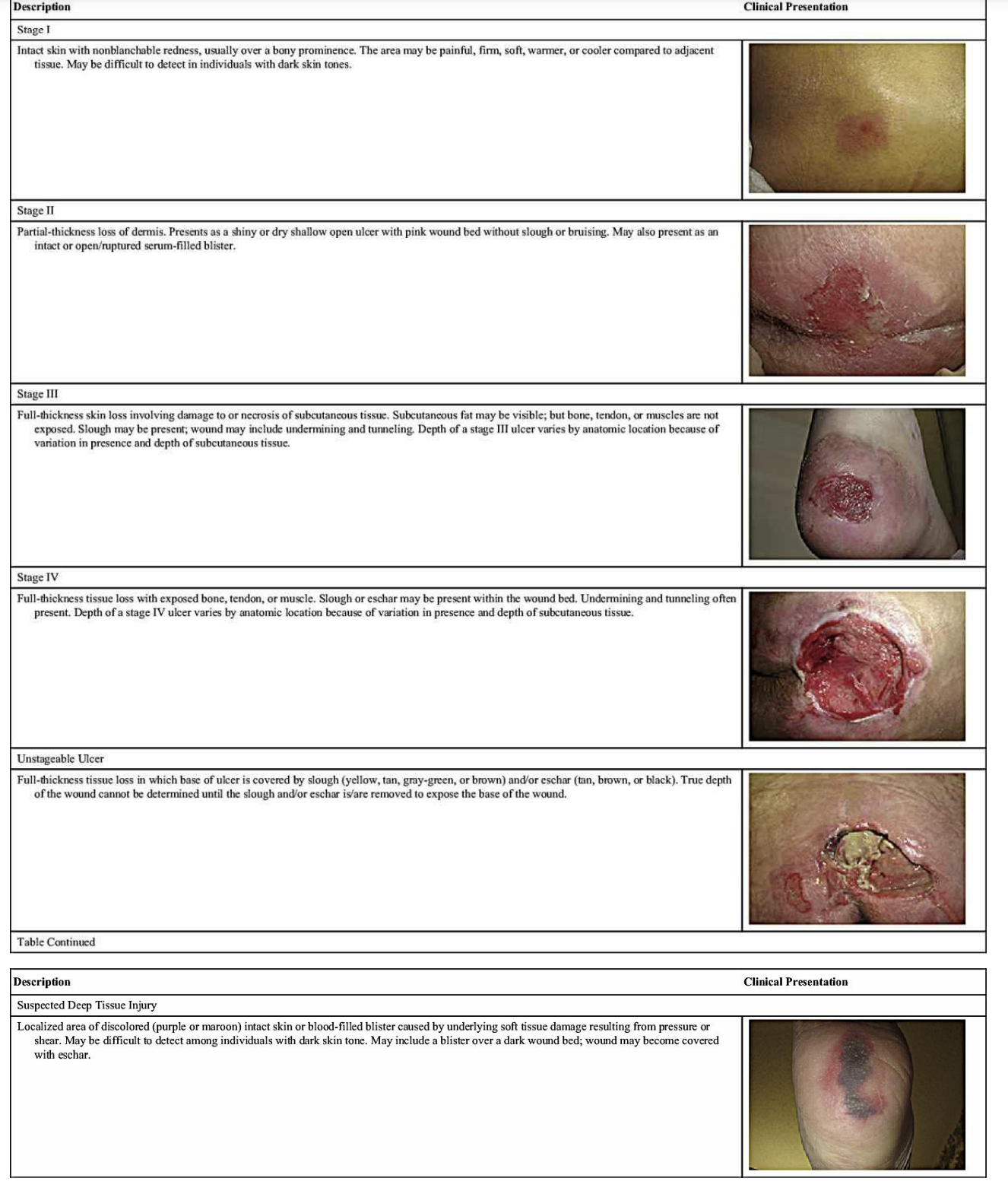
- Early signs of melanoma
- Asymetry: not oval or round
- Border: poorly defined or irregular border
- Color: uneven or barigated
- Diameter: greater than 6mm
- Evolving: looks different, changesin size, color, or shape
- Cranial Nerves:
- Objective Data: objective data is data that you can measure
- Subjective Data: what's reported by the patient
- Holistic Healthcare:
- Assessment techniques:
- Inspection
- Auscultation
- Palpation
- Percussion
- To find a pullse you cant find use doppler (I remebr this was one of the question)
- Wash hands
- Origin of pain (?)
- Culture and perception of pain
- Most accurate assessment for pain
- Pain and getting old
- Older people sense pain diferently, pain is NOT a normal process of aging
- Mini mental health exam
- How do you talk to patient when they have a drug history
- indirect fist percussion of the kidney (I remember it was on the Exam)
- Woods lamp = see fungal