Year 7 Science Notes (copy)
Microscope & Cells
Use the lowest magnification first for the widest view.
Organelles:
Nucleus: Contains genetic material, controls the cell.
Cell Membrane: Controls substance movement in/out.
Cytoplasm: Chemical reactions occur.
Mitochondria: Energy release (respiration).
Ribosome: Protein synthesis.
Cell Wall: Strength and support (plant cells).
Chloroplast: Photosynthesis (plant cells).
Vacuole: Contains cell sap.
Cell: Basic structural unit.
Tissue: Similar cells with a function.
Organ: Different tissues for a job.
Organ System: Different organs for a job.
Unicellular: One cell. Multicellular: Many cells.
Specialized Cells: Root hair cell (water absorption), Sperm cell (streamlined), Palisade cell (photosynthesis).
Systems
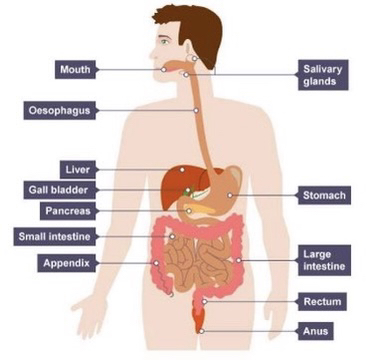
Digestive System: Breaks down food molecules.
Respiratory System: Gas exchange.
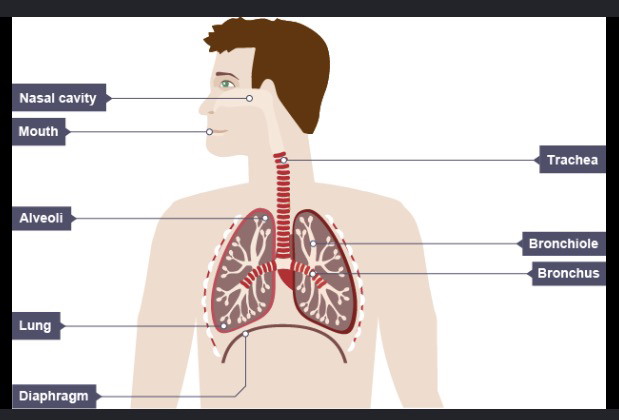
Inhaled air: More oxygen. Exhaled air: More carbon dioxide.
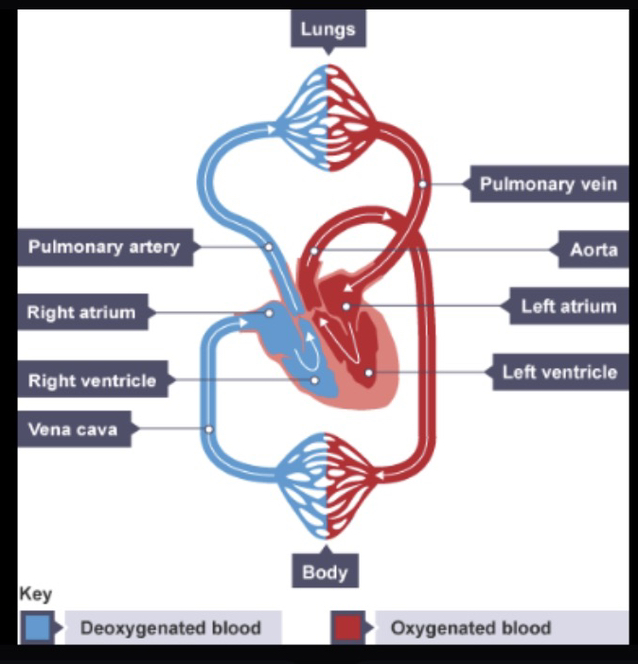
Cardiovascular system: pumps blood around body
States of Matter
Conservation of Mass: Mass stays constant during state changes.
Solids: Fixed shape, cannot be compressed.
Liquids: Flow, take container shape, cannot be compressed.
Gases: Flow, fill container, can be compressed.
Changes of State:
Melting: Solid to liquid (gaining energy).
Boiling/Evaporating: Liquid to gas (gaining energy).
Freezing: Liquid to solid (losing energy).
Condensing: Gas to liquid (losing energy).
Diffusion: Movement from high to low concentration in liquids/gases.
Gas Pressure: Particles hitting container walls.
Mixtures & Separation
Pure Substance: One type of particle.
Mixture: More than one type of particle, not chemically joined.
Chromatography: Separates dissolved substances based on dissolving ability.
Solution: Solute (dissolves) in Solvent.
Saturated: No more solute can dissolve.
Distillation: Separates solvent from solution (based on boiling point).
Evaporation: Separates soluble solid from liquid.
Filtration: Separates insoluble solid from liquid (residue stays, filtrate passes through).
Forces & Motion
Forces measured in Newtons (N).
Pressure: (Pressure = Force/Area).
Weight: (Weight = mass x gravitational field strength).
Earth's gravitational field strength: .
Speed: Speed (m/s) = distance (m) / time (s).
Balanced forces: Stationary or constant speed.
Unbalanced forces: Acceleration, deceleration, or direction change.
Light
Opaque: does not let light travel through it
Translucent: lets some light travel through it
Transparent: lets light travel through it
Refraction: Light changes speed and direction when passing between different density substances.
Light can travel in a vacuum (doesn’t need medium to travel)
Waves & Sound
Waves transfer energy.
Longitudinal Waves: Vibrations parallel (e.g., sound).
Transverse Waves: Vibrations perpendicular (e.g., light).
Sound needs medium (solid, liquid, gas).
Vacuum: a space without particles (e.g. space)
Amplitude: Loudness. Wavelength: Distance between crests. Frequency: Pitch (Hertz).
Reflection (Sound): Echoes.
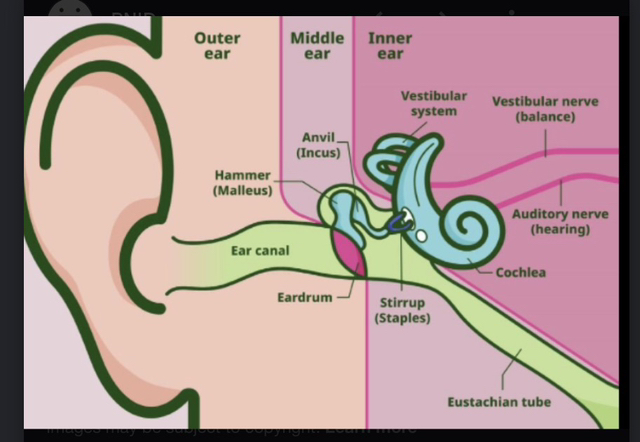
Ultrasound: >20,000 Hz (Uses: Check health of unborn babies, clean jewellery).
Speed of Sound: $$340 m/