Statics of the Pelvis
Statics of the Pelvis
The pelvis is a critical bony structure in the human body, serving as a link between the trunk and lower limbs. In the context of oral anatomy and posture, understanding the statics of the pelvis is essential as it influences body alignment, balance, and functional efficiency, including oral and facial dynamics.
Anatomy of the Pelvis
Bones of the Pelvis:
Ilium: The large, flared upper portion.
Ischium: The lower and back part of the hip bone.
Pubis: The anterior portion of the pelvic bone.
These three bones converge at the acetabulum, forming the hip joint.
Joints:
Sacroiliac Joints: Between the sacrum and ilium.
Pubic Symphysis: A cartilaginous joint uniting the two pubic bones.
Ligaments:
Strong ligaments stabilize the pelvis, including the sacrospinous, sacrotuberous, and iliolumbar ligaments.
Static Role of the Pelvis
Support of Body Weight:
The pelvis acts as a base for transmitting the weight of the upper body to the lower limbs through the sacroiliac joints.
The curvature of the sacrum (part of the pelvic structure) ensures efficient weight distribution.
Centre of Gravity:
The pelvis helps maintain the center of gravity of the body, crucial for upright posture and balance.
Changes in pelvic tilt or alignment can affect spinal posture and, consequently, oral and facial structures.
Load Transfer:
During static and dynamic movements, the pelvis facilitates load transfer from the axial skeleton to the lower limbs.
Stability and Mobility:
The pelvic ligaments and muscles work in synergy to provide both stability and the flexibility necessary for various movements, such as walking, bending, and sitting.
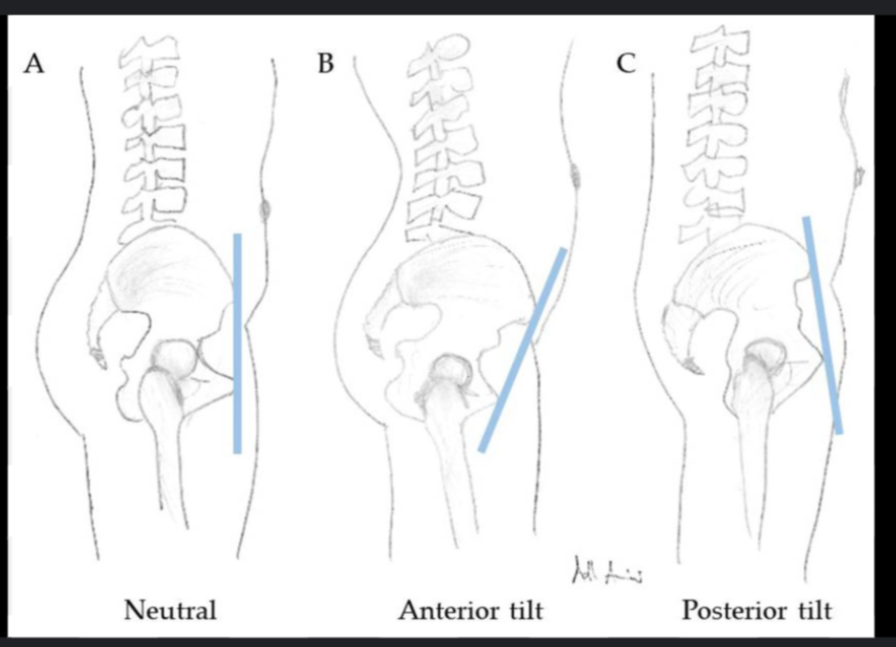
Pelvic Tilt and Oral Posture
Neutral Pelvis: Essential for balanced posture, aligning the spine and head, which is vital for optimal oral functions.
Anterior Tilt: Causes the lower back to arch, potentially affecting neck and jaw alignment.
Posterior Tilt: This can lead to a rounded back, influencing oral postural dynamics.
Clinical Relevance in Oral Anatomy
Misalignments or dysfunctions in pelvic statics may lead to compensatory postural changes in the cervical spine and mandible.
Pelvic posture influences the alignment of the maxilla and mandible, which can impact:
Temporomandibular joint (TMJ) function.
Occlusion (bite alignment).
Breathing and swallowing mechanisms.