Lecture 1 Cells, Tissues & Body organisation
Basic Organisation of the Body
Five levels of body organisation:
Cells: smallest functional unit
Tissues: multiple cells
Organ: tissues make up organ
Organ system: multiple organs working together
Organism: multiple organ systems that make up the body
Humans have approximately 210 different cell types.
Components of Cell Theory
All living organisms consist of one or more cells.
Cells are the basic unit of structure and function.
New cells arise only from existing cells.
Light Microscopy Observations
Various cellular structures visible in blood and duodenum tissues.
blood cells carry oxygen
extracellular matrix = extracellular (not in the cell) matrix (complicated cell)
cytoplasm (plasm = water)
Advanced Microscopy Techniques
Scanning Electron Microscopes (SEM):
Equipment examples: KIMTECH, FEI, TECHAIS
Cellular Structures
Organelle (smaller organs inside cells, nelle = smaller version of something)
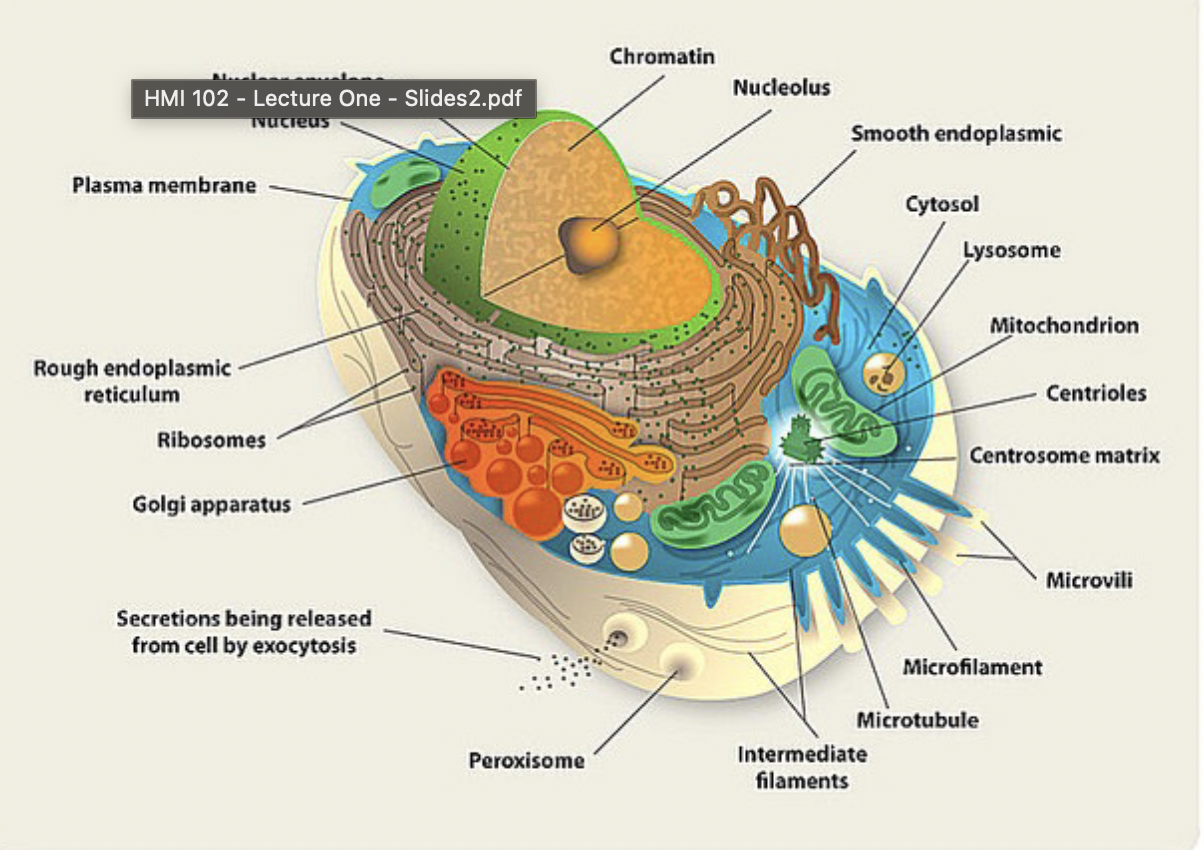
Major organelles include:
Nucleus
Cell membrane
Mitochondria
Golgi apparatus
Endoplasmic reticulum
Ribosomes, Lysosomes, Peroxisomes, etc.
Functions of Cellular Structures
Cell Membrane:
Phospholipid bilayer, regulates movement in/out of cells. has hydrophobic and hydrophilic regions
regulates what goes in and out of cell
Heads of phospholipid bilayer - hydrophilic - water loving heads
Tails of bilayer are hydrophobic
Creates a barrier that prevents water inside of the cell from leaving and water outside of the cell from coming in
Has proteins embedded in that regulate what comes in and out - protein channel - proteins have receptors to communicate with each other
Nucleus:
Control center, contains DNA (chromatin), and nucleolus for ribosome production.
DNA contains recipe to make proteins
Nucleolus produces ribosomes
DNA copied into mRNA to pass messages out of the nucleus
Cytoplasm & Nucleoplasm
Gel-like fluids that contain dissolved molecules important for cell functions.
impairment of solute and solution levels can damage the cell
Endoplasmic Reticulum (ER)
endo = inside, plasmic = water, reticulum = many pathways
ER: folded membranous structure that surrounds nucleus
Types:
Rough ER (with ribosomes embedded on inner part of membrane) for protein production - mRNA sends recipes to ribosomes which build proteins
ribosomes build proteins from RNA code
Smooth ER (without ribosomes) for folding and packaging of proteins.
folds and packs into membrane bound pouches - vesicles
Golgi Apparatus
Processes and modifies amino acid chain from the ER, functioning as the "postal service" of the cell.
repackages and sends proteins in membrane bound packages out of the cell - membrane merges with same material membrane
Mitochondria
Produces energy (ATP) through the breakdown of carbohydrates, lipids, and proteins.
ATP is energy that maintains cell function
energy used by nerve cells to remove water from the cells - not enough energy means cell death
Common Characteristics of Cells
Functions necessary for life include:
Obtaining nutrients
Waste disposal
Maintaining shape and integrity
Undergoing cell division (mitosis/meiosis)
mitosis: one cell splitting into two identical cells - replicating itself - used by bacteria
meiosis: creates gametes - anything that sexually reproduces uses meiosis
Tissues
Histology: Study of cells and extracellular matrix; four tissue types:
Epithelium
Connective
Muscle
Nervous
Epithelium Characteristics
Covers body surfaces and cavities, acts as protective layers (e.g., skin, lining of organs (kidney cells, liver cells, inside of mouth).
stops things from drying out
separates, protects and helps keep organs in place
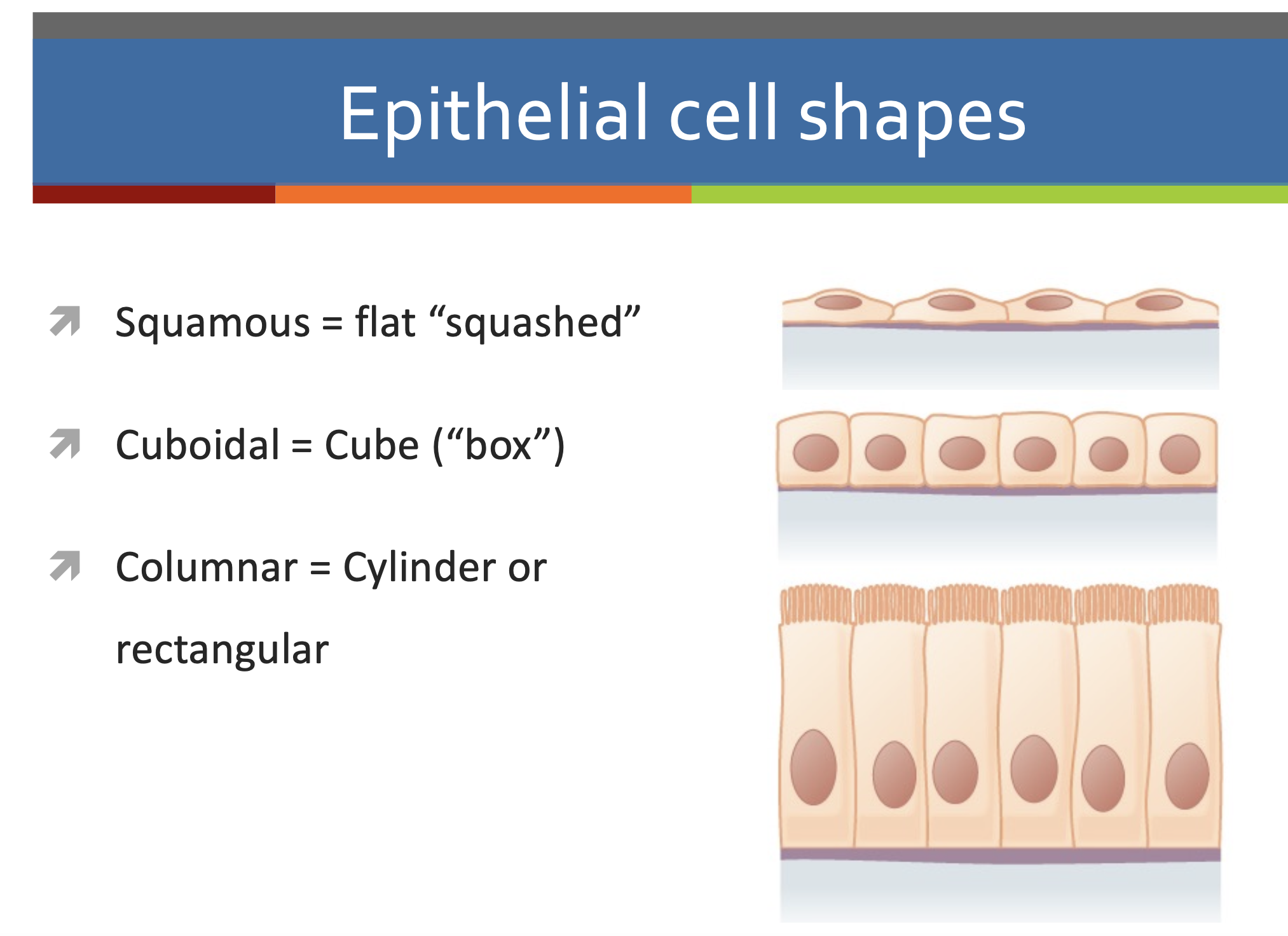
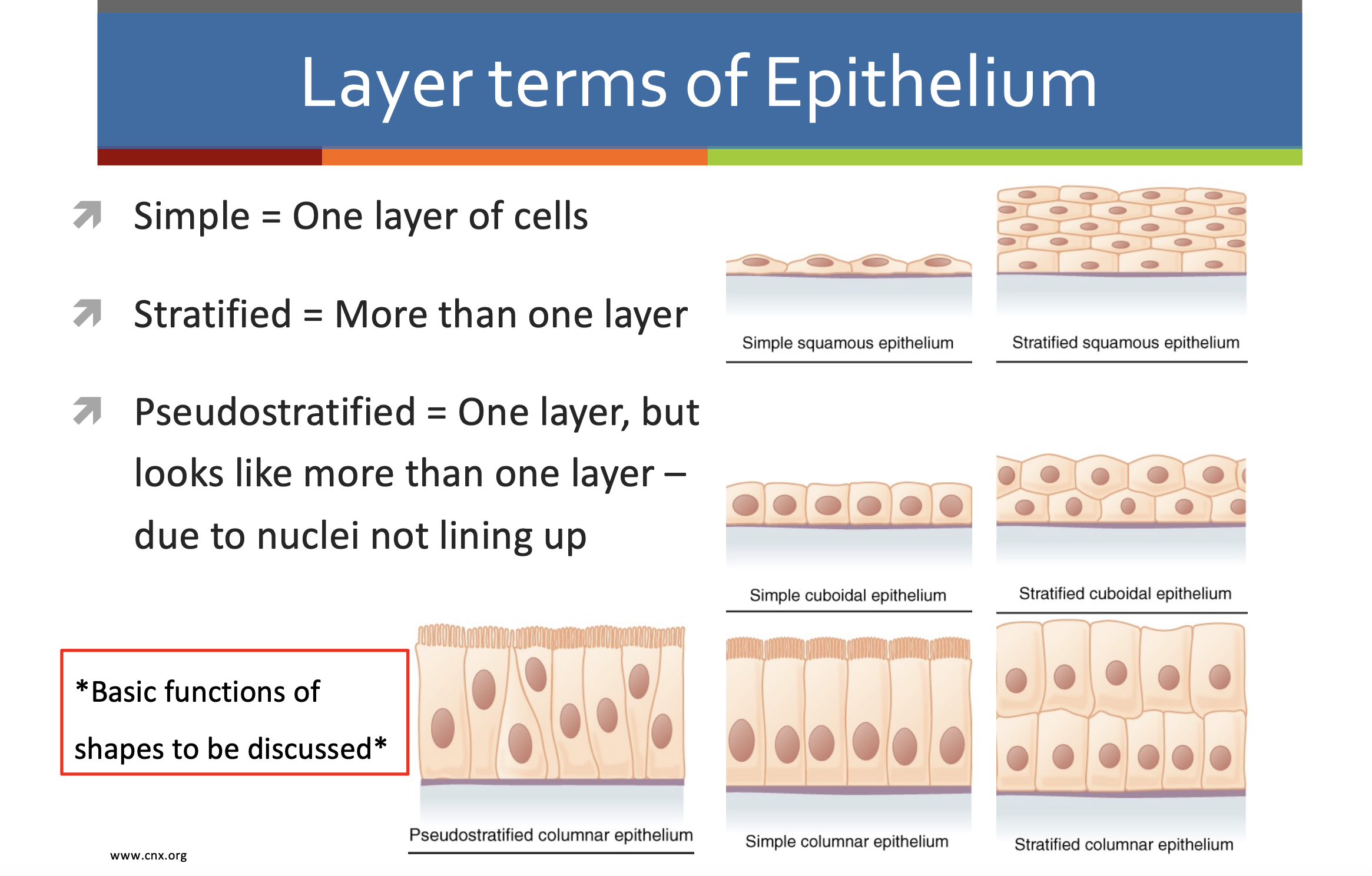
Cell shapes include:
Squamous: Flat
Cuboidal: Cube-shaped
Columnar: Rectangular
Layer terms of epithelium and function
Layer Terms:
Simple: one layer
Stratified: multiple layers
Pseudostratified: appears like multiple layers but is one.
Functions:
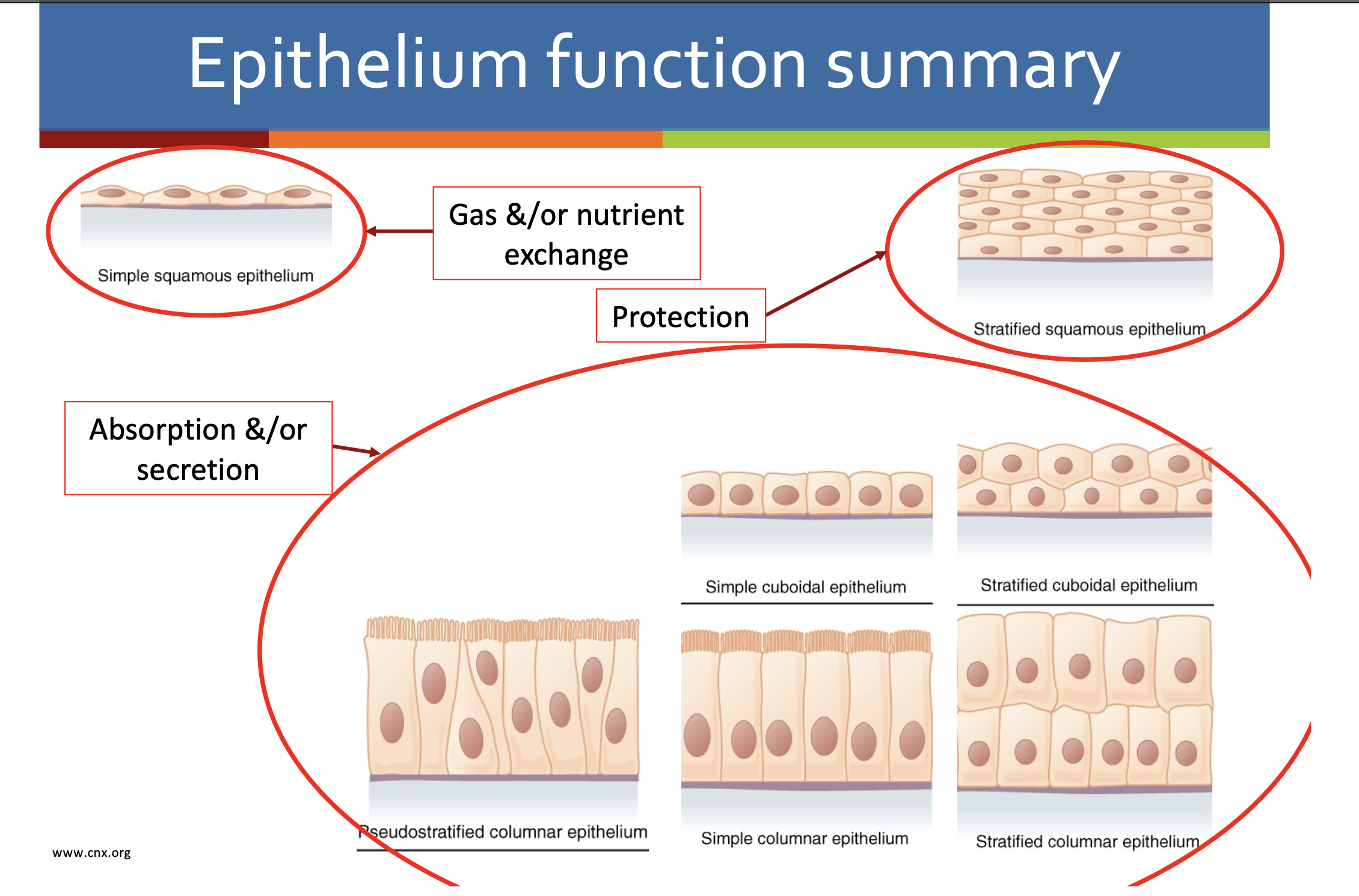
simple squamous epithelium = gas and/or nutrient exchange
stratified squamous epithelium = protection
simple and stratified cuboidal epithelium = absorption and/or secretion
simple, stratified and pseuodostratified columnar epithelium = absorption and/or secretion
Connective Tissue
Functions: Support and structure; high extracellular matrix ratio (bones, cartilage, fat, blood).
most abundant tissue in the body
high extracellular to cell ratio
bone and cartilage are connective tissue types
Nervous & Muscle Tissues
Nervous Tissue: Transmits sensory and motor signals - brain signals go through nervous tissue.
coordinates functions
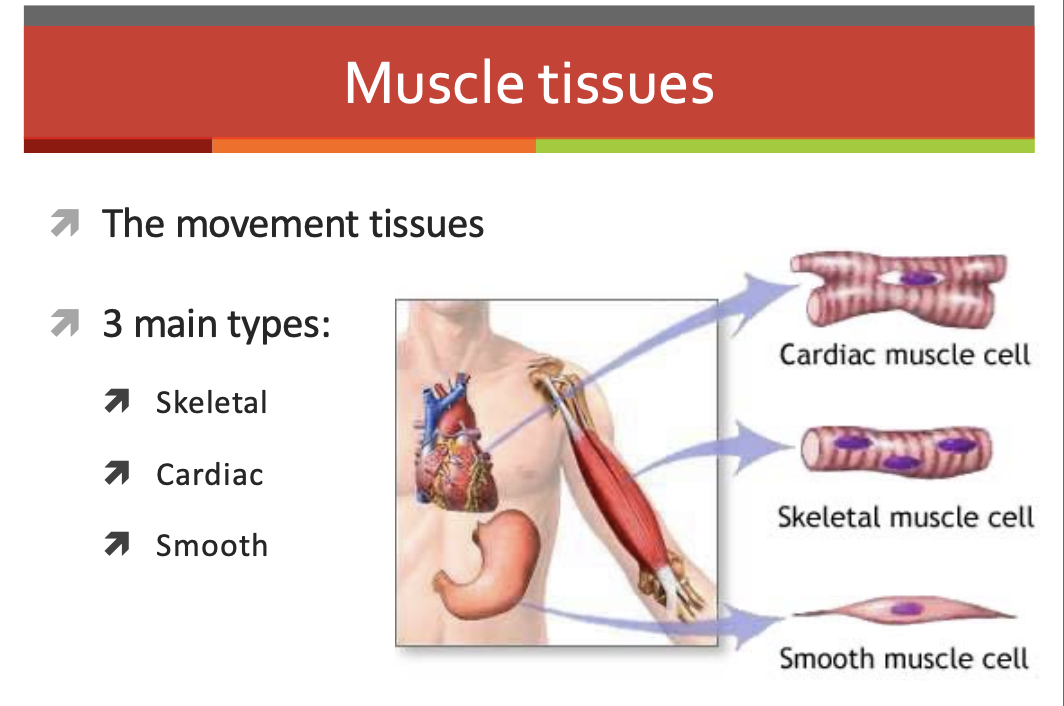
Muscle Tissue: Enables movements; includes skeletal, cardiac, and smooth types.
Skeletal muscle tissue: consciously think and move - the single tubes that merge together in one line eg.biceps
Smooth muscles: cant think about/control eg. digestive tract, gastrointestinal tract, lungs, blood vessels, intestines.
Cardiac muscle: squeezes and is branched, has stripes to enable contracting function - shorter/longer
Organs and Organ Systems
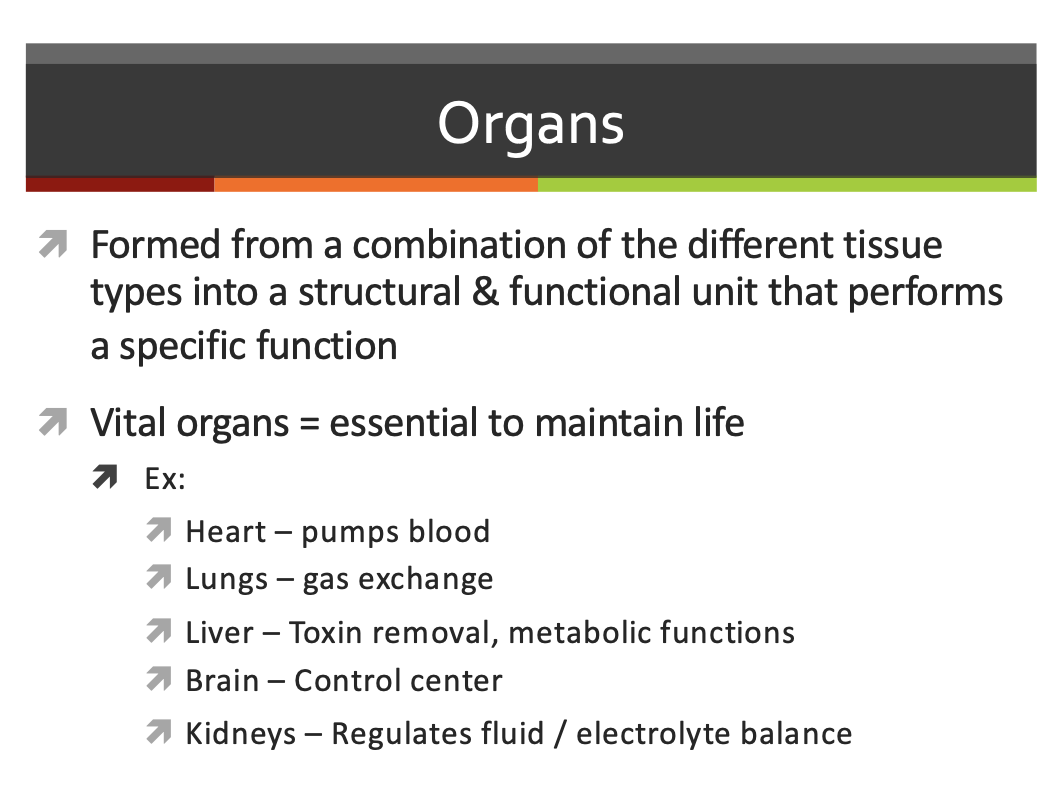
Composed of different tissue types working together to perform specific functions (e.g., heart, lungs).
Major Organ Systems
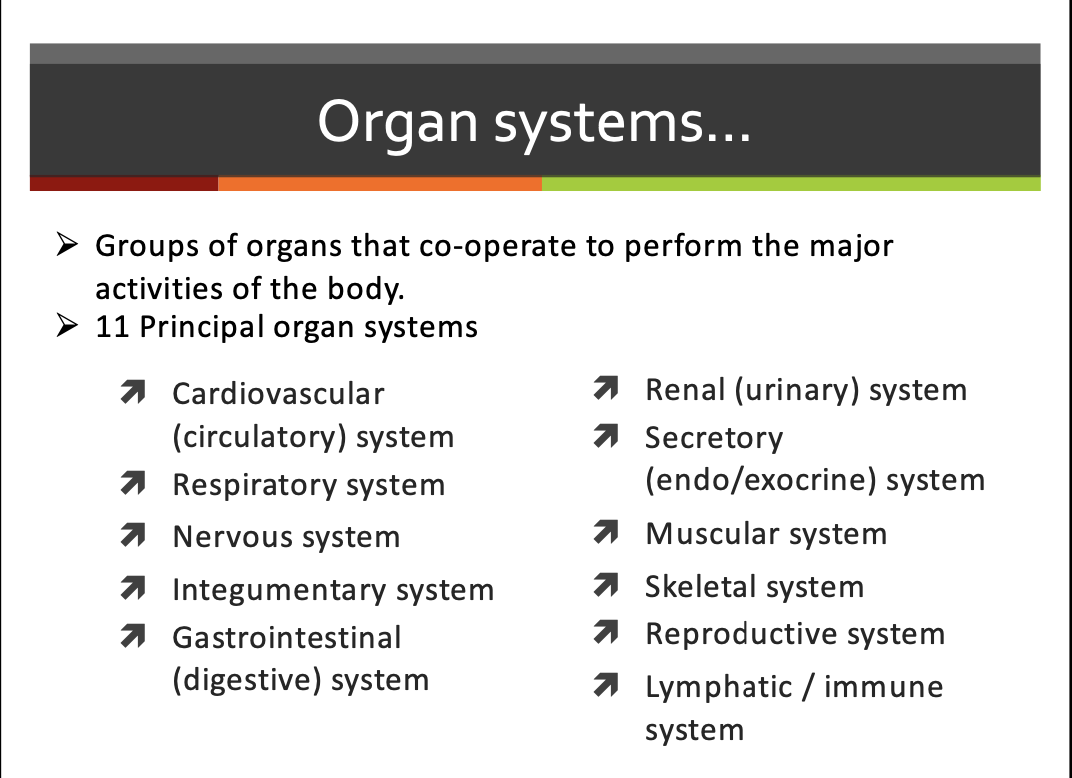
11 principal systems include:
Cardiovascular, Respiratory, Nervous,
Integumentary, Gastrointestinal, Renal,
Secretory, Muscular, Skeletal,
Reproductive, Lymphatic/Immune systems.
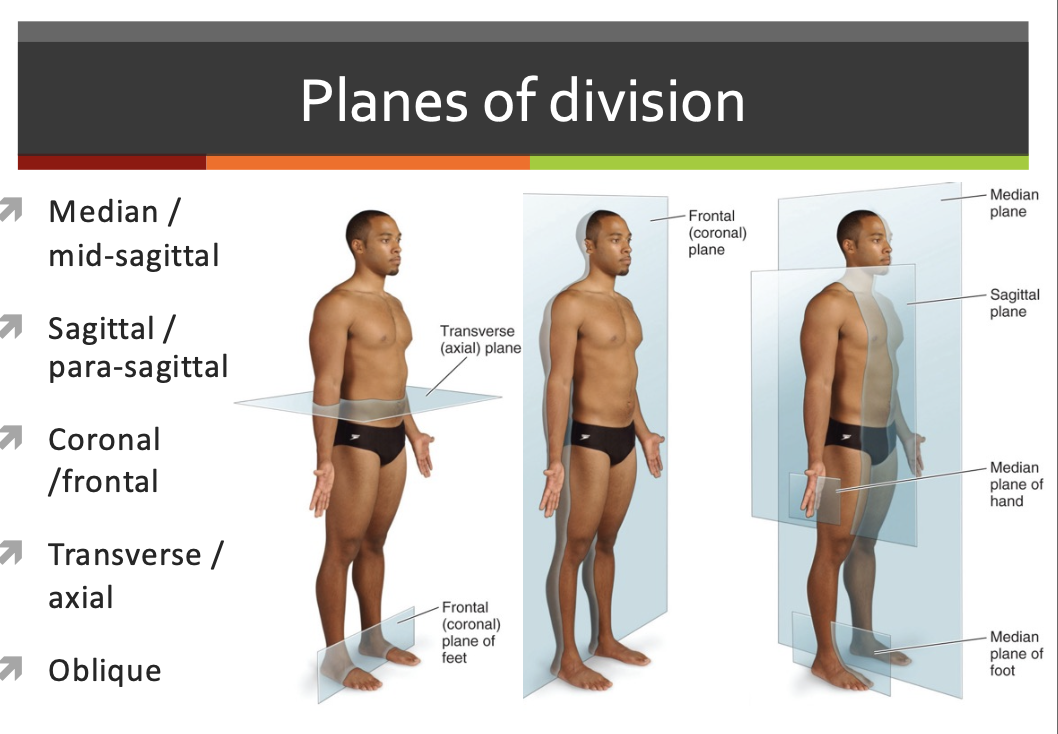
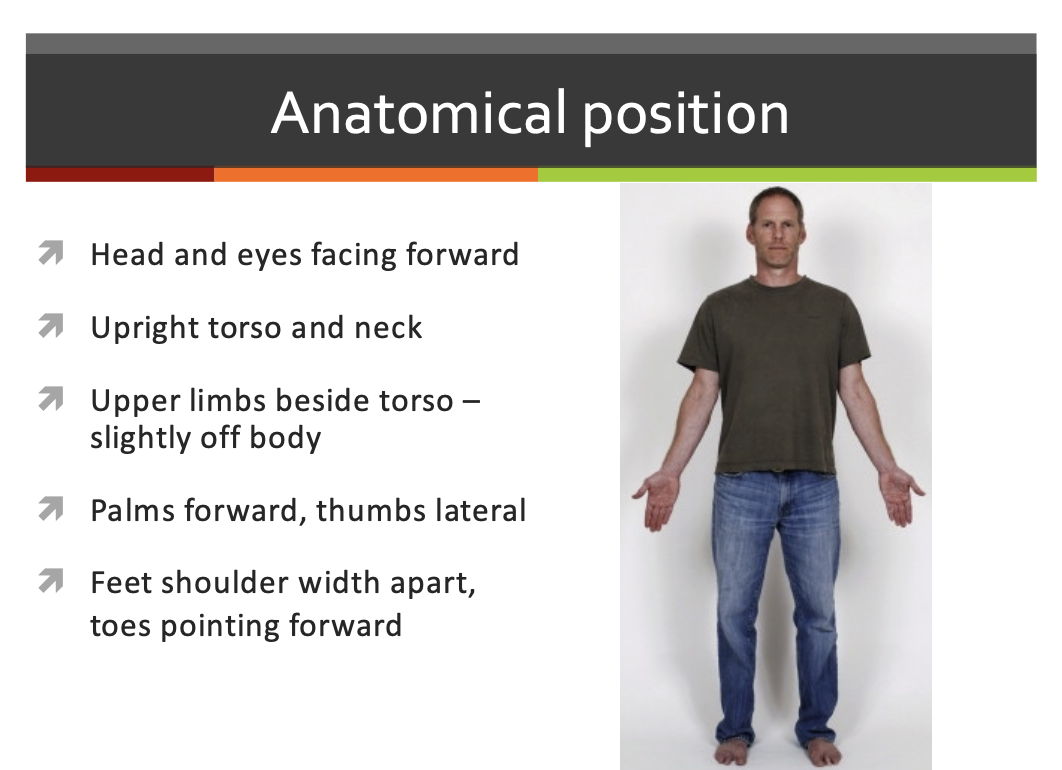
Anatomical Position & Planes of Division
Anatomical positioning is standardized for consistency in identification.
Planes:
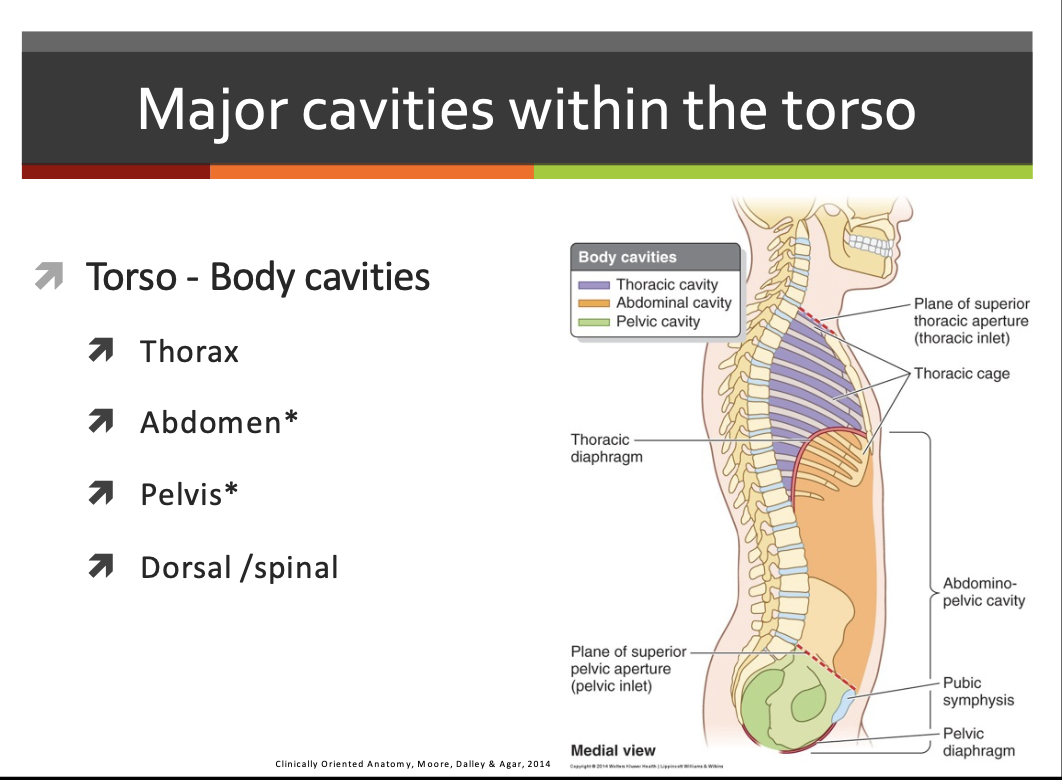
Major cavities within the torso:
Thorax (chest to diaphragm)
Abdomen
Pelvis
Dorsal/spinal
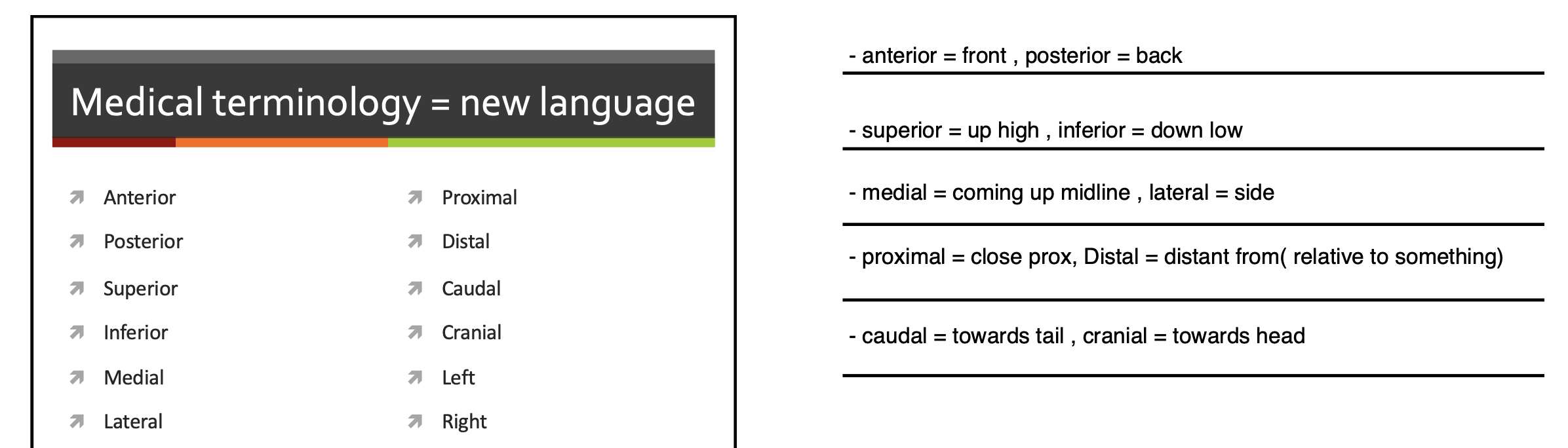
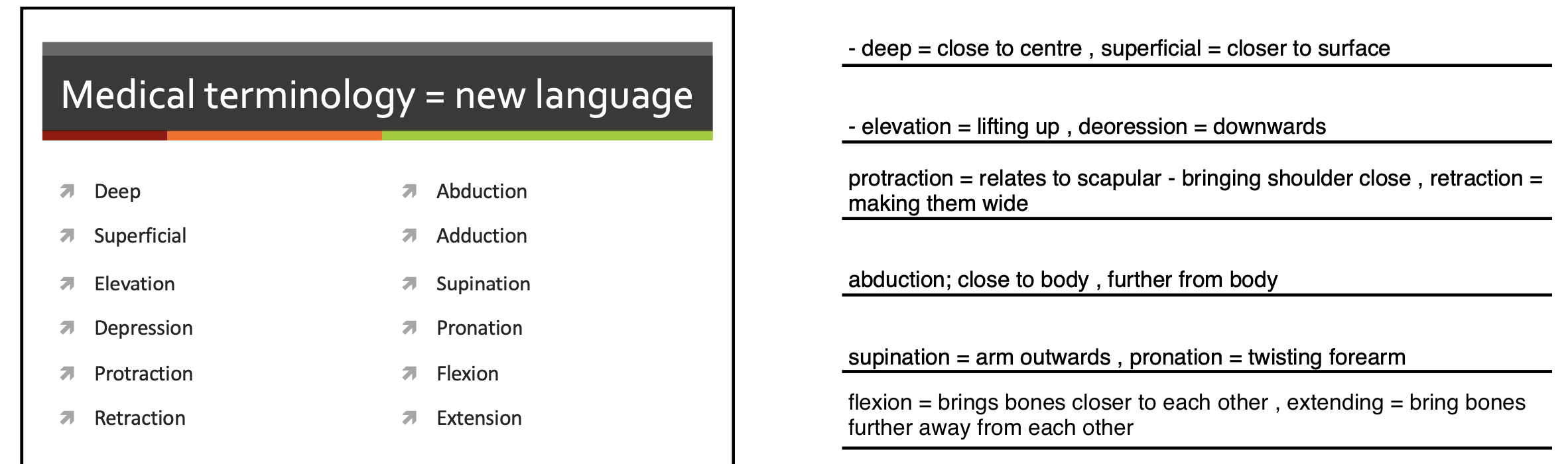
Medical Terminology