Genomics, Transcriptomics, and metagenomics
Genomics
next-gen sequencing (NGS)
massively parallel sequencing
SNPs and whole genomes
Much more power and can more easily identify regions under natural selection
Bioinformatic analyses with HPCs
an assembled and annotated genome is helpful for examining regions under selection: you know the function of the genes
not always available for non-model organisms
know theres a difference, but dont know what it signifies
Datasets require:
careful processing
extensive data filtering
knowledgeable use of analytical programs
Attention to assumptions
Consideration of alternative explanations for results
Transcriptomics: RNA sequencing
can extract mRNA (from one or more tissue types, individuals, infection status, development stage, etc)
mRNA degrades very quickly, so liquid nitrogen or special reagents often involved in sample storage
Once RNA is extracted, reverse transcribe to cDNA (complement DNA) i.e., you’re only looking at transcribed regions like exons
cDNA is sequenced and aligned to a reference transcriptome
e.g., marsh rice rats and hanta virus
Seaside Sparrows on oiled and unoiled sites following the Deepwater Horizon oil spill
~270 genes are differentially expressed
Pathway analysis: genes associated with liver damage, liver proliferation, and cell death
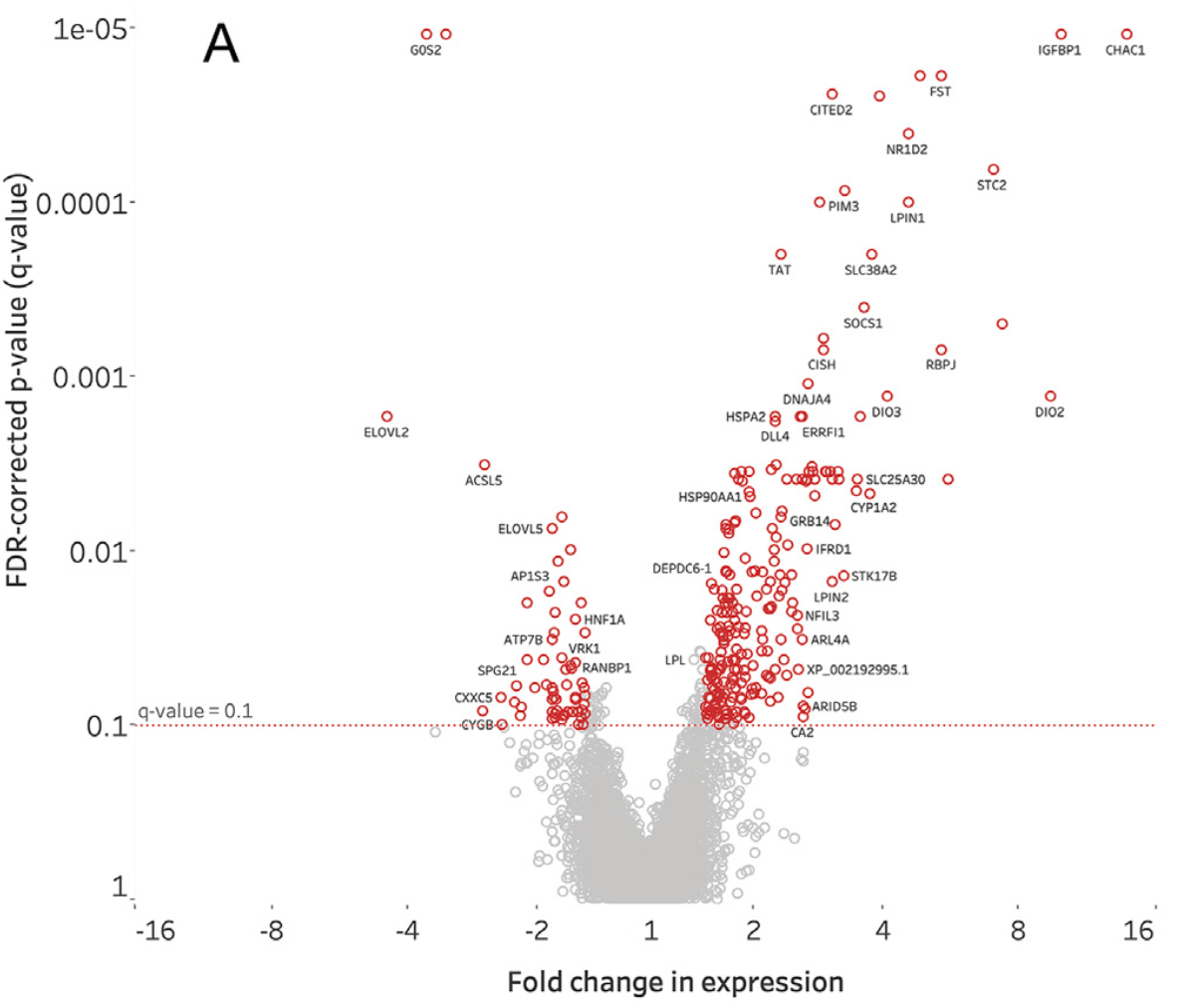
Fig. 1. Differentially expressed genes in liver samples. (A) A volcano plot showing the differentially expressed genes (DEG; red circles) in birds exposed to oil compared to control birds (fold change N ˂ 1.5, false discovery rate (FDR) corrected p value (or q value) ˂ 0.1).
Metagenomics
all DNA (sort of) present in a sample
e.g., DNA in soil, water samples to identify the species present (eDNA)
e.g., the microbiome present in the gut, on skin, etc.
e.g., all insect sequences in a bird fecal sample to examine diet