subject guide notes
D3.1.8—Sexual reproduction in flowering plants
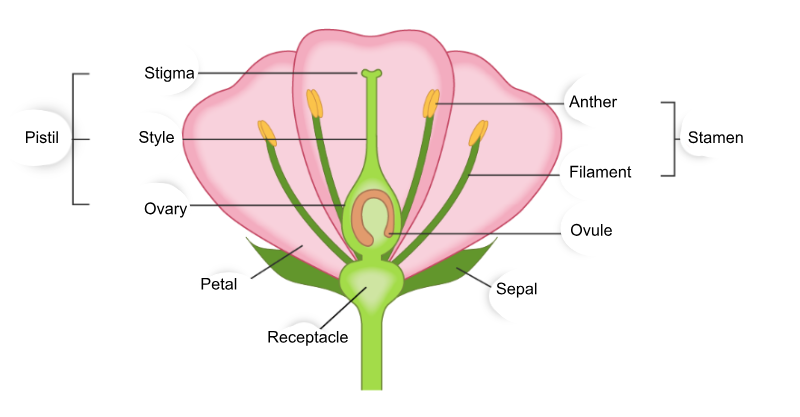
stamens are the male structures of a flower
they consist of the anther & filament
pistil/carpel is the female reproductive part
consists of a swollen base (ovary)
if 4 petals aren’t present, flower is incomplete
flowers can be hermaphroditic/bisexual - consist of both male & female reproductive parts
perfect flower = has both
imperfect flower = only has one
remember - reproduction in flowering plants is sexual, even if the plant is hermaphroditic
pre- fertilization
before fertilization occurs, pollen grains are transferred from stamen to pistil
process is known as pollination
pollination
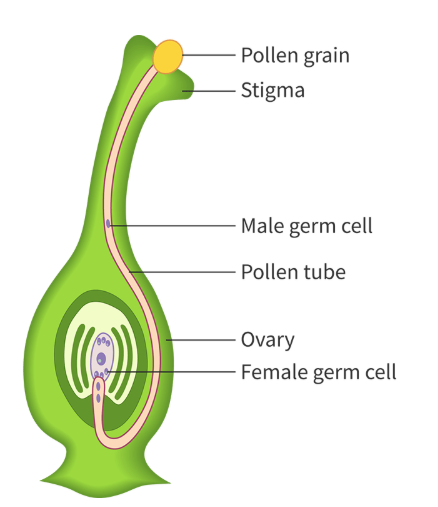
when pollen grain reaches stigma, it begins to germinate
tube cell elongates, forming pollen tube
pollen tube grows down the length of the style into the ovary, in response to chemicals released by synergids
generative cells divide mitotically to form sperm cells
sperm cells move through micropyle (small opening) into ovule
fertilisation
sperm nuclei will fuse with the egg to form the diploid zygote
this develops into embryo
second sperm nucleus fuses with central cell
central cells consists of 2 haploid polar nuclei
process is known as triple fusion & results in triploid cell
triploid cell gives rise to endosperm
process of fertilisation & triple fusion is known as double fertilisation
is seen only in flowering plants
D3.1.9—Features of an insect-pollinated flower
anther contains pollen grains
when mature, they’re released from the anther
each pollen cell consists of a generative cell & a larger tube cell
tube cell is surrounded by an outer tough exine & an inner intine (made of cellulose)
pistil consists of: swollen base (ovary), stalk (style) & stigma
ovary contains the ovules
each ovule contains an embryo-sac with 7 cells & 8 haploid nuclei
*check kognity for diagram of pollen grain & ovule
for flowers to reproduce, rate of pollination must be high
means lots of pollen must land on stigma
insect pollination is when pollen grains are carried from one flower to another through insects
flowers hv some adaptations to attract pollinators
nectar - as pollinator drinks nectar, anther brushes against its leg, transferring the pollen
when insect visits another flower, some pollen are transferred to stigma, resulting in pollination
strong scents
white or brightly colored
pollen is sticky to ensure it sticks to the insect’s body
flowers also hv ways to attract specific pollinators, so that the pollen of the plant isnt wasted on another species
D3.1.10—Methods of promoting cross-pollination
cross-pollination is transfer of pollen from from one flower on one plant, to the stigma of another flower on another plant
pollen grains transferred by animals
introduces genetic diversity, cuz male & female gametes are from 2 different plants
wind-pollinated flowers rely on wind to spread pollen grains
dont produce nectar
hv small petals
pollen grains are light & produced in large numbers
self-pollination is transfer of pollen grains to stigma of same flower or to stigma of another flower on same plant
plants hv some adaptations that facilitate cross-pollination & prevent self-pollination
some plants hv male & female females located on different plants
if male & female flowers located on same plant, their maturation time differs
in plants with hermaphroditic flowers, time at which anthers & pistils mature varies
D3.1.11—Self-incompatibility mechanisms to increase genetic variation within a species
self-pollination is form of inbreeding or mating amongst close relatives
genetic makeup of offspring is similar to parents, reducing genetic diversity
self-incompatibility is the inability of hermaphroditic plants to produce zygotes after self-pollination
characterized by failure at any of these stages: pollen germination, growth of pollen tube, embryo development & fertilisation
variations in length of stamen & style are governed by self-incompatibility genes
there are also genes for self-sterility, which can contribute to the incompatibility
genetically determined self-incompatibility facilitates cross-pollination & encourages variability in population
D3.1.12—Dispersal and germination of seeds
soon after fertilisation, changes occur
in ovule, zygote divides mitotically to form ovule
triploid cell develops into endosperm
wall of ovule becomes seed coat, enclosing embryo & endosperm
the ovary forms the fruit
seed dispersal
if all seeds fall close to parent plant, there’ll be intense competition for resources
to prevent this, seeds hv to be dispersed to other areas
seed dispersal can happen via wind, animals or water
dispersal by wind
wind-dispersed seeds are light & hv adaptations (wings or hair) to help them be carried by the wind
dispersal by water
seeds are buoyant
dispersal by animals
animals can eat fleshy fruits & toss the seeds a different direction
animals can eat seeds along with fruit
seeds cant be digested by digestive system cuz of the coating
the seeds are passed through faeces
animals (like chipmunks & squirrels) may hoard seeds & store them in different places
seeds can hv hooks or spines that attach to skin or fur of passing animals
*check kognity for produce of germination in seeds