Skin, Hair, Nails
Identify correct technique and order of performing a skin, hair, nails assessment.
Objective Assessment: What we collect
DO FIRST: General Survey (quick glance at pt) prior to systematic approach
Skin
Inspect skin of each body area in a head to toe approach
Eyes, lips, inside of mouth — Dehydration, cancers
Focus on areas prone to skin breakdown and moisture
Use ABCDE format for any lesions (melanoma signs)
Asymmetry, Border, Color, Diameter, Evolving
Inspect wounds (Describe and stage wound healing)
Palpate skin
Temperature
Skin turger (normal is less than 4 seconds; inner thigh for elders 65+)
Edema
Hair
Note hair texture, hygiene, lesions, nits
Hair styles
Don’t forget behind ears and at base of scalp (lice breakdown, etc.)
Nails
Inspect then palpate fingernails and toenails
Capillary refill (normal is <2 seconds)
Nail angle (normal is <160 degrees)
Analyze and interpret patterns in laboratory and diagnostic findings to identify patterns and individualize patient assessment.
Complete Blood Count (CBC)
Red Blood Cell (RBC) Count: Total # of RBCs in a sample
Hemoglobin (HGB): Amount of Hgb in a sample
Hematocrit (HCT): % of total blood volume made up of RBCs
RBC Morphology: Examination of size, shape, color, and structure of RBCs
Platelet Count (PLT): # of platelets in a sample to clotting capacity and bone marrow function
Platelet Size
White Blood Cell (WBC) Count: Total # of leukocytes in a sample
Basic Metabolic Panel (BMP) — Electrolytes & Renal Function Indicators
Sodium (Na+)
Chloride (Cl-)
Potassium (K+)
Blood Urea Nitrogen (BUN): Measures amount of nitrogen in the blood that comes from urea to evaluate kidney function (healthy kidneys filter urea from blood)
Creatinine: Level of waste products created by muscle metabolism, which kidneys typically filter out
Glomerular Filtration Rate (GFR): How well your kidneys filter waste
Calcium (Ca2+)
Glucose
Braden Scale
Definition: Tool to determine patient’s risk of skin breakdown
Possible High Score: 23 points
Six Criteria: Sensory perception, moisture, activity, mobility, nutrition, friction & shear
Would Healing Phases
Inflammatory Phase
Proliferative Phase — “Ground beef” granules
Remodeling Phase (Takes weeks to years)
Describe normal and abnormal findings using appropriate medical terminiology.
Common Skin Findings
Primary Skin Lesions
Definition: Abnormalities appearing on previously healthy skin
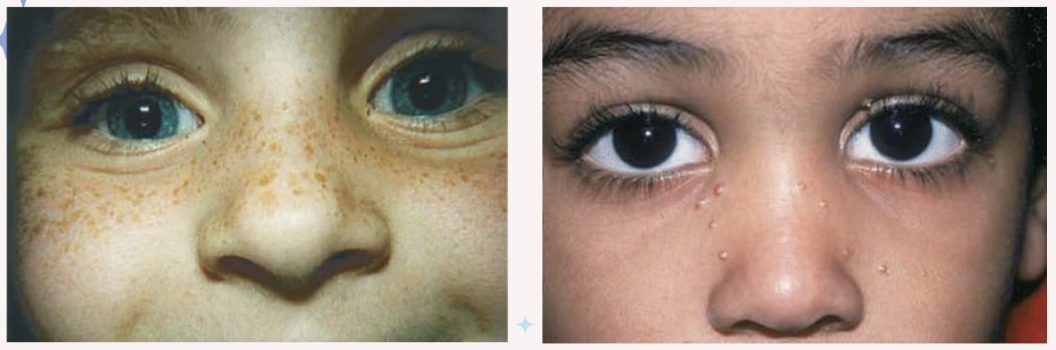
Macule (<1 cm; flat discolorations, freckles) vs. Papule (<1 cm; raised and defined bumps, insect bites)
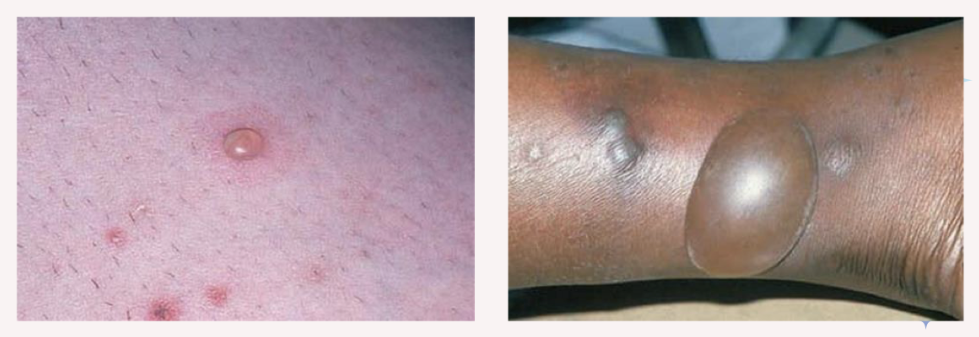
Vesicle (Small/<1 cm; fluid-filled) vs. Bulla (Large/>1 cm; fluid-filled)
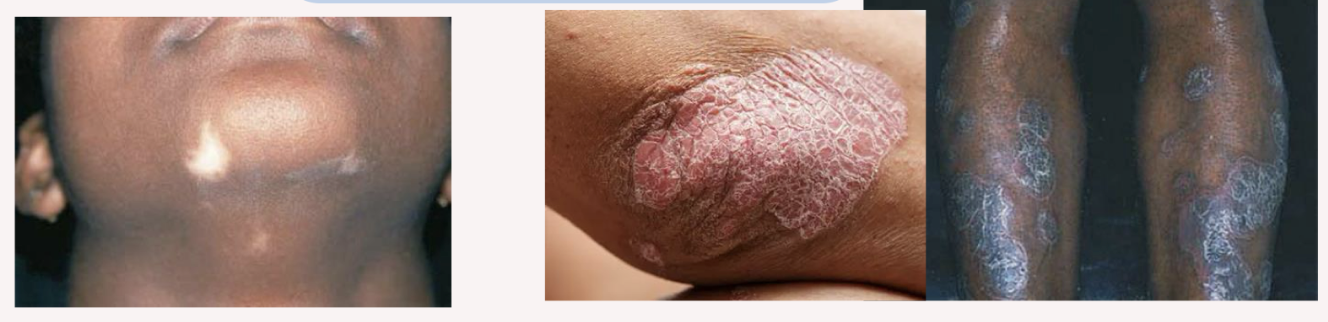
Patch (Flat color change) vs. Plaque (Textured and raised color change)
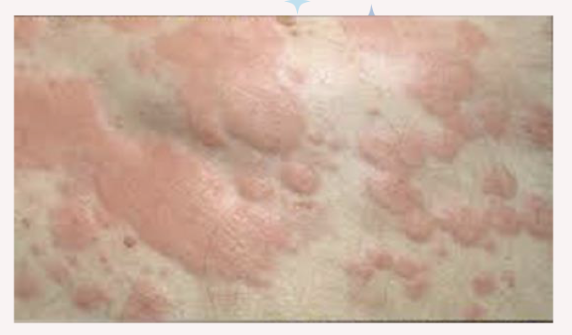
Wheal (Raised satellites; well circumcised)
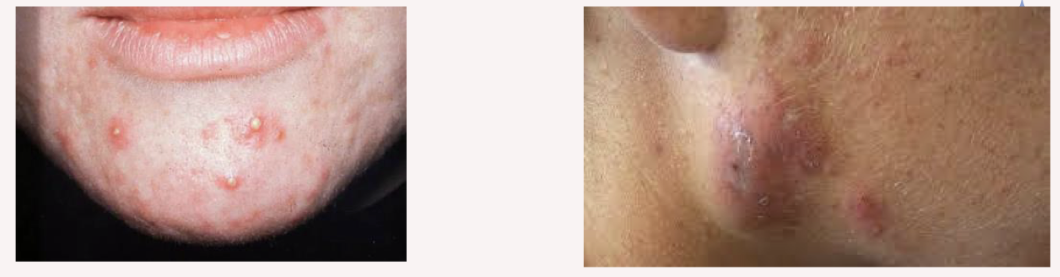
Pustule (<1 cm; pus-filled) vs. Cyst (>1 cm; pus-filled & mobile)
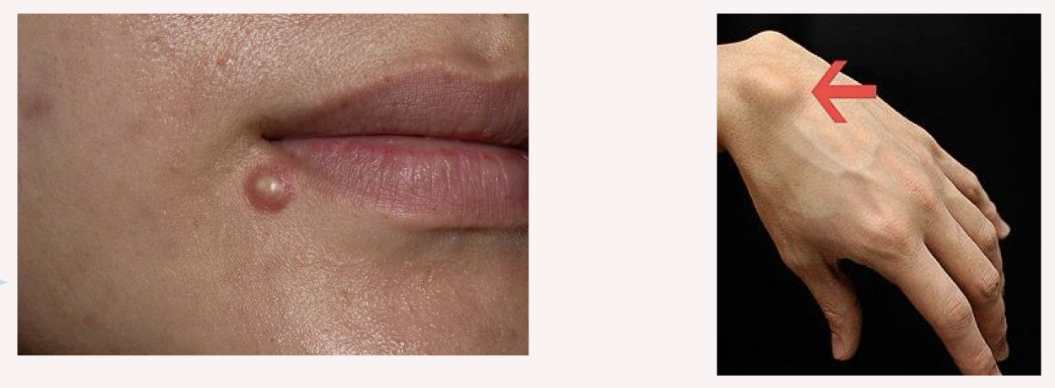
Pustular Acne vs. Cystic Acne
Secondary Skin Lesions
Definition: Develop from these primary lesions or result from external factors
Keloid: Painful scares that have excessive proliferation; common with POC
Scars
Atrophy: Thin appearing, fragile skin
Exoriation: Scratching/rubbing
Distributions/Patterns of Lesions
Asymmetrical (Solely on one side) vs. Symmetrical (Bilateral)
Diffuse (Distributed widely across an affected area w/o any pattern) vs. Generalized (Distributed over one area)
Localized (Located in a distinct area) vs. Grouped (Multiple lesions/wounds in a distribution/pattern)
Cultural Variation
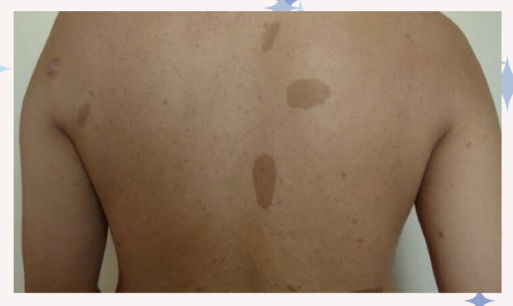
Café au Lait — Born with it and won’t outgrow; common in Asian descent and POC
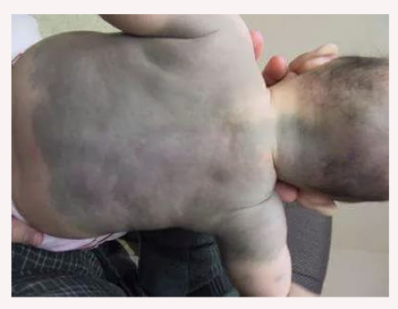
Congenital Dermal Melanocytosis — Appears as bruising; commin in babies of color
Stork Bites
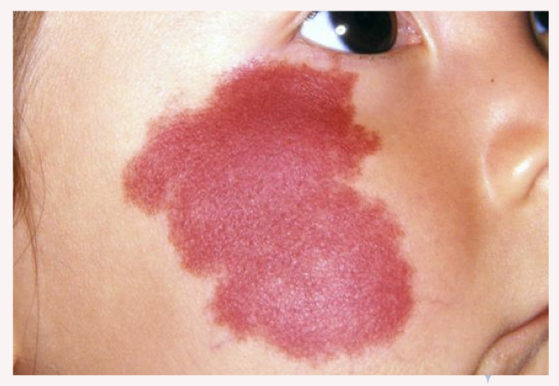
Cultural Considerations
Important Notes: Treat, educate yourself (cultural values), and educate the patient.
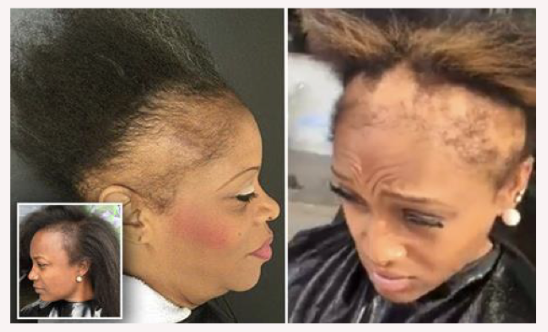
Traction Alopecia — Hair loss related to certain tight hairstyles
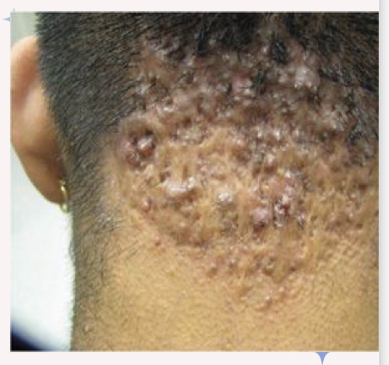
Pseudofolliculitis Barbae — Typically found in Black, Hawaiian, and API; patient education on shaving close to skin and going to barbers
Cupping and Coining (tx to promote circulation)
Determine pertinent information that needs to be obtained during the subjective assessment.
Subjective Assessment: What the pt tells you
Areas of Focus
Issues (follow up with OLDCARTS)
Life changes
PMH (past med hx)
FH (fam hx)
Medications
Allergies and severity at exposure
Lifestyle (diet, occupation, hygiene, mobility, etc.)
O — Onset
L — Location
D — Duration
C — Characteristics
A — Aggrivating/alleviating
R — Related sxs
T — Tx by pt
S — Severity (pain scale; “How bad is it?”)
Synthesize data from chart review, subjective and objective assessment, to identify patterns or altered concepts, recognize cues and generate solutions/take action.
Oxygenation
Definition: The process of providing oxygen to all cells of the body through adequate gas exchange
Hypoxemia: Decreased oxygen in the blood
Hypoxia: Decreased delivery of oxygen to the tissues
Recognize Cues
Clubbing of nails (Chronic finding of hypoxemia)
Cyanosis (Late sign of hypoxia; blue in lighter skin tones, gray/green in darker skin tones)
Generate Solutions/Take Action
Elevate HOB (head of bed) to open airways & ↓ lung pressure via gravity
Administer supplemental O2 (w/ ↓ PaO2 stats)
Treat underlying causes
Perfusions
Definition: The physiological process of the heart transporting and distributing a continuous supply of blood throughout the body
Ischemia: Decreased supply of blood and nutrients to the tissues
Infarction: The death of cells due to lack of nutrients/oxygen due to blood flow
Local
Cool
Pallor of area
Pain or ↓ sensation
Week or absent pulses
Non-blanching skin
No hair growth on extremities (chronic)
Systemic
Pallor: Loss of color (anemia or poor oxygenation)
Cold, clammy skin — Blood is warm; cold = no blood
Diaphoresis (sweat) — Compensatory mechanism from ↑ cardiac workload (↑ HR)
Capillary refill >2 sec
Pressure Ulcers (Concept Altered: Localized Perfusion)
Stage 1: Red, unblanching area of skin. Skin remains intact.
Stage 2: Partial thickness of loss of dermis.
Stage 3: Full thickness tissue loss. Subcutenous fat may be visible but NO bone, tendon, or muscle.
Stage 4: Full thickness tissue loss. Bone, tendon, OR muscle exposed.
Generate Solutions/Take Action
Picture in chart
Document in EMR
Q2H turns
Wound dressing
Encourage nutrition (↑ protein & caloric intake)
Pressure relieving mattress
Ensure lines & drains aren’t under pt
Soft nasal canula (ear/nose ulcer risk)
Wound care consult (early for prevention)
File incident report if nosocomial
Inflammation
Definition: The body’s natural immune response to tissue damage or foreign organisms/particles, including environmental stressors (not just infection!)
Recognize Cues
Elevated WBC (if infxn)
Erythema
Edema
Warmth at site
Purulent exudate (if infxn)
↑ temp
Generate Solutions/Take Action
Determine if due to infxn
Wound dressing
Hand hygiene
Cellulitis (Concept Altered: Inflammation)
Definition: Skin infxn caused by bacteria or foreign substance in/on epidermis
Recognize Cues
Erythema
Hot/warm to touch
Edema
May be painful or itchy
Generate Solutions/Take Action
Hand hygiene
Monitor s/s of infxn progression
Elevate extremity (pain management)
Moist heat (penetrates better)
Wound dressing
IV ABX (fast acting!)
Encourage nutrition to fight infxn
Fluid & Electrolyte Balance
Definition: The pattern of equilibrium between fluid volume and chemical composition of body fluids
Recognize Cues
Fluid Volume Excess
Edema
Weight gain
Fluid Volume Deficit
Dry skin & mucous membranes
Low BP (1st tx = fluids)
Poor skin turgor (dehydration)
Generate Solutions/Take Action
Determine & treat underlying cause
Monitor (edema)
Burns (Concept Altered: Inflammation, Fluid & Electrolyte Imbalance, Perfusion)
Recognize Cues
↓ Hgb/HCT (losing RBCs)
↓ sodium (fluid loss fm interstitial space damage)
↑ potassium (cell damage pushes K out r/t cardiac issues)
↑ BUN (kidney filtration probs)
Erythema
Blistering
Non-blanching skin
Generate Solutions/Take Action
ABC’s (Airway, Breathing, Circulation) ⭐️⭐
Remove restrictive clothing (swelling)
IV fluids (cell leakage)
Wound care
Pain ctrl
High-calorie, high-protein drinks once able to eat
Dehydration (Concept Altered: Fluid Volume Deficit and Potential for Decreased Perfusion)
Recognize Cues
↑ RBC, HGB, & HCT
↑ BUN/Creatinine (b/c more stuff for kidneys to filter out)
Dry skin & mucous membranes
↓ BP (late signs)
Poor skin turgor (tenting)
↓ capillary refill
Generate Solutions/Take Action
Determine cause
Administer IV fluids
Monitor electrolytes
Encourage oral fluids