Cell structure and function
The cell
the need for a boundary (cell membrane)
the need for DNA (the blueprint)
the need for energy (the fuel): ATP
Prokaryote vs Eukaryote
Prokaryote - these are cells that existed before the nucleus
bacteria cells
DNA is in the nucleoid
have a single circular naked DNA
lake any membrane bound organelles
have a cell wall but are different in composition to the cell walls of eukaryotes
ribosomes are small
Eukaryote - these are cells that have a true nucleus
plant animal fungal cells and protists
most of the DNA is in the nucleus which is bounded by a double membrane
genetic materials is found in chromosomes (DNA + proteins)
including membrane bound organelles
ribosomes are larger
Nucleus Structure
double membrane (nuclear envelope) with pores
Functions: stores DNA (genetic info)
ribosome synthesis (nucleolus)
Rough Er (Endoplasmic Reticulum)
Structure - membrane attached with ribosomes attached to nuclear envelope
Functions:
site of membrane bound protein, enzymes and secreted protein synthesis
role in intracellular transport
Smooth ER
Structure - folded tube like (cisternae)
functions - detoxification
calcium storage
lipid synthesis
Golgi Complex
Structure - membrane bound structure composed of flattened sacs(cisternae)
Functions - folding and chemical modification of synthesized proteins
packaging protein traffic
Ribosomes Structure
Structure - composed of rRNA and protein
large and small subunits
types: bound or free (cytoplasmic)
Function: protein synthesis
Vacuole structure
Structure - membrane bound sac
Function - storage and release of macromolecules and cellular waster products
central: water retention - turgor pressure
Contractile: osmoregulation (protist)
Food: phagocytosis fuse with lysosome
Lysosome
Structure - membrane enclosed sacs that contain hydrolytic enzymes
Functions: intracellular digestion (recycle cell organic materials and programmed cell deal: apoptosis)
Mitochondria
Structure - double membrane (out smoother, inner, highly folded)
Functions - site of krebs cycle (matrix), site of oxidative phosphorylation (cristae/inner membrane)
Chloroplast
Structure - double outer membrane(thylakoid sac stacked: grana and fluid: stroma)
Functions - site of photosynthesis
Thylakoid - light reactions
Stroma - Calvin Benson Cycle
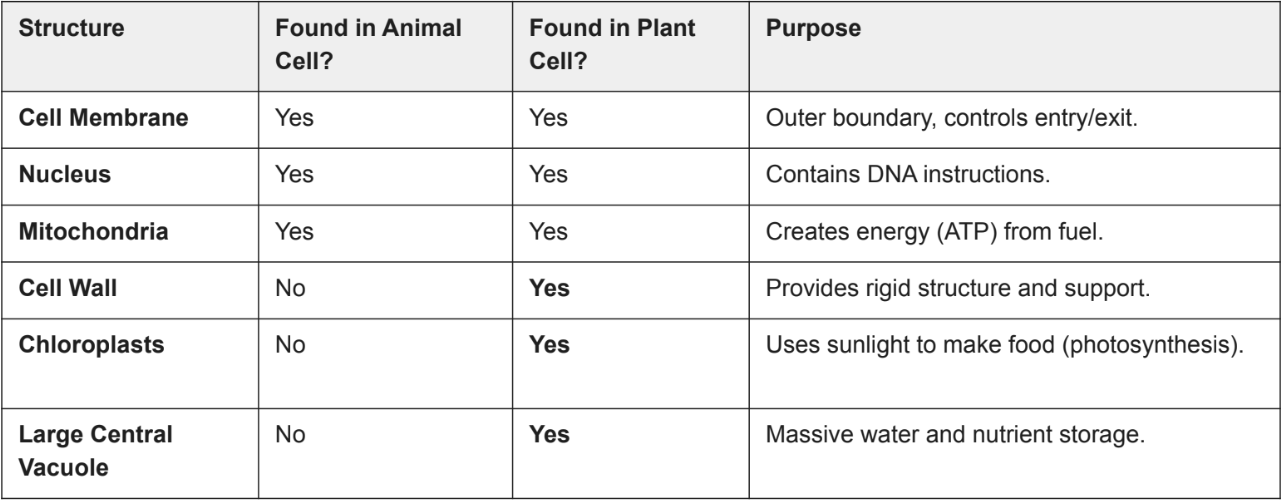
Cell Wall
structure and protection
made of cellulose
chitin for fungi
prokaryote pepitodoglycan
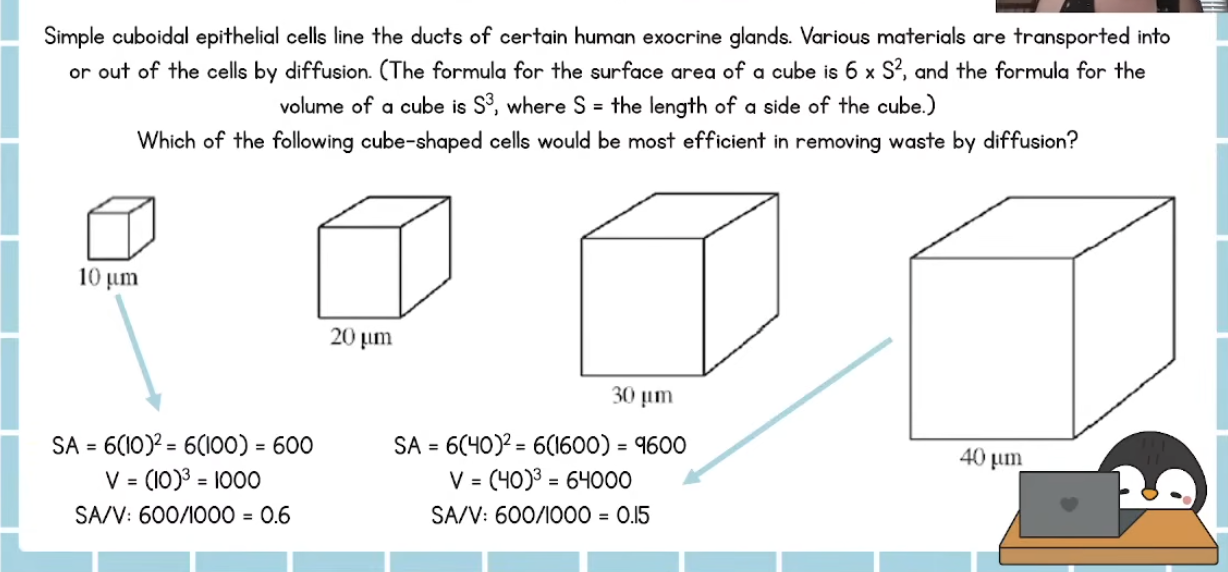
Most favorable cell is one with larger surface area/volume ratio
how can a cell increase surface area without increasing volume? Microvilli
How does an increase in surface area affect heat exchange
larger surface area = more heat exchange with environment, lose more heat
Plasma Membrane
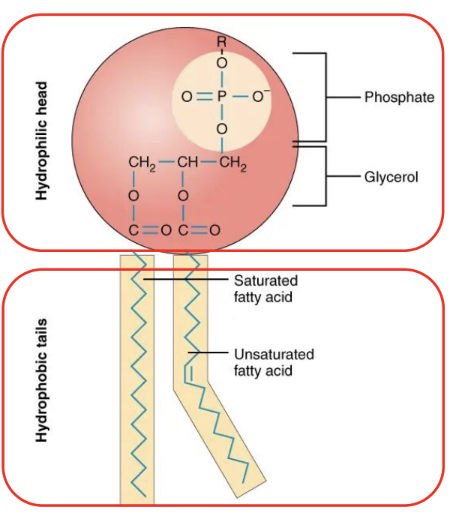
phospholipd bilayer
proteins
cholestrol
Carbohydrate chain
lipid - glycolipid
protein - glycoprotein
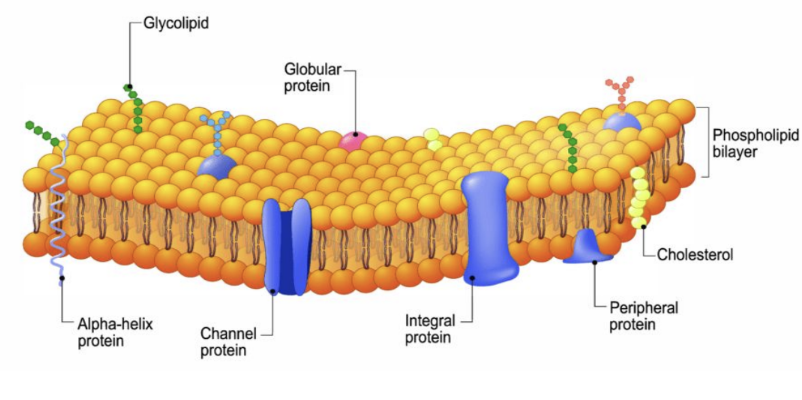
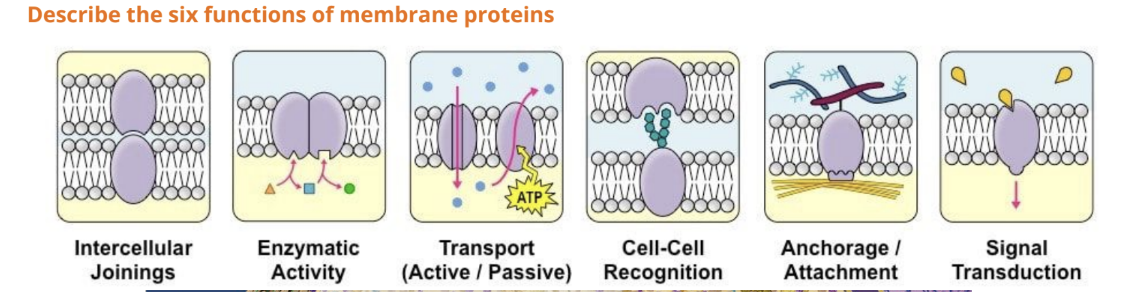
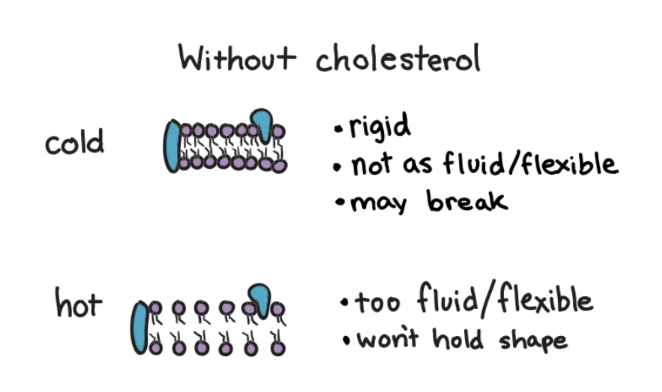
Cholesterol helps maintain fluidity, stability, and intergrity
Membrane Permeability
the cell membrane is nonpolar
pass through directly
small nonpolar molecules
Pass through with requirement:
charged particles
and polar molecules
For big materials
Exocytosis
Endocytosis
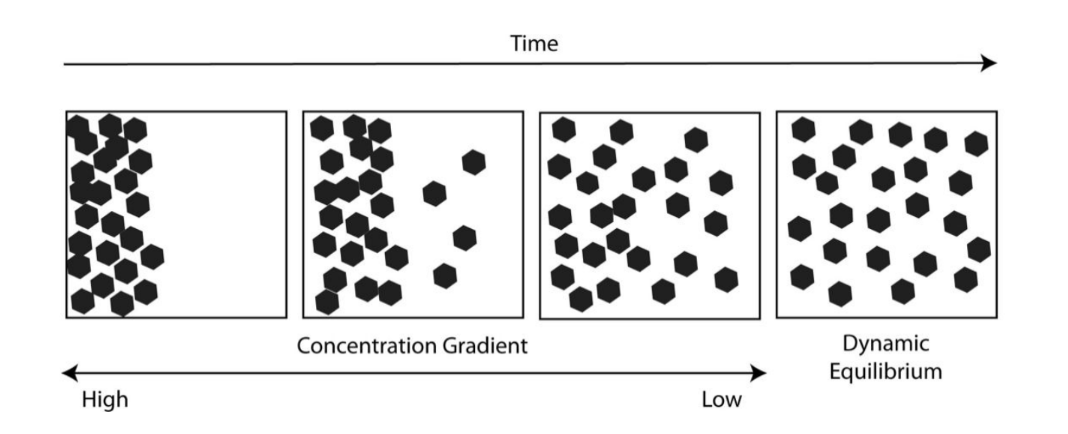
Passive Transport
simple diffusion - no transport protein needed
facilitated diffusion - requires a transport protein (ex. channel, carrier)
transport charge particle or polar
Molecules move from a high concentration to a low concentration
● No ATP energy required
Active Transport
Exosytosis/endosytosis
Channel proteins
Hydrophilic region in the interior
allows solute to pass through
small amounts of water can diffuse through the membrane directly without aquaporins
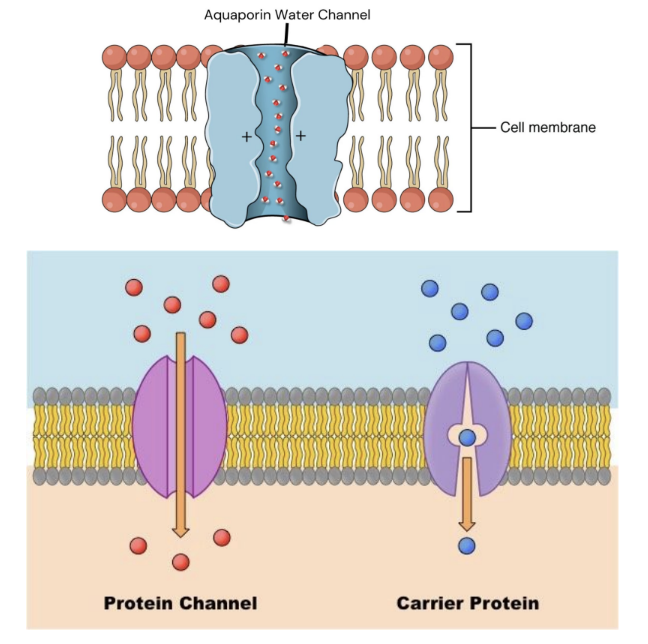
Carrier Proteins
integral membrane that facilitates the movement of specific molecules across the cell membrane by binding to the substance and undergoing a conformational change
Active Transport - molecules move from low to high concentration, needs ATP energy and transport protein, charge or polar particles
two ways to get energy
transport protein hydrolyzes ATP to ADP +Pi to get energy
Transport proteins do not use ATP directly, but relies on energy stored in an ion gradient
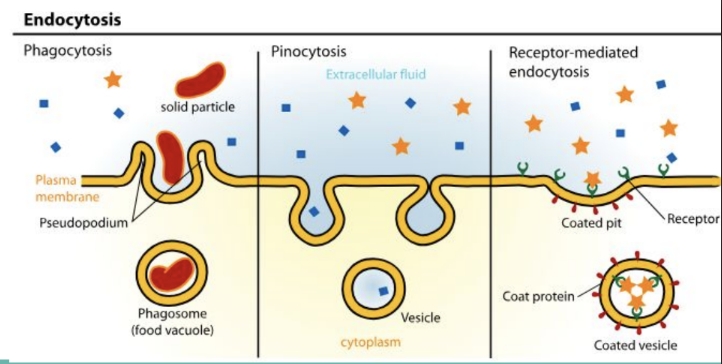
Endosytosis and Exocytosis
both need Atp energy
exocytosis - molecules exit the cell using the vesicle
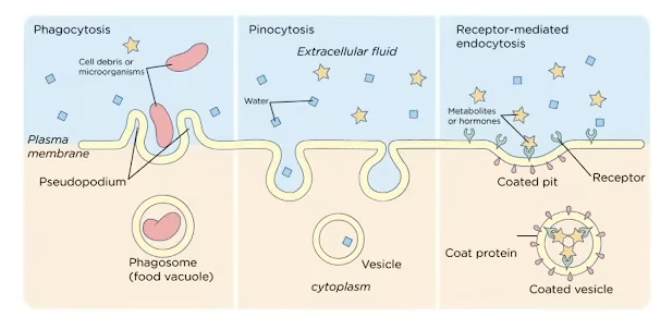
Endocytosis - molecules enter the cell through the creation of vesicles
phagocytosis: the cell membrane reaches outward and engulfs food in the vesicles then fuse with lysosomes for digestion
Pinocytosis: the cell membrane folds inward to pull fluids into the cell
Receptor-mediated endocytosis: ligands bind to receptor to cause the pit and form a vesicle
Osmosis - process involving the movement of solvent through a semipermeable membrane from a region of lower solute concentration to a region of higher solute concentration
Osmoregulation - maintenance by an organism of an internal balance between water and dissolved materials regardless of environmental conditions.
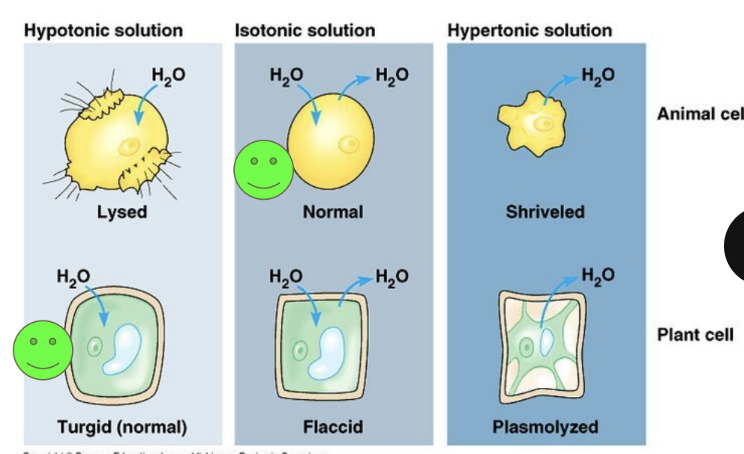
Hypotonic solution: lower solute concentration in a high amount of water
Hypertonic solution: higher solute concentration in a low amount of water
Isotonic solution: Isotonic refers to a solution with the same solute concentration as another solution
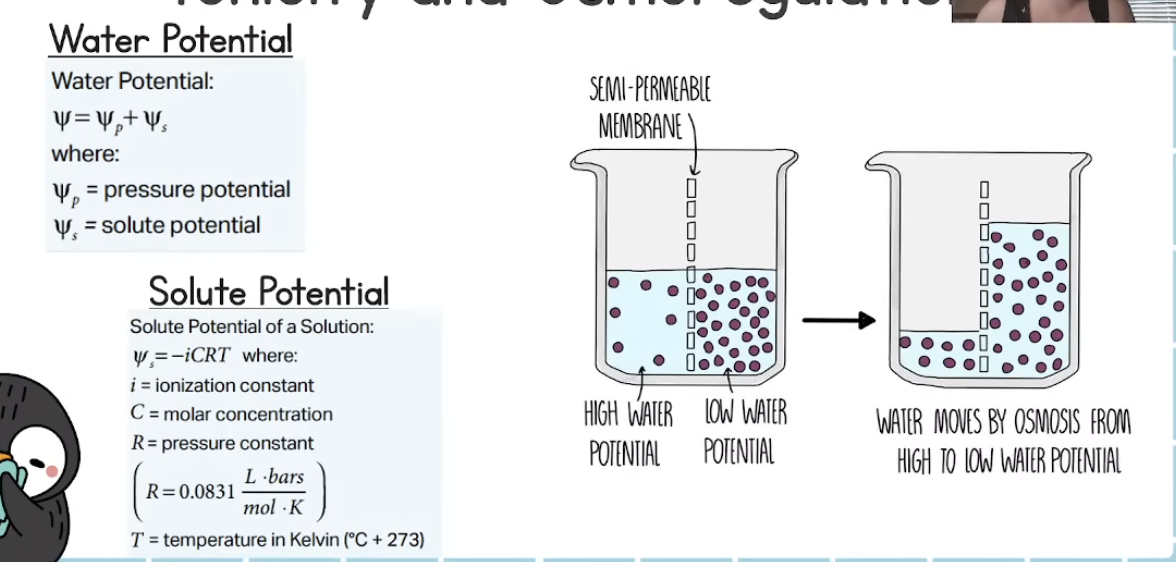
Water potential (Ψ) is a measure of the potential energy of water — basically, it tells us which way water will move.
Water always moves from higher water potential → lower water potential, just like how objects roll downhill.
Ψ = ΨS + ΨP
Ψ = water potential
ΨS = pressure potential
ΨP = solute potential
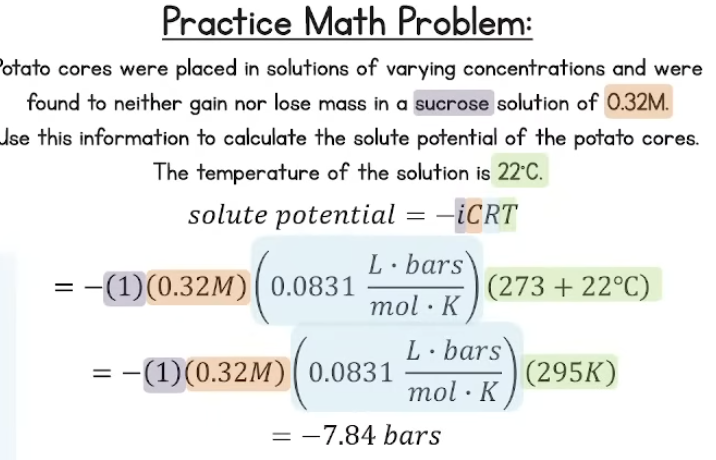
Ψs = -iCRT
i=ionization constant
C=molar concentration
R=pressure constant, 0.0831
T=temperature in Kelvin (°C+273)
Membranes compartmentalize the cell, creating distinct, controlled environments where specific processes can take place efficiently and without conflict.
Eukaryotic cells are larger because they have membrane-bound
organelles. That compartmentalization let them organize and
sustain more complex life functions.
What is the function of the inner membrane folding in the
mitochondria?
What is the function of the endoplasmic reticulum’s folded
membrane?
Rough ER: Provides distinct reaction spaces for
protein.
Smooth ER: Calcium storage. Provide distict region for
lipid synthesis.
The structure supports ATP synthesis, where
protons flow through ATP synthase to power ATP
production.
Compartmentaliztaion
What is the function of the thylakoid membrane in the
chloroplast?
The light-dependent reactions to occur inside the
thylakoid membrane.
A proton gradient to build across the membrane for
ATP synthesis.
What is the function of the multiple membranes and sacs found in
the Golgi?
Each compartment modifies them in a specific order
(adding sugars, tagging for transport).
This ensures proper sorting and packaging before
they exit the cell.
Eukaryotic cells likely evolved
when a larger prokaryote
engulfed smaller bacteria,
forming a mutually beneficial
partnership that became
permanent — giving rise to
organelles like mitochondria
and chloroplasts.
Mitochondria come first.
● Reproduction — They divide independently by binary fission, like
bacteria.
● Own DNA — Mitochondria and chloroplasts have circular DNA, like
bacteria.
● Ribosomes — Similar to bacterial ribosomes (70S type).
AP BIO PENGUINS
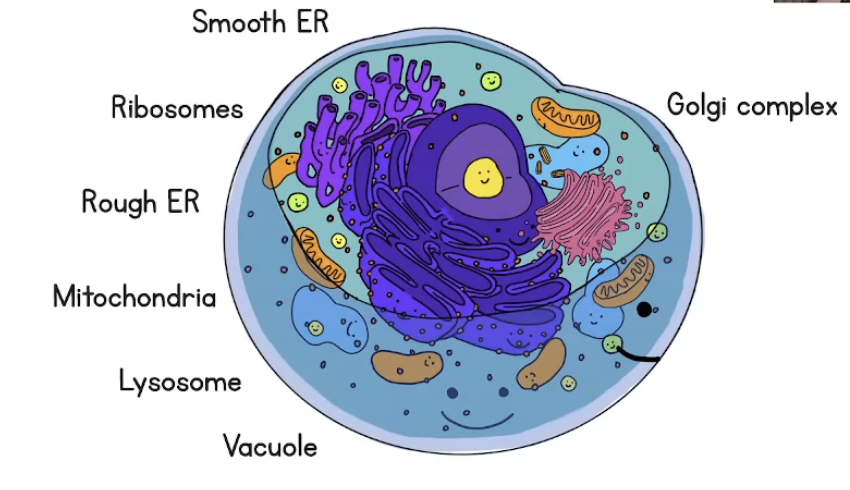
Ribosomes
composition - ribosomal RNA (rRNA) and protein non membrane, subcellular structures
Role - synthesize proteins according to messenger (mRNA) RNA sequences
Found - in cells in all forms of life and reflect the common ancestry in all known life
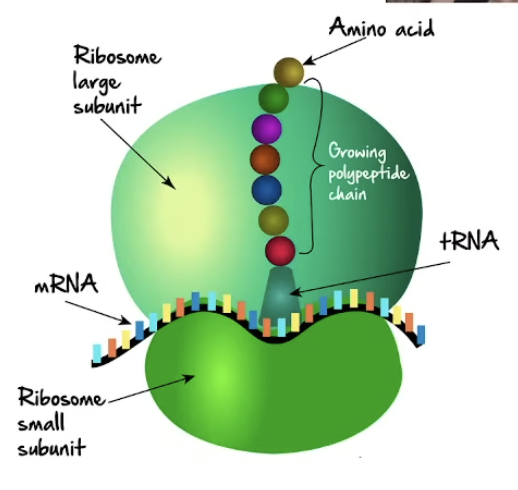
Endoplasmic Reticulum:
Role: provides mechanical support to maintain shape and intracellular transport
Rough ER:
compartmentalization
protein synthesis (membrane bound ribosomes)
Smooth ER:
detoxification of cells
lipid synthesis
Golgi Complex
membrane bound structure with series of flattened membrane sacs
materials from rough ER
Role:
correctly fold and chemically modifying newly synthesized cellular products
packaging proteins for trafficking
moves through cisternae (folds)
Mitochondria
Role: provide compartments for different metabolic reactions involved in aerobic cellular respiration
inner membrane (cristae) is highly folded to help ATP be synthesized more efficiently
has own circular DNA and own ribosomes
double membrane (inner is cristae, highly folded)
krebs cycles (matrix) and oxidative phosphorylation (cristae/ inner membrane)
Lysosomes
membrane enclosed sacs with hydrolytic (water breaks own) enzymes
role: intracellular digestion
apoptosis
Vaculoses
membrane bound cells
role: central Vacuole maintains turgor pressure with nutrient and water storage (plant cells)
contractile vacuole maintains osmoregulation in some single celled organisms (pumps water out so it doesn’t burst)
food vacuole formed from phagocytosis and fuses with lysosome
smaller in size in animal cells and more plentiful than in plants
chloroplast
2-3 membranes (thylakoid - light reactions)
specialized organelles that are found in plants and photosynthetic algae
own circular DNA + ribosomes
location for photosynthesis
Membrane Bound Organelles
compartmentalize cells intracellular metabolic process and specific enzymatic reactions (no ribosome b/c they don’t have membrae)
Internal Membranes
facilitate cellular processes by minimizing competing interactions and increases surface area where reactions occur
mitochondria: Cristae - oxidative phosphorylation
Chloroplast: Thylakoid - light reactions
Cell Size
Sa/V
LARGE SA, small volume
obtains nutrients
eliminate waste products
acquire/dissipate heat
exchange chemicals/energy with environment
SMALLER CELLS HAVE HIGHER SA/V and more efficient exchange of materials with environment (metabolism more frequently b/c loss of heat)
Plasma Membrane
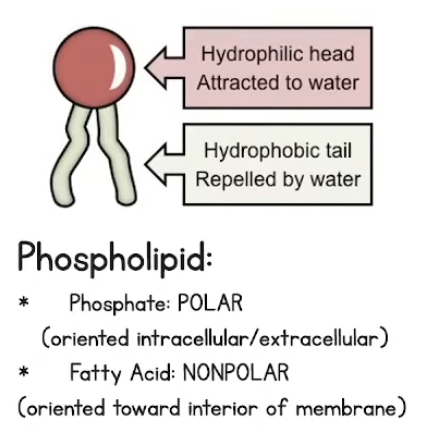
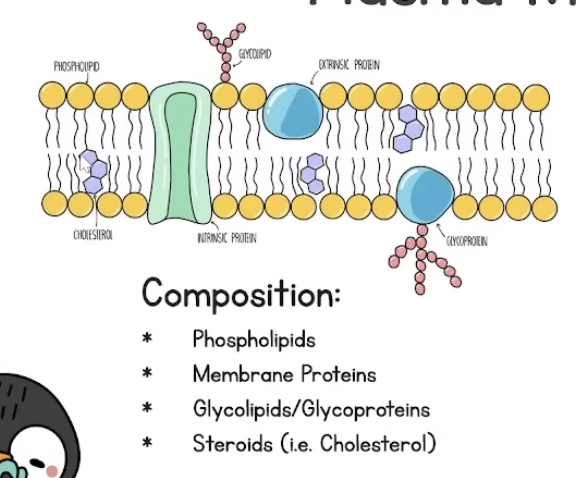
cell walls - barrier for substances and prevent osmotic lysis (bursting)
Simple diffusion
passive transport, no energy/transport protein
down concentration gradient
SMALL NONPOLAR
small amount of polar uncharged molecules leak through membrane (H2O)
Facilitate Diffusion
passive transport, no energy
down concentration gradient
small molecules
requires transport proteins (channel vs. carrier)
ex. H2O, Na, etc,
Membrane becomes polarized due to movement of ions
aquaporins transport large quantities of water across membranes
Active transport
requires energy
against concentration gradient
requires transport protein Na/K pump and ATPase
maintains membrane proteins
Membrane Transport
Exocytosis - internal vesicles release material from cells by fusing with the plasma membrane and secreting large molecules from cell
pathway: Rough ER (synthesize), Golgi (package/modification), transport vesicle, plasma membrane
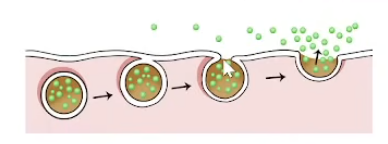
Endocytosis - takes in large molecules and particulate matter by folding the plasma membrane in on itself and forming new small vesicles that engulf material from the external environment.
Tonicity and Osmoregulation
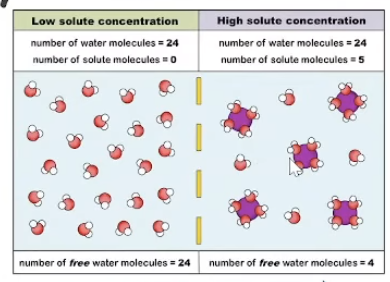
always compare hyper to, hypo to
Hypotonic Solution - low solute concentration, high free water concentration, loses water to hypertonic solution
Hypertonic solution - high solute concentration, low free water concentration, gains water from hypotonic solution
Isotonic Solution - equal water and solute (in and out)
Water potential
Hypotonic cell
low solute concentration
high free water concentration
loses water to hypertonic solution
hypertonic
higher solute concentration
low free water concentration
gains water from hypotonic solution