L13- Cretaceous Terrestrial Ecosystems
The Cretaceous World-
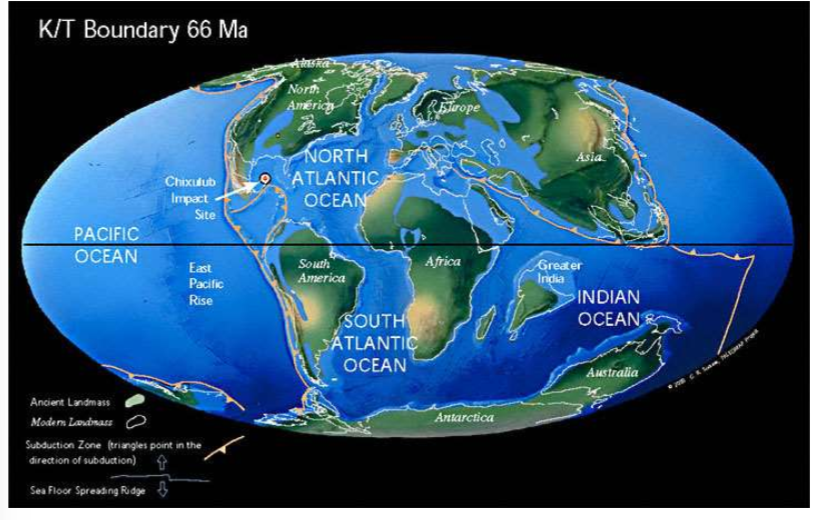
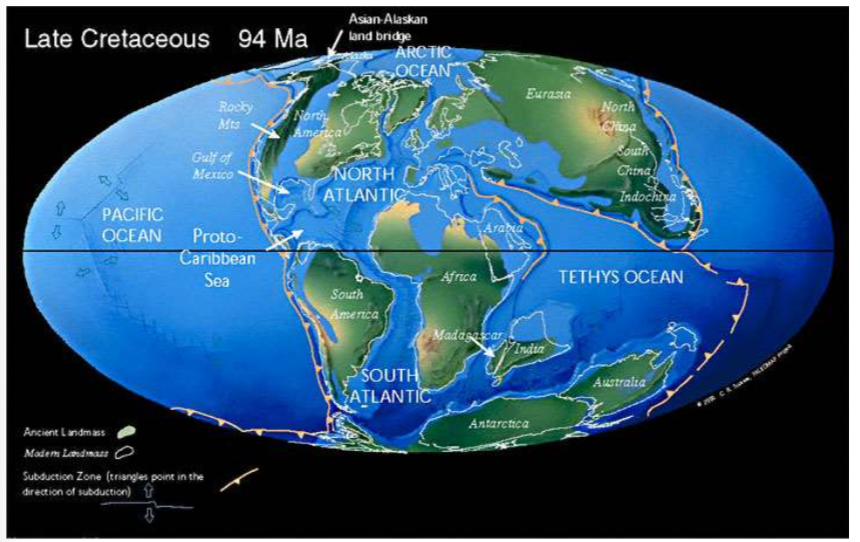
continents still splitting apart, high sea levels, greenhouse world, shallow continental seas
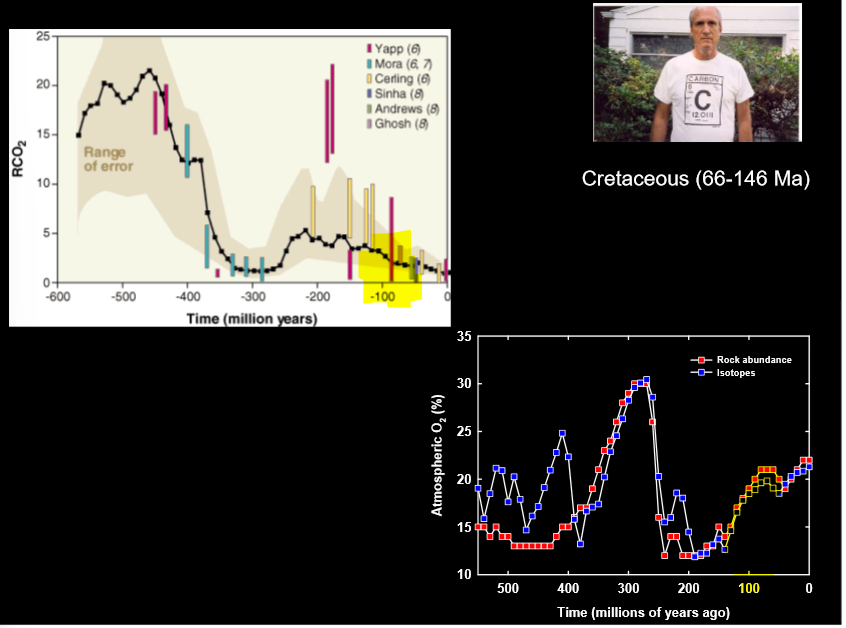
CO2 still high but gradually declining to modern levels (icehouse world now), O2 gradually rising
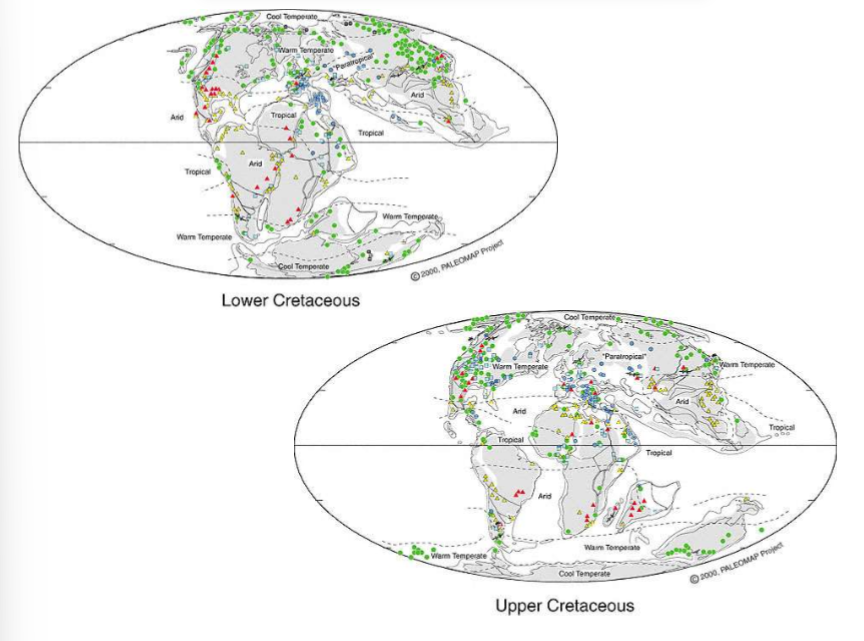
climatically sensitive fossils→ difficult to interpret when continents are separate, no current between australia and antarctica, cool temperate at poles, latitudinal banding but gets dragged around by currents
Plants:
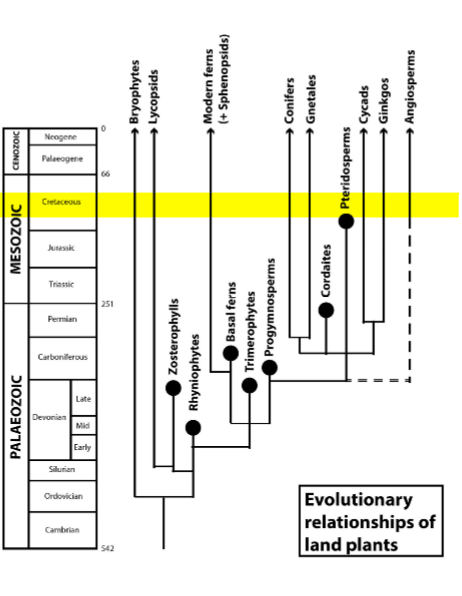
Early Cretaceous→ no angiosperms
bryophytes
lycopsids, ferns, sphenopsids→ fern prairies, all shrubs (undergrowth)
pteridosperms (bennettites and caytoniales) go extinct
cycads
gingkos
conifers→ all groups
gnetales appear→ last of sea plants (potential ancestor of angiosperm)
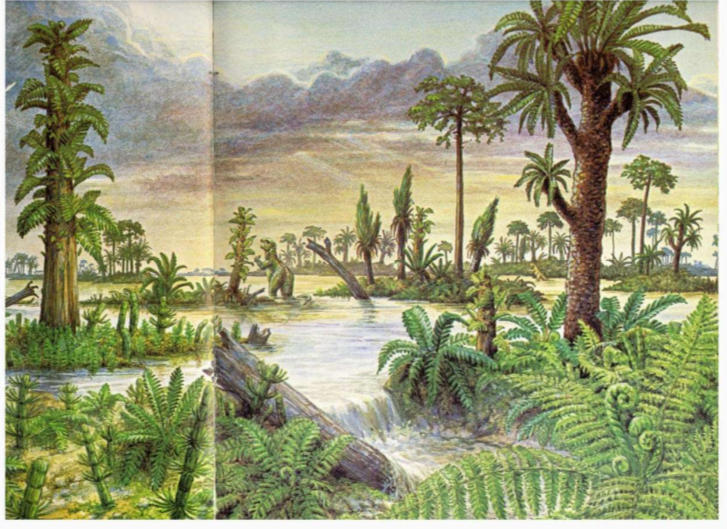
→ plants resemble the jurassic world
angiosperms appear→
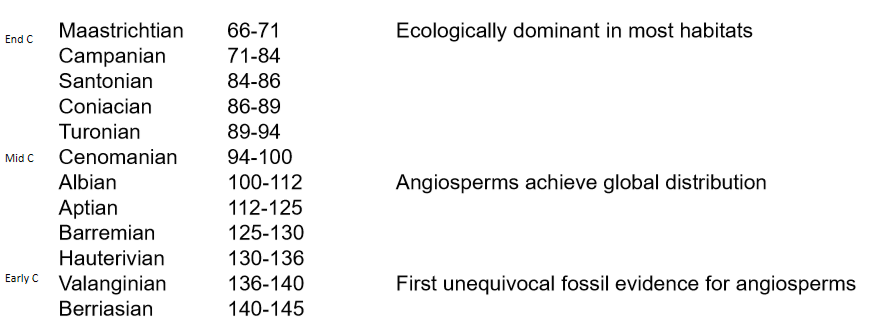
first ones were small shrubs→ dark and disturbed hypothesis
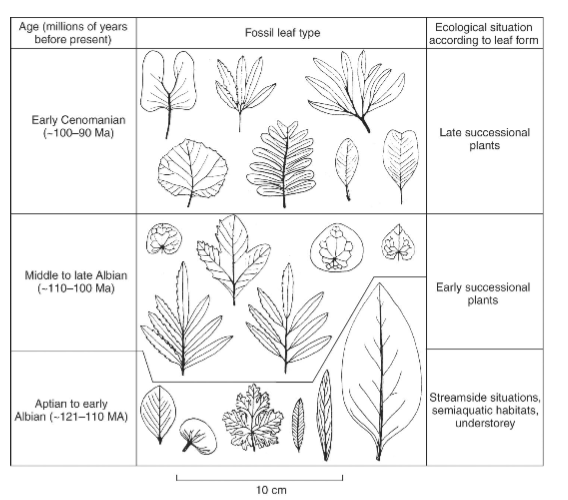
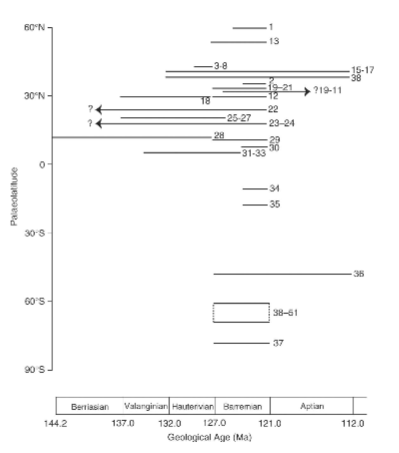
pollen are found at equatorial latitudes→ originally at the equator, diversify north and south
can trace migration of angiosperms through their pollen grains and megafossil evidence
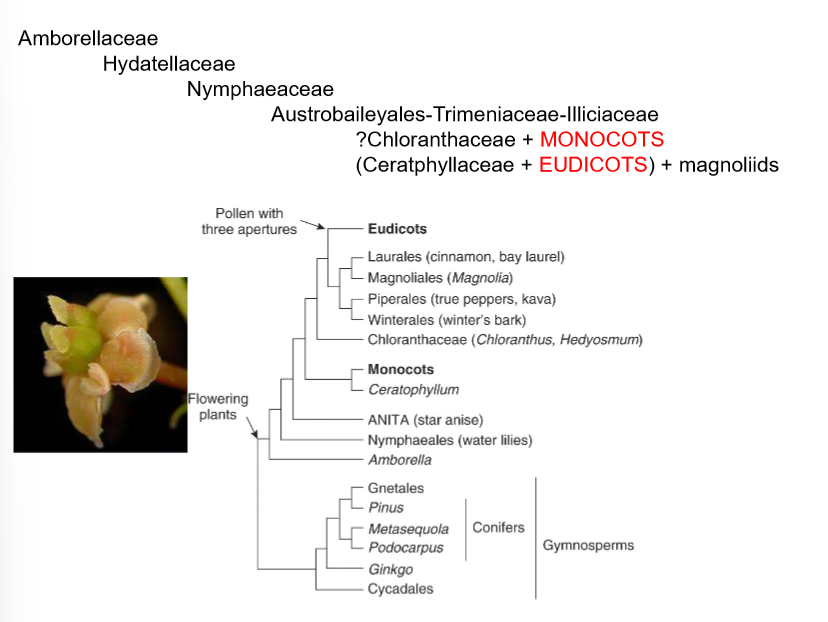
phylogeny of modern angiosperms→ are sister group to gynosperms (seed plants)
most present day angiosperms are tropical in their requirements:
50% are confined to tropical regions
75% have optimal development in tropical environments
→ modern angiosperm biota adds more evidence to the fact that it was tropical in origin
biomes→
the most diversity is in the angiosperm biotas e.g. tropical summerwet:
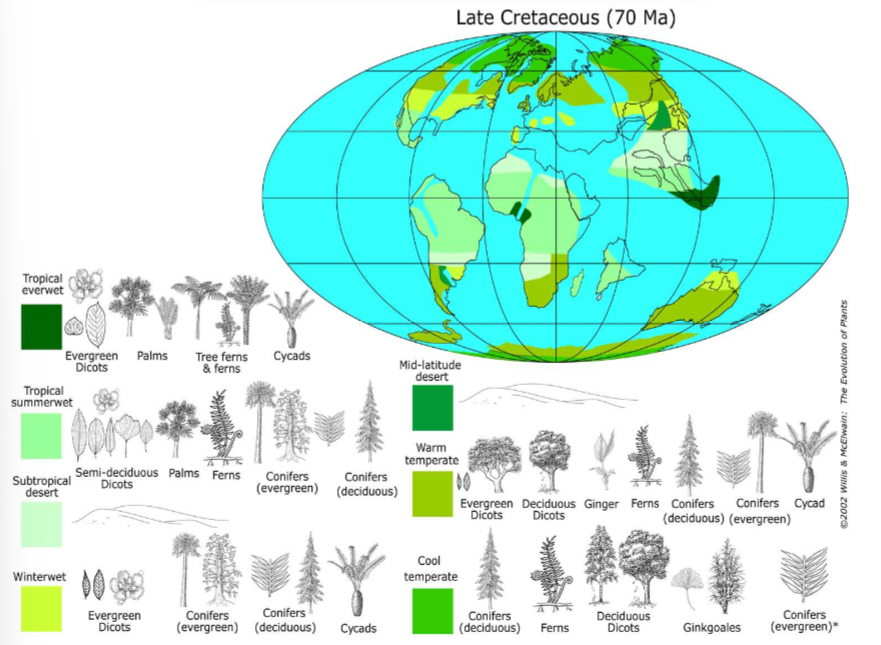
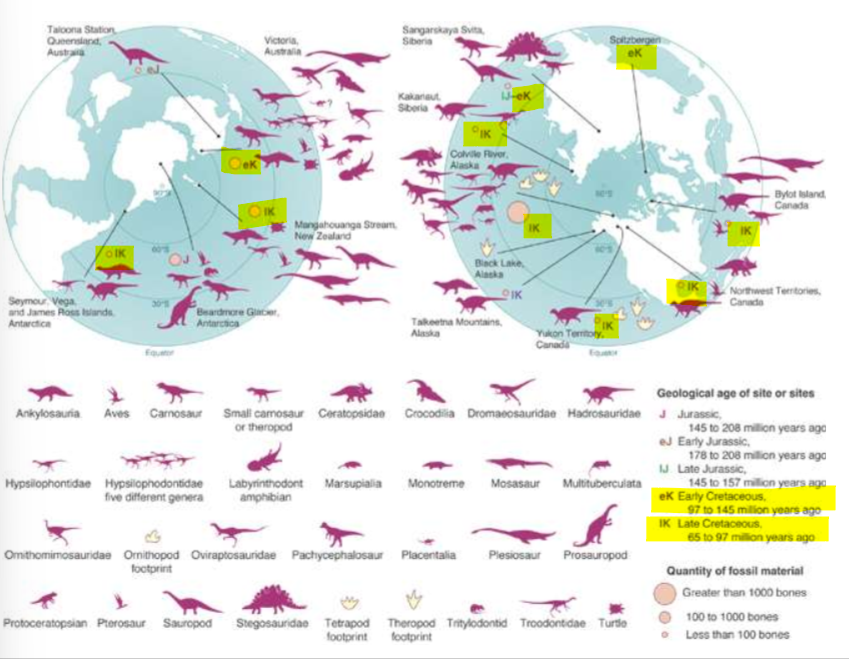
get polar forests→ evidence around northern and southern ice sheets
Insects:
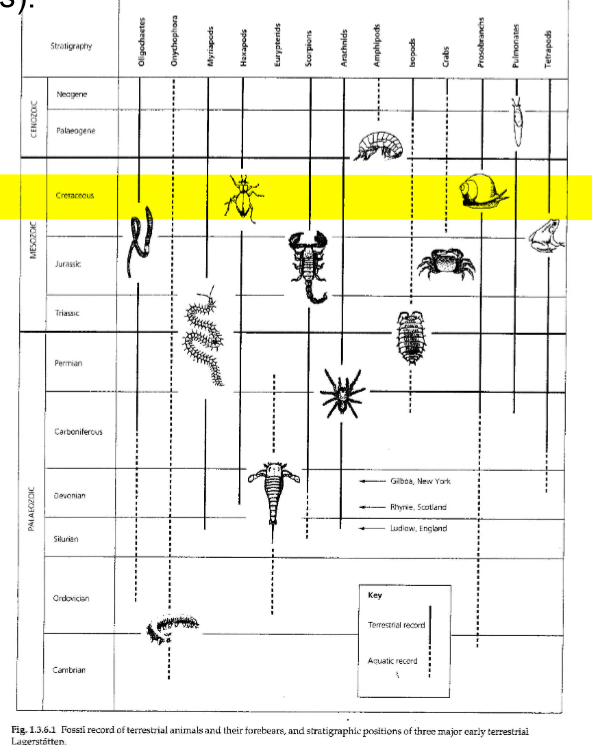
there are at least 25 major Cretaceous deposits
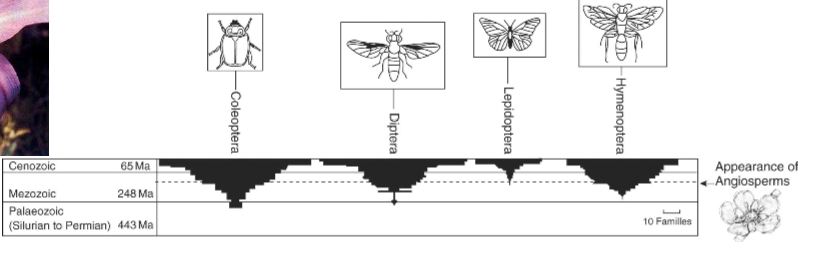
diversification of insects is associated with angiosperm diversification, but insects did not drive the origin of angiosperms→ insects and plants are associated
the more diverse an angiosperm assemblage is, the more diverse insect assemblages are e.g. in the tropics
all three major groups of insects evolved advanced sociality (ants-bees-vespid wasps, termites and aphids)
get first amber deposits
crabs appear but are aquatic
Biotic Interactions:
first angiosperms are pollinated by pollen collecting or pollen eating insects
more derived angiosperms are pollinated by nectar later on
not much pollen and food dispersal at this time
plant-insect interactions can’t be linked to origin of angiosperms because these diversifications happened before
Fish:
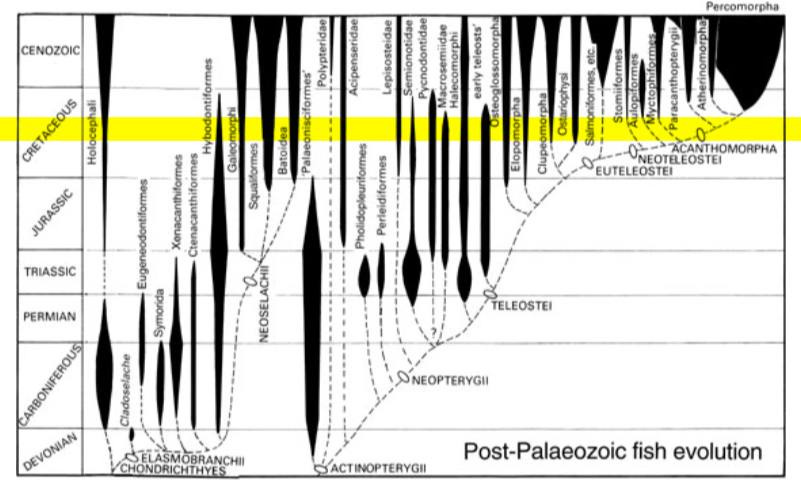
new groups→ all modern groups of teleosts appear, huge diversification
there are still some basal actinopterygians
this is when fish become modern in aspect
Amphibians:
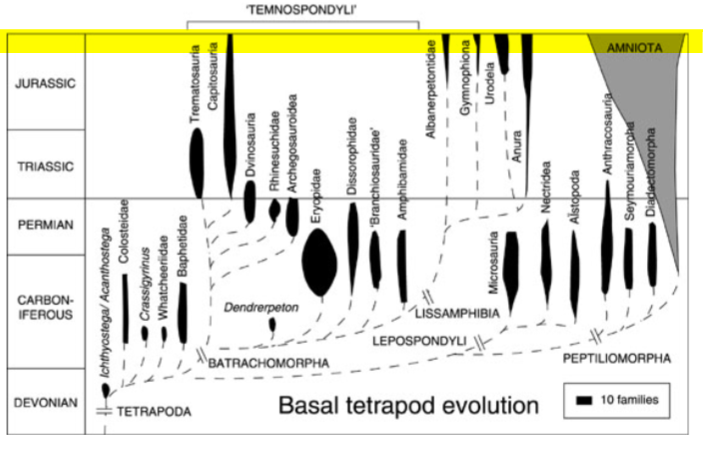
last of temnospondyls come through but disappear and are left with lissamphibians→ modern groups
Reptiles:
Synapsids:
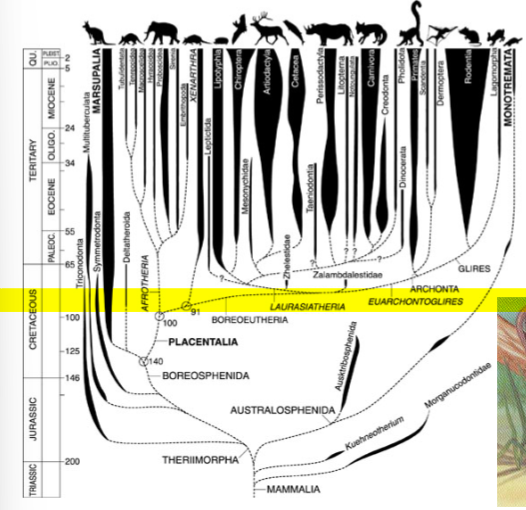
only remaining synapsids are mammals→ diversify widely throughout jurassic-cretaceous but are not dominant in the biota (dinosaurs still dominating)
Anapsids:
only remaining groups are turtles→ debate if they are anapsids or not
Diapsids:
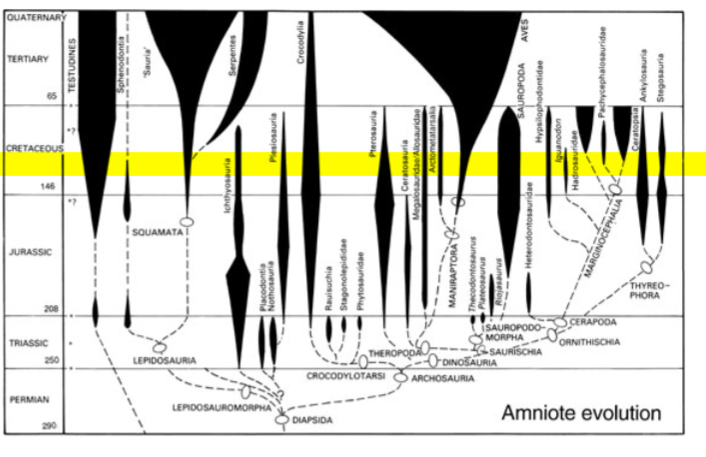
huge radiation of modern groups of snakes and lizards
ichthyosaurs and plesiosaurs persist in the shallow continental seas
crocodiles persist→ huge diversity
pterosaurs persist in the sky
dinosaurs continue to persist and dominate
taxonomy of dinosaurs
get two new groups→ get complete phylogeny of dinosaurs now
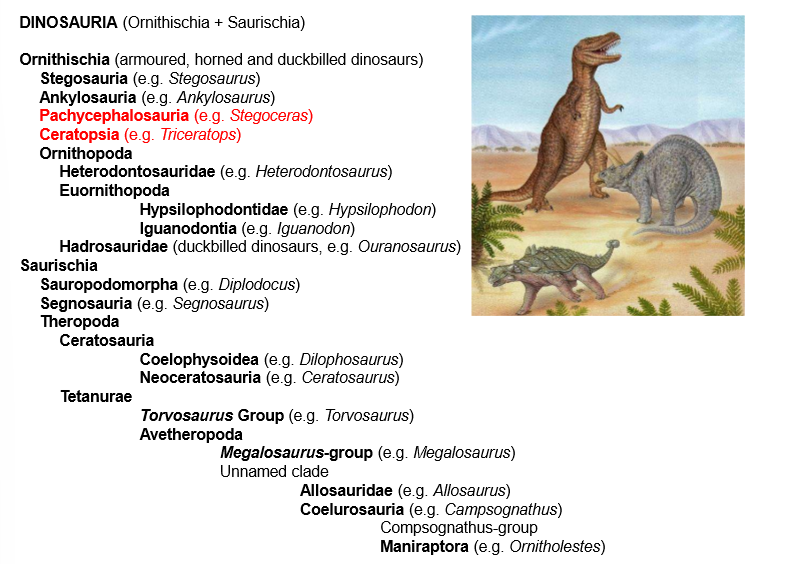
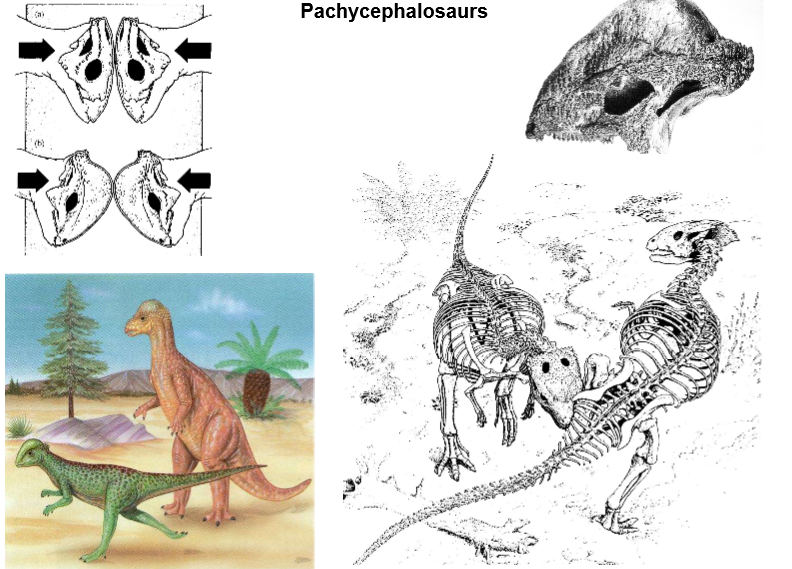
pachycephalosurs→
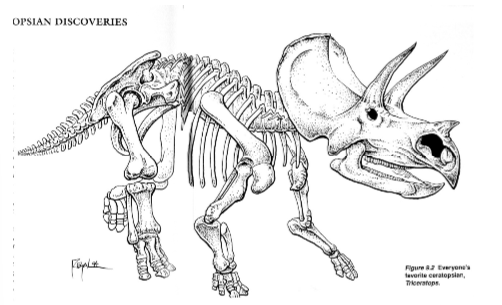
ceratopsids→
diet changes in the cretaceous→
mesophtyic diet changes to a cenophytic diet due to angisoperm diversifciation
no grass→ understory is ferns, lycopsids and horsetails, some dycots, dominated by fern priaries
Birds:
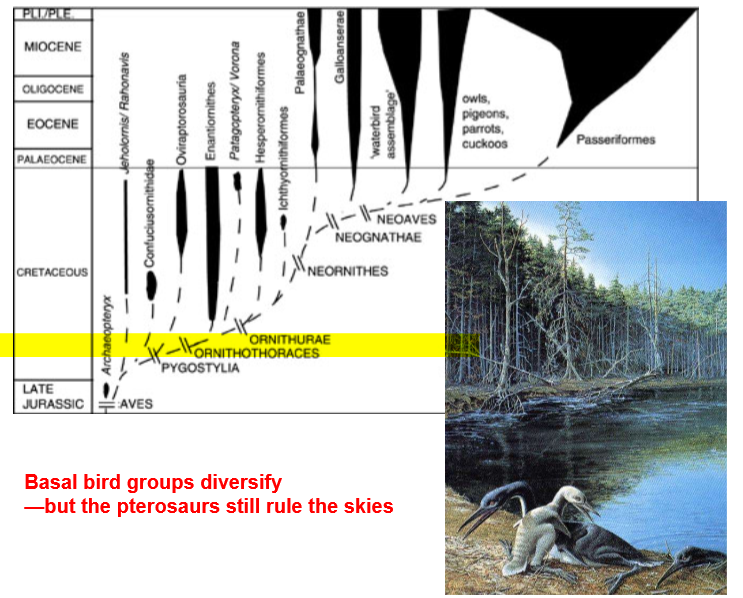
get ancient groups, diversify
birds evolved but lost ability to fly due to pterosaurs dominating
mass extinction wipes out most of the old groups→ birds diversify in pterosaur niche
there were flying birds that coexist with pterosaurs but there are much less of them→ found in china deposits
K/T Mass Extinction:
5th mass extinction
dinosaurs disappear on the land, ammonites disappear in the oceans
boundary layer has high iridium layers, globally and at high and low sedimentation rates→ only from outer space
bolide hit planet
hit at the chixulub site→ can learn about the nature of the impact, material gets thinner away from this site
lots of basalt released from earth cracking open- outgassing, blocks out sunlight, no photosynthesising in the ocean, plants can’t grow back on land, nuclear winter, shut down of primary productivity→ increased extinction but bolide impact was the main cause
find layers of charcoal→ fires
finds layers of ferns→ grow back after fires
is the shortest mass extinction→ impact, aftereffects (earthquakes, tsunamis)
forest reestablish, survivor animals e.g. crocodiles, birds, repopulate planet