Emotions and Stress
The Emotional Brain
The Sympathetic Nervous System and Arousal
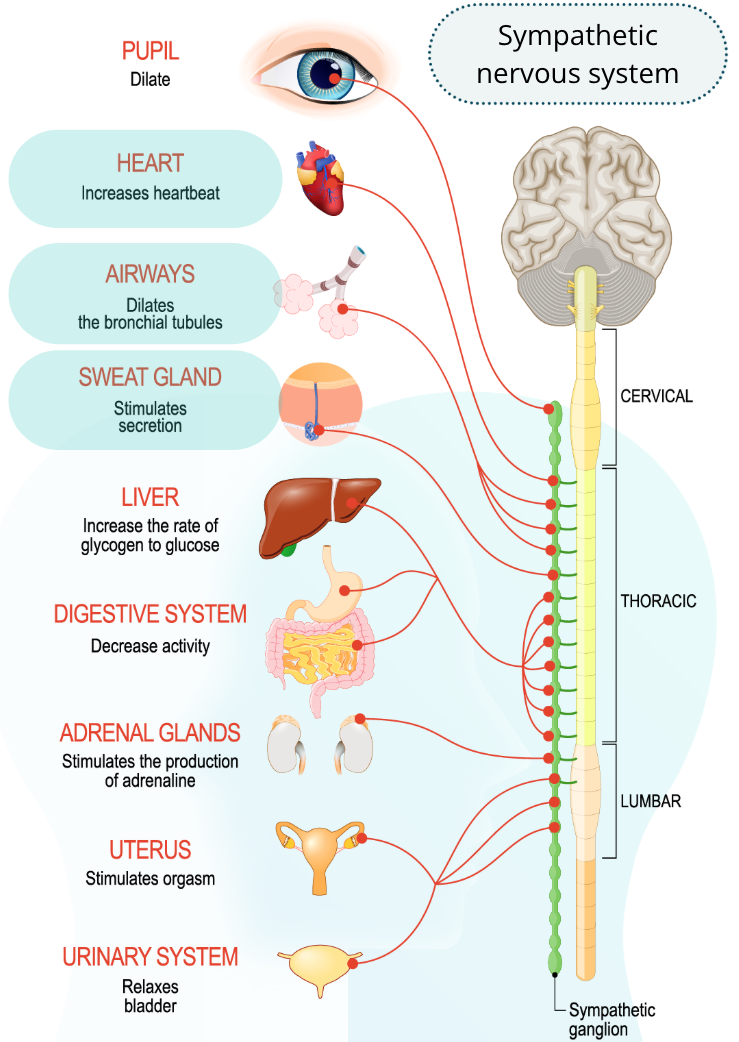
If you recall, you learned about what happens to your sympathetic and parasympathetic branches of the nervous system if you encounter a bear while walking in the woods. You learned that your sympathetic nervous system would cause your heart to race, it would increase your rate of respiration, your blood pressure would increase, and you may even start sweating. This would be the initial stress response in action. We are going to cover stress in more detail in a later lesson.
What is Emotion?
You can imagine, should you unexpectedly encounter a bear while walking in the woods, you would also have an emotional reaction – fear. How we physiologically react versus how we emotionally react to a situation has been a controversial topic in behavioural neuroscience for many years. First of all, how do we even define emotion? It’s not exactly an easy term to pin down. You may think, I know what emotion is, I know the difference between – sadness, happiness, anger, fear etc. But neuroscientist Joseph Ledoux of New York University put it best in 1996 when he stated that we all know what emotion is - until we try to define it. As you are about to find out, it’s not so easy.
Theories of Emotion
James-Lange Theory of Emotion
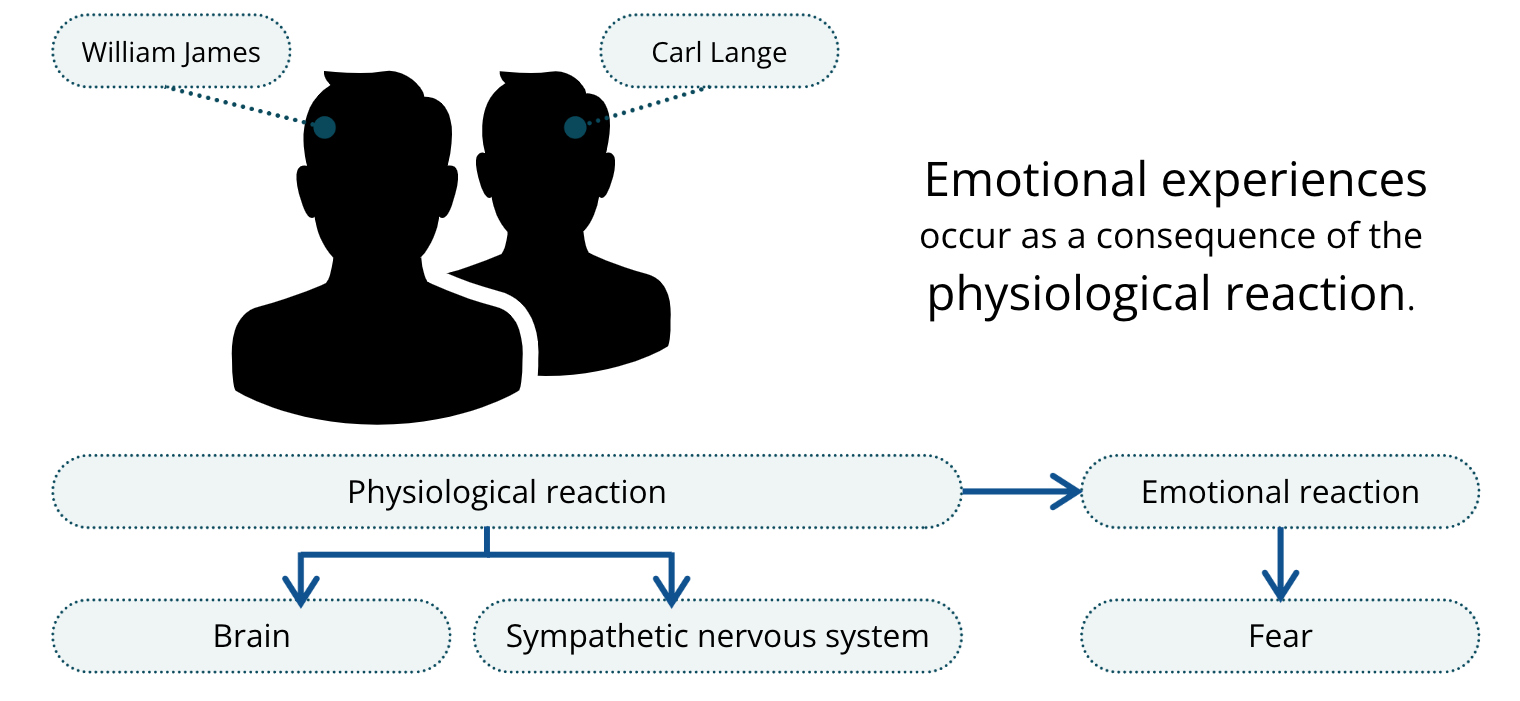
Back in 1893, American psychologist, William James, and Danish physiologist, Carl Lange, developed what we now call the James-Lange theory of emotion. They proposed that emotional experiences occur as a consequence of the physiological reaction. The theory also proposes that the type of emotion experienced is a result of the type of physiological reaction. One way to think about James-Lange theory is to picture yourself encountering that bear. According to this theory, your body would physiologically react first. Your brain would sense danger and alert your sympathetic nervous system to become aroused. After that happens, your brain then reacts to the fast heart rate, high blood pressure, etc., and you then experience fear. If your body had a different pattern of sympathetic arousal, then you might otherwise experience a different emotion, like anger let’s say.
Cognitive Theory of Emotion
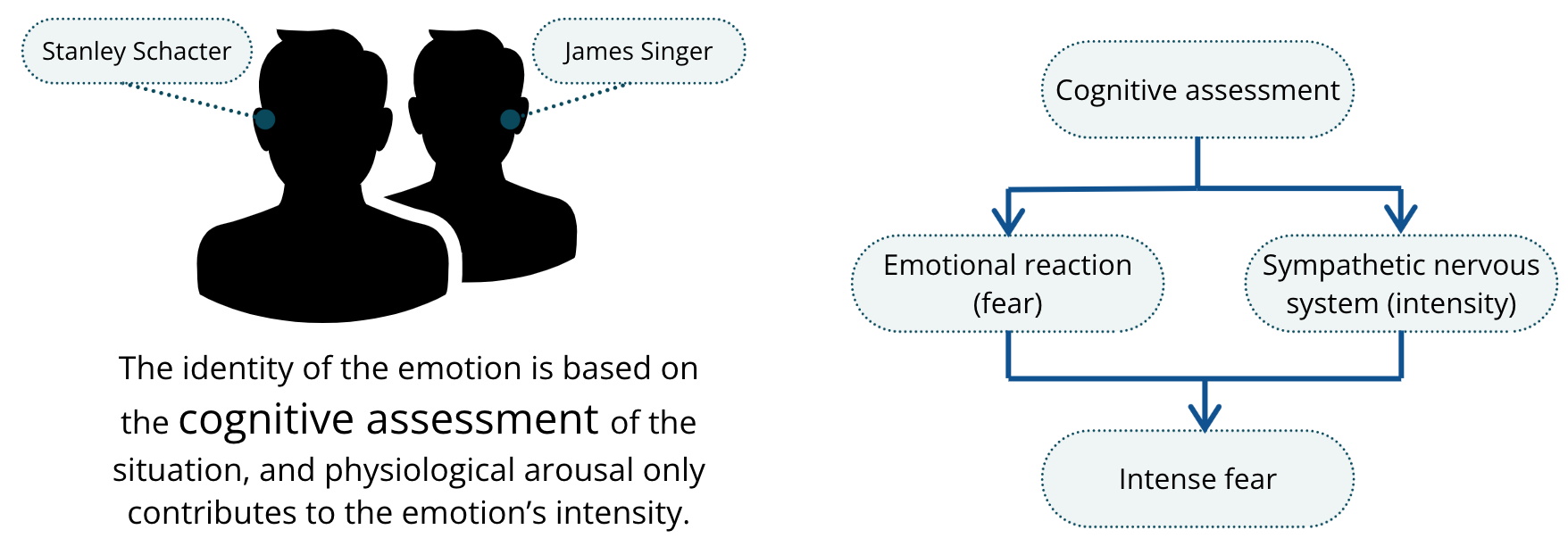
The James-Lange theory didn’t always sit well with most neuroscientists. In 1962, Stanley Schacter and James Singer proposed a contrary idea called the cognitive theory of emotion. They proposed that the identity of the emotion is based on the cognitive assessment of the situation, and physiological arousal only contributes to the emotion’s intensity. The way to think about cognitive theory is to imagine encountering the bear again. Your brain first assesses the situation and then decides that you should be afraid while at the same time arousing your sympathetic nervous system. How much you are afraid, will depend on how fast your heart is beating, how much you are sweating, etc.
Which Theory Came First?
The debate over how our brain processes emotions may appear to be a little like chicken and egg, which came first, the emotion or the physiological reaction? James and Lange believed that the physiological reaction came first and the emotion later, while Schacter and Singer felt that the emotion came first. It is likely neither of these theories is exactly correct and our emotional and physiological reactions to a situation are likely integrated with each other, one informing the other.
The Limbic System and Emotion
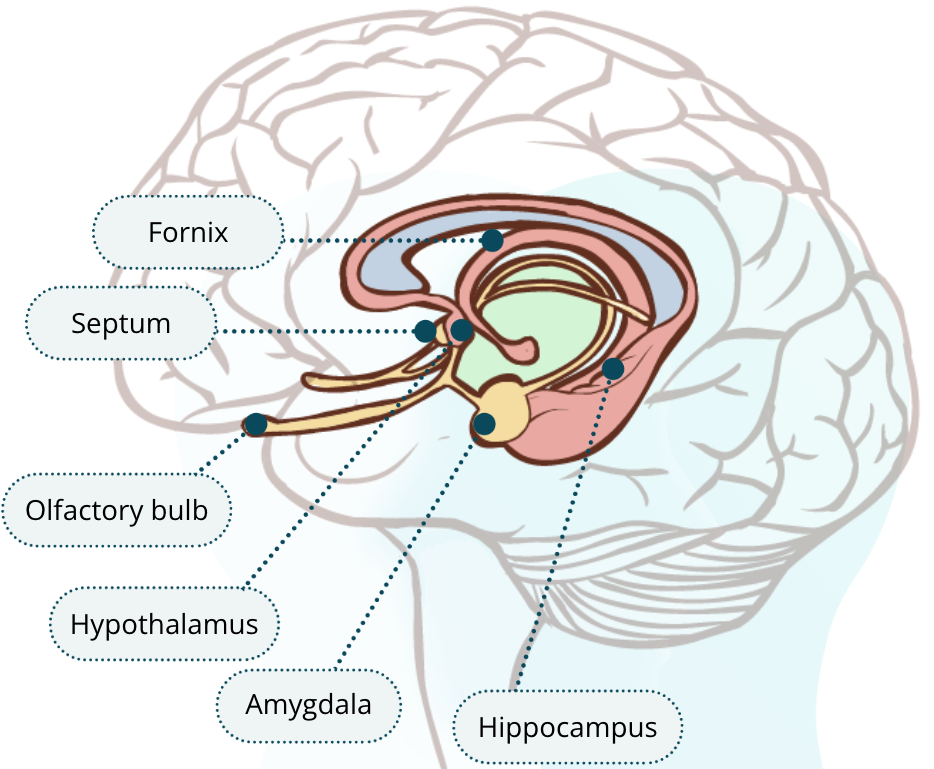
Around the 1930s and 40s it was proposed that emotions originated in the limbic system. The limbic system was first described by Paul Broca based on its subcortical location in the brain. It is a network of structures comprised of the olfactory bulbs, the septum, the hippocampus, the amygdala, the hypothalamus, and the fornix along with other structures. It is not important that you know all of the structures of the limbic system. Non-neuroscientists sometimes refer to the limbic system as our reptilian brain because many of these structures are also preserved across species and they have been historically thought to be involved in our more base emotions. That idea stuck, unfortunately, despite that fact that we now know that emotions are processed in many areas of the brain. In fact, Joseph LeDoux argues that we should abandon the term, limbic system, altogether as obsolete.
Where are Emotions Processed in the Brain?
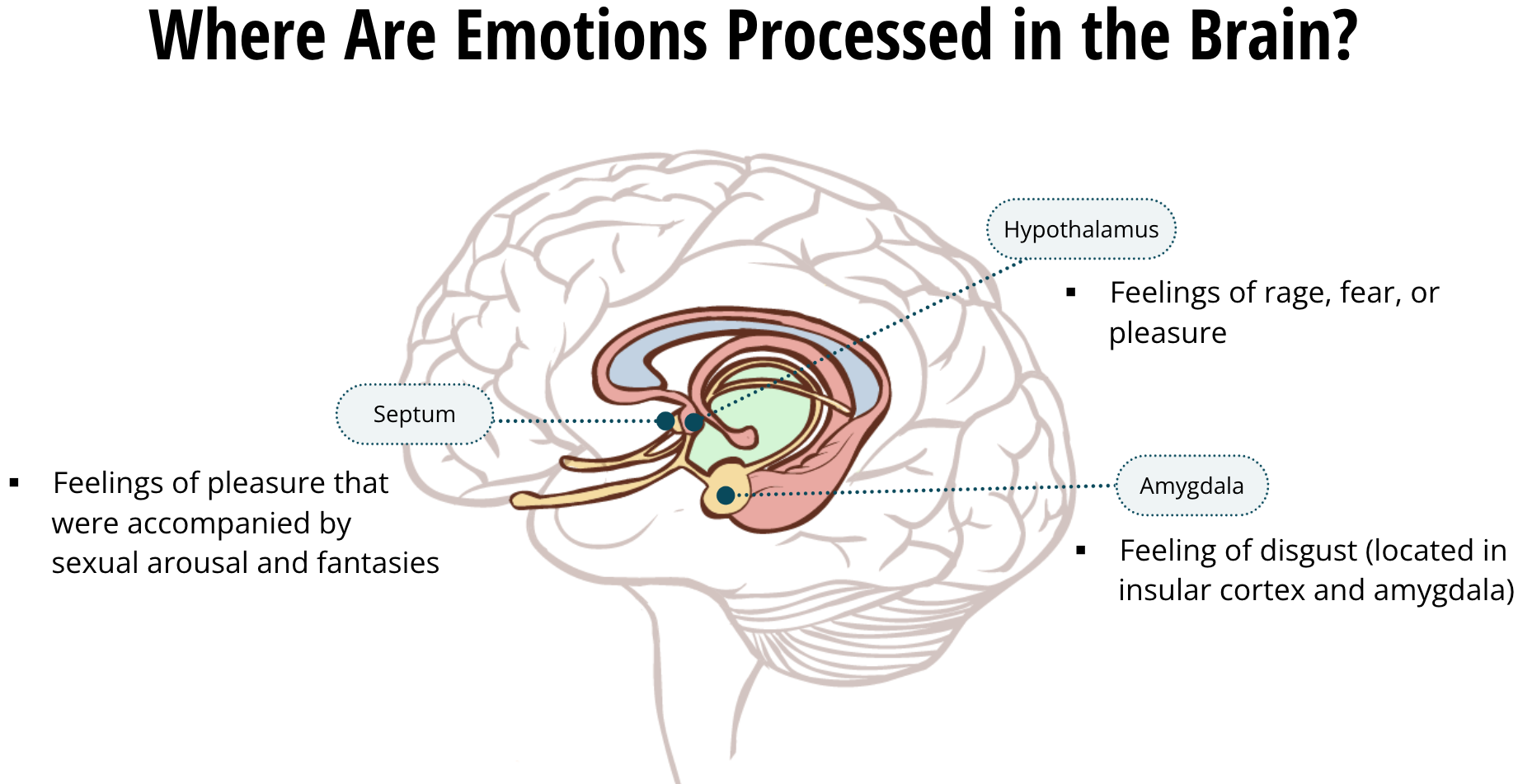
Much of what we know about emotions in the brain comes from early stimulation studies, where a part of the brain is stimulated by an electrode. Back in the 1960s researchers tried to stimulate parts of the brain to treat disorders such as epilepsy, or sleep or pain disorders. When they stimulated the hypothalamus, the patients experienced feelings of rage, fear or pleasure depending on precisely where the electrode was implanted. On the other hand, stimulation of the septum evoked feelings of pleasure that were accompanied by sexual arousal and fantasies. Today researchers mostly use neuroimaging techniques to answer questions about emotions in the brain. We know now that the amygdala is very important for fear, which we will discuss in the next lesson. But also, that disgust is located in the insular cortex and the amygdala.
The Anterior Cingulate Cortex
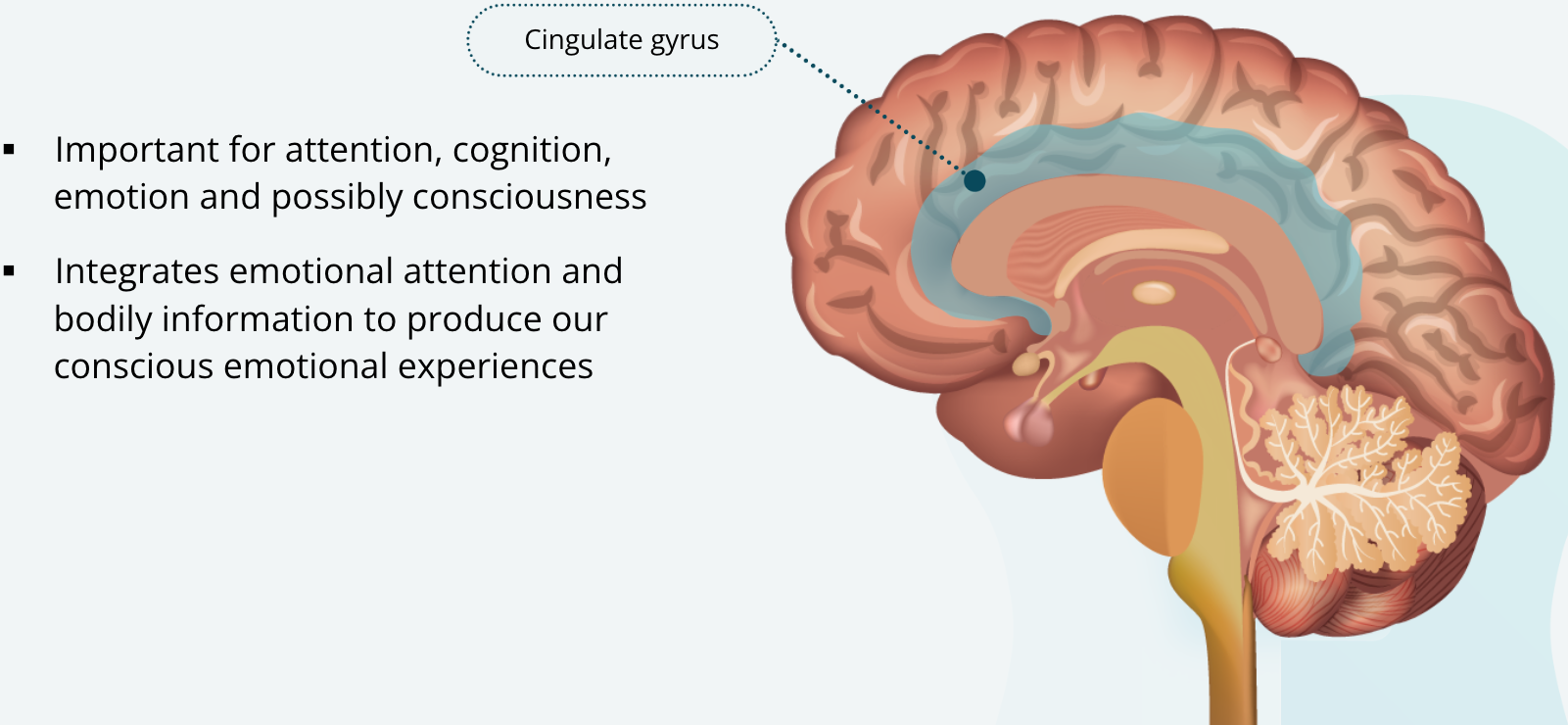
Another important brain area for emotional processing is the anterior cingulate cortex. This brain region is part of the cingulate gyrus, and it is important for attention, cognition, emotion and possibly consciousness. It is thought that this brain area integrates emotional, attentional, and bodily information to produce our conscious emotional experiences. Even though we are identifying areas of the brain that are thought to be important for specific emotions, it is important to keep in mind when you learn these things that the brain is a network. As such, no one brain area does just one thing and it would be incorrect to say that your disgust resides in the insular cortex alone. Rather these areas, in concert with many other areas of the brain, are important for processing such information.
Fear and Anxiety
The Amygdala and Emotions
As you learned, the amygdala is important for learning. It likely works with the hippocampus to enhance learning memories that are emotionally charged. It is a small limbic structure located in each temporal lobe. While most research on the amygdala has been concerned with fear and anxiety, it is important to note that the amygdala processes other emotions as well. It responds to photos of happy faces and its activity increases when people recall pleasant memories or when they are presented with sexually exciting stimuli. So, the amygdala isn’t just about learning about fear and anxiety.
Fear vs. Anxiety
Fear: An emotional reaction to a clear or present danger
Anxiety: An emotional reaction or apprehension about a future event, often an uncertain one
Most of us think we know what fear and anxiety are, but they have specific definitions in psychology. Fear is an emotional reaction to a clear and present danger. Anxiety, on the other hand, is an emotional reaction or apprehension about a future event, often an uncertain one.
One way to think about the difference is like this:
If you are sitting in the waiting room of your dentist’s office about to have a root canal and your palms are sweating, that is fear.
If your palms are sweating because it is soon time to make your annual dentist checkup, then that is anxiety.
The Amygdala and Fear and Anxiety
Deficiency of gene SLC6A4: Have reduced serotonin transmission in the brain and are prone to fear and anxiety
When researchers stimulate the amygdala in human participants, those participants report experiencing fear. People who have a deficiency of the gene SLC6A4, have reduced serotonin transmission in the brain and are also prone to fear and anxiety. When they are shown fearful stimuli, their amygdala reacts more than people who do have the gene.
Amygdala Lesions
Lesions to the amygdala lead to fearless behaviours
When researchers lesion the amygdala in both hemispheres, rats show fearless behaviours. Lesion is a broad term with many definitions, but in the experimental sense like here, it means to damage or remove a specific part of the brain. Rats with amygdala lesions will approach and even climb over a sedated cat. Cats are the natural enemies of rodents and normally they are much avoided.
Patient SM
SM reported little feeling of fear
SM showed an unusual compulsion to touch deadly snakes
SM underwent a panic attack after inhaling carbon dioxide
Bilateral damage to the amygdala in humans is quite rare. However, there is one famous patient, called patient SM, whose brain image indicates only dark holes where her amygdala should be. She reports little feeling of fear, even when she was once held up at gunpoint. She also showed an unusual compulsion to touch snakes that she was told are deadly, behaviour that is similar to the rat with amygdala lesions that climbed over its own predator. On the other hand, when she inhaled carbon dioxide, which normally produces a sense of suffocation, she underwent a full-blown panic attack.
From these studies, it was concluded that the amygdala monitors external threats from the environment but not fear that is triggered internally, such as the sense of suffocation.
Post-Traumatic Stress Disorder (PTSD)
PTSD Overview
PTSD is a mental illness that involves exposure to trauma
Post-traumatic stress disorder, or PTSD, is a mental illness that involves the exposure to trauma involving death, the threat of death, serious injury, or sexual violence. When most people are exposed to trauma, they may feel nervous, have trouble sleeping, or go over the details of the event in their mind repeatedly. These normal reactions will decrease over time for many people, but in an unfortunate number of people they don’t, or they even worsen. PTSD causes intrusive thoughts such as re-experiencing the traumatic event and may cause vivid nightmares or flashbacks of the event. People with PTSD often feel that something terrible is going to happen even when they are safe.
PTSD Treatment
Cognitive-Behavioural Therapy (CBT): A psychotherapy used for PTSD
There has been a lot of research on PTSD over the years. Some of the earlier studies were on holocaust survivors or victims of sexual violence. The sad reality is that there have been many more people to study in the past decade because of the prolonged war in Iraq and western nations’ involvement in Afghanistan. Many soldiers return home with PTSD. The good news is that because of this increase in research because of the increase in numbers of people with PTSD, there are effective treatments using cognitive-behavioural therapy or CBT. CBT is a type of psychotherapy originally used to treat depression but has been adapted for many mental illnesses, and quite successful in treating PTSD.
PTSD Brain Pathology
As you might guess, researchers long suspected that PTSD occurs as a result of something gone awry with the amygdala. It has been hypothesized that during a traumatic event, the amygdala would normally enhance the encoding of a memory in the hippocampus, but in PTSD something goes wrong with these two brain areas and the traumatic memory gets overrepresented. Of course, this is a simplification, but I mention it so you get an idea of what is probably happening. Recent findings in rodents have been very promising in hope for new drugs to treat or possibly even eliminate PTSD, although we are a long way off yet.
Reconsolidating Memories
One aspect of memory that we did not cover is what happens to a memory when we recall it. It is theorized that when a memory is stored somewhere in the brain, each time we recall it, that memory is taken out of storage and has to be filed away again later or reconsolidated. Thus, during the moment of recall the memory itself is quite fragile. This idea could explain why people are so very suggestible when recalling facts and false memories can occur in witness testimonies in court.
CREB and Reconsolidation
With respect to fear learning, researchers have shown that in rodents, a protein in neurons called CREB is important for consolidating long-term fear memories. CREB stands for cyclic AMP-response element binding protein. It is a transcription factor, which means that it binds to the DNA of the cell and regulates certain gene expression. CREB is thought to be important for the molecular steps that stabilize memory in the brain, especially emotional memories. Specifically, research shows that CREB is important for the consolidation of fear memories in the amygdala, but not for the encoding or retrieval of those memories.
Erasing Fearful Memories
Interfering with CREB and invoking memory prevents memory reconsolidation, thereby making you forget the memory entirely
But here is the fascinating part. I mentioned that memories are fragile during recall, it has been shown that CREB is important to put that memory back into storage or reconsolidate it. Why is this exciting? Because researchers have shown that if you interfere with CREB function when a mouse is remembering a stimulus that it was earlier taught to fear, the mouse will subsequently lose that fear memory because it was unable to store it away again. Basically, by interfering with CREB and invoking the memory, the researchers were able to erase it. It is an exciting time for neuroscience, perhaps someday we can do this in humans and erase the memory of a traumatic event in patients with PTSD.
Erasing Fear Memories in Mice
The Experiments
Background Information and Setup
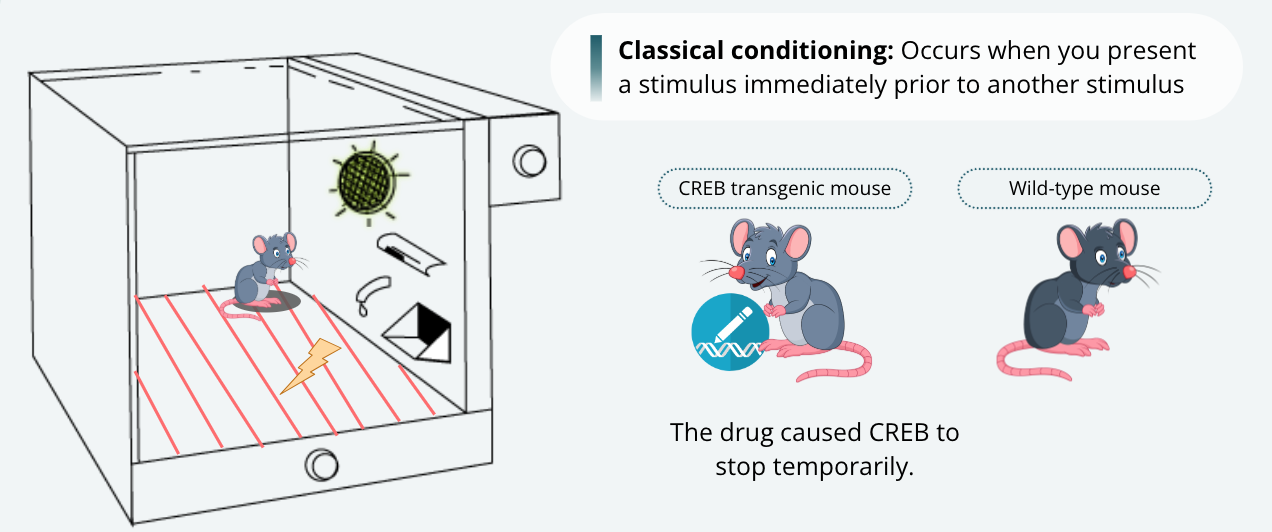
The neuroscientists used a behavioural paradigm in mice to teach them to fear a tone. They put mice in a chamber and then presented a tone just prior to presenting a slight shock from the floor of the chamber to their feet, or a foot shock. This is the equivalent to the electrostatic shock you get in your finger when wearing wool socks on a carpet and then touching a metal doorknob. It is not very painful, but it is quite unpleasant, and mice, like us, really dislike it. If you present a stimulus immediately prior to another stimulus, classical conditioning can occur — just like Pavlov’s dogs learning to salivate to a tone. In this paradigm, the mice were classically conditioned to fear the tone, as it was predicting a foot shock. After repeatedly pairing the tone with the foot shock, the mice would freeze when they heard the tone alone, which is a typical fear behaviour in mice.
The researchers then developed a genetically modified mouse that I will call a CREB transgenic mouse. They altered the genes of this mouse such that if they gave a drug (here it happens to be Tamoxifen, but the drug does not matter), the drug then signal the genes of the mouse to stop transcribing CREB for a temporary period. Remember that CREB stands for cyclic AMP response element binding protein and is thought to be important for consolidating memories. In this way, by giving a drug to these mice, they can shut down CREB for a short time. They compared these mice with normal or wild-type mice as a control.
Experiment 1
The first experiment was aimed to test whether CREB is important for fear memory consolidation, so the experiment was structured as follows:
Group 1
CREB transgenic mice
Received placebo
Group 2
CREB transgenic mice
Received tamoxifen (TAM)
Group 3
Wild-type mice
Received placebo
Group 4
Wild-type mice
Received tamoxifen (TAM)
The experimenters gave TAM at various points in time before pairing the tone with the foot shock. What they found was that the CREB mice with the TAM didn’t freeze when tested 24 hours later, but that all the other groups did. This showed that long-term memory of the tone-foot shock pairing was impaired when CREB wasn’t available.
Experiment 2
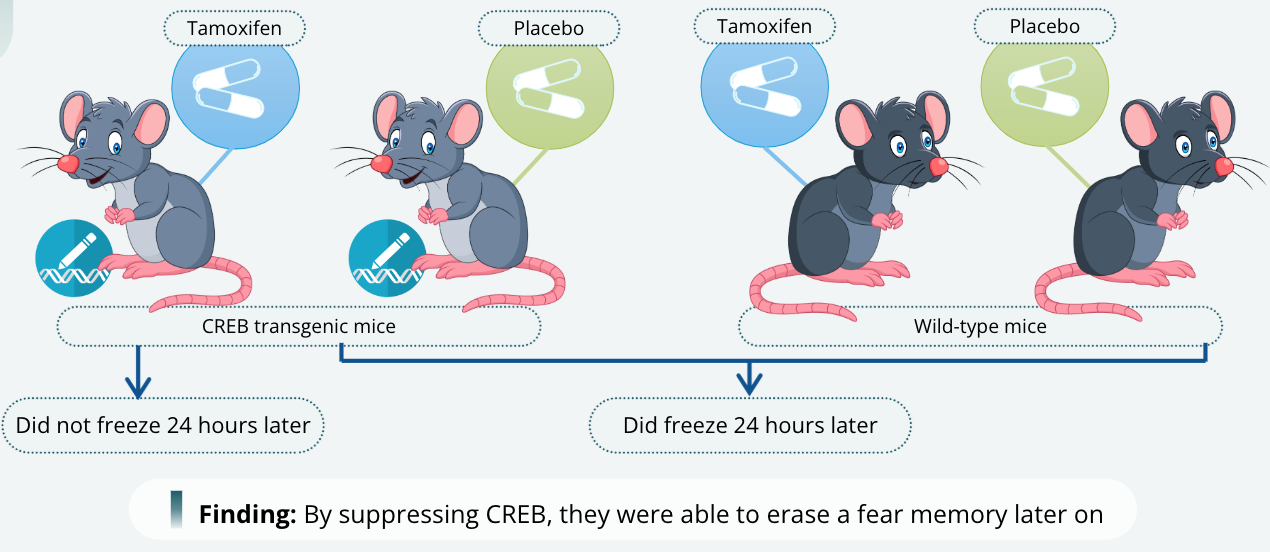
The first experiment was aimed to test whether CREB is important for memory reconsolidation, so they modelled the second experiment based on the first (e.g., same groups), but paired the tone and foot shock without the administration of any drugs. Results showed that all groups displayed fear.
Then 24 hours later, they gave either the Tamoxifen or the placebo and put the mice back in the box and exposed them to the tone. All the mice froze except the CREB transgenic mice that were given Tamoxifen. This experiment showed that by suppressing this protein, they were able to erase a fear memory later on.
Experiment 3
For the third experiment, the groups remained the same, and the aim was to make sure that simply giving TAM doesn’t erase memories 24 hours later.
They exposed all four groups to the tone-foot shock pairings, and 24 hours later, the experimenters gave them TAM or a placebo. However, they gave the treatment while the mice were in their home cage, and not in the testing cage with the tone. This time, when later exposed to the tone, all the mice showed freezing — this experiment showed that it is not enough to simply suppress CREB to erase a fear memory, you have to suppress CREB while the animal is remembering it.
Conclusions
In sum, these clever experiments suggest that when we recall a memory, it has to be reconsolidated back into long-term memory, and CREB is important for this to occur. If we block the actions of CREB while a memory is being recalled, our brain will not reconsolidate the memory and the memory is lost.
What is Stress?
Eustress vs. Distress
Eustress: positive stress
Distress: negative stress
In 1956, a Hungarian physician and researcher named Hans Selye published the book, The Stress of Life, based upon his prolific work at the Stress Institute in Montreal. He originated the idea that stress differs from other physical responses in that stress is the same whether we hear good news or bad news. He coined the term eustress to mean positive stress and distress to mean negative stress.
What is Stress?
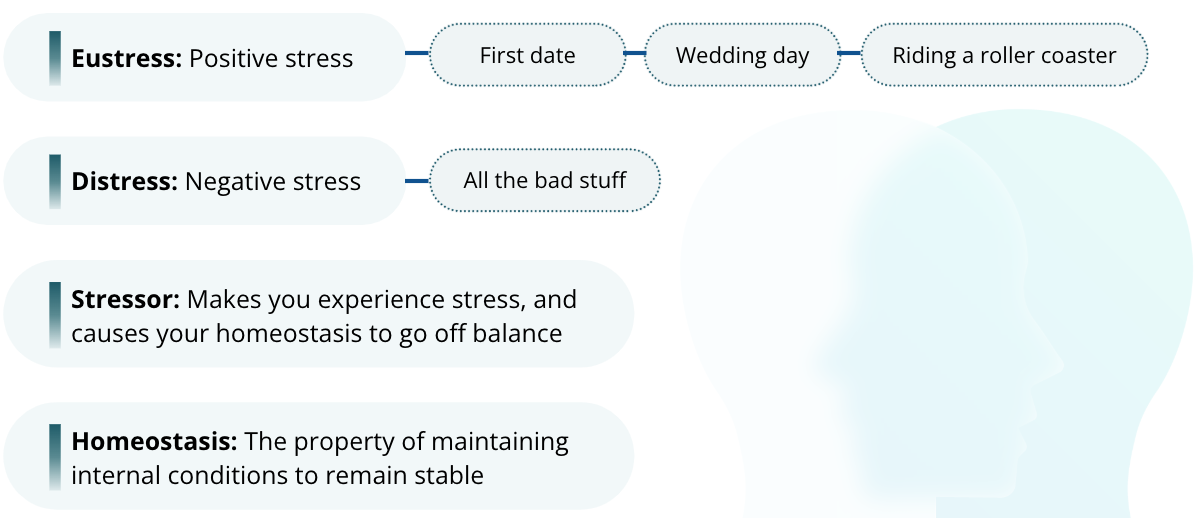
You may think of eustress as the stress you experience on a first date, or on your wedding day, or even having fun riding a roller coaster. Distress is pretty much what most of us generally call stress today - all the bad stuff. It is difficult to find two neuroscientists who have the exact same definition of stress. You might think of a stressor (that which makes you experience stress) as anything that causes your homeostasis to go off balance. Homeostasis is the property of maintaining internal conditions to remain stable. By this I mean, we need a specific amount of oxygen and glucose in our blood, and our body temperature needs to be within a narrow range. Our body works hard to keep those levels in check. Thus, if an event is using up a lot of oxygen, our body increases our respiration rate to replace that oxygen.
Personal Note: eustress and distress may be obsolete terms, and may just be replaced with stress, according to this article.
Types of Stress
A normal and adaptive response to the challenges we encounter every day
It is important to note that stressors aren’t just those that we encounter in our western world. Those psychological stressors such as exam stress, relationship stress, or the stress of not having enough money for rent. Other stressors are more physical such as starvation, illness, or prolonged exposure to heat or cold. The stress response, then, can be considered as those things that our body does to maintain homeostasis when faced with a stressor.
Stress Response
As in our previous example, facing a bear in the woods and the possibility of being mauled by it is a stressor. Our stress response would be the increased heart rate, respiration and sweating as we are running away. In this way, you should understand that the stress response is a normal and adaptive response to the challenges we encounter every day.
Types of Stress Responses
Autonomic Nervous System (ANS)
There are two stress responses. The first is the one you already learned about, that is, the activity of the two branches of the autonomic nervous system or ANS: the sympathetic and parasympathetic. This is considered the immediate stress response as it occurs within seconds of encountering a stressor.
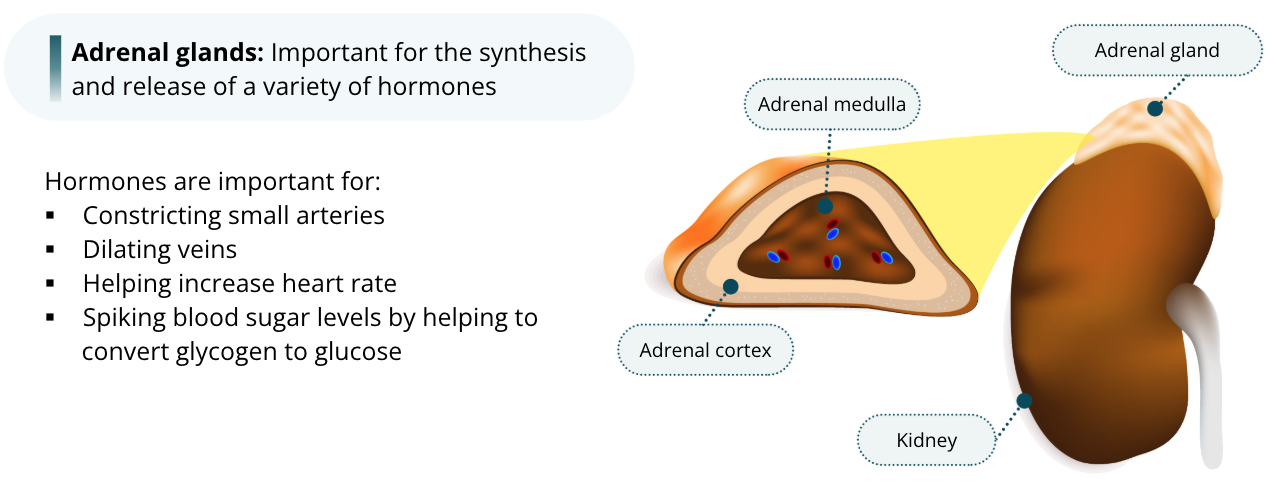
One aspect of the ANS stress response not previously mentioned is that neurons from the sympathetic branch also stimulate the adrenal glands. The adrenal glands are located on either side of the body just above the kidneys. They are important for the synthesis and release of a variety of hormones. They have two components; an outer bark called the adrenal cortex and an inner core called the adrenal medulla. The adrenal medulla is directly innervated by the sympathetic nervous system, which stimulates it to release the hormones adrenalin, and noradrenalin also known as epinephrine and norepinephrine. Why we chose to give these two hormones two different names is beyond me. These hormones are important for constricting small arteries, dilation of veins, helping increase heart rate, and they also spike your blood sugar levels by helping to convert glycogen to glucose. Glycogen is the liver’s storage form of glucose.
Hypothalamic-Pituitary-Adrenal Axis (HPA Axis)
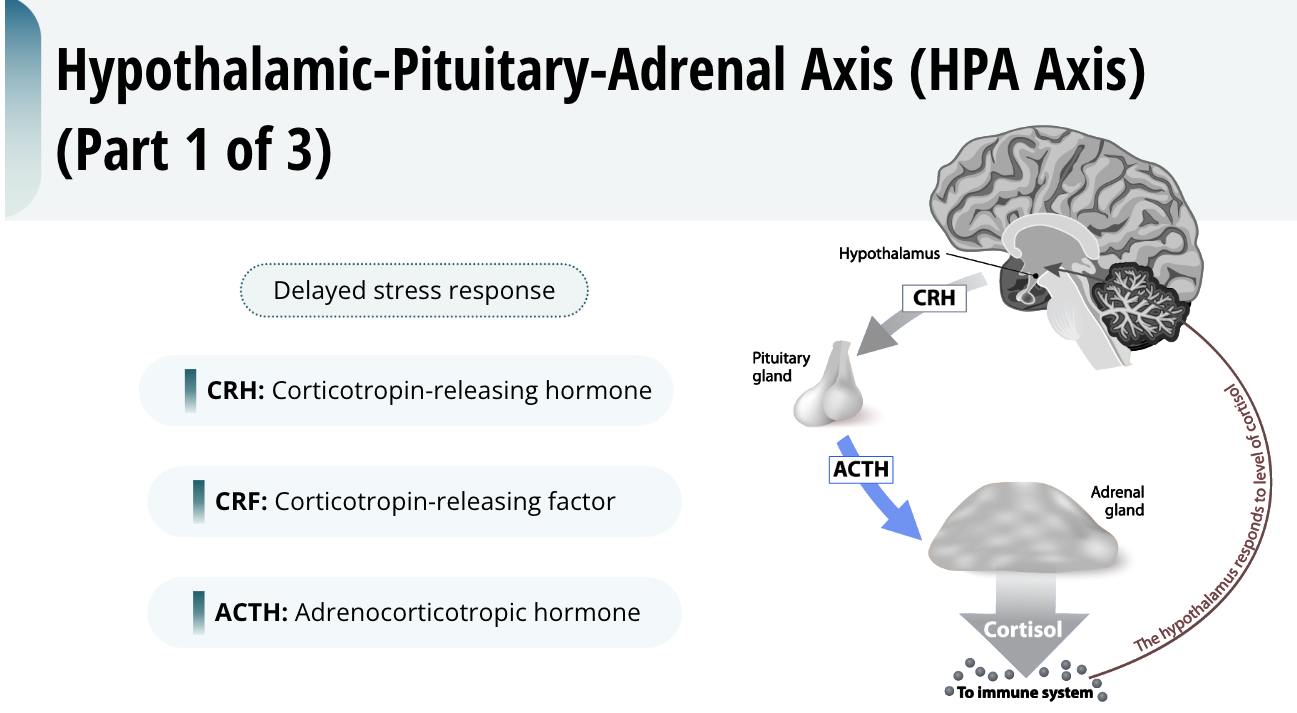
Delayed stress response involving:
CRH (Corticotropin-releasing hormone) or CRF (Corticotropin-releasing factor)
ACTH (Adrenocorticotropic hormone)
The second stress response is the hypothalamic-pituitary-adrenal axis, also called the HPA axis. This stress response is delayed in its onset and takes minutes before it is activated. The neuroscientist Robert Sapolsky of Stanford University made the statement that if the stress response was a war, the ANS would be handing out guns to troops at the front, while the HPA axis would start building aircraft carriers. When we encounter a stressor, the brain first signals the hypothalamus. The hypothalamus releases the hormone corticotropin-releasing hormone or CRH also known as corticotropin-releasing factor or CRF. When released by the hypothalamus, CRH travels through specialized blood vessels directly to the pituitary. It signals the pituitary to subsequently release another hormone called adrenocorticotropic hormone or ACTH.
ACTH released into circulatory system
ACTH signals adrenal cortex to synthesize steroid hormone cortisol
Steroid hormones are fat soluble (can enter any cell in body) but can’t be synthesized and stored for immediate release when needed
ACTH is then released into the general circulatory system where is travels to the adrenal glands. Once there, ACTH signals the adrenal cortex to synthesize the steroid hormone, cortisol. Steroid hormones are unique in that they are fat soluble. Because of this, they can and do enter any cell in the body because they can dissolve across the phospholipid bilayer of the cell membrane. On the other hand, they cannot be synthesized and stored for immediate release when needed. How could your cells store them? They would just leak right out across the membrane. It is, in part, because it takes time to synthesize cortisol from scratch, that the HPA axis is a delayed stress response. Once synthesized, cortisol enters the bloodstream and travels throughout the body. Cortisol has many complex actions in the body, the details of which are beyond the scope of this course.
However, I will review a simplified list of its actions to help you better understand this stress response:
Cortisol increases energy levels by converting protein to glucose. Note that this is different from adrenalin, which converts glucose from the more readily available glycogen in the liver.
Cortisol also increases overall metabolism to help the body cope with sustained stressors.
Cortisol also helps convert certain fat stores into energy
Cortisol also suppresses immune function
Summary
Cortisol provides a more sustained release of energy
HPA — purpose is to cope with sustained or long-term stressors
ANS — purpose is to cope with immediate or short-term stressors
If you put it all together, cortisol provides a more sustained release of energy than the sympathetic nervous system does. The ultimate purpose of the HPA axis stress response is to cope with sustained or long-term stressors, while the autonomic nervous system (ANS) stress response is for more immediate, short-term stressors.
Stress and Health
Why Zebras Don’t Get Ulcers by Robert Sapolsky
In his book, Why Zebras Don’t Get Ulcers, Robert Sapolsky explains that Zebras are always on the lookout for a threat from a predator such as a lion. However, once a lion is detected, the zebras only have to outrun the lion until either the lion is exhausted, because lions can only sprint for a short period of time, or until the lion captures another member of the herd. This all happens relatively fast. Once the danger has passed, the zebras go back to grazing and the stress is over. Zebras don’t have the exigencies of our contemporary western world. Zebras aren’t stuck in traffic worried about how they are going to make the mortgage payment this month or lose their home. Zebras aren’t losing sleep, awake at 2 AM worrying about what career they will miss out on if they don’t get an A in the next exam.
Two Types of Stress Responses
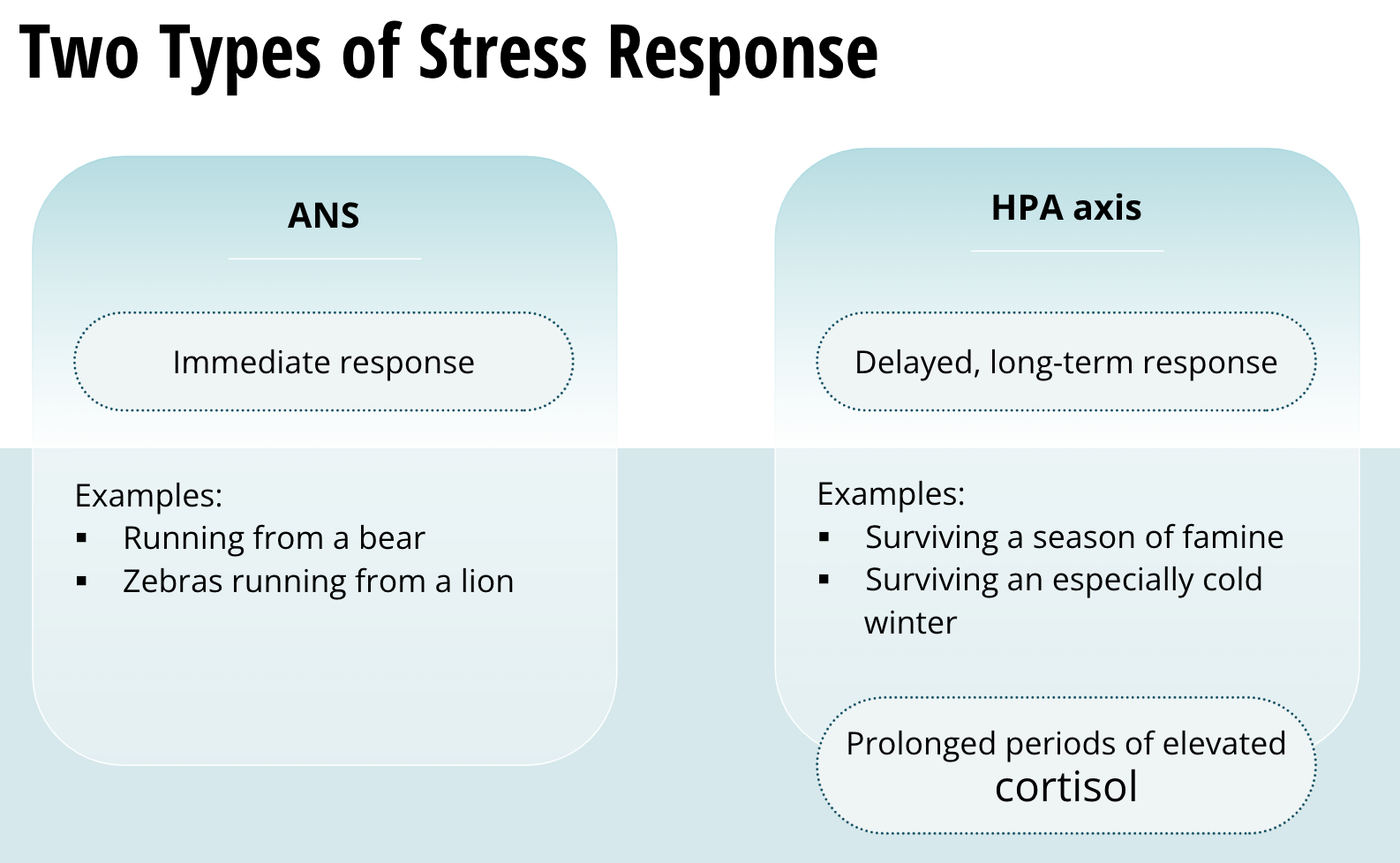
As you learned, there are two stress responses. The more immediate response of the ANS is designed to immediately help get you out of a jam, such as you running from a bear or zebras running from a lion. The delayed and more long–term stress response of the HPA axis is designed to get you through more enduring periods of stress such as a season of famine or an especially cold winter. The latter stress response is designed to keep you alive but at a net cost to your health. In other words, Mother Nature designed our delayed, HPA axis stress response to keep us alive no matter what when the only other option is death. Mother Nature did not plan on the fact that, as humans developed societies, we would have social stressors that can persist. If you aren’t starving or freezing or suffering from some other prolonged physical stressor, you are not meant to be exposed to prolonged periods of elevated cortisol. But that is the situation many of us find ourselves today, elevated cortisol for long periods due to our day-to-day psychological stressors.
Chronic Stress and Immune Function
Chronic stress is a risk factor for developing many, if not most, illnesses. Prolonged, elevated cortisol levels can have many negative consequences on the body. For example, brief stress can enhance immune function to help heal wounds, but prolonged stress has the opposite effect. Cortisol will suppress cells of the immune system. Mother Nature decided it is better to expend energy surviving a prolonged threat rather than concerning the body with healing during such an emergency. Thus, chronic stress will weaken our immune system. Anyone who has survived exam week can attest to this - as soon as exams are over, we often come down with a cold or flu. For some, cold sores will break out.
Illnesses Associated with Chronic Stress
Cortisol breaks down muscle protein and converts it into glucose for long-term energy use
Illnesses include viral or bacterial infections, cancer, ulcers, high blood pressure, heart disease and stroke
Chronic stress has been linked with diseases associated with a weakened immune system, from viral or bacterial infections to more ominous consequences of a weakened immune system such as cancer. Other effects of chronic stress include ulcers, high blood pressure, and risk for heart disease and stroke. One function of cortisol is to break down protein and convert it into glucose for long-term energy use. The protein that cortisol breaks down is from muscle, and some of it is heart muscle.
Chronic Stress and Brain Pathology
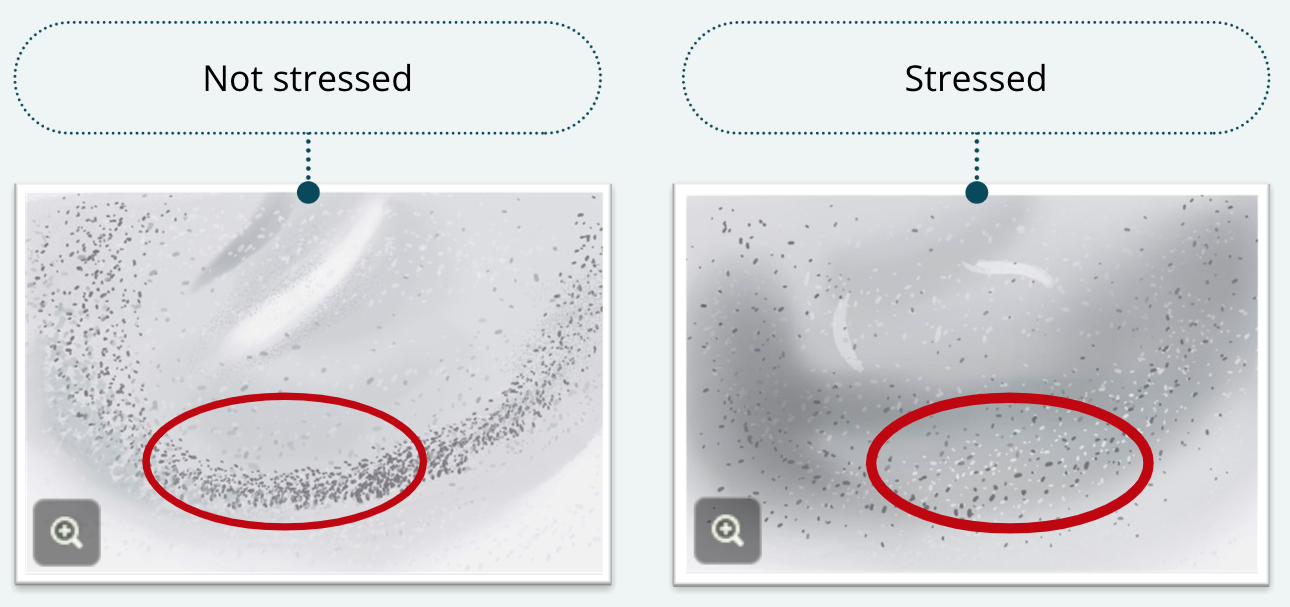
Chronic stress can also damage the brain. In this image you can see that the hippocampus of a chronically stressed monkey has fewer neurons compared to nonstressed monkeys.
Bruce McEwen
Neuroscientist Bruce McEwen of the Rockefeller University in New York City
One of the early pioneers of examining how stress affects the brain
Published almost a thousand scientific papers on the effects of cortisol and other steroid hormones in the brain
Much of this seminal work came out of the lab of neuroscientist Bruce McEwen of The Rockefeller University in New York City. Bruce McEwen is considered one of the early pioneers of examining how stress affects the brain. For example, Robert Sapolsky trained in his lab, and in the interest of full disclosure, I too trained with Bruce McEwen. He has advanced much of what we now understand about how stress affects the brain. Of course I am biased in this regard, but McEwen’s prolific career speaks for itself. He has published almost a thousand scientific papers on the effects of cortisol and other steroid hormones on the brain
Stress, the Hippocampus, and Memory
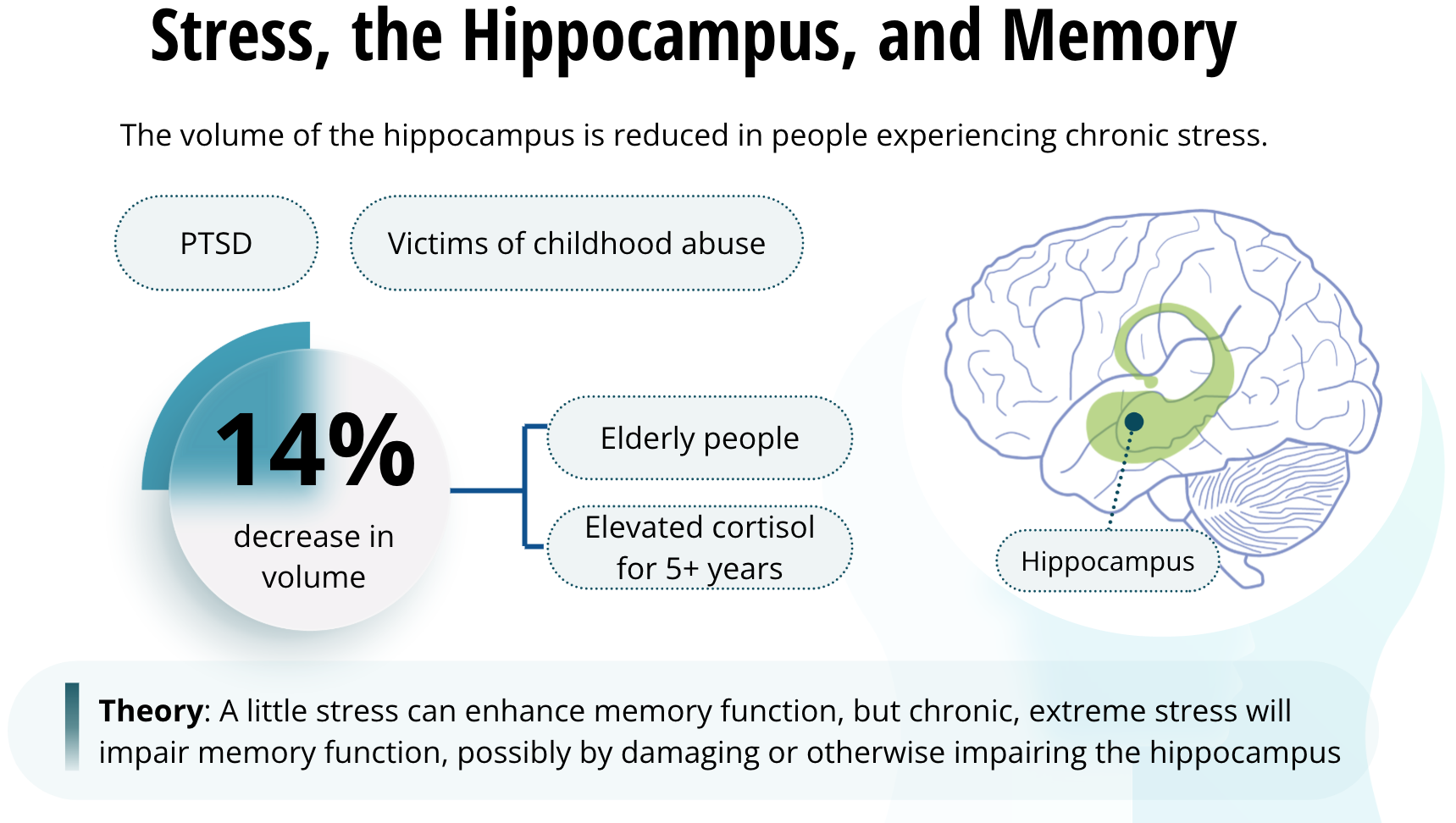
We now know that the volume of the hippocampus is reduced in people experiencing chronic stress. For example, hippocampal volume is reduced in people suffering form PTSD and in victims of childhood abuse. Elderly people who had elevated levels of cortisol over a five-year period showed a 14% decrease in hippocampal volume. Considering what you have now discovered about learning and memory and the hippocampus, it should not be surprising to you to learn that chronic stress also impairs memory. The prevailing theory among neuroscientists is that a little stress can enhance memory function, but chronic, extreme stress will impair memory function, possibly by damaging or otherwise impairing the hippocampus.
Allostatic Load
Stressor — causes an imbalance in homeostasis
Homeostasis — the body’s way of keeping internal states the same
Allostasis — the body’s way of keeping internal states viable and adaptable to change
Bruce McEwen popularized the concept of allostatic load to explain the ill-effects of a lifetime of chronic stress along with poor dietary choices and physical inactivity on health outcomes. If you recall the definition of a stressor, a stressor causes an imbalance in homeostasis. Homeostasis is the body’s way of keeping internal states the same, such as maintaining a very narrow and consistent body temperature. Allostasis on the other hand, is the body’s way of keeping internal states viable by adapting to change. An example of allostasis is body weight. Our body tries to keep us within a target range of fat cell deposits, but during times of excess caloric intake, our body will adapt, and our weight will change to higher fat deposits accordingly. Another example of allostasis is our resting blood pressure, which can change under different circumstances, such as periods of low physical activity versus periods of higher activity.
Stress and Lifestyle
According to the theory of allostatic load, McEwen argues that a lifetime of chronic stress along with constant changes in weight and blood pressure takes a cumulative toll on our bodies. As such, yo-yo dieting, inactivity and lack of exercise, combined with elevated cortisol levels are the perfect storm to increase our risk for a myriad of diseases. I am not a life-coach guru, and I am not a clinical psychologist – so I am not going to pretend to tell you what you need to do next. I think you are smart enough to figure it out by yourself. Don’t sweat the small stuff. We all need to eat better, exercise more, and most importantly, worry less. I wish I had the answers of how you can do all that. All I can do is inform you of why you should, which hopefully I’ve just done.