Chapter 1: Introduction to the fundamentals of Dynamic Business Law
Business Law: The enforceable rules of conduct that govern the actions of buyers and sellers in market exchanges.
Six functional areas of Business
Management
Production and Transportation
Marketing
Research and Development
Accounting and Finance
Human Resource Management
Private Law: Law that involves suits between private individuals or groups.
Ex: If a businessperson owns a computer equipment store and is delinquent in paying rent to the landlord, the dispute between them entails private.
Public Law: Law that involves suits between private individuals or groups and their government.
Ex: if a computer store dumps waste behind its building in violation of local, state, or federal environmental regulations, the resulting dispute focuses on public law.
Civil Law: The body of laws that govern the rights and responsibilities either between persons or between persons and their government.
Criminal Law: The body of laws that involve the rights and responsibilities an individual has with respect to the public as a whole.
U.S. Constitution: The general limits and powers of a government as interpreted from its written constitution. The U.S. Constitution is the supreme law of the land, meaning that it overrules all federal, state, and local laws that conflict with it and is the foundation for all laws in the United States.
Statutory Law (Legislative actions): The assortment of rules and regulations put forth by legislatures.
Model Laws or Uniform Laws: Laws created to account for the variability of laws among states. These laws serve to standardize the otherwise different interstate laws. Also called uniform laws.
National Conference Of Commissioners (NCC): created by a group of legal scholars and lawyers, NCC regularly urges states to enact model laws to provide greater uniformity of law. the respond is entirely in the hands of the state legislatures, they can ignore the suggestion or adopt part or all of the proposed model law.
Uniform Commercial Code: sales laws and other regulations affecting commerce, such as bank deposits and collections, title documents, and warranties.
Case Law: The collection of legal interpretations made by judges. They are considered to be law unless otherwise revoked by a statutory law. Also known as common law.
Precedent: A tool used by judges to make rulings on cases on the basis of key similarities to previous cases.
Stare Decisis: “Standing by the decision”; a principle stating that rulings made in higher courts are binding precedent for lower courts.
Restatements of the Law: Summaries of common law rules in a particular area of the law. Restatements do not carry the weight of law but can be used to guide interpretations of particular cases.
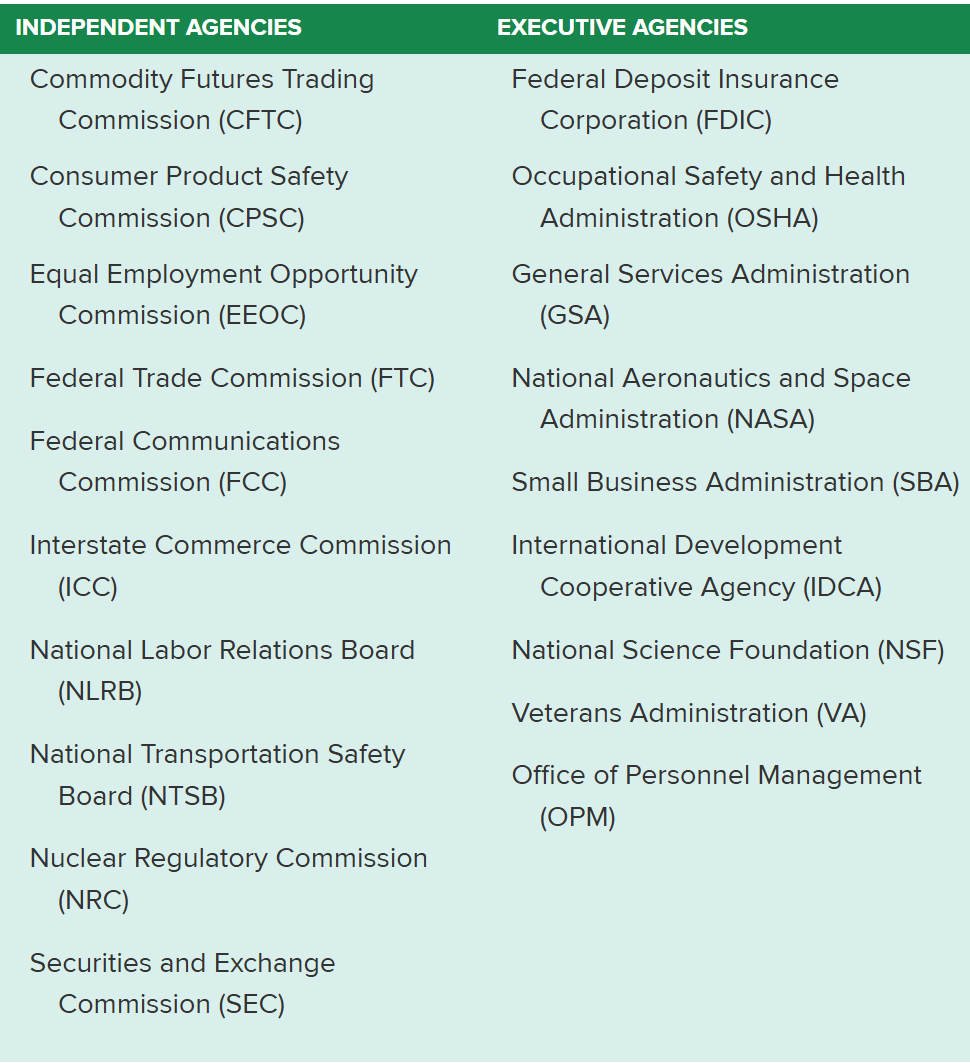
Administrative Law: The collection of rules and decisions made by administrative agencies to fill in particular details missing from constitutions and statutes.
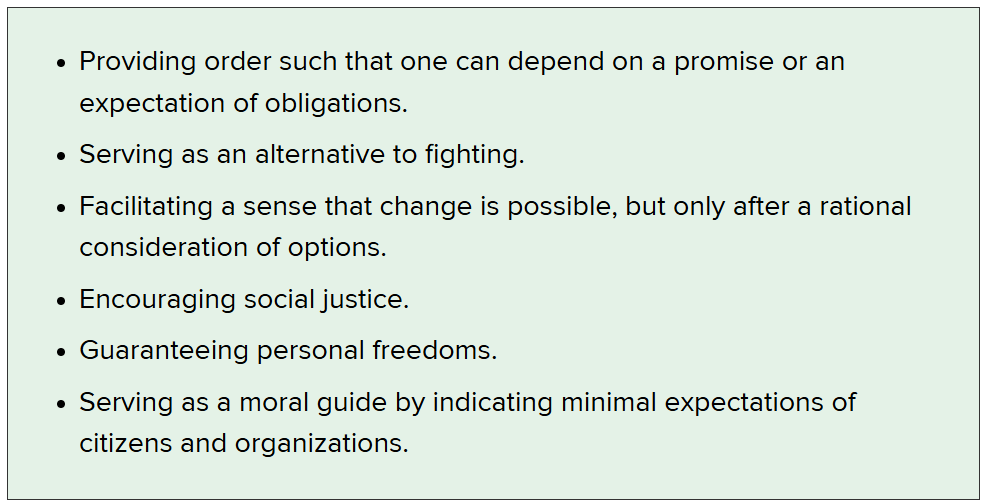
Identification with the Vulnerable: A school of jurisprudence that holds that society should be fair. Particular attention is therefore paid to the poor, the ill, and the elderly.
Originalism: The interpretation of legal texts such as the Constitution by relying on the words or intent of the creators of the text in question.
Legal Realism: A school of jurisprudence that holds that context must be considered as well as law. Context includes factors such as economic conditions and social conditions.
Cost-Benefit Analysis: An economic school of jurisprudence in which all costs and benefits of a law are given monetary values. Laws with the highest ratios of benefits to costs are then preferable to those with lower ratios.
Chapter 2: Business Ethics and Social Responsibility
Ethics: The study and practice of decisions about what is good or right.
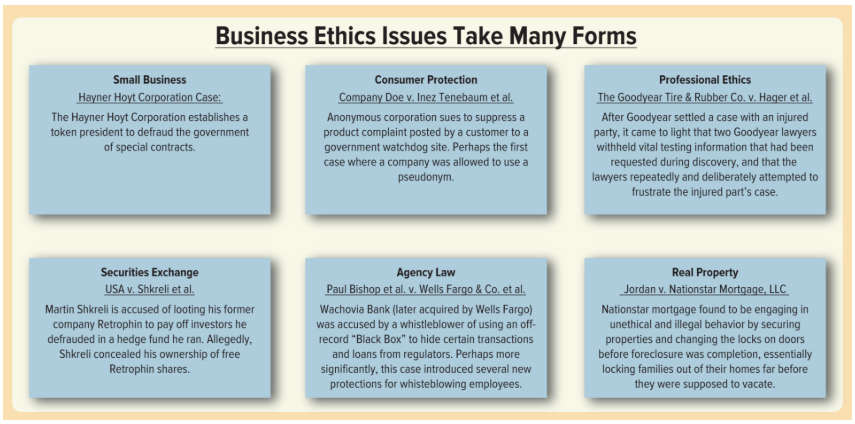
Business Ethics: The use of ethics and ethical principles to solve business dilemmas.
Ethical Dilemma: A question about how one should behave that requires one to reflect on the advantages and disadvantages of the optional choices for various stakeholders.
Social Responsibility of Business: The expectations that a community places on the actions of firms inside that community’s borders.
ethics guides decisions within firms, ethics helps guide the law. law and business ethics serve as an interactive system informing and assessing each other.
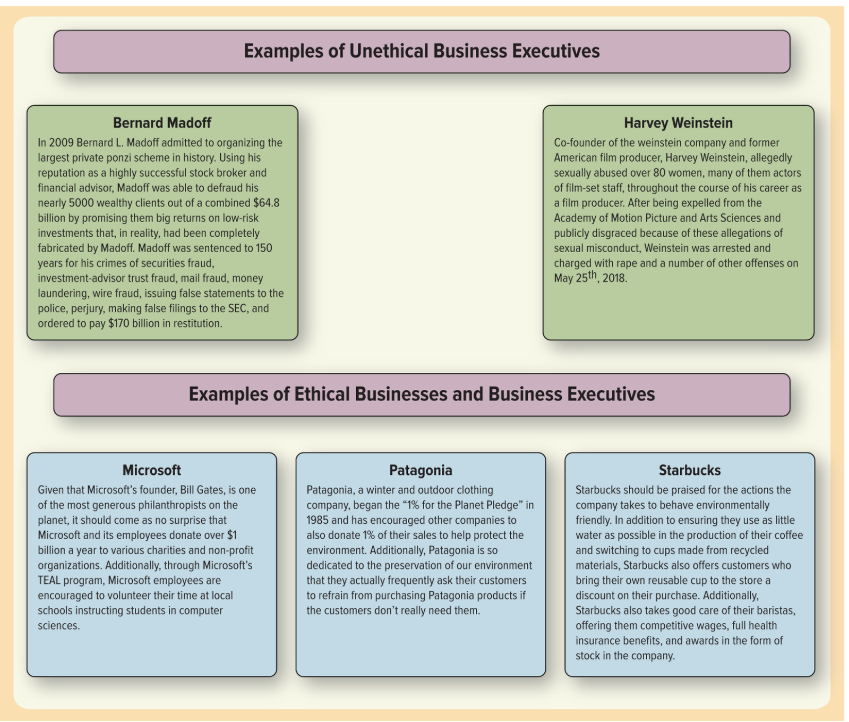
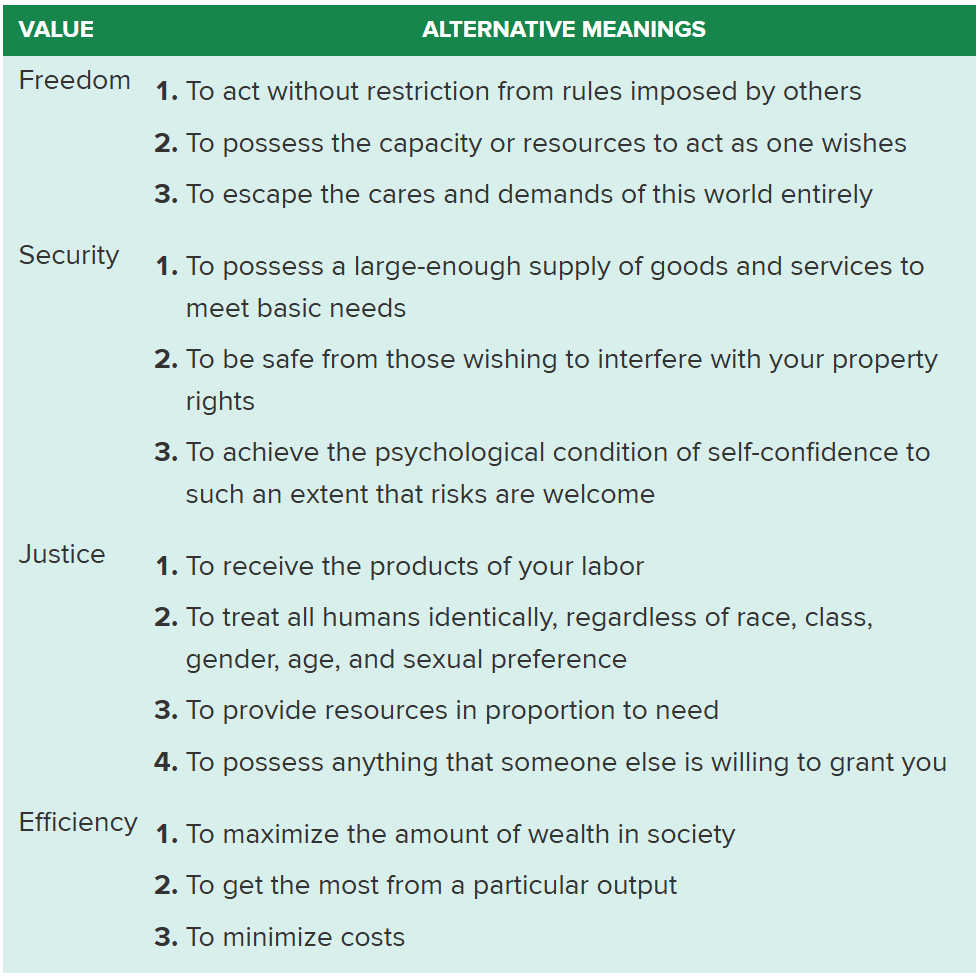
Values: Positive abstractions that capture our sense of what is good and desirable.
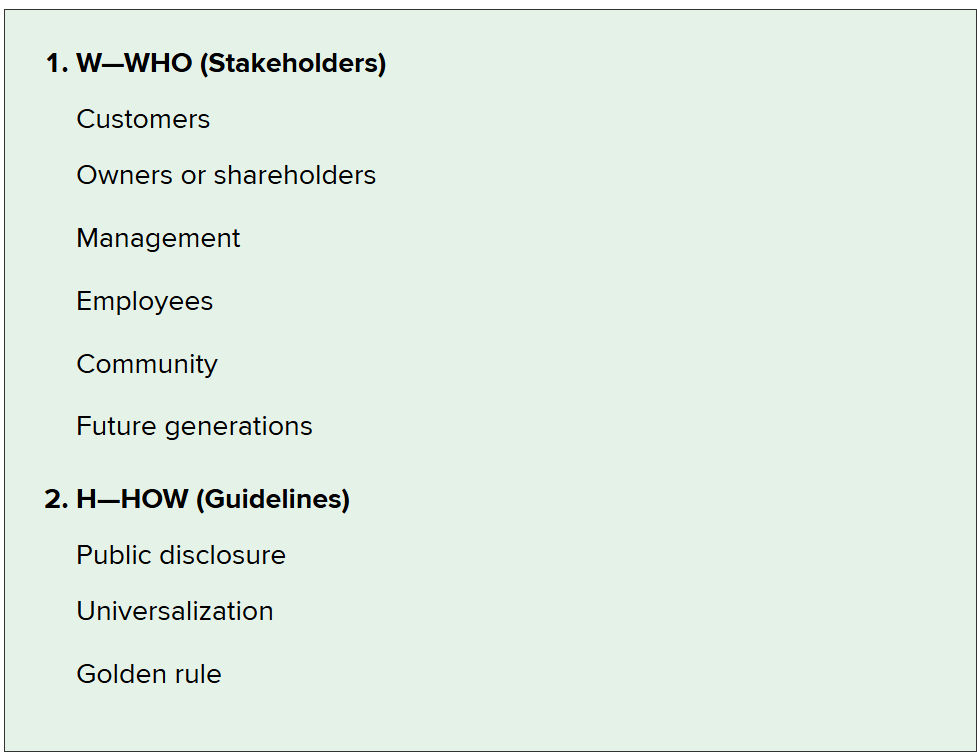
Stakeholders: The groups of people affected by a firm’s decisions.
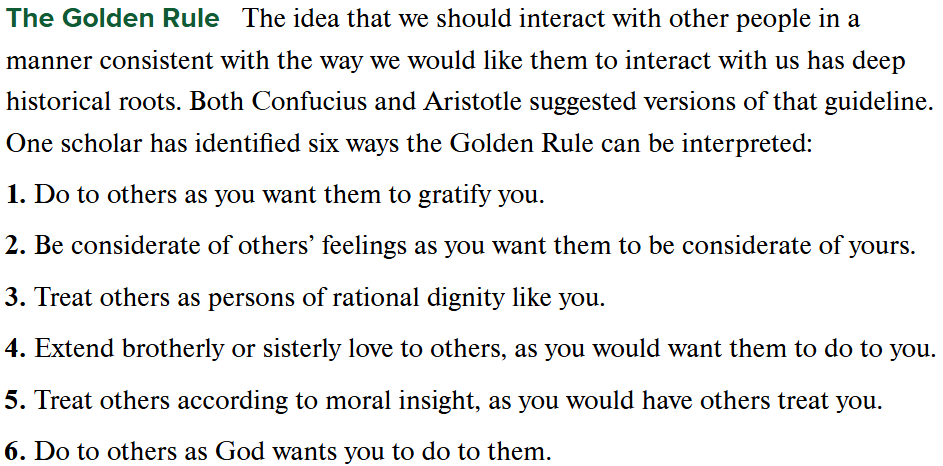
Universalization Test: The ethical guideline that urges us to consider, before we act, what the world would be like if everyone acted in this way.