The relation of shot to shot: editing
Editing: the relation of shot to shot
dimensions:
graphic (eg graphic match or contrast)
rhythmic (eg rhythmic cutting; pace)
spatial (construction of space; orientation
temporal (order, duration, frequency)
Movie Do the Right Thing: editing and narrative form
relevant also to rhetorical, associative, abstract, epistolary forms
narrative form and continuity editing (style)
goal is to provide spatiotemporal continuity to an action that would have been perceived as continuous in the realm of the story (though not necessarily having ever been continuous in its staging
spatial continuity (even if not always chronologically presented)
ellipsis, montage etc
continuity to movement of figures (characters, moving objects etc)
presence of discontinuity
editing and meaning
lev kuleshov’s experiment (1921) — meaning of facial expression changes according to shot that follows
constructive editing: building connections between elements that never belonged to the same place (creating meaning through editing)
Editing and clarity
analytical editing
guides the viewe: cut to close up, draws attention to relevant details (images once belonged to the same space)
editing also aims for clarity through the organization of events: temporal dimension
editing styles
analytical editing
cut type: medium to close up shot
match on action
continuity: space; movement/action
establishing shot
establishment of spatial relationship: girl/house (dramatic relevance apparent at the end of the sequence)
continuity editing and spatial relations and orientation
establishing shots (spatial relations between elements: distance, angle etc)
180-degree system
keeps consistency
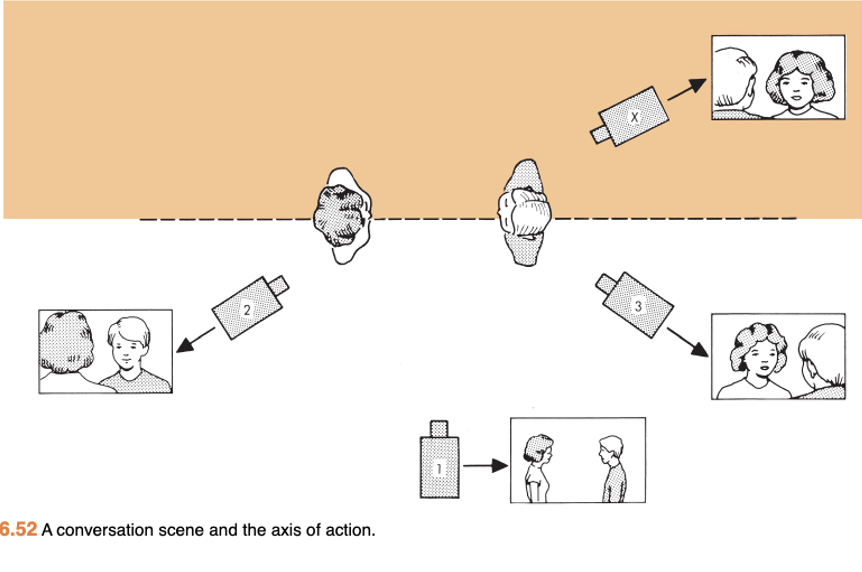
transition shots
cut to transition to different space, main connection is graphic similarity (graphic match)
types of shot transitions (joins)
cut
dissolve (brief superimposition)
fade (in/out)
wipe
this helps to specify dramatic or narrative effects, depending on the context
POV and reaction shots
includes split-screen effect; analytical editing
helps establish the spatial orientation
there is also an eyeline match
Graphic match and meaning
foreshadowing
inversion = dramatic effect; graphic match (or clash), color
inversion
inversion + opposing directions (similarity and contrast)
dramatic effect (building up suspense
acceleration
faster pace/rhythm
graphic (and aural) match
similar actions
similar actions/movements by different characters in different spaces (tension) + faster pace (temporal (shot duration); and rhythm)
editing and suspense: temporal dimension
cutting across different elements of the action and different spaces delays conclusion of events
editing is temporal dimension: duration (expanded or shortened)
other temporal dimensions
chronology
frequency
interactions: editing, mise-en-scene, cinematography
slow motion: cinematography (speed of motion)
camera movement and framing: equally relevant
graphic matches: color, shapes, acting (mise-en-scene)
discontinuity
frequency (repetition)
jump cuts
breaking of 180-degree system
things won’t really change graphically from shot to shot
beyond narrative: editing and the associative form
Associations (John Smith, 1975)
still images match words or parts of words:
“player” in VO matches “players” cigarette pack
“2” stands for “to”
“thyme” stands for “time”
an image of a general matches the word “generally” in the VO narration