AP biology: AP Test
biology review
science
the heart of science is inquiry- search for information and an explanation with making observations and forming hypotheses
making observations
making observations- describes natural structures of processes through observation and analysis of data
data- recorded observations
qualitative- observations with senses
quantitative- measured using instruments
inductive reasoning- derive generalizations based on a large number of specific observations
forming hypotheses
hypothesis- predictions that can be tested by recording more observations or experiments
include “if…then…(because…)”
NEVER SAY- “the hypothesis is correct because…”
deductive reasoning- specific results are deriverde from general premises
hypotheses
start with a null hypothetsis (the researcher attempts to disprove, reject, or nullify your hypothesis)
list the alternative hypothesis
hypothesis/theory/law
hypothesis- an explanation to a question (can be tested by an experiment or an observation but can also be rejected)
theory- summarizes a group of hypotheses (new hypotheses can be generated and also NEVER becomes a law)
scientific law- statement of fact usually as a mathematical formula (like newtons law of gravity)
experiments
start with an observation and a hypothsis
use control groups (+ and/or -) and experimental groups
use an independent variable and a dependent variable
use constants
minimum of three trials
variables vs constants
a variable is something that is changed in the experiment
a consant is something that does not change throughout
independent variable- the one factor that is changed by the person doing the experiments (represents a quantity that is being manipulated in an experiment)
dependent variable- the factor which is measured in the experiement (represents a quantity whose value depends on how the independent variable is manipulated)
control groups
control are essential elements of an experiment
they help eliminate experimental errors and biases of researchers
results of the control experiments validate statistical analysis of the experiment
reliability of the experiment increases
controls are NOT constants
- there are two types of controls: positive and negative
positive: group not exposed to the experimental treatment or independent variable (but it is exposed to a treatment known to produce the expected effect)
negative: group not exposed to ANY treatment or exposed to a treatment that is known to have NO effect (ensure that there is no effect when there should be no effect)
unit one: chemistry of life
REVIEW:
matter- anything that takes up space and has mass
element- a substance that cannot be broken down into other substances by chemical reactions
compound- a substance consisting of two or more different elements combined in a fixed ratio
essential elements- of the 92 naturally occuring elements 20-25% are essential to survive and reproduce. CHOPN make up 96% of living matter
trace elements- of the 92 naturally occuring elements, these are required by an organism in very small quantities.
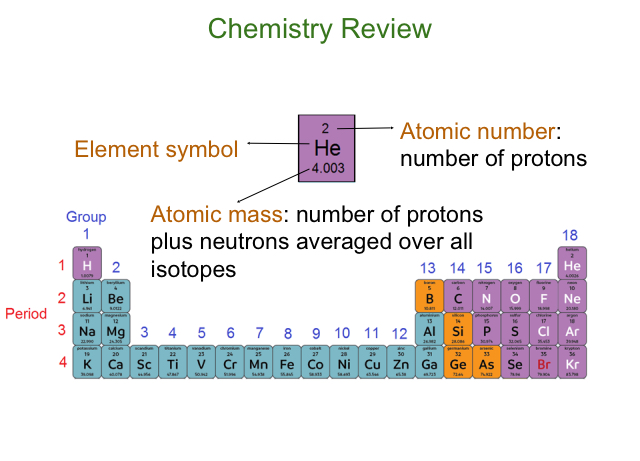
lewis dot model- simplified Bohr diagrams
types of bonds
elements want to be stable (they achieve this by forming chemical bonds with other elements)
octet rule- elements will gain, lose, or share electrons to complete their valence shell and become stable (like noble gases)
chemical bonds- an attraction between 2 atoms, resulting from the sharing or transferring of valence electrons
electronegativity- the measure of an atom’s ability to attract electrons to itself
covalent bonds- when two or more atoms share electrons
forms molecules and compounds
single bond: 1 pair of shared electrons
double bond: 2 pairs of shared electrons
triple bond: 3 pairs of shared electrons
nonpolar convalent bonds: electrons are shared equally between two atoms
polar covalent bonds: electrons are not shared equally between two atoms