Entomology Question Bank
Question Bank for Internals:
One mark
1. Define entomology.
Entomology can be defined as the scientific study of insects.
2. Enlist biotic and abiotic factors in ecology.
Biotic factors are living organisms like plants, animals, and microbes.
Abiotic factors are the non-living factors; that support the biotic factors, like soil, water, and light.
3. Define metamorphosis.
Metamorphosis is the biological process by which an insect undergoes a series of developmental changes from an immature form to an adult form, typically involving distinct stages such as egg, larva, pupa, and adult.
4. Draw and label insect eggs.
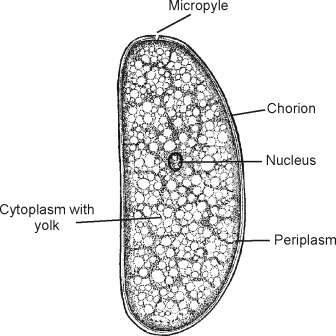
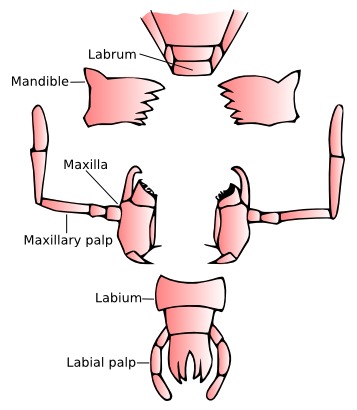
5. Draw and label the mouth parts of cockroach.
6. Enlist any two insect names.
Honeybee (Apis mellifera)
Housefly (Musca domestic)
Cockroach (Periplantae Americana)
7. Name of walking insect leg is?
Insects have ambulatory legs for walking.
8. Breathing of insect through?
Insects breathe through a network of small tubes called tracheae, which open to the outside via small openings known as spiracles.
9. Classification of insects. not sure
Insects belong to the class Insecta within the phylum Arthropoda. They are typically classified based on their orders, some examples of which include:
Coleoptera (beetles),
Lepidoptera (butterflies and moths),
Diptera (flies),
Hymenoptera (bees, wasps, ants),
Orthoptera (grasshoppers, crickets)
10. Define halter. not sure
A halter is a small, knob-like structure found in some insects, such as flies (Diptera), that helps with balance during flight. Halteres are modified hind wings that act as gyroscopic stabilizers.
Long answers
1. Digestive system of insect.
The digestive system of an insect is divided into three main parts:
Foregut (Stomodaeum): Includes the mouth, pharynx, esophagus, crop (stores food), and proventriculus (grinds food).
Midgut (Mesenteron): The main site of digestion and absorption. It contains the gastric caeca which secrete digestive enzymes.
Hindgut (Proctodaeum): Responsible for water absorption and excretion. It includes the ileum, colon, and rectum, leading to the anus.
Insects also have Malpighian tubules, which are excretory organs that help remove nitrogenous wastes.
2. Write a note on insect integument and its derivatives.
The integument (or exoskeleton) is the outer covering of an insect, composed of:
Cuticle: A non-living layer made of chitin, divided into three layers: epicuticle, exocuticle, and endocuticle.
Epidermis: A single layer of cells that secretes the cuticle.
Basement membrane: A thin layer below the epidermis.
Derivatives of the integument include body structures like scales, spines, bristles, and setae (hair-like structures), which play roles in protection, sensation, and movement.
3. Explain the reproductive system of an insect.
Male reproductive system: Includes testes (producing sperm), vasa deferentia (sperm ducts), seminal vesicles (storage of sperm), and an ejaculatory duct.
Female reproductive system: Includes ovaries (producing eggs), oviducts (transport eggs), spermatheca (stores sperm), and a vagina. Some insects also have accessory glands that produce substances to protect eggs or help in reproduction.
Fertilization is usually internal, and many species show complex mating behaviors.
4. Write a note on insect metamorphosis.
Metamorphosis refers to the developmental process by which insects undergo significant changes in form and structure. There are two main types:
Incomplete metamorphosis (Hemimetabolous): Egg → Nymph → Adult (e.g., grasshoppers, cockroaches).
Complete metamorphosis (Holometabolous): Egg → Larva → Pupa → Adult (e.g., butterflies, beetles, flies).
Metamorphosis allows insects to occupy different ecological niches during different life stages.
5. Explain insects as a social group.
Social insects, such as ants, bees, and termites, exhibit complex social behavior characterized by:
Division of labor (e.g., workers, queens, drones).
Cooperative care of offspring.
Overlapping generations within a colony.
These insects live in colonies or nests, often showing altruistic behaviors where certain individuals may forgo reproduction to help others.
6. Explain the general characters of insects.
Exoskeleton: Made of chitin, providing protection and structural support.
Segmented Body: Divided into three main parts: head, thorax, and abdomen.
Three Pairs of Legs: Attached to the thorax, used for walking, jumping, or grasping.
Antennae: Sensory organs for detecting chemicals, sounds, and vibrations.
Wings: In most species, insects have one or two pairs of wings.
Compound Eyes: Provide a wide field of vision, essential for detecting movement.
7. Explain the economic importance of insects.
Insects have both positive and negative economic impacts:
Beneficial Insects:
Pollination: Bees and other pollinators are crucial for agricultural crops.
Natural Predators: Some insects help control pests (e.g., ladybugs eat aphids).
Products: Insects like honeybees produce honey, beeswax, and silk from silkworms.
Harmful Insects:
Pests: Insects like locusts and weevils can damage crops, leading to economic losses.
Disease Vectors: Mosquitoes transmit diseases like malaria, dengue, and Zika.
8. Describe insect ecology.
Insect ecology involves the interaction of insects with their environment and other organisms:
Role in Food Chains: Insects act as herbivores, predators, and decomposers.
Pollination: Many flowering plants depend on insects for pollination, making them key players in ecosystems.
Adaptation to Environment: Insects have evolved to inhabit diverse ecosystems, including forests, deserts, and aquatic environments.
Symbiosis: Insects engage in mutualistic relationships (e.g., ants and aphids), as well as parasitic and commensal interactions.