osmoregulation
- the human body
- the human body is made up of liquid components
- the actual amounts may vary with age and sex
- infants are approximately 75% water
- adult females are about 55% water
- water balance is about matching intake with output
- regulation of body fluids
- sources of fluid for the body
- daily intake : average 2500cm3
- drinking fluids
- 1600cm3 drinking fluids
- food
- 700cm3 in food
- metabolic water - water that is produced because of the chemical reactions taken place in the body
- losing body fluids
- urine
- 1500cm3
- breathing
- 300cm3
- through the skin
- 500cm3
- in faeces
- 200 cm3
- body fluids
- water
- electrolytes
- non electrolytes
- electrolytes
- ionic compounds that form anions and cations in solution
- mainly inorganic ions but also few organic ions
- many are essential for bodily functions
- carry electric current so are responsible for nerve impulses transmission
- control acid/base balance in the body
- non electrolytes
- covalent molecules
- mainly organic compounds
- glucose
- urea
- creatine
- osmosis and osmoregulation
- the overall concentration of dissolved electrolytes and non electrolytes in intracellular fluid and extracellular fluid is important
- the concentrations must be balanced to prevent osmosis taking place
- uncontrolled osmosis can damage cells
- osmosis is the movement of water down a concentration gradient of water
- requires the presence of a partially permeable membrane
- occurs when solutions of different strengths are separated by a membrane
- maintenance of the current levels of electrolysis is important for proper function of the body
- water potential
- this is in effect a measure of the amount of dissolved material or solute present in a solution
- the units used for water potential are kPa (also used for pressure in chemistry)
- the water potential of pure water is 0 kPa
- adding a solute to pure water will lower the water potential
- the water potential of all solutions is a negative number
- solutions and cells
- hypertonic solution
- more solute or less water than inside the cell
- hypotonic solution
- less solute and more water than inside the cell
- isotonic solution
- the amount of solute and water are the same as inside the cell
Regulation of sodium ions in the body
- controlled by a hormone called aldosterone
- hormone secreted by the [art of the adrenal gland called the cortex
- aldosterone acts on the kidney tubules
- presence of hormone increases the uptake of sodium from the nephron back into the blood
- aldosterone action
- aldosterone also has an effect on the levels of potassium and chlorine
- increased reabsorption of sodium leads to increased reabsorption of chlorine
- raising the levels in the blood
- at the same time aldosterone increases the rate at which potassium is excreted by the kidneys
- mechanism of aldosterone release
- this is a complex pathway
- decreases in blood pressure resulting from dehydration or sodium deficiency causes certain kidney cells to produce an enzyme called renin
- renin acts on a plasma protein called angiotensinogen and converts it into amniote 1
- angiotensin 1 is converted into angiotensin 2 by angiotensin converting enzyme (ACE)
- angiotensin 2 is a hormone that stimulates a rise in blood pressure by vasoconstriction in arterioles and adrenal cortex to produce aldosterone
- male and female organs
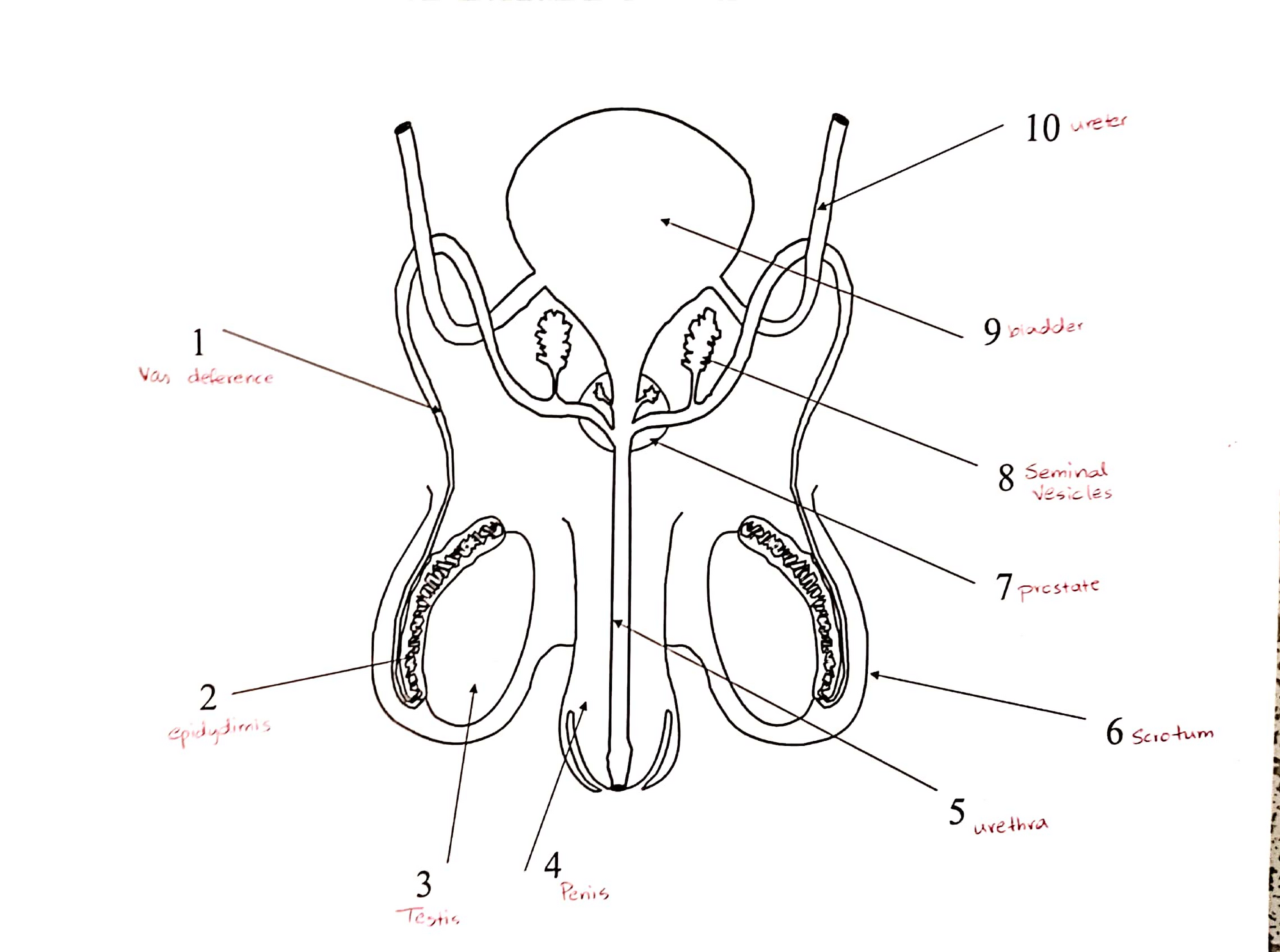
- functions : male
- testis - responsible for making sperm - human testosterone is secreted
- epididymis - to bring sperm to maturity - they carry and store sperm to be matured
- sperm duct - to allow the transit of sperm from inside to the outside of the body -
- seminal vesicles - important for fertility
- prostate - produces fluids that nourishes and transports sperm
- urethra - allow urine to pass outside the body - allows sperm to pass out (secretes)
- penis - for urination and sexual intercourse
- scrotum - regulates the temperature
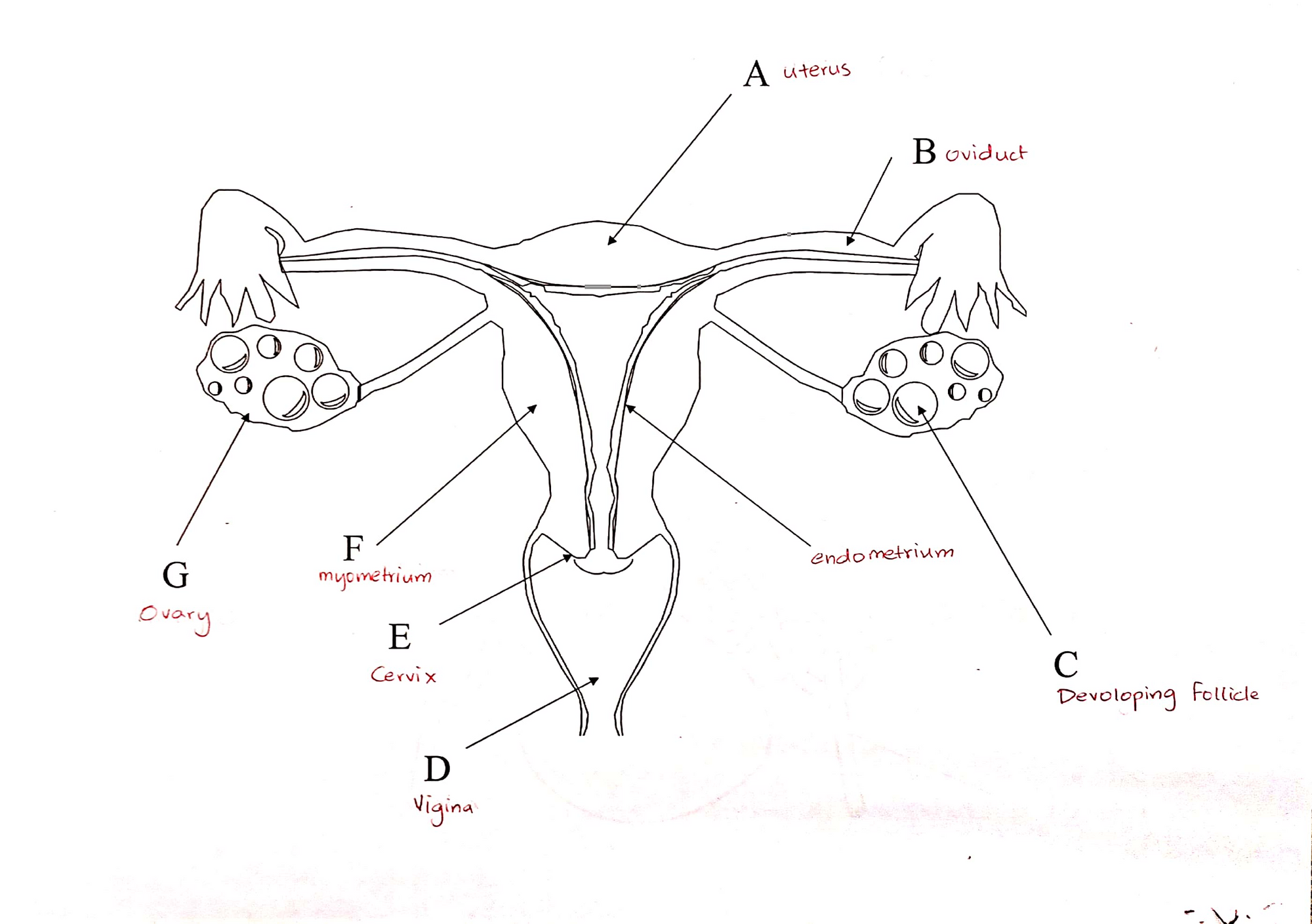
- function : female
- ovary - produce egg cells + hormones progesterone and oestrogen
- follicle - oocyte maturation and release and steroidogenesis required for regulating its own growth and providing the proper environment in reproductive organs for the transport of gametes and nidation
- fallopian tube - egg from the ovary to the uterus
- uterus - also known as the womb
- myometrium - induce uterine contractions
- endometrium - preparation for implantation, maintenance of pregnancy if implantation occurs, and menstruation in the absence of pregnancy
- cervix - passage into and out of
- vagina - birth canal