TUT - MB
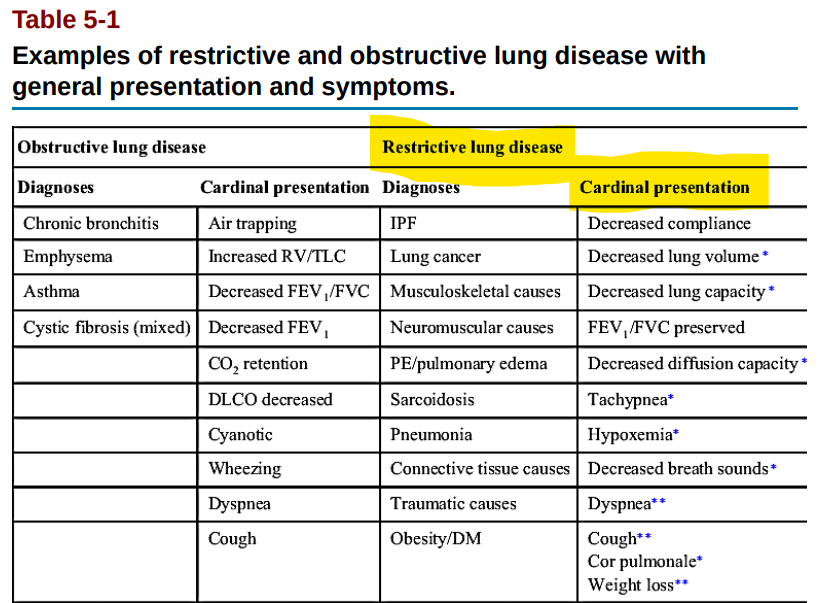
1A) differences between COPD and RDL
Obstructive disease: obstruction of the canal (mucus obstruction)
Restrictive: lung can’t extend much (can have different causes)
1B) Describe the etiology of restrictive lung dysfunction (RDL)
According to chat GPT:
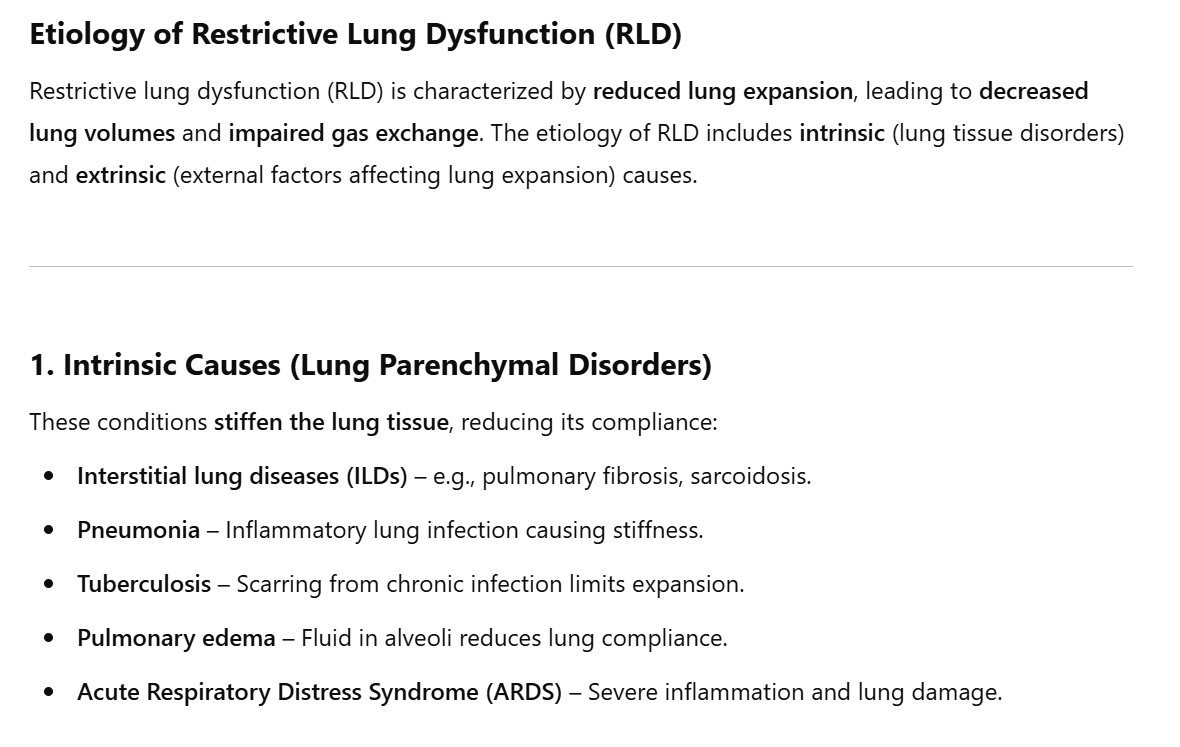
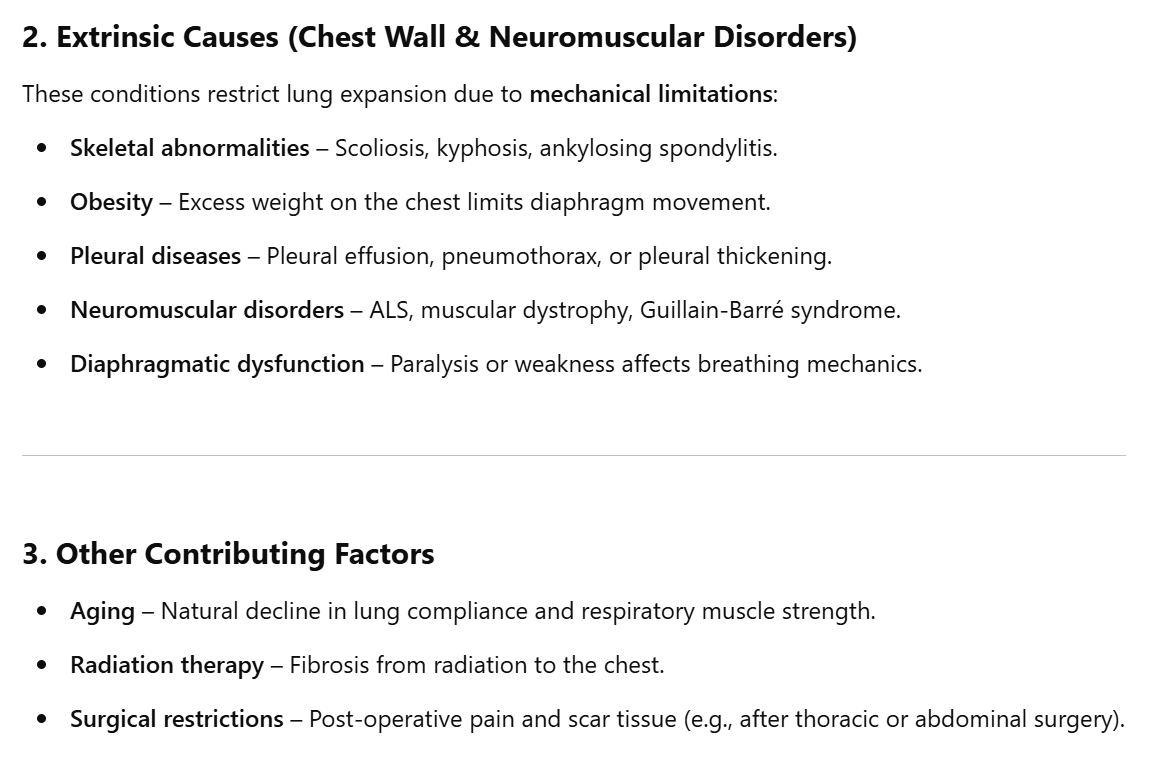
Chapter 5 - Restrictive Lung Dysfunction
Etiology
Restrictive lung dysfunction (RLD) is an abnormal reduction in pulmonary ventilation due to restricted expansion by the chest wall or the lungs.
Lung expansion is restricted, and therefore the volume of air or gas moving in and out of the lungs is decreased.
Restrictive lung dysfunction is not a disease → This dysfunction may result from many different diseases arising from the pulmonary system or almost any other system in the body
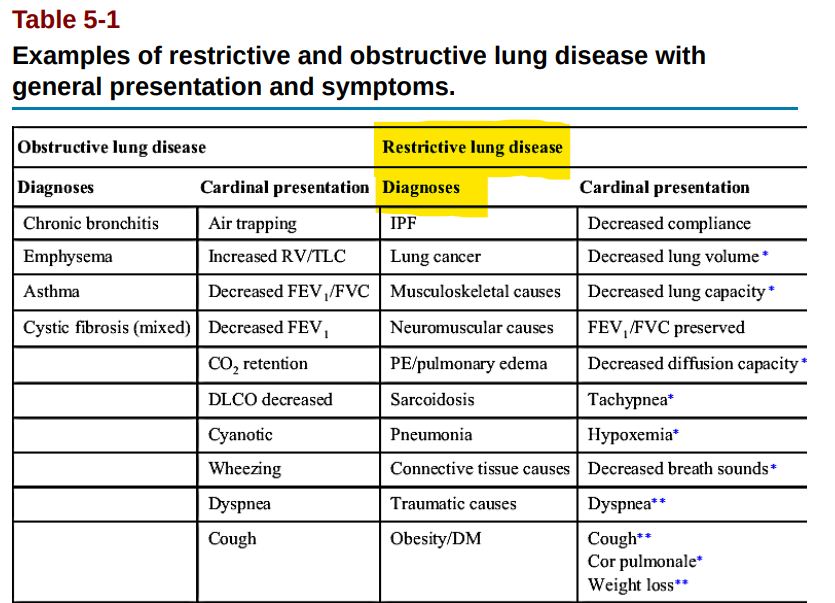
IPF: idiopathic pulmonary fibrosis
sarcoidosis: inflammation blobs in the lungs and vessels
1C) pathophysiology
1) compliance with both the lung and the chest wall
2) lung volumes and capacities
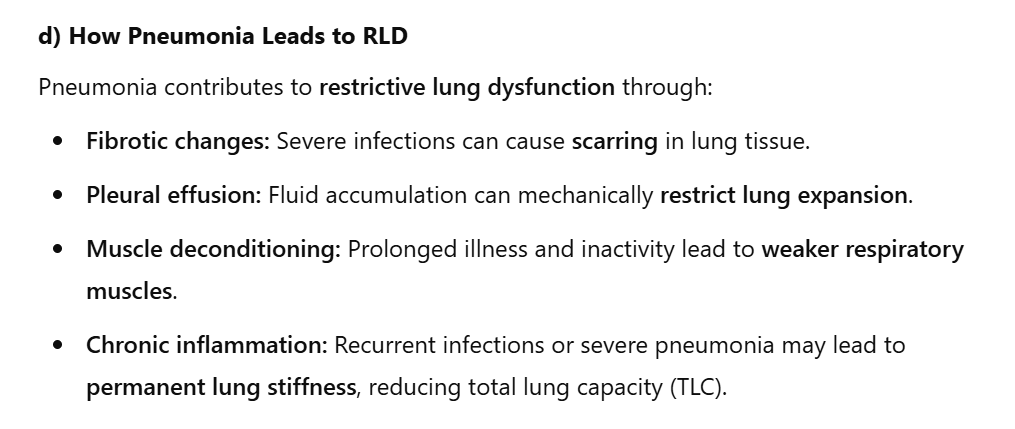
3) the work of breathing.
1D) Signs of RDL
Note: when stiffness increases, compliance decreases
compliance is NOT elasticity or stiffness, similar but not the same
when you blow a balloon, the first part is hard because you have to fight the compliance of the balloon, when you let air out of the balloon you can see the elasticity of it.
compliance → lung capacity to expand
1E)
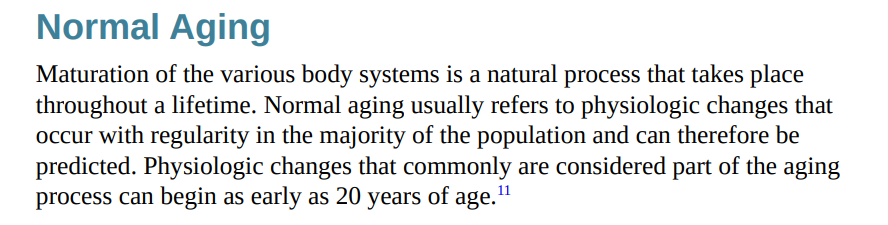
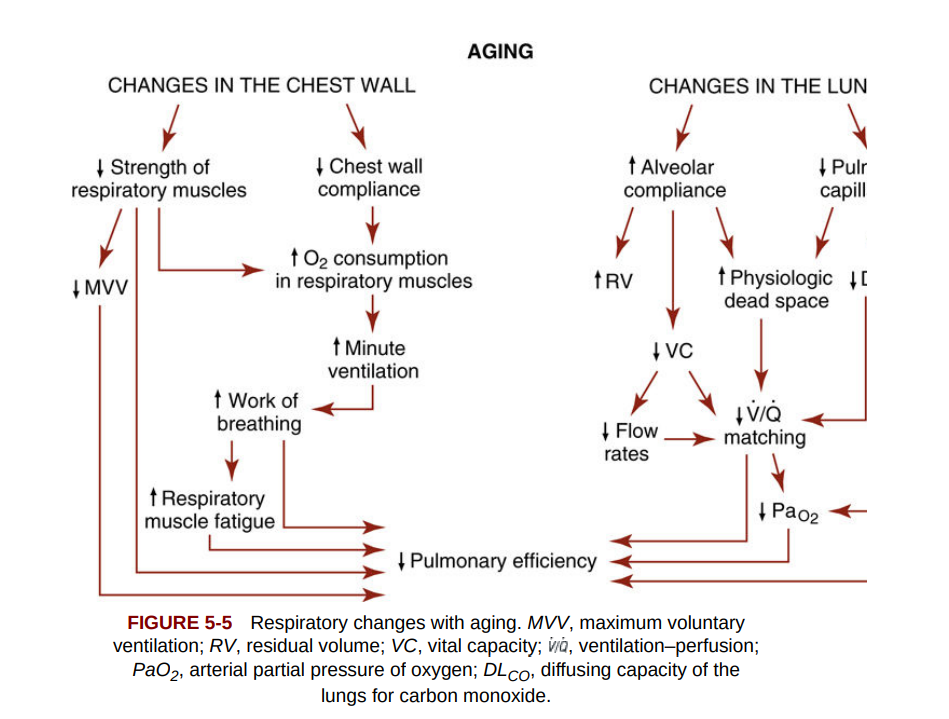
—
Assignment 2
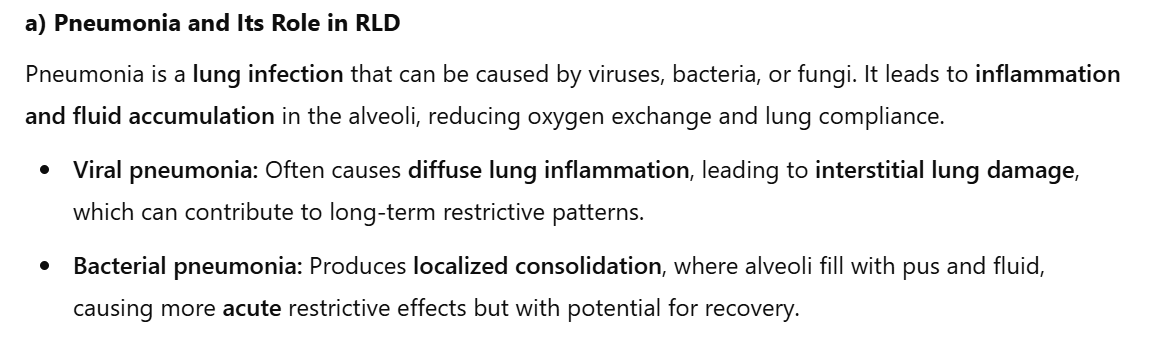
Note:
It doesn’t matter the color, it has nothing to do with the bacteria type!
BUT brown rust → specific type of bacteria (Pneumoconiosis)
septic → bacteria goes into the blood and it spreads there
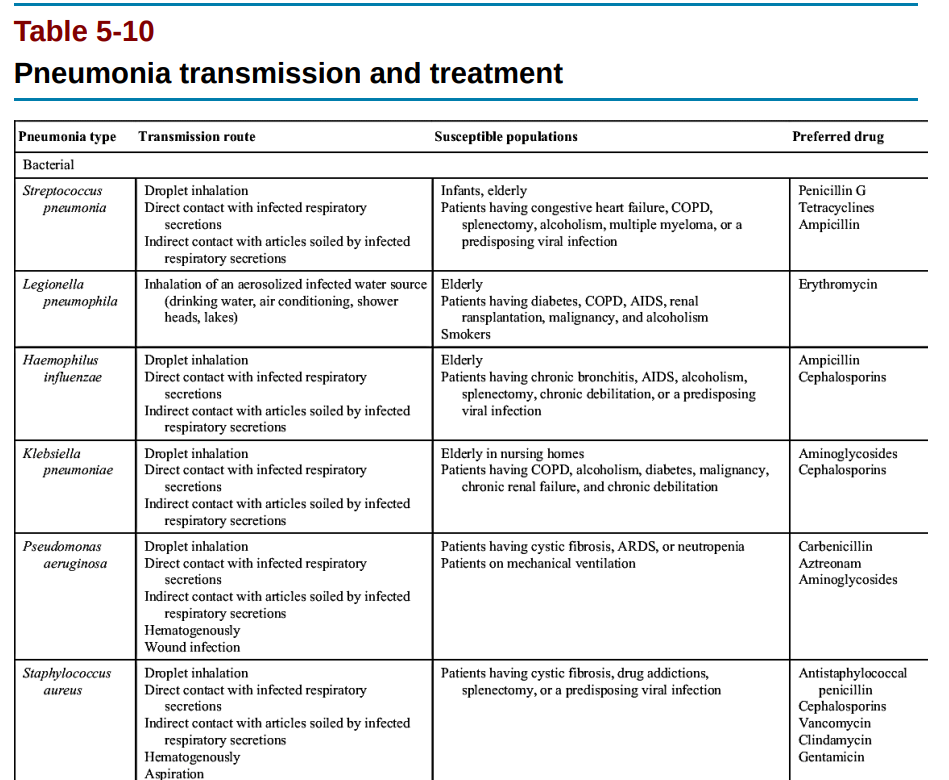
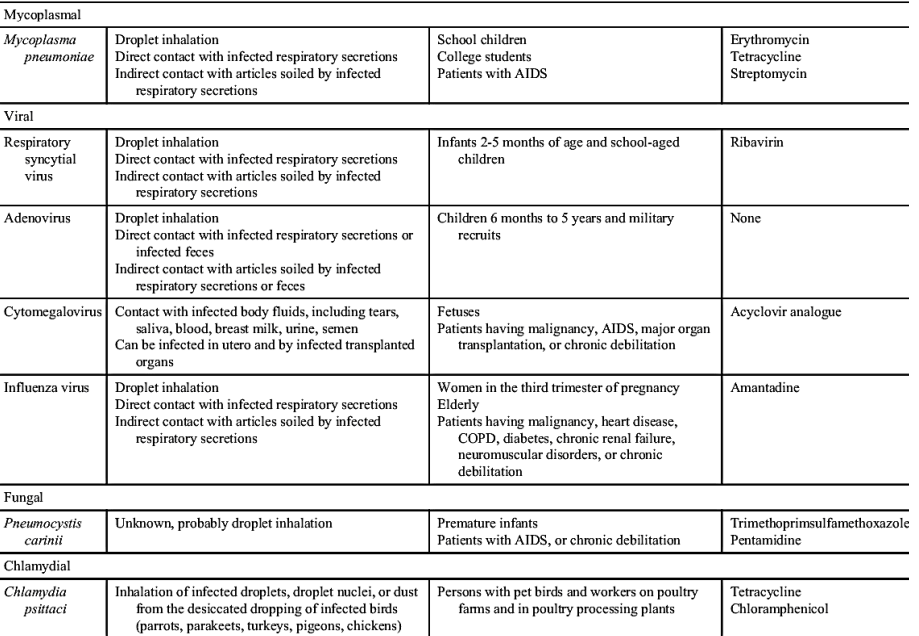
Ventilation perfusion mismatch (V/Q)
with a blockage in air conducts ventilation is impaired
perfusion (blood) goes into the lung → what happens? only one lung oxygenated one lung not oxygenated → not oxygenated blood goes back into the body (without oxygen and full of CO2) → HYPOXIA (V/Q mismatch)
perfusion problem → pulmonary embolism blockage of the arteries
Spirometry
flow volume loop
relationship between flow and volume
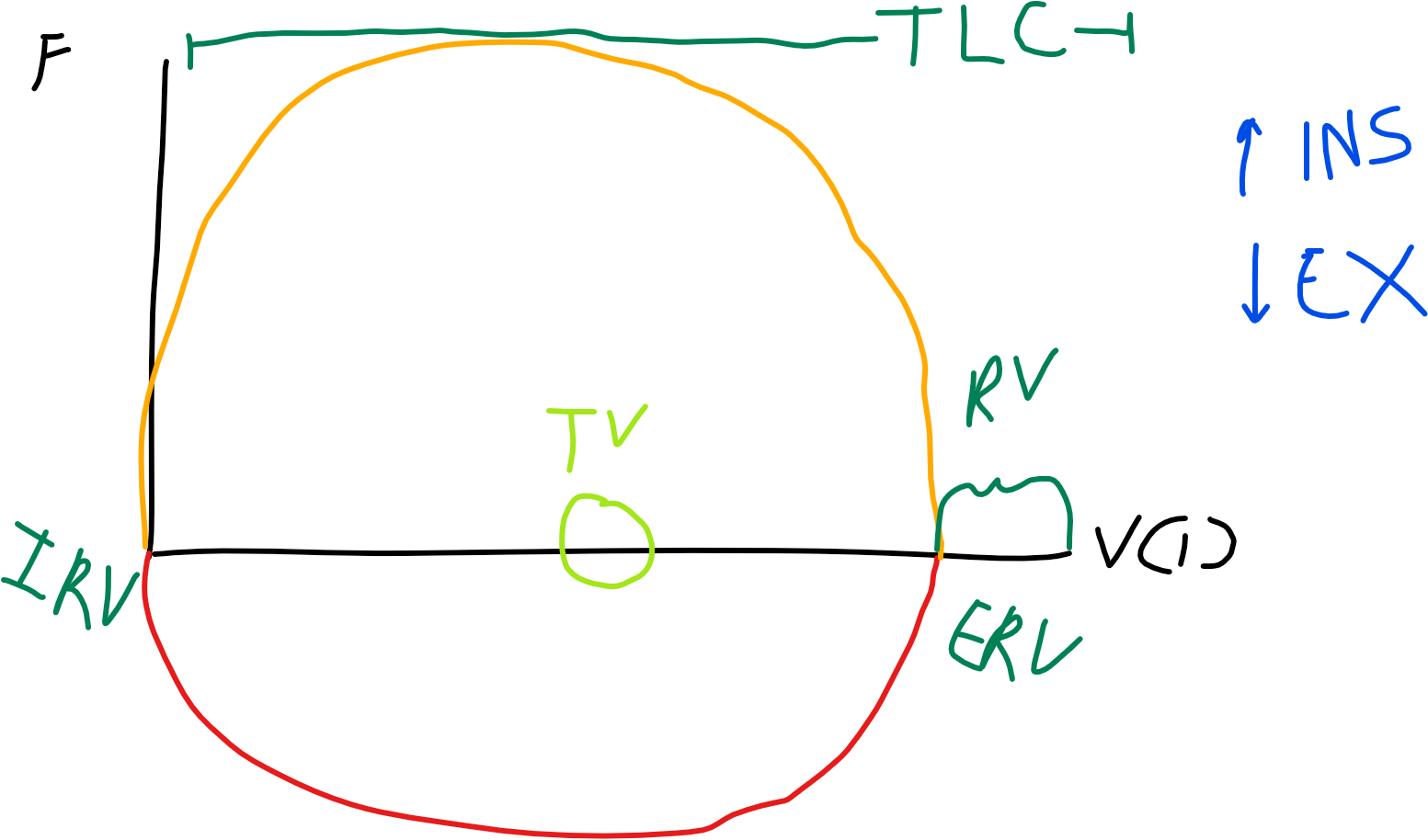
While breathing, normal PT doesn’t reach TLC
FEV1 = between 80% - 100% - 120%
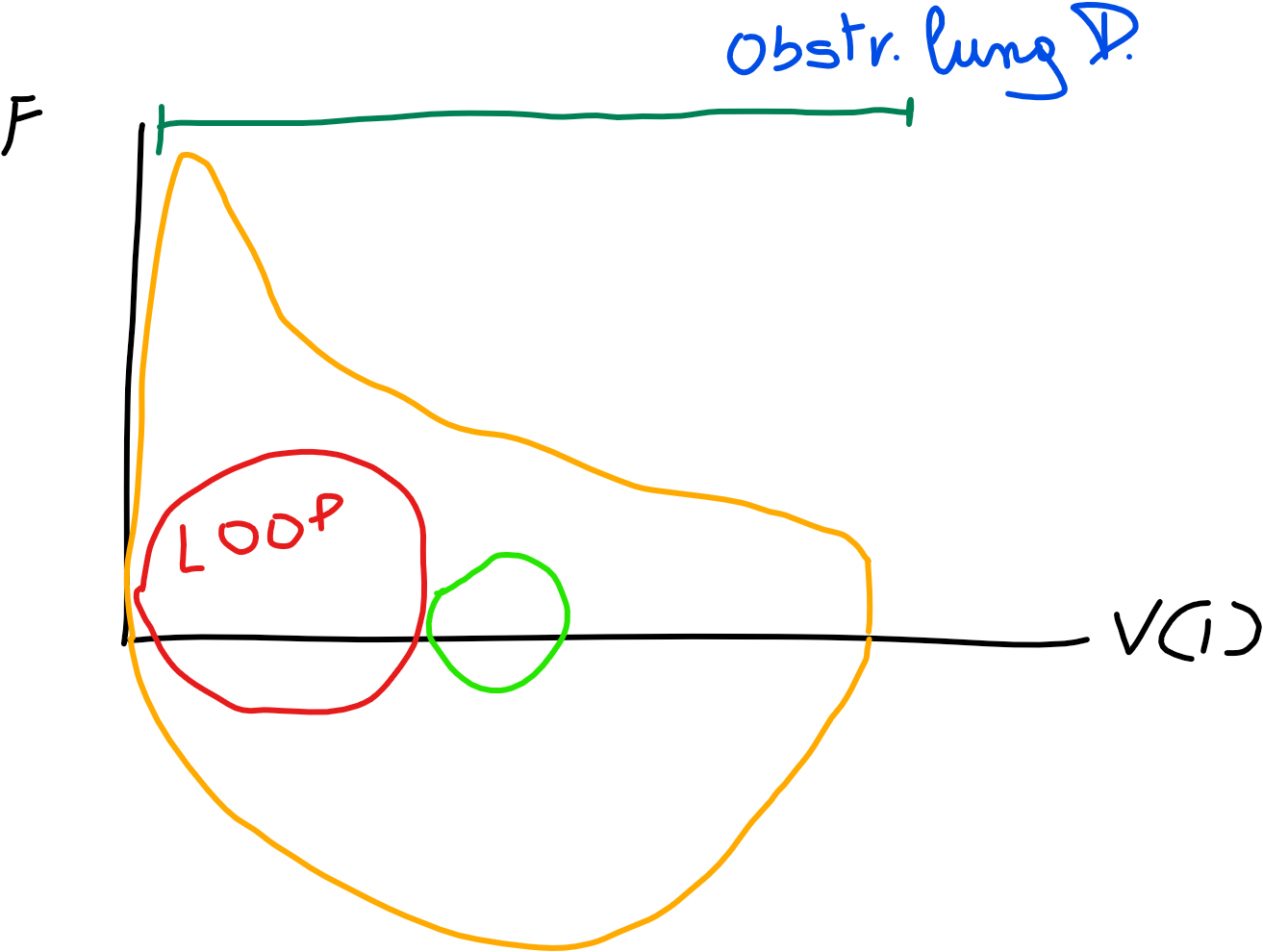
lungs are hyperinflated
they have to reach TLC to breathe
FEV1 = 70%
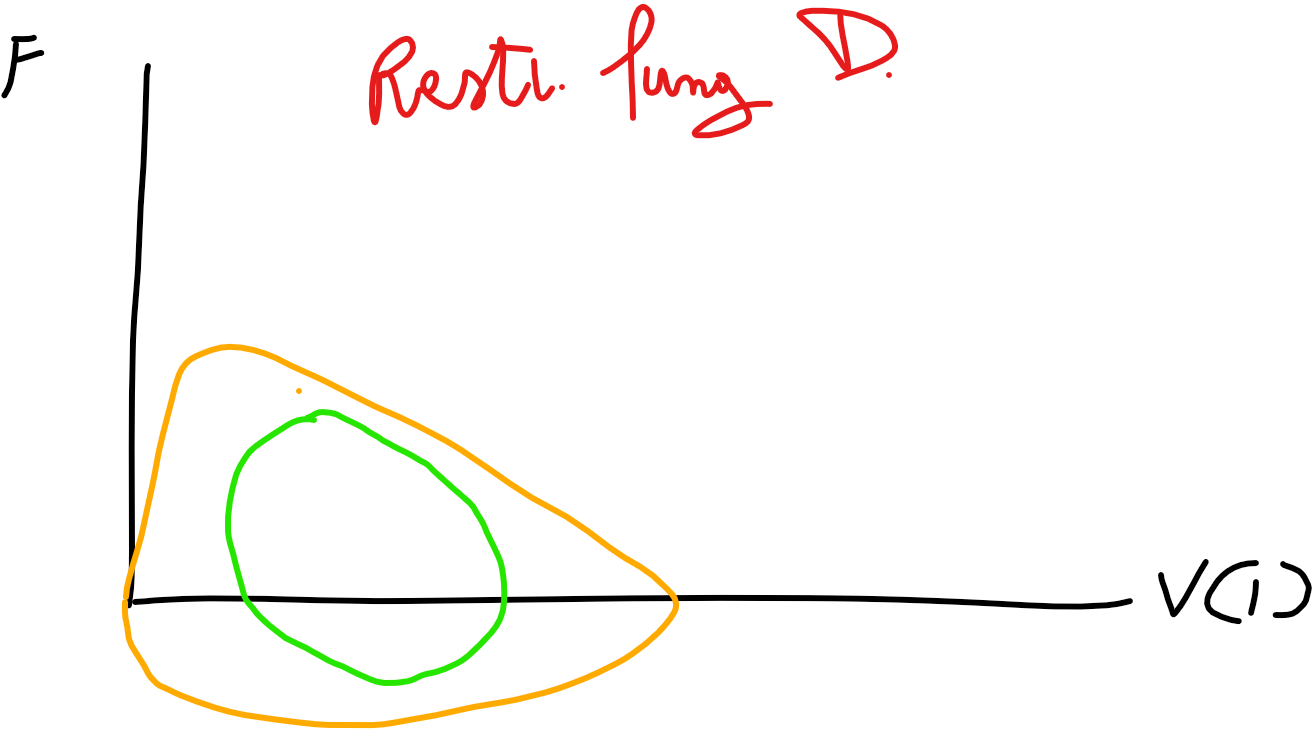
same, but the loop it’s smaller
FEV1 = 70%
(note to self: don’t smoke)
Blood acidity
normal: pH 7.35 to 7.45
One of the functions of the lungs is to regulate the pH (gas exchange Co2 → high pH) with the kidneys (Bio-carbonates HCo3 → low pH) → they have affects on pH
Co2 levels make you breath
COPD → high Co2, therefore Low pH → breaths faster
Diabetic (out of control) → PT tries to blow out air as much as possible to get rid of Co2