Ecological organisation
Ecological Organisation
Ecological organisation refers to the various levels that make up ecological systems, ranging from microscopic organelles to the entire biosphere. Understanding these levels is critical for studying ecosystems and addressing ecological problems.
Objectives of the Lecture
By the end of this lecture, participants should:
Understand the different levels at which ecosystems can be organised and studied, from organelles to the biosphere.
Appreciate the physical environmental factors that influence local ecology.
Recognise the role of soil and nutrients as pivotal in the formation of habitats and the associated biodiversity.
Importance of Selecting the Correct Level
Selecting the appropriate level of ecological organisation is crucial for effective investigation.
Choosing the wrong level can complicate the study, making it difficult to find answers or leading to inefficient ecological studies.
Typically population :
‘Population’ definition: group of individuals of a particular species occurring in a particular location, at a particular time’
Some species appear to be predictable assemblages known as communities (‘A particular grouping of species occurring in a predictable manner in a specific location’)
A number of communities occurring together is an ‘ecosystem
Artificial communities
Beneficial
E.g. motorways = prevents soil moving to read, muffles sound and prevents rubbish
Strandline communities
communities of plants and animals that live on the strandline, the area above the water line at the top of a beach. The strandline is made up of debris and seaweed that is left behind after high tide.
Biome
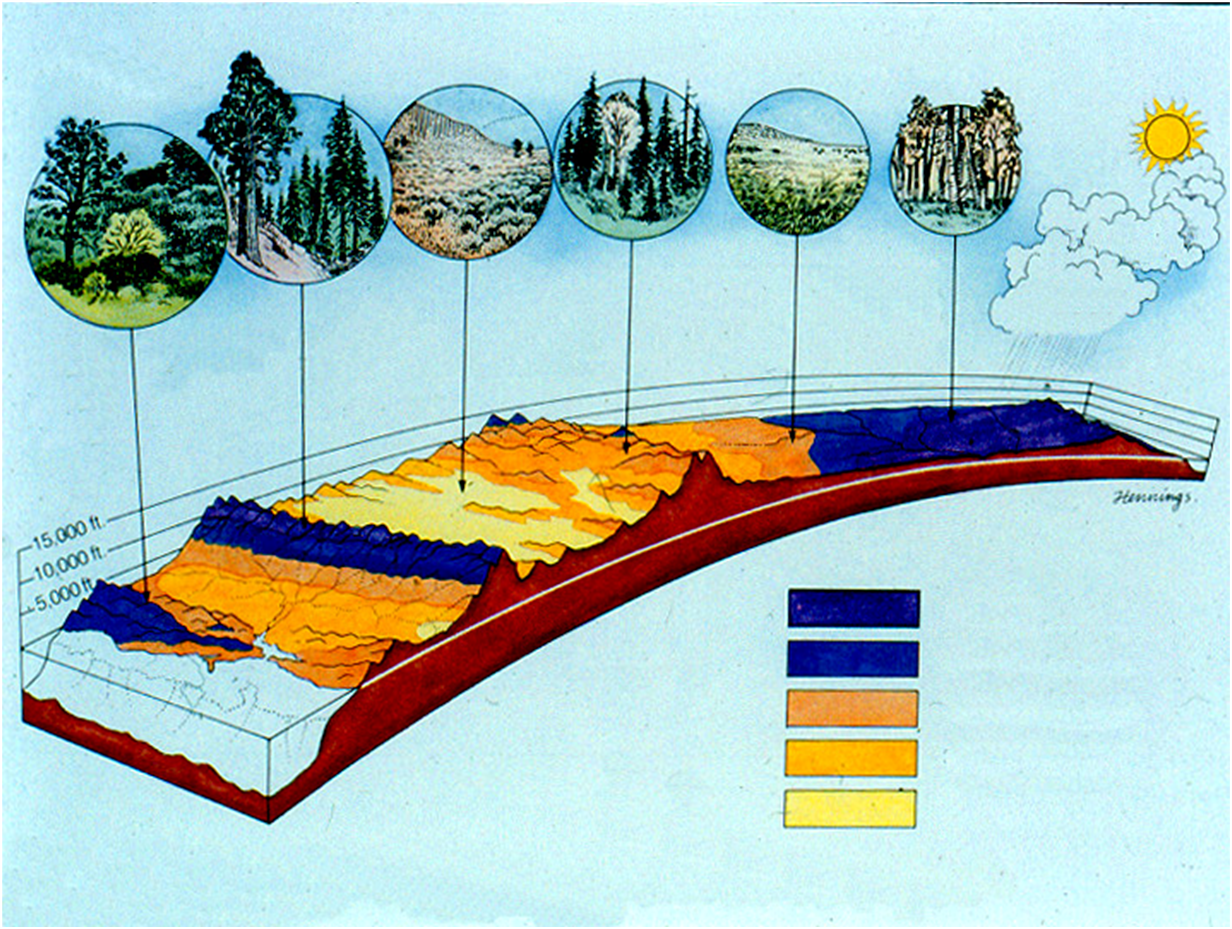
Ecosystems together make up the Earth’s biological systems - referred to as the ‘biosphere
The Guild
Involves different species which all seem to have similar ecological characteristics
In this example, we can see a number of different bird species that feed on insects in the canopy of trees.
We use guilds, for example, to study predation (consumption) rates of insects by birds collectively rather than studying each bird species separately.
This would take a much greater research effort and not really tell us a lot more about the system.
Epiphyte guild
Different plant species growing on surface of oil palm in Malaysia
The Ecological Hierarchy
Organisational Levels
The ecological hierarchy consists of several levels:
Biosphere: The global sum of all ecosystems.
Ecosystem: A community interacting with its environment.
Community: A group of interacting species in a specific area.
Species: A group of individuals capable of interbreeding.
Population: A group of individuals of a species in a particular location at a particular time.
Individual: A single organism.
Organ: A body part composed of tissues.
Cell: The basic unit of life.
Organelle: Structures within a cell, such as mitochondria or chloroplasts.
Guild: Groups of species that share similar ecological characteristics.
Hierarchical Structure
Organelles come together to form cells, which combine to create organs (for example, various tissues in a plant leaf). Organs in turn constitute an individual plant, made up of leaves, roots, stems, and flowers.
Understanding ecological changes often requires examining lower levels of organisation, as seen in the impact of pollutants.
Understanding Individuals and Populations
Recognizing Individuals
Individual organisms can sometimes be easily recognised, like a reed plant or a sea urchin.
A question arises: Are multiple shoots from underground rhizomes considered individuals, or are they part of one plant?
Working at the Population Level
It may be more effective to study populations, defined as a group of individuals of the same species in a particular location and time.
Important characteristics to consider include age, sex ratio, and reproductive output (fecundity).
Communities
Definition
A community is a specific grouping of species occurring predictably in a particular location, while multiple communities together form an ecosystems.
Examples of Communities
Grazed maritime grassland communities demonstrate species interactions. Different species inhabit unique niches, such as guillemots nesting on cliff ledges and shags in gullies.
Artificial communities can also be studied to understand ecological dynamics.
The Role of Geology and Environmental Factors
Impact on Ecosystems
Geological factors heavily influence ecosystem types.
Acidic soils support oak woods, while basic soils may lead to ash woods.
Waterlogged soils can lead to bog systems, whereas dry conditions can still support vegetation.
Soil Chemistry's Role
Soil chemistry, whether acidic or basic, profoundly affects the types of species that can thrive within an area.
Physical soil structure is critical; for example, heavy clay can restrict root penetration, affecting plant development.
Vegetation Effects on Soil
Certain plant species, like sea buckthorn, can enhance soil nutrient levels through the nitrogen compounds produced by their roots.
Cutting sea buckthorn can leave nutrient patches, improving soil status.
Summary
In the field of ecology, awareness of the biological hierarchy—from organelles to the biosphere—is essential. Ecologists can study various levels, including individuals, populations, communities, and guilds, while also focusing on ecological processes. The physical environment, notably soil and nutrient availability, plays a vital role in shaping habitats and the biodiversity found within them.