APES Soil Notes
most O2 from ocean = phytoplankton
rhizobia: important bacteria
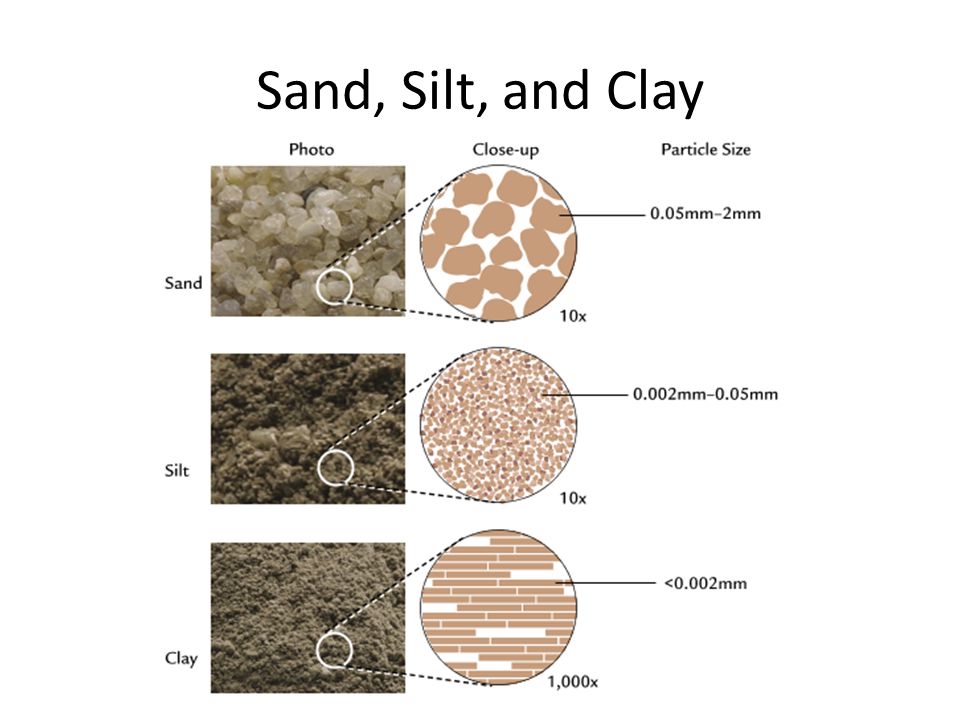
Sand:
permeable
gives soil structure
worm can wriggle in
Silt:
between sand
stabilizer
silt floats in water, fish sunscreen/camouflage
Clay:
tiny particles
not permeable (too small, no space)
helps keep moisture in soil (not too much or it’ll get swampy)
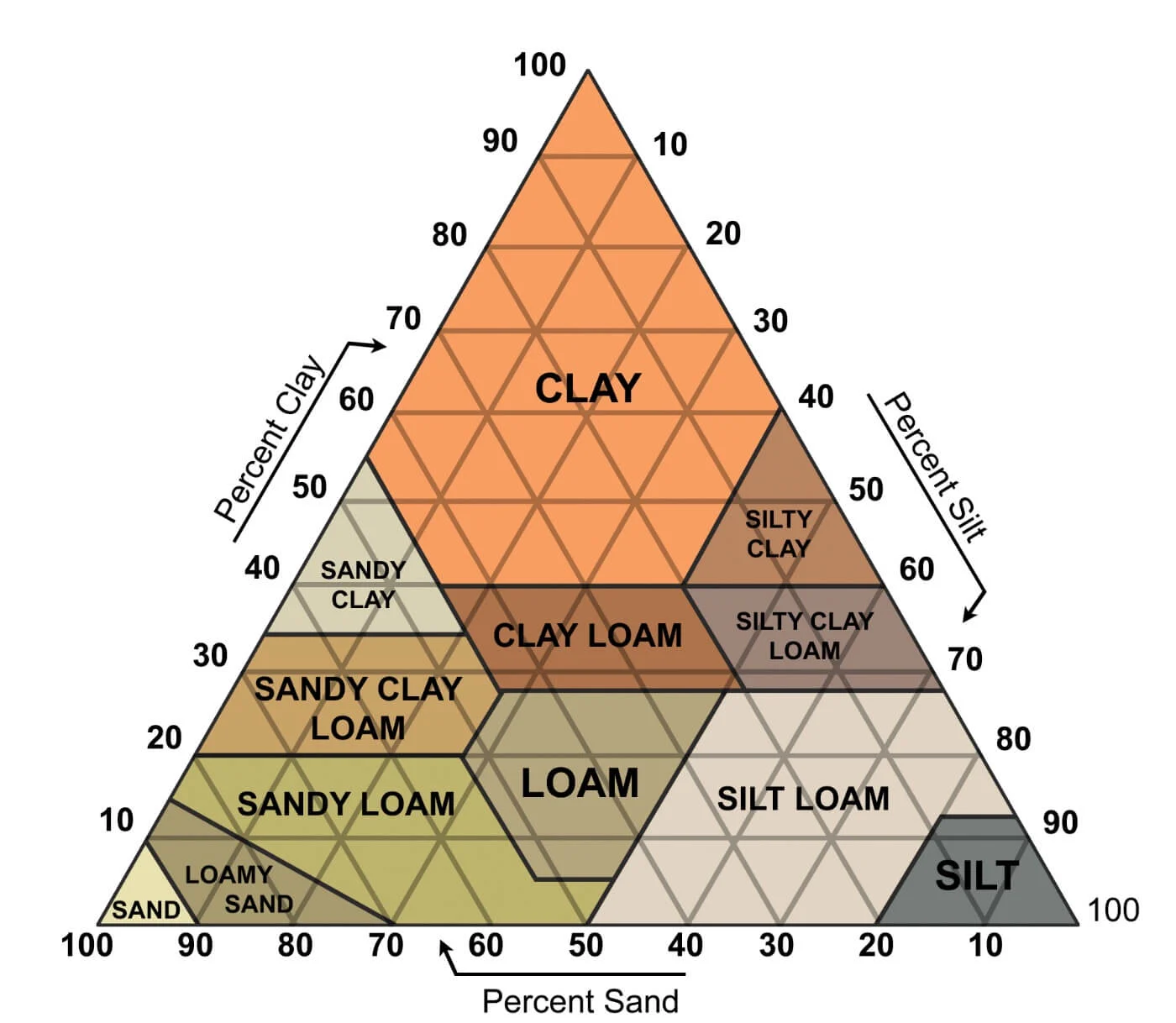
Horizontal lines w/ percentage
NOTES 10/28
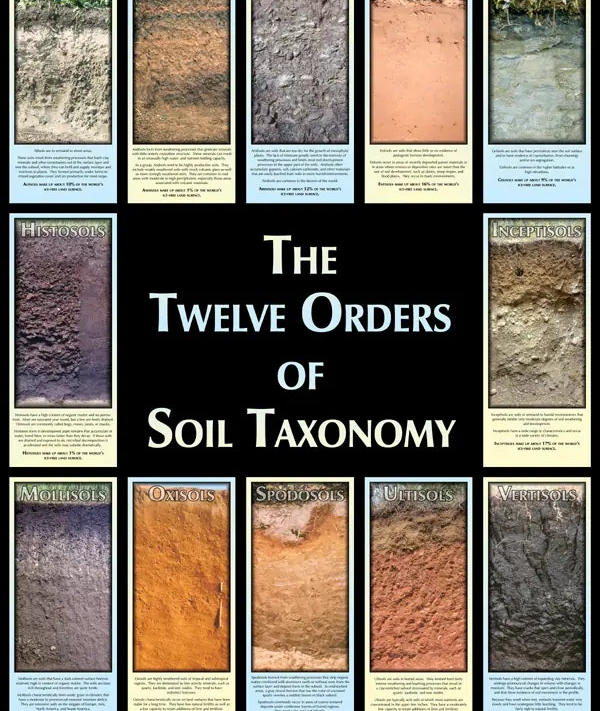
dont need to know this just putting image here
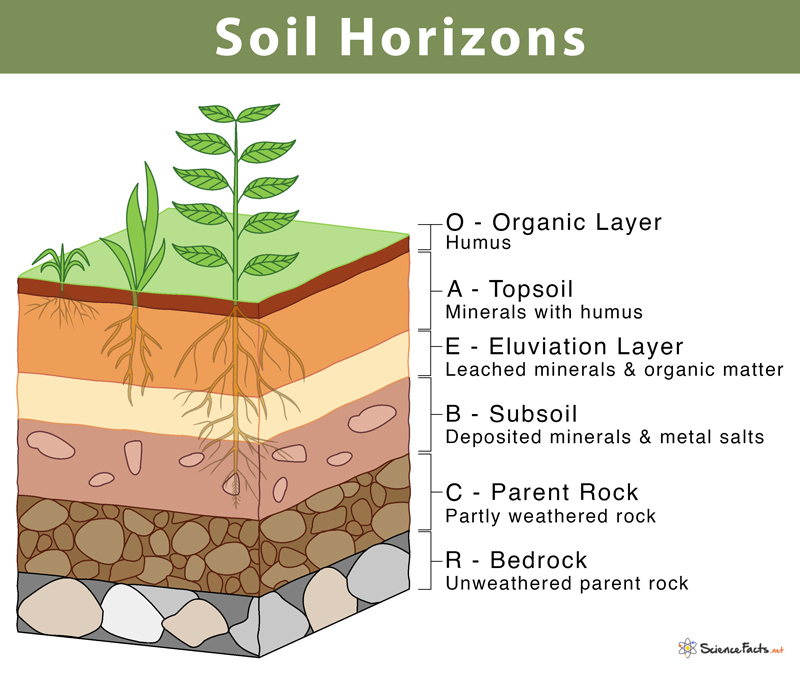
A: top soil, vegetation, nutrients, worms
B: buildup of stuff, roots don’t get through
C: weathered broken rock, old rock = round rock
R: bedrock, helps aquifers
E: eluviaton or exit layer
HUMUS:
nature’s compost
nutrients and yummy yummy, worms
NOT hummus
IRRIGATION TECHNIQUES (privilege)
center pivot irrigation: (misty, like a sprinkler, circle shape farm)
wasteful, 80% evaporates
lands on soil/plant, not roots
gravity flow (rectangle farm):
valve, sends water down from irrigation ditches
also very wasteful
drip irrigation (most sustainable):
water efficiency 80-90%
valve that lets water out (drip)
animals keep attacking it 🥀🥀
floodplain irrigation (live near river):
nutrient rich soil
just let the water flood your farm
GROUNDWATER:
surface water is just exposed ground water
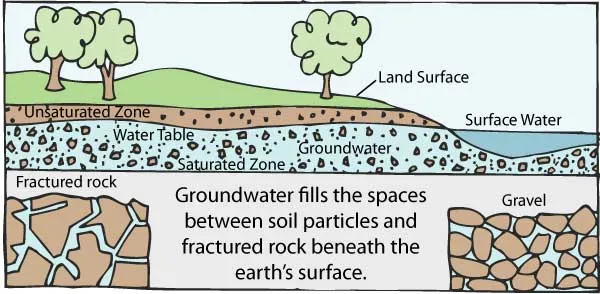
OGALLALA AQUIFER:
awesome aquifer
most precious water source, in america at least
Watershed:
water goes west
high ground to low ground
Salination and Waterlogging = BAD
crusty water = not permeable
salination = salty water = crusty water
HOW 2 STOP/PREVENT
use less water
switch to salt tolerant plant
flush soil ($)
dig a drain ($)
stop farming for 2-5 yrs
NOTES 11/3
Food Deserts: Residential areas w/ limited access to affordable and nutritious food.
CLIMATE CHANGE = harder to produce crops
crops will start shutting down
harder to feed people
SOIL IS VERY IMPORTANT !!!!!!!
considered alive
affected by climate change
can reduce climate change IF we change farming techniques
SOIL STUFF
carbon = life
removal of carbon from soil → atmosphere
soil stores co2
plants pull carbon and store it to soil
no till !!!!
planned grazing
NOTES 11/4
NITROGEN CYCLE
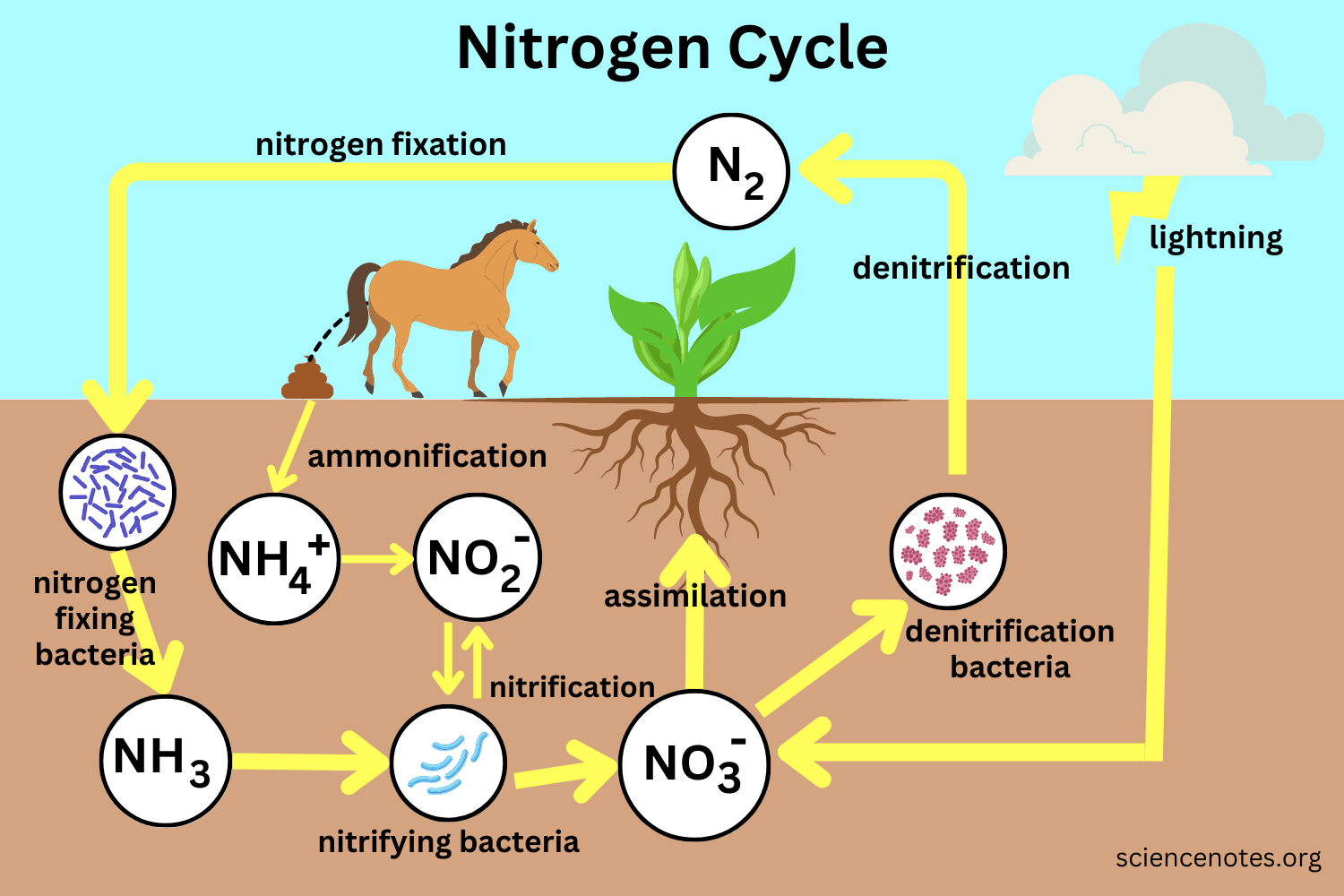
Nitrogen Fixation: RHIZOBIA!!
gaseous nitrogen (N2) → to ammonia (NH3)
can be used by plants
HOW?
cyanobacteria in water
bacteria living in nodules on roots of plants
WHEN YOU TILL YOU KILL THESE BACTERIA
beans (legumes) give soil N2
bacteria = :3
NITRIFICATION:
ammonia (NH3) → nitrite (NO2) → nitrate (NO3)
WHO INVOVLED?
nitrosomonas
nitrobacter
THEY OXIDIZE THE AMMONIA!!
ASSIMILIATION
plant roots absorb NH3 and NO3 ions
helps make molecules
dna, amino acids and protein
AMMONIFICATION
decomposing bacteria turn waste w/ lots of N2 to NH3
DEVITRIFICATION:
soil nutrients reduce and released in atmosphere as gas
anaerobic bacteria does that
NITRATE & NITRITE ions convert to NITRUS OXIDE GAS (N2O) & NITROGEN GAS (N2)
N2O = GHG (GET HOTTEST)
(CO2 is 1, METHANE CH4 is 30, N2O is 100)
PROCESS
Fix(ation)
N(itrification)
A(ssimilation)
A(mmonification)
D(evitrification)
PRODUCTS
A(mmonia, NH3, NH3) RHIZOBIA
N(itrates/nitrates) NITROSOMONAS, NITROBACTER
P(rotein, amino acids, dna)
A(mmonia) DECOMPOSERS
N(itrogen gas, N2, N2O)
Notes 11/6