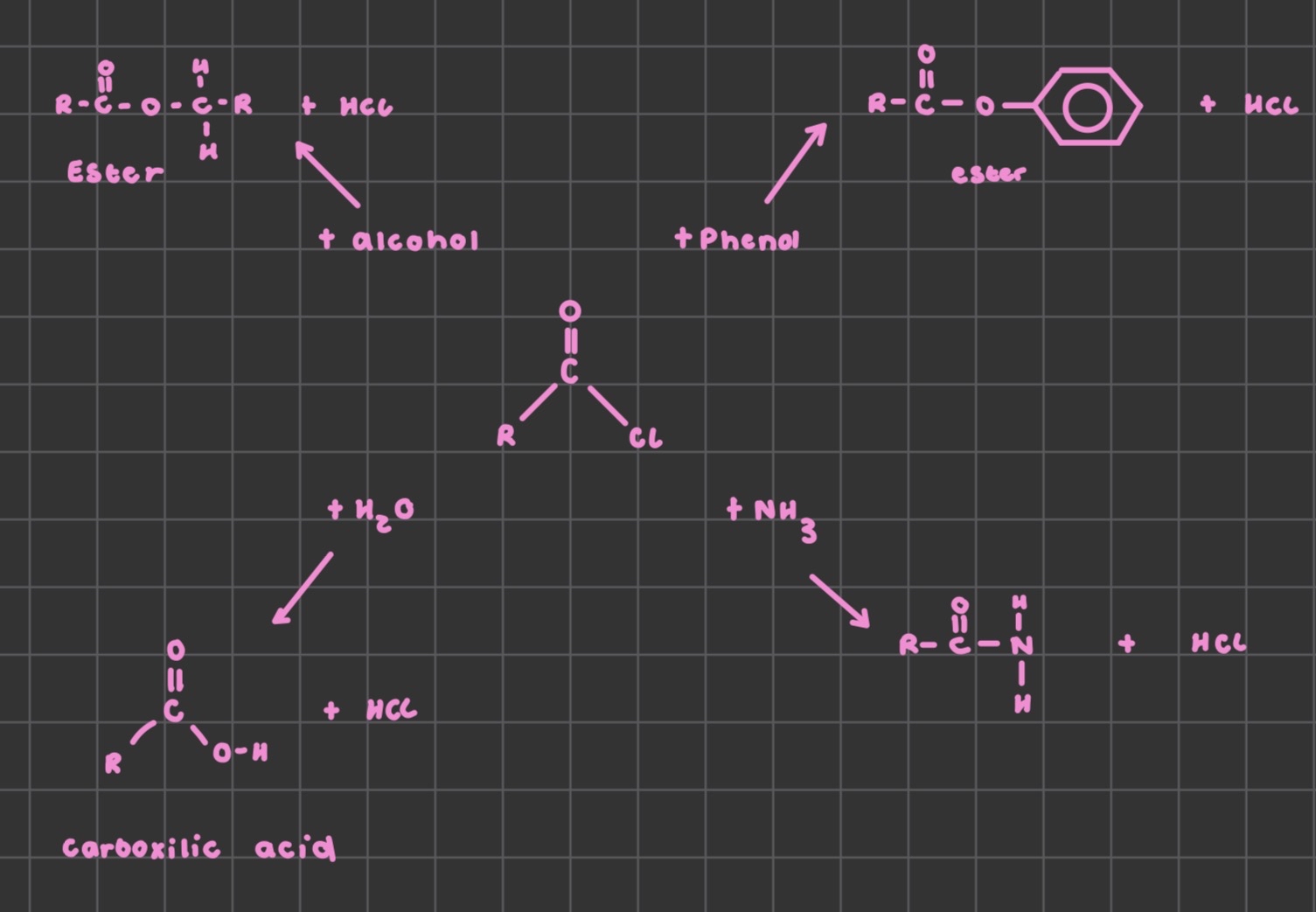
esters and acid anhydrides
structure: substitute an organic group for the H in acids
Nomenclature (naming): first part from alcohol, second part from acid e.g methyl ethanoate = CH3COOCH3
e.g propanoic acid + methanol —> methyl propanoate + water
making esters from carboxylic acid = add alcohol and conc H2SO4 (makes water as well)
Hydrolysis of esters
esters are unreactive compared with acids and acyl chlorides
there are 2 types of hydrolysis reactions that can take place, acid hydrolysis and alkali hydrolysis
acid hydrolysis example (breaking of ester chain)=
CH3COOCH3 + H2O ⇌ CH3COOH + CH3OH
products: carboxylic acid and alcohol
Alkali hydrolysis example (breaking ester change)=
CH3COOCH3 + NaOH —> CH3COO- Na+ + CH3OH
very soluble in water
products= soluble sodium salt and alcohol (salt can then be used to make salts via saponification)
Uses of esters:
solvents
adhesives
perfumes
fruity flavours
soaps
Acid anhydrides
group display:
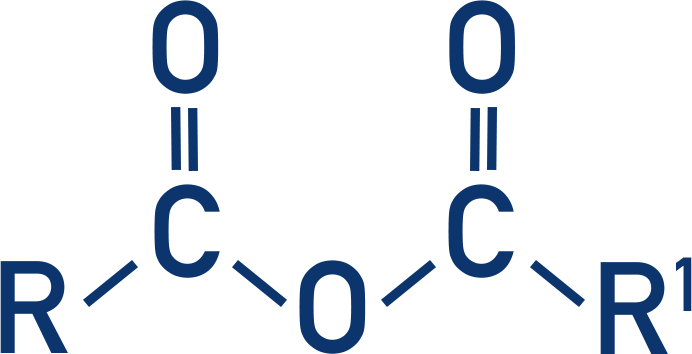
formed by dehydrating a carboxylic acid
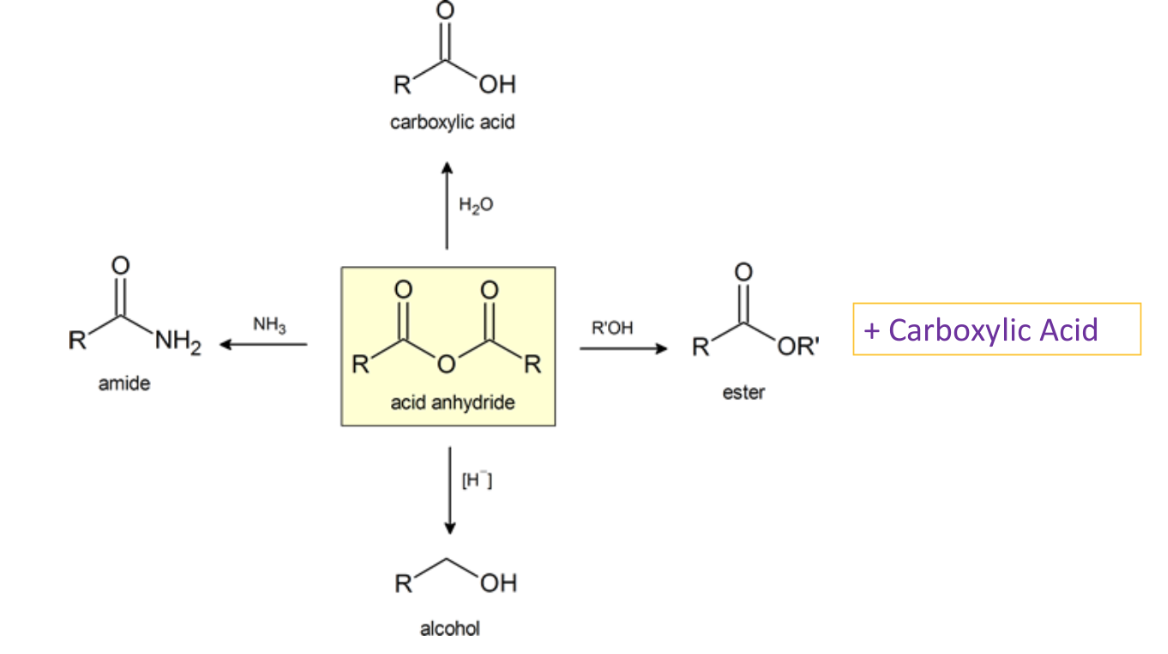
reaction paths of of acid anhydrides: