Signalling 4 - enzyme-linked receptors
Extracellular signalling mechanism: TGF-β pathway, Wnt pathway, Hedgehog pathway.
Intracellular signalling mechanisms: second messengers such as (discussed in these notes) cGMP through the NO/cGMP pathway
Receptor guanylyl cyclases (rGCs)
Receptor guanylyl cyclases (rGCs)
Activated by natriuretic peptides (ANP and BNP).
Structure: Receptor outside the cell; cyclase domain inside that is the effector which transmits the signal.
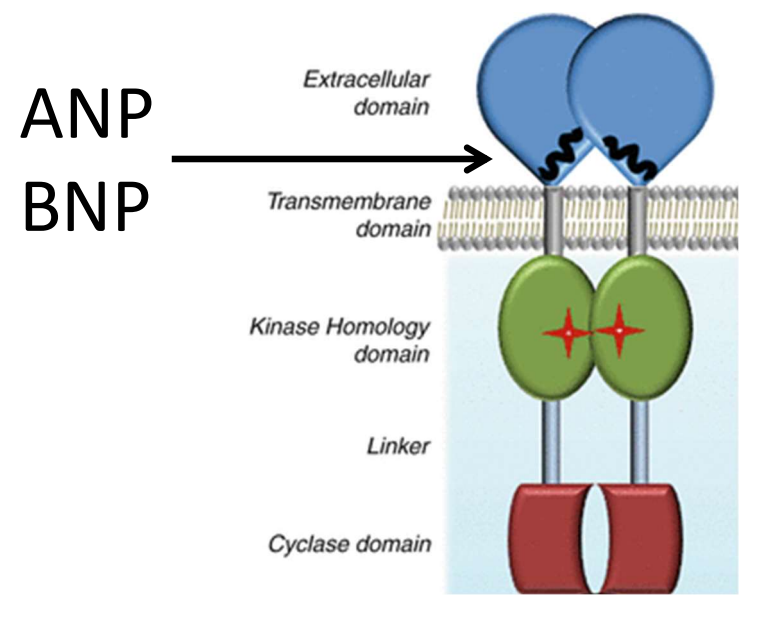
Function: Cyclase effector domain converts GTP into cyclic GMP (cGMP), a second messenger.
Comparison with Cyclic AMP (cAMP) Pathway
cGMP and cAMP have similar molecular structures.
cGMP is produced by guanylyl cyclase from GTP while cAMP is produced by adenylate cyclase from ATP.
The production of cAMP involves GPCR and G-protein molecular switch, while the production of cGMP only involves rGCs.
Both pathways need GTP. Both terminated by phosphodiesterase (PDE) by converting cGMP/cAMP back to GMP/AMP.
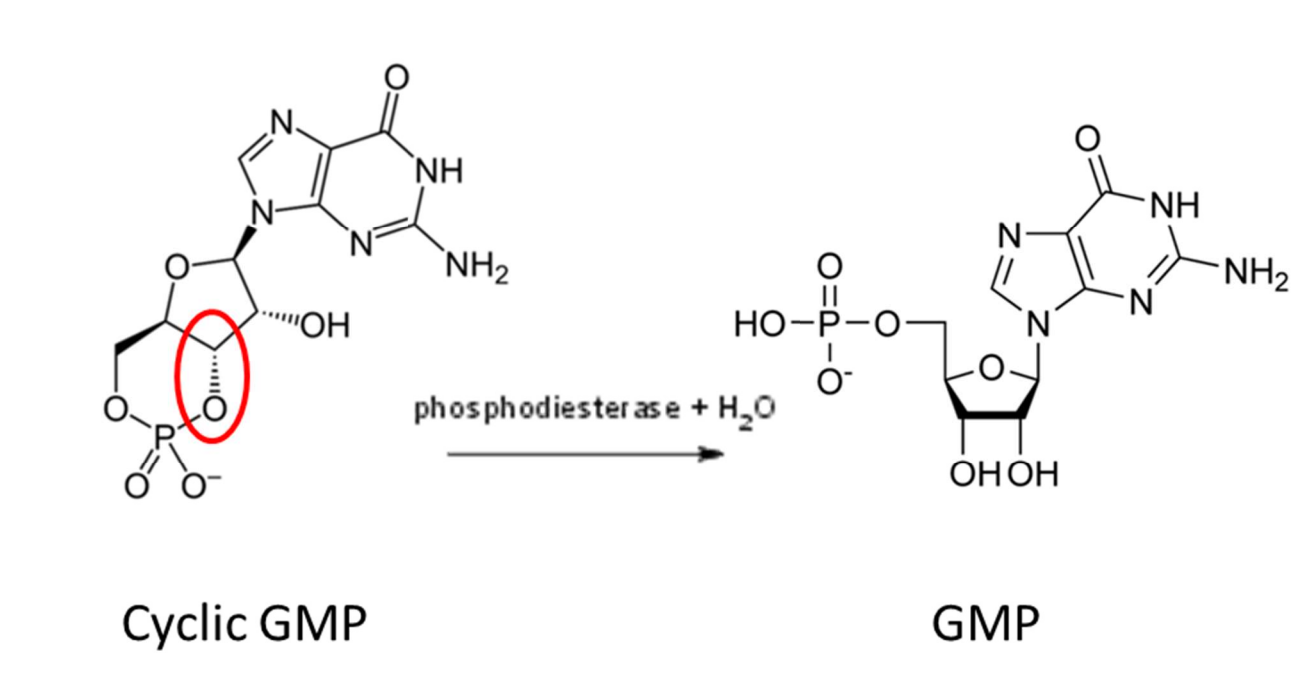
Pharmacological relevance: for example, Viagra inhibits PDE5, increasing cGMP levels, leading to smooth muscle relaxation and increased blood flow through signalling pathways involving decreased intracellular calcium levels (Effect of cGMP).
cGMP activates PKG, while cAMP activates PKA.
Types of receptor guanylyl cyclases (rGCs)
Membrane-bound rGCs respond to external signals like peptides.
Soluble guanylyl cyclases float in cyctoplasm, and are activated by nitric oxide (NO) gas, leading to cGMP production.
Problem: NO is gas and is short-lived, leading to localized signaling effects unlike hormones.
Nitric Oxide Production: Activated NO synthase produces NO, which diffuses into cells and activates soluble guanylyl cyclases, leading to cGMP production.
Key Signalling Pathways
TGF-β signalling - receptor serine/threonine kinases
Primarily activated by Transforming Growth Factor-β (TGF-β) and ligands of the TGF-β superfamily.
All TGF-β ligands are secreted proteins. Examples are Activin, Bone morphogenetic protein (BMP).
Receptor types (I and II)
Activated type II receptors phosphorylate type I receptors. This is known as transphosphorylation. TGF-β receptor type I then phosphorylate specific SMAD proteins.
Phosphorylated SMAD proteins associate with SMAD4 to regulated gene expression vital for developmental processes like mesoderm induction and cell proliferation.
Wnt (Wingless (Drosophila) + Int-1 (mouse)) signalling pathway
Wnt proteins are secreted proteins.
It is a critical pathway involved in cell differentiation, growth, and embryonic development.
Canonical Pathway: Stimulus =Wnt ligand, Receptor = Frizzled and Lrp5/6 co-receptor, Effector = Dishevelled, Transcription factor = β-catenin.
Key event: Under normal conditions, β-catenin is degraded, inhibition of β-catenin proteolysis allows it to accumulate and act as a transcription factor, influencing gene expression regulations.
Proteolysis of β-catenin involves a complex of:
Axin
Adenomatous polyposis coli (APC)
Glycogen Synthase Kinase 3 (GSK3)
Casein kinase 1a (CK1a)
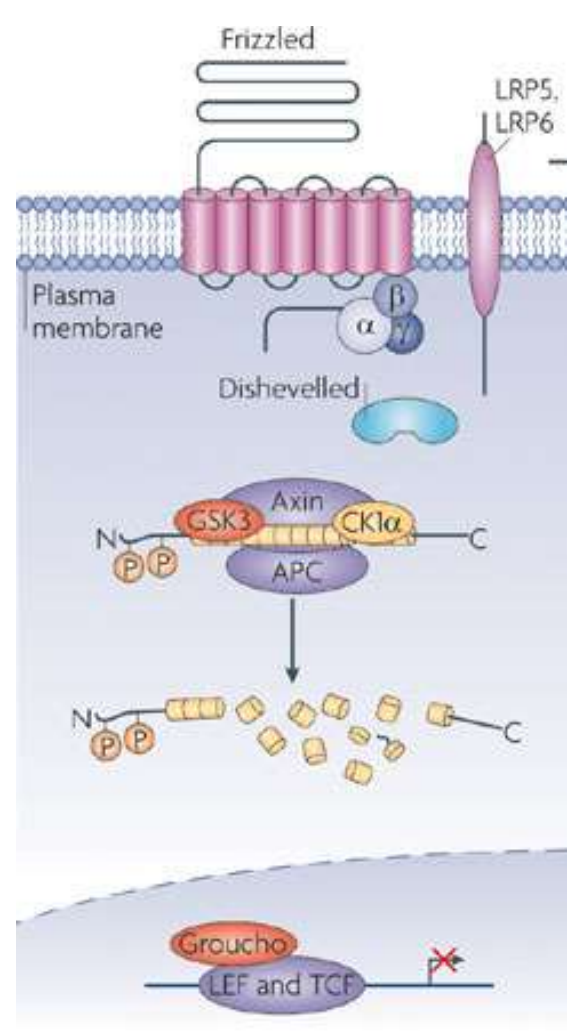
In the absence of β-catenin, Groucho represses the transcription of target genes LEF and TCF.
As β-catenin increases in level, Groucho is displaced to activate transcription.
Non-Canonical Pathway: Includes various downstream effects and involves other pathways like calcium and planar cell polarity (PCP).
Hedgehog (Hh) Signalling
Regulates polarity of segments and growth and polarity in developmental contexts in the embryo.
There are 3 types of secreted proteins: Sonic, Indian, Desert.
Mechanism: Hedgehog proteins bind to the Patched receptor, leading to the activation of Smoothened, which regulates downstream transcription factors like Gli.
Stimulus = Hedgehog; Receptor = Patched, Effector = Smoothened, Transcription factor = Gli (mammalian) or Cubitus interruptus.