Meiosis
What accounts for family resemblance
offspring resemble their parents more than unrelated individuals
Heredity
living organisms are distinguished by their ability to reproduce their own kind
Genetics
scientific study of heredity and variation
Heredity
the transmission of traits form one generation to the next
Variation
demonstrated by the differences in appearance that offspring show from parents and siblings
Inheritance of genes
genes are units of heredity
made up of segments of DNA
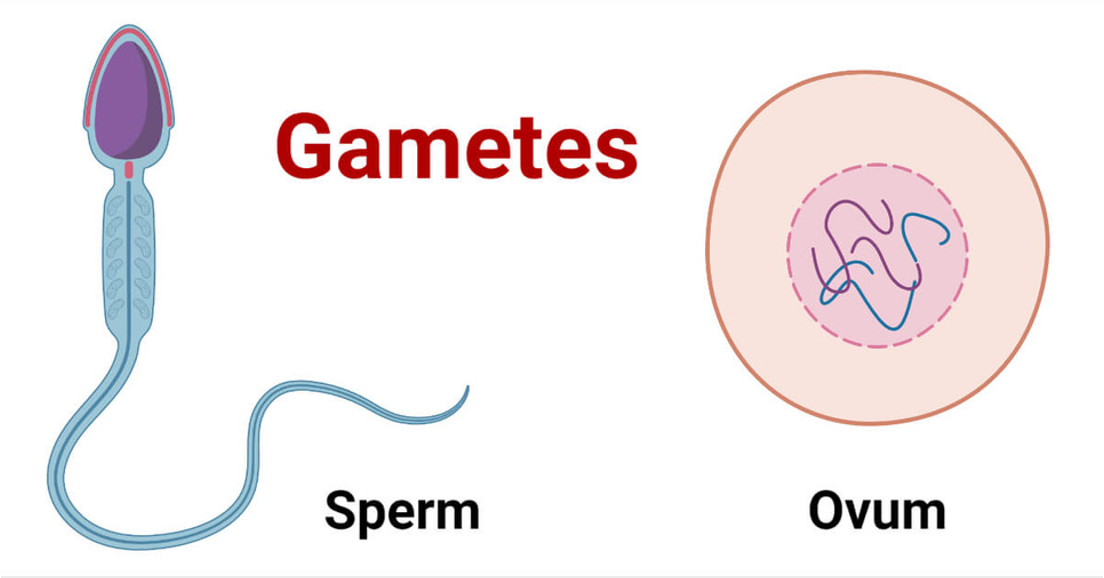
genes are passed to the next generation through reproductive cells called gametes (sperm and eggs)
each gene has a specific location called a locus on a certain chromosome
loci = plural
most DNA is packaged into chromosomes
one set of chromosomes is inherited from each parent
alleles = different versions of a gene that can exist at a special locus on a chromosome
can influence various traits
eye color, blood types, etc.
each individual inherites two alleles for each gene
one from each parents
determine the organism’s genotype
in a typical mendal cross
an allele can be dominant (capital) or recessive (lower)
Homologous chromosomes
pair of chromosomes
one chromosome from the mother and one from the father
after DNA replication, each homologous chromosome is made of a pair of sister chromatids
Sister chromatids
two identical copies of a single chromosome that are connected by a structure called the centromere
haploid
n or 1n
a cell having a single set of chromosomes not having one from each parent
Diploid
2n
a cell containing two complete sets of chromosomes, one from each parent
n stands for number of full sets of chromosomes
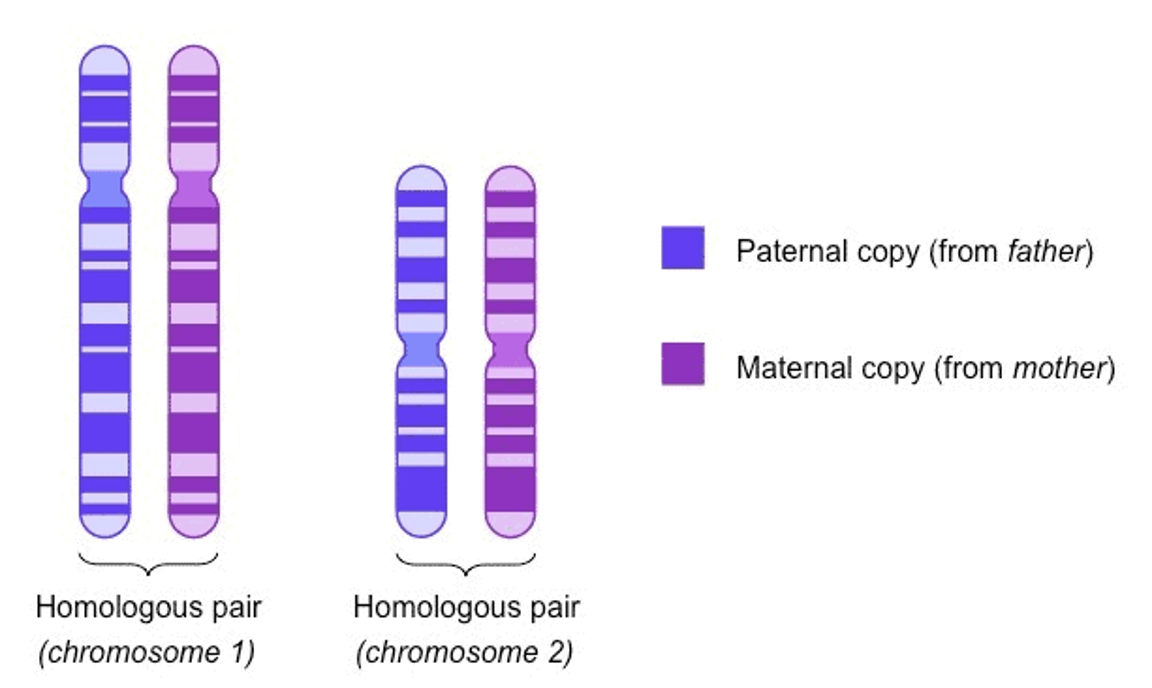
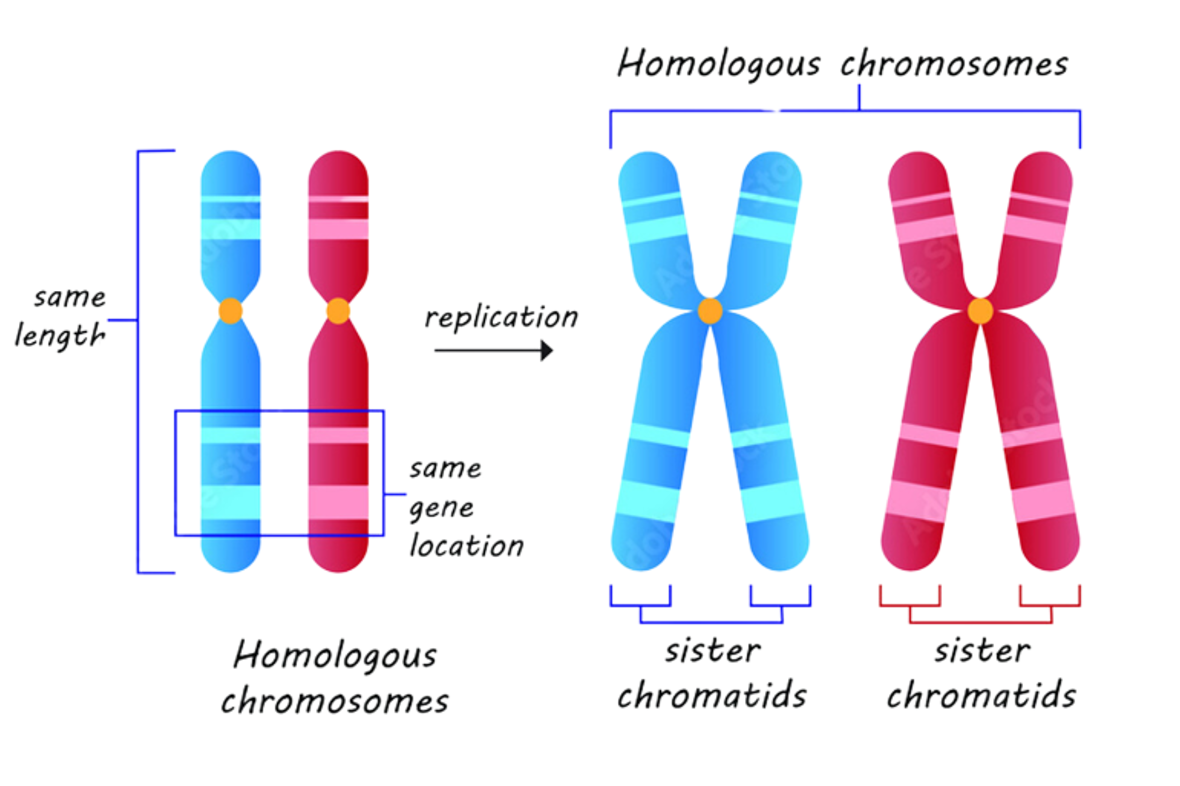
each pair of homologous chromosomes includes one chromosome from each parent
the 46 chromosomes in a human somatic cell are two sets of 23
one from mother and one from father
a diploid cell (2n) has two sets of chromosomes
for humans, diploid number = 46 (2n=46)
Sets of chromosomes in human cells
human somatic cells (any cell other than a gamete) have 23 pairs of chromosomes
a karyotype is an ordered display of the pairs of chromosomes from a cell
the two chromosomes in each pair are called homologous chromosomes, or homologs
chromosomes in a homologous pair are the same length and carry genes controlling the same inherited characters
sort based on size
one pair of sex chromosomes
called X and Y
human females have a homologous pair of X chromosomes (XX)
males have one X and one Y chromosome
22 pairs of chromosomes that do not determine sex are called autosomes
in a cell in which DNA synthesis has occurred
each chromosome is replicated
each replicated chromosome consists of two identical sister chromatids
Mitosis
process by which a single cell divides into two identical daughter cells
essential for growth and repair in multicellular organisms
essential for asexual reproduction in some single-celled organisms
(make more cells, make cells bigger)
Meiosis
process by which a single cell divides into four daughter cells
each with half the number of chromosomes of the parent cell
critical for sexual production
allows for the production of gametes
Asexual reproduction
one parent produces genetically identical offspring by mitosis
a clone is a group of genetically identical individuals from the same parent
Sexual reproduction
two parents give rise to offspring that have unique combinations of genes inherited from the two parents
Fertilization and meiosis alternate in sexual life cycles
a life cycle is the generation-to-generation sequence of stages in the reproductive history of an organism
meiosis is the process in which the gametes are formed in animals or spores in plants, fungi, and some protists to create haploid cells
fertilization is the process in which two haploid cells (gametes) fuse to form a single diploid cell
called zygote (or sometimes a diploid stage)
The variety of Sexual Life cycles
the alternation of meiosis and fertilizaton is common to all organisms that reproduce sexually
the three main types of sexual life cycles differ in the timing of meiosis and fertilization
a. haploid life cycle
b. diploid life cycle
c. alternation of generations
a) Haploid life cycle
in most fungi and some protists
the only diploid stage is the single-celled zygote
there is no multicellular diploid stage
the zygote produces haploid cells by meiosis
each haploid cell grows by mitosis into a haploid multicellular organism
the haploid adult produces gametes by mitosis
most of the organism’s life is haploid (n)
adult organism has one set of chromosomes
multicellular but haploid
fertilization creates a zygote (2n)
two haploid gametes fuse
forms a single diploid cell (zygote)
only diploid stage
zygote does meiosis
turns zygote into haploid cells
haploid cells grow by mitosis
form a haploid multicellular organism
haploid adults make gametes by mitosis
b) Diploid life cycle
in animals
meiosis produces gametes
undergo no further cell division before fertilization
gametes are the only haploid cells in animals
gametes fuse to form a diploid zygote that divides by mitosis to develop into a multicellular organism
c) alternative of generations
plants and some algae exhibit an alternation of generation
this life cycles includes
both a diploid and haploid multicellular stage
the diploid organism, called the sporophyte
makes haploid spores by meiosis
each spore grows by mitosis into a haploid organism called a gametophyte
a gametophyte makes haploid gametes by mitosis
fertilization of gametes results in a diploid sporophyte
plants alternative between two different multicellular bodies
a diploid generation (sporophyte)
a haploid generation (gametophyte)
sporophyte makes spores by meiosis
reduces chromosome number (2n→ n)
spores grow into gametophytes
haploid spore divides by mitosis
becomes a haploid multicellular organism (gametophyte)
gametophyte makes gametes by mitosis
continues to be haploid
two gametes fuse
forms diploid zygote
zygote grows by mitosis into sporophyte
meiosis shares some characteristics with mitosis
however it produces haploid cells, which introduces some differences
this process involves the “PPMAT” phases
occurs twice to guarantee that the resulting cells are haploid
these two stages are referred to as Meiosis I and Meiosis II
Interphase
G1 Phase
cell grows and produces proteins
S Phase
DNA replication occurs
G2 Phase
cell grows further and prepares for division
even though there is twice the DNA as before replication
the cell is still considered diploid
we count chromosomes by the number of centromeres
sister chromatid cohesion allows sister chromatids of a single chromosome to stay together through meiosis I
protein complexes called cohesins are responsible for this cohesion
in mitosis
cohesins are cleaved 劈裂 at the end of metaphase
in meiosis
cohesins are cleaved along the chromosome arms in anaphase I (separation of homologs) and at the centromeres in anaphase II (separation of sister chromatids)
explains how sister chromatids stay together and then separate at the correct time in mitosis vs meiosis
key player = cohesin proteins
sister chromatid cohesion = physical holding together of sister chromatids
done by cohesin protein complexes
In mitosis
all cohesins are cleaved 劈裂
sister chromatids separate
Result
each daughter cell gets one chromatid
chromatids become individual chromosomes
In meiosis
cohesins cleaved along the chromosome arms in anaphase I
allows homologous chromosome to separate while sisters stay attached
centromeres in anaphase II
sister chromatids finally separate
Why matters?
meiosis I reduces chromosome number (diploid → haploid)
meiosis II separates sister chromatids correctly
IF goes wrong → nondisjunction (extra/ missing chromosomes)
Memory trick
mitosis
cut all cohesins at once
meiosis I
cut arms only
meiosis II
cut centromeres
Prophase I
chromatin condenses into the chromsomes
homologous chromsomes will fuse together in a process called synapsis
then, crossing over takes place
genetic material is exchanged between homologous chromosome
During cross over
recombination occur
process where homologous chromosomes pair up and exchange genetic material between each other
called recombinant chromosomes
each tetrad usually has one or more chiasmata, X-shaped regions where crossing over occurred
Prometaphase I
nuclear membrane dissolves
mitotic spindle starts to form and attach to the chromosomes at their centromeres
Metaphase I
homologous chromosomes align in pairs in center of cell
random assortment occurs
chromosomes pairs line up randomly
Anaphase I
homologous chromosomes pairs separate and move to opposite ends of the cell
as homologous pairs are separated
each end of the cell will contain only one version of each chromosome
ensures that each cell contains half the number of chromosomes and is haploid
Telophase I & Cytokinesis I
two new nuclei form around each set of chromosomes
cytoplasm splits and two (haploid) daughter cells are formed
cleavage furrow forms
cell plate forms in plant cells
Prophase II
Meiosis II happens to allow 4 haploid gametes to be created
no interphase II
interkinesis
centrosomes replicate, nucleus reforms around the chromosomes
DNA is not replicated between meiosis I and II
Prometaphase II
nuclear membrane dissolves
mitotic spindle begins to form and attach to chromosomes at their centromeres
Metaphase II
chromosomes align in a single file in the center of the cell
occurs to ensure sister chromatids separate in the next phase
Anaphase II
sister chromatids separate and move to opposite ends of the cell
chromosomes on each end of the cell will result in haploid daughter cells
each will have one version of each chromosome
Telophase II
four new nuclei form around each set of chromosomes
Cytokinesis II
cytoplasm splits and four (haploid) daughter cells are formed