Insects and People: Products and Services
Most Insects Are Good
- Out of all the insect species in the world, only about 5% are pests of humans (Urban, Agriculture, Disease, etc.)
- The rest are beneficial in some way to us
- We wouldn’t be here without them!
Insect Products and Supplies
Many insects produce things that we take advantage of
- Usually in the form of goods (products) or services
Bees produce many things including, some of which we take advantage of or consume (Apiculture)
- Honey
- Beeswax
- Pollen
- Royal Jelly
- Venom
Silkworms have been farmed for a very long time (4500~ BCE in by the Yangshao culture in China)
- It takes 3,000 silkworms eating 200 lbs of mulberry leaves to make one pound of silk
- Sericulture is the farming of silk
Some species of scale insects can be harvested for their naturally produced properties
- Cochineal/Carmine dye
- Shellac from scales
- Red dye number four
- Ink from oak galls
- During medieval times, ink was made from the tannins in trees Can be collected from oak galls
Insects also supply a variety of services for humans.
- They can be used as food for humans, as well as in medicine
- Pollen pellets, which bees carry, can be eaten and are very nutritious (corbiula= pollen basket)
- Mead made from honey
- Carnivorous plants
Insects As Food
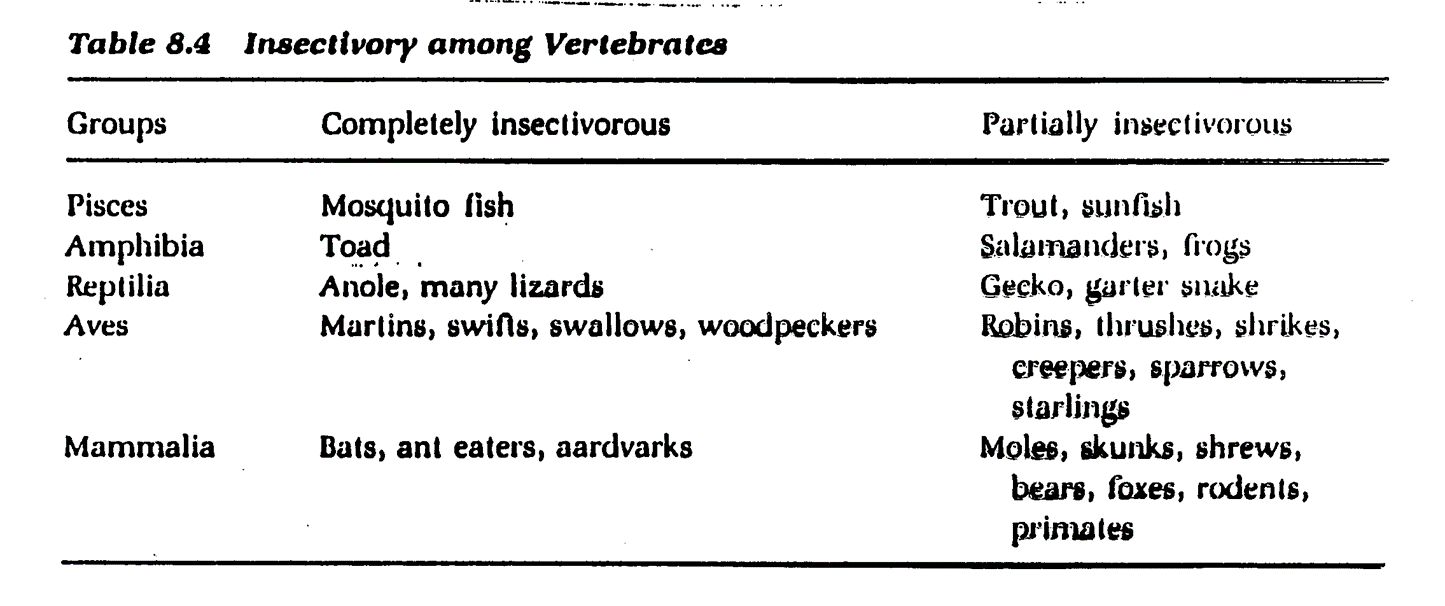
Insects serve as a major food source for other groups of organisms.
- What animals can you think of that eat ONLY insects (completely insectivores)?
- Mosquito fish, toad, lizards, swallows, woodpeckers, anteaters,
- What animals can you think of that eat insects sometimes?
- Trout, sunfish, salamanders, frogs, gecko, garter snake, robins
Pollinators
- Insects across the globe serve as pollinators for flowering plants
- Most temperate flowering plants (and some crops) rely on insect pollination
- Types of pollinators:
- Bees, ants, wasps, beetles, flies, mosquitoes, and moths/butterflies
- Wasps are the only ones who can pollinate fig trees, so figs would go extinct without wasps
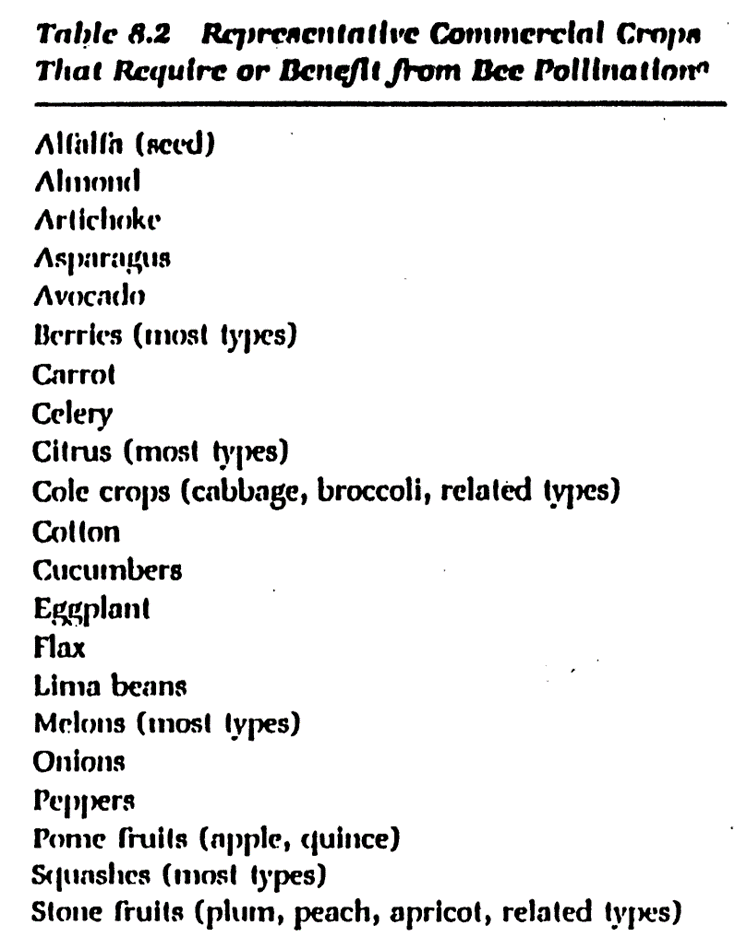
- Without bees, we would have few fruits and vegetables
- Bees on the decline!
- Bee Pollinated Crops:
Insect Predation
- Many insects (and arthropods) serve as predators and parasitoids of other insects controlling their populations
- Warriors of the insect world ensure the balance of nature by eating other insects
Insect Decomposers
Insects are the ultimate decomposers. They turn dead and decaying plants and animals and their waste products into reusable sources of C, H, N, O, P, etc.
- Saprophagous insects: insects that feed on decaying organic matter
- They turn this organic matter back into reusable nutrients (C, H, N, O, P)
- Wood and Plants: Termites, Beetles, Flies, Ants, etc.
- Animal Carcasses: Flies, Skin/Fur/Hide Beetles, Burying beetles, etc.
- Animal Waste: Dung flies, Beetles, etc.
- Insects are also used in forensic entomology to see how long a body has been dead for.
Insects as “Lab Rats”
- We have used flies and other insects as model organisms in science for many years now
- Drosophila melanogaster & genetics
- No one cares if insects are used in experiments, rather than other animals, so there is a lot less regulation.
Insect Entertainers
- Insects can serve as a source of inspiration for many movies, T.V. shows, and literature
- Often portrayed as villains…