micro_rna
Recent Advances in miRNA Development and Clinical Application
Authors and Affiliations
Sara Nunes, Laboratory of Medicine and Precision Public Health (MeSP2), Gonçalo Moniz Institute, Oswaldo Cruz Foundation (FIOCRUZ), Salvador, Bahia, Brazil
Rana Bastos, Federal University of Bahia (UFBA), Salvador, Brazil
Ananda Isis Marinho, FIOCRUZ
Raissa Vieira, FIOCRUZ
Ingra Benício, FIOCRUZ
Maria Alícia de Noronha, UFBA
Sofia Lírio, Bahiana School of Medicine and Public Health, Salvador, Brazil
Cláudia Brodskyn, FIOCRUZ
Natalia Machado Tavares, FIOCRUZ (Corresponding author)
Article Info
Keywords: microRNAs, infectious diseases, biomarkers, therapeutic targets
Abstract
MicroRNAs (miRs): Small RNAs important for gene regulation emerging as candidates for biomarkers and therapeutic targets in infectious diseases.
MiRs help in distinguishing healthy from diseased states and different disease stages.
They can be detected in biological fluids, supporting non-invasive diagnostics.
Focus of the manuscript: To describe miRs as biomarkers and therapeutic targets, analyze miR platforms, and discuss clinical applications.
1. Introduction
Importance of Research: Understanding pathogen mechanisms aids in developing new strategies for disease management.
Role of Non-Coding RNAs: Key elements in controlling physiological and immune responses, particularly during infections.
Characterization of miRNAs: Unique features and functions:
Approximately 22 nucleotides long, regulating gene expression by degrading mRNA or repressing translation.
Represent 1-2% of eukaryotic genomes, regulating over 60% of human genes.
Clinical Significance of miRNAs
MiRNAs as biomarkers:
Distinguish between healthy individuals and those with diseases, identify stages, and serve as screening tools.
Investigated as therapeutic targets:
Examples include Miravirsen for hepatitis C and MRX34 for tumors.
MiRNAs can enhance existing treatments' efficacy or serve as standalone therapies.
2. The Biogenesis of MicroRNAs
Formation Steps:
Primary miRNA (pri-miRNA) transcribed from DNA.
Cleaved by DROSHA into precursor miRNA (pre-miRNA).
Transported to the cytoplasm and cleaved by DICER into mature miRNAs.
Functioning Mechanism:
Integrates into the RNA-induced silencing complex (RISC) to regulate target mRNA expression, leading to decreased translation or degradation.
3. Clinical Applications of miRNAs
3.1 Treatment and Therapy
Utilization in Medicine:
Specific sequences known as miRNA mimics and antagomirs designed to modulate gene expression.
Preclinical trials crucial for evaluating effectiveness and optimizing delivery systems.
Notable Treatments:
AMT-130: Artificial miRNA for Huntington’s disease.
Miravirsen: Targets miR-122 to reduce HCV.
3.2 Potential of miRNAs as Biomarkers
Non-Invasive Diagnostic Tools:
Detectable in various bodily fluids, allowing for easier monitoring compared to traditional methods.
Highlighted Diseases: HIV, Tuberculosis, Hepatitis C, etc. with specific miRNA profiles significant for diagnosis.
Examples of miRNA Profiles:
Upregulated: miR-19a-3p in COVID-19.
Downregulated: miR-150 in HIV.
4. Expression of miRNAs in Infectious Diseases
4.1 Tuberculosis
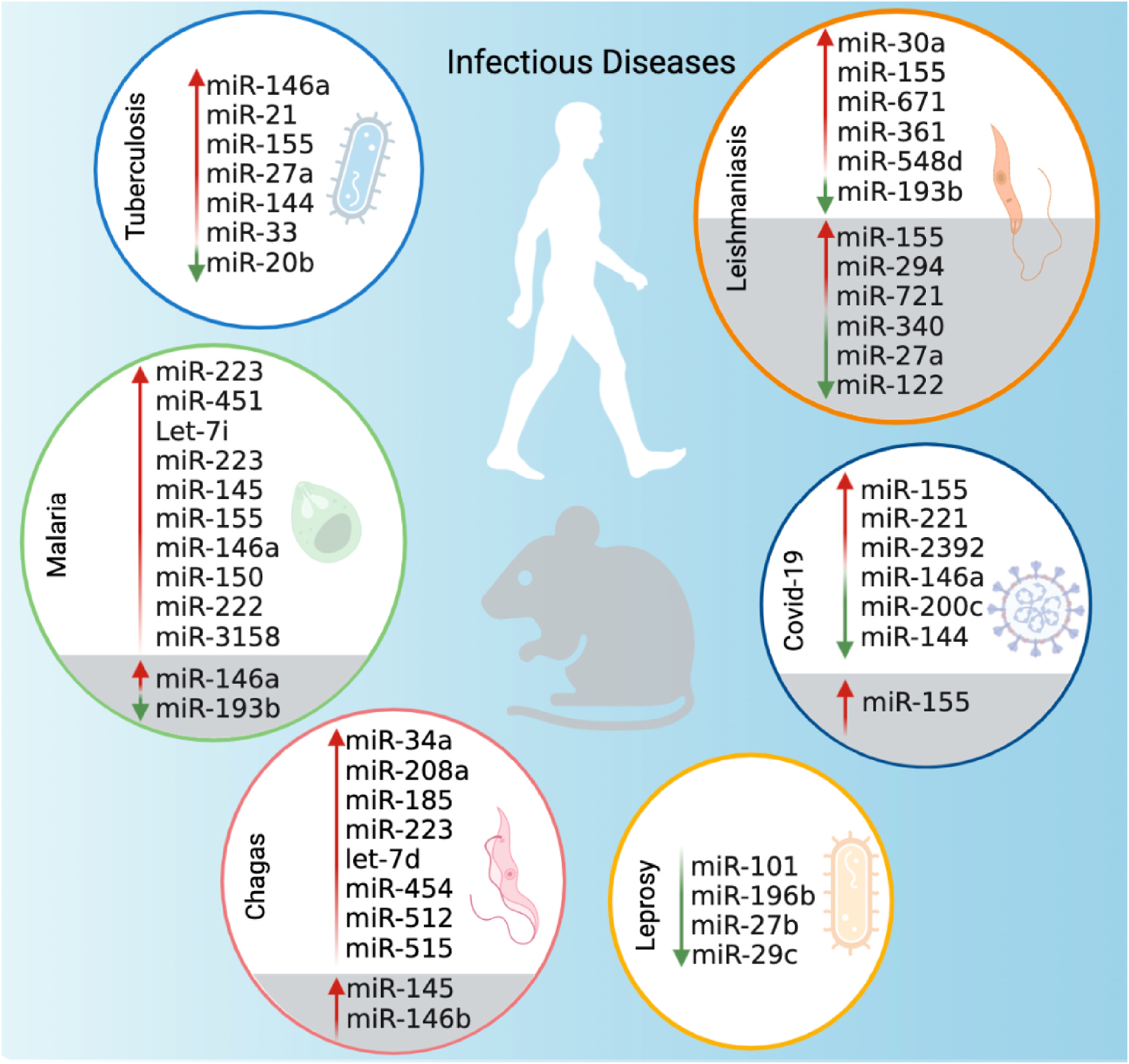
Influence of miRNAs such as miR-21, miR-155 in modulating immune response, and phagocyte function against Mycobacterium tuberculosis.
4.2 Leprosy
Differential expression of miRNAs in leprosy lesions correlates with disease forms (TT and LL), showing potential for early diagnosis.
4.3 Malaria
Investigation into miRNAs during Plasmodium infection reveals roles in inflammation and immune response modulation.
4.4 Leishmaniasis
Host-cell miRNA profiling suggests modulation by Leishmania parasites, influencing immune response and persistence.
4.5 Chagas Disease
miRNAs like miR-145 and miR-146b play roles in modulating immune response and reducing parasitic burden.
4.6 SARS-CoV-2 (COVID-19)
Various miRNAs (miR-146a, miR-155, miR-2392) influence inflammatory responses and disease severity, indicating their potential as biomarkers for COVID-19 status.
5. Platforms to Analyze miRNAs
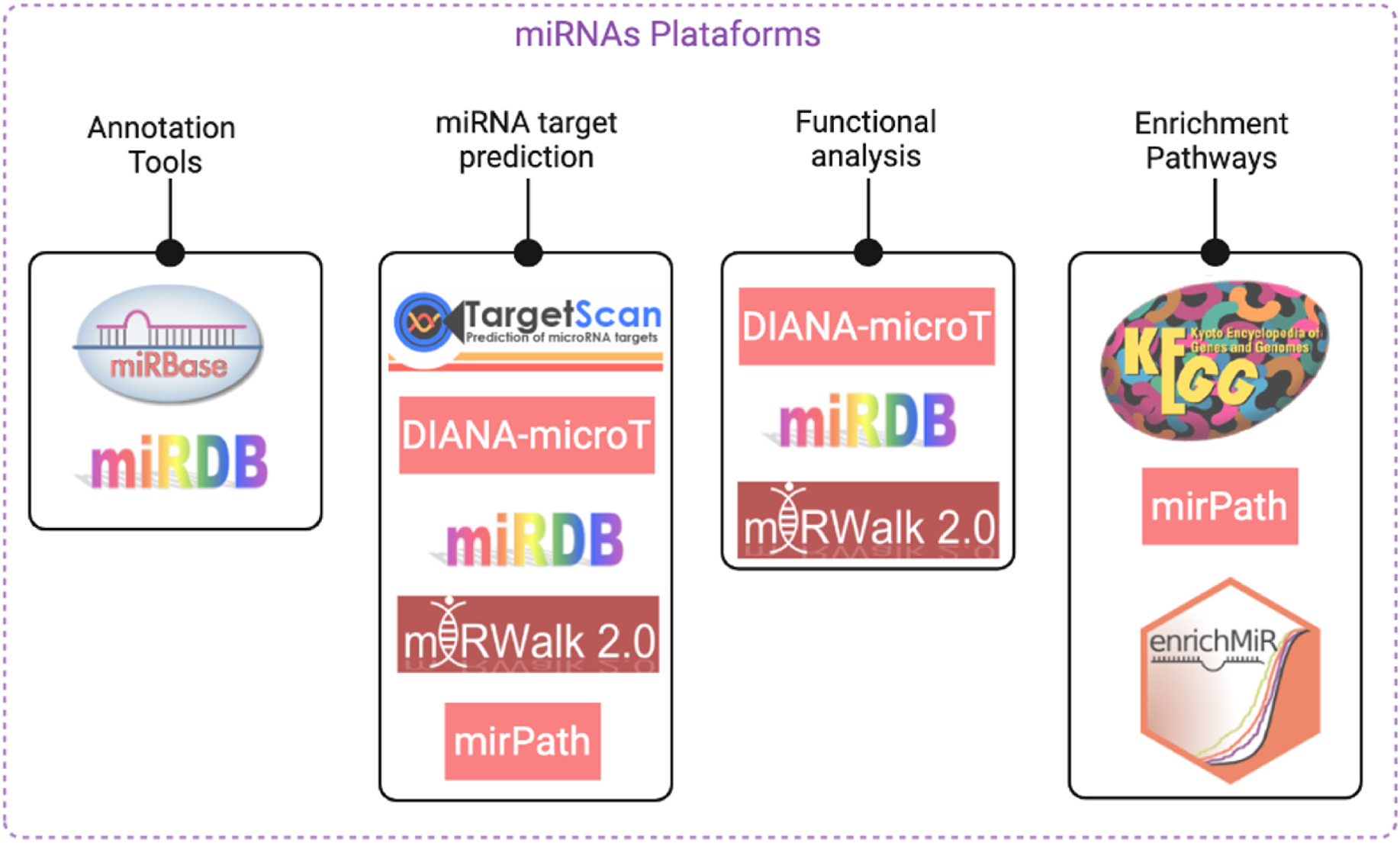
Overview of tools such as miRBase, TargetScan, and DIANA-microT for predicting interactions and understanding miRNA biology.
6. Obstacles and Advances in miRNA Clinical Applications
Challenges remain regarding effective delivery and specificity of miRNA therapies. Development of targeted delivery systems is crucial for clinical success.
7. Conclusion
Importance of continued research into miRNAs for their roles as biomarkers and therapeutic targets. Their inherent capabilities offer promise in treating infectious diseases and advancing personalized medicine.