Shelley, continued
"Song to the Men of England" (1819)
Poem Context
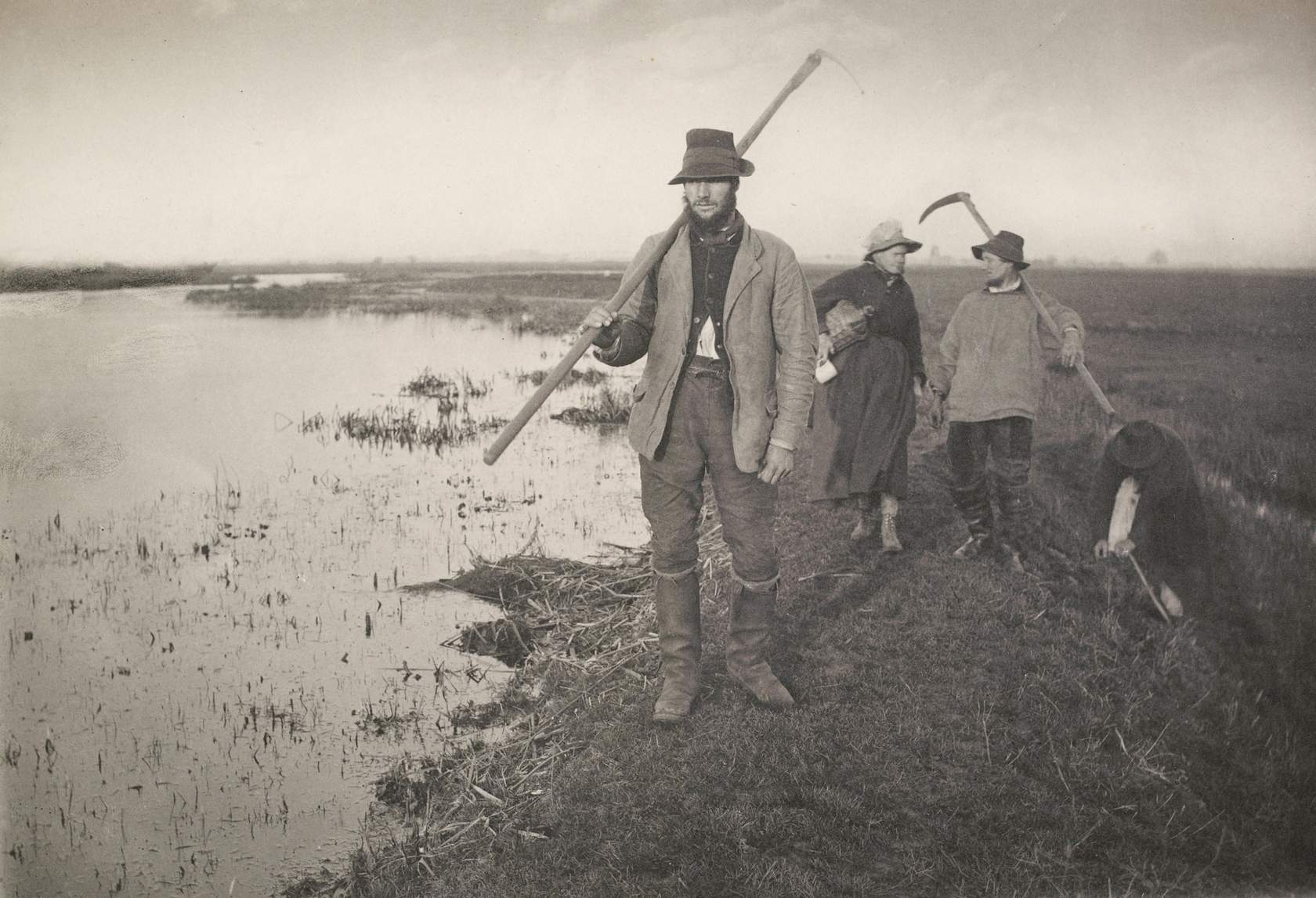
Shelley wrote "Men of England" with the hope that it would become an anthem for downtrodden British laborers.
Vocabulary Guide
Wherefore: for what reason; why
Drone: a useless person; a male bee who does no work except to fertilize the queen
Sepulchre: tomb
Men of England, wherefore plough
For the lords who lay ye low?
Wherefore weave with toil and care
The rich robes your tyrants wear?Wherefore feed and clothe and save [5]
From the cradle to the grave
Those ungrateful drones who would
Drain your sweat—nay, drink your blood?Wherefore, Bees of England, forge
Many a weapon, chain, and scourge, [10]
That these stingless drones may spoil
The forced produce of your toil?Have ye leisure, comfort, calm,
Shelter, food, love's gentle balm?
Or what is it ye buy so dear [15]
With your pain and with your fear?The seed ye sow, another reaps;
The wealth ye find, another keeps;
The robes ye weave, another wears;
The arms ye forge, another bears. [20]Sow seed—but let no tyrant reap:
Find wealth—let no imposter heap:
Weave robes—let not the idle wear:
Forge arms—in your defence to bear.Shrink to your cellars, holes, and cells— [25]
In hall ye deck another dwells.
Why shake the chains ye wrought? Ye see
The steel ye tempered glance on ye.With plough and spade and hoe and loom
Trace your grave and build your tomb [30]
And weave your winding-sheet—till fair
England be your Sepulchre.
"Song to the Men of England"
Poem Analysis
In "Men of England," we see Shelley's fiery politics. He, the poet, is enraged at the injustices British laborers suffer under "ungrateful drones." He boldly calls out the laziness and cruelty of the upper classes, challenging lower-class workers to rise up against their masters. This is a controversial position!
At the same time, Shelley criticizes the workers themselves. He taunts them, almost blaming them for their own suffering:
Shrink to your cellars, holes, and cells—
In hall ye deck another dwells.
Why shake the chains ye wrought? Ye see
The steel ye tempered glance on ye.
With plough and spade and hoe and loom
Trace your grave and build your tomb. ... (lines 25–30)
Shelley speaks the truth in this poem. Many laborers were perpetuating their own sorrow, and many masters did treat their workers poorly. However, the young poet speaks from a position of privilege. He has not experienced the oppression of British laborers, so his poem lacks compassion and understanding of their situation. His tone—a mixture of inspiring and condescending—adds a layer of tension to the poem.
"Ode to the West Wind" (1819)
Vocabulary Guide
Azure: bright blue
Clarion: a trumpet
Mænad: a frantically dancing worshipper of Dionysus, Greek god of wine and vegetation
Zenith: the highest point reached by a celestial object
Pumice: porous volcanic rock
Lyre: a stringed instrument
1.
O wild West Wind, thou breath of Autumn's being,
Thou, from whose unseen presence the leaves dead
Are driven, like ghosts from an enchanter fleeing,
Yellow, and black, and pale, and hectic red,
Pestilence-stricken multitudes: O Thou, [5]
Who chariotest to their dark wintry bed
The wingèd seeds, where they lie cold and low,
Each like a corpse within its grave, until
Thine azure sister of the Spring shall blow
Her clarion o'er the dreaming earth, and fill [10]
(Driving sweet buds like flocks to feed in air)
With living hues and odours plain and hill:
Wild Spirit, which art moving everywhere;
Destroyer and Preserver; hear, O hear!
2.
Thou on whose stream, 'mid the steep sky's commotion, [15]
Loose clouds like Earth's decaying leaves are shed,
Shook from the tangled boughs of Heaven and Ocean,
Angels of rain and lightning: there are spread
On the blue surface of thine airy surge,
Like the bright hair uplifted from the head [20]
Of some fierce Mænad, even from the dim verge
Of the horizon to the zenith's height,
The locks of the approaching storm. Thou Dirge
Of the dying year, to which this closing night
Will be the dome of a vast sepulchre, [25]
Vaulted with all thy congregated might
Of vapours, from whose solid atmosphere
Black rain and fire and hail will burst: O hear!
3.
Thou who didst waken from his summer dreams
The blue Mediterranean, where he lay, [30]
Lulled by the coil of his chrystalline streams,
Beside a pumice isle in Baiæ's bay,
And saw in sleep old palaces and towers
Quivering within the wave's intenser day,
All overgrown with azure moss, and flowers [35]
So sweet, the sense faints picturing them! Thou
For whose path the Atlantic's level powers
Cleave themselves into chasms, while far below
The sea-blooms and the oozy woods which wear
The sapless foliage of the ocean, know [40]
Thy voice, and suddenly grow grey with fear,
And tremble and despoil themselves: O hear!
4.
If I were a dead leaf thou mightest bear;
If I were a swift cloud to fly with thee;
A wave to pant beneath thy power, and share [45]
The impulse of thy strength, only less free
Than thou, O Uncontrollable! If even
I were as in my boyhood, and could be
The comrade of thy wanderings over Heaven,
As then, when to outstrip thy skiey speed [50]
Scarce seemed a vision; I would ne'er have striven
As thus with thee in prayer in my sore need.
Oh! lift me as a wave, a leaf, a cloud!
I fall upon the thorns of life! I bleed!
A heavy weight of hours has chained and bowed [55]
One too like thee: tameless, and swift, and proud.
5.
Make me thy lyre, even as the forest is:
What if my leaves are falling like its own!
The tumult of thy mighty harmonies
Will take from both a deep, autumnal tone, [60]
Sweet though in sadness. Be thou, Spirit fierce,
My spirit! Be thou me, impetuous one!
Drive my dead thoughts over the universe,
Like wither'd leaves, to quicken a new birth!
And, by the incantation of this verse, [65]
Scatter, as from an unextinguished hearth
Ashes and sparks, my words among mankind!
Be through my lips to unawakened Earth
The trumpet of a prophecy! O Wind,
If Winter comes, can Spring be far behind? [70]
"Ode to the West Wind"
Poem Highlights
Literary Device
Symbolism
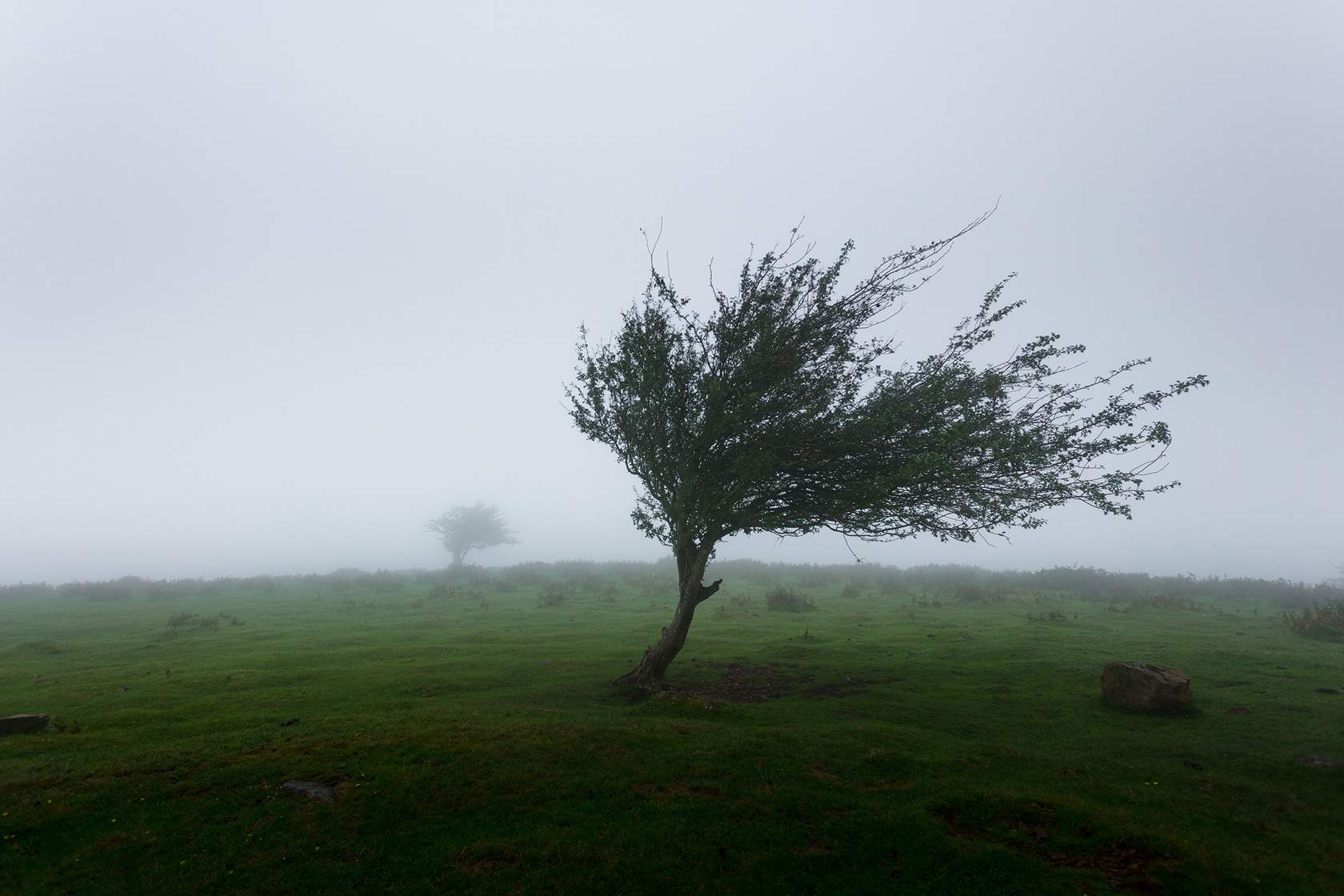
Shelley addresses this poem to the West Wind, a powerful force of nature. For him, the West Wind seems to symbolize the ability to affect widespread change. The West Wind moves freely and swiftly across land, sky, and sea, pushing away dead leaves (the old ways) and preserving seeds (the new ways) in the ground in preparation for winter and spring.
Literary Device
Apostrophe
This poem is essentially one long apostrophe (exclamatory address to an inanimate thing). Shelley begs the West Wind to hear and help him.
This relationship between Shelley and the wind is Romantic (in the literary sense): Shelley does not observe and talk about the wind; he talks to the wind as if they are friends.
Form
Poem Structure
Did you notice how Shelley structured this poem? He drops a clue in stanza 4:
"If I were a dead leaf thou mightest bear;
If I were a swift cloud to fly with thee;
A wave to pant beneath thy power. . ."
Each line corresponds to one of the previous three stanzas. In stanza 1, the poet describes how the West Wind moves across the land and blows away the dead leaves. In stanza 2, the poet describes how the West Wind blows the clouds through the skies. In stanza 3, the poet describes how the West Wind moves the waves in the ocean. Land, sky, and sea!