L8: Irradiation creep
Learning Outcomes:
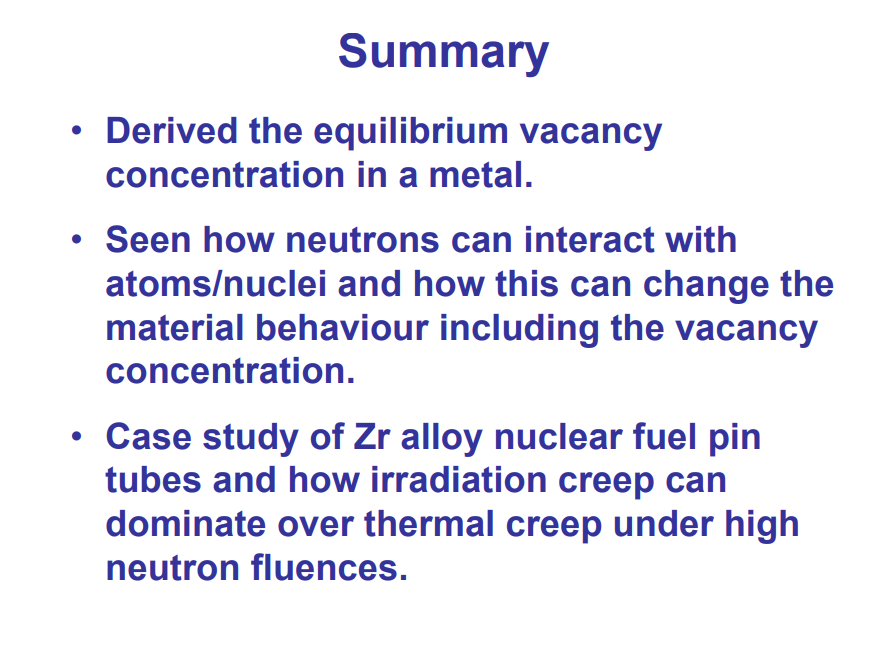
Explain why vacancies occur in metals and calculate the equilibrium concentration of vacancies.
Describe how neutrons can interact with atoms and hence change the properties of materials.
Describe the irradiation creep of zirconium alloys for nuclear fuel cladding
Equilibrium Vacancy Concentration in Metals
Why vacancies occur:
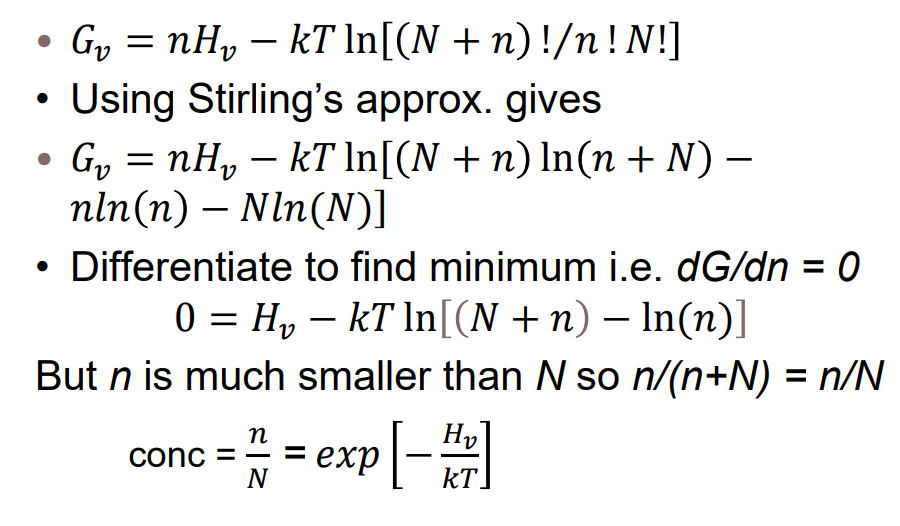
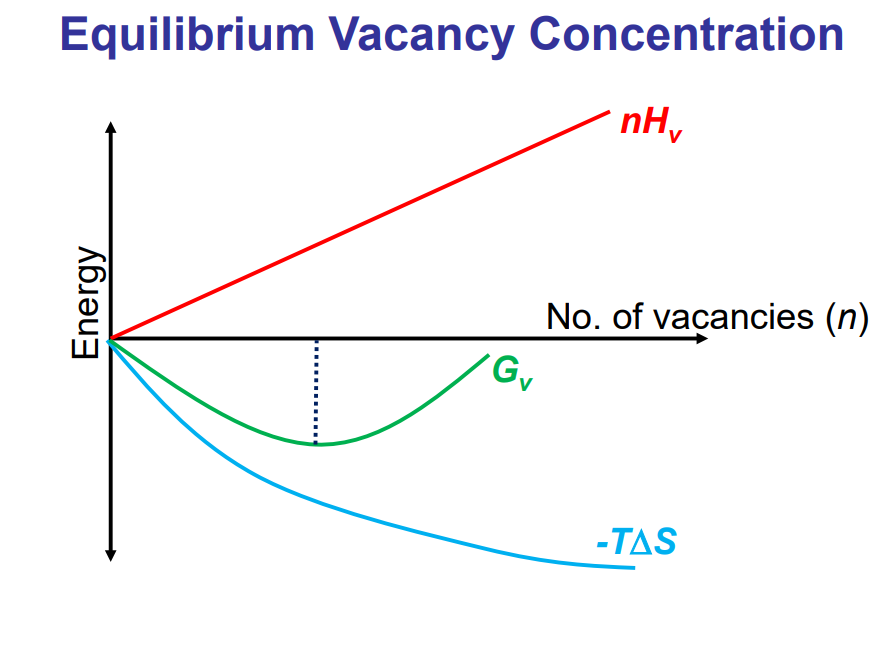
Vacancies form due to configurational entropy (disorder) even though energy (~1–3 eV) is required to create them.
Gibbs free energy balance:
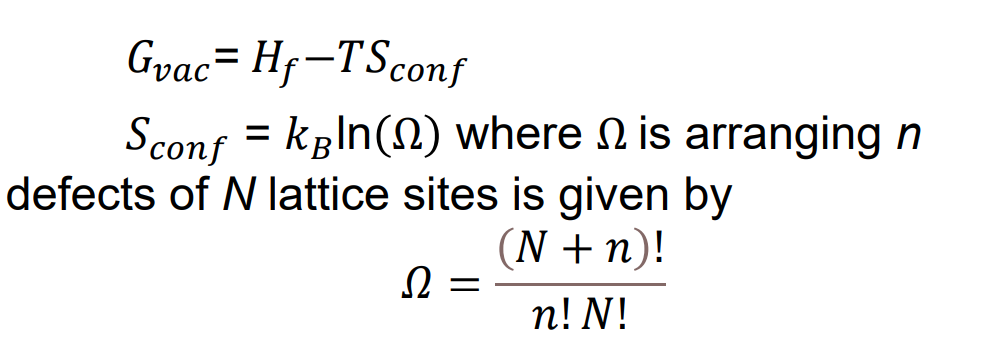
Calculation:
Using Stirling’s approximation:
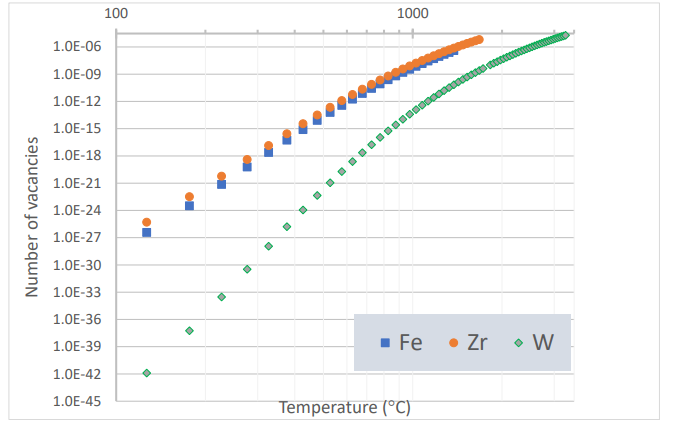
Example: Fe, Zr, and W have vacancy concentrations ~10⁻⁵ at high temperatures.
Self-interstitial vs. vacancy:
Interstitial concentration is much lower due to higher formation energy (distortion of lattice).
2. Neutron Interactions & Material Property Changes
Neutron characteristics:
Uncharged, mass = 1 amu, diameter = 1.6×10⁻¹⁵ m.
Fe atom diameter = 2.52×10⁻¹⁰ m; nucleus = 4.35×10⁻¹⁵ m.
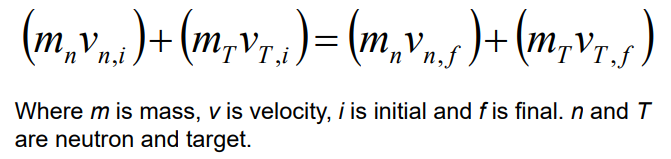
Elastic scattering:
Conservation of momentum (like pool balls):
Radiation damage:
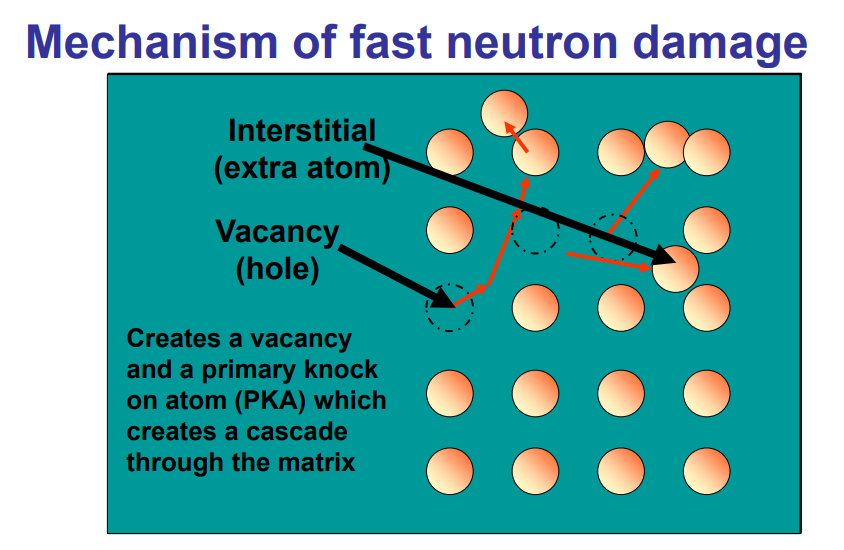
Fast neutrons create Frenkel pairs (vacancy + interstitial) and Primary Knock-on Atoms (PKAs), causing cascades.
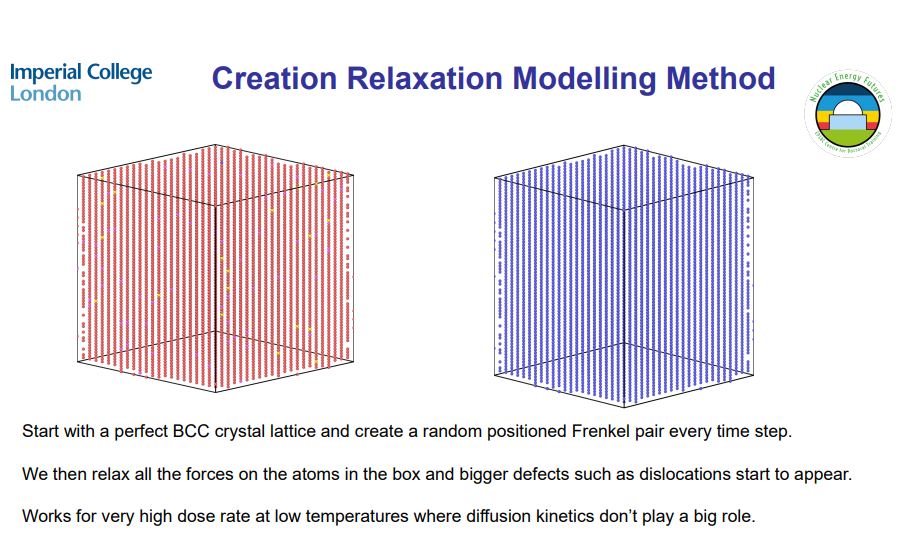
Modelling:
Irradiation Creep in Zirconium Alloys (Nuclear Cladding)
Why Zr alloys?
Low neutron capture cross-section, corrosion resistance, mechanical stability at 300°C.
Conditions:
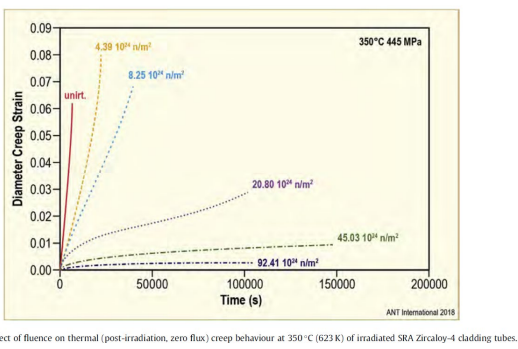
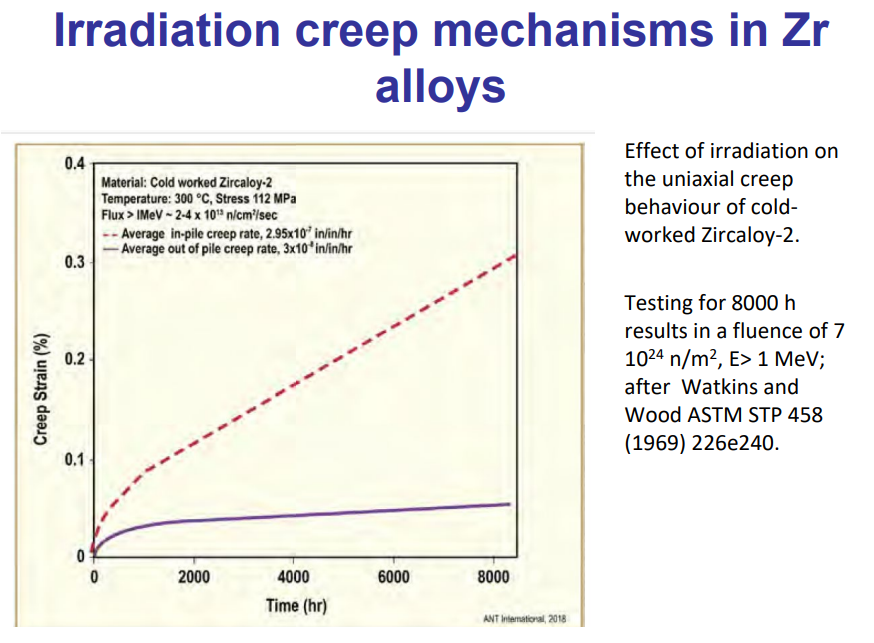
High neutron flux (7×10^17 n/m^2s), fluence up to 1025 n/m2 over 6–8 years.
Mechanisms:
Irradiation creep dominates over thermal creep (dislocation slip suppressed by irradiation hardening).
Strain from diffusional mass transport + dislocation glide.
Microstructure & Texture:
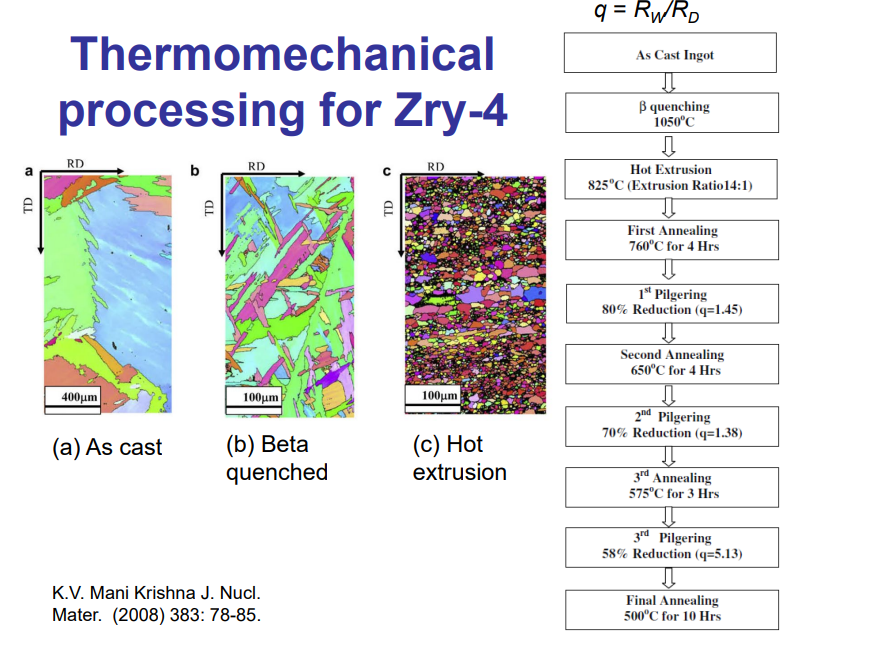
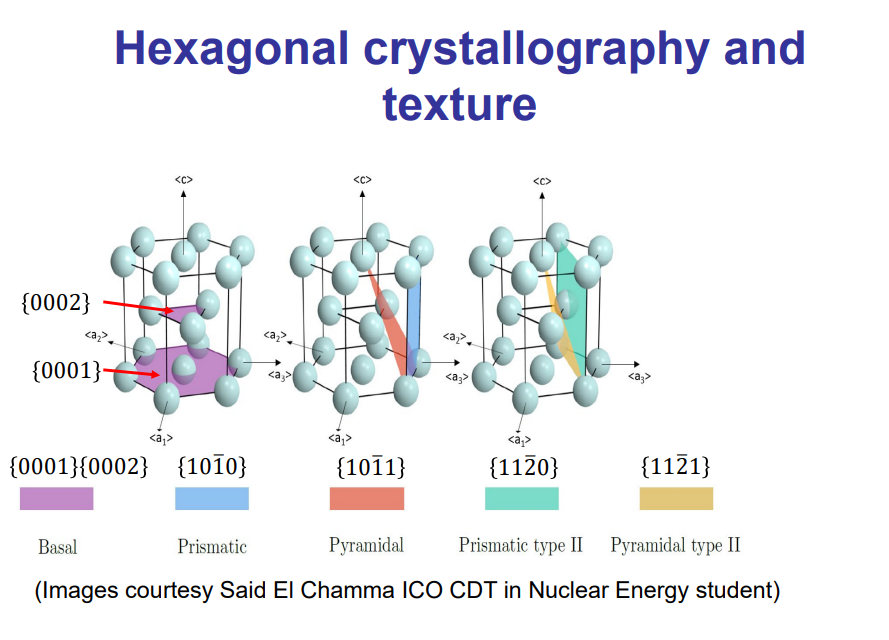
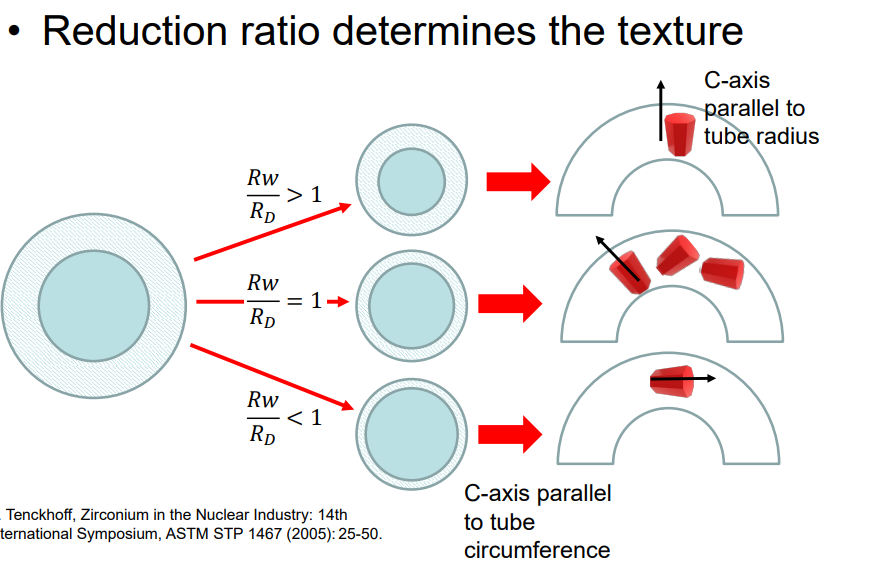
Zr tubes manufactured via pilgering (high-strain deformation), creating textures like basal/prismatic planes.
Texture controlled by reduction ratio (RW/RD):
RW/RD>1: c-axis parallel to tube radius.
RW/RD<1: c-axis parallel to circumference.
Thermomechanical Processing:
Steps: β-quenching → hot extrusion → pilgering → annealing