Lecture 7 – ER Protein Insertion, COPII Trafficking & Congenital Disorders of Glycosylation
Types of Membrane Proteins
• Integral-membrane proteins are firmly embedded in the lipid bilayer and can only be removed by disrupting the membrane with detergents. They are classified based on their topological orientation to the membrane and the number of transmembrane (TM) segments. These proteins are crucial for cell signaling, transport, and adhesion.
• Type I – These proteins are characterized by an N-terminal signal sequence which is cleaved upon entry into the ER lumen. They possess a single transmembrane helix, with their N-terminus located in the ER/Golgi lumen or the extracellular space, and their C-terminus facing the cytosol. This orientation allows for receptor binding on the cell surface and intracellular signaling. Examples include the LDL receptor (involved in cholesterol uptake), Influenza HA protein (mediates viral entry), Insulin receptor (key for glucose metabolism), and Growth-hormone receptor.
• Type II – Unlike Type I, these proteins have an internal signal anchor sequence that is not cleaved. Their N-terminus remains in the cytosol, while the C-terminus protrudes into the ER lumen or extracellular space. This configuration is often seen in enzymes involved in glycosylation or other luminal modifications. Examples: Asialoglycoprotein receptor (involved in glycoprotein clearance), Transferrin receptor (iron uptake), Golgi galactosyl- and sialyl-transferases (responsible for carbohydrate modifications in the Golgi).
• Type III – Structurally similar to Type I, but distinguished by a much shorter N-terminus that extends into the ER lumen. This minor variation can impact how the protein is processed or interacts with other components in the lumen.
• Type IV – These are polytopic proteins, meaning they possess multiple transmembrane domains that weave back and forth across the lipid bilayer. This multi-pass structure allows them to form pores, channels, or complex binding sites within the membrane. Examples: G-protein–coupled receptors (GPCRs, critical for signal transduction), glucose transporters (facilitate glucose entry into cells), voltage-gated channels (regulate calcium flow in excitable cells), ABC pumps (ATP-Binding Cassette transporters involved in diverse transport processes), and CFTR (Cystic Fibrosis Transmembrane conductance Regulator, a chloride channel).
• Tail-anchored (TA) – These proteins are unique because they have a single C-terminal transmembrane helix that is inserted into the ER membrane post-translationally, after their synthesis is complete on free ribosomes in the cytosol. Their N-terminus remains entirely cytosolic. Due to their post-translational insertion, they bypass the typical SRP-dependent pathway. Examples: v-SNAREs and t-SNAREs (critical for vesicle fusion and trafficking), and Sec61 (a component of the protein-translocation channel).
• GPI-anchored – These proteins are synthesized with a C-terminal signal sequence that directs them to the ER. Within the ER, the protein is proteolytically cleaved at this sequence and subsequently linked covalently to a pre-assembled glycophosphatidylinositol (GPI) anchor directly in the ER membrane. The entire protein portion then resides in the ER lumen or is exposed on the extracellular surface, attached to the membrane via the lipid-based GPI anchor. Examples: Plasminogen-activator receptor (involved in fibrinolysis) and Fasciclin II (a cell adhesion molecule).
Post-Translational Insertion of Tail-Anchored Proteins (GET/TRC Pathway)
• Key problem: Tail-anchored (TA) proteins present a unique challenge to the secretory pathway because, unlike most integral membrane proteins, they lack a conventional N-terminal signal peptide that typically directs ribosomes to the ER. Instead, their single transmembrane (TM) helix is located at their C-terminus and only emerges from the ribosome towards the end of translation. This means they cannot be co-translationally inserted via the SRP-Sec61 pathway.
• To overcome this, a specialized cytosolic “pre-targeting complex” acts immediately after ribosomal release. This complex is composed of the Bag6 complex (which includes Bag6, UBL4A, and TRC35 in mammals; Sgt2 in yeast) along with the chaperone proteins Hsp70 and Hsp40. This complex’s role is to capture and protect the newly exposed hydrophobic C-terminal segment of the TA protein, preventing its aggregation in the aqueous cytosol.
• Get3 (in yeast) / TRC40 (in mammals) – This is a central component of the targeting pathway. It functions as a homodimeric ATPasebelonging to the GIM (Guided Entry of TA proteins) family. TRC40 precisely binds the TA substrate in an ATP-bound closed conformation, shielding the hydrophobic TM helix. This ATP-bound state is crucial for high-affinity substrate binding and prevents premature interactions.
• Get3/TRC40 then targets the TA protein to its specific receptor complex located on the ER membrane. In yeast, this receptor is the Get1-Get2 complex, while in mammals, it is the WRB-CAML complex (TrcB-TrcA). This ER-resident receptor acts as the docking site for the Get3-substrate complex.
• Cycle: The insertion process proceeds through a precise cycle:
Recognition – The initial step involves the precise transfer of the newly synthesized TA substrate from the cytosolic pre-targeting complex (Sgt2/BAG6 + Hsp70/Hsp40) to Get3-ATP. This handover is critical to maintain solubility and prevent misfolding of the hydrophobic TM domain.
Targeting – The Get3-substrate complex, still in its ATP-bound state, docks specifically onto the Get1/2 (WRB-CAML) receptor complex on the ER membrane. Upon productive binding, ATP hydrolysis by Get3/TRC40 is stimulated, leading to a conformational change that facilitates substrate release.
Release – Following ATP hydrolysis, the TA helix is released from Get3/TRC40 and laterally partitions into the ER membrane. This insertion event is energetically favorable and occurs at a Sec61-independent membrane site, meaning it does not rely on the Sec61 translocon. Simultaneously, Get3-ADP dissociates from the receptor and the membrane.
Recycling – To enable further rounds of TA protein insertion, Get3-ADP must be converted back to its ATP-bound state. This is achieved through nucleotide exchange, which is facilitated by an unknown factor that promotes the dissociation of ADP and binding of a new ATP molecule, thereby resetting Get3 for another cycle of substrate binding.
• Energetics: This entire targeting and insertion cycle is driven by the hydrolysis of one ATP molecule per TA protein inserted. This mechanism is distinct from the SRP/Sec61 pathway, as there is no additional driving force required from the Sec61 translocon itself or from the SRP (Signal Recognition Particle).
SRP-Independent Routes to the ER
• Not all proteins destined for the ER or secretion require the Signal Recognition Particle (SRP) for their targeting and translocation. Several classes of proteins utilize alternative, SRP-independent pathways, often involving cytosolic chaperones and post-translational mechanisms. This is particularly important for proteins that either do not bind SRP efficiently or are fully synthesized before SRP can act.
Mildly hydrophobic N-terminal signal sequences: Some proteins possess N-terminal signal sequences that are less hydrophobic or have a lower affinity for SRP. These sequences might be unable to efficiently engage SRP co-translationally, leading them to follow a post-translational import route.
Structurally inadequate (e.g., short) signal peptides: Signal peptides that are too short, or have unusual structural features, may not fit the SRP binding pocket effectively. Consequently, their targeting to the ER relies on alternative chaperone-mediated pathways.
Short secretory proteins ((<100 residues)) that fully emerge before SRP can bind: For very short proteins, translation can complete before the N-terminal signal sequence emerges sufficiently from the ribosome to be recognized and bound by SRP. Once fully synthesized and released into the cytosol, these proteins require chaperones to deliver them to the ER translocon post-translationally.
TA proteins (handled by GET pathway): As described in the previous section, tail-anchored proteins, due to their C-terminal hydrophobicity and post-translational insertion, are exclusively handled by the dedicated GET/TRC pathway, which is distinct from the SRP pathway.
• Key chaperones/cofactors: The successful targeting and insertion/translocation of these SRP-independent proteins rely on specific cytosolic chaperones and ER-resident factors:
• Hsp40/70 plus calmodulin for generic hydrophobics: For proteins with mildly hydrophobic, but structurally acceptable, signal sequences or hydrophobic domains, the Hsp70/Hsp40 chaperone system (often in conjunction with calmodulin, a calcium-binding protein) helps maintain their solubility in the cytosol and guides them to the ER.
• Sgt2/BAG6 for TA proteins: As part of the pre-targeting complex, Sgt2 (yeast) and BAG6 (mammals) are crucial for capturing and shielding the hydrophobic C-terminal TM helix of TA proteins immediately after they emerge from the ribosome, preventing aggregation and preparing them for delivery to Get3/TRC40.
• Sec62-Sec63-Kar2/BiP for post-translational Sec61 translocation: For proteins whose full translation occurs in the cytosol, a dedicated post-translational translocation pathway exists. This pathway utilizes the Sec61 translocon, but its opening and protein import are driven by the ER-resident Sec62-Sec63 complex, which acts as a receptor, and the lumenal Hsp70 chaperone Kar2 (BiP in mammals). BiP acts as a “molecular ratchet,” pulling the polypeptide into the ER lumen by repeatedly binding to the translocating chain in an ATP-dependent manner.
Congenital Disorders of Glycosylation (CDG)
• Congenital Disorders of Glycosylation (CDG) are a heterogeneous group of rare genetic metabolic disorders characterized by defects in the synthesis and attachment of oligosaccharides (glycans) to proteins and lipids. Given the ubiquitous nature of N-glycosylation—a critical post-translational modification essential for proper protein folding, stability, and function—CDG typically presents with a wide range of multi-systemic clinical manifestations. The severity and specific symptoms vary greatly depending on the specific gene defect.
• Clinical presentation is multi-systemic due to ubiquity of N-glycosylation:
• Neurologic – These are often the most prominent and debilitating symptoms, reflecting the critical role of glycosylation in brain development and function. They include profound developmental delay, recurrent seizures (epilepsy), stroke-like episodes (which can be transient or lead to permanent neurological damage), hypotonia (poor muscle tone), cerebellar ataxia (lack of muscle coordination affecting balance and gait), and peripheral neuropathy (damage to nerves outside the brain and spinal cord, leading to weakness, numbness, and pain).
• Ophthalmologic – Visual impairments are common, such as strabismus (crossed eyes), cataracts (clouding of the eye's lens), and retinitis pigmentosa (a group of genetic disorders causing progressive vision loss).
• Visceral – Affecting internal organs, symptoms include hepatomegaly (enlarged liver), cholestasis (reduced bile flow from the liver), renal cysts (fluid-filled sacs in the kidneys), cardiomyopathy (diseases of the heart muscle), and pericarditis (inflammation of the sac surrounding the heart).
• Endocrine – Hormonal imbalances are frequent, leading to hypogonadism (reduced function of the gonads), hypo/hyper-thyroidism (underactive or overactive thyroid gland), and hypoglycemia (low blood sugar).
• Hematologic – Blood-related issues can include thrombosis (blood clot formation, often due to altered coagulation factor glycosylation), bleeding diathesis (tendency to bleed easily), and anemia (reduced red blood cell count).
• Skeletal – Musculoskeletal abnormalities can manifest as kyphoscoliosis (abnormal curvature of the spine) and osteopenia (reduced bone mineral density, increasing fracture risk).
• Genetic causes span the entire N-glycosylation pathway
CAML (WRB Receptor Subunit)–Associated CDG
• CAML stands for Calcium Modulating Cyclophilin Ligand, and its gene symbol is CAMLG. It is known to be the mammalian ortholog of yeast Get2, which plays a crucial role as a receptor subunit for the Get3/TRC40 complex in the post-translational insertion of tail-anchored (TA) proteins into the ER membrane.
• 2022: In a significant breakthrough, Wilson et al. identified novel recessive CAML variants responsible for a newly recognized form of CDG, now referred to as CAMLG-CDG. Among the identified variants, a notable example is the splice-site mutation c.633+4A>G his specific mutation disrupts the normal splicing of the CAMLG pre-mRNA, leading to incorrect protein synthesis.
• Western blot – Analysis of patient fibroblast samples via Western blot revealed a significant reduction in the steady-state level of the CAML protein. The band representing CAML was reduced to approximately of the control levels, indicating a severe deficiency in functional CAML protein in affected individuals.
• Patients display canonical multi-system CDG symptoms, including developmental delay, neurological dysfunction, and visceral involvement, along with the characteristic defective transferrin glyco-profile (hypo-sialylation) observed in other CDG types. This confirms that CAMLG deficiency leads to a systemic glycosylation disorder.
• Mechanism: The pathogenic mechanism in CAMLG-CDG is rooted in the impaired insertion of TA proteins into the ER. The loss or reduction of functional CAML, a key component of the TRC40 receptor (WRB-CAML), directly hinders the efficient insertion of a crucial subset of TA proteins into the ER membrane. This defective insertion has cascading effects: it leads to accumulation of mislocalized or aggregated TA proteins in the cytosol, which triggers ER stress (an unfolded protein response). Furthermore, it causes membrane trafficking defects, as many TA proteins are vital for vesicle fusion and transport. These primary issues culminate in secondary glycosylation failure, as proper protein trafficking and ER homeostasis are prerequisite for correct N-glycan synthesis and modification.
• Observed: Consistent with the proposed mechanism, studies in CAMLG-CDG patient cells observed a reduced abundance and significant mislocalization of several critical ER-tail-anchored SNAREs. These include Syntaxin-5 (STX5) and Sec22b, which are essential for ER-Golgi vesicle fusion. Their improper localization or reduced levels directly disrupt the anterograde transport of newly synthesized proteins, including glycosyltransferases and other components of the glycosylation machinery, thereby leading to the observed glycosylation defects.
Functional Relevance of ER Tail-Anchored Proteins
• Tail-anchored (TA) proteins, despite their unique insertion mechanism, perform a broad array of indispensable functions within the ER and subsequent membrane compartments, making their proper insertion critical for cellular homeostasis. Their mislocalization or dysfunction can have profound implications for cell viability and organelle integrity.
• Vesicle trafficking SNAREs: A significant subset of TA proteins are members of the SNARE (SNAP Receptor) family. These include Syntaxin 5 (STX5), Sec22b, Use1, and Bet1. These SNAREs are crucial for mediating membrane fusion events in various stages of the secretory pathway, particularly between the ER and Golgi. STX5, Sec22b, Use1, and Bet1 are specifically involved in retrograde and anterograde endoplasmic reticulum-Golgi transport, ensuring the correct flow of lipids and proteins between these compartments.
Initiation of Protein Translocation
•
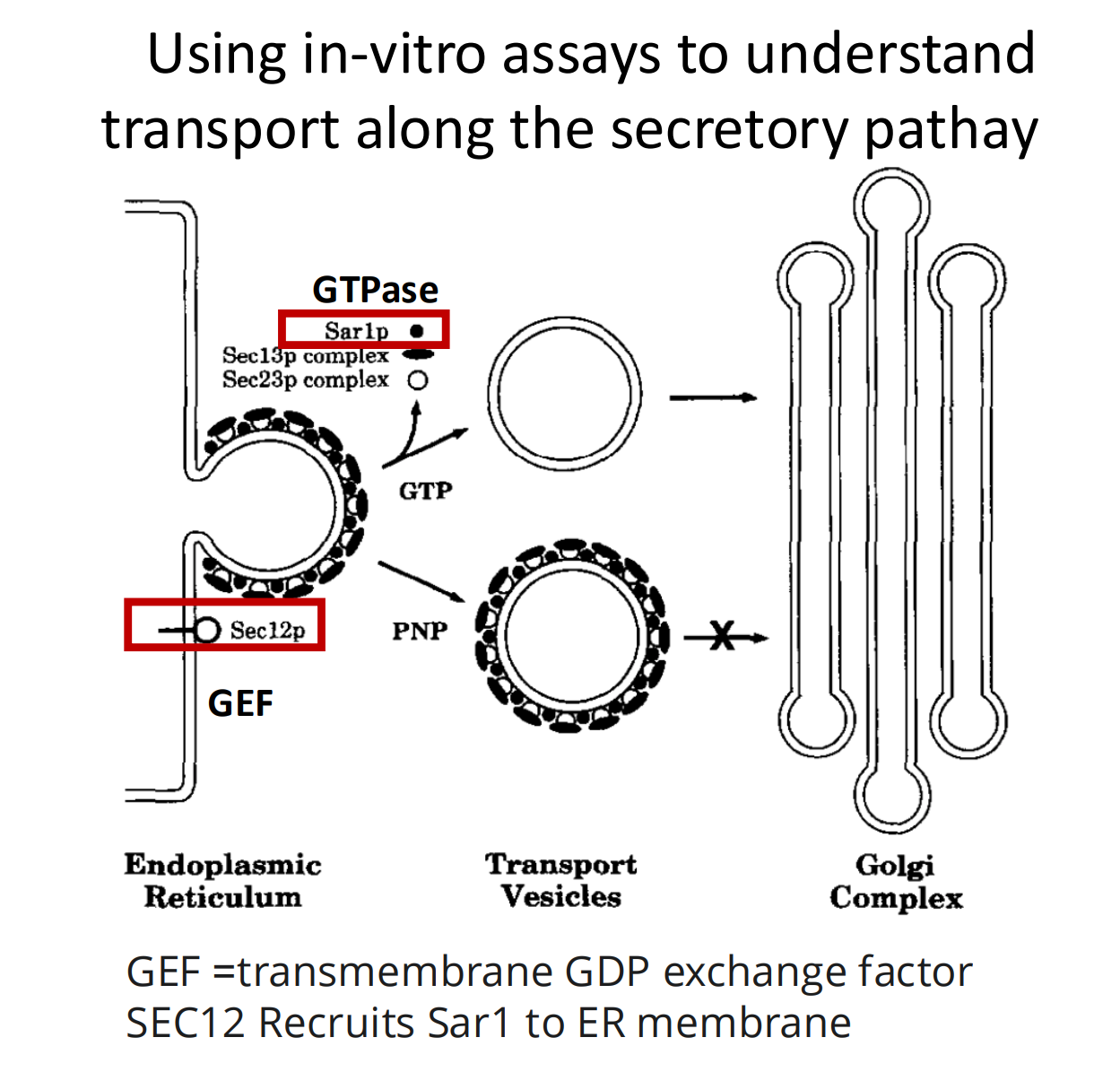
GTPase cycle component: Sar1 is a small GTPase that is essential for the initiation of COPII vesicle formation at the ER. While not strictly a TA protein in its active GTP-bound form (which inserts into the membrane), its precise regulation and interaction with GEFs and GAPs at the ER membrane are critical, highlighting the role of membrane-associated proteins in regulating GTPase cycles that drive membrane trafficking events.
Overview of the Secretory Pathway
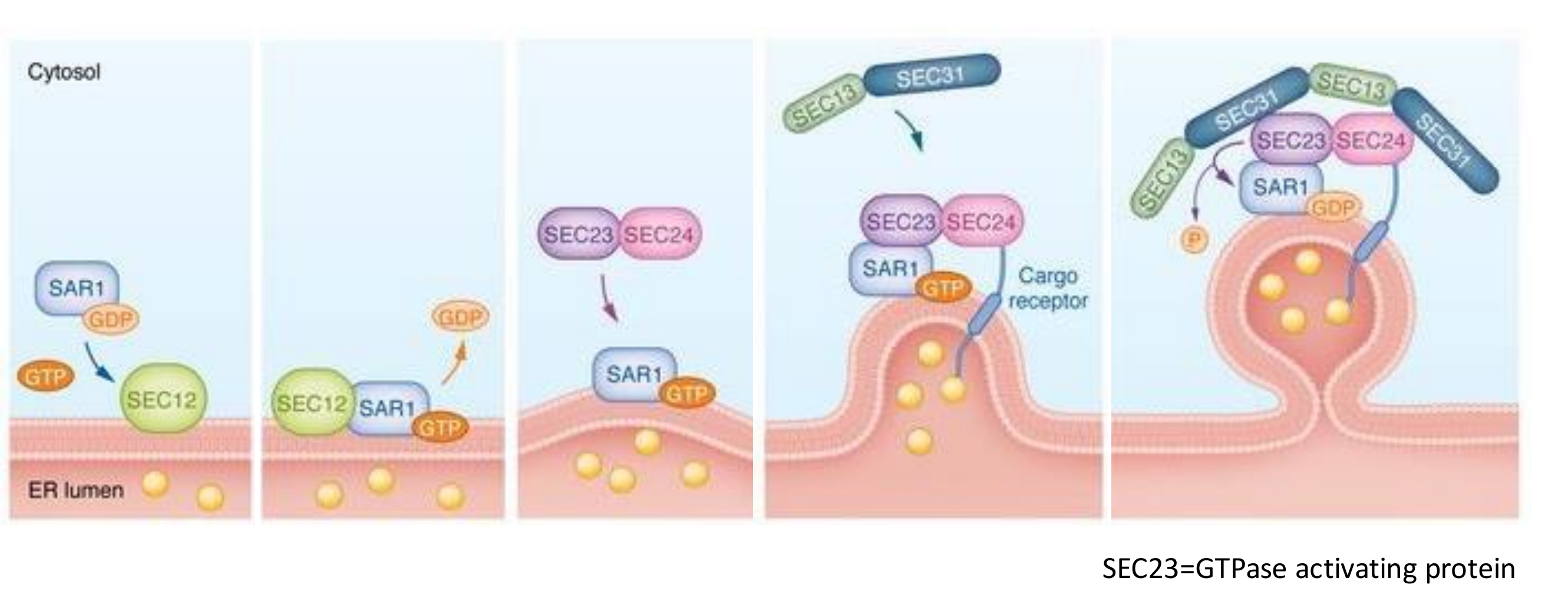
• The secretory pathway is a complex and highly organized network of membrane-bound organelles responsible for the synthesis, modification, sorting, and transport of proteins destined for secretion, insertion into cellular membranes (plasma membrane, lysosomal, ER, Golgi), or delivery to organelles like lysosomes and vacuoles. This pathway ensures that proteins are correctly folded, post-translationally modified, and delivered to their precise cellular locations.
• The journey begins with the nuclear envelope, which is continuous with the endoplasmic reticulum (ER). Proteins are synthesized on ribosomes, and those destined for the secretory pathway enter the ER lumen or integrate into its membrane. Within the ER, proteins undergo initial folding and modifications. From the ER, proteins move to specialized regions called ER exit sites (ERES), where they are packaged into cargo vesicles. These vesicles then bud off and target the Golgi apparatus.
• The Golgi cisternae comprise a series of flattened membrane-bound sacs, typically organized into distinct compartments: cis-Golgi network (CGN), cis-cisternae, medial-cisternae, trans-cisternae, and the trans-Golgi network (TGN). Proteins sequentially pass through these compartments (cis → medial → trans), undergoing further modifications, such as glycosylation trimming and addition, phosphorylation, and sulfation. The Golgi acts as a central sorting hub.
• From the TGN, proteins are sorted into different types of vesicles for delivery to their final destinations: secretory vesicles (for regulated or constitutive exocytosis to the plasma membrane), lysosomes (for degradation), or directly to the plasma membrane (for integral membrane proteins).
• Endocytosis serves as a complementary pathway, where material from the extracellular space or plasma membrane is internalized. This material typically passes through a series of endosomal compartments: early endosomes (sorting), followed by late endosomes (maturation towards lysosomes), and recycling endosomes (reverting components to the plasma membrane). The endosomal system intersects significantly with the TGN, allowing for the recycling of membrane components and crosstalk between outward and inward trafficking pathways.
• The foundational understanding of this pathway was significantly advanced by Randy Schekman (Nobel Prize in Physiology or Medicine 2013), who pioneered genetic screens in yeast, identifying numerous SEC (secretory) genes. His work uncovered the core molecular machinery, particularly the COPII coat proteins, responsible for vesicle formation and trafficking, laying the groundwork for understanding secretion in all eukaryotes.
COPII Coat and ER Exit
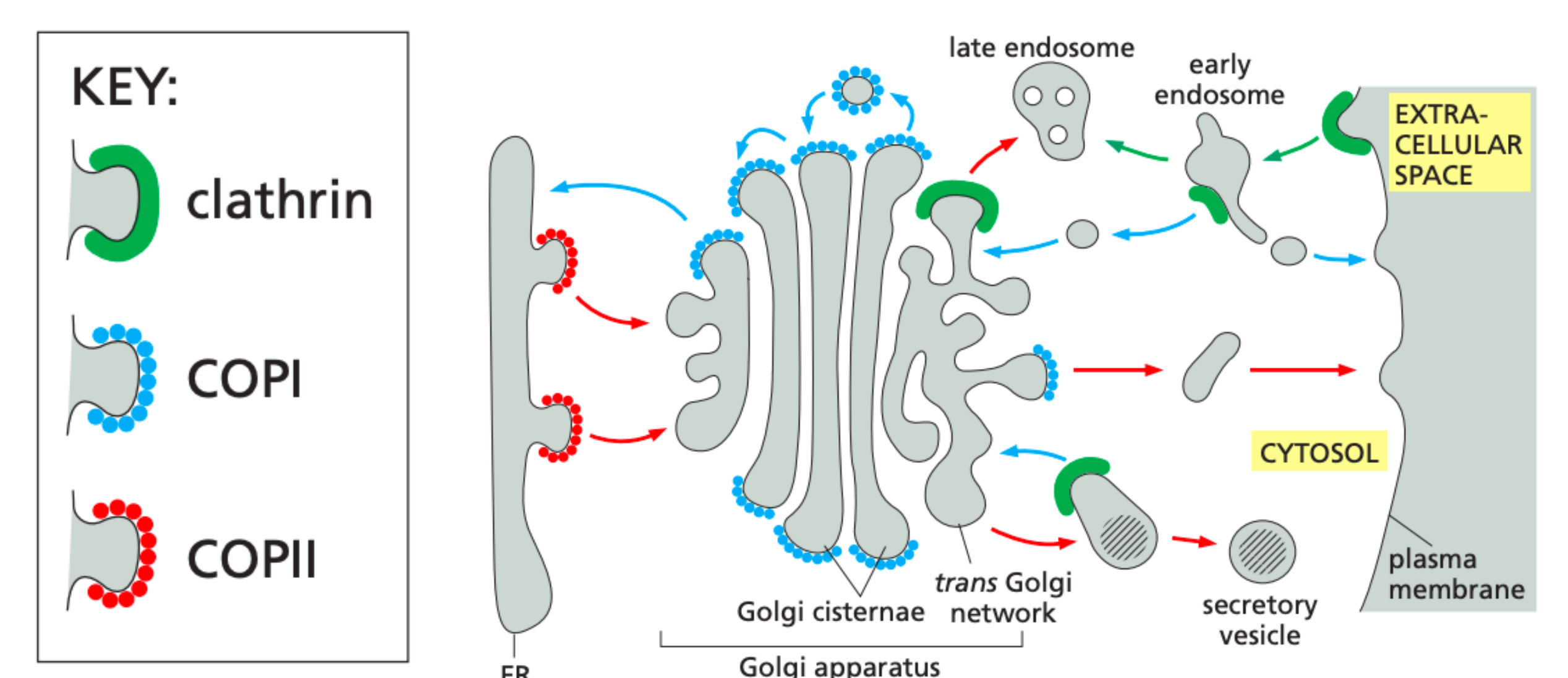
• The COPII (Coat Protein Complex II) coat is essential for the budding of vesicles from the ER exit sites (ERES) that carry newly synthesized proteins and lipids to the Golgi apparatus. The assembly of this coat is precisely regulated by a cascade of molecular events involving several key players (using yeast nomenclature, which is highly conserved in mammals):
• Sec12 – This is an ER-resident integral membrane protein that functions as a Guanine nucleotide Exchange Factor (GEF) for Sar1. Sec12 catalyzes the conversion of inactive Sar1-GDP (guanosine diphosphate) to its active Sar1-GTP (guanosine triphosphate) form. This activation is the initiating step for COPII coat assembly.
• Sar1-GTP – Once activated by Sec12, the Sar1-GTP molecule undergoes a conformational change that exposes an amphipathic N-helix. This helix inserts into the outer leaflet of the ER membrane, effectively anchoring Sar1 to the membrane. This insertion is crucial for initiating membrane curvature, which is the precursor to vesicle budding.
• Inner coat: Sec23–Sec24 heterodimer – This complex is recruited to the membrane by membrane-bound Sar1-GTP. Sec23 possesses GAP (GTPase Activating Protein) activity for Sar1, which is important for eventual uncoating. Sec24 is the primary cargo-binding subunit; it recognizes specific short linear motifs (e.g., , ) on the cytosolic tails of cargo proteins or cargo receptors, thereby packaging them into the nascent vesicle.
• Outer coat: Sec13–Sec31 cage – This complex is recruited after the inner coat components are in place. Sec13 and Sec31 assemble into a polyhedral cage-like structure (an outer scaffold) that further contributes to membrane deformation and provides the structural framework for the nascent vesicle. This outer coat is crucial for shaping the vesicle and facilitating scission.
• Assembly cycle: The formation of a COPII vesicle is a dynamic and sequential process:
Sar1-GTP embeds; recruits Sec23/24: Sec12 activates Sar1 by exchanging GDP for GTP. Sar1-GTP embeds its N-terminal amphipathic helix into the ER membrane, inducing initial membrane curvature. This membrane-bound Sar1 then recruits the preformed Sec23/24 inner coat complex from the cytosol.
Cargo (or cargo-receptor) cytosolic sorting motifs bind Sec24: Once Sec23/24 is at the membrane, Sec24 specifically recognizes and binds to export signals on the cytosolic tails of transmembrane cargo proteins or cargo receptors, thus concentrating specific proteins within the nascent bud.
Sec13/31 polymerize, promoting membrane deformation and vesicle scission: The binding of Sec23/24 facilitates the recruitment and polymerization of the Sec13/31 outer coat complex. This polymerization creates a strong extrinsic scaffold that further drives membrane budding and generates significant curvature, ultimately leading to the fission of the vesicle from the ER membrane, typically through a poorly understood scission mechanism.
Sec23 acts as GAP; Sar1 GTP hydrolysis triggers uncoating: After vesicle budding, the Sec23 subunit, acting as a GAP (GTPase Activating Protein), stimulates the hydrolysis of GTP by Sar1 back to GDP. This conformational change in Sar1-GDP leads to the dissociation of Sar1 from the membrane, which in turn destabilizes the entire COPII coat, causing it to disassemble (uncoat). This uncoating step is essential for the vesicle to fuse with its target membrane (typically the cis-Golgi).
• Typical vesicle diameter: Canonical COPII vesicles measure approximately (50$–$80\,\text{nm}) in diameter. This standard size is sufficient for transporting most soluble and transmembrane proteins, but poses a challenge for larger cargo, as discussed next.
Accommodating Large Cargo
• Problem: One significant challenge for the canonical COPII vesicle budding mechanism is the transport of exceptionally large cargo molecules. For instance, procollagen rods, which are trimeric proteins, can be up to 300 nm, far exceeding the typical diameter of a standard COPII vesicle. This size discrepancy necessitates specialized mechanisms for their efficient ER export.
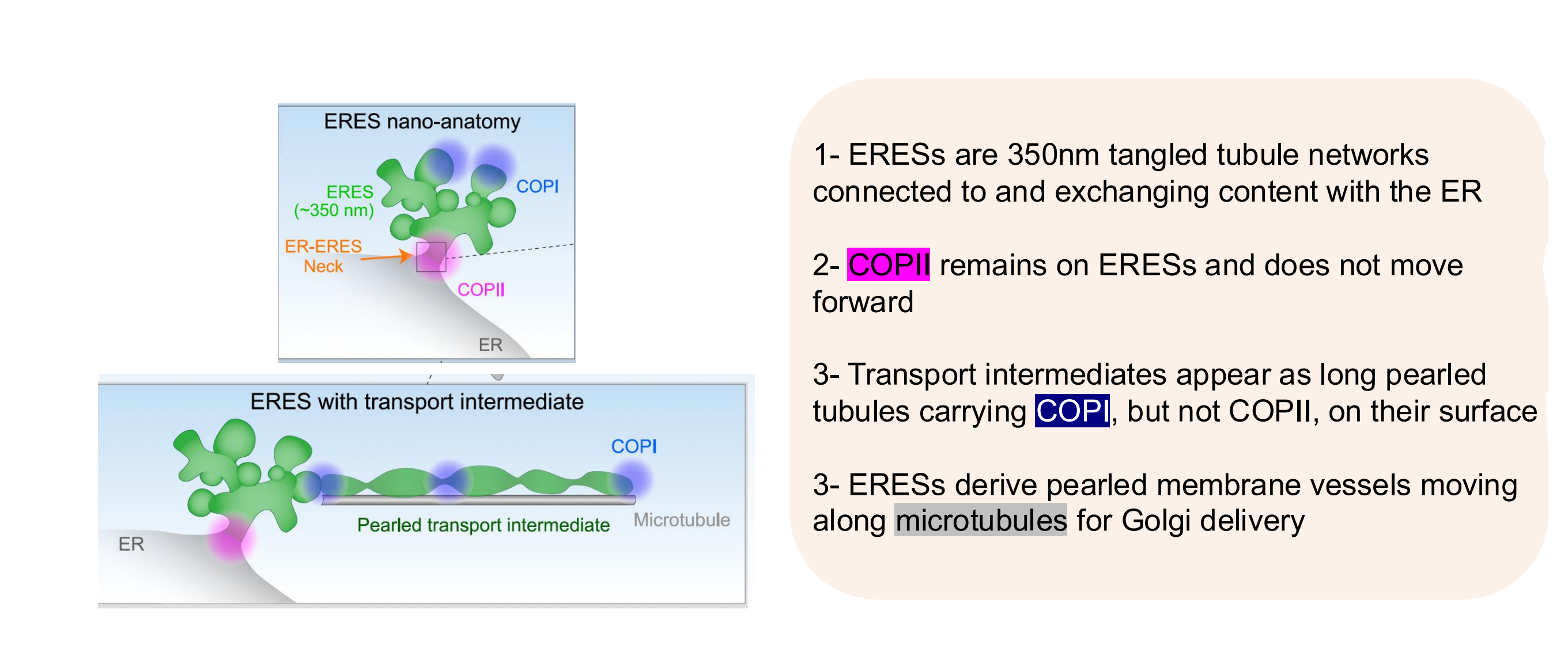
• Sec13/31 flexibility allows partial cages or tubules: While the Sec13/31 outer coat typically forms a closed, polyhedral cage, studies suggest that its inherent flexibility allows for adaptations to larger cargo. Instead of forming fully enclosed spherical cages, Sec13/31 can form partial cages, or even extend into tubular structures around the elongated cargo. This adaptability allows the coat to mold around non-spherical or exceptionally large payloads, facilitating their enclosure and subsequent transport.
• Revised view: ER exports bulky cargo via megacarriers (tubulo-vesicular structures) rather than discrete vesicles: The discovery of these mechanisms has led to a revised understanding of large cargo export. It is now widely accepted that the ER does not exclusively rely on the budding of small, discrete spherical vesicles for all cargo. Instead, bulky cargo, such as procollagen or very large protein complexes, are exported within dynamic, elongated tubulo-vesicular structures often referred to as “megacarriers.” These structures are much larger than standard COPII vesicles and are better suited for accommodating large or elongated proteins, providing a more efficient means of transport.