L9 : Recovery
Learning Objectives:
Part 1: Recovery
• Be able to describe the main stages of recovery
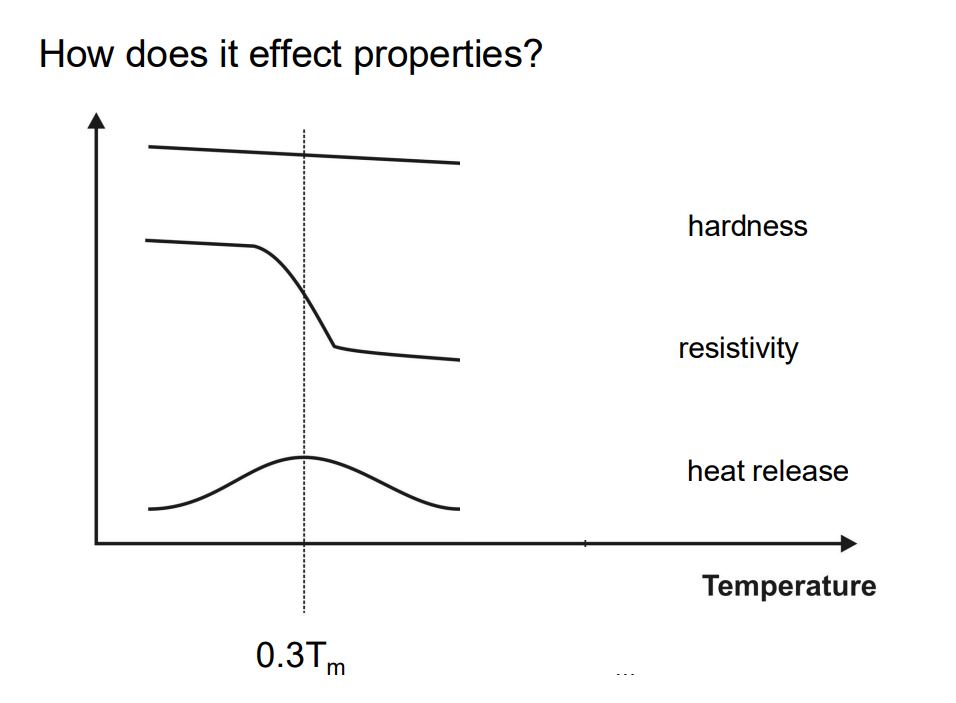
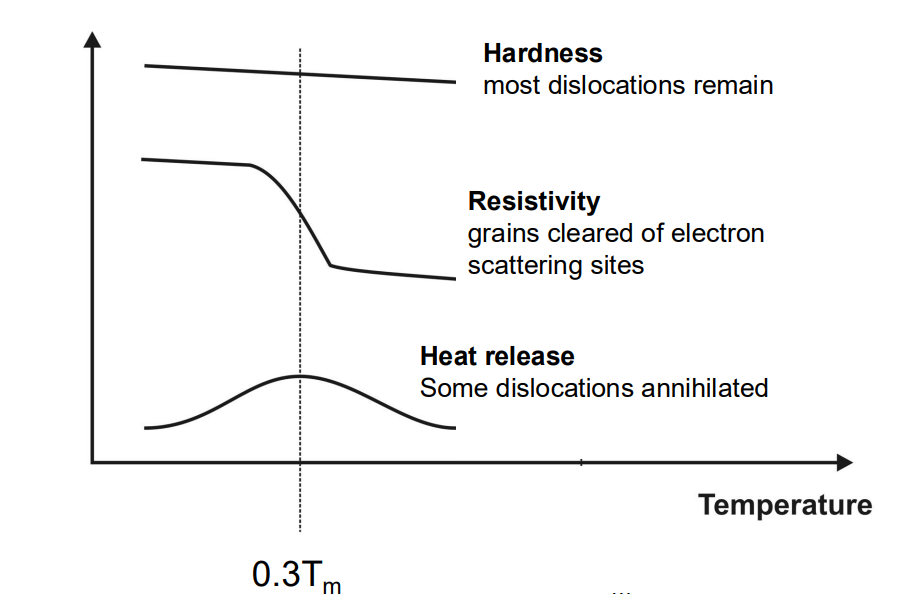
• Know approximately at what temperature it occurs and how it affects materials properties
0.3 Tm; hardness decreases, resistivity decreases,
Part 2: Recrystallisation
• Adapt nucleation and growth theory to understand the driving force for recrystallisation
Related to dislocation density. Too small for homogenous nucleation!
• Be able to argue where in the microstructure recrystallisation might occur
– SIBM, GBs, shear bands, hard particles
∘ and how we might recognise it having occurred
– Recrystallisation twins (parallel sided) or large drop in strength
Part 1: Recovery
Main Stages of Recovery:
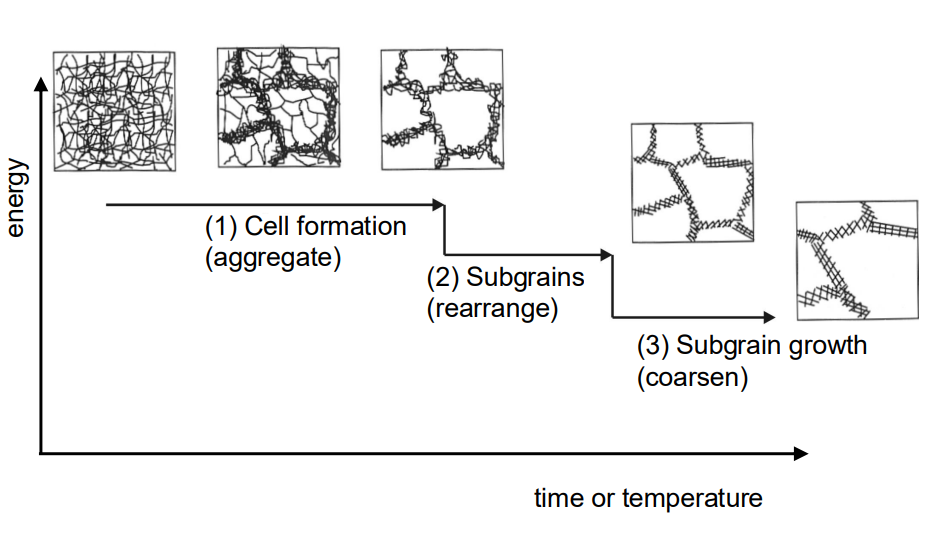
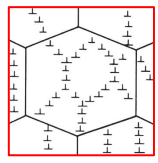
Dislocation Migration and Annihilation: Dislocations of opposite signs attract and annihilate each other, reducing the overall dislocation density. Dislocations on different slip planes rearrange into lower energy configurations.
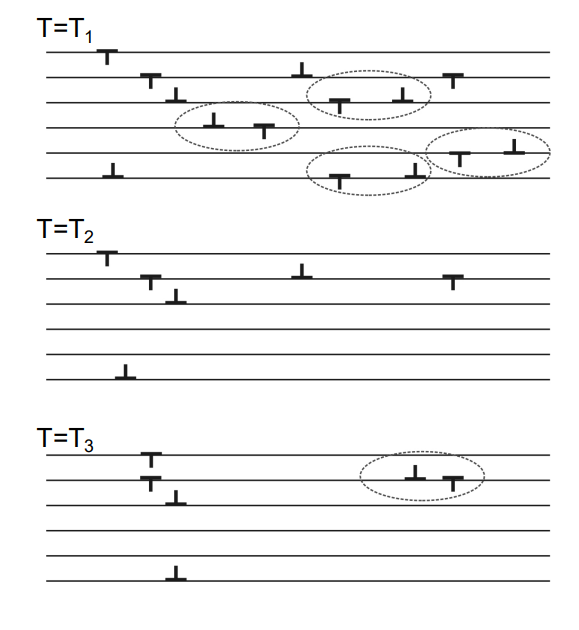
Sub grain Formation: Dislocations rearrange into stable arrays, forming low-angle grain boundaries (sub grains).
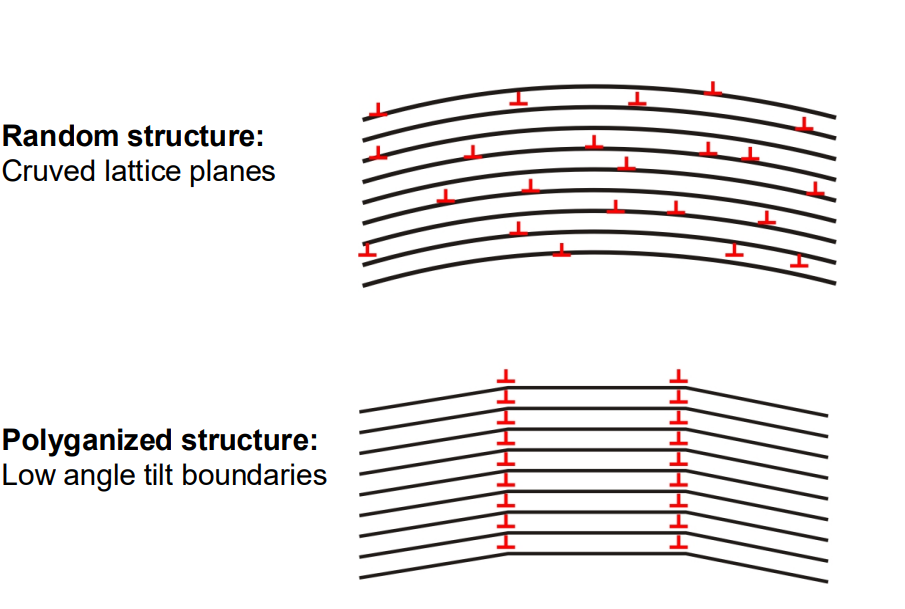
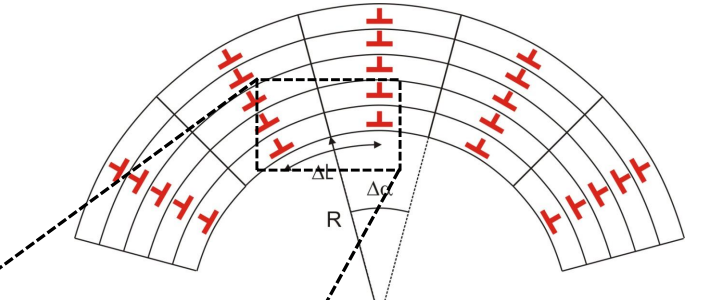
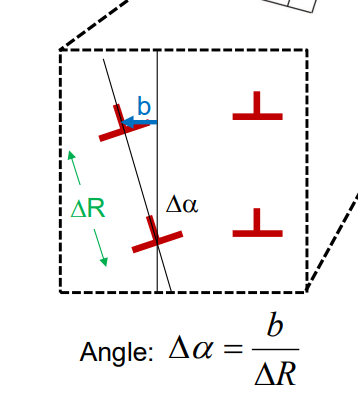
Cahn's relation states that the curvature (κ) of a grain boundary is directly proportional to the dislocation density (ρ), expressed as κ=bρ where b is the Burgers vector, linking dislocation arrangement to microstructural changes during recovery and recrystallisation; when trying to make things smaller or perform the same amount of deformation, more curvature must be introduced into the material, which increases dislocation density and, consequently, strength.
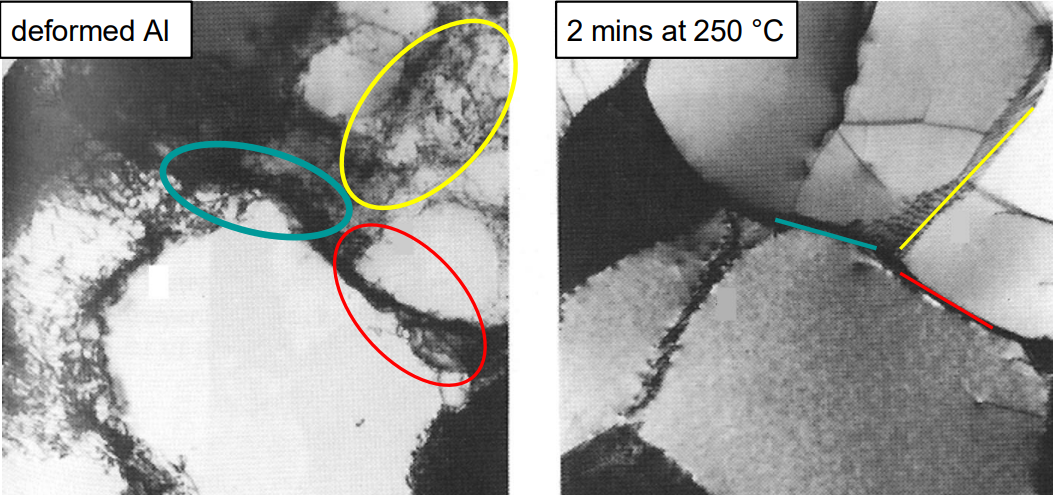
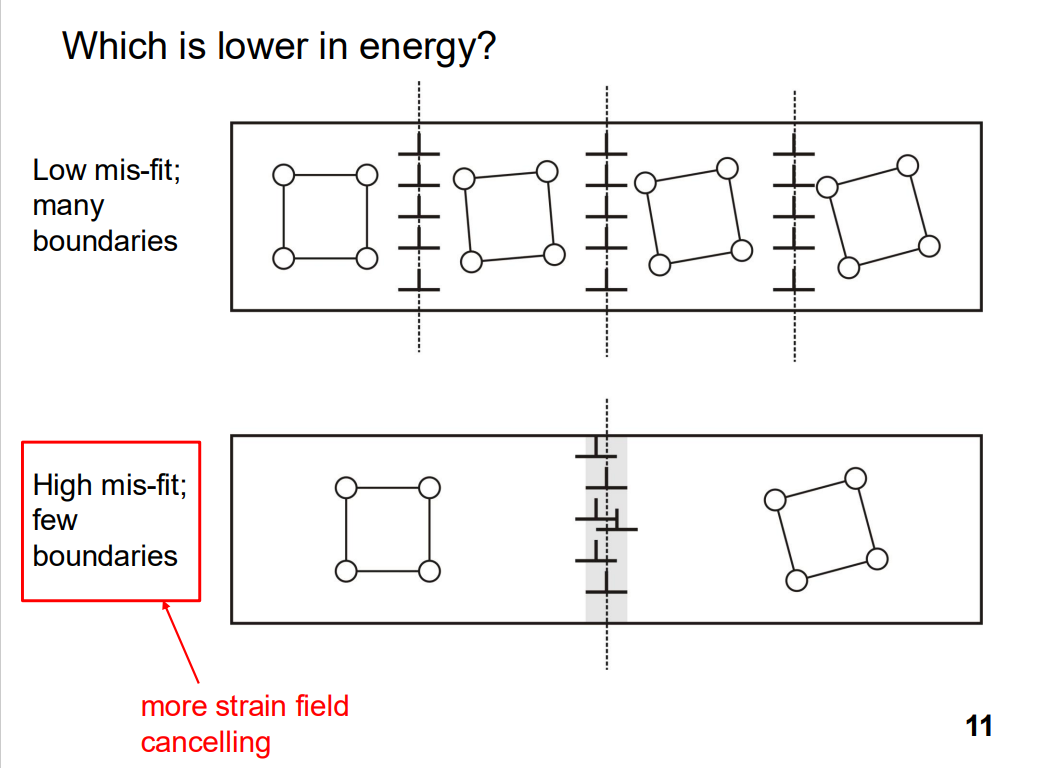
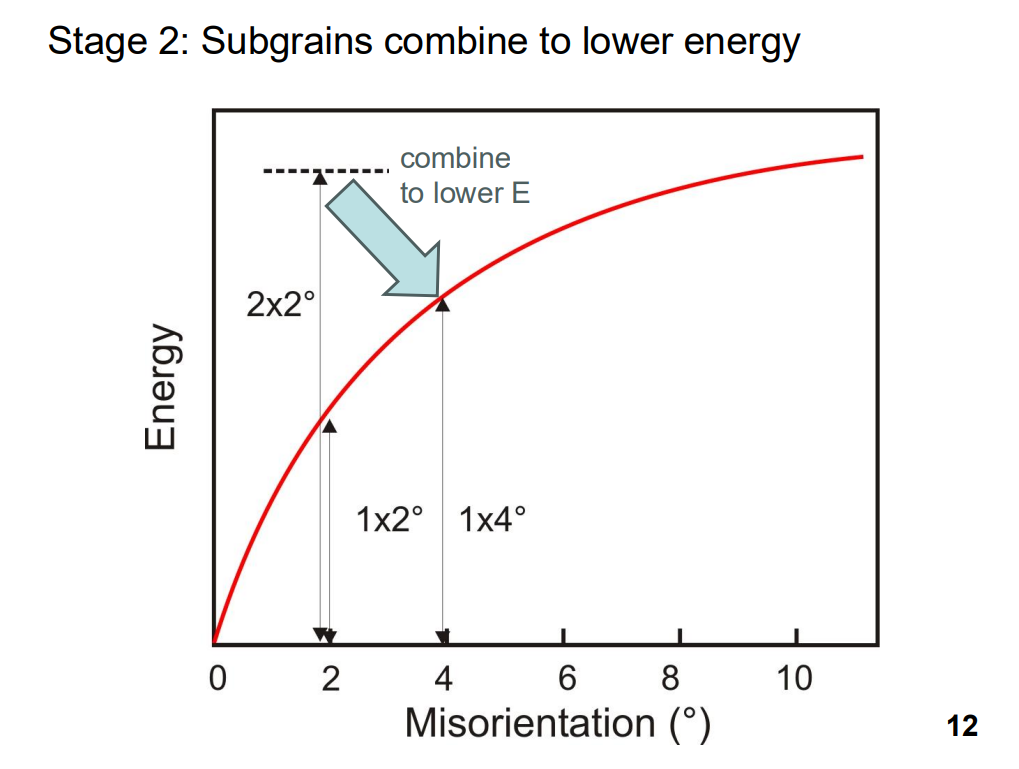
(3) Sub grain Growth: Sub grains grow as the boundaries between them migrate, driven by the reduction in grain boundary energy.
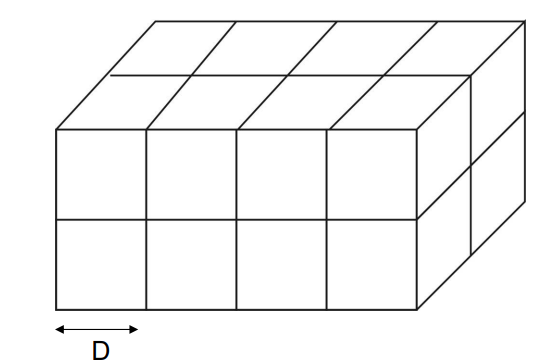
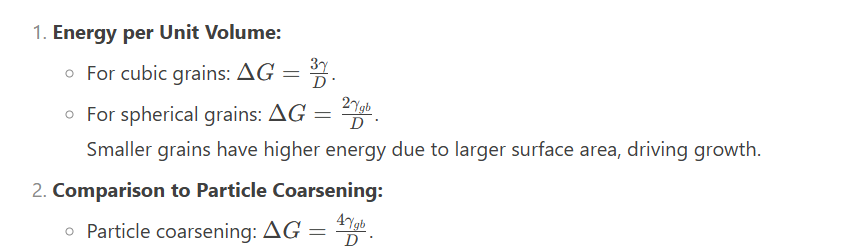
The driving force for particle coarsening is twice that of spherical grains because particle coarsening involves a single interface (particle-matrix), while grain growth involves shared grain boundaries between two grains, reducing the energy benefit.
Temperature and Effects on Material Properties:
Recovery typically occurs at temperatures of 0.3-0.5 Tm (where Tm is the melting temperature of the material).
Effects on Properties:
Hardness: Decreases slightly due to the reduction in dislocation density.
Electrical Resistivity: Decreases significantly because the rearrangement and annihilation of dislocations reduce the scattering of electrons, improving electrical conductivity.
Part 2: Recrystallisation
Driving Force for Recrystallisation:
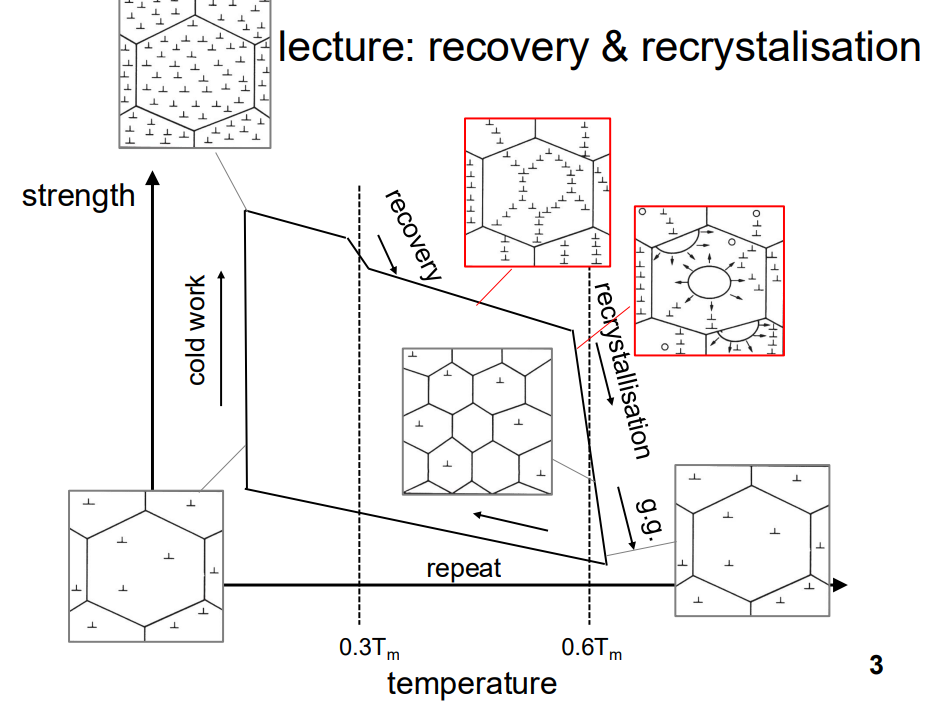
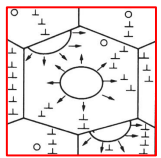
The driving force for recrystallisation is the reduction in stored deformation energy, primarily related to the dislocation density. The high dislocation density in deformed materials creates a significant energy imbalance, which drives the formation of new, dislocation-free grains.
The driving force is too small for homogeneous nucleation, so recrystallisation typically occurs through the growth of pre-existing nuclei or regions with high dislocation density.
Where Recrystallisation Might Occur in the Microstructure:
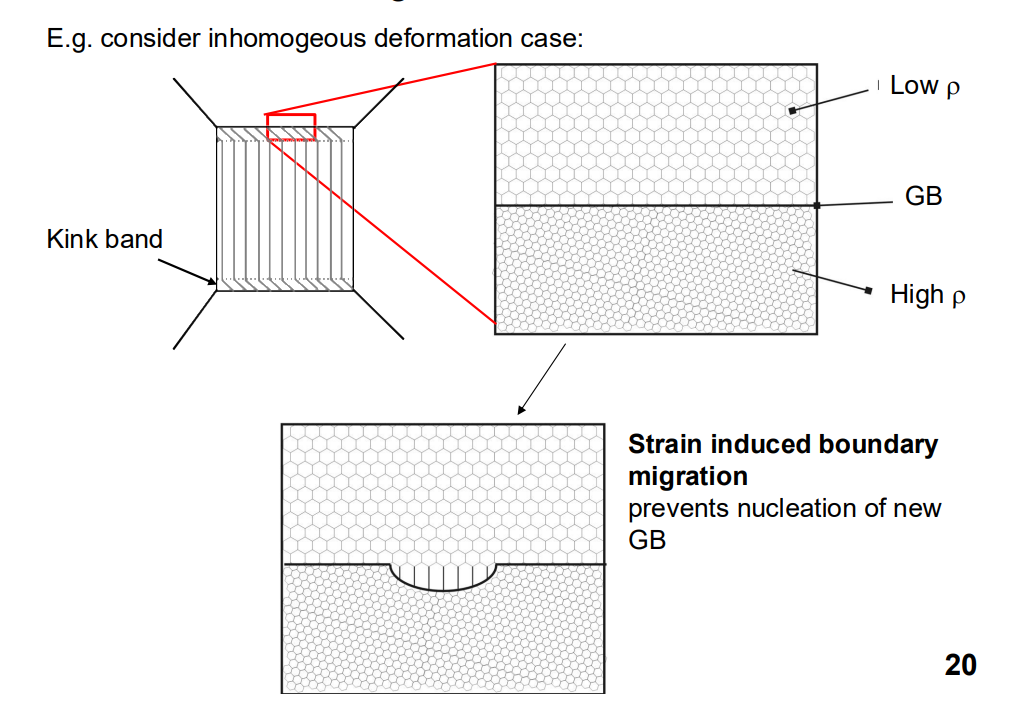
Strain-Induced Grain Boundary Migration (SIBM): New grains form by the bulging of existing grain boundaries, especially when adjacent grains have different stored energy levels. This prevents the nucleation of new GB.
Grain Boundaries (GBs): Nucleation often occurs at grain boundaries due to the high strain energy and dislocation density in these regions.
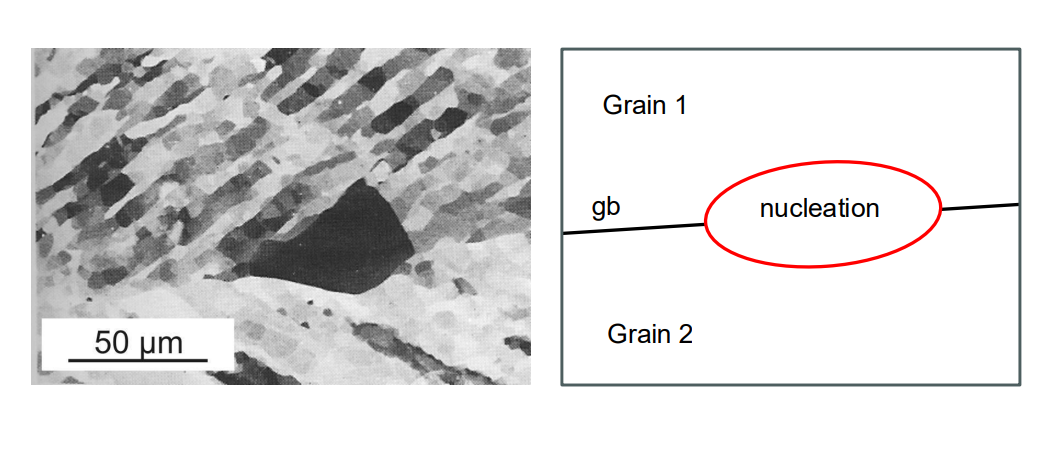
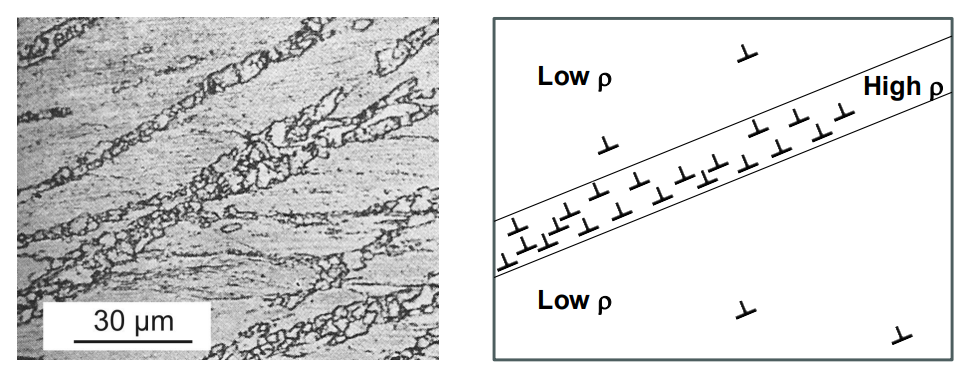
Shear Bands: Highly deformed regions, such as shear bands, are common sites for recrystallisation nucleation.
Shear bands form during fast deformation, reducing yield stress and making slip easier (runaway effect).
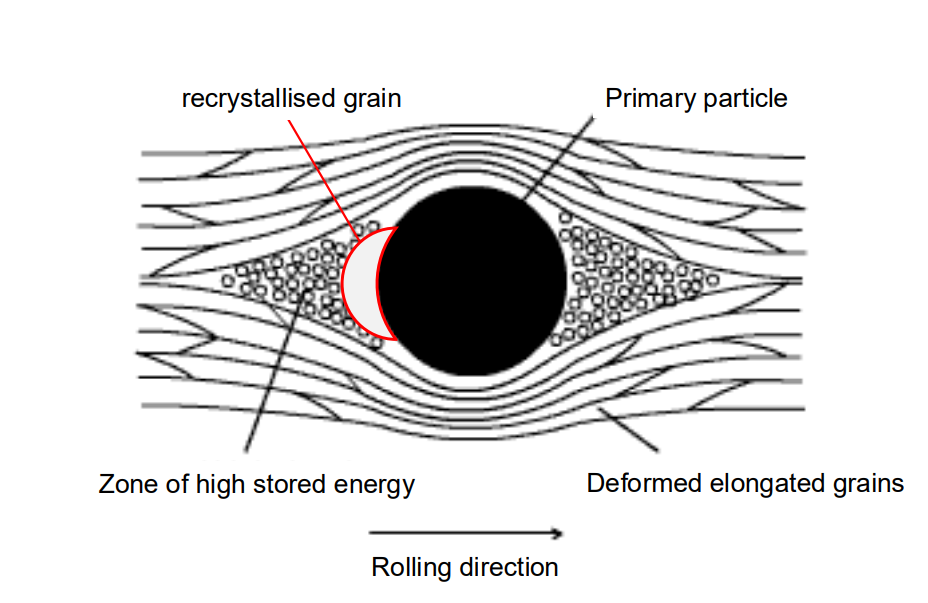
Hard Particles: Second-phase particles or inclusions can act as nucleation sites due to the strain fields they create in the surrounding matrix. Second-phase particles reduce the system's surface energy.
How to Recognise Recrystallisation:
Recrystallisation Twins: In materials with low stacking fault energy (e.g., FCC metals like copper and brass), recrystallisation twins are often observed. These twins are parallel-sided and distinct from the lenticular twins formed during deformation.
Large Drop in Strength: Recrystallisation leads to a significant reduction in dislocation density, resulting in a large drop in strength and an increase in ductility
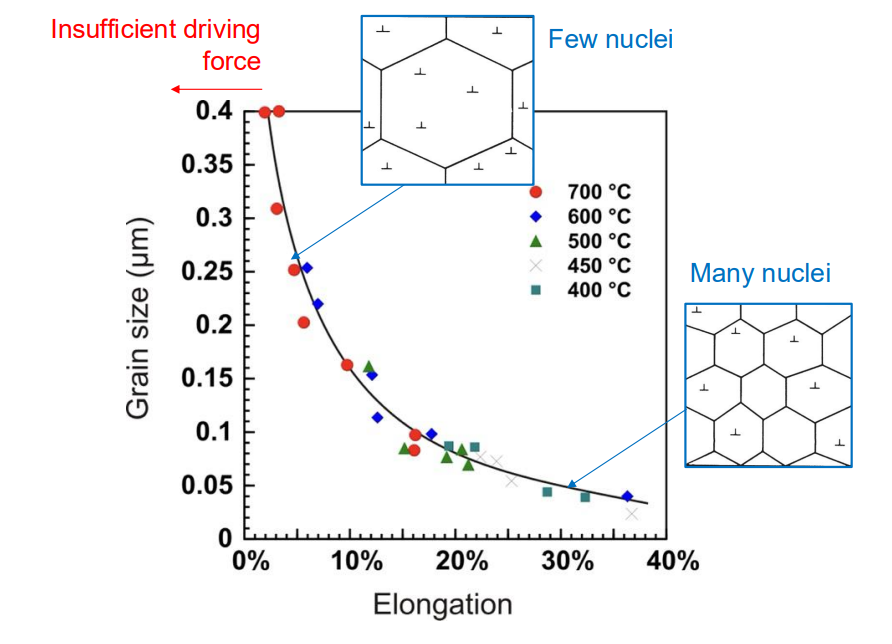
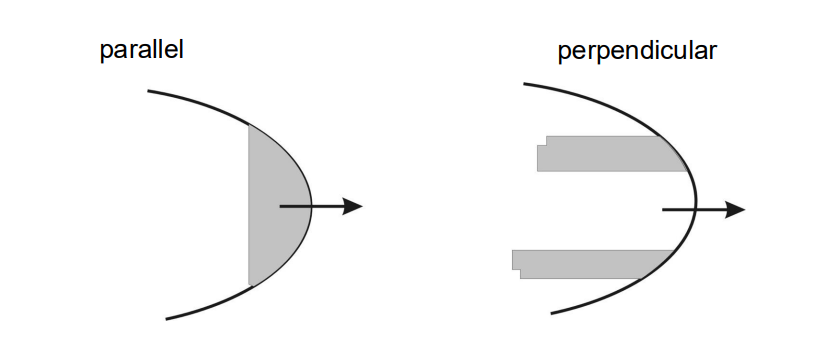
The mechanism is unclear but may involve lowering energy or improving grain boundary mobility, with twin frequency increasing with dislocation density.