The pancreas
The pancreas
has both exocrine and endocrine functions
majority of cells produce pancreatic juices
amylase
trypsinogen (inactive protease)
lipase
sodium hydrogen carbonate
endocrine cells produce glucagon and insulin which control blood glucose level
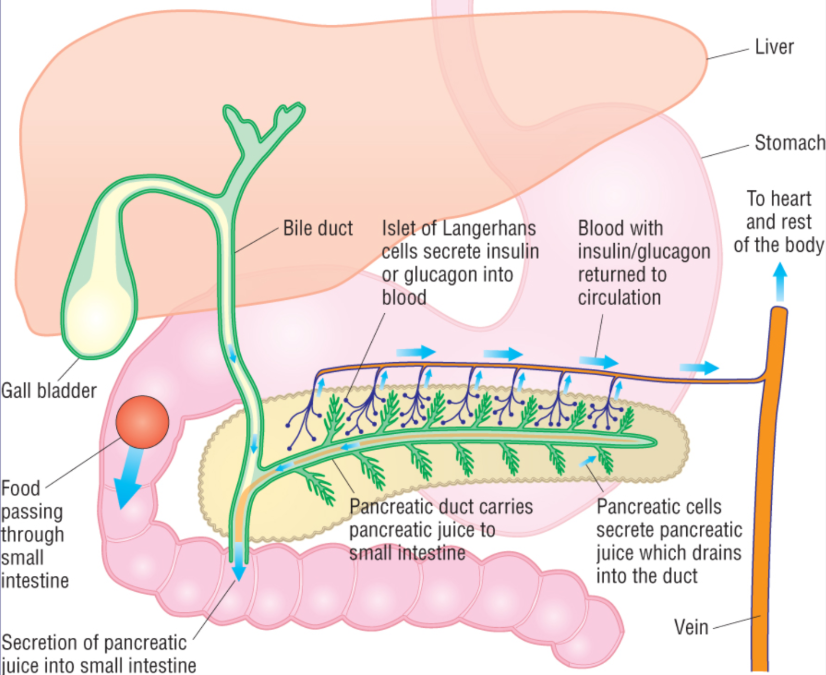
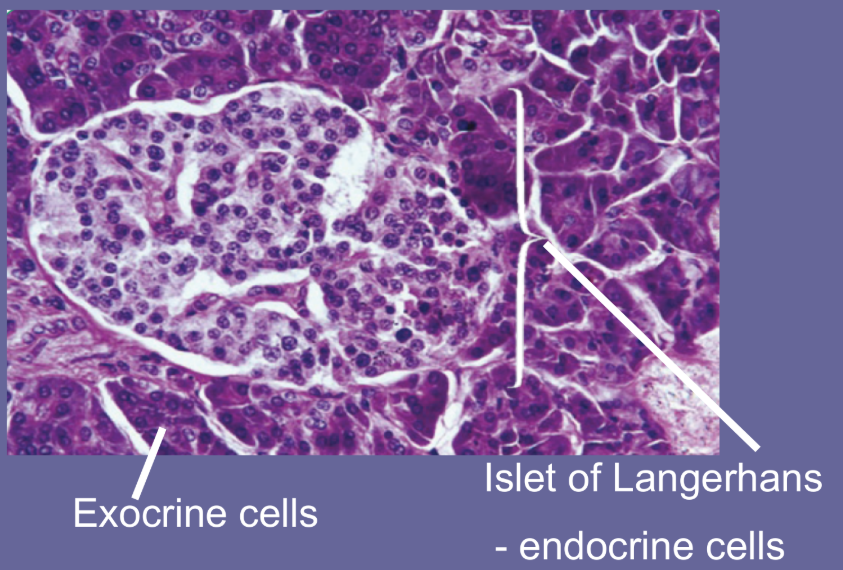
Islet of Langerhans = endocrine cells
looks like an island on an image
highly vascular
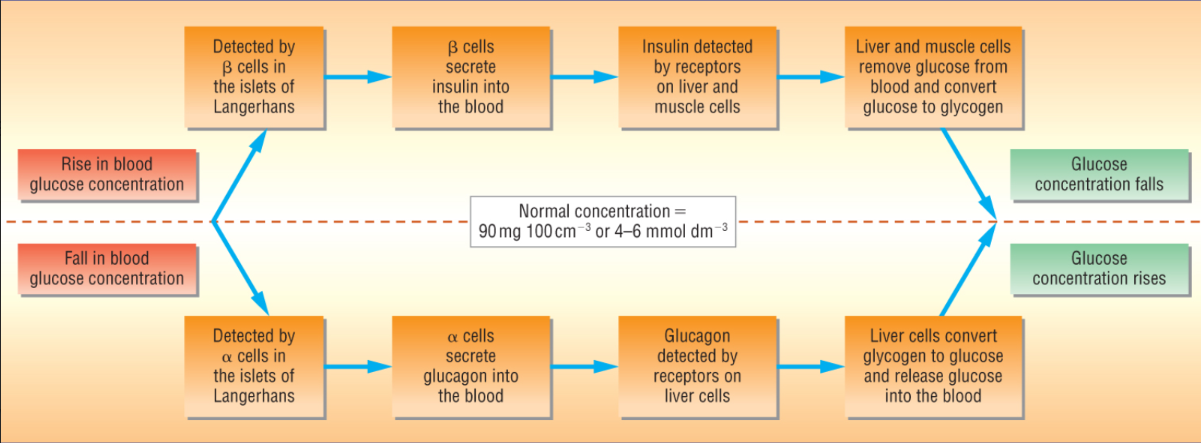
alpha cells produce glucagon
beta cells produce insulin
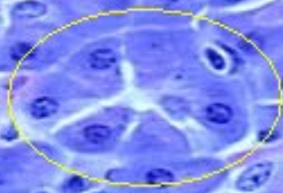
Acinus = circle of exocrine cells releasing into a duct
Blood glucose levels
normal blood glucose levels is 90mg/100cm³
if conc varies above or below then alpha and beta cells detect and release appropriate hormone
negative feedback
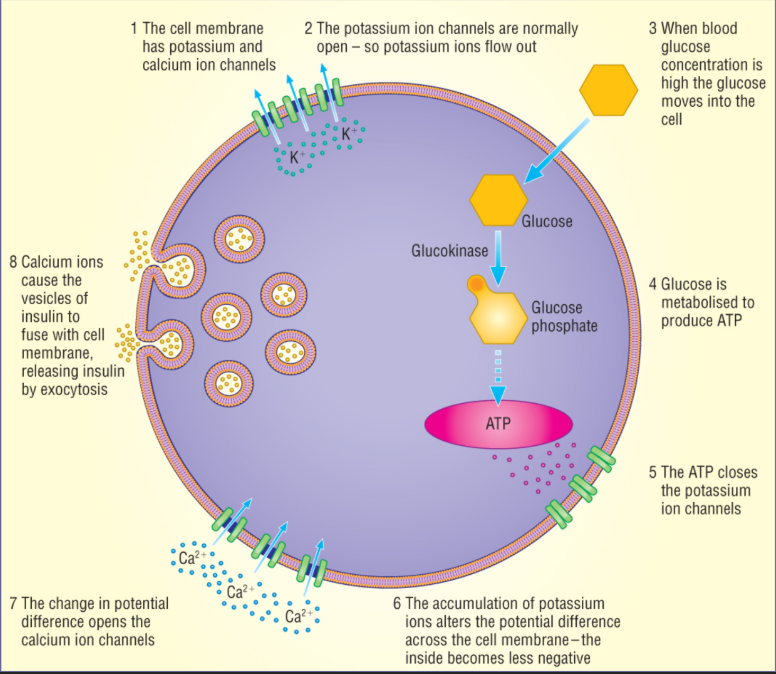
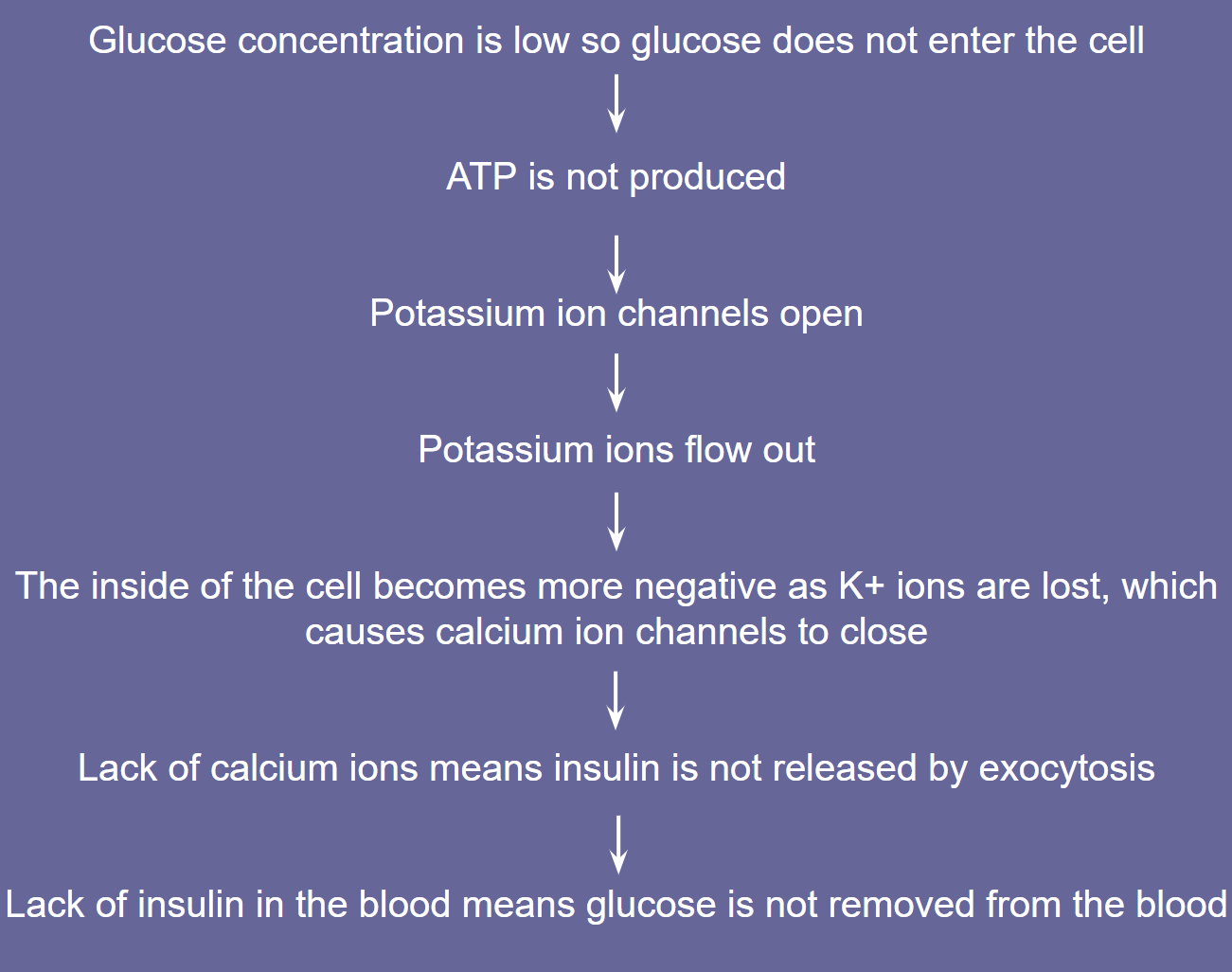
Role of insulin
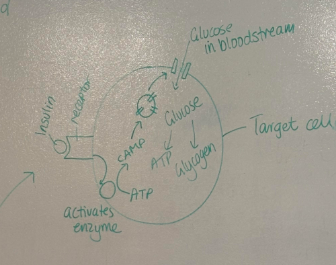
insulin binds to specific receptors on cell membrane of all cells but specifically liver and muscle cells
causes glucose channels to open so glucose can enter the cell
via cAMP
inulin stimulates:
respiration - so more glucose is respired
conversion of glucose into glycogen in liver and muscle cells
glycogenesis
conversion of glucose into fatty acids then fats which are stored in adipose tissues
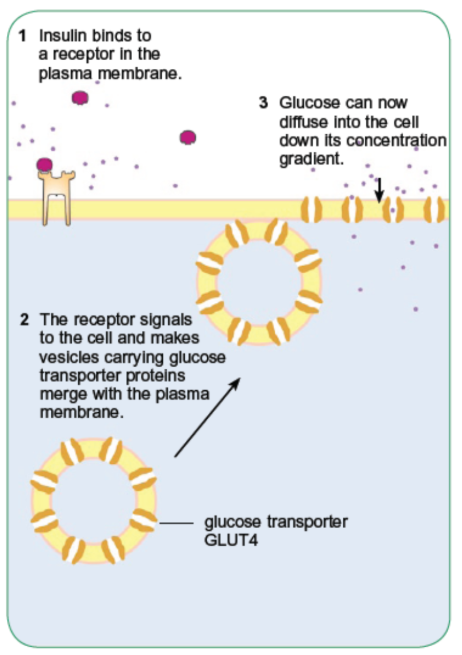
Role of glucagon
glucagon binds to specific receptors in plasma membranes
activates enzymes that convert glycogen to glucose
glycogenolysis
stimulates conversion of amino acids to glucose
Key words
Glucose
simple sugar produced from carbohydrates
Glycogen
polysaccharide that is the main form of carbohydrate storage in animals
Glucagon
hormone that causes blood glucose levels to rise
Insulin
hormone that causes blood glucose levels to fall
Glycogenolysis
conversion of glycogen to glucose
Glycogenesis
conversion of glucose to glycogen
Gluconeogenesis
production of glucose from amino acids (pyruvate and lactate)