footwear evidence flashcards (forensics q3)
important features | significance |
size of footprint | real size of suspects foot approximate height of suspect |
shape of footprint | sex of the suspect |
type and brand | suspect’s hobbies |
depth of footprint on soft material | weight of suspect |
wear patterns and specific damages | walking habits of suspect |
trace materials. such as soil, rocks, tar, and paint | places where suspect had visited |
foot impression collection method
electrostatic lifting
charged lifting film
dust attracted to the film
earthed surface
casting
individual characteristics on a footprint
highly unlikely that two different shoes share all the same identifying characteristics
if 2-3 characteristics between a shoe print and the suspects shoe its a strong match
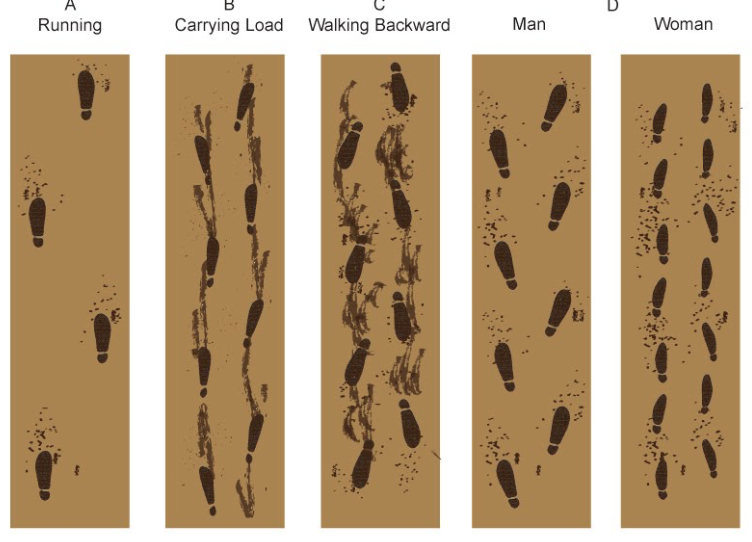
measurement of human gait at crime scene
sex
height
direction of movement
walking or running
special walking habit
carrying load or not
drunken or instability
Deep prints, long pace = rapid movement
long strides, toe deeper than heel = running
short, irregular stride = walking backward
deep, short, widely spaced = carrying heavy load
women tend to be pigeon toed, men walk with feet straight or pointed slightly outward
women strides are usually smaller and shorter than mens