Domain 2 Risk Treatment:RiskResponse Options - Risk and Control Ownership
Risk Ownership in Organizations
Key Question: Who should own a risk?
Importance of Risk Ownership:
If a risk isn't owned by anyone, it will likely not be properly mitigated.
Proper understanding of a risk and its consequences is essential for effective management.
Risks need to be clearly assigned to ensure appropriate management, communication, and mitigation.
Ideal Risk Owner
Definition: The asset owner should ideally be the risk owner.
Complication: While the concept sounds straightforward, practical implications can complicate it.
Benefits of Clear Risk Ownership
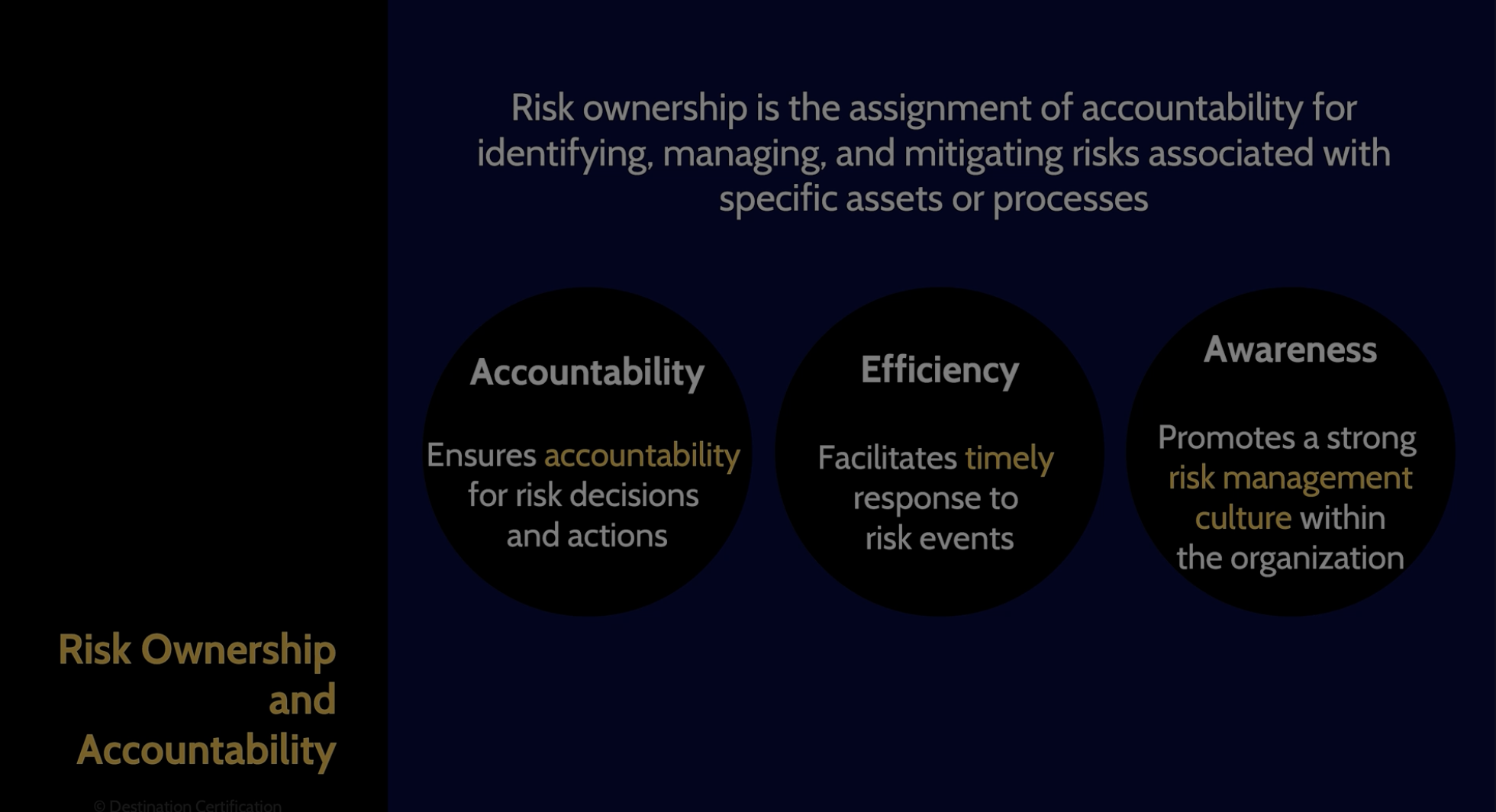
Accountability:
Clear identification of who is accountable for understanding, documenting, and managing each risk.
Absence of accountability may lead to neglect of risk management.
Accountability is the primary focus—it's about who ultimately faces consequences if risks are not managed properly.
Efficiency:
Assigning risk ownership facilitates better communication.
If an auditor or stakeholder needs updates or information regarding a risk, knowing who the risk owner is streamlines the process.
Enhanced Awareness:
The risk owner is responsible for ensuring that key personnel are aware of the risk and engaged in mitigation efforts.
Roles Associated with Risk Ownership
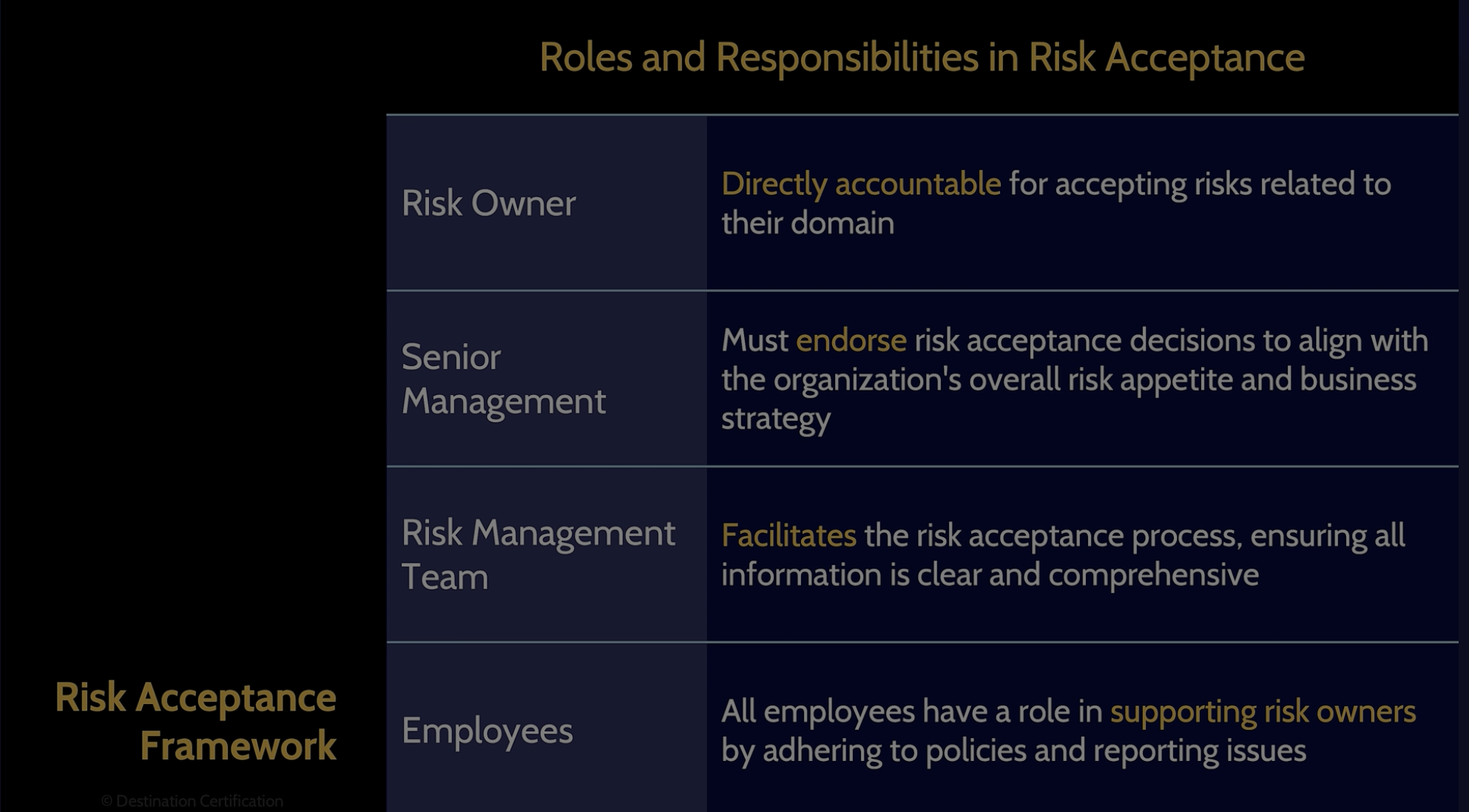
Risk Owner:
Accountable for the risk.
Responsible for ensuring proper understanding and management of the risk.
Senior Management:
Role: Set the tone from the top and endorse the risk owner's initiatives.
Importance of backing from senior management: Mitigating risks often involves significant costs and efforts that require organizational support.
Risk Management Team:
Facilitates the information gathering on risks.
Ensures consistent evaluation of risks across the organization.
Provides crucial insights to risk owners regarding the relevance and criticality of various risks.
Aids in evaluation and ensures alignment with the organization’s overall risk management strategy.
Employees:
Play a vital role in mitigating risks through their actions and adherence to protocols.
Support risk owners by promoting proper understanding and management of risks throughout the organization.