Fluid Balance and Acid Base Disorders
Introduction
The video addresses fluid and electrolyte imbalances and acid-base disorders, focusing on:
Differences between crystalloids and colloids for fluid replacement.
Important electrolytes and acid-base agents.
The video serves as a brief overview, with supplementary videos provided for pathophysiology refreshers.
Key Definitions and Concepts
Importance of reviewing definitions from prior courses:
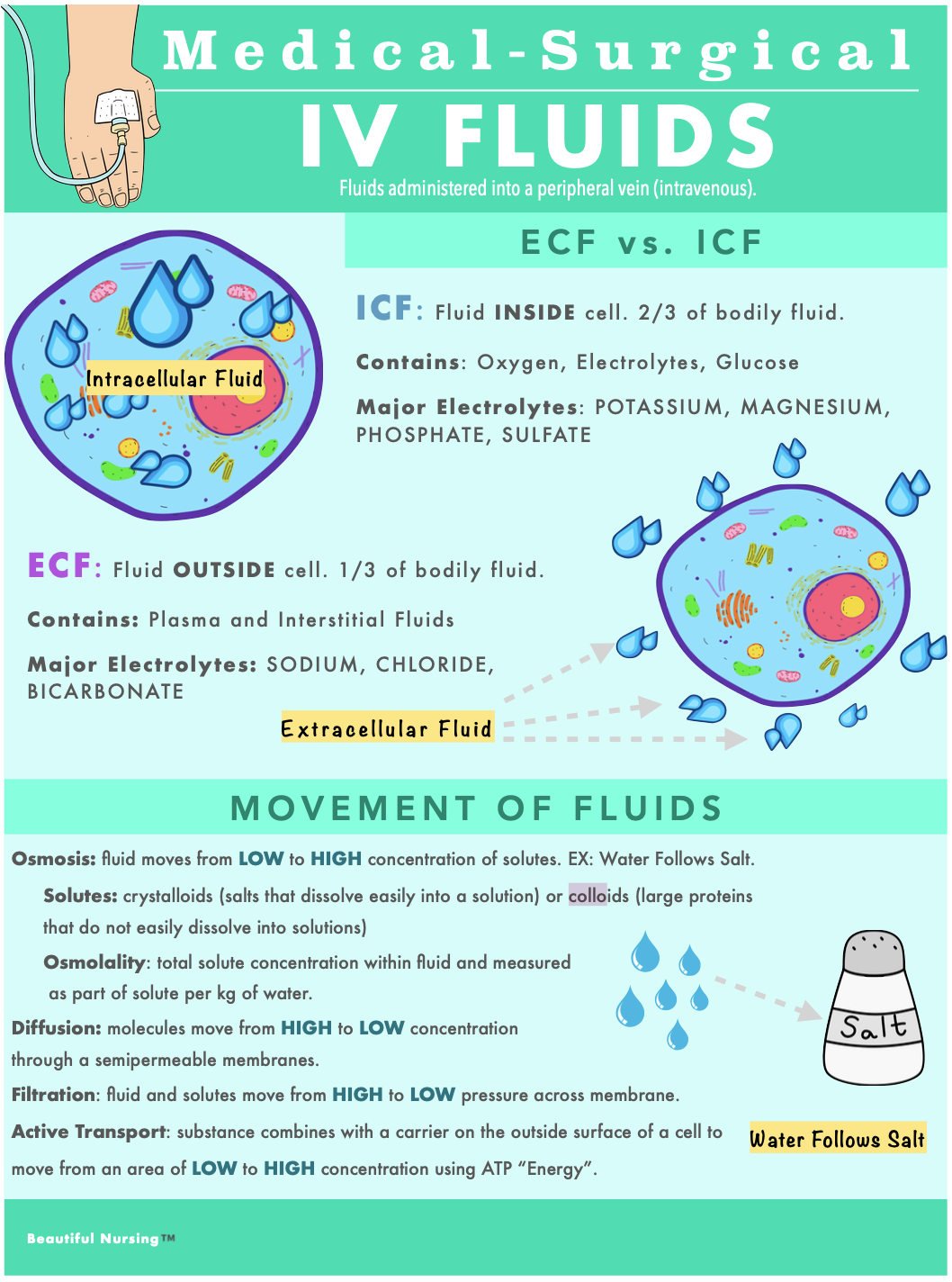
Osmosis: Movement of water from an area of low solute concentration to an area of high solute concentration.
Osmolality: Number of solute particles in a solution.
Tonicity: Relative concentration of a fluid compared to its environment, classified into three types:
Hypertonic: Greater concentration than surrounding fluid.
Hypotonic: Lesser concentration than surrounding fluid.
Isotonic: Equal concentration to the surrounding fluid.
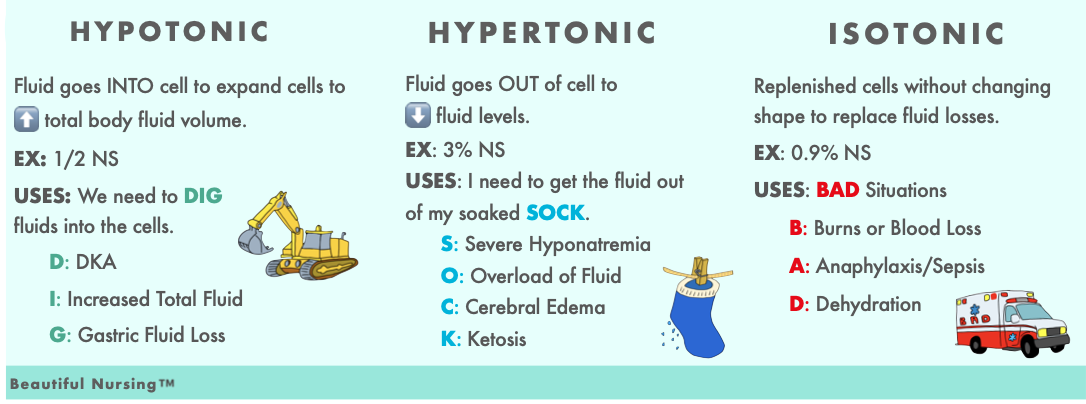
For further reading, consult sections around 337-338 in the textbook.
Homeostasis and Fluid Balance
Homeostasis: Maintenance of stable internal conditions, crucial in discussions of fluid, electrolyte concentrations, and acid-base balance.
Simplistic equation: Fluid In = Fluid Out.
Fluid movement between compartments:
Intracellular Compartment: Fluids and electrolytes within cells.
Extracellular Compartment: Fluids and electrolytes outside of cells.
Fluid movement involves:
Consumed fluids (intake).
Excreted fluids (output).
Imbalances and Underlying Conditions
Imbalances indicate potential underlying medical conditions:
Pathologic causes (sickness, illness).
Induced causes (medications causing electrolyte changes, etc.).
Risk factors include:
Fluid Imbalance: Too much or too little.
Electrolyte Imbalance: Error in electrolyte concentrations inside versus outside cells (tolerance ranges).
Acid-Base Imbalance: Excess acid or base leading to acidotic or alkalotic environments.
Critical to identify the underlying cause of imbalances to prevent recurrence (e.g., dehydration requires understanding causes like fluid loss, bleeding).
Role of Sodium and Thirst Mechanism
Sodium: Major solute contributor to osmolality.
Thirst Drive:
Regulates fluid intake, crucial for hydration status.
May be impaired in very young children who cannot communicate thirst adequately or elderly with diminished thirst drive.
Regulation of Fluid and Electrolytes
Kidneys: Principal regulators of fluid output and acid-base balance alongside lungs.
Poor kidney function can affect regulation of fluids and electrolytes.
Tonicity of Solutions:
Isotonic Solution: Same concentration as blood, e.g., normal saline.
Hypotonic Solution: Will cause cells to swell.
Hypertonic Solution: Will cause cells to shrink as fluid is pulled into the vascular space.
Urine and Hydration Status
Importance of urine color as an indicator of hydration:
Pale yellow is typical for hydration; clear urine may not be a reliable indicator.
Assessing urine can help in bedside care across various settings, particularly in catheter or bedside commode contexts.
Normal urine output considered to be around 30 mL/hour with variations in concentration depending on hydration status.
Types of IV Solutions
Crystalloids:
Contain electrolytes and closely resemble extracellular fluid, impacting interstitial and vascular spaces.
Used for rapid hydration and to replace lost fluids through urine or bleeding.
Key isotonic examples include:
Normal Saline: For rapid intravenous (IV) fluid distribution without shifts.
Lactated Ringer's: Another isotonic option.
Colloids:
Larger molecules, typically proteins, remain in the intravascular space and assist in maintaining blood volume by pulling fluid from the interstitial space due to colloidal pressure.
Common example: Albumin, utilized in cases of massive bleeding or to prevent excess fluid leakage into interstitial spaces.
Importance of Balancing Fluids and Electrolytes
Understanding fluid, electrolyte, and pH balance is foundational in nursing practice.
Acid-base balance includes a normal pH range of 7.35 to 7.45.
Identifying root causes of imbalances is paramount to effective treatment, such as administering potassium for hypokalemia or managing hyperkalemia through loop diuretics.
Monitoring is essential for both under- and over-correcting fluid and electrolyte imbalances to prevent complications (e.g., fluid overload indicated by lung crackles).
Conclusion
Review anatomical and physiological concepts alongside provided resources.
Reinforce understanding of fluid, electrolyte, and acid-base balance for practical nursing applications and patient care.