Week 3 & 4: Respiratory physiology
Pulmonary Ventilation (breathing)
- Inhalation and exhalation of air
- Exchange of air between the atmosphere and the lungs
- Air flows between the atmosphere & alveoli because of alternating pressure differences, caused by:
- contraction/relaxation of respiratory muscles
- alveolar surface tension
- compliance of the lungs
- airway resistance
External Respiration • Exchange of gases between the alveoli and blood • Needs to meet the respiratory demands of tissues and organs
Internal Respiration • Exchange of gases between the blood and cells of tissues • Absorption of O2 and production of CO2 + water + energy
Upper Respiratory System
Nasal Cavity
- Warms, moistens, filters air
- Detects olfactory stimuli
- Modifies speech vibrations
Oral cavity
Pharynx (throat)
- Nasopharynx
- Oropharynx
- Laryngopharynx
Lower respiratory System
Trachea
- Passageway for air
- Contains C-shaped rings of cartilage
Bronchi
- Primary Bronchi
- Lobar Bronchi
- Segmental Bronchi
- Larger Bronchioles
- Smaller Bronchioles
- Terminal Bronchioles
Lungs
- Respiratory bronchioles
- Alveolar ducts
- Alveoli
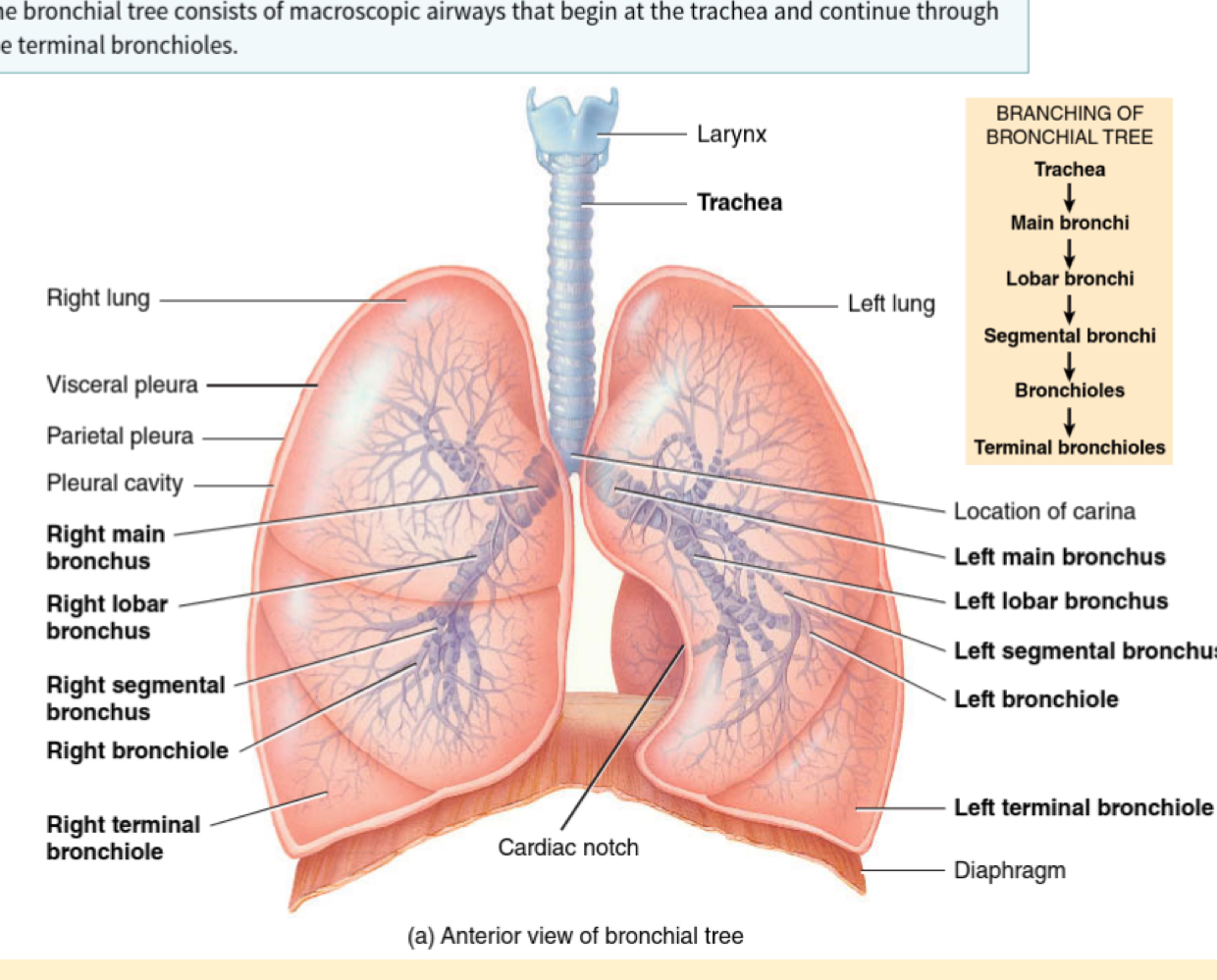
Conducting Zone - All structures that provide passageways for air to travel into and out of lungs
Respiratory Zone - Site of O2 and CO2 exchange with the blood
Boyle’s Law - ‘for a fixed mass of enclosed gas at a constant temperature, the product of PRESSURE (P) & VOLUME (V) remains contact (k)’
inverse relationship between PRESSURE and VOLUME
Equation: P1V1=P2V2
Inspiration:
For inhalation to occur the volume in lungs must increase, results in a pressure change in lungs below that in atmosphere.
- Diaphragm contracts and flattens
- Pressure reduces
- Volume increases
- Inhalation is an active process requiring muscle activity and energy
Expiration:
Passive process, requiring pressure change and tissue elastic recoil.
Elastic recoil of the chest wall and lungs reduces the volume - natural tendency to recoil
To cause the movement of air into the lungs it needs to move down a pressure gradient, therefore lung volume must increase (same amount of air but larger volume of space) to decrease pressure and enable the air to move down a pressure gradient.
Factors affecting ventilation:
- surface tension of alveolar fluid
- compliance of the lungs
- airway resistance
Exchange of O2 and CO2 between alveoli and blood, and blood and tissues occurs by Passive diffusion. This process is governed by 2 gas laws:
- Dalton’s Law- Total pressure of a mixture of gases is the sum of the pressures of individual gases
- Henry’s Law- quantity of a gas that will dissolve in a liquid is directly proportional to the PP of the gas & its solubility. The ability of a gas to stay in solution is greater when its PP is higher and solubility is higher
Factors that determine the R of Exchange:
- surface area of the alveoli,
- diffusion distance
- molecular weight & solubility
Oxygen transport
- PP of O2 will determine how much O2 binds- higher the PO2, the more O2 binds
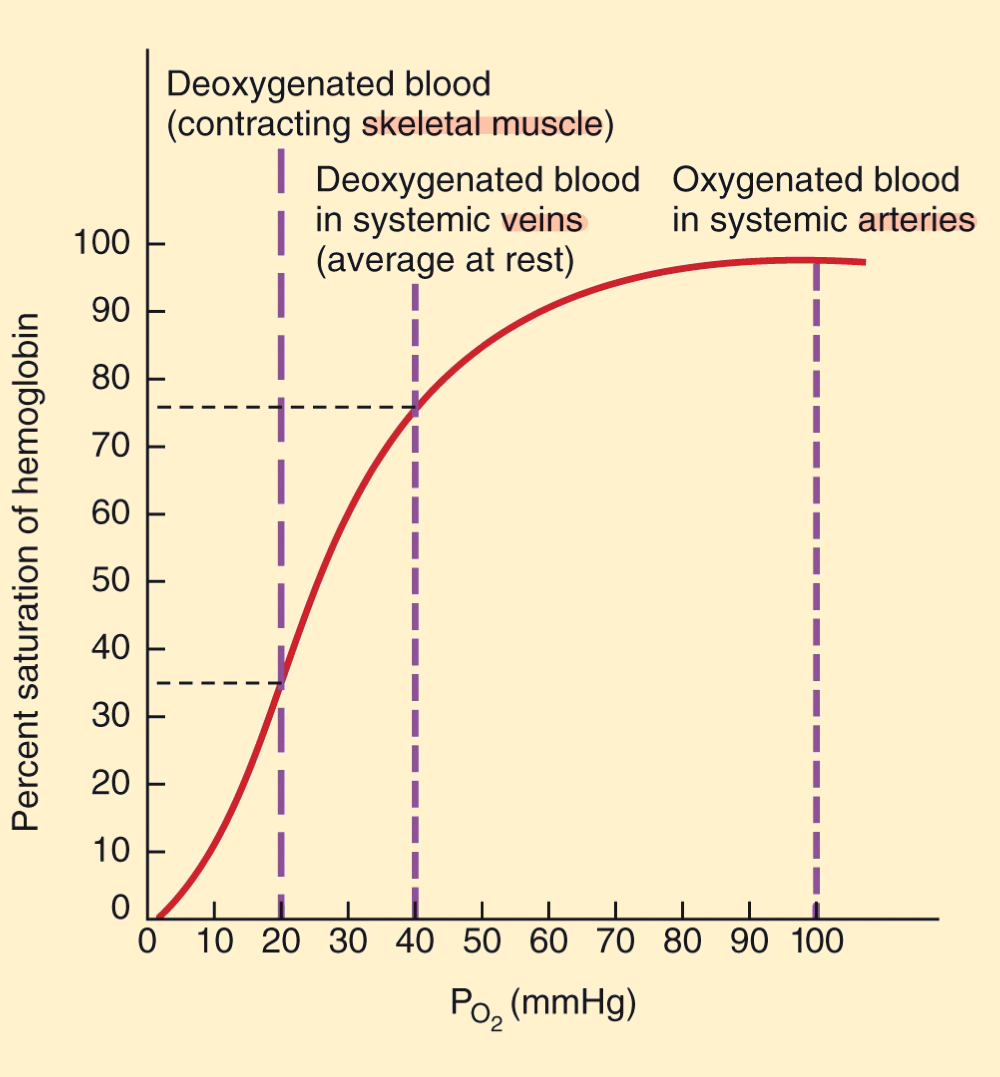
Sigmoidal shape because as 1 O2 binds, it becomes progressively easier for more to bind- causing a plateau - cooperative binding.
Factors that affect O2 binding:
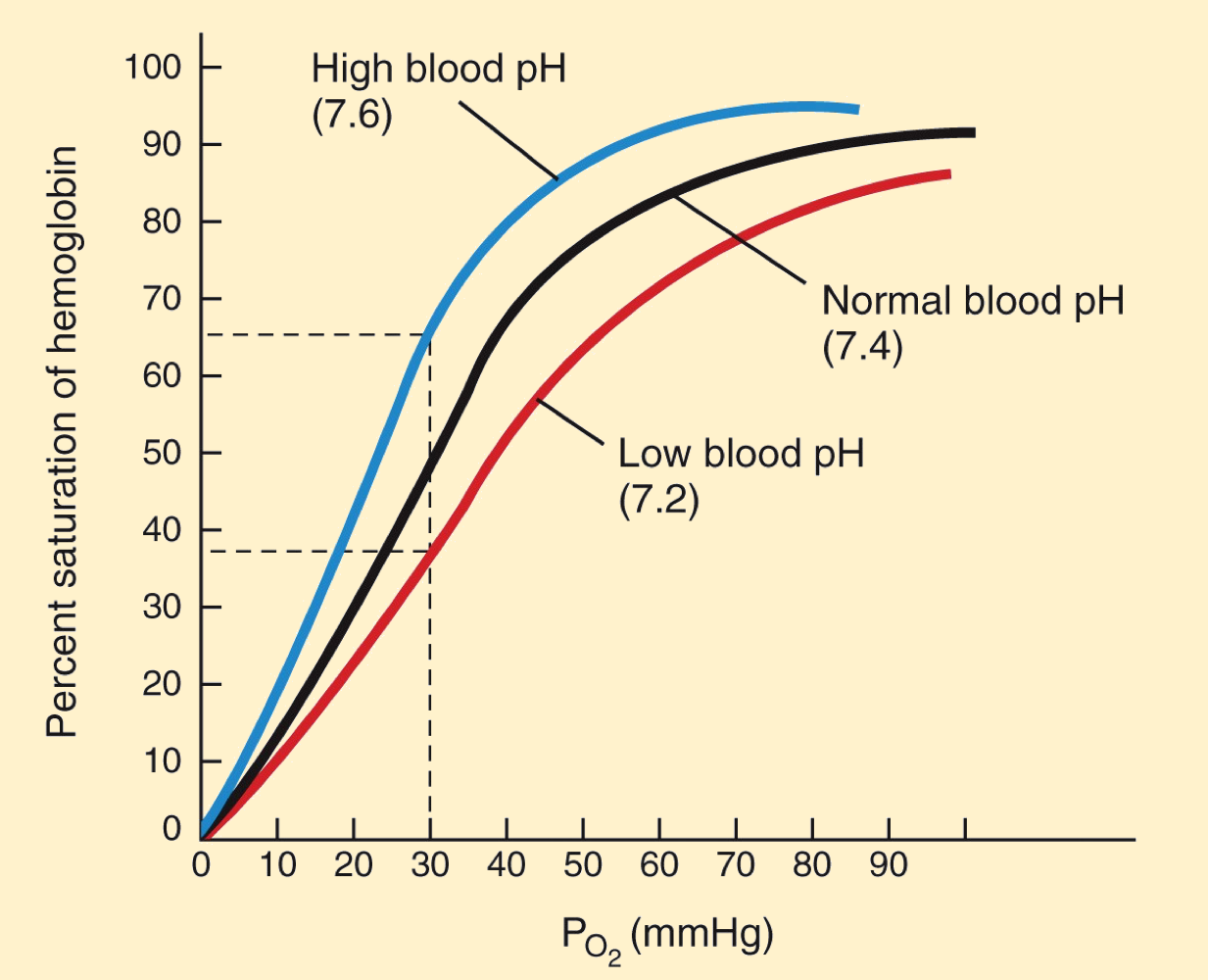
- Acidity (pH)- The Bohr Effect causes a shift in curve due to a pH change
- As pH decreases (↑acidity), O2 dissociates from Hb more easily
- As pH increases(↓acidity), O2 binds more readily with Hb
Common metabolic acids include:
- Lactic Acid-↑H+
- Carbonic Acid-↑H+
Hb acts as a buffer for H+ → H+ ions bind with Hb molecules to cause a shape Δ - with a less strong ‘grip’ on the O2 molecules.
⬇️ pH (↑ H+ ions) causes decreased O2 saturation ∴ shifts dissociation curve to the right
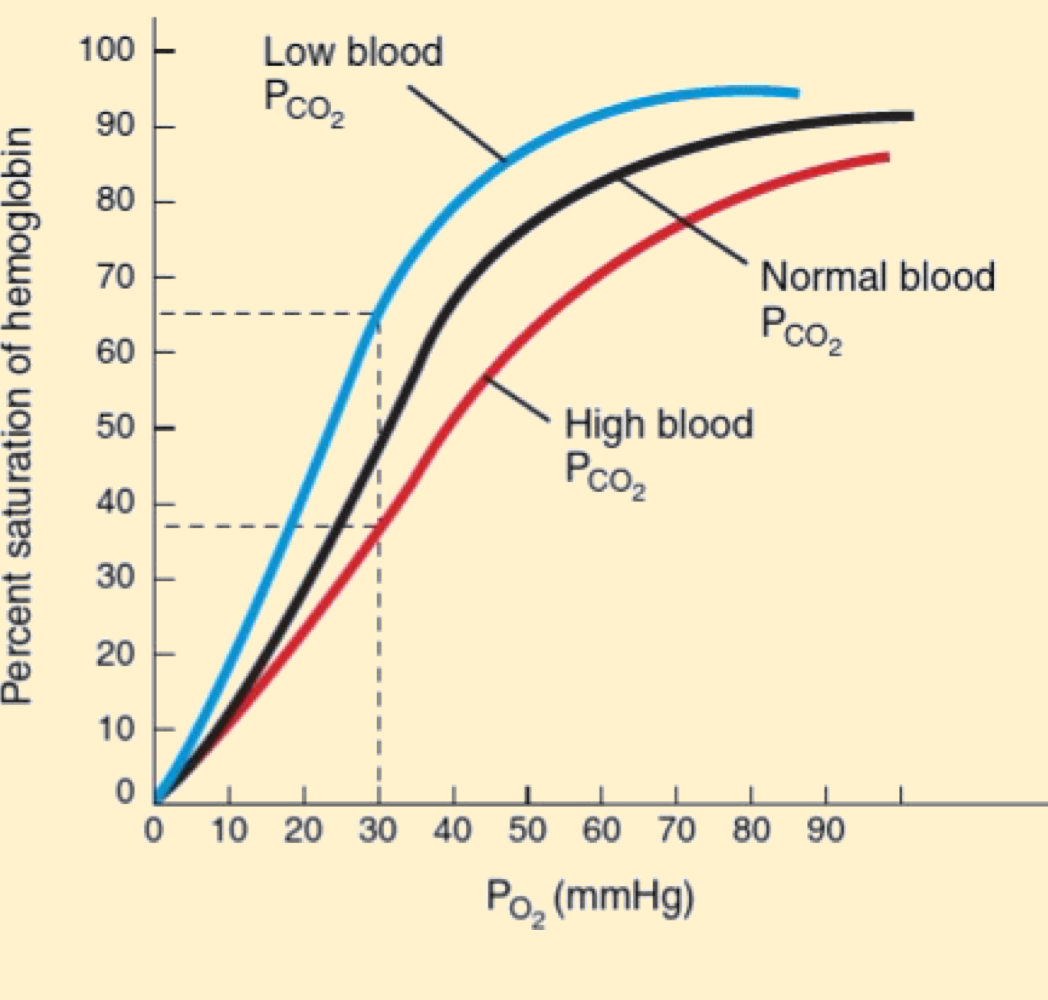
- Partial pressure of CO2
CO2 binds to Hb
- As PCO2 ↑, Hb release more O2
- CO2 is temporarily converted to carbonic acid (H2CO3)
- As H+ ↑ the BÕR effect occurs
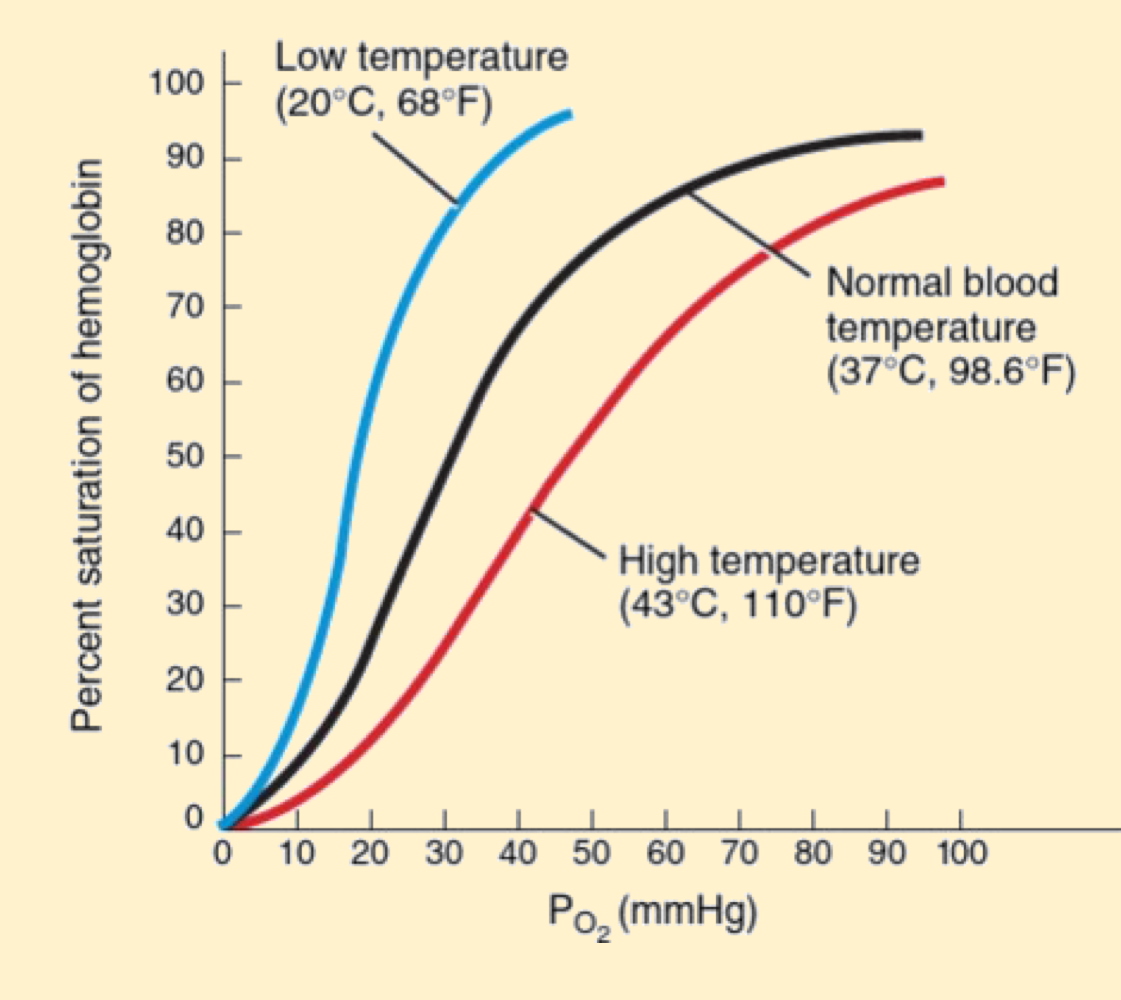
- Temperature
As temperature increases, more O2 is released from Hb
- Metabolically active tissues require more O2
- More acids and H+ are created, pH is reduced and O2 is released from Hb
- BPG
Metabolite of carbohydrate metabolism in RBCs
- Acts as an inhibitor that binds to the Hb structure -
- An increase causes the curve to shift to the right (decreased saturation) under the following conditions:
• Exercise
• Drop in blood pH
• Increase in thyroid hormones & growth hormone
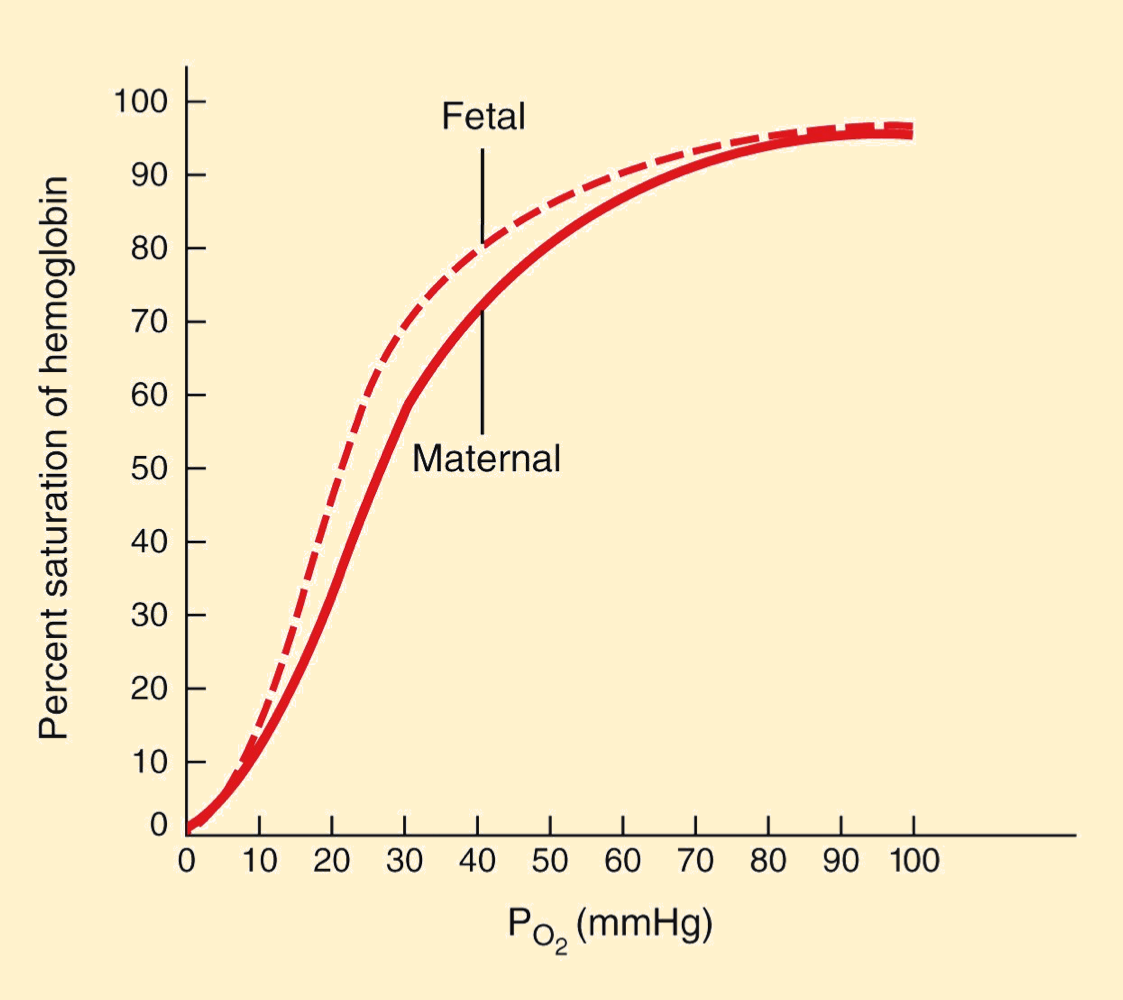
- Foetal Hb has a poor binding of BPG hence greater affinity for O2 than the mother